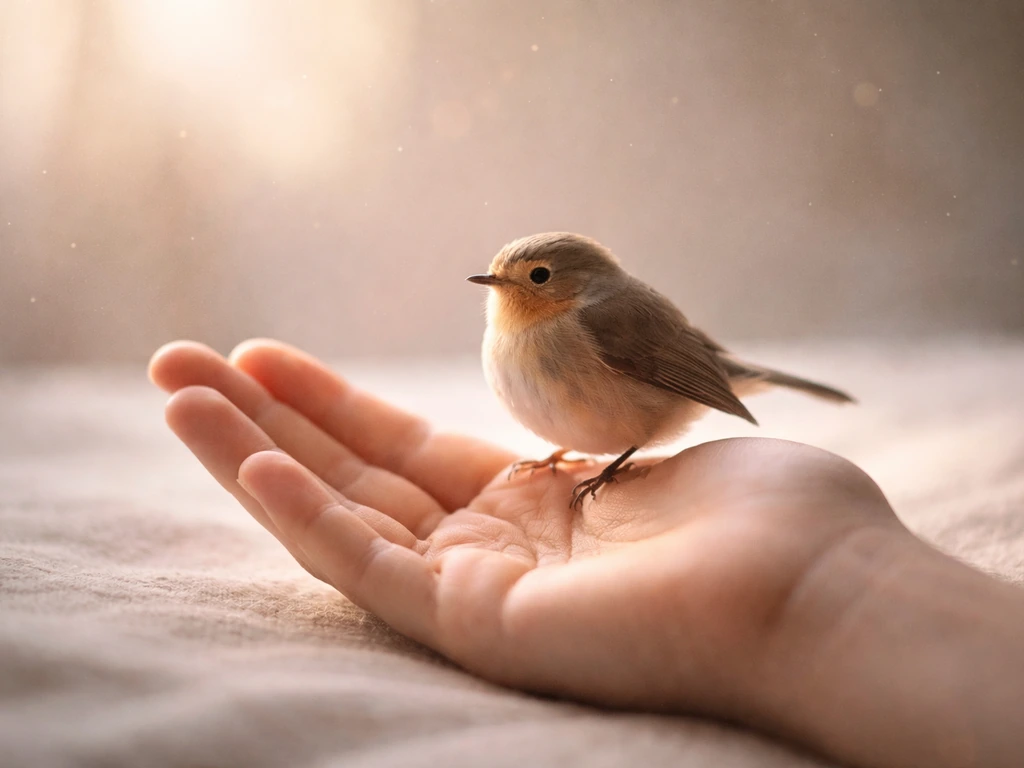
Yes, most people across cultures and traditions do see a bird landing on you as a good omen, often reading it as a sign of incoming luck, spiritual reassurance, or a message from something beyond the everyday. That said, the full picture is more layered: the bird's species, its behavior, your emotional state in that moment, and whether it fits a pattern in your life all shape what the encounter might mean for you personally. It's also worth knowing that sometimes a bird just lands on you because you're holding food, standing near a nest, or wearing something shiny. Both things can be true at once.
Is a Bird Landing on You Good Luck? Meaning and What to Do

Maya Hartwell
21 May 2026
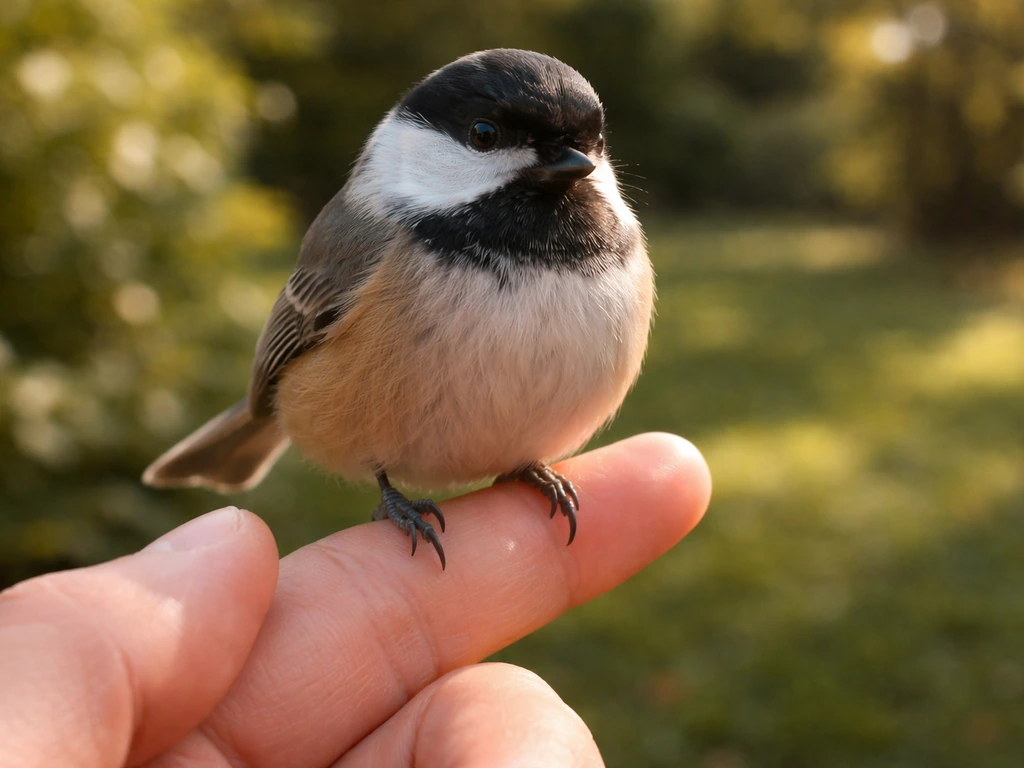
How to interpret a bird landing on you
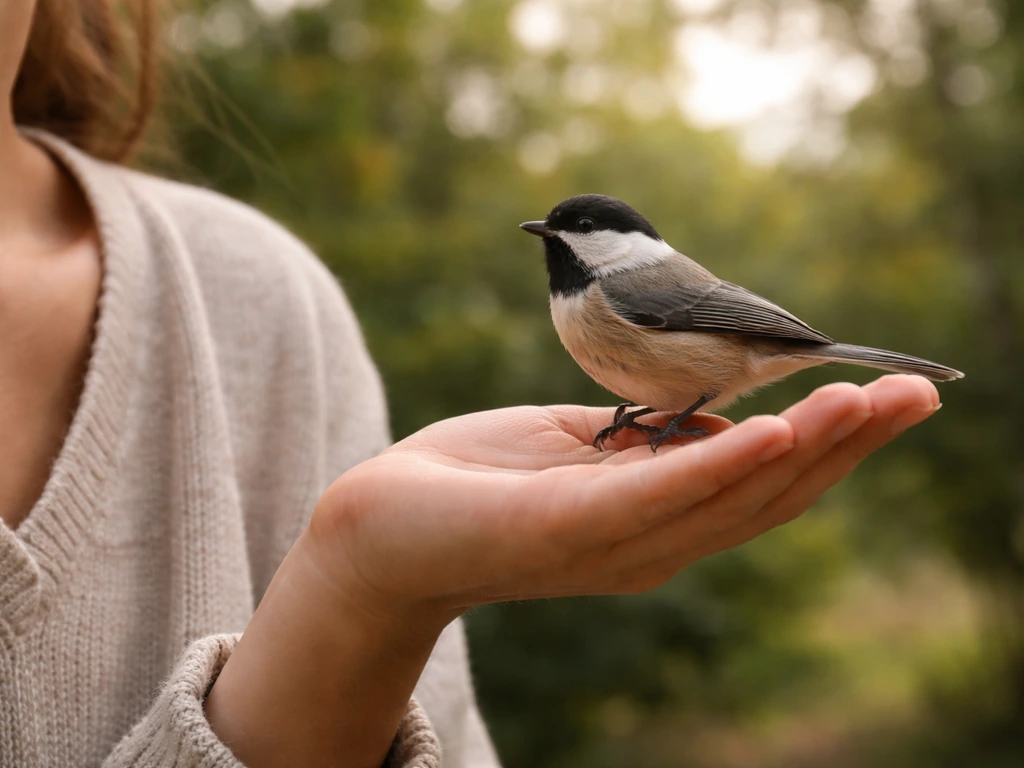
The most honest starting point is this: a bird choosing to land directly on your body is unusual enough that it gets people's attention, and that attention is worth something in itself. In many spiritual frameworks, the fact that the moment stopped you in your tracks is part of the message. Popular spiritual interpretation holds that birds act as messengers between the physical and spirit realms, and a direct landing (as opposed to a bird flying past you or perching nearby) is seen as a more personal, intentional contact.
Behavior matters as much as species here. A bird that lands gently on your hand or shoulder, stays calm, and makes eye contact reads very differently from one that crash-lands on you in a panic or uses you as a pit stop while fleeing a predator. The calmer and more deliberate the landing, the more weight most people give it spiritually. If a bird sits with you for an extended time, moves toward your face, or seems to be observing you, that's what spiritual traditions tend to flag as genuinely significant.
Timing and personal context add another layer. If you've been asking for guidance, grieving someone, or standing at a crossroads in life, many people find that a bird encounter lands with unmistakable emotional weight. If nothing particular is going on and you simply have crumbs on your sleeve, the meaning calculus shifts. Both interpretations deserve honest consideration.
What the bird type and behavior actually signal
Different birds carry different symbolic weight across traditions, and that matters when you're trying to interpret the encounter. Here's a practical breakdown of the most commonly encountered species and what they're generally associated with:
| Bird | Common Symbolic Meaning | What a Landing Might Signal |
|---|---|---|
| Robin | New beginnings, renewal, messages from the deceased | A loved one checking in, fresh start incoming |
| Sparrow | Community, simplicity, perseverance, divine care | Reminder you are watched over and not alone |
| Crow or Raven | Intelligence, transformation, magic, transition | A period of change, heightened awareness needed |
| Dove | Peace, hope, the Holy Spirit, reconciliation | Deep peace is coming, or present tension will resolve |
| Cardinal | Vitality, passion, messages from departed loved ones (common in U.S. folk belief) | A spirit message, encouragement to stay the course |
| Hawk | Clarity, vision, focus, spiritual protection | Pay attention to what you've been overlooking |
| Hummingbird | Joy, lightness, resilience, timelessness | An invitation to slow down and find pleasure in small things |
| Owl | Wisdom, the unseen, transitions, intuition | Trust your gut; deeper insight is available to you |
| Pigeon | Loyalty, peace, resourcefulness, home | Stability and safe return; sometimes dismissed but symbolically rich |
A bird landing on your hand carries a slightly different weight than one landing on your head or shoulder. Many traditions treat the hand as a symbol of action and capability, so a landing there is often read as encouragement toward something you're creating or deciding. A shoulder landing is sometimes described as a companion energy, like someone walking beside you. Head landings are rare and often interpreted as a strong, crown-level spiritual signal, though they're also more likely to be accidental.
Cultural and folklore meanings from around the world
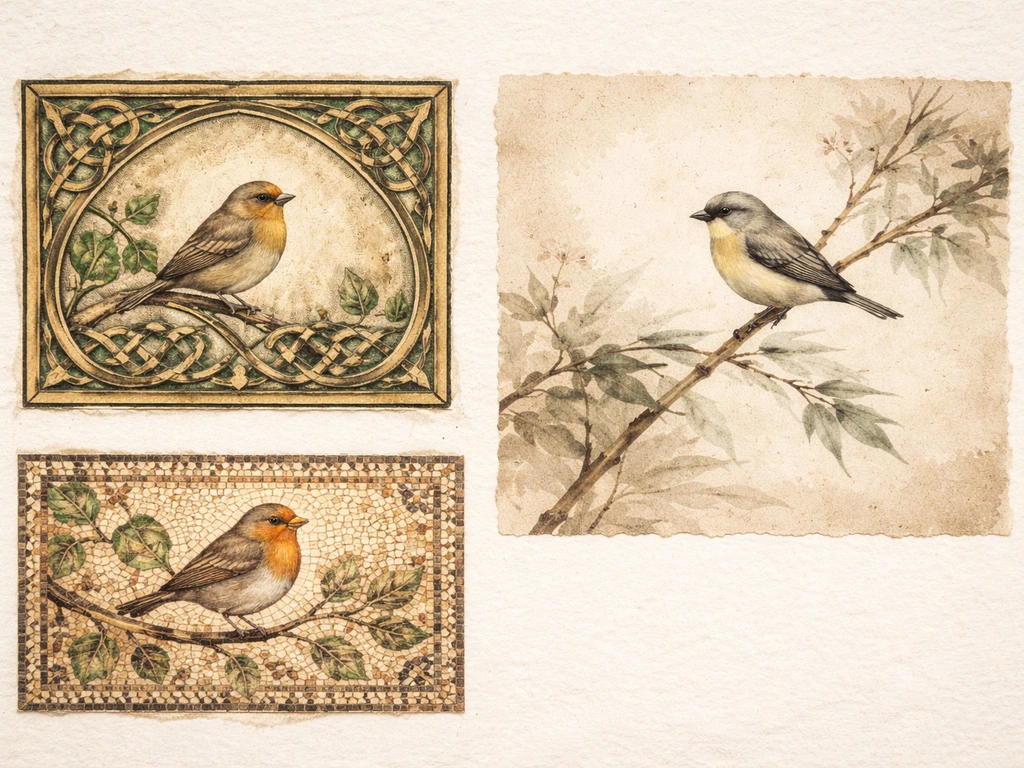
Bird encounters feature in nearly every major cultural tradition, and the consensus leans optimistic when a bird chooses you specifically. In Celtic tradition, birds were seen as souls or messengers crossing between this world and the Otherworld, making a direct landing a potential contact from an ancestor or guide. Native American traditions vary widely by nation, but many hold birds as sacred communicators between humans and the spirit world, with the specific bird species carrying its own medicine or teaching.
In East Asian traditions, particularly Chinese and Japanese folk belief, birds are generally associated with good fortune and protection. A crane landing near you is considered extraordinarily auspicious, tied to longevity and divine favor. In Japanese culture, the sparrow (suzume) is a symbol of loyalty and good luck in the home. In Roman augury, the ancient practice of reading omens from birds, the direction a bird flew and where it landed relative to a person was used to interpret divine will. A bird landing directly on a person was a significant and generally positive sign.
In European folk tradition, a robin landing on you or very close to you is widely considered a strong good luck sign, and in Britain especially, robins are associated with the souls of the departed coming to visit. A swallow landing on you is similarly seen as a blessing, tied to safe travel and good fortune. In contrast, some folk traditions (particularly in parts of Eastern Europe and the American South) treat a bird entering your home or landing on your windowsill with more caution, associating it with news or warnings rather than straightforward luck. Context and cultural lens matter here.
Biblical and Judeo-Christian perspectives
The Bible is rich with bird imagery, and birds appear repeatedly as signs of divine presence, care, and communication. The most famous examples include the dove returning to Noah's ark with an olive branch as a sign of peace and renewed covenant (Genesis 8:11), the dove descending on Jesus at his baptism as a manifestation of the Holy Spirit (Matthew 3:16), and God's use of ravens to feed Elijah in the wilderness (1 Kings 17:4-6). These aren't incidental details; they frame birds as real carriers of divine meaning within the tradition.
Jesus also spoke directly about birds as evidence of God's attentive care: 'Are not two sparrows sold for a penny? Yet not one of them will fall to the ground outside your Father's care' (Matthew 10:29). The message there isn't just poetic. It positions birds as creatures within God's awareness, which gives many Christians room to see meaningful bird encounters as a kind of gentle reminder of divine presence rather than mere coincidence.
That said, the Jewish and Christian traditions also carry a clear caution about omen interpretation. Deuteronomy 18:10 lists 'one who interprets omens' among practices God explicitly prohibits for the Israelites. The Talmudic tradition, as discussed in Chabad sources, similarly discourages using natural events as a basis for divination. This doesn't mean bird encounters hold no spiritual weight within these traditions, but it does mean the framework shifts: rather than asking 'what does this bird predict for me,' the more theologically consistent question within Christianity or Judaism might be 'what might God be drawing my attention to in this moment?' That reframe keeps the encounter meaningful without crossing into prohibited divination.
What to actually do when a bird lands on you

Staying safe in the moment
First things first: stay calm and move slowly. Sudden movements will startle the bird and can cause it to scratch or bite in panic. Wild birds can carry bacteria on their feet and beaks, so avoid bringing your hands to your face while the bird is on you or right after. If it's a larger bird like a crow, hawk, or any bird of prey, keep still and let it leave on its own terms. Do not try to grab or restrain a wild bird.
If the bird has landed on bare skin, wash that area with soap and water after it leaves. If it leaves droppings on you (which, for what it's worth, is considered especially lucky in several folk traditions), clean with soap and water and avoid touching the droppings directly with bare hands. Bird droppings can carry Salmonella and other bacteria, so this is basic hygiene, not an overreaction. Change your clothes if droppings landed on fabric, and wash that clothing normally.
For the spiritual seeker: practical next steps
If the encounter felt meaningful to you, the most useful thing you can do in the hours after is capture it while it's fresh. Here are a few simple next steps depending on your own spiritual inclination:
- Take one minute right where you are: pause, breathe, and notice what you were thinking about or feeling just before the bird landed. That context is often the message.
- Journal the details: the bird species (or your best guess), where it landed on your body, how long it stayed, your emotional state, and anything happening in your life right now. Patterns only become visible when you track them.
- Offer a moment of gratitude or prayer in whatever form feels natural to you, whether that's a spoken thank-you, a brief prayer, or simply an inner acknowledgment.
- Look up the species: knowing the basic symbolic associations of the specific bird (see the table above) gives you a more personalized lens than a generic 'good luck' reading.
- Set a brief intention: if the encounter felt like encouragement or a nudge, name aloud (or in your journal) what you're being encouraged toward. Giving it language helps it land in your actual life.
- Notice if it happens again: a single encounter is an event. Two or three encounters with the same species in a short period is a pattern, and most traditions treat patterns as more clearly meaningful.
When it might just be a bird doing bird things
Not every landing is a cosmic message, and being honest about that doesn't diminish the ones that genuinely feel significant. Birds land on people for very ordinary reasons: you were near their food source, you were sitting quietly and they misjudged you for a safe surface, you're wearing bright colors that attracted them, or a bold urban bird (pigeons and house sparrows are notorious for this) has simply been conditioned by humans handing out food. Birds also use stationary humans as temporary vantage points when they feel threatened or are scanning for predators.
Territorial behavior is another common driver, especially in spring nesting season (roughly March through July in the Northern Hemisphere). Some birds, particularly mockingbirds, red-winged blackbirds, and certain corvids, will actually divebomb or land on humans to drive them away from a nest. That's protective instinct, not a spiritual message for you specifically.
So how do you decide which category your encounter falls into? A few honest questions help:
- Was the bird acting calm and deliberate, or flustered and erratic? Calm and deliberate leans meaningful; panicked or territorial leans natural.
- Were you near food, a nest, or a known bird-feeding area? If yes, the practical explanation rises in probability.
- Did the encounter stop you emotionally, or did you barely notice it? A strong gut reaction is data worth taking seriously.
- Is this part of a pattern? Have you been seeing this species repeatedly or in unusual contexts lately?
- What was on your mind in the minutes before? If the encounter arrived right in the middle of a meaningful thought or decision, many people find that hard to dismiss as pure coincidence.
You don't have to land firmly in either the 'purely natural' or 'definitely spiritual' camp. Most of the time the wisest position is holding both: this was a bird doing what birds do, and it also arrived at a moment when I was open to it. That's enough to work with.
If you're drawn to exploring related bird encounters, the meaning of a bird landing specifically on your hand carries its own nuanced symbolism, as does what it might mean when a feather lands on you rather than the bird itself. Both are worth sitting with if this kind of encounter resonates with you.
What does it bring up for you when you replay that moment? That question, honestly asked, will often give you more useful direction than any single tradition's answer.
FAQ
Should I take it as “luck” if the bird landed calmly but I felt uneasy afterward?
Yes, you can still treat it as meaningful, but “good luck” does not have to mean pleasant feelings. If the encounter left you unsettled, check the non-omen explanations first (nesting season, territorial behavior, the bird was startled). Then ask what emotion the moment stirred, that often points to the real guidance you need.
What if the bird hits me, then flies away instead of landing gently?
A collision usually fits a safety or navigation issue (glass reflections, misjudging distance, startled flight) more than a spiritual message. In practice, prioritize a health check and hygiene, then interpret it as a reminder to slow down and pay attention, rather than a guaranteed sign.
How long should I wait before I wash if the bird peed or left droppings on my skin?
Wash as soon as you can after the bird leaves. If it’s fresh, soap and water are usually enough, avoid scrubbing aggressively, and do not touch your eyes or mouth before cleaning. If the bird contacted broken skin, seek medical advice if you notice increasing redness or irritation.
Is it safe to keep the bird on my shoulder or hand if it seems content there?
It’s safer to stay still, but don’t try to “hold” the bird like a pet. Keep movements slow, let it leave on its own, and avoid approaching your face. Even calm birds can bite or scratch if they become uncomfortable.
Does the species matter if I could not identify the bird?
Species is most helpful when you can identify it, but you can still interpret the encounter using behavior and context. Focus on whether it landed gently, stayed, or looked defensive, and consider what you were doing emotionally at that moment. If you cannot identify it, skip symbolic “medicine” and use the timing and your reaction instead.
What should I do if a bird keeps returning to the same spot or person?
Treat repeat behavior as a likely environmental driver, food, nesting, or a learned human routine. Move away from the area, cover food if relevant, and if it is divebombing, protect your head and relocate. You can still note the personal meaning, but do not assume it is a one-time “message.”
If a bird lands on me in my home, does it mean something different than outside?
Many traditions associate indoor landings with stronger “news” symbolism, but the practical causes are common: windows, reflective glass, or a bird trapped indoors. Open curtains only if you can do so safely, turn off indoor lights at night if possible, and guide it out with a clear exit route.
Is touching a feather or picking up a bird feather always safe?
Usually it’s safe, but wash your hands afterward. Avoid rubbing your eyes or face until cleaned. If the feather was near droppings or you handle it with bare hands, consider a quick rinse to reduce bacteria exposure.
Can I interpret it spiritually if I’m worried about “divination” or spiritual overreach?
A helpful middle approach is reflection instead of prediction. Ask what the moment is bringing into your awareness (patience, protection, gratitude, a decision you’ve been avoiding). You are using it as a prompt for attention, not claiming it forecasts a specific outcome.
What if the bird’s behavior looked defensive, like divebombing or chasing me?
That usually points to territory or nest protection rather than fortune. In spring and early summer, treat it as a safety issue: cover your head, move away calmly, and avoid returning to the same spot for a while.
Should I record the encounter to remember the meaning later?
Yes, but keep it simple. Note the time, location, bird behavior (calm, lingering, defensive), and what you were thinking or feeling. This helps you distinguish a pattern in your life from a one-off coincidence, and it’s more reliable than relying on memory alone.
Next Article
Dream Meaning of a Bird Landing on Your Hand and What It Signifies
Discover what it means when a bird lands on your hand, with spiritual and psychological insights plus journaling steps.