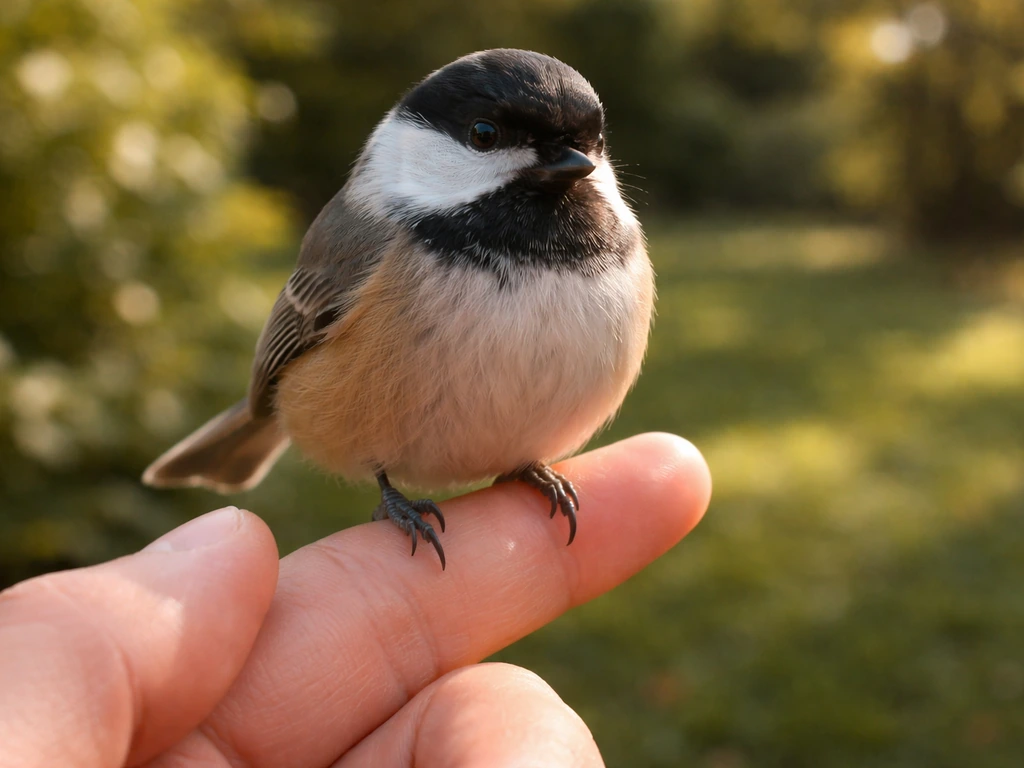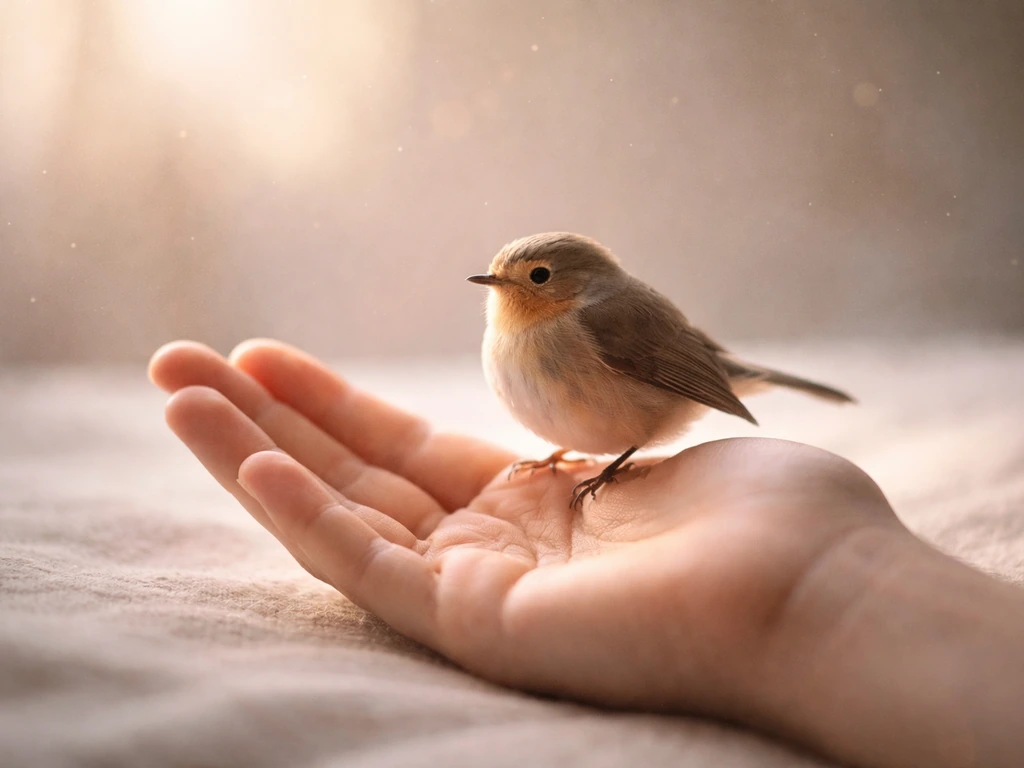
A bird feather landing on you is almost always a harmless natural event caused by molting, preening, or wind-carried shedding. But if you want to go further than the biology, across dozens of spiritual traditions and folklore systems, a feather arriving unexpectedly is treated as a message worth pausing to notice. Both things can be true at once: there's a perfectly normal reason it happened, and it can still feel meaningful if you choose to receive it that way.
When a Bird Feather Lands on You: What to Do and What It Means

Maya Hartwell
22 May 2026
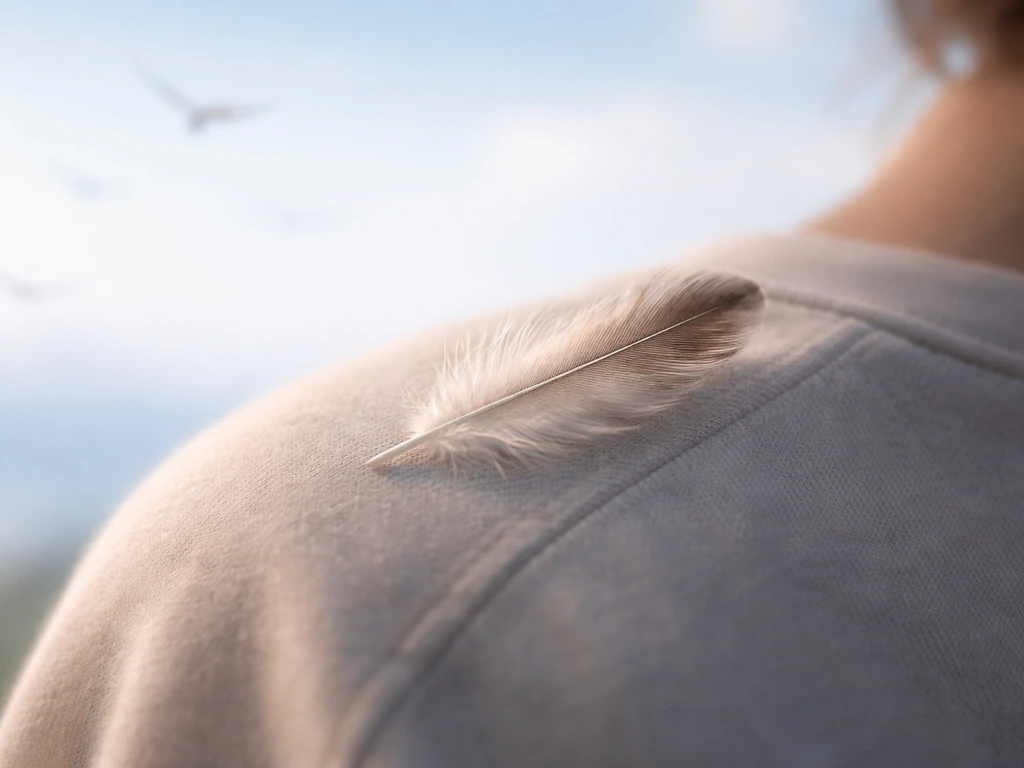
What actually happened: natural reasons vs. a potential sign
Most birds molt once or twice a year, shedding worn feathers so fresh ones can grow in. Smaller birds can complete a full molt in around five weeks; larger birds may take up to twelve weeks and often do it in stages. During that window, loose feathers are constantly drifting off during normal movement, preening, or even a wing-shake. Preening itself, the daily behavior where a bird uses its beak to clean and align feathers, routinely frees already-loose ones. So if you were standing near a tree, a rooftop, a feeder, or anywhere birds gather, a feather landing on you is about as surprising as a leaf falling in autumn.
Wind is the other obvious factor. A feather shed fifty feet away can travel a surprising distance in a light breeze. Indoors, a feather near a window or vent might land on you after a bird struck the glass outside (window strikes are staggeringly common, with estimates ranging from 100 million to 1 billion bird-window collisions per year in North America alone). None of that makes the moment less interesting, but it does mean the physical explanation is usually simple.
The spiritual read on the same event is a separate layer, not a replacement for the natural one. Many traditions hold that ordinary moments can carry meaning precisely because they're so ordinary. You weren't looking for a feather. It found you. That unexpectedness is exactly what makes people ask 'what does this mean?' and it's a fair question to sit with.
What to do the moment a feather lands on you

Before you start interpreting anything, take thirty seconds for the practical side. Here's what to actually do right now:
- Don't touch your face. If the feather brushed your skin, avoid touching your eyes, nose, or mouth until you've washed your hands.
- Pick it up (or don't) with intention. If you want to keep the feather, handle it briefly and then set it aside on a clean surface. If you'd rather not keep a wild feather, gently brush it away without rubbing it across your skin.
- Wash your hands. A quick soap-and-water wash is all you need after handling a feather from a wild bird. This is standard CDC hygiene guidance for any contact with wild birds.
- Check your hair or clothes if the feather tangled in them. A gentle shake or brush is enough. No need to panic.
- If any part of the feather or debris got near your eye, flush immediately with clean water or preservative-free eye drops. If you have persistent discomfort, blurred vision, or can't clear it easily, that's a reason to see a doctor, not something to push through.
- If you're in an area with a known avian influenza outbreak, treat any feather contact more carefully: avoid stirring up dust, wash hands thoroughly with soap, and avoid touching your face. For most people in most places, this is not a concern with a single stray feather.
That's genuinely it on the safety side for most situations. A clean, dry feather from a healthy bird in a normal outdoor setting is not a hazard. The cautions above are for completeness, not to alarm you.
How to read the spiritual message: bird type, feather condition, and context
If you want to interpret the feather as a potential sign, the meaning isn't one-size-fits-all. Three factors shape how most traditions approach it: what bird it likely came from, the condition of the feather, and the circumstances around the moment.
The bird type
If you can identify the bird, that's your starting point. Different birds carry different symbolic weight across cultures. A few common ones:
| Bird | Common Symbolic Associations |
|---|---|
| Hawk or Eagle | Vision, strength, spiritual elevation, messages from higher realms in many Indigenous and metaphysical traditions |
| Crow or Raven | Intelligence, transformation, the in-between space; sometimes a warning, sometimes wisdom |
| Dove | Peace, purity, divine presence; associated with the Holy Spirit in Christian tradition |
| Robin | New beginnings, renewal, the arrival of spring energy and fresh starts |
| Hummingbird | Joy, lightness, resilience; a reminder to be present and find sweetness in small things |
| Owl | Intuition, hidden knowledge, the unseen; folklore meanings range from wisdom to a prompt to pay attention |
| Blue Jay | Clarity, communication, boldness; sometimes seen as a push to speak up or act decisively |
| Cardinal | Widely seen as a visitation from a loved one who has passed, especially in North American folk belief |
| Peacock | Beauty, integrity, the courage to be seen; associated with protection in some Eastern traditions |
| Unknown/generic small bird | Lightness, freedom, the simple reminder that life is moving around you |
If you genuinely can't identify the bird, that's fine. The gesture of a feather landing on you carries its own symbolism independent of species: a brush with something wild and free, a moment of contact between the natural world and your own life.
The condition of the feather
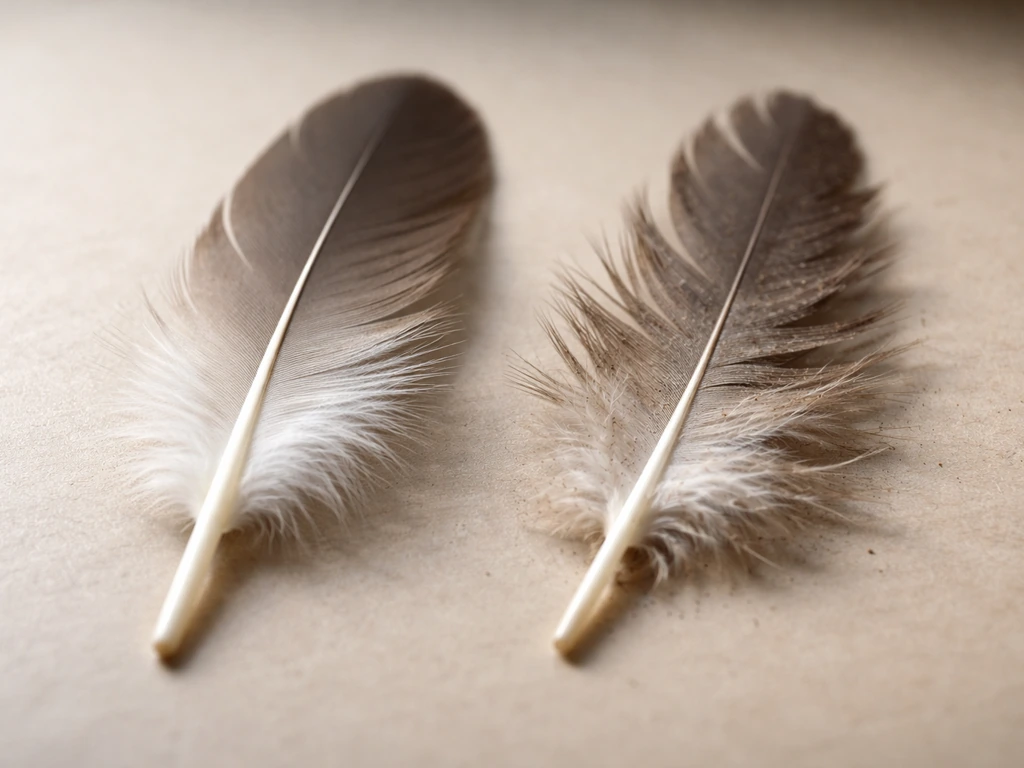
A clean, intact, fresh feather is generally read as a positive sign in spiritual frameworks: clarity, a message arriving whole. A worn, broken, or dirty feather doesn't necessarily mean a negative omen, but some traditions interpret it as a sign that the message comes from a place of difficulty, or that something in your life needs attention or renewal. A feather that's still bright and barbed with no damage? That's the most straightforwardly uplifting version of this encounter symbolically, and also practically the least likely to carry any irritants.
The context of the moment
Where it happened and what you were thinking about matters a lot in most interpretive frameworks. A feather landing on you while you were outdoors near a park carries a different weight than one drifting down in your home, or landing specifically on your head, your shoulder, or your open hand.
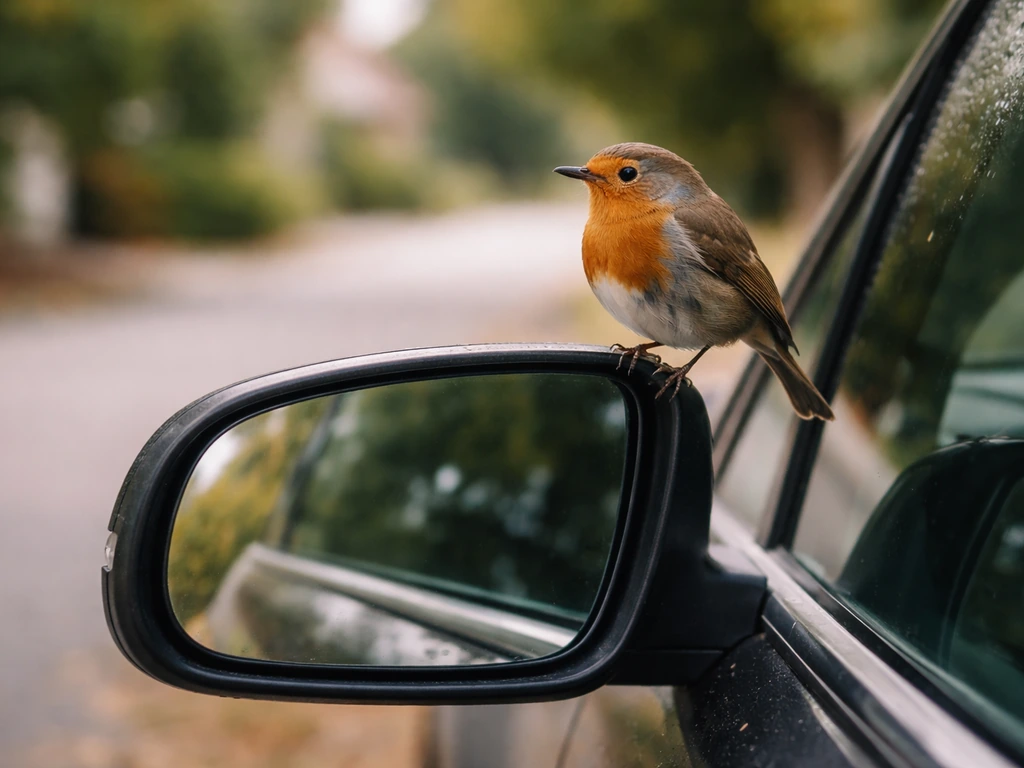
If you want to get even more specific, the idea of when a bird lands on your car can also be interpreted as a similar kind of moment that prompts attention a feather landing on you.
Many spiritual traditions attach significance to body location: the shoulder or head is often associated with guidance or a message meant for your thoughts and decisions; the hand, with action or something you're meant to hold; the chest or heart area, with emotional matters. Whether you were feeling grief, joy, uncertainty, or deep in a question you'd been turning over is the most personal piece of the interpretation, and also the most meaningful one.
Nobody outside of you can tell you what you were carrying in that moment.
Indoors vs. outdoors, and how many feathers
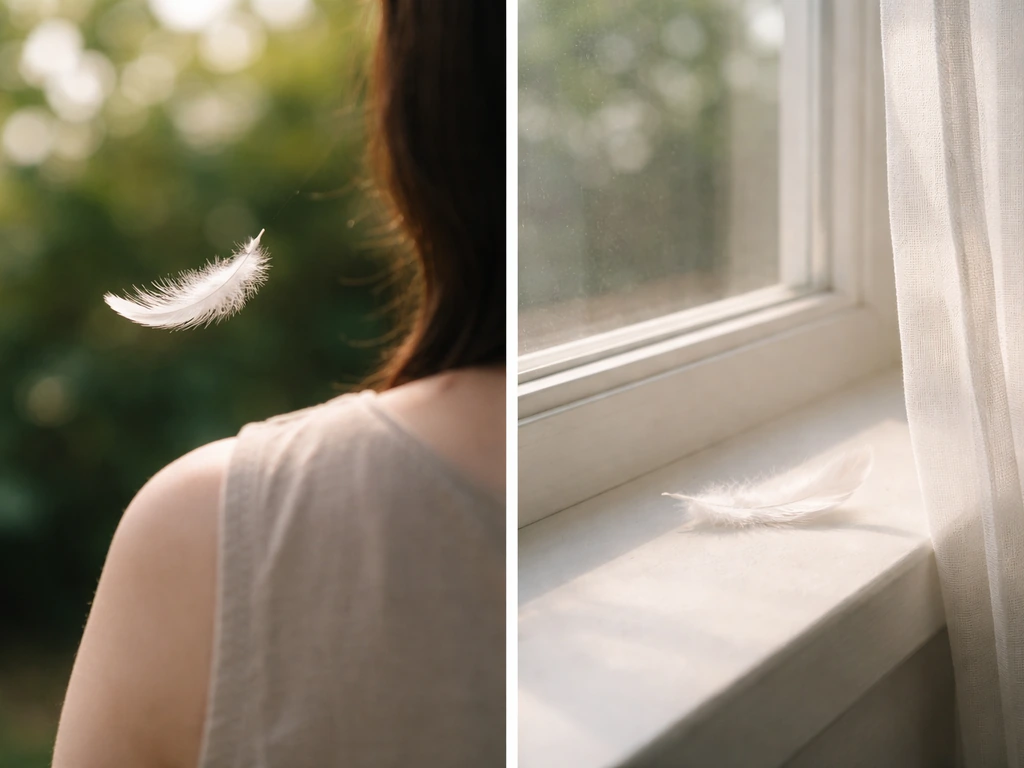
A single feather drifting onto you outdoors is probably molt or wind. A feather inside your house is more unusual and tends to carry more weight in spiritual interpretation, simply because it's harder to explain naturally. Multiple feathers appearing repeatedly in a short period, whether landing on you or appearing in your path, is what most traditions would call a 'pattern,' and patterns get more interpretive attention than a single event. A single feather is a gentle nudge. A cluster of experiences is an invitation to pay closer attention.
What the Bible says about birds and signs
If you're reading this from a Christian faith perspective, it's worth being honest about what Scripture actually says, because the picture is nuanced. On one hand, birds throughout the Bible carry real spiritual significance. In Matthew 6:26, Jesus points directly to birds as evidence of God's care: 'Look at the birds of the air; they do not sow or reap or store away in barns, and yet your heavenly Father feeds them.' Birds are woven into moments of divine communication from Noah's dove to the Spirit descending like a dove at Jesus's baptism. The natural world in the biblical framework isn't spiritually empty.
On the other hand, Deuteronomy 18:10-12 is direct in warning against divination and observing omens as a way of seeking guidance, framing it as a practice that pulls people away from reliance on God. The biblical tension here isn't really about whether birds can be meaningful; it's about whether you're treating a feather as a message from God's creation that moves you toward gratitude and trust, or as a fortune-telling device that replaces prayer and discernment. Most Christian traditions would see the former as fine and the latter as worth examining. A feather that prompts you to pray, give thanks, or notice God's presence in creation sits very differently than one you're consulting for a life decision.
What cultures and folklore say about feathers landing on you
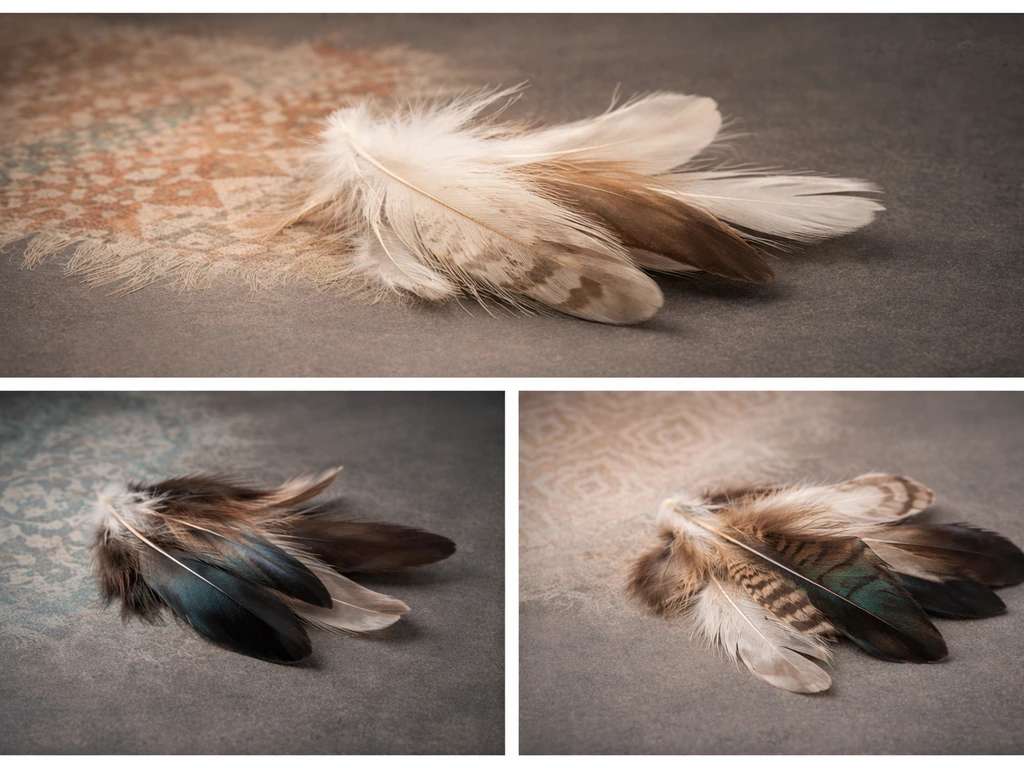
The feather as a spiritual symbol shows up in traditions across nearly every continent, though the meanings vary in important ways. It's worth respecting those differences rather than flattening them into one generic 'feathers mean good luck' idea.
- Indigenous North American traditions: Feathers are treated as sacred objects in many nations and may be associated with healing, protection, or spiritual communication. Specific meanings depend on the bird species, the feather's position, and the traditions of a particular nation or family. This is not a monolithic belief system, and it's worth approaching it with that respect.
- Celtic and European folklore: Birds were widely seen as messengers between the living world and the spirit world. A feather arriving unexpectedly was often treated as a sign that an ancestor or spirit was nearby or attempting to communicate.
- Ancient Egyptian tradition: Feathers, especially from certain birds, were connected to Ma'at, the principle of truth, balance, and divine order. The feather of Ma'at was used in the weighing of the soul after death.
- General Western metaphysical/new age tradition: A feather landing on you is frequently interpreted as a sign from a deceased loved one, a spirit guide, or the universe affirming that you're on the right path. This is especially common in modern spirituality communities.
- East Asian traditions: Birds in general carry auspicious meaning in many East Asian cultures, with cranes associated with longevity and luck, and certain birds considered harbingers of good fortune.
- Cross-cultural thread: Across many traditions, what unites feather symbolism is the idea of lightness, freedom, and the connection between the earthly and spiritual realms. A feather travels on air, the element most often associated with spirit, communication, and the divine.
No single culture owns feather symbolism, and no single interpretation is objectively correct. What matters is which framework resonates with your own lived experience and belief system.
What to notice next and how to follow through
If you want to treat this as a meaningful moment rather than just an interesting coincidence, the follow-through is where the real value is. Not in obsessing over what the feather means, but in staying open and paying attention. Rumination, turning the same thought over and over without resolution, won't get you anywhere useful. Rumination is described as excessive, repetitive thinking that interferes with other activity, and recognizing the spiral of overthinking early can help keep it from becoming harmful Rumination, turning the same thought over and over without resolution, won't get you anywhere useful.. What does help is a light, intentional kind of noticing.
Start by asking yourself: what was on my mind right before the feather landed? Was there a question you'd been sitting with, a decision you'd been putting off, a grief you'd been carrying? The timing matters in most spiritual frameworks not because the feather caused anything, but because it arrived in a specific moment of your life. That timing is the conversation.
Then watch for patterns over the next few days. Do you keep seeing the same bird? Do you notice the same theme recurring in conversations, dreams, or passing thoughts? If you're also someone who's had a dream about a bird landing on your hand, or you've been thinking about what it means when a bird lands on you specifically (not just a feather), those experiences together carry more interpretive weight than any single event alone.
Whether it’s good luck if a bird lands on you is something many people wonder, so use the natural and spiritual frameworks in this guide to decide how you want to receive it dream about a bird landing on your hand.
If you've also had a dream meaning of a bird landing on your hand, you may want to compare that symbolism with what the real-life moment is bringing up for you dream about a bird landing on your hand.
Some concrete ways to respond that work across belief systems:
- Write it down. A single journal entry, what happened, where you were, what you were thinking, and what you felt, creates a record you can look back on to spot patterns.
- Say something out loud. Whether that's a prayer, a thank-you to whatever you believe in, or just a quiet acknowledgment that you noticed: 'I see you' is enough.
- Make one small adjustment. If the feather arrived while you were stressed about a decision or a relationship, let it prompt a five-minute sit with that question. Not to force an answer, but to give yourself the space you probably already knew you needed.
- Don't force meaning if it isn't there. Sometimes a feather is just a feather. If nothing resonates, that's a valid read too. Staying curious without being anxious is the right posture.
The rare cases where you should actually worry
For the vast majority of people in the vast majority of situations, a feather landing on you is a non-event on the safety front. But here are the edge cases worth knowing.
Bird mites
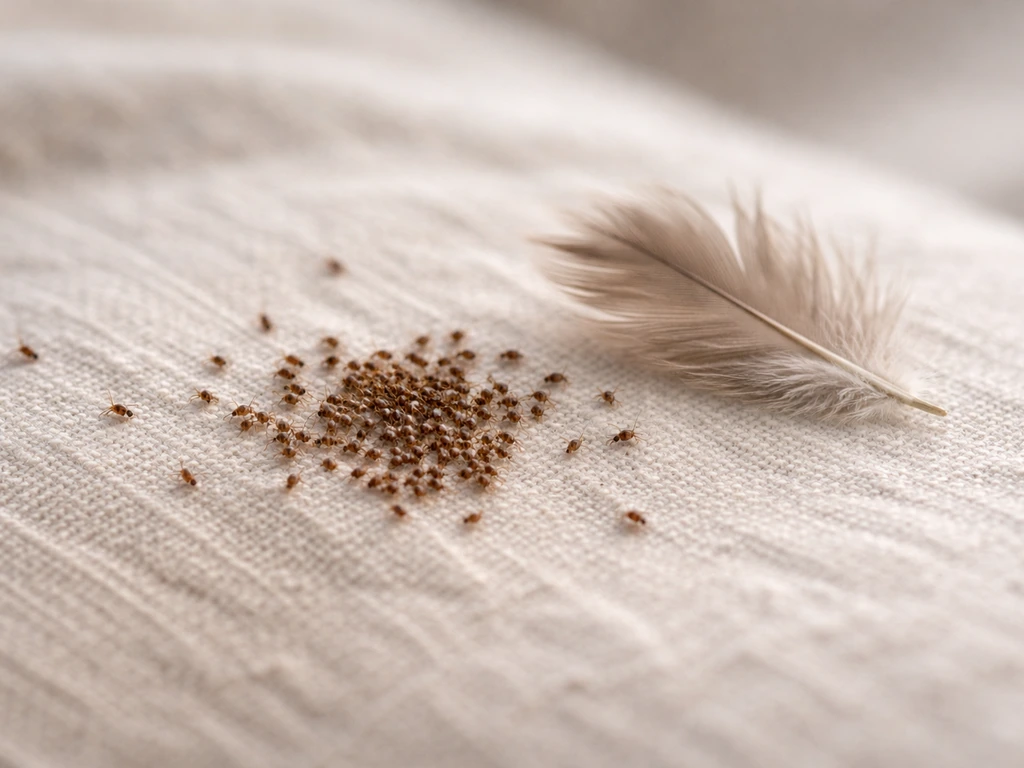
Bird mites are tiny parasites associated with poultry and wild birds. In rare situations, usually involving contact with active nests or birds in distress, mites can transfer to people and cause skin irritation or itching. The important thing to know: bird mites cannot reproduce on human blood. They don't stay. If you develop itching after handling a feather, especially one from near a nest, shower thoroughly, wash your clothes, and the issue typically resolves on its own. If irritation persists or worsens, see a doctor. A random airborne feather in a normal outdoor setting is an extremely low-risk scenario for mite contact.
Allergies
Some people are allergic to bird feathers, particularly the dander that can come with them. If you have a known bird feather allergy and one lands on your skin or clothes, wash the area, change if needed, and take any antihistamine you'd normally use. If you develop hives, swelling, or breathing difficulty, that's an allergic reaction requiring medical attention.
Eye contact

If a feather or any debris from it gets into your eye, flush gently with clean water or preservative-free eye drops. Don't rub. If the irritation doesn't clear within a few minutes, or if you have blurred vision or ongoing pain, that's a reason to seek medical care rather than wait it out.
Avian influenza concerns
If you live in or near an area with a confirmed avian influenza (bird flu) outbreak among wild or domestic birds, treat any feather contact with more caution: wash hands thoroughly, avoid touching your face, and avoid stirring up any debris around the feather. A single stray feather in a normal environment is a very low-risk item, but if you've been around a large number of sick or dead birds, or you're in a high-risk agricultural setting, follow CDC guidance for that context specifically. For most readers, this is background information rather than an active concern.
The bottom line on safety: wash your hands, don't touch your face before you do, and treat your eyes gently if anything gets in them. That's it. The moment is yours to interpret from there.
FAQ
What should I do if the feather is dirty, wet, or from an unknown source?
If it is dry and intact, you can simply brush it off, then wash your hands if you touched the feather directly. If the feather feels damp or dirty, wipe it with a damp paper towel first so you remove debris, then wash up, especially before eating or touching your eyes.
Does where the feather lands on my body change what it means?
Yes, body location can change the “story” people tell themselves, but it is still your choice. A practical approach is to ask, “What was happening in that area of my life?” For example, if it landed on your shoulder, you might reflect on support, burdens, or guidance, without treating it as a verdict about what you must do next.
Should I keep the feather as a keepsake, or let it go?
You do not need to keep it to “confirm” the meaning. If you want a symbolic follow-through, keep it only if it is clean, dry, and not causing allergies, then store it in a breathable container (like paper) and avoid touching it every day in a way that turns into anxiety.
How can I tell the difference between a meaningful prompt and an unhealthy sign-based decision?
Spiritual sign interpretations are usually meant to guide your attention, not to replace decisions. A helpful test is to treat the feather as a prompt to clarify your values, then make the decision using your usual process (facts, counsel, prayer or reflection) rather than making it solely based on the timing.
What if I keep seeing feathers or related bird moments repeatedly, is that a sign?
If you repeatedly have a similar moment, focus on themes rather than one-off details. For example, if feathers keep appearing when you are worried, the repeated signal might be “pause and regain grounding.” If you ever find yourself spiraling or checking constantly, scale back and return to one intentional reflection per day.
What does it usually mean if a feather lands on me indoors?
Yes. If a feather lands indoors, the most common explanation is an entry point (open door, window, vent) or a window strike event outside. Spiritually, people often treat indoor landings as “more noticeable” simply because they are less expected, so consider whether your attention has been pulled toward home, rest, or private matters.
Does a broken or worn feather change the interpretation?
Many traditions consider the condition relevant. A quick practical note is that if the feather is broken, it might still be harmless, but symbolically you can interpret “incomplete” as a nudge to repair, renew, or revisit something unfinished rather than expecting a perfect, guaranteed outcome.
What if I have bird or feather allergies?
If you have a known allergy to birds or bird products, treat contact like any other allergen exposure: remove the feather promptly, wash skin, change clothing if needed, and use the medication you normally rely on. If you have breathing symptoms or swelling, seek urgent care rather than waiting to see how it “passes.”
What should I do if a feather or debris gets into my eye?
If the feather gets in your eye, flush gently with clean water or preservative-free drops, and do not rub. If symptoms persist beyond a few minutes, if vision is blurry, or if pain continues, get medical attention rather than attributing it to “just irritation.”
How can I integrate this idea with a Christian faith without veering into superstition?
Avoid treating it like fortune-telling. If you are Christian, a safe framing is gratitude and prayer-inspired reflection rather than asking the feather to function as a decision mechanism. If the feather urges you toward trust, humility, and discernment, that sits more comfortably than using it to replace prayer, counsel, or responsible action.