A bird attacking you is startling, sometimes painful, and almost always confusing. Your first instinct might be to wonder what it means, spiritually, symbolically, or practically. The honest answer is: it usually means a bird feels threatened, is protecting something it loves, and has decided you are the problem. That's the starting point. From there, you can layer in the symbolic and spiritual interpretations that have followed these encounters across cultures for centuries. But let's handle the immediate stuff first, because the meaning of the moment matters a lot less if you're standing there bleeding.
What Does It Mean When a Bird Attacks You and What to Do

Maya Hartwell
17 Apr 2026
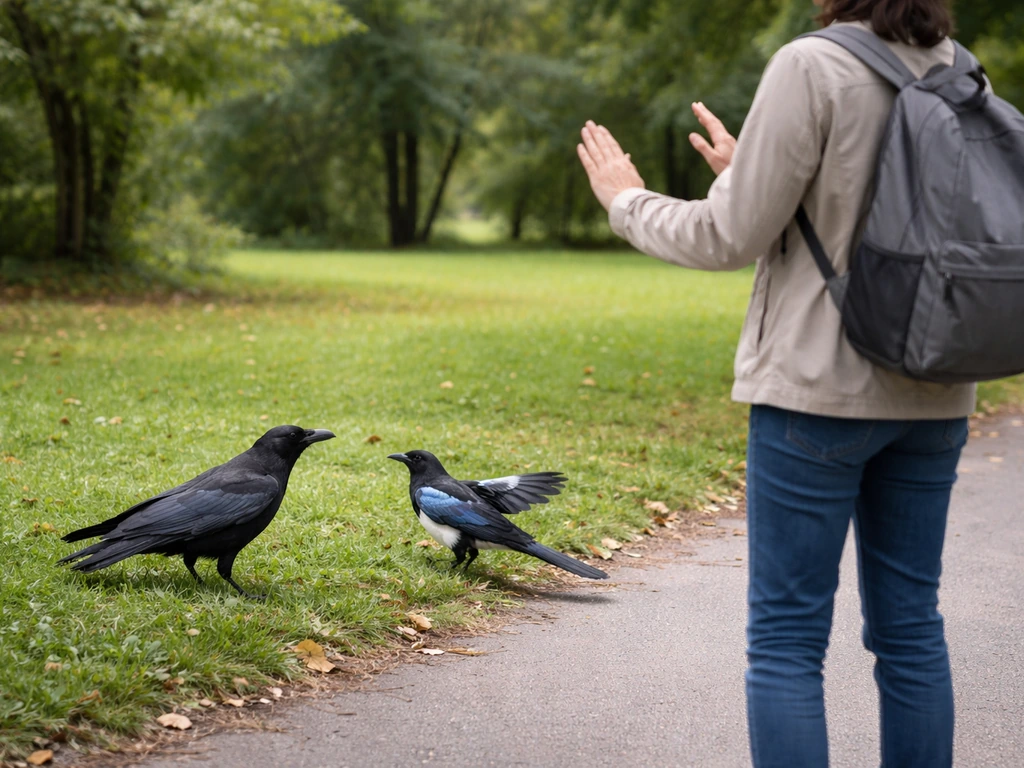
What to do in the first few minutes after a bird attacks you

If a bird has scratched or broken your skin, move away from the area calmly. Running or swatting tends to escalate the attack, so back away steadily without turning it into a chase. Once you're clear, your priority is wound care, and it matters more than most people realize.
Wash any scratch or bite wound immediately. The WHO recommends flushing and washing for approximately 15 minutes with soap and copious water. The CDC's 2025 post-exposure prophylaxis guidance confirms that thorough wound cleansing with soap and water is the first step before any other medical intervention is considered. For bird encounters specifically, this isn't just about infection from the bird itself, it's about removing any saliva or body fluid from broken skin. If you got pecked near your face, eyes, nose, or mouth, that matters too: the CDC notes that rabies transmission can occur through mucous membrane contact with saliva or secretions, not just through a visible puncture wound.
After washing, apply pressure if there's active bleeding. Johns Hopkins guidance advises at least 5 minutes of pressure on the wound under running water, and if bleeding doesn't stop after 15 minutes of sustained pressure, call a healthcare provider. Cover the wound with a clean bandage and assess whether you need to go further.
- Back away from the bird steadily — don't run or swing at it
- Wash the wound thoroughly with soap and water for at least 15 minutes
- Apply pressure if bleeding; cover with a clean bandage
- Check your face, eyes, and mouth area for any contact with the bird's fluids
- Note the species, location, and behavior so you can describe it if needed
- Decide whether medical attention is necessary (see the aftercare section below)
Why birds actually attack people (the natural reasons)
Birds don't attack randomly. Almost every attack has a clear, logical reason from the bird's perspective, and once you understand what's driving the behavior, it becomes a lot less mysterious, and a lot easier to prevent next time.
Nesting and protecting young
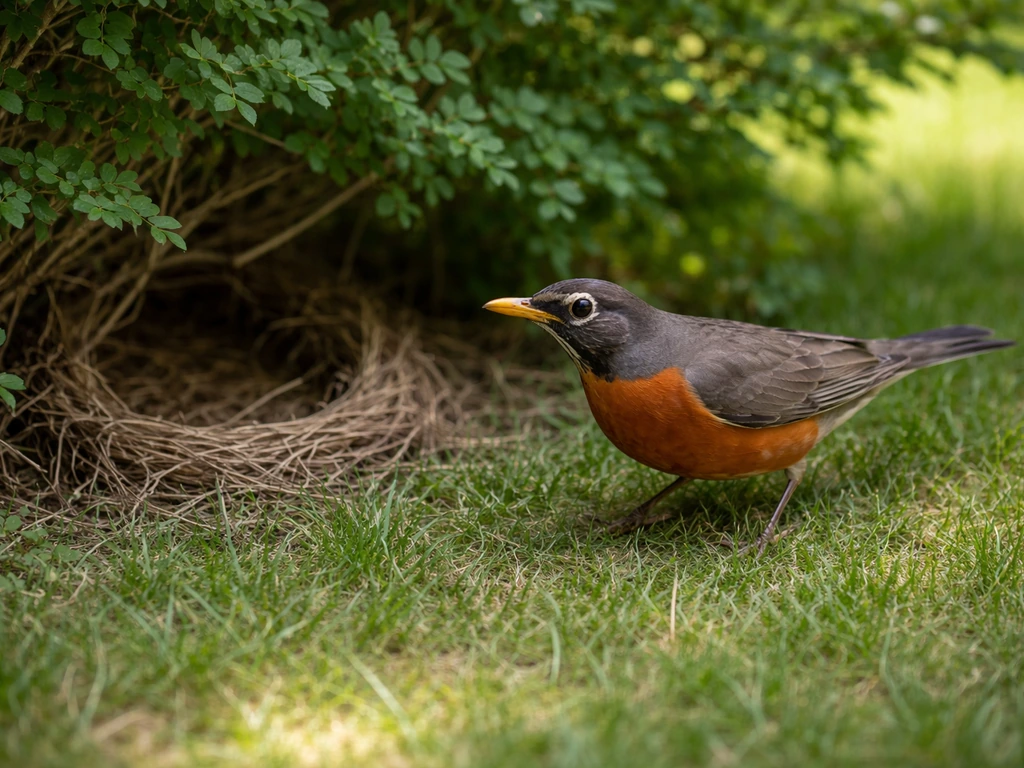
This is the single most common cause of bird attacks on humans. Many species, mockingbirds, red-winged blackbirds, crows, magpies, and the notoriously aggressive Australian magpie, will actively dive-bomb or strike anyone who comes within a certain radius of an active nest. Nesting season in the Northern Hemisphere typically runs from March through July, which is exactly when bird attack reports spike. If you were attacked near a tree, bush, building ledge, or rooftop in spring or early summer, there is almost certainly a nest nearby.
Territory defense
Outside of nesting season, territorial behavior still drives a lot of attacks. Some birds maintain feeding territories or roosting areas and will strike at perceived intruders. Male birds during breeding season are particularly aggressive, with elevated testosterone making them more reactive. This is why you might be attacked repeatedly in the same spot, the bird has mentally mapped that space as its own.
Mistaken identity and habituation
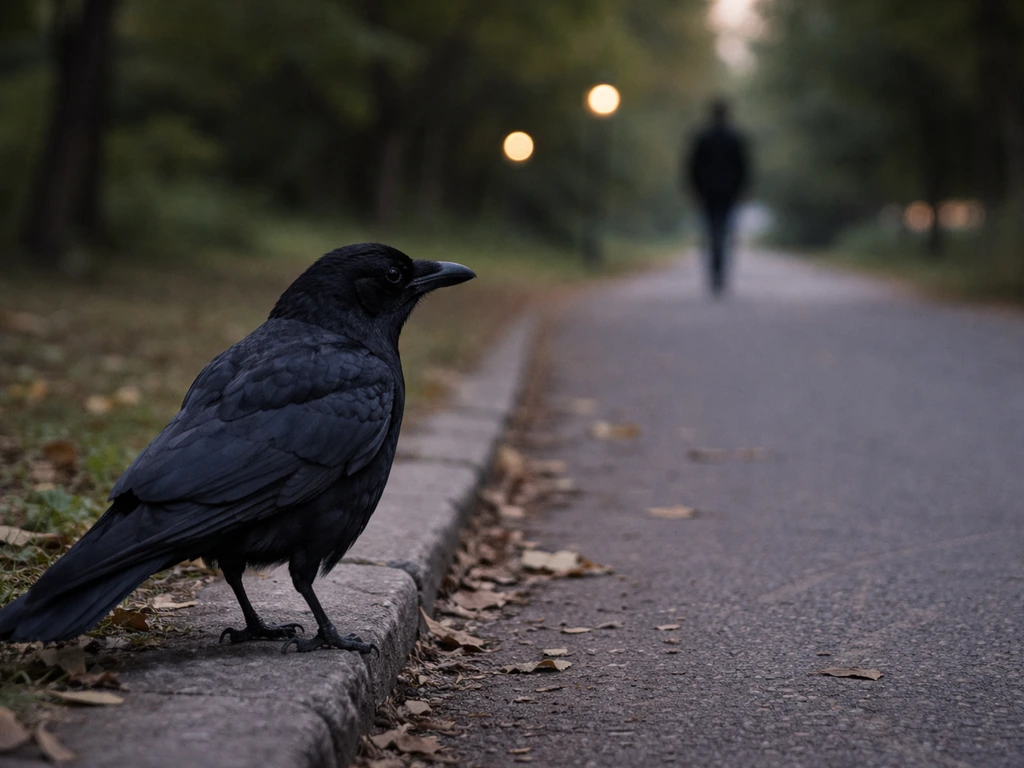
Crows and ravens are known to recognize individual human faces and remember threats across years. If a crow was previously disturbed by someone with similar features, clothing color, or a hat, it may redirect that aggression toward you. Some birds also associate humans with food and become bold to the point of snatching or striking. The CDC's Yellow Book notes that any animal, including birds, can bite or scratch if it feels threatened, is protecting young, defending territory, or competing for food.
Reading the encounter: what species, setting, and behavior tell you
Not all bird attacks carry the same weight, practically or symbolically. The species involved, where you were, and how the bird behaved all give you useful context for understanding what actually happened, and what to take from it.
| Species | Most Likely Reason for Attack | Spiritual/Symbolic Association |
|---|---|---|
| Red-winged blackbird | Nesting defense (very common, very predictable) | Protection of boundaries, fierce maternal energy |
| Mockingbird | Nest or territory defense | Mimicry and messages; pay attention to your own voice |
| Crow or raven | Remembered threat or territorial claim | Prophecy, transformation, intelligence, death/rebirth |
| Hawk or falcon | Perceived threat to nest or accidental fly-through | Vision, power, urgent spiritual messages |
| Owl (rare) | Nest defense if too close at night | Death omens, transitions, hidden wisdom |
| Seagull | Food competition, bold habituation to humans | Freedom, resourcefulness, boundary-setting |
Where you were matters just as much as the species. An attack in a park during spring almost always points to nesting. An attack in an open area away from obvious nesting sites, especially involving a species like a hawk or owl, is rarer and more likely to feel significant, practically and symbolically. The behavior pattern also helps: dive-bombing with noise is territorial defense; a quiet, deliberate approach is more unusual and worth paying attention to regardless of your interpretive lens.
If you're someone who pays attention to bird encounters in general, you already know that context shapes everything. what it means when a bird stares at you is a very different kind of encounter than a physical strike, one is an invitation to reflect, the other demands an immediate response.
The spiritual and symbolic meanings people find in bird attacks
Across cultures and centuries, being physically confronted by a bird has rarely been considered neutral. These encounters tend to carry weight in folklore, spiritual traditions, and personal spiritual practice, and the interpretations, while varied, share a few recurring themes: a message is being delivered, a boundary is being enforced, or a shift is coming that you need to pay attention to.
In many metaphysical and New Age frameworks, a bird attack is read as a jolt to awareness. The idea is that the universe sometimes needs to be loud to get your attention, and a bird diving at your head is pretty loud. The interpretation isn't that you're cursed or in danger, it's more like a signal to stop sleepwalking through something in your life. What were you thinking about before it happened? Where were you going? Those questions matter in this framework.
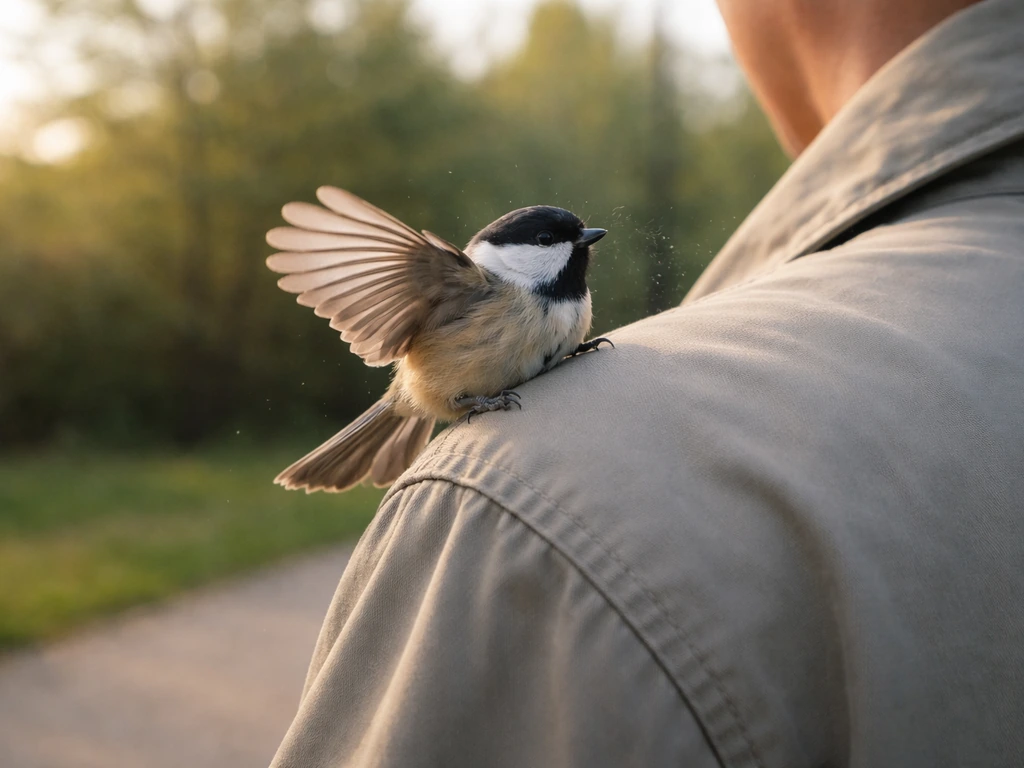
Shamanic and indigenous traditions from various parts of the world treat birds as messengers between worlds. A bird that makes contact with a human, especially unexpectedly or forcefully, may be understood as a spirit messenger demanding acknowledgment. This is distinct from a bird that gently approaches you: when a bird lands on you, many traditions read that as a gentle blessing or affirmation. A strike carries more urgency in these interpretations.
Celtic traditions placed enormous significance on birds, particularly crows, ravens, and hawks, as omens. A crow attacking you in Celtic-influenced folklore could signal that the Morrigan, a goddess of fate, war, and transformation, was drawing your attention to a crossroads or coming change. It wasn't considered a punishment; it was considered a heads-up. Ravens specifically were seen as messengers carrying news from the spirit realm, and an aggressive encounter was taken seriously but not with fear.
In many Eastern traditions, birds represent the soul, freedom, and the link between the earthly and divine. An aggressive bird encounter is sometimes interpreted as a sign that something in your current path is misaligned, that you're moving in a direction that is drawing resistance, either from your own higher self or from forces beyond the ordinary. It's worth noting that a bird flying directly into your path (including into your body) is often similarly interpreted: what it means when a bird flies into you carries overlapping themes of disruption, redirection, and forced awareness.
In grounded personal spiritual practice, the most useful question after a bird attack is not "what bad thing is about to happen" but rather: "what am I being asked to wake up to?" That reframe shifts the experience from omen-as-threat to omen-as-invitation, which is how most healthy spiritual traditions actually use these encounters.
Biblical and cultural views on birds behaving aggressively toward people
The Bible doesn't specifically address bird attacks, but birds appear throughout scripture as messengers, symbols of divine provision, and occasionally harbingers of judgment. In Genesis, a raven is the first bird sent out from the ark. In Revelation, birds are called to gather for the great supper of God, a striking, if unsettling, image of birds as agents of cosmic order. Proverbs 27:8 compares a man wandering from home to a bird that strays from its nest, suggesting that displacement and disturbance have meaning.
In the broader Abrahamic tradition, animals that behave unusually have sometimes been interpreted as divine warnings or calls to attention, not as supernatural attacks, but as nudges toward prayer, reflection, or a change in direction. A bird attacking you might be read through this lens as a moment to stop, pray, and ask whether you're where you should be.
In African and Afro-Caribbean spiritual traditions, birds, particularly blackbirds and owls, are often associated with ancestors and spirit communication. An aggressive encounter might signal that an ancestor is trying urgently to reach you or warn you. The appropriate response in many of these traditions is not fear but acknowledgment: speaking to the bird, offering a word of recognition, and later seeking guidance through prayer or divination.
In Norse mythology, Odin's ravens Huginn and Muninn (thought and memory) fly across the world gathering information. An aggressive raven in Norse-influenced folk belief was sometimes seen as Odin himself delivering an unwelcome but necessary truth. The attack, in that context, was a form of respect, you were considered important enough to receive direct communication.
Across these traditions, there's a consistent thread: the bird's behavior is meaningful, not malicious. The response they recommend is awareness and reflection, not alarm. That's a useful framework regardless of your personal belief system.
How to reduce the chances of it happening again
If you were attacked once in a specific location, there is a very good chance it will happen again if you pass through the same area under the same conditions. Birds, especially crows and mockingbirds, have excellent spatial memory and will continue to defend an area for weeks while nesting is active. Here's how to approach the situation practically.
- Avoid the area during peak nesting season (March through July in the Northern Hemisphere) if you know an aggressive bird is there
- Wear a hat or carry an open umbrella — birds typically target the highest point of a person, so covering your head reduces impact risk significantly
- Don't stare directly at the bird; prolonged eye contact can be read as a challenge or threat
- Don't make sudden movements or try to shoo the bird; calm, steady retreat works better than any aggressive response
- If it's a crow or raven, consider wearing a different hat or changing your route — they genuinely remember faces and clothing
- Never disturb a nest intentionally; if you've found one in an inconvenient place (a porch, a doorway), contact a local wildlife rehabilitator for humane options rather than trying to move it yourself
If the attacks are happening repeatedly and you can't simply avoid the area, some people have had success with wearing sunglasses on the back of their hat, which can confuse a bird that relies on eye contact as a targeting cue. It sounds odd, but there's real behavioral research behind it. The goal is always de-escalation, for both your safety and the bird's.
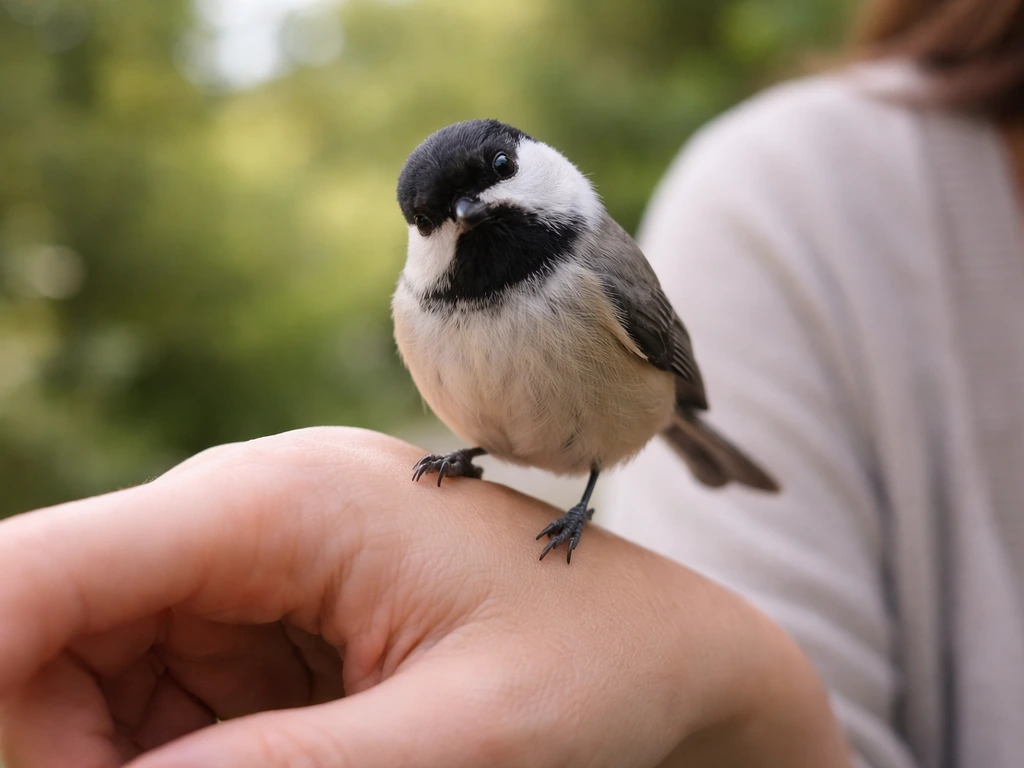
Interestingly, not all close bird encounters are about conflict. when a bird sits on you or stays near you calmly, that's an entirely different energy, one that most traditions read as peaceful contact rather than warning. If you've experienced both kinds of encounters, the contrast itself can be informative, both practically and symbolically.
Aftercare: injuries, when to get help, and how to process the experience
Deciding whether you need medical attention

Most bird scratches and pecks are minor, but the decision to seek medical care should be based on the wound's depth and location, not just how it looks immediately after. Mayo Clinic advises seeking prompt medical care if a wound is a deep puncture, if you're unsure of the severity, or if the wound is on the face or near a joint. If the wound is on your scalp, which is a common target, given that birds aim for the highest point, it can bleed significantly even when shallow. That can look alarming without being dangerous, but it still warrants cleaning and evaluation.
For head-level attacks specifically, the dynamics of the encounter and the physical risks that follow are worth understanding in detail: what it means when a bird attacks your head covers both the natural and symbolic dimensions of that particular experience.
Tetanus is a real consideration with bird encounters. The CDC's clinical guidance on wound management specifies that penetrating or puncture wounds are tetanus-prone. Mayo Clinic recommends checking whether you've had a tetanus booster in the past 5 years for any deep or dirty wound. If you haven't, a booster is worth getting in the days following the attack.
Rabies from birds is extremely rare, birds are not considered significant rabies reservoirs, but if the attacking bird appeared sick or behaved very unusually (not just defensive), mention that to a doctor. The CDC also notes that if you are in an area with known avian flu (H5N1) activity and had close contact with a wild bird, inform public health authorities. This is an edge case, but it's worth flagging if relevant.
Processing the meaning of the encounter
Once the practical side is handled, the symbolic side has room to breathe. If you're someone who finds meaning in these moments, here are a few grounded ways to reflect on a bird attack without escalating it into fear or obsession.
- Journal immediately after the experience: write down what you were thinking about, where you were going, and what the bird looked like — context matters a lot in personal spiritual interpretation
- Note the species and look up its symbolic associations across multiple cultural traditions rather than settling on the first dramatic interpretation you find
- Sit with the question: 'What in my life right now might need my undivided attention?' rather than 'What bad thing is coming?'
- If prayer or meditation is part of your practice, bring the encounter into that space and ask for clarity, not protection from a threat that may not exist
- Talk to someone else who takes spiritual symbolism seriously — sometimes another perspective grounds what feels overwhelming in the moment
- Give it a few days before drawing conclusions; sometimes the meaning of a striking encounter becomes clearer once the adrenaline fades
A bird attack is one of the more physically confrontational encounters you can have with wildlife. It's jarring in a way that other bird interactions simply aren't. But across most traditions and practical frameworks, the bird wasn't out to harm you, it was communicating something urgent, whether that was 'stay away from my nest' or (if you're open to it) something larger. The question worth sitting with is: what were you ready to hear?
FAQ
What should I do immediately if a bird attacks my face or near my eyes?
Back away calmly, protect your eyes with your hands or a hat brim while moving out of range, then rinse any exposed area right away. If there is a scratch to the eyelid, eye itself, or skin around the eye, get same-day medical evaluation, since punctures near the eye can need special cleaning and assessment beyond standard wound care.
Is it ever safe to try to scare the bird away after it attacks me?
Use space instead of confrontation. If you swat, run suddenly, or keep trying to shoo it at close distance, many birds interpret that as a threat and escalate. The more effective approach is to increase distance on a steady retreat and avoid lingering where it has an obvious target cue like a nest or hiding spot.
How do I know if I need stitches or urgent care after a bird peck?
Seek urgent care if the wound is deep, gaping, will not stay closed, is over a joint, or you can see tissue underneath. Also go promptly if bleeding soaks through the first bandage or if the area becomes increasingly painful, red, hot, or swollen over the next 24 to 48 hours.
Do I need rabies shots after a bird attack?
For most people, rabies risk from birds is extremely low, and birds are not considered major rabies reservoirs. Still, if the bird looked clearly ill or behaved in an unusual way, tell a clinician promptly so they can decide whether any medical steps are needed based on the specific exposure and local guidance.
Should I keep the bandage on, and when should I change it?
Keep it clean and dry at first, then change it daily or whenever it gets wet or dirty. Each time you remove it, rinse gently with clean water or follow clinician instructions, and watch for signs of infection such as spreading redness or increasing tenderness.
What tetanus timing should I use if I do not remember my last booster date?
If you are unsure whether you had a tetanus booster in the last 5 years, treat it as if you are due. Contact a healthcare provider promptly after the injury, since puncture-type wounds are the kind that often benefit from a booster decision in the days following the event.
What if the bird attack left only a tiny scratch, but it bled a little?
Tiny scratches still require thorough washing with soap and copious running water. Also assess location, since even small wounds near the face, scalp, or a joint can bleed more and may need a clinician to confirm there is no deeper puncture or contamination.
Can bird attacks happen outside nesting season?
Yes. Territorial defense, protecting a perch, defending a roost, or competing for food can trigger attacks year-round. If you are targeted repeatedly in the same spot outside typical nesting months, assume it is defending a consistent resource rather than a one-time nest event.
How can I prevent repeat attacks in the same area?
Avoid the exact approach path and give extra buffer distance, especially near trees, ledges, and bushes where nests are likely. If the bird targets you consistently, vary your route and timing when possible, since birds can maintain site-specific memory and keep defending the same radius for weeks.
What should I do if I accidentally feed birds and they start targeting me?
Stop feeding and remove the attractant as soon as you can, since associating you with food can make birds bolder and more aggressive. Until the behavior changes, keep a wider distance around areas where people regularly feed birds, like near cafés or parks with bird feeders.
What if the bird was sick, too tame, or acted erratically before attacking?
Treat the situation as higher priority for reporting and medical advice. After you get safe, note the bird’s appearance and behavior, and mention it to a clinician. In some cases it may also be appropriate to report to local animal control or public health, especially if there are broader wildlife illness concerns.