When a black bird shows up near you, lingers, or seems to follow you down the street, your first instinct is probably to wonder what it means. The short answer: it can mean different things depending on the bird's behavior, the cultural lens you bring, and what's happening in your life right now. A black bird visiting you is one of the most symbolically loaded encounters in folklore, spirituality, and omens traditions worldwide, but it's also one of the most misread. This guide walks you through how to interpret what happened, what questions to ask yourself, and what to actually do next.
What Does It Mean When a Black Bird Visits or Follows You

Maya Hartwell
11 Apr 2026
Is it a visit, or is it following you? The difference matters
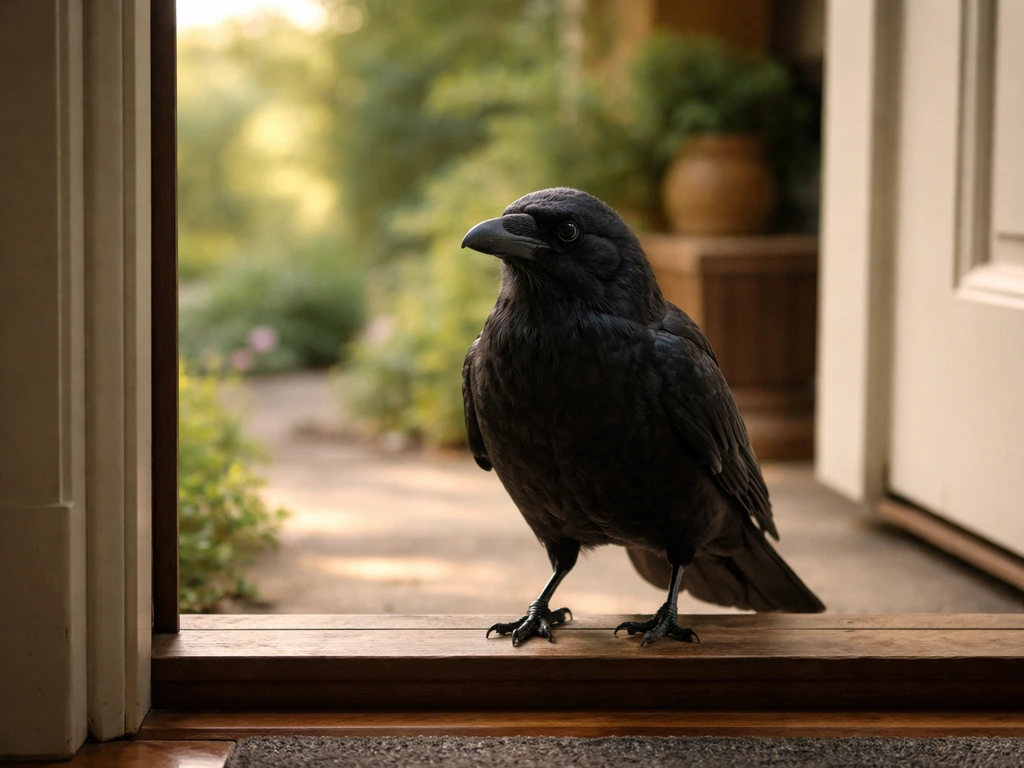
A "visit" and being "followed" aren't the same experience, and the distinction shapes how you interpret the encounter. A visit is when a black bird appears near you, maybe perches on a fence, watches you for a moment, and then goes about its day. It's brief, contained, and feels like a passing moment of contact. Following is something else: the bird moves as you move, reappears across locations, or seems to track you with intention over time.
From a symbolic standpoint, following can be read as an intensified version of visitation. If a single visit is like receiving a letter, being followed is like getting a phone call you can't ignore. Many spiritual traditions treat persistence as a signal that the message is urgent or that you haven't fully received it yet. That said, as you'll see in the natural explanations section, following behavior also has some very grounded, non-mystical causes. The key is learning to read the full picture before landing on one interpretation.
What to notice during the encounter
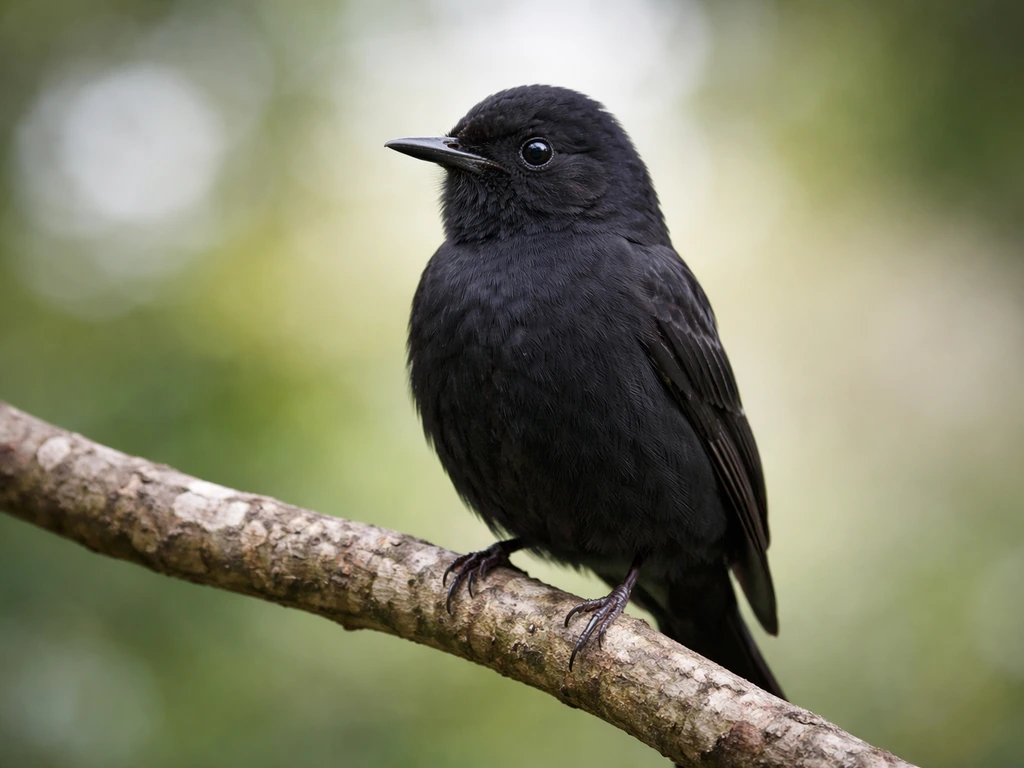
Before jumping to meaning, slow down and take stock of the details. The specifics of the encounter are what shift a general symbol into a personal message, or rule out the symbolic entirely. Here's what to pay attention to:
- Behavior: Was the bird calm and observant, or was it vocalizing loudly, dive-bombing, or aggressively circling? Calm watching carries a very different energy than aggressive mobbing.
- Distance: Did it land close to you, or watch from a tree line? Proximity often intensifies the symbolic reading.
- Duration: A quick perch and departure feels like a passing sign. A bird that follows you across a parking lot or returns repeatedly over several days is harder to dismiss.
- Time of day: Morning encounters in many traditions are considered positive or forward-looking, while dusk appearances are often linked to transition and endings.
- Season: It's mid-April 2026 right now, which puts you squarely in prime nesting season for many North American blackbird species. Territorial aggression spikes at this time of year.
- Your own state of mind: Were you in the middle of a difficult decision, grieving, or experiencing a shift? Personal context colors how a symbol lands.
- Repetition: Has this happened once or multiple times? Recurring encounters across different locations tend to carry more weight in omen-reading traditions.
If you're curious about how the same logic applies when a bird visits your home specifically, the behavior cues change slightly because the home environment carries its own set of symbolic associations across cultures.
What black birds symbolize spiritually and in omens traditions
Black birds, particularly ravens, crows, and grackles, sit at one of the most contested intersections in bird symbolism. They're simultaneously feared and revered, treated as death omens in one tradition and wise messengers in another. Understanding that range is actually the most useful thing you can take from this section.
The death and transformation themes
In many Western traditions, a raven or crow's all-black plumage and carrion-feeding habits historically linked them to death and the underworld. This isn't necessarily about literal death. In metaphysical and omen-reading frameworks, "death" symbolism more often points to endings that make room for something new: a relationship changing, a chapter closing, an identity you're outgrowing. The bird's appearance doesn't predict a death so much as it mirrors a transition that's already underway.
Intelligence, change, and the trickster
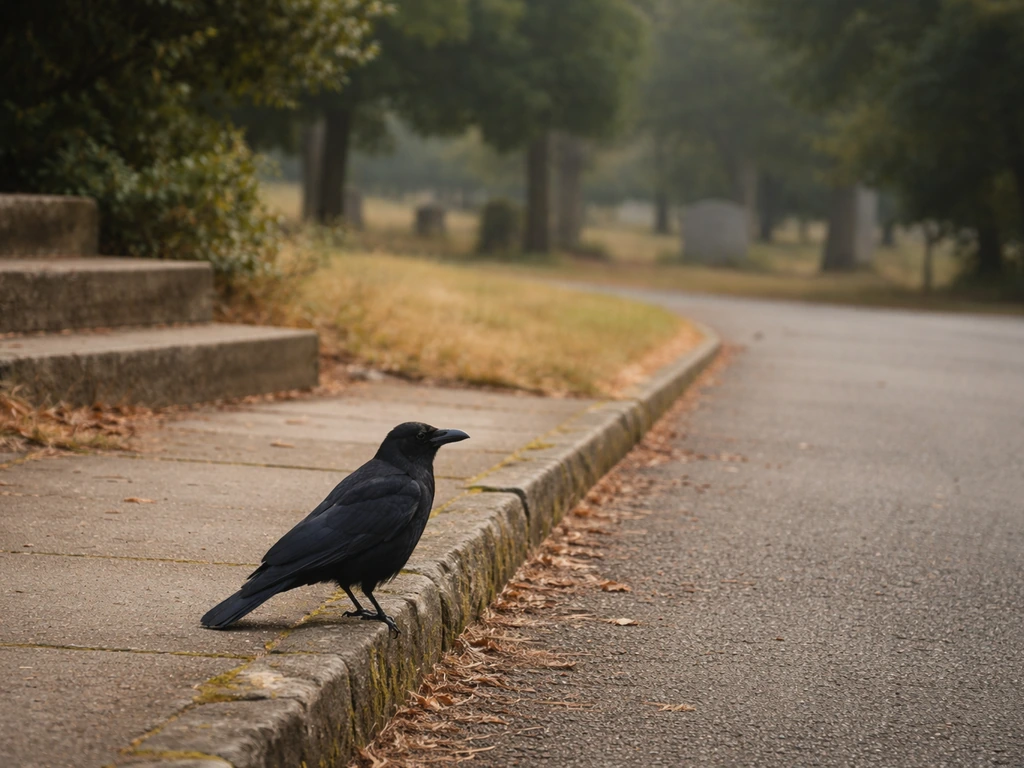
A recurring theme in modern crow symbolism is adaptability and sharp intelligence, often framed as "trickster" energy. Crows are genuinely among the most cognitively sophisticated birds on the planet, capable of using tools and social learning. In symbolic terms, a crow visit is often interpreted as a nudge to think more flexibly, to adapt, or to look at a situation from an unexpected angle. The message here isn't doom; it's "wake up and pay attention."
Omens reading: what the ancient traditions actually said
Ornithomancy, the ancient practice of reading omens from bird behavior, was practiced formally in Greek and Roman cultures, where bird direction, flight patterns, and species all factored into the interpretation. The key insight from that tradition, which is still useful today, is that the bird's action matters as much as the species. A raven flying to your right meant something different than one flying to your left. A bird that lands calmly carries a different omen than one circling overhead. Applying that nuance to your encounter is more useful than relying on a single "black bird equals bad news" headline.
Biblical and faith-based interpretations
If you're coming to this question from a Christian or broadly faith-based framework, the biblical record on ravens is more complex, and more positive, than most people expect. Ravens in the Bible are consistently used as instruments of provision rather than warning. In 1 Kings 17:4–6, God commands ravens to bring food to the prophet Elijah while he's hiding in the wilderness. It's one of the most direct examples in the Old Testament of a wild animal being used as an agent of divine care.
Noah's raven appears earlier in Genesis, sent out from the ark to search for dry land. Christian and Jewish commentators have long interpreted that mission as purposeful, part of a larger plan rather than a random or ominous event. Many contemporary Bible-study frameworks explicitly frame ravens as a symbol of God's providence: unexpected, sometimes uncomfortable-looking messengers that carry something you actually need.
For faith-based readers, a black bird encounter may feel less like an omen and more like a prompt: is there something being provided for you right now that you haven't noticed? Is there an unexpected source of support, comfort, or direction you've been overlooking? That's a very different question than "is something bad coming?"
What folklore and cultural traditions say
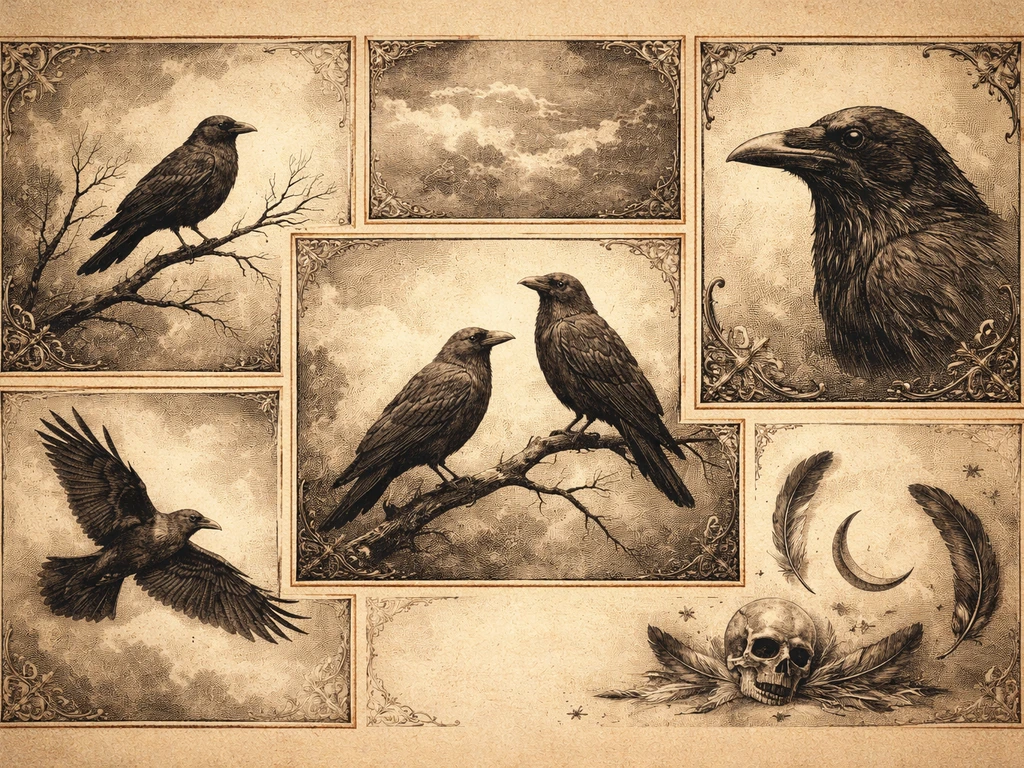
Across folklore traditions, black birds land on nearly every point of the symbolic spectrum, which tells you something important: the meaning is never universal. It's always context-dependent.
| Tradition / Region | Black Bird Symbolism | General Tone |
|---|---|---|
| British folklore | Large black birds (crows, ravens) as "evil" counterparts to "good" white birds | Cautionary / ill omen |
| Norse mythology | Ravens as companions of Odin, representing wisdom and cosmic knowledge | Powerful / sacred |
| Swedish folklore | Ravens linked to ghosts of murdered people | Unsettling / cautionary |
| German folklore | Ravens as damned souls | Dark / warning |
| Persian / Arabian traditions | Ravens reported as bad omen in some accounts | Ill omen |
| Celtic / Druidic traditions | Ravens and crows as watchers between worlds, carrying messages from the otherworld | Liminal / meaningful |
| Indigenous North American traditions (varied) | Raven as a trickster-creator figure, bringer of light and change | Transformative / sacred |
| Modern metaphysical / witchcraft | Crow/raven as symbol of intelligence, shadow work, and transition | Reflective / empowering |
What's striking is that even within cultures that treat black birds as ill omens, the underlying concern is often about transition or hidden truth rather than pure bad luck. The bird is a watcher between worlds, a carrier of messages that live in the uncomfortable in-between spaces of life. Compare this to how a white bird visit is almost universally read across traditions: peace, purity, good news. Black and white birds often work as symbolic opposites, but that doesn't make black birds purely negative.
If you're interested in how dramatically a bird's color can shift its symbolic meaning, it's worth reading about what it means when a yellow bird visits you as a point of contrast. Yellow carries almost universally uplifting, joyful energy across traditions, which makes the comparison illuminating.
Natural and practical explanations: when the bird is just being a bird
Here's something worth sitting with: a black bird visit can carry genuine symbolic weight and have a straightforward natural explanation at the same time. These aren't mutually exclusive. Understanding the natural side helps you read the spiritual side more accurately, not less.
Territory and nesting season
If you're reading this in mid-April 2026, timing is a major factor. Crow nesting season begins as early as February in warmer U.S. states and runs into April and beyond in northern regions. Red-winged blackbird nesting peaks from late April through July. During these windows, territorial behavior spikes dramatically. A crow that seems to be following you may actually be monitoring you as a potential threat to a nearby nest. Red-winged blackbirds in particular are well-documented dive-bombers during nesting season, and their behavior can feel startlingly targeted and personal even though it's entirely about the nest behind you.
Following behavior and food associations
Crows are also remarkably good at tracking people who have fed them, even once. Research on corvid foraging behavior supports what's called the "information centre hypothesis": crows learn from each other about who carries food and where profitable patches are. If a crow seems to be following you, it may simply have learned, or heard from other crows, that you're a walking food source. This is learned social behavior, not mystical tracking.
Habitat and human environments
American crows naturally frequent yards, parks, cemeteries, and other human-created spaces because these areas consistently offer food. If a crow keeps showing up in your yard, there's a good chance your yard has something attractive to it, whether that's a bird feeder, fallen fruit, open garbage, or nearby water. This is habitat use, not a visitation in the spiritual sense.
When to actually worry
Most black bird encounters are benign, but here are the situations that warrant practical action rather than just reflection. If a bird is repeatedly dive-bombing you or others in a specific outdoor area, there's likely an active nest nearby. The safest response is to simply avoid that zone until nesting season passes. Don't try to handle the bird, and don't feed it in an attempt to calm it down.
Animals that become accustomed to human interaction can lose their natural fear and escalate aggression over time. If you find a grounded black bird that allows you to approach it closely, something may be wrong with the bird, and getting close increases your risk of bites and exposure to disease. Observe from a distance and contact your local wildlife rehabilitator if it appears injured. Pets should be kept away from any wild bird encounter.
How black birds compare to other bird visitors
It helps to place the black bird visit in context alongside other commonly reported bird encounters. Color and species both do significant symbolic work across traditions.
| Bird Color / Type | Common Symbolic Theme | Faith-Based Read | Natural Behavior Note |
|---|---|---|---|
| Black (crow, raven) | Transition, death/rebirth, intelligence, hidden truth | Providence, purposeful messenger | Territorial, scavenger, highly social learner |
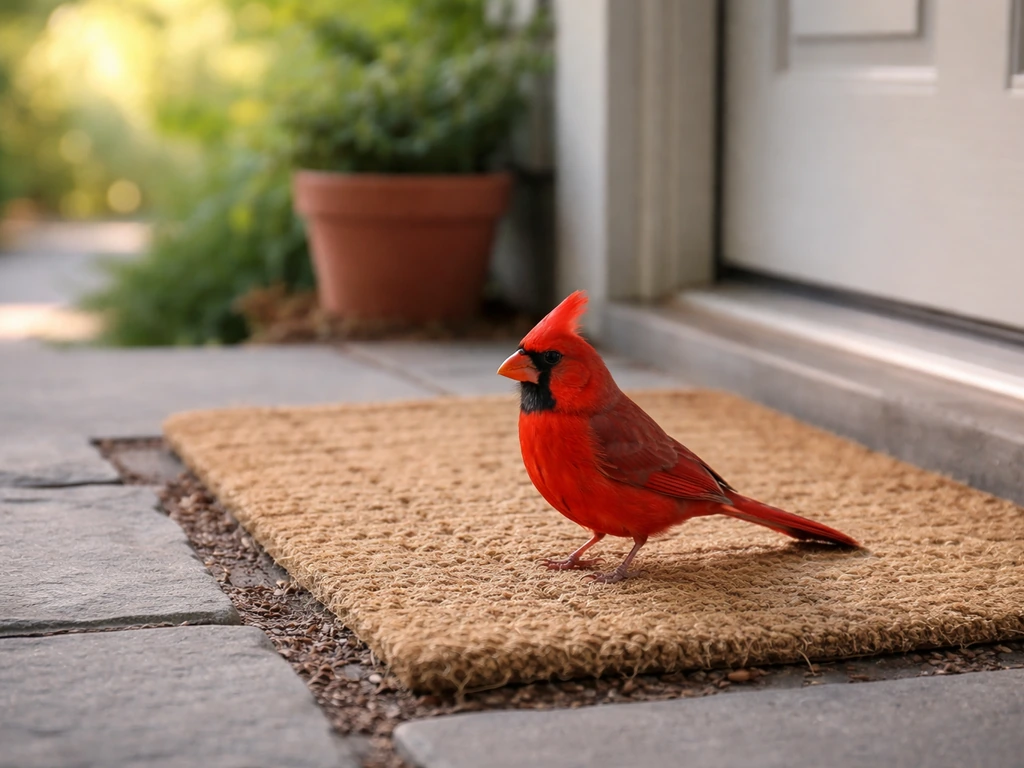
| Red (cardinal) | Love, passion, spiritual presence of the deceased | Divine messenger, hope | Highly territorial males in spring |
| White (dove, egret) | Peace, purity, good news, spiritual protection | Holy Spirit, divine blessing | Often associated with water or open space |
| Yellow (finch, warbler) | Joy, creativity, optimism, new beginnings | Light and blessing | Often appears during migration windows |
| Red (general red birds) | Vitality, courage, grounding energy | Alertness, divine attention | Breeding plumage males most visible in spring |
If you've also had encounters with red-colored birds, the symbolic overlap and contrast are worth exploring. Many people find the question of what it means when a red bird visits you sits right alongside the black bird question, especially when both happen in the same period. Similarly, what it means when a cardinal visits you carries one of the most specific and emotionally resonant sets of associations in North American bird symbolism, particularly for people processing grief.
And if the same black bird seems to be showing up day after day, that persistence shifts the interpretation entirely. The question of what it means when a bird visits you every day is worth reading alongside this one, because repetition across days is treated very differently than a single encounter in almost every tradition.
What to do after a black bird visit
You've observed the encounter. You've considered the natural explanations. Now what? Here's a simple process that works whether you're approaching this spiritually, practically, or both.
Immediate practical steps
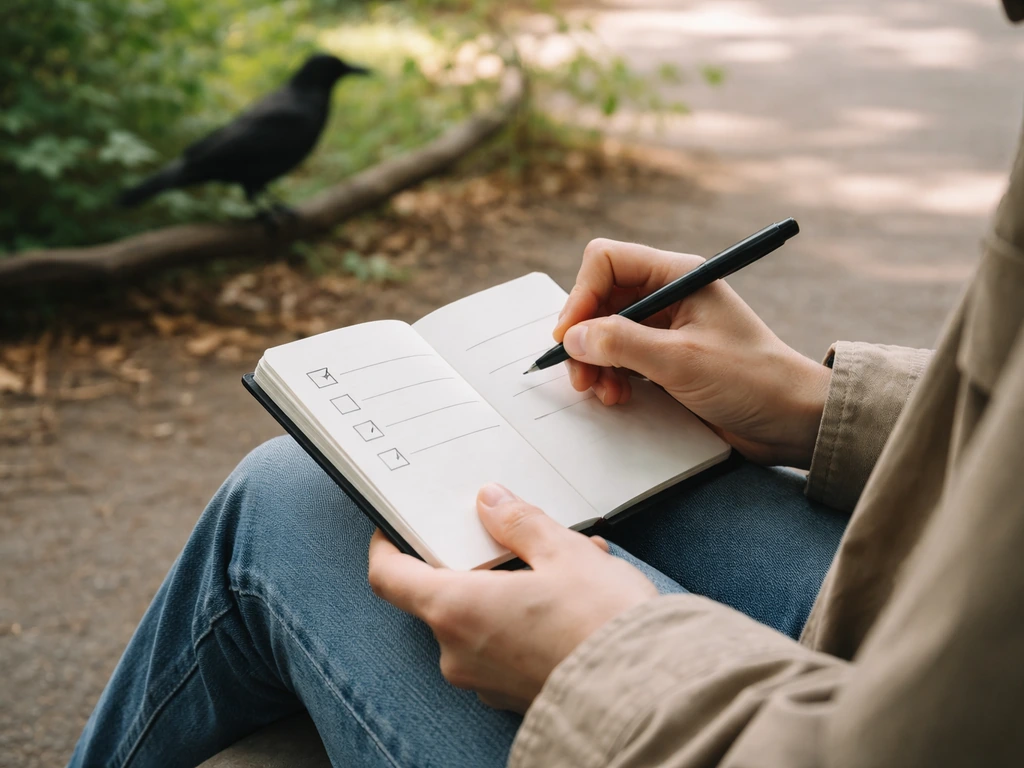
- Note the details while they're fresh: species (if you can identify it), behavior, time of day, season, and how you felt in the moment.
- Check whether there's an active nest in the area. If the bird was aggressive, avoid the zone for a few weeks.
- Don't feed it. Even well-intentioned feeding can lead to habituation and escalating behavior.
- Keep pets inside or on leash near the area until you're sure what's happening.
- If the bird appeared injured or unusually approachable, contact a local wildlife rehabilitator rather than handling it yourself.
Reflection prompts
If you want to work with this encounter spiritually, reflection is more useful than trying to decode a single fixed meaning. Good omen-reading traditions, including druidic and folk practices, emphasize that an omen's meaning connects to your personal question more than to a dictionary definition. Ask yourself: What transition am I in the middle of right now? What am I resisting looking at directly? Is there something being offered to me that I've been too skeptical or too distracted to accept? The black bird isn't giving you the answer. It's pointing at the question you already have.
Journaling and prayer
Write down the encounter in as much sensory detail as you can. Then write freely for five minutes about what's been on your mind lately, without trying to connect it to the bird. After that, read both entries together and notice whether anything resonates.
If prayer is part of your practice, the biblical framework of ravens as provision messengers gives you something concrete to bring into that prayer: what is being provided for you right now, even in an unexpected form? Some people also find it meaningful to set up a space near a bird feeder as a point of regular observation.
There's something to be said for the practice that cardinals appearing near a bird feeder inspired in many people: creating a consistent place where you're simply open to noticing what shows up.
A note on not over-interpreting
One of the most practical pieces of advice that runs through serious omen-reading traditions is this: don't keep scanning for confirmation. Reading an omen once is useful. Ruminating on it until fear takes over is the opposite of useful. If you've done your reflection and no clear meaning has surfaced, that's fine. Not every bird encounter is a message. Sometimes a crow is just looking for lunch. The openness to possibility is the practice, not the certainty of the answer.
FAQ
How can I tell if a black bird is giving a real warning versus just nesting behavior?
If you want a quick way to separate symbolism from safety risk, use the bird’s behavior as the deciding factor. Perching quietly, watching, then leaving usually points to curiosity or habitat use. Repeated dive-bombing, flying into your face, or targeting pets is a nest-defense scenario, and the best “next step” is to avoid the area until the nesting period passes.
Does the direction the bird flies (left, right, circling) change the meaning?
In many omen traditions, direction is treated as nuance, not proof. If you’re choosing a practical interpretation, treat consistent flight paths around your home as a clue to resources (trees, water, a feeder, or garbage) rather than a message about your future. The more the bird uses the same routes, the more likely the cause is predictable foraging.
What if the same black bird keeps coming back every day?
If you’re seeing the same black bird again and again, first check what’s staying the same in your yard or routine. Clean up accessible food sources, cover trash, and remove pet food outdoors. If the bird persists especially near one spot, it may be guarding or checking a nearby nest, and reducing attractants helps lower risky, territorial attention.
What observations should I write down to interpret the encounter more accurately?
If you can safely observe without approaching, track three things for 2 to 3 days: time of day, where it appears from (tree, fence, roof), and what triggers it (your movement, pets, mowing, walking in the same path). Those details help you decide between “nest defense,” “food-learning,” and “chance visitation,” and they keep you from forcing a spiritual explanation where a natural pattern explains it better.
Should I feed a black bird that keeps showing up near me?
Don’t feed black birds to “make them go away.” It can increase the chance they return and may shift them from cautious to bolder, especially with crows who remember people who provide food. If you want to reduce visits, remove attractants and let the bird find food elsewhere rather than training it to associate you with feeding.
How should I interpret this encounter if I’m looking through a Christian perspective?
If you want to involve faith without turning it into fear, focus your reflection on what support you may be overlooking, not on predicting disaster. A useful question is, “What provision or guidance is available to me right now, even if it looks uncomfortable?” This keeps the practice grounded while still respecting your spiritual lens.
What should I do if the black bird seems injured or unusually calm?
If a black bird is injured, acting strangely, or can’t fly properly, keep your distance and contact a local wildlife rehabilitator. Avoid handling it yourself, and keep pets indoors. If you do have to be near it (for example, it’s on a sidewalk), give it space and watch for sudden defensive moves if it can still react.
What if it happens at work or in public spaces, not just near my home?
If the bird is near your workplace or a shared public area, involve practical context rather than personal fate. Ask coworkers whether they’re also seeing the bird, and whether there’s a nearby tree, roof nesting spot, or outdoor food source. Collective sightings often indicate a location-based explanation like nesting or consistent foraging routes.
Next Article
What Does It Mean When a Red Bird Visits You?
Interpret a red bird visit with spiritual and practical lenses, using timing, details, and next steps, plus safety tips.