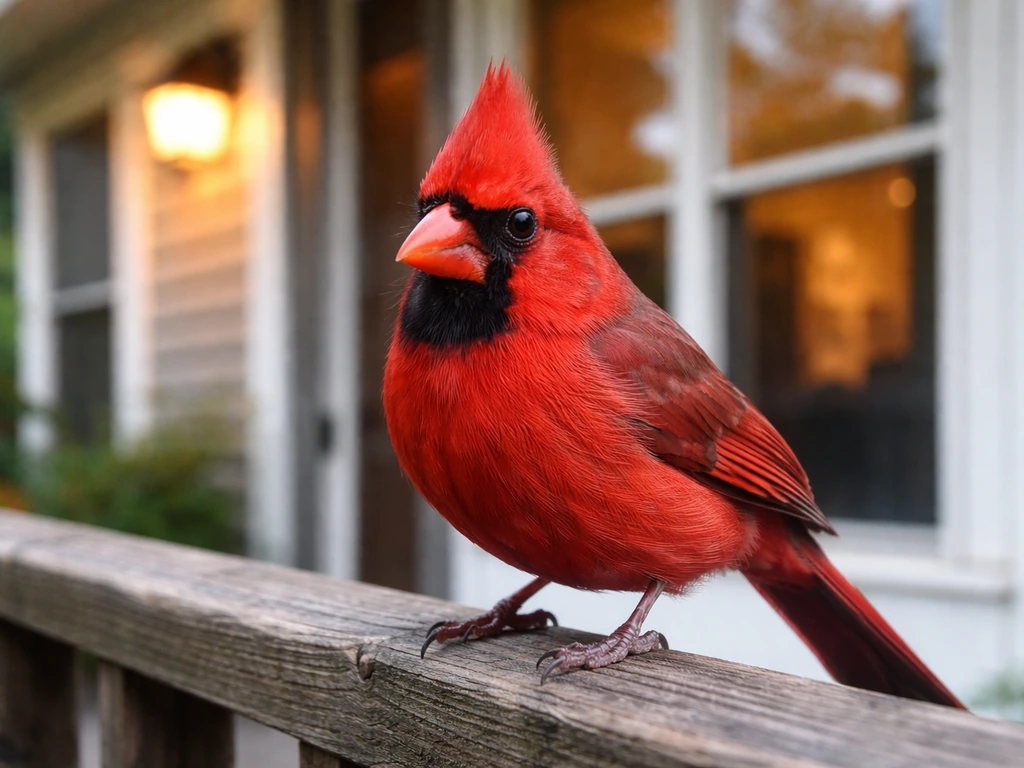
When a red bird lands nearby and looks straight at you, it's hard not to feel like something just happened. And honestly, something did, whether that's a natural moment of beauty or a sign you're meant to receive depends on a combination of context, belief, and what's going on in your life right now. The short answer: a red bird visit can be both a completely ordinary wildlife encounter and a deeply meaningful spiritual moment.
What Does It Mean When a Red Bird Visits You?

Maya Hartwell
5 Apr 2026
If you want to interpret a yellow bird visit specifically, the meaning can shift based on your context and the details of what the bird is doing yellow bird visits you. This guide walks through both possibilities so you can figure out which one, or which combination of both, fits what you experienced.
What's actually happening when a red bird shows up
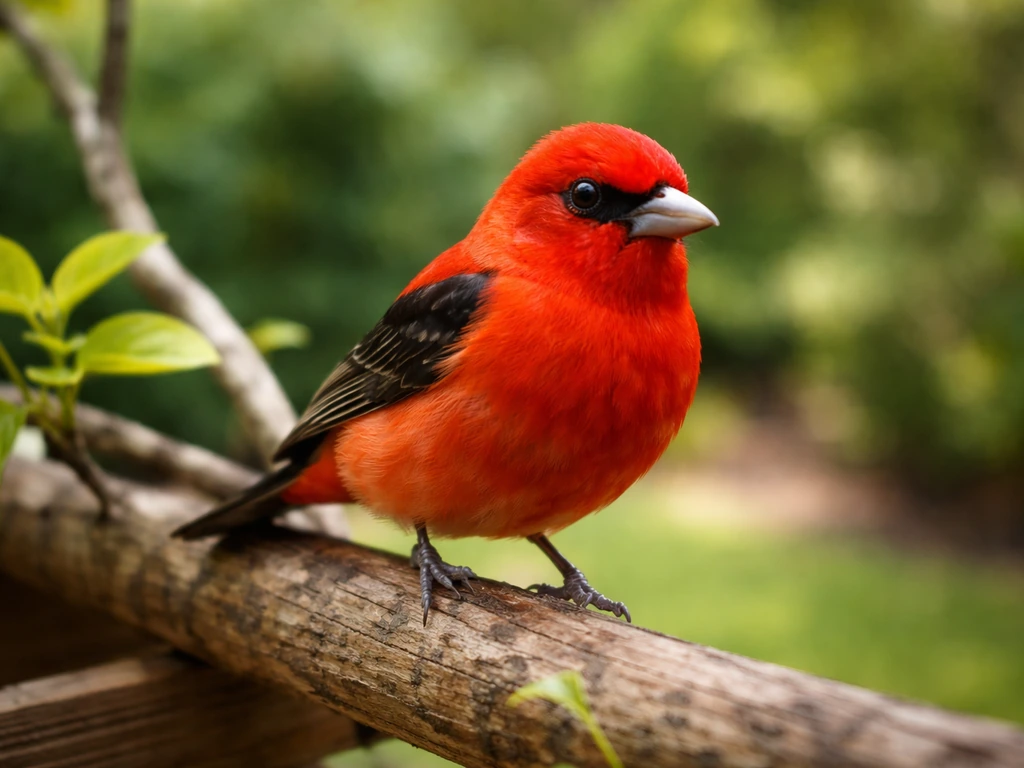
Before diving into meaning, it helps to know what you're likely looking at. The most common 'red bird' in North America is the northern cardinal (Cardinalis cardinalis), and it's worth knowing that cardinals don't migrate. They're year-round permanent residents wherever they live, so if you're in their range, you could see one any day of the year, at your feeder, your window, or just passing through your yard. That's not a knock on the experience; it just means a cardinal sighting isn't rare in the way a shooting star is rare.
That said, not every red bird you see is a cardinal. House finches, which are common around human settlements, have rosy-red plumage that can look striking from a distance. In the southern United States and Mexico, the vermilion flycatcher is a vivid red species that sometimes surprises people who aren't expecting it. So if you want to dig into the symbolism specific to your bird, it's worth a quick look to confirm what you actually saw.
There are also very practical, behavior-based reasons a red bird might visit in a particular way. Cardinals strongly defend their territories, especially in spring when their hormonal drive to protect nesting areas peaks. One thing that surprises a lot of people: a cardinal aggressively pecking at your window isn't necessarily visiting you as much as it's attacking its own reflection, which it reads as a rival.
Male Northern Cardinals may sing or act defensively to defend nesting territory, and they can attack intruding males and their own reflection in windows and mirrors, according to the Audubon Field Guide a cardinal aggressively pecking at your window. This is normal, seasonal, and usually passes after nesting is established.
So if your 'visit' involves a bird hitting or circling a window repeatedly, there's a biological explanation worth knowing alongside any symbolic one.
The spiritual and symbolic meanings of a red bird visit
Across many spiritual traditions, the color red carries weight: vitality, life force, passion, transformation, and divine fire. When a red bird shows up, those associations tend to color (literally) how people interpret the encounter. The most common spiritual themes attached to a red bird visit fall into a few clear categories.
A message from someone you've lost
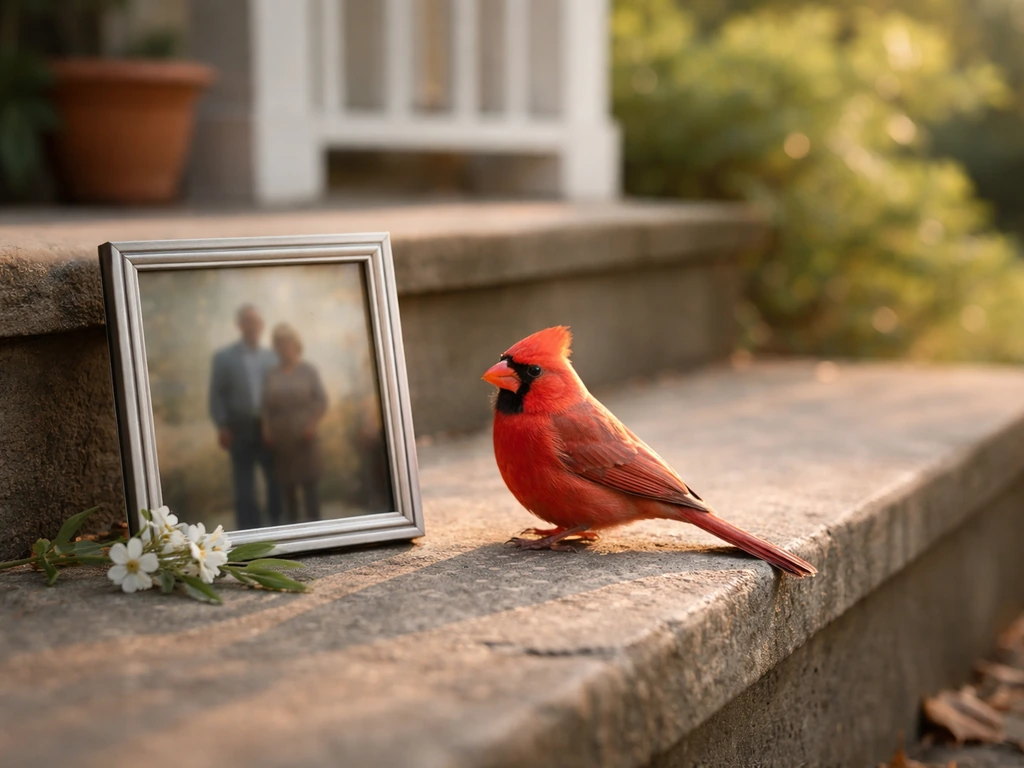
This is probably the most widely held spiritual interpretation of a red bird visit, especially a cardinal. The belief that cardinals carry messages from deceased loved ones is deeply embedded in modern grief traditions. It frames the bird's appearance as a 'continuing bond,' a way the person who passed is still present and offering comfort. If you've lost someone recently and a red bird appeared, many people in this tradition would say: that's not a coincidence.
Whether or not you share that belief, the emotional resonance is real, and there's something worthwhile in sitting with it. Cardinals and angels are so often linked in grief communities because the bird seems to appear at exactly the moments when comfort is most needed.
Hope, encouragement, and new beginnings
Outside of grief, the red bird also symbolizes hope during difficulty and the promise that love doesn't disappear, it adapts. If you're going through a hard stretch, a red bird visit is often interpreted as encouragement to keep going, a gentle nudge that things are shifting. The red color itself points to energy and vitality, so some people read the encounter as an invitation to act with more confidence or to trust their own passion and direction.
Spiritual awareness and paying attention

Some traditions frame the red bird less as a messenger and more as a signal to wake up. The bird's vivid color is hard to ignore, which is partly the point. In this reading, the visit is a reminder to be more present, to pay attention to what's unfolding around you, or to tune into your own intuition more deliberately. If you've been distracted, scattered, or disconnected from something that matters to you, the red bird might be nudging you back.
What different cultures and traditions say about red birds
Red bird symbolism isn't new, and it's not limited to one belief system. It shows up across Indigenous traditions, Christian-influenced folklore, and general cultural practice in ways that are worth knowing.
Indigenous and Native American traditions
The cardinal (often called 'redbird' in older references) appears in several Native American traditions as a spiritually significant creature. In Ojibwe teachings, the redbird is associated with being alert and watchful, a quality that echoes both the bird's actual behavior and its spiritual framing as a messenger. Cherokee teachings also assign cultural importance to the cardinal, presenting it as a carrier of meaning rather than just wildlife. These traditions treat the redbird's appearance as worthy of attention, not something to brush past.
Biblical and Christian-adjacent interpretations
It's worth being honest here: the cardinal is not named in Scripture. The 'biblical' meanings attached to red cardinals are symbolic inferences, not direct citations. That said, the inference isn't arbitrary. Birds appear as messengers and signs throughout the Bible, and the red color has long been associated with the blood of Christ, carrying themes of hope, sacrifice, and redemption. From that symbolic logic, many Christian writers extend the red cardinal into a framework of divine comfort and guidance. It's interpretive, but for people inside that faith tradition, it resonates meaningfully. What it means when a cardinal specifically visits you goes deeper into this thread if you want a fuller exploration.
Modern folklore and grief traditions
Across modern folklore, especially in the context of death and transitions, the red bird is frequently associated with news, messages, and change. Some traditions link it directly to comfort after loss; others frame it more broadly as a sign that something significant is shifting. Either way, the cultural pattern is consistent: the red bird isn't treated as ordinary. It's treated as a carrier of something important.
How the details of your visit change the meaning
Not all red bird visits are the same, and in most symbolic traditions, the specific details matter quite a bit. Here are the factors that tend to shape interpretation the most.
| Detail | What it might suggest |
|---|---|
| A lone bird, calm and close | Deliberate 'visitation' feel; often linked to personal messages or comfort |
| Repeated visits over days/weeks | Encouragement to pay sustained attention; may feel like ongoing communication |
| Appears during grief or hardship | Widely interpreted as comfort from a loved one or divine reassurance |
| Appears at a window or reflection | Likely territorial behavior in spring; worth noting before assigning symbolic weight |
| First visit after a significant event | Timing often amplifies meaning; synchronicity framing applies here |
| Bird appears unwell or distressed | Shift focus to practical help; symbolism takes a back seat to care |
If a red bird has been showing up every day around your home, that pattern itself tends to feel more significant than a one-time flyby. Daily bird visits carry their own layer of symbolism, and many people find that the repetition is the message: something is asking for your sustained attention.
Comparing the red bird to other colored visitors can also sharpen your sense of meaning. If you've recently had a black bird visit, that's traditionally linked to mystery, transition, and the unseen. A white bird visit tends to carry associations with peace, purity, and spiritual openness. And a yellow bird visit often signals joy, optimism, or creative energy. The red bird, by contrast, brings warmth, vitality, and an urgency to notice.
Where the bird appears also matters. A visit to your yard or feeder feels different from a bird that comes directly to your window or into your home. A bird visiting your home specifically tends to carry heightened symbolic significance in many traditions, as if the bird is choosing you more deliberately.
How to connect the message to your own life
Symbolism only goes so far if it stays abstract. The real value comes when you bring it into contact with what's actually happening in your life right now. A few grounding questions can help you do that:
- What was I thinking about, feeling, or doing right before the bird appeared? Sometimes the timing is the message.
- Is there someone I've lost who I've been thinking about? If so, does the visit feel like it could be connected to them?
- Am I at a crossroads, in the middle of a hard stretch, or waiting for something to shift? The encouragement theme may apply.
- Have I been ignoring something I know I need to pay attention to? The red bird as a 'wake up' signal might fit.
- What's my gut reaction to this encounter? Comfort? Surprise? Curiosity? Your instinctive response often carries meaning.
You don't need a firm belief system to engage with this. You just need a willingness to sit with the question: what might this mean for me, right now, in my actual life? That's where interpretation becomes personal rather than generic.
What to do after a red bird visits you
If the encounter felt meaningful, there are practical things you can do today to honor and explore that. You don't need an elaborate ritual. Simple, grounded steps are often the most useful.
- Write it down. Record the date, time, what the bird did, where you were, and what you were thinking or feeling. Details that seem minor now often become significant later when you look back.
- Journal on the questions above. Give yourself 10 minutes to write freely without editing. What does this visit bring up for you?
- If grief is part of this, name the person. Say their name aloud, write it down, or spend a moment remembering them deliberately. Many people find this simple act of acknowledgment brings unexpected comfort.
- Pray or meditate if that's part of your practice. Ask for clarity on whatever feels unresolved, and sit quietly with what comes.
- Check your feeder. If the bird came to your yard, it may come back. Clean your feeder (Audubon recommends cleaning seed feeders every two weeks, and letting them dry completely before refilling) so future visits are safe and welcoming. A bleach-and-water disinfecting solution scrubbed across feeder surfaces can prevent disease spread.
- Notice patterns over the next week. If the bird returns, or if other things seem to align with the theme you identified, pay attention to that.
When symbolism shouldn't be the only thing on your mind
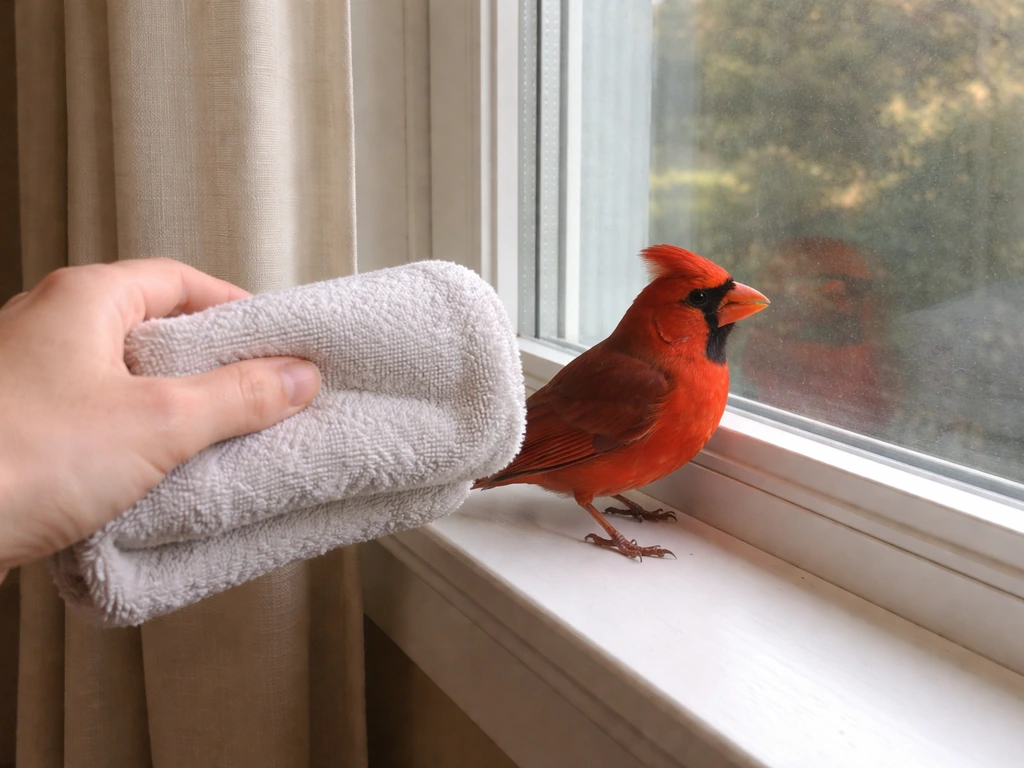
There are situations where the first priority needs to be the bird's safety or your own, not interpretation. Here's when to shift gears.
If the bird hit your window
Window collisions are a major cause of bird injury and death. If a red bird has flown into your window and is sitting stunned on the ground, the priority is keeping it safe: place it in a dark, quiet cardboard box and contact a licensed wildlife rehabilitation facility. The U. S.
Fish and Wildlife Service recommends window treatments to reduce future strikes, and placement of feeders matters too. To help prevent bird-glass collisions at home, the U. S. Fish & Wildlife Service recommends making windows visible using inexpensive and attractive measures, such as providing clear signals that help birds see the glass [inexpensive and attractive measures, such as making windows visible](https://www.
fws. gov/sites/default/files/documents/preventing-bird-glass-collisions-at-home. pdf). Chicago Bird Collision Monitors suggests either placing feeders very close to windows (within 3 feet, so birds don't build speed) or far away (more than 30 feet).
If a cardinal is attacking your window repeatedly in spring, that's almost certainly territorial reflection behavior, not a spiritual omen, and the practical fix is covering or treating that pane of glass.
If the bird looks sick or behaving strangely
A lethargic, puffed-up, or uncoordinated bird is likely unwell, and that's a wildlife health issue, not just a symbol to interpret. Sick birds near feeders can spread disease to other birds. Audubon advises stopping feeder use temporarily if you notice sick birds, cleaning your feeder thoroughly, and contacting local wildlife resources. Dirty feeders can develop mold and become disease hubs, so regular maintenance protects every bird that visits, not just the red one.
If the bird comes inside your home
A bird entering your home is always first a practical situation: the bird is stressed, disoriented, and needs to get out safely. Close interior doors, open windows and exterior doors, dim the lights, and give the bird space to find its way out. Once it's safe, then you can sit with what it might mean. Many traditions do interpret an indoor bird visit as a significant omen, but the bird's welfare comes first.
The red bird is a powerful symbol across so many traditions because it demands to be noticed. That's the throughline whether you're approaching this from a grief lens, a spiritual one, a faith tradition, or just an open-minded curiosity. Something showed up. Something bright and vivid asked for your attention. What you do with that, how you hold it, what questions you ask because of it, that's entirely yours to decide.
FAQ
If I saw a red bird once, is it more likely a real-life animal reason than a spiritual message?
A single, brief appearance is commonly just normal wildlife behavior (food, shelter, territory, weather, or a passing route). Spiritual interpretations usually feel strongest when the bird’s behavior stands out, like sustained attention to you (lingering nearby, repeated visits), or when the timing closely matches an emotionally significant moment.
How can I tell whether the red bird is actually a cardinal versus a look-alike?
Check the shape and key field marks: northern cardinals have a relatively thick body, a prominent crest, and a strong black facial mask and beak area. House finches are also red but usually more streaked and lack the cardinal’s bold mask. If you can, take a photo and note location, season, and whether the bird is visiting a feeder regularly.
What does it mean if the red bird is aggressive toward my window or mirror?
Repeated window or mirror strikes are often territorial and frustration-driven, the bird sees its reflection as a rival. The most helpful “meaning” is practical, adjust the environment (cover the reflective surface, add window decals, or change feeder placement) and expect the behavior to subside once nesting territory is established.
Does a red bird visit mean a loved one is trying to contact me?
In grief traditions, yes, the encounter can be read as a continuing bond, but it is not something you can verify. If you’re unsure, focus on what the visit stirs up in you (comfort, readiness to grieve, motivation to reach out) rather than treating it as guaranteed communication.
What should I do if the red bird looks injured or won’t fly?
Treat it as an immediate animal-welfare issue. Keep it quiet and shaded in a ventilated cardboard box, limit handling, and contact a licensed wildlife rehabilitation facility or local animal control for guidance. Avoid feeding it unless a professional tells you what to offer.
If the bird keeps coming back every day, how do I avoid over-interpreting?
Use a simple log for 3 to 7 days: time of day, behavior (perching, pecking, flying by), and whether the same area is involved (feeder, specific window, yard corner). This helps you separate natural patterns (feeding schedule and territory) from truly unusual behavior before assigning deeper meaning.
Is it safe to leave a feeder up if I notice sick birds?
If you see lethargy, puffed-up posture, or birds acting uncoordinated, pause feeder use and clean equipment thoroughly before restarting. Also disinfect feeding areas because disease can spread quickly between visits. If birds are repeatedly sick, contact local wildlife resources for next steps.
What does it mean if a red bird enters my home?
First, it usually means the bird is disoriented and stressed, not that it chose a symbolic message. Practical response matters most: close interior doors, open a clear exit, dim lights, and give it space to find the way out. After it’s safe, you can reflect on any spiritual or emotional resonance if you want.
Can the color red be symbolic if I am not sure about the bird species?
Color symbolism can still be meaningful to you personally, but uncertainty about the species is a good reason to prioritize practical explanations (common local birds, feeder attraction, seasonal behavior). If you want symbolism to guide your reflection, anchor it to your lived context, not to the assumption that it was definitely a cardinal.
How do I know whether the visit is prompting me to take action versus just feel something?
If the encounter naturally connects to a decision you have been avoiding (reach out to someone, take a step toward a goal, address a relationship), treating it as a prompt to act can be helpful. If it mainly triggers anxiety or obsession, scale back the interpretation and focus on grounding actions (sleep, talk to someone, reduce window reflection triggers).
Next Article
What Does It Mean When a Cardinal Visits You? Meanings
Why cardinals visit and what it may symbolize: timing, behavior, spirituality, biblical views, and practical next steps