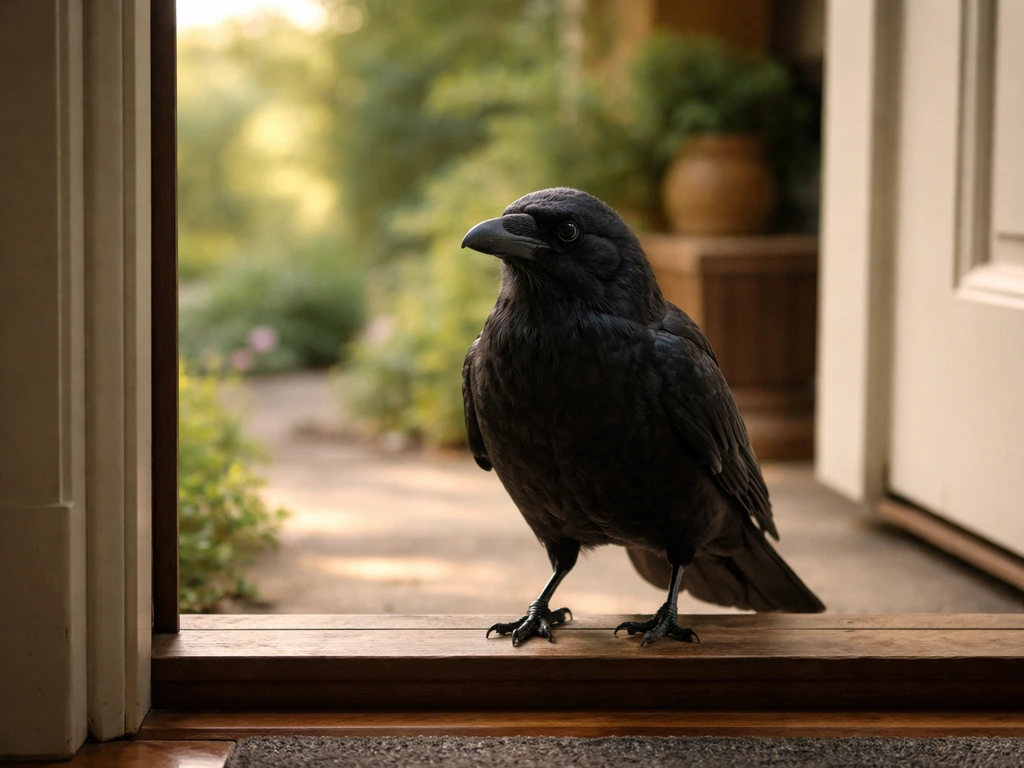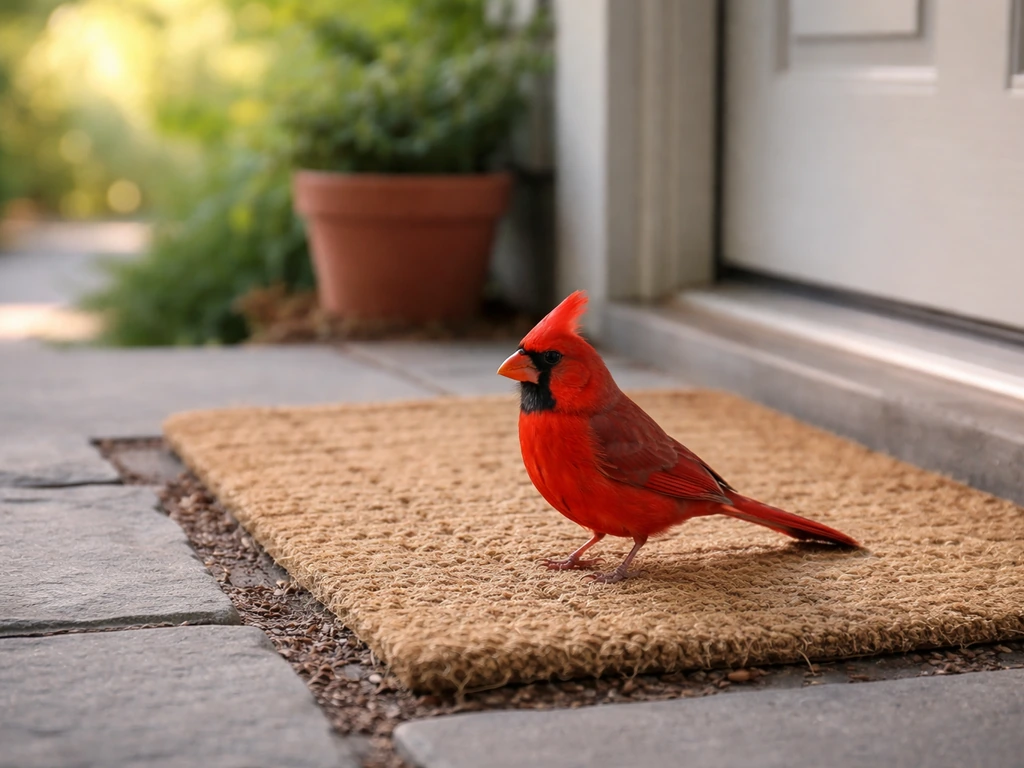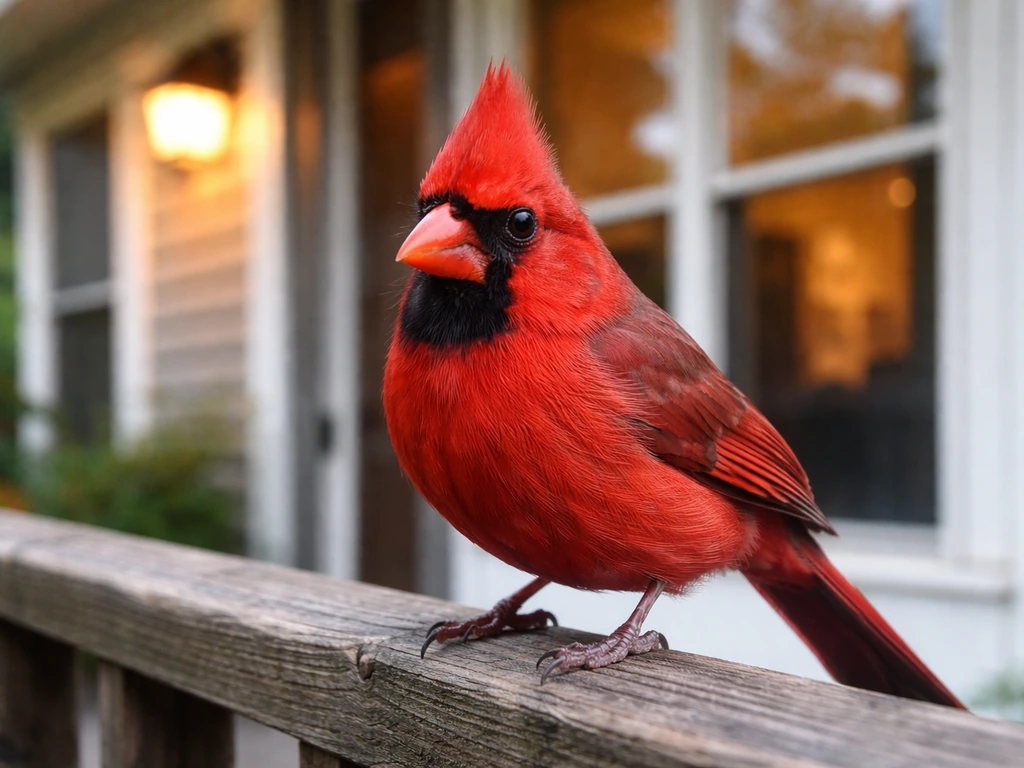
A bird showing up at your door or window is almost always one of two things: a completely natural behavior driven by food, shelter, or instinct, or a moment that feels significant enough that you stopped what you were doing and searched for what it might mean. Both of those things can be true at the same time. This guide will walk you through the most likely practical explanations, the symbolic and spiritual interpretations people across many traditions have attached to bird visits, and exactly what to do today if a bird is sitting on your porch, pecking at your window, or has flown inside.
What Does It Mean When a Bird Visits Your Home?

Maya Hartwell
13 Apr 2026
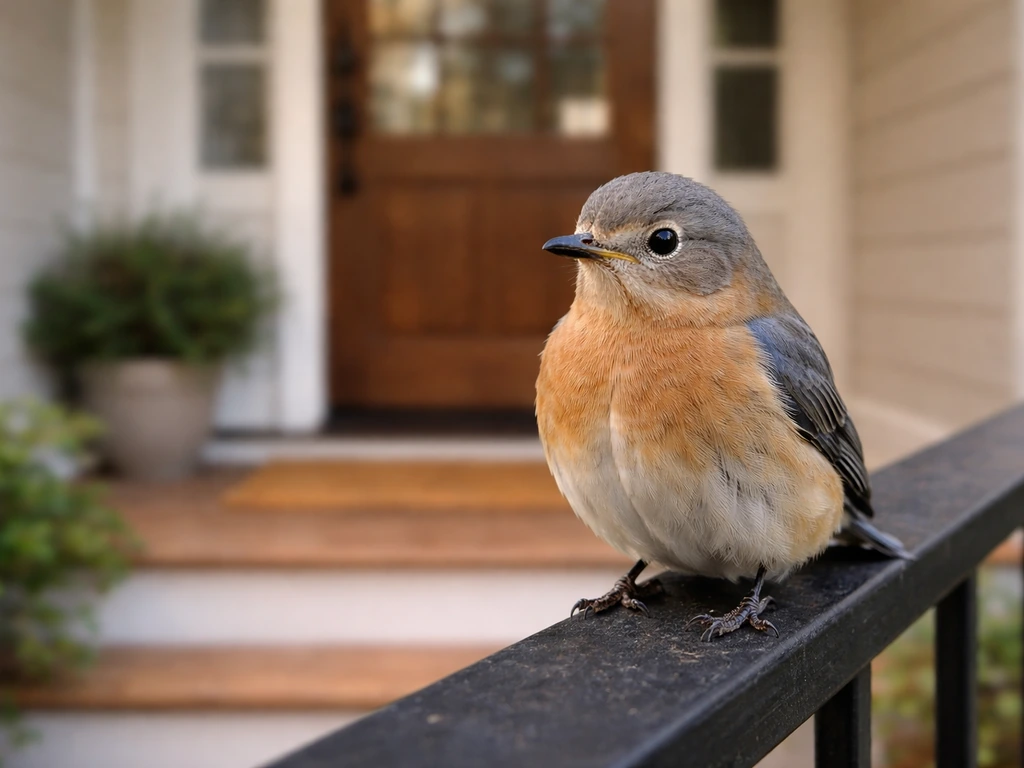
Natural reasons a bird visits your door or home
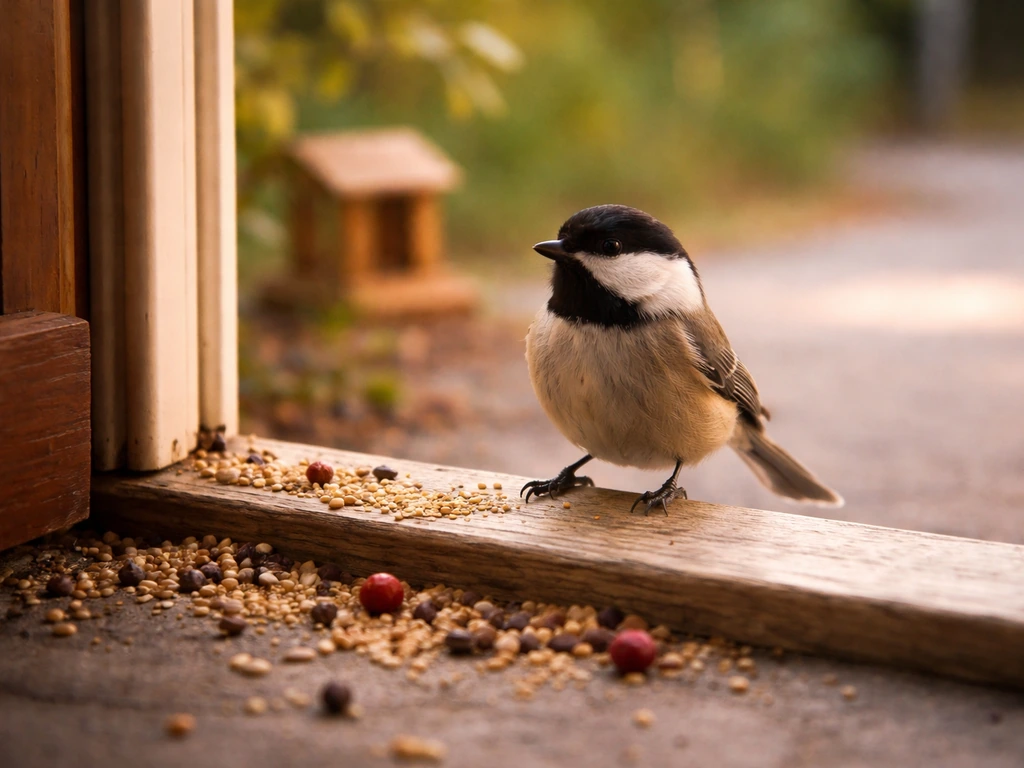
Before anything else, let's talk about what's most commonly happening when a bird shows up near your home. Birds are practical creatures. They go where the food, water, and shelter are. Your home offers more of those things than you might realize.
Food is the number one draw. Seed spilled from a feeder, berries on a nearby shrub, insects clustered around your porch light, or even crumbs near your door can all bring birds directly to your entryway. If a bird appeared near your front door or on your stoop, check within about 10 feet for anything edible from their perspective.
Shelter is the second big driver. Eaves, porches, ledges, and the overhangs above doors are premium real estate for birds looking to roost or nest. Covered structures protect them from rain, wind, and predators. A bird perching repeatedly in the same corner of your porch isn't mystified by your home, it's treating it like a hotel. During spring (roughly March through June in the Northern Hemisphere), nesting behavior spikes and you'll see far more birds exploring ledges and enclosed spaces close to your home.
Glass is one of the most misunderstood factors. Windows and glass doors reflect sky and trees, and birds genuinely cannot distinguish that reflection from open space. In a Reddit discussion focused on bird strikes on windows, commenters weigh practical steps like placing decals on the inside versus outside and consider how reflections can affect what birds perceive [whether decals should go on the inside vs. outside and how reflections affect what birds see](https://www.
reddit. com/r/Audubon/comments/1s8mkdh/questionpreventingbirdstrikeson_windows/). The U. S.
Fish and Wildlife Service identifies glass collisions as one of the leading human-related causes of bird deaths, with an estimated 600 million birds killed annually in the U. S. by window strikes. A bird that keeps returning to a window, pecking at it, or [appears stunned](https://www.
usgs. gov/labs/bird-banding-laboratory/science/bird-window-collisions) on your doorstep is almost certainly responding to a reflection, not delivering a message. This is especially common with robins, cardinals, and mockingbirds defending territory during breeding season.
Migration and disorientation also play a role. During spring and fall migration windows, birds travel at night and use light cues to navigate. Artificial lighting from homes and buildings can pull birds off course, drawing them toward structures they would otherwise avoid. The U.S. National Park Service explains that night lighting can disorient migrating birds, causing them to veer off course, slam into surfaces, or circle endlessly and waste energy Artificial lighting from homes and buildings can pull birds off course, drawing them toward structures they would otherwise avoid.. If you find an unfamiliar species at your door during April or October especially, a migrating bird that got turned around is a very plausible explanation.
How to read the meaning: spirituality, symbolism, and what people call omens
Practical explanations aside, humans have interpreted bird visits as meaningful messages for thousands of years across nearly every culture on earth. That's not nothing. Whether you hold a spiritual worldview or simply find the symbolism useful as a lens for reflection, it's worth knowing what different traditions say.
In many Christian and biblical traditions, birds are messengers of divine care. Matthew 6:26 references birds as evidence of God's provision. Doves specifically represent the Holy Spirit, and a bird appearing unexpectedly near your home is sometimes interpreted as a reminder that you are watched over. For people who have recently lost someone, a bird's arrival is frequently felt as a visit from the deceased, a form of spiritual contact or reassurance. This isn't limited to Christianity. Similar beliefs appear in Celtic, indigenous North American, and West African spiritual traditions.
In folklore and metaphysical traditions, the direction a bird arrives from, the color of its feathers, and the time of day it appears all carry significance. A bird arriving from the east is often tied to new beginnings. A bird arriving at dawn can symbolize clarity or a fresh start. Eastern philosophical traditions, particularly in Chinese and Japanese culture, associate certain birds with good fortune (the crane, for instance, with longevity and luck) while others are linked to caution or transition.
Color is one of the most commonly interpreted details. A red bird visiting your home is widely interpreted as a sign of vitality, passion, or a message from someone who has passed. White birds carry near-universal associations with peace, purity, and spiritual protection. A black bird appearing at your home is more nuanced, often representing transition, mystery, or heightened intuition rather than outright bad luck, despite what popular superstition sometimes suggests.
Frequency matters too. A single visit is easy to explain away. But a bird that visits you every day creates a different kind of experience, one that many people find hard to dismiss as coincidence regardless of their worldview. You don't have to commit to one interpretation. Hold the question open.
Observation checklist: what to notice before deciding what it means
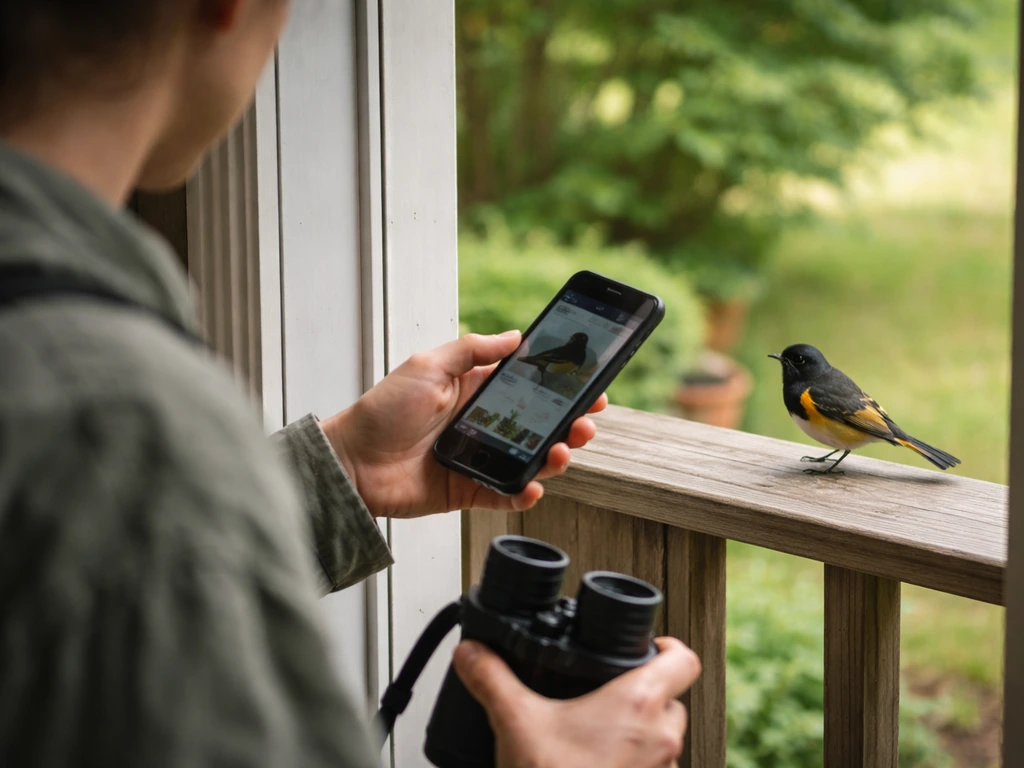
The most useful thing you can do in the moment is slow down and observe. The details you notice will help you with both the practical and symbolic interpretation. Here's what to pay attention to:
- Species: Can you identify the bird? Color, size, beak shape, and markings help. A cardinal, a sparrow, a crow, and a hummingbird each carry very different practical behaviors and symbolic traditions.
- Behavior: Did it land and sit calmly? Did it repeatedly strike or tap at a window? Did it fly inside? Calm perching suggests roosting or shelter-seeking. Repeated striking suggests a reflection issue. Flying inside almost always means disorientation.
- Time of day: Morning visits are interpreted differently than evening arrivals in most symbolic traditions. Practically, dawn and dusk are when birds are most active and most likely to be foraging near homes.
- Season: Spring suggests nesting behavior. Fall suggests migration. Winter visits from species that don't normally overwinter can indicate that a bird is stressed, lost, or injured.
- Condition: Is the bird alert and healthy-looking? Puffed up, lethargic, or sitting on the ground without moving? A healthy bird behaves very differently from one that is ill or has struck a window.
- What's nearby: Feeder, berry bush, water source, or large window with sky reflection? Any of these explains a visit in practical terms.
- How long it stayed: A brief perch and departure is natural. A bird that sits for hours or returns for multiple days has crossed into territory worth examining more closely.
How species shape the interpretation
Species is one of the most important variables. Different birds carry very different cultural weight. When a cardinal visits you, it's one of the most commonly reported "meaningful" bird encounters in North America, often linked to deceased loved ones and described in phrases like "cardinals appear when angels are near. " The belief that cardinals near a bird feeder represent angelic presence is widespread in Christian-adjacent folklore and has become a genuine cultural touchstone for people processing grief.
Meanwhile, a yellow bird visiting your home tends to be associated with joy, optimism, and creative energy in metaphysical traditions. And a white bird at your home carries some of the most universally positive symbolism across cultures, frequently interpreted as a sign of peace or divine protection.
What to do right now if a bird is at your door or home
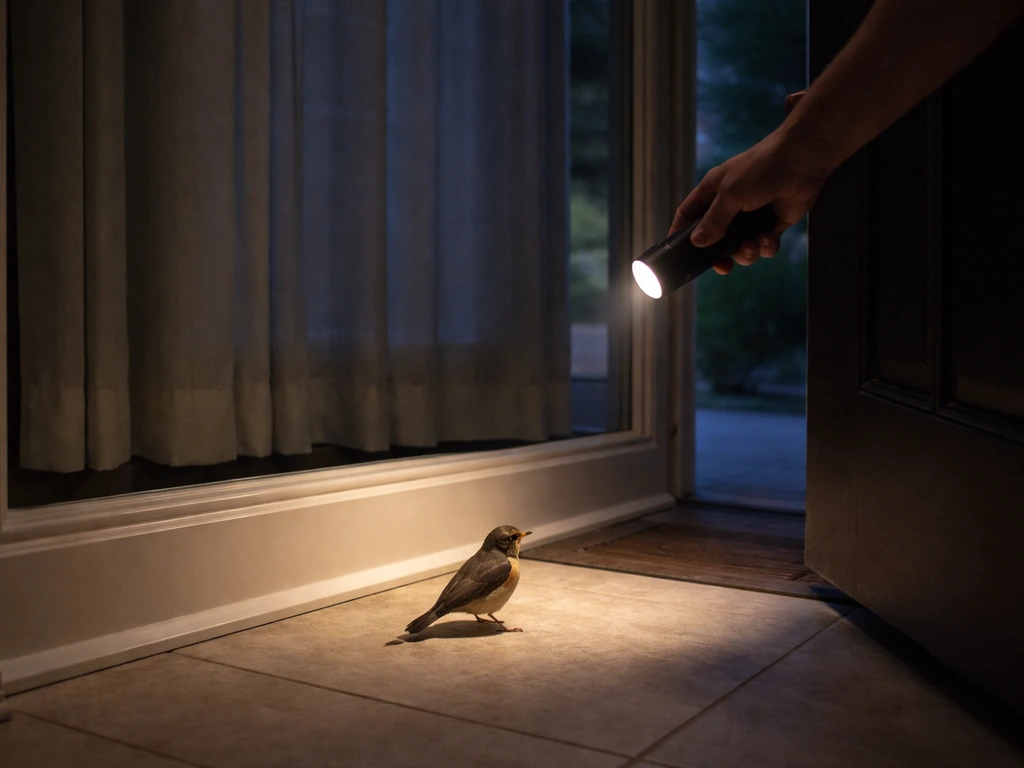
If a bird is currently at your door or home, here are your practical next steps. These apply regardless of what meaning you draw from the visit.
- Don't panic or make sudden movements. Startling the bird could cause it to fly into glass, injure itself, or flee into traffic or a predator's path. Move slowly and give it space.
- If the bird is outside and healthy, simply observe it. Leave it alone. Most birds will depart on their own once they've found what they came for or realized the space isn't what they were looking for.
- If the bird has flown inside your home, close off interior rooms to limit where it can go. Open one window or door wide, turn off interior lights, and draw blinds on other windows. The bird will navigate toward natural light and find the exit. Do not chase it.
- If a bird is repeatedly striking a window, apply a temporary deterrent to break up the reflection. Painter's tape strips in a grid pattern (spaced about 2 inches apart), window clings, or a sheet of paper taped to the outside of the glass all work. This interrupts the reflection and typically stops the behavior within a day or two.
- Keep pets and children calm and at a distance. Cats especially can injure a bird even with what looks like gentle contact. Keep pets inside or in another room until the bird has left.
- If you have a bird feeder, make sure it's placed either within 3 feet of a window (so birds can't build up speed for a dangerous strike) or more than 30 feet away. Intermediate distances (3 to 30 feet) are the highest collision risk zone.
- Document what you observe: take a photo if you can do so without disturbing the bird. This helps with species identification and lets you revisit the moment later for reflection.
If the bird seems injured or unusual: what to do and when to call for help
A bird sitting motionless on your doorstep, puffed up, or unable to fly is a different situation from a healthy bird perching nearby. Here's how to tell the difference and what to do.
| What you observe | Most likely explanation | What to do |
|---|---|---|
| Bird is alert, upright, and flies away when approached | Healthy, resting or foraging | Leave it alone. Observe from a distance. |
| Bird is sitting on ground, not flying, but eyes are open and it's alert | Stunned from window strike (common) | Place it in a dark, ventilated cardboard box in a quiet spot for 30 to 60 minutes. Release if it recovers. |
| Bird is puffed up, eyes closed, or appears very lethargic | Ill, hypothermic, or seriously injured | Contact your local wildlife rehabilitator immediately. Do not try to feed it. |
| Bird is on its back or completely unresponsive | Dead or near death | Use gloves or a plastic bag to handle. Do not handle with bare hands. Contact local animal control if needed. |
| Fledgling (fluffy, short tail) on ground near bushes | Normal — learning to fly, parents nearby | Leave it alone unless a cat or dog is directly threatening it. Parents are likely watching. |
| Unfamiliar or exotic-looking species | Escaped pet or very rare migrant | Photograph and report to local Audubon Society or eBird. Contact a rehabilitator if injured. |
To find a licensed wildlife rehabilitator near you, search the National Wildlife Rehabilitators Association (NWRA) directory or call your state's fish and wildlife agency. Do not attempt to keep a wild bird, feed it bread or human food, or provide water by force. These interventions almost always do more harm than good.
How to reflect on this without overreacting or dismissing it
Here's the honest truth: most bird visits have a practical explanation. A bird at your door is more likely drawn by a reflection in your glass or a bug near your porch light than by any cosmic directive. That's not cynicism, that's just the reality of how birds navigate the world.
And yet, the fact that you noticed, that you paused and looked and wondered, that's yours. Symbolism works precisely because we bring meaning to it. A cardinal appearing on the anniversary of your mother's death doesn't need to be "real" in a scientific sense to carry emotional truth. Across Celtic, indigenous, biblical, and Eastern traditions alike, birds have served as liminal beings: creatures that exist between earth and sky, between the visible and invisible. People have always watched birds for signs. That instinct is ancient and deeply human.
The healthiest approach is to hold both possibilities lightly. You don't have to choose between "it's just a bird" and "this is definitely a message from beyond." You can acknowledge the natural explanation and still ask yourself: what does this moment bring up for me? Is there something I've been avoiding thinking about? A person I've been missing? A decision I've been sitting with? Sometimes the value of a bird visit is simply that it made you stop, look up, and pay attention. That alone is worth something.
If you want to go deeper, keep a simple journal of when it happened, what species it was, what you were doing or thinking at the time, and how you felt. Over days or weeks, patterns sometimes emerge that are more meaningful than any single visit. And if the bird keeps coming back, that's a signal worth sitting with rather than explaining away quickly.
FAQ
How can I tell if the bird is just looking for food or if something is wrong with it?
Look for normal posture and alert behavior. A healthy bird typically perches upright, keeps its distance, and watches you while occasionally hopping or searching. If it is puffed up, listless, has trouble balancing, shows trembling, or has a visible injury, treat it as a potential collision or illness and contact a licensed wildlife rehabilitator.
What should I do if a bird keeps hitting my windows or glass door?
Reduce the reflection immediately. Turn off indoor lights at night, close blinds or curtains on affected windows, and cover or relocate outdoor reflective items near the glass. If you find a stunned bird, keep people and pets away and call a wildlife rehabilitator rather than trying to “help” it inside.
Does the time of day the bird appears matter for practical reasons, not just symbolism?
Yes. Morning sightings often align with birds foraging and active territorial behavior, while late afternoon can be driven by roosting routines. Nighttime confusion is especially common during migration and can be worsened by exterior lights, so if it happens after dark, checking lighting and window reflections is a practical first step.
What if I only see one bird, but it behaves oddly, like staring at my door or landing repeatedly?
Repetition usually points to a navigation or territorial cue. It may be reacting to its own reflection, defending a perceived boundary, or trying to reach insects drawn to porch lights. Note whether it approaches the same spot each time, then adjust the most likely drivers (lights, blinds, feeder placement) and watch for improvement over 24 to 48 hours.
Is it harmful to put out bread or water to “care for” the bird?
In general, avoid bread and human food, and do not force water. Bread can be nutritionally poor and can attract unwanted pests, while forced hydration or handling can stress the bird and worsen injuries. If you suspect injury or disorientation, the safest move is to contact a rehabilitator and make the area quiet and contained for the bird.
Should I move my bird feeder or change what I feed if birds are coming to my home too often?
If birds are arriving mainly for calories, changing the setup can reduce repeat visits. Consider placing feeders farther from windows and away from glass, and avoid overfilling. Also check whether the bird is targeting porch lights for insects, because turning off lights at peak hours can reduce “traffic” without eliminating all bird activity.
What does it mean if a bird is nesting near my home but keeps coming to the door area?
Nest sites can create high-activity zones around entryways, especially during early nesting and when parents are defending territory. The practical step is to avoid blocking the nest and to keep pets inside, because repeated close approaches are often defensive rather than symbolic.
How should I respond if I’m worried I “summoned” the bird by thinking about it?
Try not to treat your thoughts as causal. Bird behavior is strongly driven by cues like food, shelter, reflections, and migration patterns. Your attention still matters, but if you want to act, focus on controllable factors (window safety steps, lighting, and distance from feeders) and on documenting what you observe.
If I want to journal patterns, what details are actually useful?
Track the species (or best guess), exact location on your property (door, window, porch corner), time of day, weather (clear, rain, wind), and what was happening nearby (lights on, feeder full, blinds open). Also note whether the bird left on its own or appeared stunned. Over time, these specifics help distinguish reflection and foraging patterns from truly unusual frequency.
When is the right time to call a wildlife rehabilitator instead of waiting it out?
Call promptly if the bird is unable to fly, remains on the ground for more than a brief period, appears injured, is repeatedly stunned near glass, or you see ongoing behavior that suggests sickness (open-mouth breathing, drooping head, abnormal stillness). Also call if you are unsure, because quick guidance can prevent accidental harm.