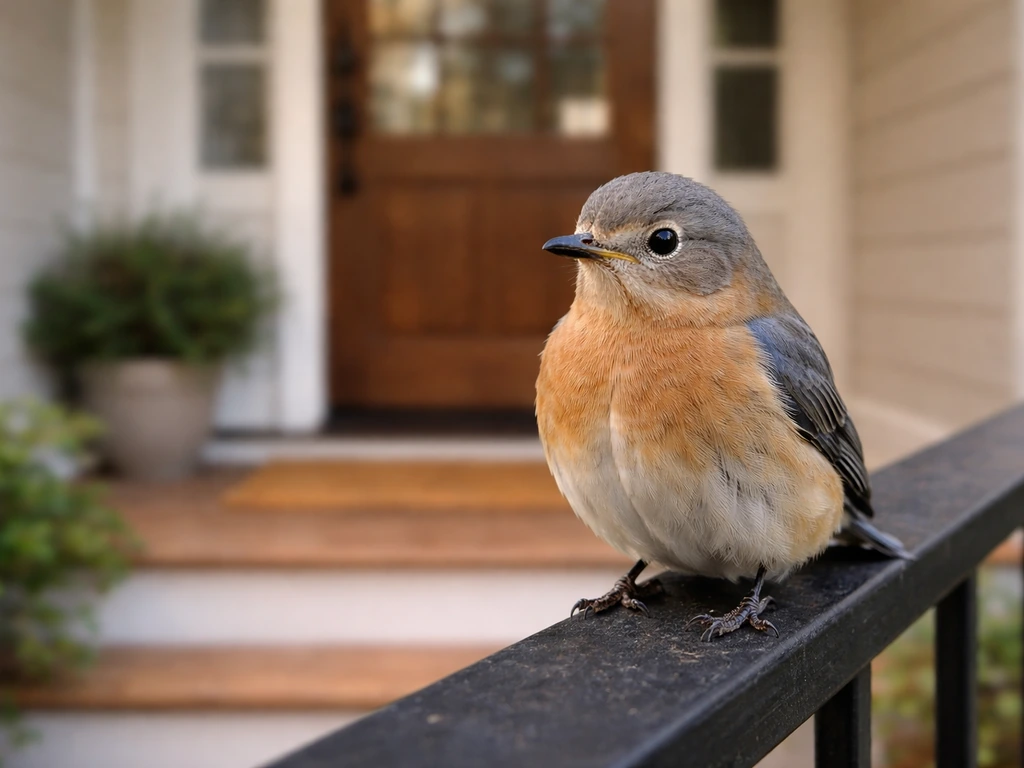
A white bird showing up in your yard, on your windowsill, or seemingly following you down the street tends to stop people in their tracks. Something about the color, bright, clean, impossible to ignore, makes the moment feel intentional. And you're not imagining that pull. Humans have been reading meaning into bird visits for thousands of years, across virtually every culture on earth. Whether you're spiritually inclined, casually curious, or just trying to figure out if this was a "sign," this guide walks you through the most common interpretations and, just as importantly, how to figure out which one actually fits what you experienced.
What Does It Mean When a White Bird Visits You

Maya Hartwell
13 Apr 2026
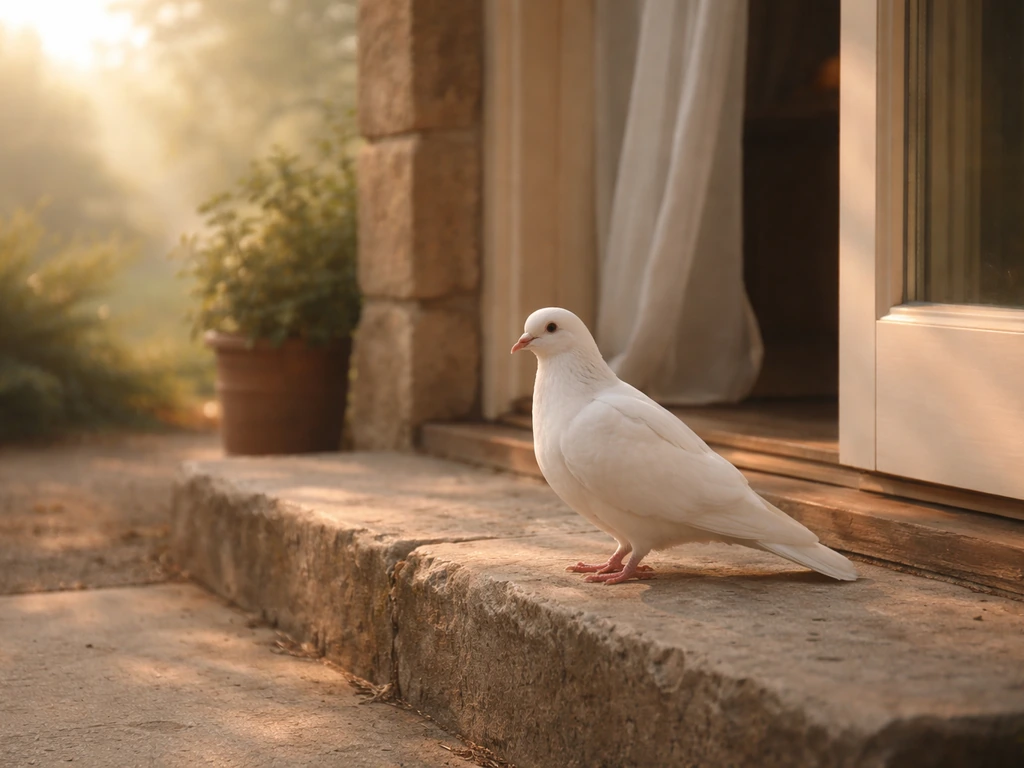
Why people associate white birds with meaning
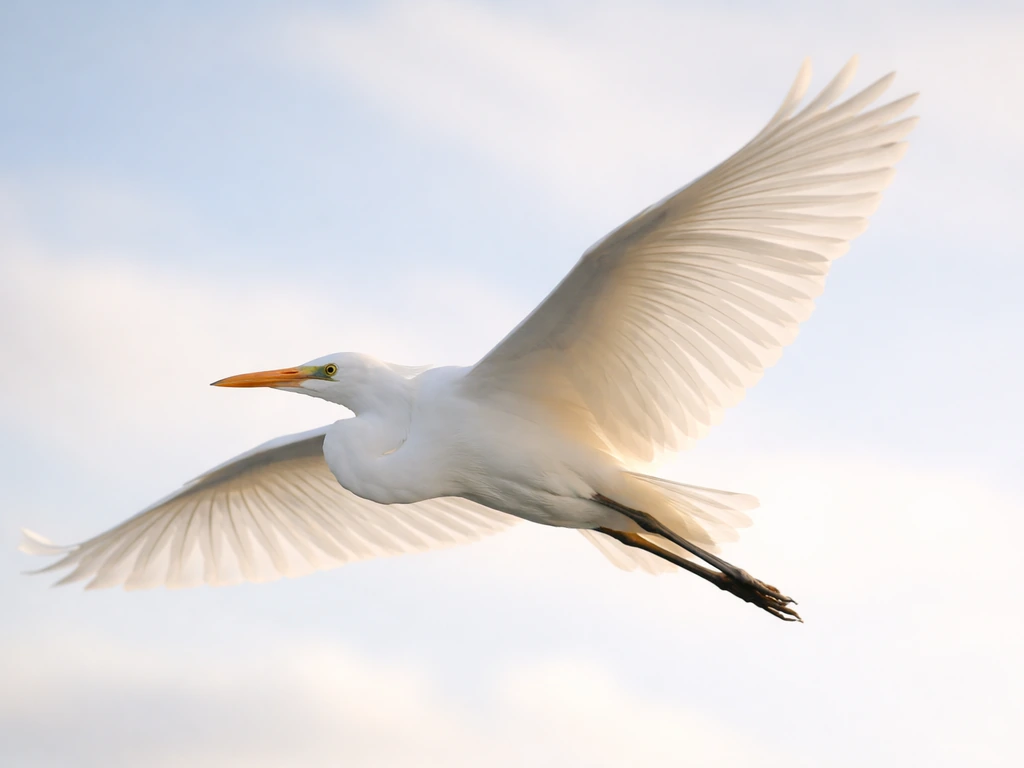
The practice of reading omens from birds has a formal name: ornithomancy. Ancient cultures across Europe, Asia, and the Americas interpreted birds' movements, cries, and appearances as messages about what was coming. Roman augury, where priests read bird behavior to forecast political and military outcomes, is one of the most documented examples, but it's far from unique. Tibetan communities, as described in a 2023 ethnobiology study, have long associated birds with spirituality, happiness, fortune, and omens, showing that this meaning-making tradition crosses continents and centuries.
White as a color amplifies the attention even further. It reads as rare in the natural world, which already triggers a sense of the unusual. White is also consistently linked in symbolic systems worldwide to purity, clarity, light, and the sacred. So when a white bird shows up unexpectedly, you're essentially getting a double signal: the cultural weight of bird-as-messenger plus the symbolic weight of white-as-holy. That combination is why the moment sticks with people.
It's also worth being honest about what psychology says here. The tendency to perceive meaningful patterns in random events, a phenomenon called apophenia, is a normal part of human cognition. Apophenia is defined as the tendency to perceive a connection or meaningful pattern between unrelated or random things. That doesn't automatically make your experience meaningless. It just means the meaning you find will be personal and constructed, not cosmically certified. That's actually freeing: it puts you in the driver's seat of interpretation.
Common spiritual and symbolic themes tied to white bird visits
Across traditions, white bird encounters tend to cluster around a handful of core themes. None of these are universal rules, but they're the most frequently reported interpretations and the ones worth sitting with first.
- Peace and resolution: A white bird appearing during a period of conflict or grief is commonly read as a signal that calm is coming — or that it's time to seek it.
- Messages from the deceased: In many folk traditions, a white bird arriving shortly after someone's death is interpreted as that person's spirit offering comfort or farewell.
- New beginnings and transition: White is linked to fresh starts in many cultures, and a white bird visit around a life change — a move, a breakup, a new job — is often read as encouragement.
- Spiritual awakening or awareness: Some metaphysical traditions frame an unexpected white bird visit as a nudge to pay attention to your inner life or spiritual path.
- Protection: Particularly in Celtic and some Indigenous traditions, white birds are seen as guardians or watchers, arriving to signal that you are being looked after.
- Hope in difficult times: A white bird in a moment of despair or uncertainty is commonly interpreted as a reminder that the path forward exists, even if it's not visible yet.
- Purity of soul or spirit: Especially associated with white-feathered birds like the egret, the white color is read as a reflection of spiritual clarity or a call back to your core values.
The species matters more than most people realize. A white dove carries very different cultural weight than a white egret or a white swan. If you can identify the bird, that detail significantly sharpens the interpretation. For example, what it means when a bird visits your home often depends heavily on the species involved alongside the color, since different birds carry different symbolic traditions.
Biblical and Christian perspectives on white-feathered birds
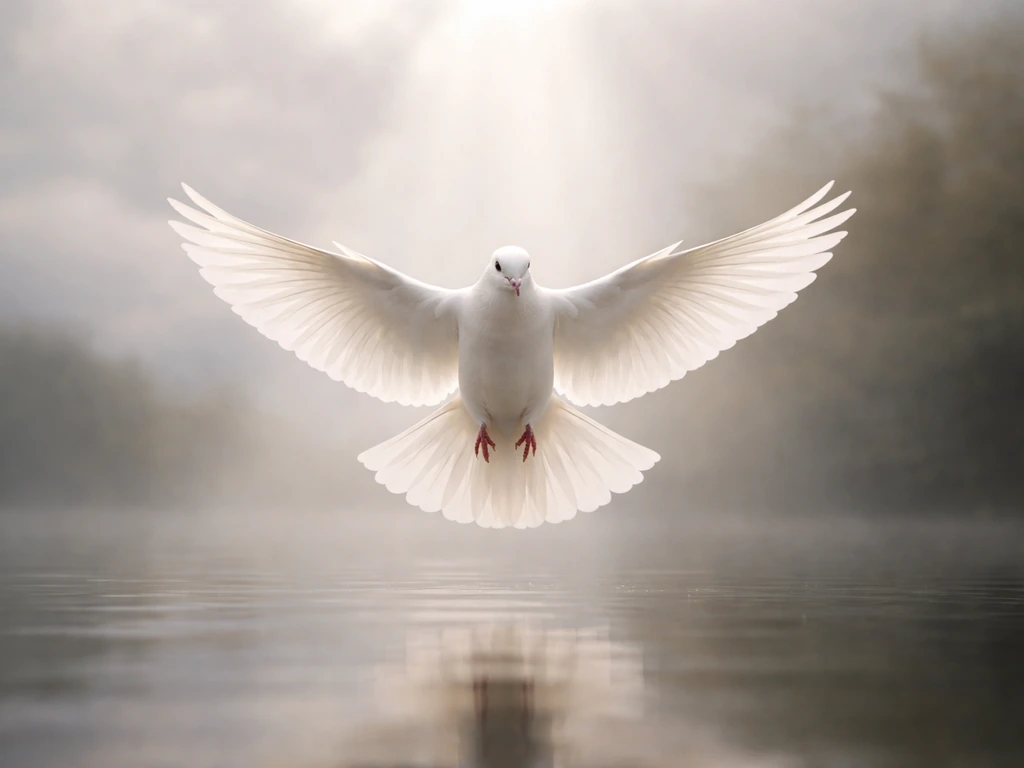
In Christian tradition, the white dove occupies a singular symbolic space. At Jesus' baptism, the Gospel accounts describe the Holy Spirit descending "like a dove" (Matthew 3:16, Luke 3:22), and while scholars note that Luke's account says "in the shape of a dove", implying a visible form rather than a literal bird, mainstream Christian interpretation has long treated dove imagery as a symbol of divine presence, peace, and approval. This is one reason a white dove encounter is often read by Christians as a moment of spiritual comfort or confirmation.
The other major biblical touchstone is Noah's ark. In Genesis 8:11, the dove returns to Noah carrying an olive leaf, a moment that has come to represent peace, trust in divine timing, and new life after devastation. The olive branch has since become a near-universal emblem of reconciliation, rooted in that single image of a white bird returning with a message. If you're in a season of waiting or rebuilding, that connection between a white bird visit and the promise of dry land can feel genuinely resonant.
Beyond doves, white swans carry a biblical-adjacent symbolic meaning in Christian contexts, often tied to grace and purity. White birds broadly, in Christian symbolism, are associated with the sacred and the holy rather than with luck per se, which is a meaningful distinction. The message in this tradition is less about fortune and more about presence: something sacred is near, or you are being called toward something higher.
What folklore and world cultures say about white bird omens
Outside of the biblical tradition, white bird encounters carry a wide range of cultural meanings that don't always agree with each other. That's not a problem, it just means you have more lenses to choose from.
In Celtic traditions, white birds, particularly white herons and white cranes, were considered otherworldly creatures, sometimes associated with the souls of the dead or with fairy realms. Encountering one was treated with reverence rather than celebration. In Hindu tradition, blank" rel="noopener noreferrer">the swan (called hamsa) is deeply connected to the goddess Saraswati and carries associations with purity, knowledge, and transcendence. The color white in Saraswati's iconography represents clarity and spiritual insight, not simply good luck. In East Asian contexts, the white crane is a symbol of longevity, wisdom, and the divine. It's viewed as a bridge between the mortal and immortal worlds.
Cuban religious traditions, particularly in syncretic Afro-Cuban practices, treat white dove encounters with particular spiritual seriousness, the white dove serves as a symbol within specific ritual contexts, and the meaning can differ significantly from general Western interpretations. This is a good reminder that geography and cultural background shape interpretation more than most people expect. Color alone doesn't determine meaning; tradition does.
Across European folk traditions, a white bird landing near a house was sometimes seen as a protective omen, and in some regions, as a warning. The difference often came down to behavior: a calm, lingering bird was protective; a frantic, circling bird was a warning. If you're interested in how color-specific bird symbolism works across traditions, the same logic applies to other birds. What a black bird visit means, for example, is almost a mirror image of white bird symbolism, death, mystery, and transition rather than peace and purity, which underscores how much color alone drives interpretation.
How to figure out which interpretation fits your specific encounter
This is where most people get stuck. They've read about dove symbolism and swan symbolism and Celtic omens, and now they want to know: which one applies to what I just saw? The honest answer is that the details of your specific encounter matter as much as any general meaning. Here's how to work through them.
Look at what the bird actually did
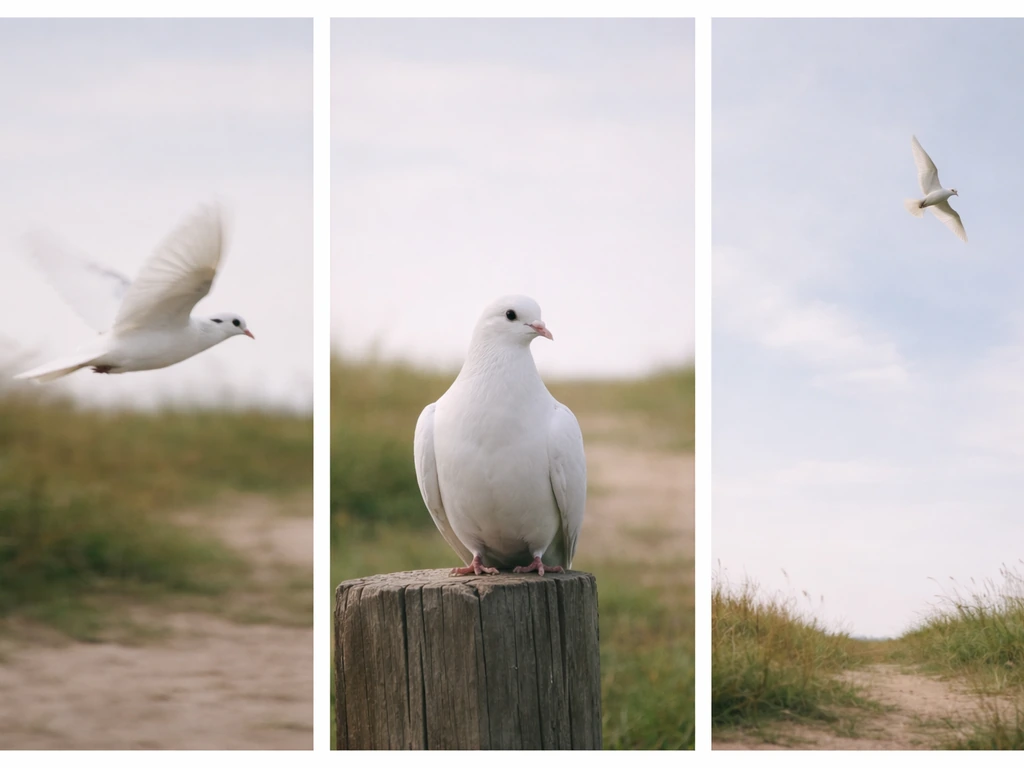
A white bird that lands calmly near you and sits for a while carries different weight than one that flew past quickly or circled overhead. A bird that flew directly toward you, made eye contact, or seemed unbothered by your presence is a very different experience from one that was panicked or disoriented. In ornithomantic traditions, the behavior of the bird was just as important as the species or color. Calm and direct = message of peace or presence. Frantic or erratic = possible warning, or more likely a practical concern (more on that below).
Consider the timing and location
Where did the bird appear? A white bird at a gravesite or during a funeral carries obvious emotional context. One appearing at your front door the morning you're starting something new has different resonance. One circling overhead during a difficult phone call is different again. Time of day, season, and what you were doing or thinking about when it appeared are all worth noting. These contextual anchors are what turn a general symbol into a personal message.
Pay attention to your emotional reaction
This one is underrated. Did you feel comforted? Startled? Peaceful? Sad? Your gut response to the encounter is often the clearest signal about what it means for you. A spiritual discernment framework sometimes called the Examen, used in various Christian contemplative traditions, encourages you to review the day by asking what brought you toward peace and what pulled you away from it. That same question applies here. Did the white bird visit leave you feeling more settled or more unsettled? That feeling is data.
Ask what's currently shifting in your life
White birds tend to arrive (symbolically) at threshold moments. If you're in a period of transition, loss, new beginning, or uncertainty, the timing of the encounter becomes meaningful simply because it intersects with something already alive in you. Ask yourself: What was I thinking about before the bird appeared? What's the biggest unresolved question in my life right now? What would it mean for me if this were a sign of peace or of change? You don't have to believe in signs to find that question useful.
Practical next steps after a white bird visit
Whether you're treating the experience as spiritual or simply memorable, there are concrete things you can do to process and honor it. These aren't mystical requirements; they're tools that help you extract whatever insight the moment holds.
- Journal about it right away. Write down every detail you can remember: the species if you know it, what the bird did, where it was, what time of day it was, what you were doing before it appeared, and what you felt. The details that seem small now often become significant in retrospect. Using a reflective journaling approach — walking back through the moment and asking what comes to mind — can surface insights you didn't know you had.
- Sit with the feeling before you research. Before you go down a symbolism rabbit hole, spend five minutes just sitting with your initial emotional response to the encounter. Analyzing your feelings with discernment means noticing whether the experience drew you toward something (hope, peace, clarity) or stirred anxiety and confusion. That direction matters.
- Set a simple intention based on what came up. If the encounter felt like a message of peace, you might set an intention around releasing something you've been holding. If it felt like encouragement, name the thing you need encouragement for. If it felt like protection, identify what you want to feel protected doing. Keep it simple and personal.
- Talk to someone in your community. In many traditions, spiritual experiences are meant to be shared and interpreted in community, not in isolation. Whether that's a spiritual director, a trusted friend, a pastor, or a like-minded online community, sharing what you experienced often clarifies its meaning.
- If the bird appeared repeatedly: note the pattern. A single visit is a moment. A bird that shows up every day for a week is a pattern, and patterns deserve more attention. When a bird visits you every day, the spiritual and practical implications shift, and it's worth examining both dimensions.
When to treat it as a real-world event instead
Not every white bird visit is a spiritual moment. Sometimes it's a wildlife situation that needs a practical response, and recognizing the difference is important both for the bird's safety and yours.
If the bird seems injured or disoriented
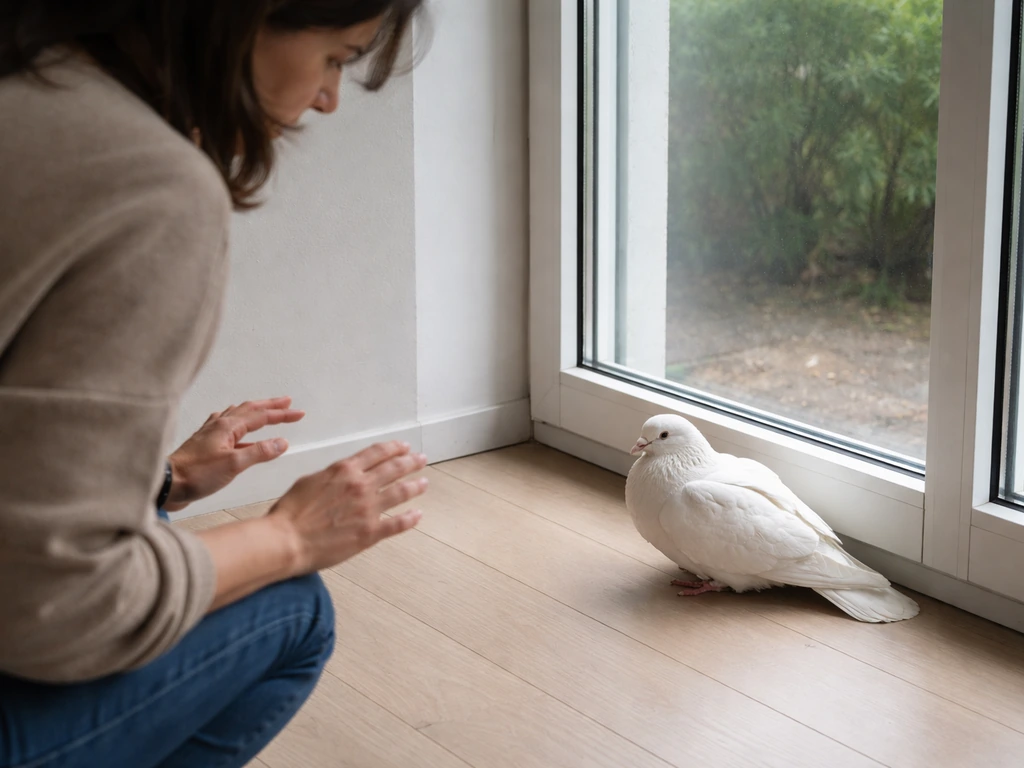
If the bird is sitting very still but appears unable to fly, is walking in circles, has an obviously drooping wing, or lets you get unusually close, it may be injured. Window strikes are a common cause: a bird flies into glass, becomes stunned or injured, and ends up on the ground nearby. If a bird appears uninjured and is just sitting quietly, give it some time and space to recover on its own, this is often enough after a mild window strike. If it's clearly hurt and can't recover on its own, don't try to handle it with bare hands. Place it gently in a box with a soft cloth for cushioning, and contact a licensed wildlife rehabilitator immediately. Do not give it food, water, or any medication.
Most injured adult birds need professional medical attention. Injured birds can also hurt you if you try to capture them, so calling a wildlife rehabilitator for guidance before doing anything is the safest first move for both of you.
If the bird entered your home
A white bird that flew into your house is a powerful symbolic moment in many traditions, but it's also a bird that needs to get back outside. Keep the room as calm and quiet as possible. Close interior doors, open the nearest window or exterior door, and give the bird time to find its way out. Avoid chasing it. If it's clearly disoriented or exhausted, you may need wildlife assistance. Window-strike risk is highest on nights of heavy migration or stormy weather, so if a bird comes in at those times, the cause is more likely environmental than supernatural.
Migration and weather as natural explanations
Depending on your location and the time of year, a white bird landing in an unusual place might simply be a migrating bird that's tired and off-course. Snowy owls, egrets, white ibises, and other white-feathered birds occasionally show up far from their typical ranges, especially after storms push them off path. If the bird looks healthy and calm, it may just need to rest before moving on. Watching it from a respectful distance and letting it leave on its own is usually the right call.
A quick look at white bird symbolism by species
| Species | Common Symbolic Theme | Cultural Traditions | Practical Notes |
|---|---|---|---|
| White Dove | Peace, Holy Spirit, love, new beginnings | Christian, Jewish, Cuban Santería, general Western | Often kept domestically; may be a released dove |
| White Swan | Purity, grace, transformation, holiness | Christian, Hindu (hamsa), Celtic, Norse | Protected in many regions; do not approach |
| White Egret/Heron | Purity of soul, patience, wisdom, solitude | East Asian, Indigenous American, metaphysical | Common near water; healthy and often near urban areas |
| White Crane | Longevity, divine connection, good fortune | East Asian (Chinese, Japanese), Celtic | Rare in urban settings; a genuinely unusual sighting |
| White Owl | Mystery, transition, messages from the unseen | Indigenous traditions, folklore, metaphysical | Nocturnal; daytime sighting may mean disorientation |
| White Seagull | Freedom, adaptability, coastal protection | Maritime folklore, Celtic | Common near coasts and lakes; often a natural presence |
How white bird symbolism compares to other colored birds
Color is a major driver of bird symbolism, and it helps to understand white birds in contrast to what their counterparts represent. Red birds, for example, carry a very different energetic signature. What a red bird visit means is typically framed around passion, vitality, and spiritual fire, a sharp contrast to the peace and purity associated with white birds. Similarly, what a yellow bird visit means tends to center on joy, optimism, and mental clarity. When you map these colors together, white sits at one pole: stillness, the sacred, and the transcendent.
Cardinals deserve a special mention here because they sit at an interesting crossroads. What it means when a cardinal visits you is one of the most commonly searched bird symbolism questions, and it often comes loaded with grief and afterlife meaning, a thread that also runs through white bird encounters. The difference is that white bird symbolism tends to be broader and less personally specific, while cardinal symbolism is often attached to a particular person who has died. If you're drawn to cardinal meaning alongside white bird meaning, it may be worth exploring how cardinal feeder traditions connect to angelic presence, since the two strands share an afterlife-communication theme that resonates with many people.
What to take from your encounter today
Here's the honest summary: a white bird visit doesn't come with a certified meaning. What it comes with is an invitation to pay attention. Across spiritual traditions, biblical texts, and folk cultures, the consistent thread is that white birds signal a moment worth noticing, whether that's a call toward peace, a message from someone you've lost, an encouragement at a threshold moment, or simply a reminder that the world is full of things that move you if you slow down enough to be moved.
The interpretation that fits best is usually the one that lands most clearly when you sit quietly with the question. What was happening in your life the moment the bird appeared? What did you feel? What do you most need right now, comfort, direction, peace, or courage? Odds are the white bird's symbolic weight points directly at that need. That's not a coincidence. That's attention meeting meaning, which is about as close to a sign as most of us ever get.
If the bird was real and possibly injured, take care of it first. If it was healthy and moved on, let it go, and write down what it stirred in you before that feeling fades. That's the part worth keeping.
FAQ
How can I tell whether a “sign” is spiritual meaning or just coincidence?
Try a simple 3-step filter, species or no species: (1) note the bird’s behavior (calm, lingering, direct approach, circling, or frantic), (2) note the context (threshold moment like a decision, grief moment, or routine task), and (3) match the result to your dominant feeling right after. If your strongest emotion was peace or relief, interpretations around presence and comfort usually fit better than luck or warning.
What if the white bird looks healthy, but the visit felt extremely intense?
Start by checking whether the bird’s behavior looks like a normal “mistake,” not an omen. Window strikes, windblown disorientation, and post-storm off-course movement are common, especially near dawn and dusk. If the bird seems healthy but simply resting, waiting quietly is often the most honest approach before assigning any message.
Does seeing the same white bird (or the same place) multiple times make the meaning stronger?
Yes, but be careful with over-assigning. A repeated pattern (same spot, same time window, multiple sightings over weeks) is a clue worth interpreting as “the theme matters,” but the meaning still hinges on what was happening for you each time. If you felt the same emotion across encounters, that consistency is more meaningful than the sheer number of visits.
What does it mean if a white bird lands near me versus just passing overhead?
If it landed near you, try to observe from a respectful distance and avoid turning it into a chase. In ornithomancy-style readings, landing calmly and staying is often read as reassurance, while persistent circling or repeated near-approach can indicate distraction or distress (including your presence blocking a route). In practice, the safest “next step” is letting it move on rather than trying to force an interaction.
How important is identifying the bird species, not just the color?
If you have the option, use identification clues like size, beak shape, and long-leg versus short-leg features, because doves, egrets, cranes, and swans can carry different symbolic associations. Also watch where it appears (yard versus window versus gravesite area). Even a rough ID can make your interpretation more specific without requiring perfect certainty.
If the bird visit made me feel uneasy, what does that usually mean?
Your gut feeling matters most, but “sadness” and “peace” can both be valid. A helpful decision rule is to ask: did the encounter leave you calmer, or did it leave you activated or fearful? Calm often aligns with comfort themes, while fear or dread often points to practical attention (for example, a nearby hazard like a nest risk) or to a need for careful, grounded reflection.
What should I do immediately if the white bird seems tame or can’t fly well?
Don’t treat “uninjured” as “safe to handle.” If a bird is unusually tame, lets you approach closely, or appears unable to fly, assume possible injury or shock. The article’s safest baseline is to give time and space if it seems mildly stunned, and if it cannot recover or appears impaired, use a box with soft material and contact a licensed wildlife rehabilitator.
If a white bird flies into my house, does that change how I should interpret it?
For a bird inside your home, the practical meaning is often the least mystical: it is disoriented and needs an exit path. Keep the room quiet, close interior doors, open the nearest exterior door or window, and avoid chasing. If it keeps colliding or shows severe exhaustion, wildlife assistance is the safer next step than repeated attempts.
How do I incorporate where the bird appears (front door, window, yard, inside) into the meaning?
Yes. The bird’s location can tilt the interpretation toward the life area it most naturally touches. A bird at a front door can connect to new beginnings or changes in access, while a bird at a yard or window can connect to attention and timing (something you noticed at home). A key caveat is not to force a story that doesn’t match your emotion and the situation.
How do I avoid over-interpreting in the moment and then second-guessing later?
Write down your exact observations right away, then pause for 10 minutes and revisit the question with calmer attention. The goal is to separate vivid symbolism from raw anxiety or surprise. If, after the short reset, your main takeaway still matches your core feeling, the interpretation is more likely to be “your” message rather than a momentary spike of emotion.
What’s a practical next step if I want to honor the visit without getting stuck in symbolism?
A good way is to name one actionable takeaway even if you treat it as symbolic. For example, “I should slow down today,” “I should make that decision,” or “I should care for someone I’m worried about.” Signs that improve clarity or behavior tend to be more useful than signs that only intensify uncertainty.
What if I can’t connect the visit to anything happening in my life right now?
If you want a test, compare it against your current “threshold” reality. The most fitting meanings usually align with something you are already moving through, like grieving, rebuilding, choosing, or healing. If you cannot connect it to anything in your life right now, it may be a moment of attention rather than a specific prediction.
How do I reconcile different cultural interpretations if they point in different directions?
If you’re trying to combine traditions, keep it simple: treat tradition-specific layers (for example, dove-focused peace imagery versus swan-focused purity imagery) as possible angles, not competing verdicts. Then let the encounter details and your felt response decide which angle “fits.” That prevents you from cherry-picking a meaning that doesn’t match the actual experience.
Next Article
What Does It Mean When a Bird Visits Your Home?
Practical reasons and spiritual symbolism when a bird lands by your door, plus what to do and how to interpret details.