When a cardinal shows up in your yard, on your windowsill, or seemingly following you around, it stops you in your tracks. The bird is hard to ignore, especially the male with that unmistakable red. Before you decide what it means, it helps to first understand why cardinals visit people and homes at all, because the answer is sometimes beautifully ordinary, sometimes genuinely mysterious, and often a little of both.
What Does It Mean When a Cardinal Visits You? Meanings

Maya Hartwell
3 Apr 2026
Practical reasons a cardinal might show up
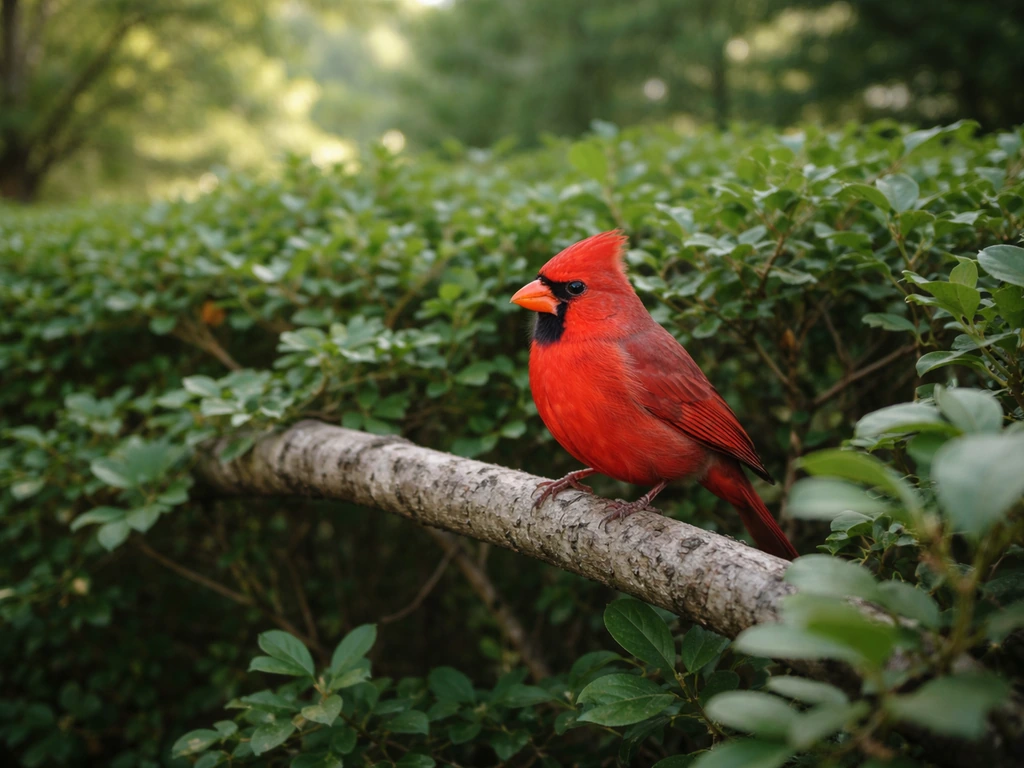
Cardinals are not rare birds. Northern Cardinals (Cardinalis cardinalis) are blank" rel="noopener noreferrer">year-round residents across most of the eastern and central United States, parts of the Southwest, and into Mexico. They don't migrate, which means they're in your neighborhood in January just as much as in June. Field-guide style sources also note that the Northern Cardinal is blank" rel="noopener noreferrer">non-migratory, with year-round residency across much of the U.S. and Canada. If one keeps appearing near you, there's a strong chance you've simply created or stumbled into habitat they already love.
Cardinals are drawn to dense, shrubby landscaping: hedgerows, forest edges, ornamental plantings, and backyard gardens with good ground cover. If your yard has berry-producing shrubs, thick bushes, or a feeder stocked with sunflower seeds or safflower (their favorites), you're essentially sending out a standing invitation. The bird isn't visiting you specifically at first; it's visiting its territory, and you happen to be in it.
Other practical triggers worth noting:
- Food sources: Bird feeders, fallen berries, or seed-rich gardens bring cardinals in close and often daily.
- Territory and mating: Male cardinals are aggressively territorial, especially in spring. If one keeps showing up in the same spot, it may be patrolling a nesting range or singing to attract a mate.
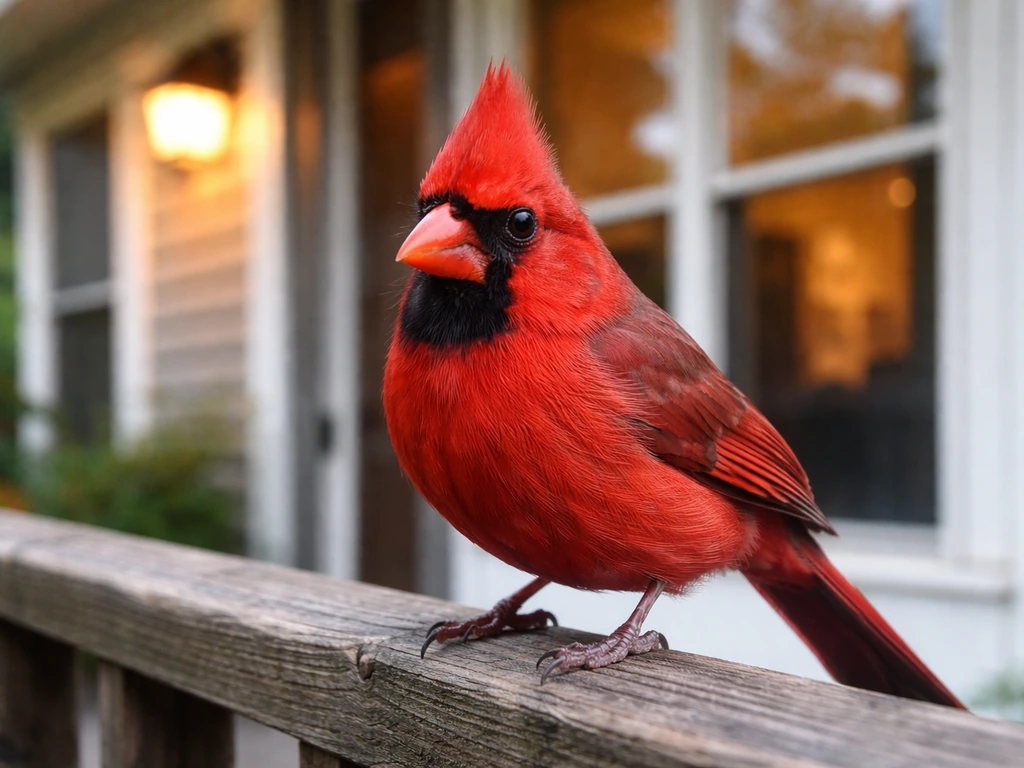
- Window reflection: Cardinals are one of the most commonly reported birds for 'reflection aggression.' A male cardinal will see his own reflection in a window and interpret it as a rival, pecking or hovering repeatedly. This isn't a spiritual message; it's a bird fighting himself.
- Weather and season: During cold snaps, cardinals crowd feeders more visibly. In late winter and early spring, their activity spikes as breeding season begins.
- Proximity by chance: If you spend time outdoors regularly, a bold cardinal may simply habituate to your presence and stop retreating when you appear.
Getting clear on the practical context first is not a way of dismissing the spiritual. It's actually more honest. If a cardinal is tapping your window every morning, knowing it's probably reacting to its reflection helps you respond appropriately on both levels: fix the window issue, and then sit with what the experience brings up for you personally.
What cardinals symbolize across spiritual traditions
The cardinal carries serious symbolic weight across a wide range of traditions, and the red color is almost always central to that meaning. Red is the color of life force, blood, passion, vitality, and urgency across most of the world's symbolic systems. A bird that is entirely, brilliantly red is hard to encounter without feeling something.
Indigenous and Native American traditions
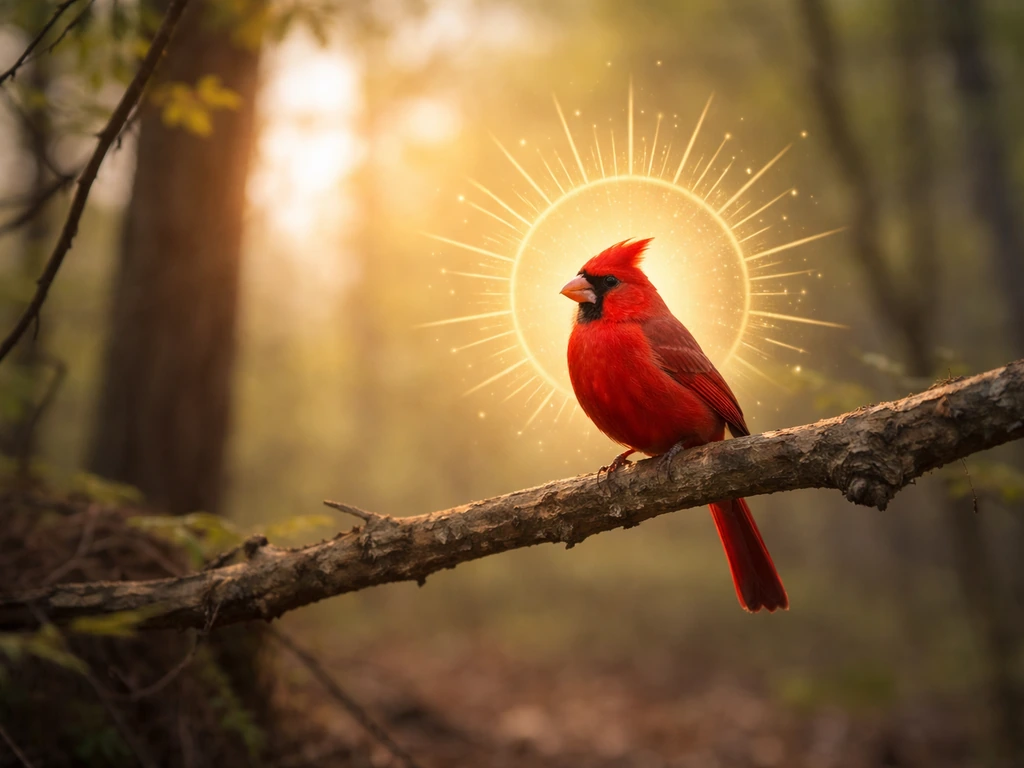
Several Native American nations, particularly in the Southeast and Midwest, associate the cardinal with the sun, good luck, and romantic relationships. Cherokee tradition connects the cardinal to the sun's daughter, linking the red bird to warmth, life, and courtship. Some traditions hold that if a cardinal crosses your path, a relationship (romantic or family) is about to shift in some way, either beginning, deepening, or healing. The bird is seen as a messenger between the physical and spiritual worlds.
Metaphysical and New Age frameworks
In contemporary metaphysical traditions, the cardinal is often interpreted as a signal to pay attention, specifically to what you're thinking or feeling at the exact moment the bird appears. The idea is rooted in synchronicity, the concept associated with Carl Jung that meaningful coincidences can carry personal insight when noticed consciously. In this view, a cardinal showing up isn't causing anything; it's a mirror. The question practitioners typically ask is: what was on your mind when the cardinal arrived? The answer is treated as the actual message.
Celtic and European folklore
Red birds in general have long been associated with fire, transformation, and the boundary between worlds in Celtic and broader European folklore. While the cardinal is a North American bird and doesn't appear in ancient Celtic texts specifically, red bird symbolism carries over into popular modern interpretations of Celtic spirituality, where it is linked to the element of fire, passionate action, and spiritual awakening. Some contemporary practitioners treat a cardinal sighting the way older traditions treated a visit from a robin redbreast: as a harbinger of change or a nudge from the other side.
Grief, remembrance, and the 'visitor from heaven' tradition
One of the most widespread modern beliefs about cardinals is that they carry messages from deceased loved ones. This belief is so common it has its own folk saying: 'Cardinals appear when angels are near. For many people, the phrase also connects cardinal sightings at feeders with angelic presence cardinals appear when angels are near. ' It's particularly strong in the American South and Midwest, and it shows up consistently in grief communities, hospice settings, and memorial culture.
The idea isn't tied to a single religion; it seems to cross denominational lines and show up in Protestant, Catholic, and secular families alike. The connection between cardinals near bird feeders and angelic presence is something many grieving families report finding comfort in, regardless of their formal belief system.
What the visit might mean for you personally
Across most of these traditions, a cardinal visit tends to carry a few common interpretive threads. None of them are prescriptive; they're invitations to reflection.
- Encouragement: Many people feel a cardinal sighting, especially during a hard season of life, as a nudge that they're on the right track or that help is present even if unseen.
- Remembrance: If you've lost someone recently (or not so recently), a cardinal's appearance often lands as a sense of contact or closeness with that person. This is reported consistently enough across different cultures that it's worth honoring, whatever your theology.
- A call to vitality: The red of the cardinal is energetically associated with action, passion, and life force. Its appearance can be interpreted as a prompt to stop drifting and re-engage with something you care about.
- Attention signal: In metaphysical terms, the cardinal asks 'what were you just thinking?' and treats your answer as the message. It's less about the bird and more about the moment it interrupted.
- Relationship focus: Given the strong romantic associations in multiple traditions, a cardinal's visit during a relational crossroads (a new connection, a conflict, a loss) often feels significant to people who are already paying attention to signs.
It's worth noting that cardinal symbolism shares some common ground with <a data-article-id='C421320D-82B2-44B4-8362-6958E2F91F1E'>the meaning of a red bird visiting you</a> more broadly, since color carries much of the symbolic load regardless of the specific species. If you're wondering what this kind of visit means beyond the cardinal, read our guide on what it means when a red bird visits you. But the cardinal's particular associations, especially with messages from the departed and with seasonal vitality, give it its own distinct character in folk and spiritual traditions.
How the cardinal's behavior shapes the meaning
Not every cardinal visit reads the same way, and most interpretive traditions (practical and spiritual) pay attention to the details of how the bird behaves, how long it stays, when it appears, and whether it comes back.
Timing of the visit
A cardinal appearing in the morning is traditionally read as a message of new beginnings or a prompt to start something you've been delaying. Evening visits, especially near dusk, carry associations with endings, reflection, and transition. Winter appearances (when the red bird stands out starkly against snow) tend to feel more symbolically weighted to observers, possibly because the bird is more visually dramatic in that context. Spring visits are often tied to renewal, new relationships, or fertility in the older folk traditions.
Distance and proximity
A cardinal that lands close, within a few feet of you, sits and watches you, or seems unbothered by your presence is generally considered more symbolically significant than one that passes through your yard at a distance. In practical terms, a bold cardinal may simply be habituated to humans. But in spiritual interpretation, that closeness is often read as intentionality, a message that feels personally directed rather than ambient.
Repeating visits
A single cardinal sighting can feel meaningful. A cardinal that returns to the same spot every day for a week carries a different kind of weight. Understanding what does it mean when a bird visits you everyday is worth comparing to your cardinal's pattern, because repeating visits often shift the meaning from coincidence to something more noticeable. Understanding what it means when a bird visits you every day is worth exploring if your cardinal has become a consistent presence, because daily visits shift the interpretation from 'coincidence' to 'pattern,' and patterns are where both practical and spiritual meanings get clearer.
Tapping or hitting your window
If a cardinal keeps tapping or flying at a window, the most likely explanation is territorial reflection aggression, as noted above. But spiritually, some traditions interpret this as an urgent message or an ancestor trying particularly hard to get your attention. Both interpretations can coexist: address the practical issue (apply window decals or break up the reflection), and spend a moment in quiet reflection about what the repeated 'knocking' might symbolize for you.
Location of the visit
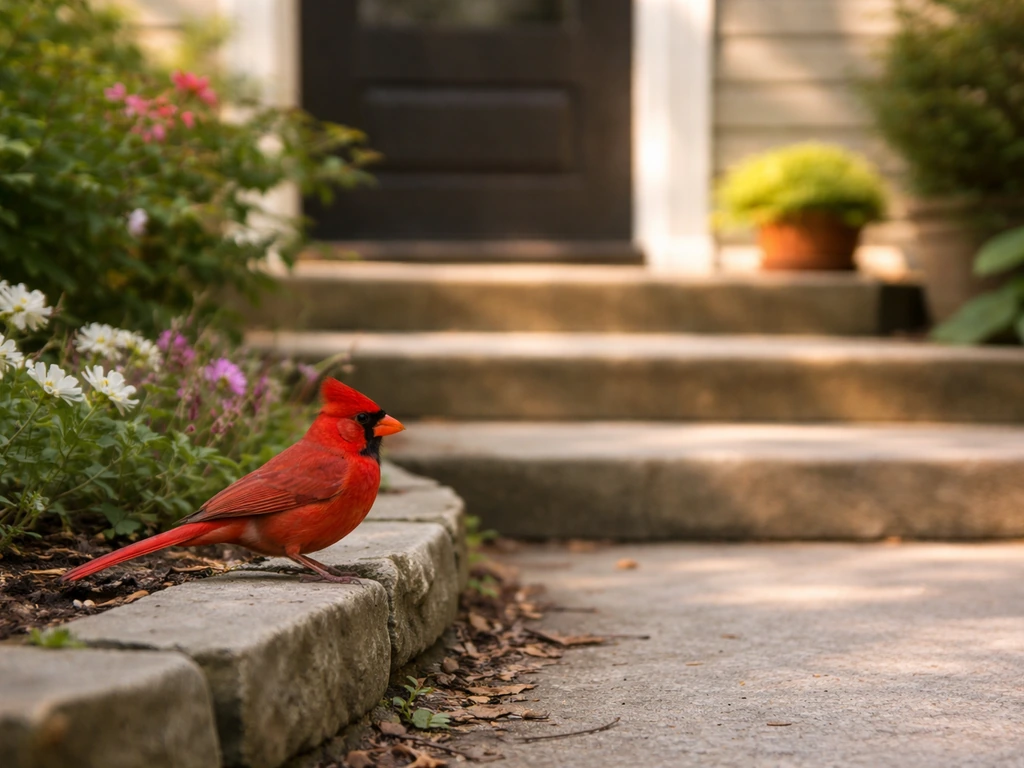
Where the cardinal appears matters in most folk traditions. A cardinal at your front door or threshold is often read as a visit or a welcome from the spiritual realm. One that appears at your window may be delivering a message specifically about your inner life or home situation. A cardinal inside your home (rare but reported) is treated as a significant omen in most traditions, though it also signals a practical emergency for the bird's safety. The spiritual significance of a bird visiting your home goes deeper than a casual yard sighting, and the threshold symbolism is worth exploring if that's where your encounter happened.
Biblical and folklore interpretations of cardinals and red birds
The Bible doesn't mention cardinals by name (the bird is North American and the texts are Middle Eastern), but red birds and birds as divine messengers appear throughout scripture. Birds in the Bible frequently function as signs of God's provision, presence, and timing. The sparrow is cited as evidence of God's attention to small things (Matthew 10:29-31). Ravens bring food to Elijah. The dove signals the end of the flood. In that interpretive tradition, any bird that arrives at a meaningful moment can be received as a form of divine communication.
Many Christian communities, especially in folk and rural traditions, have adopted the cardinal as a symbol of Christ's blood, sacrifice, and the enduring life of the spirit. The red bird becomes a reminder of redemption and the presence of the Holy Spirit. Some families specifically associate a cardinal's visit with a deceased Christian loved one now at peace, which connects to the broader 'cardinal as messenger' folk belief mentioned earlier.
In general American and European folklore, red-colored birds have historically been associated with good luck, passion, and warning. A red bird crossing your path in older European traditions was sometimes read as a fire omen, sometimes as a love sign, and sometimes as a signal that spiritual forces were active nearby. The interpretation depended heavily on the context and the traditions of the specific community. Today those threads are loosely woven together in popular culture under the broader umbrella of 'cardinal as spiritual messenger.'
Cardinals versus other bird visitors: a quick comparison
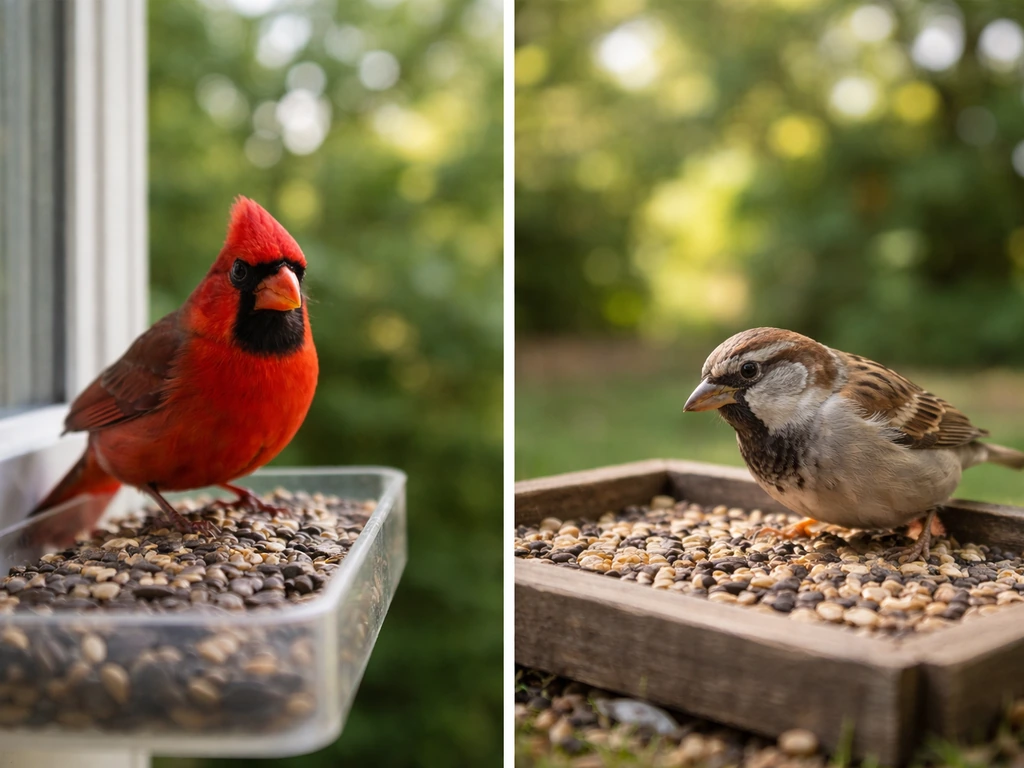
If you're trying to sort out what your specific bird encounter means, it helps to see how cardinal symbolism stacks up against other common bird visitors. Color carries a lot of the symbolic load, which is why a black bird visiting you carries very different traditional associations than a red one, and why a white bird visiting you tends to evoke themes of purity and peace rather than passion and urgency. The table below gives a quick orientation.
| Bird / Color | Core Symbolic Themes | Common Traditions | Practical Notes |
|---|---|---|---|
| Cardinal (red) | Vitality, passion, messages from loved ones, encouragement, spiritual attention | Native American, Christian folk, metaphysical, grief traditions | Year-round resident; feeder-attracted; window reflection aggression common |
| Black bird (crow/raven) | Transformation, mystery, intelligence, shadow work, omens of change | Celtic, Norse, indigenous, occult traditions | Highly intelligent; often found near human food sources |
| White bird (dove/egret) | Peace, purity, divine presence, new beginnings, transitions | Christian, Islamic, Greek, metaphysical | Doves may be released ceremonially; egrets follow water sources |
| Yellow bird (finch/warbler) | Joy, optimism, creativity, lightness, solar energy | Metaphysical, folk traditions, some indigenous | Migratory in many regions; seasonal appearance adds meaning |
The spiritual meaning of a yellow bird visiting you offers an interesting contrast to the cardinal: where red tends to feel urgent and charged, yellow is typically read as lighter, more joyful energy. Knowing the difference can help you calibrate your interpretation based on what the bird actually was.
What to do after a cardinal visit
You don't have to choose between 'it's just a bird' and 'it's definitely a message from my grandmother.' The most grounded approach holds both possibilities open and gives you something to actually do with the experience.
- Observe first: Before assigning meaning, spend a moment watching the bird. Note its behavior (calm, agitated, tapping, watching you), where it is, and what time of day it is. These details matter both practically and symbolically.
- Check your surroundings: Is there a feeder nearby? Reflective glass? Dense shrubs? Understanding the practical pull helps you assess whether this is a habitual visit or something out of the ordinary.
- Note your internal state: What were you thinking or feeling when the cardinal appeared? This is especially useful if you work with synchronicity or intuition-based practices. Your emotional landscape in that moment is often where the personal meaning lives.
- Sit with a brief reflection: If you use prayer, meditation, or intention-setting practices, this is a good moment for a short one. Ask inwardly what you need to hear right now, and listen without forcing an answer.
- Write it down: If the visit felt significant, note it. Date, time, weather, your emotional state, the bird's behavior. Patterns often emerge over multiple entries that you'd miss if you relied only on memory.
- Take one small action: Most spiritual traditions that treat cardinal visits as messages don't expect you to overhaul your life. They suggest tuning in and then acting on what surfaces. That might mean reaching out to someone, revisiting a stalled creative project, or simply spending five minutes in honest self-reflection.
When to focus on practical action instead of meaning
There are situations where the right response to a cardinal visit is less about spiritual reflection and more about taking care of the bird, your home, or your safety. Here's when to shift focus:
Window strikes and collisions
If a cardinal hits your window and falls stunned or injured, it needs help, not interpretation. Homes with bird feeders are at roughly double the risk of bird-window collisions compared to homes without feeders, according to U. S. Fish and Wildlife Service data.
Reflective or transparent glass appears to birds as open sky or reflected habitat, leading them to fly straight into it. If this is happening repeatedly, apply window strike deterrents: external window film, hanging cords or screens, or repositioning feeders either within 3 feet of the glass (too close to build up dangerous speed) or farther than 30 feet away.
A bird that has hit a window and is sitting dazed on the ground should be placed gently in a dark, ventilated box for 15 to 30 minutes and then released outside once it's alert. Contact a wildlife rehabilitator if it doesn't recover.
Territorial window tapping
A cardinal tapping your window repeatedly is almost certainly fighting its own reflection. This is stressful for the bird and can go on for weeks during breeding season. It's not a sign of distress in the way a collision is, but it is worth breaking up the reflection: soap the outside of the window temporarily, hang something that moves (like strips of paper or a hawk silhouette), or cover the glass from the outside during peak tapping hours (usually early morning).
A cardinal indoors
A bird inside your home is frightened and needs to get out. Close doors to other rooms, open the window or door closest to the bird, dim the lights to reduce the bird's panic response, and stand back. Don't chase it. If it won't leave on its own, a large towel thrown gently over it allows you to carry it outside safely. Once the bird is out, then reflect on what the experience meant to you, if that's part of your practice.
Signs of illness in the bird
A cardinal that is sitting on the ground and won't move, seems unable to hold its head up, has feathers fluffed in warm weather, or allows you to walk right up to it without flying away is likely sick. Don't handle it with bare hands. Contact your local wildlife rehabilitator or state wildlife agency. Sick birds can occasionally carry salmonella or other pathogens, so hand-washing after any contact is essential.
Property and garden signals
A sudden influx of cardinals (or any birds) in your yard can signal that you've accidentally created excellent habitat, sometimes more habitat than you intended. Dense, unmanaged shrubs can also attract other wildlife. If you're seeing more birds than usual, it may be time to assess your landscaping and feeder setup, especially if you're also seeing signs of rodents drawn to spilled seed.
The practical and the symbolic don't have to compete. A cardinal that visits you during a hard week, lands close, and watches you for a moment before flying off can be both an animal doing animal things and an experience that carries genuine personal meaning. Most people who've had that kind of encounter already know, in their gut, which frame feels true for them. The job of this guide is to give you enough information to hold both with clarity, so you can respond wisely to whatever the visit actually is.
FAQ
How can I tell if the cardinal is visiting for food or for symbolism?
Yes, repeated visits can happen simply because cardinals learn a reliable food source. If the bird keeps returning to the same feeder or the same patch of shrubs, try taking down the feeder for 3 to 7 days, then observe whether the behavior stops. If it stops, the “message” is likely environmental rather than spiritual.
What if the cardinal shows up right after something important happens to me?
A cardinal visiting on a specific day can still have a practical cause even if the timing feels meaningful. Check whether there was a recent change in your yard (new shrub growth, added seed, cleared brush, or a new reflection on a window). If the environment changed, interpret the encounter through both lenses, starting with the most immediate cause.
What should I do if it keeps hitting or tapping the same window?
If you see a cardinal and it repeatedly targets one window, prioritize safety and prevention over interpretation. Use a quick test: cover or block that window from the outside for a few hours (during its peak hours, often early morning). If collisions or tapping reduce, you’ve confirmed reflection behavior and can continue with window strike deterrents.
Does a cardinal meaning change if it lands near me versus inside my home?
It depends on what you mean by “visits you.” If it lands close, stays briefly, and then leaves, people often treat it as personal symbolism. If it enters your home, that is mostly a panic/safety issue, and your immediate priority is getting it out safely, then reflecting afterward.
Can breeding season change how often cardinals show up and how intense they act?
Yes. Cardinals often pair up and become more territorial during breeding season, so increased activity can spike in spring and early summer. If you notice aggressive behavior (chasing, multiple window hits, persistent tapping), treat it as nesting or reflection aggression first, then consider any personal meaning you associate with it afterward.
Is it okay to treat a cardinal visit as comfort from a deceased loved one, and what if it makes me upset?
If you’re grieving, a cardinal can feel especially comforting, but watch for signs of distress that make it harder to function day to day. A helpful middle step is to set a short ritual (for example, a brief moment of remembrance) and then return to practical coping, like support from friends, a counselor, or a grief group.
What if I find a cardinal after a window collision, should I feed it?
Some people try to “help” by feeding a bird right after a window hit, but that can prolong stress or delay recovery if the bird is injured. If the bird is stunned, use the dark, ventilated box method for 15 to 30 minutes, then release when alert. If you are uncertain, contact a wildlife rehabilitator instead of guessing.
How do I know when the bird might be sick, not just symbolic?
If you see a cardinal on the ground repeatedly and it does not fly away, the “message” should take a back seat to health and safety. Look for clear signs like lethargy, inability to hold its head up, or fluffed feathers out of season. Do not handle with bare hands, and contact a wildlife rehabilitator.
How should I handle it if I don’t know what to “ask” or “read” from the encounter?
Avoid making a certainty out of one encounter. A simple way to reduce misinterpretation is to write down what was on your mind, then wait for a second confirming detail (like recurring timing, location, or behavior). If nothing else matches, the experience may still matter emotionally without needing a fixed prophecy.
Is it safe or appropriate to try to interact with a cardinal that seems very calm?
If the bird seems too tame, it still can be normal habituation, especially around feeders. A safety-oriented approach is to keep distance, use humane deterrence if it’s repeatedly hitting windows, and avoid trying to approach or “interact” closely. You can acknowledge the visit without rewarding risky behavior.
Next Article
Why Is My Bird Flapping Its Wings at Me? Causes and What to Do
Understand why your bird flaps wings at you and what to do, from hormones and stress to attention and warnings.