
When a bird shows up at your window, doorstep, or garden every single day, your first question is usually a practical one: why this spot, and why every day? Your second question, if you're honest, is often a softer one: is this trying to tell me something? Both questions are worth taking seriously, and neither cancels the other out. A daily bird visit almost always has a real-world explanation, and it can still carry personal meaning. The trick is figuring out which explanation fits your situation, so you're not reading spiritual significance into a robin who just really likes your suet feeder.
What Does It Mean When a Bird Visits You Every Day?

Maya Hartwell
14 Apr 2026
First, rule out the common real-world reasons
Before you assign any meaning to a bird's daily appearance, it's worth running through the most common natural explanations. blank" rel="noopener noreferrer">Birds are creatures of habit, and those habits are driven by food, territory, nesting, and light, not mystery. Once you can identify which one applies, the remaining sense of meaning (if any) becomes much cleaner to work with.
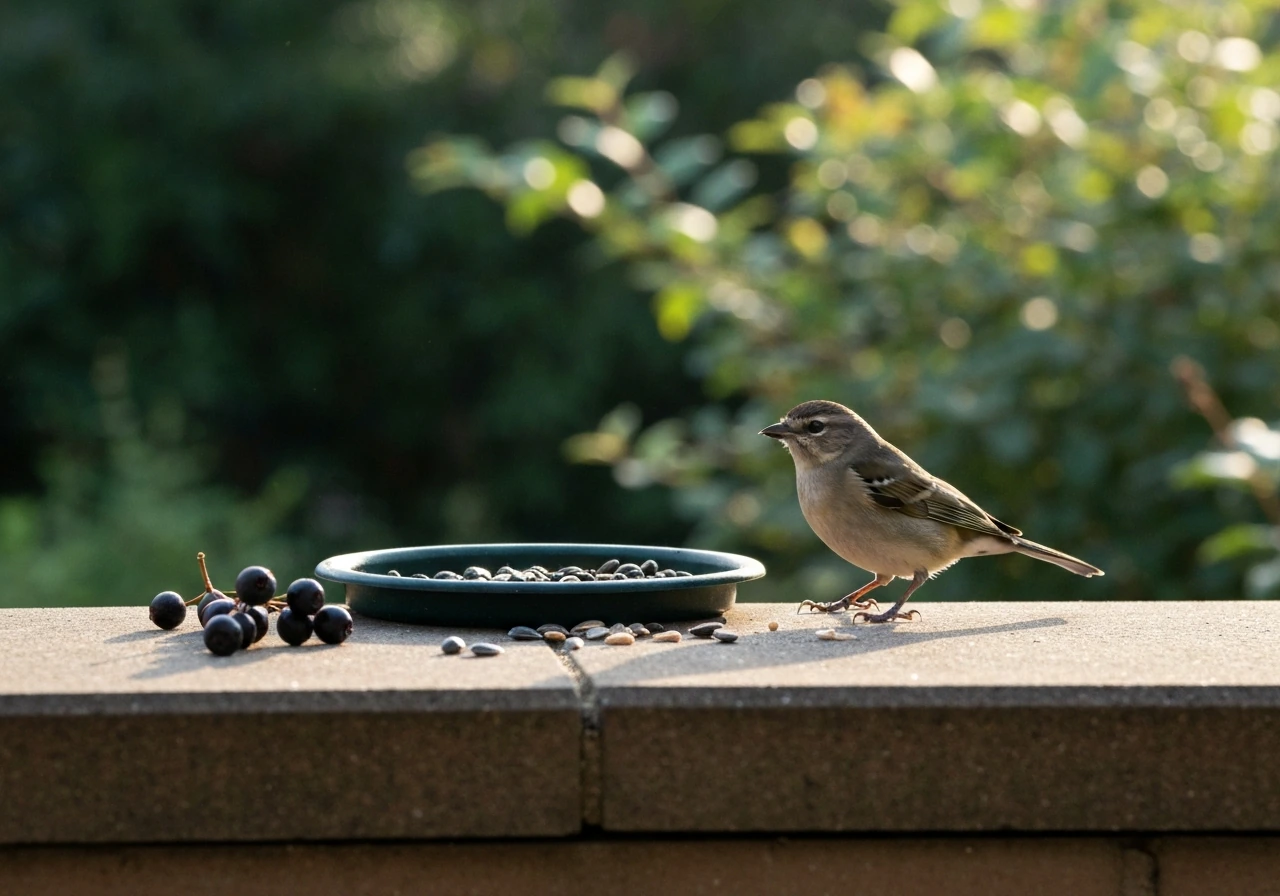
- Food source: This is the most common reason by far. If you have a feeder, berry-producing shrubs, an uncovered compost bin, or even a predictable morning routine of leaving crumbs on the porch, a bird has learned your spot is reliable. Research on bird cognition shows that many species use what's called time-place learning, associating a specific location with a consistent feeding window and returning at roughly the same time each day.
- Territory: Many birds, especially songbirds, establish and defend territories during spring and summer. If your yard, window ledge, or porch falls within a bird's claimed territory, you're simply inside its daily patrol route. It's not visiting you, it's visiting its territory, which happens to overlap with your home.
- Nesting nearby: During nesting season (roughly March through August in most of North America), birds visit the same spots repeatedly to gather materials, check sites, or feed young. A key behavioral clue is seeing the bird carrying grass, moss, spiderwebs, or soft fibers in its bill. According to bird behavior guides, most birds only carry items in their bills during nesting, so this is a reliable signal.
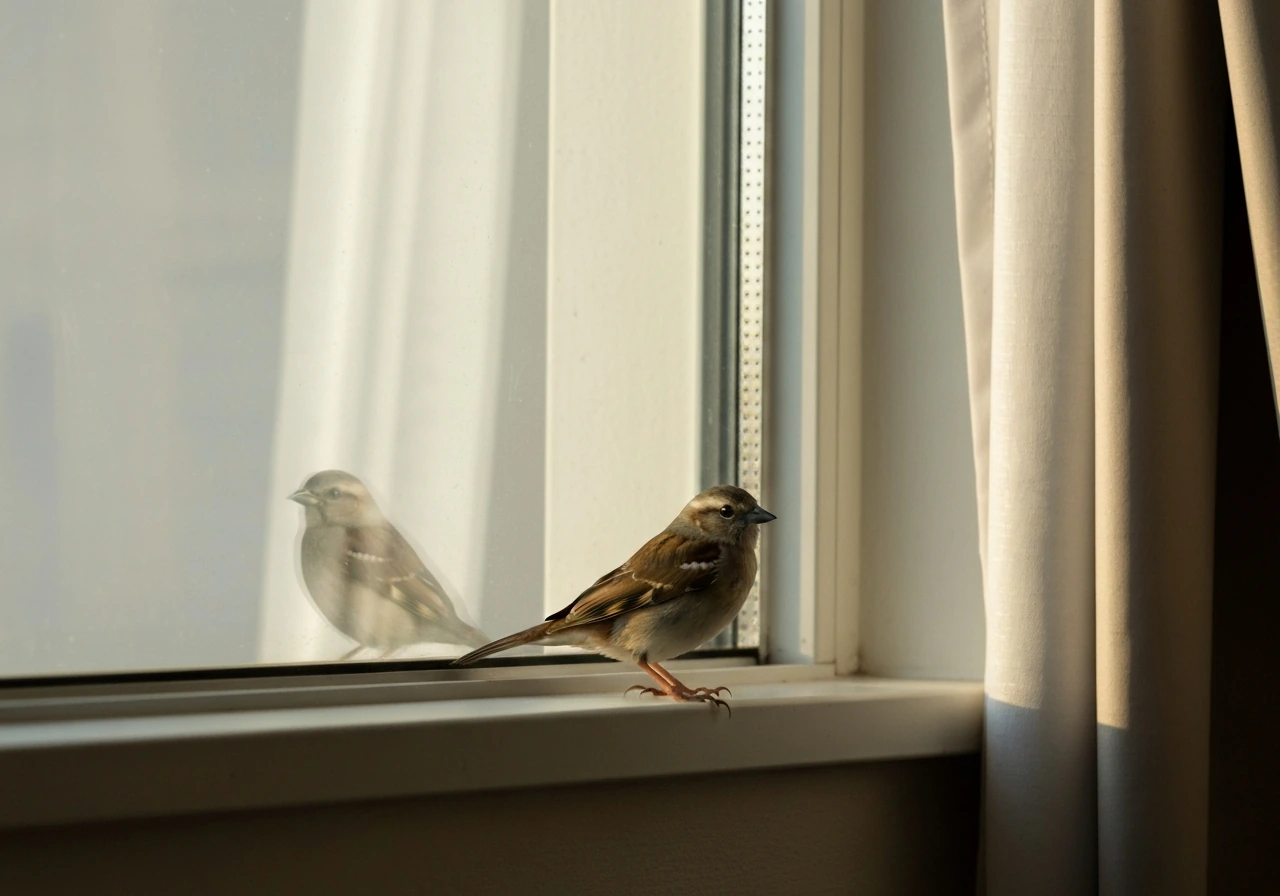
- Window reflections and light: Birds don't perceive glass as a barrier. They frequently mistake window reflections of sky, trees, or habitat for open flight paths or rival birds. If a bird is tapping, hovering, or repeatedly flying at a window, it's almost certainly responding to its own reflection, not trying to communicate with you.
- Learned routine and site fidelity: Some species return to the same breeding or wintering sites year after year, a trait called philopatry. If a bird visited your garden last season and survived, it 'knows' your location as a safe, resource-rich spot and will return reliably, sometimes for years.
Running through this checklist honestly takes about five minutes and will answer the question for a significant portion of people reading this. If you can point to a clear practical reason, great. If you genuinely can't, or if the visits feel unusual in timing, intensity, or species for your area, then the spiritual and symbolic layer is worth exploring.
How to observe and identify: species, location, and behavior clues
Before you can interpret a visit, you need to know what you're actually dealing with. A cardinal showing up at your window every morning carries very different cultural weight than a crow, a sparrow, or a pigeon. Identification doesn't require being an expert, but it does require slowing down and looking carefully.
Audubon's beginner approach to bird ID starts with four basic field marks: overall size and shape, bill structure, plumage markings, and what the bird is actually doing. A chunky bird with a thick, seed-cracking bill is in a completely different category from a slender, insect-probing bird with a thin curved beak. These physical details narrow your options fast. Vocalizations can help too, since some bird calls are instantly recognizable, though calls alone aren't always enough to confirm a species.
Once you know what species you're dealing with, think carefully about location and behavior. Is it visiting your window specifically, or your yard more broadly? Is it singing, watching silently, tapping the glass, bringing nesting material, or landing close to you personally? Is it alone or part of a flock? Each of these details shifts both the practical and symbolic interpretation. A bird that watches you quietly from a branch for extended periods reads differently than one that taps your window repeatedly at dawn. The emotional context matters too: do you feel comforted, startled, or like something is asking for your attention? That felt sense is worth noting, because it often points toward the interpretation that will resonate most personally.
A quick species-to-location cross-reference
| Bird Type | Common Visit Location | Likely Natural Reason | Common Symbolic Theme |
|---|---|---|---|
| Cardinal (red) | Feeders, garden, window | Territory, food source | Good luck, messages from loved ones |
| Crow or raven | Yard, rooftop, nearby trees | Curiosity, food scavenging, intelligence-driven exploration | Transformation, wisdom, caution |
| Dove or pigeon | Porch, windowsill, walkway | Food, urban habitat comfort | Peace, hope, spiritual renewal |
| Sparrow | Doorstep, garden, feeder | Abundant food, nesting proximity | Simplicity, community, protection |
| Robin | Lawn, garden perimeter | Earthworm foraging, territory | New beginnings, seasonal change |
| Bluebird | Feeder, garden edge | Territorial patrol, food | Happiness, good fortune, love |
| Hummingbird | Flowers, feeder, close personal space | Nectar source, learned feeder route | Joy, resilience, messages of lightness |
Spiritual meanings of repeated bird visits

Across spiritual traditions, a bird that arrives once is an encounter. A bird that arrives every day is a relationship, or at least that's how many people intuitively experience it. The repeated nature of the visit is what shifts it from coincidence into something that feels personally addressed. Popular spiritual interpretations cluster around a few consistent themes: guidance (the bird appears when you're facing a decision), comfort (especially after grief or loss), protection (the bird as a kind of watchful presence), and messages from loved ones who have passed. None of these are scientifically provable, and responsible spiritual writing is honest about that. They are frameworks for personal meaning, not literal instructions about what will happen next.
What makes the daily pattern feel different from a one-off sighting is the repetition, and in spiritual interpretation, repetition is often read as emphasis. A single visit might be chance; a visit every morning for two weeks feels like it's asking you to pay attention to something. The most grounded spiritual advice I've encountered treats the bird as a symbol rather than a deterministic messenger: it's inviting reflection, not delivering a verdict. If you find yourself drawn to the spiritual layer, the useful question isn't 'what is this bird telling me to do?' but rather 'what area of my life does this symbolism map onto right now?'
Species-specific meanings do matter in spiritual frameworks. If you're curious about a particular color or type, the interpretations vary considerably. For example, if you'd like to explore what it means when a cardinal bird visits you specifically, that symbolism is deeply tied to themes of love, vitality, and connection with those who have passed. Similarly, encounters with darker-colored birds carry their own distinct tradition of meaning.
Biblical and faith-based interpretations
Christian scripture uses birds as everyday illustrations rather than omens, which is an important distinction. In Matthew 6:26, Jesus points to birds as evidence of God's provision: 'Look at the birds of the air; they do not sow or reap or store away in barns, and yet your heavenly Father feeds them.' The birds here are not signs predicting outcomes, they're reminders to trust in care that's already present. This is a meaningful reframe for someone reading spiritual significance into a daily bird visit: the encounter might not be a message about the future so much as an invitation to notice the abundance and care that's already surrounding you.
The dove in Genesis 8:11, returning to Noah's ark with a freshly plucked olive leaf, is one of the most enduring bird symbols in the Abrahamic tradition. In popular Christian interpretation, the dove's return after the flood represents hope, renewal, and the end of a difficult season. If you're going through a hard stretch and a dove has started appearing daily, that symbolic resonance is available to you regardless of whether you treat it as a literal sign or a poetic comfort. Other faith traditions carry their own bird symbolism: in Celtic spirituality, birds are often seen as messengers between this world and the next; in many Indigenous traditions, specific birds function as clan totems or seasonal guides. The common thread across traditions is that birds occupy a liminal space, moving between earth and sky, and that liminality has always made them candidates for carrying meaning.
Folklore and cultural symbolism: what daily visits are said to mean
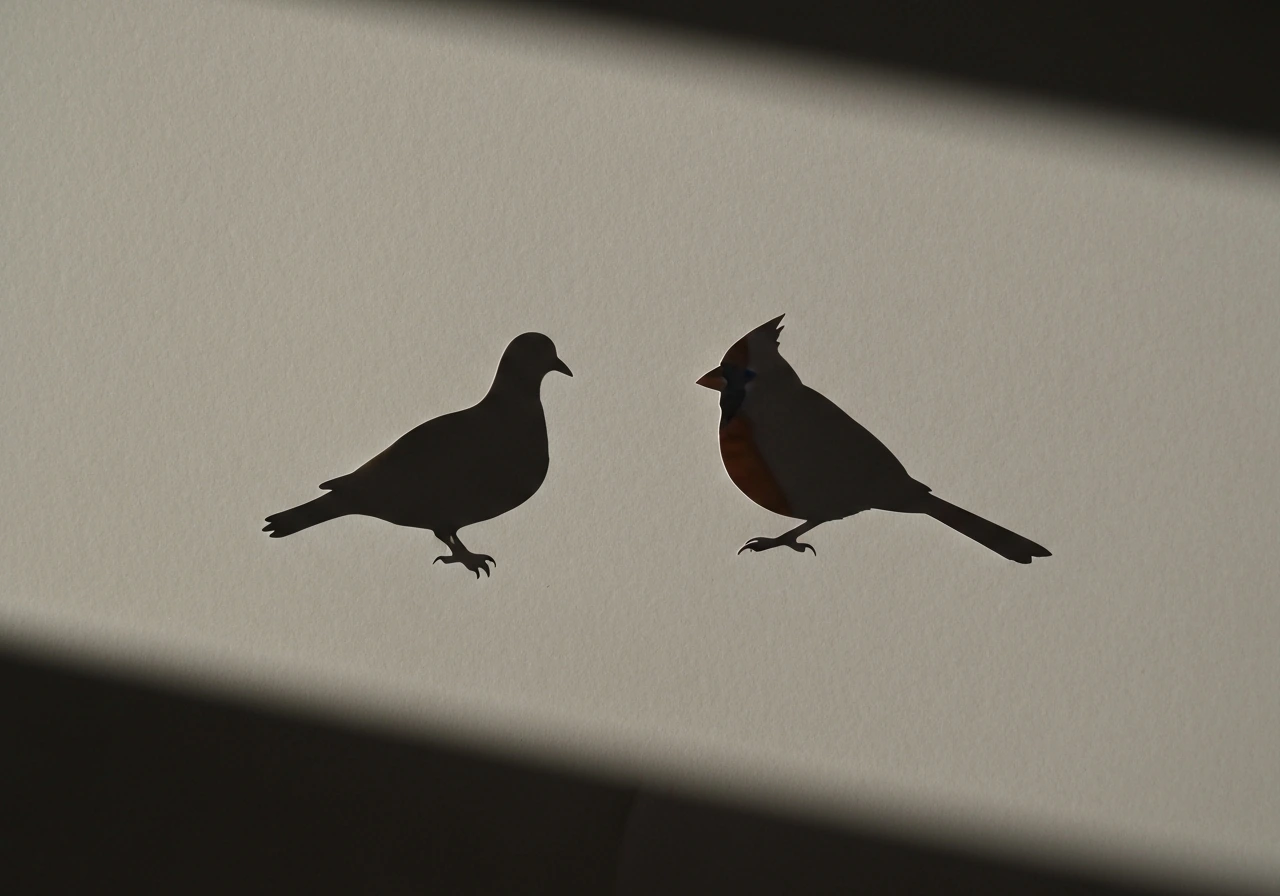
Folklore around bird visits is extraordinarily varied and often contradictory across cultures, which is worth knowing before you lean hard on any single interpretation. In European folk traditions, a bird repeatedly tapping a window was sometimes read as an omen of death or change in the household. In other traditions, the same behavior was seen as a spirit of an ancestor trying to make contact. In Asian cultures, particularly Chinese and Japanese folklore, certain birds visiting the home are associated with good fortune and prosperity. The wide range of interpretations means there's no universal 'correct' reading, only traditions that you may or may not personally resonate with.
Color plays a large role in folklore symbolism. A red bird visiting your home carries associations with passion, vitality, and sometimes warning depending on tradition. White birds are almost universally associated with peace, purity, and spiritual presence, a consistent thread across Western, Eastern, and indigenous traditions. Black birds tend to attract the most dramatic folklore, ranging from trickster energy to prophecy to transformation. If you want to go deeper on the cultural weight of your specific visitor, what it means when a black bird visits you versus a brightly colored bird can differ substantially in both folk meaning and emotional register.
One honest limitation of internet-era bird folklore is that many 'meanings' circulating online are author-invented or loosely aggregated from multiple unrelated traditions without clear sourcing. A meaning that feels deeply true may be genuine cross-cultural wisdom, or it may be something a blog post generated in 2018. That doesn't make personal resonance invalid, but it's worth holding the specific 'meaning' lightly and paying more attention to what the encounter stirs in you personally.
Metaphysical approaches: energy, intuition, and synchronicity
In metaphysical frameworks, a bird that appears every day isn't explained by territory or food sources, it's understood as a synchronicity: a meaningful coincidence that signals alignment between your inner state and the outer world. Carl Jung's concept of synchronicity proposed that events can be connected through meaning rather than direct causation, and many spiritual practitioners apply this framework to animal encounters. The bird isn't 'sent' to you in a mechanical sense; rather, you and the bird are part of the same unfolding, and noticing the pattern is itself the invitation.
In energy-based traditions, specific birds are said to carry particular vibrational frequencies. Hummingbirds are associated with joy and lightness. Eagles with clarity and higher perspective. Owls with wisdom and transition. From this view, whatever bird keeps showing up is mirroring something that's active in your own energy field right now, whether that's something you need more of or something you're already embodying. A yellow bird visiting you might point toward optimism and mental clarity, while a white bird carries connotations of spiritual openness. The practical application of this framework is to sit quietly with the bird's symbolic associations and ask honestly: where does this land in my life right now?
The most responsible version of this approach treats the encounter as an invitation to reflection rather than a prediction. Metaphysical traditions at their best offer a mirror, not a map. If you're in a period of transition or grief and a bird appears daily, the metaphysical interpretation says: pay attention to what this stirs in you. That internal work has real value regardless of whether the bird is 'trying to communicate' in any literal sense.
What different birds tend to signal, spiritually speaking
Because the species matters so much in symbolic interpretation, it helps to have a working reference. Many people find that a bird visiting their home specifically carries different weight than one they encounter outdoors, since the home represents personal sanctuary and inner life in many symbolic systems. Below is a broad-strokes guide to what repeated visits from common bird types tend to mean across multiple traditions, presented as interpretive options rather than definitive truths.
- Cardinals: Widely associated with messages from loved ones who have passed, good luck, and vitality. The red color amplifies associations with life-force and passion. If you've been wondering whether a cardinal visit carries specific significance, there's a rich tradition connecting these birds to angelic presence, and some people even keep a dedicated space, like a bird feeder, as a kind of ongoing invitation for that connection.
- Doves and white birds: Peace, hope, spiritual renewal, and the presence of the divine. Particularly resonant after loss or during periods of major transition.
- Crows and ravens: Transformation, intelligence, and the liminal space between one phase of life and another. Often misread as bad omens, but in many traditions they're guides rather than warnings.
- Sparrows and small brown birds: Protection, community, and the reminder that small things have inherent worth. In some folk traditions, sparrows near the home signal that the household is spiritually protected.
- Owls: Wisdom, transition, and the unseen. An owl visiting during daylight hours is especially notable and often read as a significant threshold moment.
- Blue birds: Happiness, love, and good fortune. In many North American folk traditions, seeing a bluebird is considered one of the most straightforwardly positive bird encounters.
If you're specifically drawn to the meaning of a white bird visiting you, the symbolism is remarkably consistent across traditions in a way that most bird colors aren't, making it one of the cleaner symbolic reads available.
Practical next steps: what to do today
Whether you're leaning toward a practical explanation, a spiritual one, or both, there are concrete things you can do right now that will help you either understand the visits more clearly or respond to them more intentionally.
If you want to understand the visits better
- Document the pattern. For the next week, note the time of day, the bird's species (even an approximate description helps), where it appears, and what it's doing. Patterns reveal cause. If the bird consistently arrives within 20 minutes of when you put food out, that's a time-place learning response, not a spiritual appointment.
- Identify the species using Audubon's four-point method: size and shape, bill structure, plumage markings, and behavior. A free app like Merlin Bird ID (Cornell Lab) can also identify birds from a photo or described field marks in seconds.
- Look for nesting material. If the bird is carrying grass, moss, or fibers in its bill, it's nesting nearby. That explains the frequency and you can decide whether you want to support it (by leaving appropriate materials) or gently discourage further nesting near high-traffic areas.
If you want to stop the visits
- Remove food attractants. Take down or relocate feeders, seal compost bins, and trim berry-producing shrubs near windows or entry points.
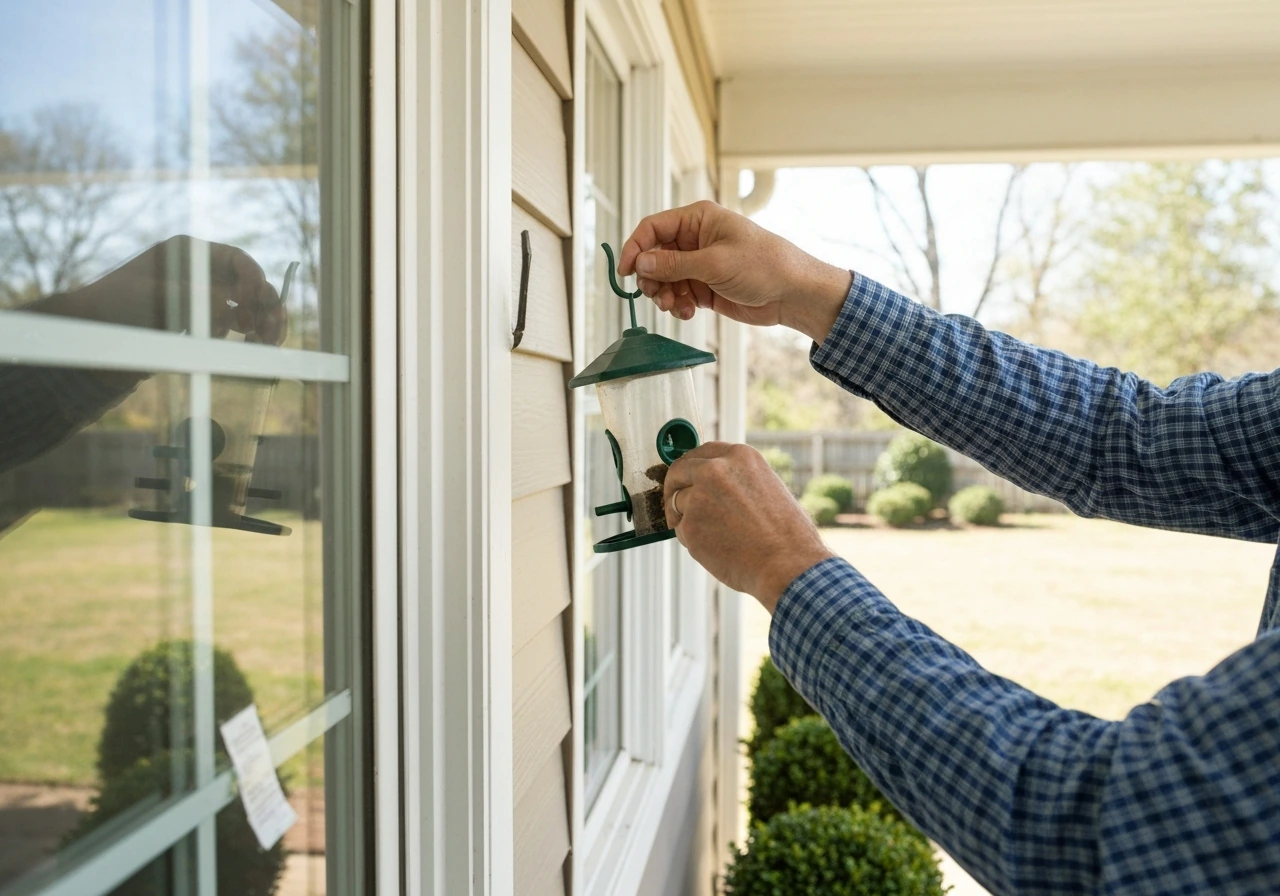
- Address window reflection issues. If a bird is tapping or repeatedly flying at a window, apply visual markers spaced no more than about 2 inches apart on the outside of the glass. This makes the barrier visible and prevents the bird from perceiving the reflection as open air. Reducing interior lighting visible from outside also helps, especially during migration season when artificial light can disorient birds flying at night.
- Limit nighttime lighting that's visible from outside. Turning off nonessential lights, drawing shades after dark, and angling or shielding exterior lights can significantly reduce the number of birds drawn to your home's perimeter.
If you want to encourage the visits intentionally
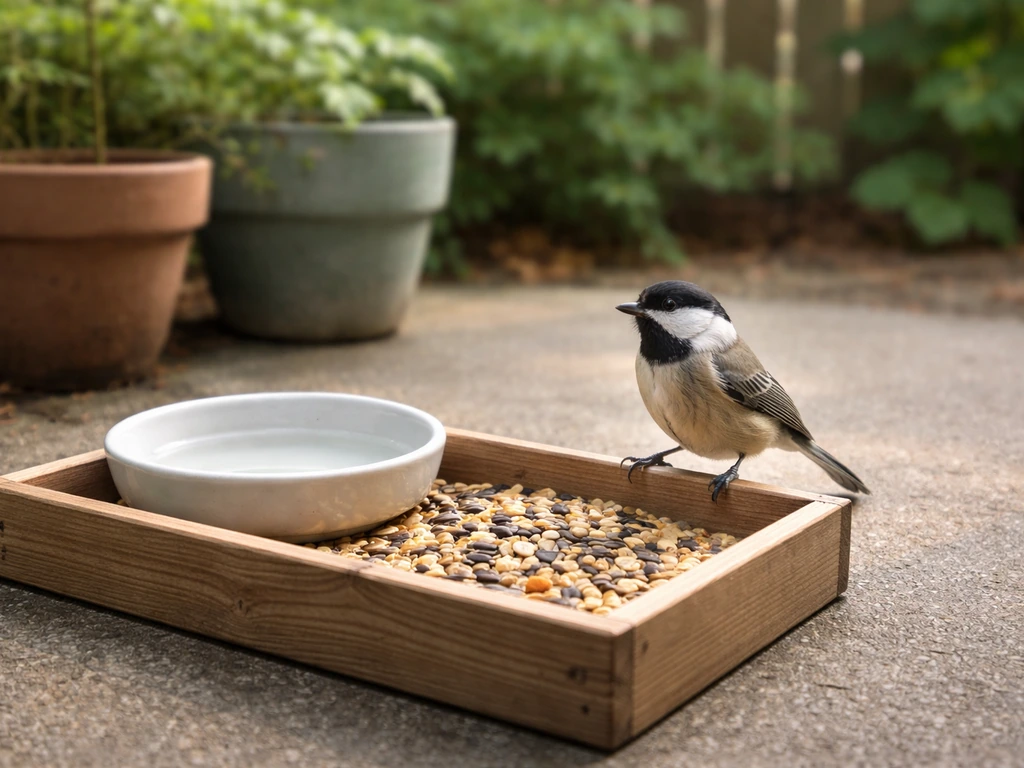
- Set up a consistent feeding station at a time that aligns with the bird's natural pattern. Time-place learning means the bird will begin anticipating the food and the relationship becomes reliable.
- Plant native species that provide food and shelter. Native berry-producing plants and insect-attracting flowers support the bird's full ecological needs, not just supplemental feeding.
- If cardinals are your daily visitor and you're drawn to the spiritual tradition, some people find it meaningful to set up a dedicated feeder as a kind of intentional welcoming space. There's even a folk tradition captured in the phrase that cardinals appear when angels are near, which frames the feeder as something more than a bird-feeding station.
Safety cautions you shouldn't skip
A few practical warnings worth knowing. If the bird appears injured or disoriented, contact a licensed wildlife rehabilitator rather than handling it yourself. Don't attempt to feed injured birds without guidance, as the wrong food can cause further harm. If you're dealing with large amounts of bird droppings near entry points, on ledges, or inside a structure, treat cleanup carefully: diseases including histoplasmosis, cryptococcosis, and psittacosis have been associated with bird droppings, and the CDC recommends not handling droppings with bare hands. For large accumulations, professional hazardous waste removal is the appropriate response rather than DIY cleanup, particularly if you or anyone in the household is immunocompromised. This is a practical issue that doesn't touch the symbolic layer at all, it's simply worth knowing.
So, what does it actually mean?
It means both things at once, usually. The bird is almost certainly visiting for real-world reasons: food, territory, nesting proximity, a window reflection, or a learned routine. Tufts Wildlife Clinic notes that when birds such as a cardinal peck at a window, they may be reacting to their reflection and perceiving it as an intruding male a window reflection. That explanation is true and worth knowing. But the meaning you take from it is yours to determine. Repeated encounters have always been treated as invitations to pay attention, across cultures and centuries, and that impulse to look for significance in patterns isn't naive. It's one of the distinctly human things we do.
The most honest frame I can offer is this: rule out the practical explanation first. If one fits cleanly, hold it. If something still feels like it's asking for your attention, sit with that feeling and ask what area of your life the bird's symbolic associations map onto right now. You don't have to choose between the practical and the meaningful. The two explanations can both be true, and the one that serves you most right now is probably the right place to start.
FAQ
If a bird visits me every day, does that automatically mean it has a message?
It usually means your space is already meeting one of the bird’s daily needs, most often food access (feeders, fruit, insects), a consistent safe resting spot, or a repeated route along territory boundaries. Window collisions are another special case, if the bird keeps appearing at the same time and then flies at the glass repeatedly. The “meaning” angle only stays useful if you also confirm what behavior the bird is actually doing (tapping, singing, landing, hovering).
How can I tell whether “every day” is just routine or something unusual?
Not necessarily. Some species are naturally consistent in timing because they’re feeding schedules, nesting routines, or morning territory displays. To tell “habit” from “pattern-with-significance,” compare the bird’s timing and behavior for two weeks, and note whether it changes with weather (rain, wind) or your own routine (when lights are on, when you open curtains). A true coincidence pattern usually stays vague, while real feeding or nesting patterns track conditions.
What should I observe besides the fact that it keeps showing up?
Use the bird’s behavior first, then its physical traits. If it repeatedly taps or bashes a window, treat it as a lighting or reflection problem, not symbolism. If it carries nesting material, watches without vocalizing, or returns to the same spot over many days, you may be seeing nesting-adjacent behavior. If it approaches very closely and stays calm, that can indicate it’s used to people or finds your area safer than nearby alternatives.
Does the bird’s species only matter for spiritual meaning, or for practical reasons too?
One of the biggest mistakes is skipping the local-species context. A “cardinal every morning” in one region might be an ordinary backyard routine, while a “crow every morning” might be tied to specific food sources or a consistent perch. If the species is outside the norm for your area, that’s a stronger cue to investigate practical causes like an unusual feeder, an accessible trash source, or habitat changes nearby.
What does it mean if the bird is unusually close to me?
If the bird lands on you, perches near you for long stretches, or seems to follow you around, interpret it as comfort, curiosity, or habituation first. Birds can get “reward trained” by people who unknowingly react with feeding, crumbs, or open doors. So before treating closeness as a sign, check whether you are accidentally encouraging the behavior (hand-feeding, leaving pet food accessible, frequent door opening at the same times).
How should I interpret the visit if I’m going through a hard time?
If the visits coincide with high stress, grief, or major decision points, the meaning layer tends to feel clearer, but it can also become a coping mechanism that fades when the pressure lifts. A helpful check is to ask, “Am I using this as a prompt for action or just reassurance?” If you end up taking practical steps (comforting yourself, making a plan, seeking support), the symbolism is serving you.
Can a daily bird visit be symbolic and also be a safety issue?
Yes, but the “what it means” depends on why the bird is coming. For example, a bird tapping a window has a physical explanation (reflection, trapped perception) even if it feels like an omen. The safest approach is to address both: protect the bird from harm (reduce reflective surfaces at peak times) and separately decide what emotional theme you want to reflect on.
What if the bird looks injured or disoriented during its daily visits?
Treat injured, exhausted, or disoriented birds differently from healthy ones. Signs include glassy eyes, inability to fly, dragging wings, or spending long periods on the ground. Contact a licensed wildlife rehabilitator quickly, and keep pets and kids away. For healthy daily visitors, focus on observation and habitat understanding rather than handling.
What should I do if the daily bird visits also come with lots of droppings?
If you’re dealing with heavy droppings near entrances or ledges, it can become a health issue regardless of meaning. Avoid bare-hand cleanup and consider professional cleanup for large accumulations, especially if anyone in the home is immunocompromised. Also look for the cause of attraction (open trash, accessible roosting ledges) so the problem stops recurring, not just the mess.
What if the visits start suddenly, then stop, then start again?
If the visits suddenly start or change after a season shift, weather change, construction, or a new feeder/planting, that’s usually the explanation. Birds also adapt to new predators, changed landscaping, and altered traffic patterns. If the bird keeps returning at the same time even when you remove tempting resources, then expand your investigation to window reflections and nearby nesting sites.
How do I avoid getting misled by contradictory folklore meanings?
Because folklore is inconsistent, use personal resonance as a filter rather than a rulebook. Try writing down the specific emotion the bird triggers (calm, fear, hope) and the life area it points to (relationships, work, healing, boundaries). Then test it by seeing what you do differently in the following week. If your actions improve your situation, the interpretation is likely more useful than “matching” a universal meaning.
What’s a practical way to respond that keeps me grounded?
If you want a simple, non-deterministic way to handle it, use a “map, not command” approach: identify one practical possibility (food, nesting, light/reflection) and one reflection theme (what you’re noticing about your life). Then choose a small step that would be beneficial even if the bird had no symbolic meaning at all, like adjusting your routine, improving boundaries, or seeking support.
Next Articles
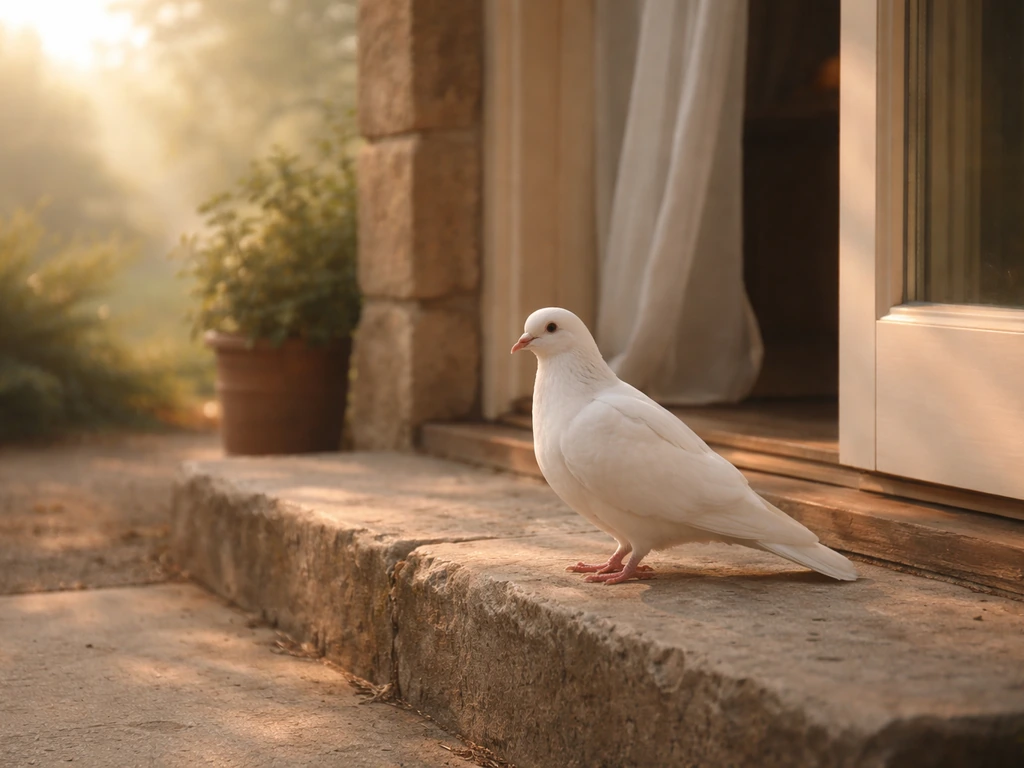
What Does It Mean When a White Bird Visits You
Meaning of a white bird visit: spiritual, biblical, and folklore interpretations plus safety steps and how to choose the
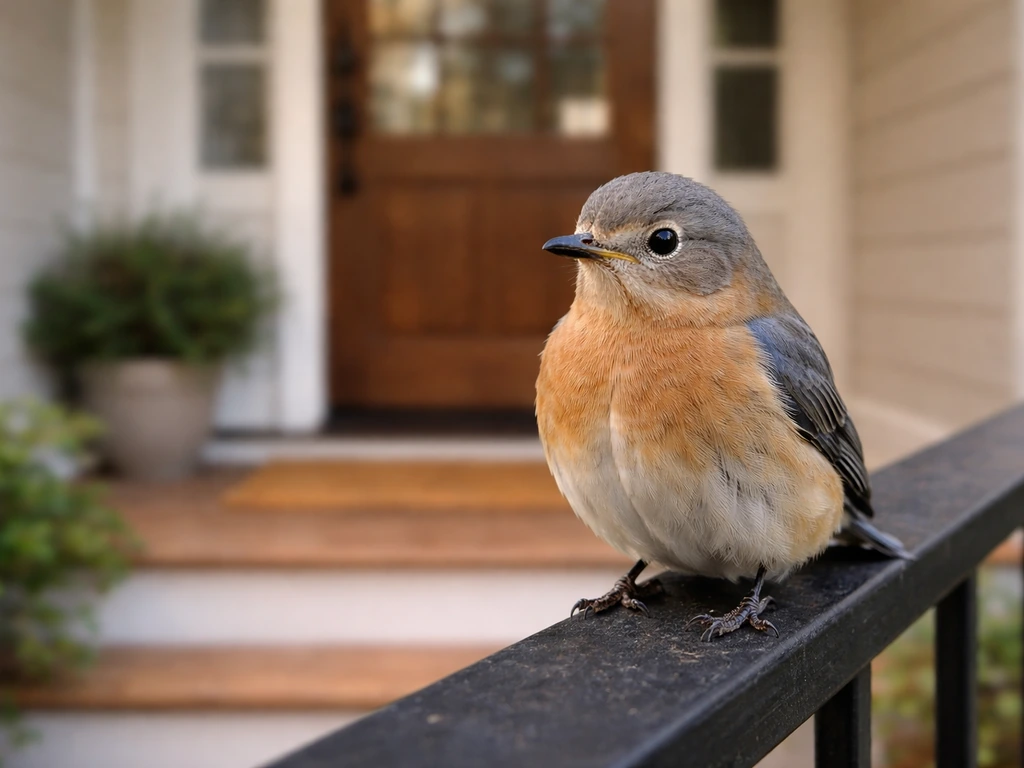
What Does It Mean When a Bird Visits Your Home?
Practical reasons and spiritual symbolism when a bird lands by your door, plus what to do and how to interpret details.
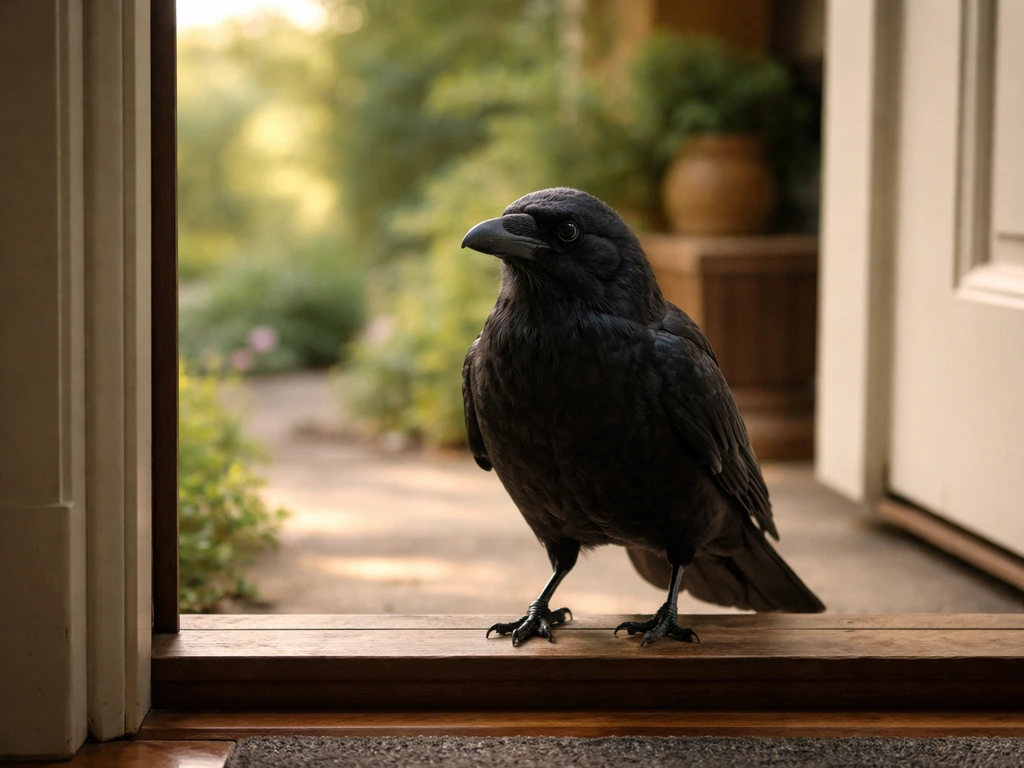
What Does It Mean When a Black Bird Visits or Follows You
Explore spiritual and practical meanings of a black bird visiting or following you, plus safe next steps.