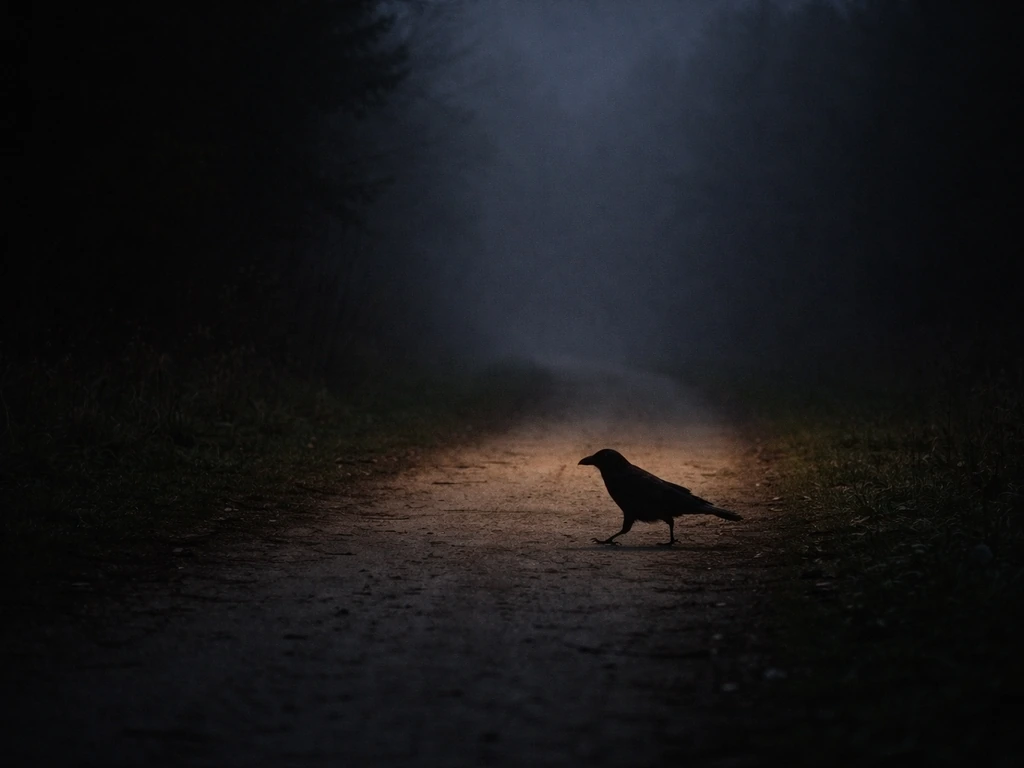
A little bird visiting you can mean many things depending on the context, and the honest answer is that it usually starts with something natural: food, shelter, curiosity, or migration. But if you felt a pull of significance in that moment, you're not imagining things. Across nearly every culture on earth, small birds have been treated as messengers, omens, and spiritual signals for thousands of years. Both explanations can be true at once. The bird may have come for perfectly ordinary reasons, and the visit may still carry meaning for you.
What Does It Mean When a Little Bird Visits You?

Maya Hartwell
1 Jun 2026
First, let's do a quick reality check
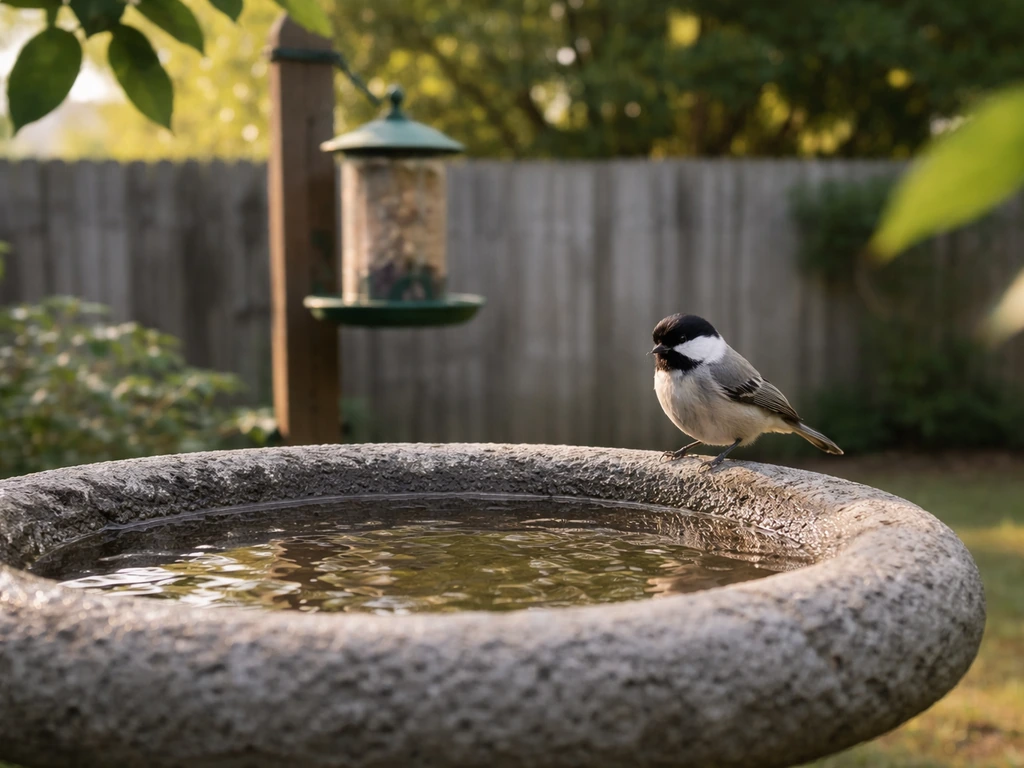
Before you read too much into the visit, it helps to ask what the bird was actually doing. Most small bird appearances have a straightforward explanation, and ruling those out first actually makes any remaining sense of mystery feel more grounded rather than less.
- Food sources: If you have a feeder, birdbath, fruit-bearing shrub, or even crumbs on a patio table, birds will show up reliably. That's not a sign from the universe; that's a hungry sparrow.
- Nesting season: From roughly March through July in the Northern Hemisphere, small birds are actively scouting territories, building nests, and defending spots. A wren hopping around your porch eaves isn't visiting you; it's house-hunting.
- Weather and migration: Cold snaps, storms, and seasonal migration push birds into unfamiliar areas. A bird that looks lost or unusually calm may simply be exhausted from a long flight.
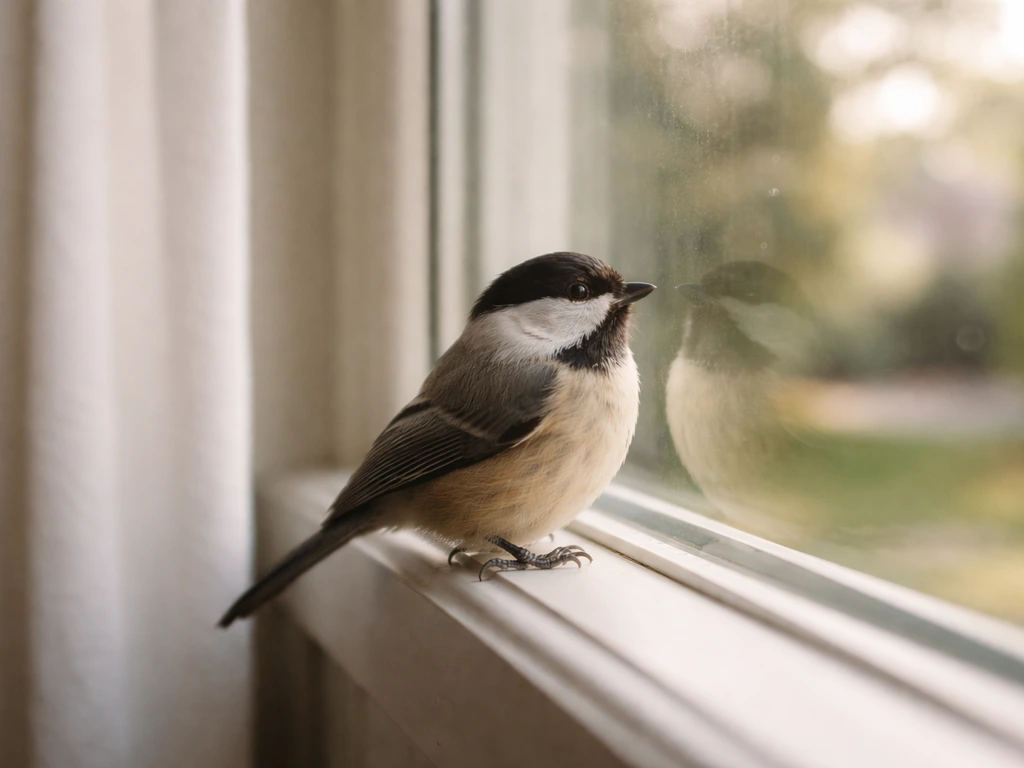
- Window reflection: Birds cannot easily distinguish glass from open space. A reflective or transparent window looks like sky or vegetation to them, which is why they approach (and sometimes collide). If a bird kept returning to your window, it may have been fighting its own reflection, mistaking it for a rival.
- Territorial curiosity: Some species, like robins and wrens, are bold by nature and will approach humans who sit still outdoors. That's personality, not prophecy, though it's charming either way.
- Artificial lighting: At night, building lights can draw migrating birds off course and cause them to circle or land in unexpected places.
None of this means the visit wasn't meaningful. It just means you're working with real information rather than wishful thinking, and that's a stronger foundation for any interpretation you want to build.
Read the details: what the bird did and where it happened
Context is everything. The same sparrow carries very different energy depending on whether it landed on your shoulder during a quiet moment of grief or pecked at your kitchen window three mornings in a row. Before deciding what a visit means, pause and note the specifics.
What was the bird doing?
- Landed close to you or made eye contact: Often interpreted as a message or sign, and also consistent with a bird that has been hand-fed before or is simply unafraid of humans.
- Sang or called persistently: Morning birdsong near your window or door is common at dawn, but a bird that sings directly at you or follows you between spots feels different. Many traditions treat this as a communication.
- Appeared calm or still, especially if injured: A bird sitting motionless on the ground may be stunned from a window strike. This is a practical safety flag as much as anything else.
- Kept returning to the same spot (days or weeks): Repetition is the detail that shifts a visit from coincidence to something worth sitting with.
- Flew in briefly and left: A bird that entered a space and quickly departed is typically just disoriented or chasing an insect. This is a more intense event than a window perch and is covered separately on this site.
Where did it happen?
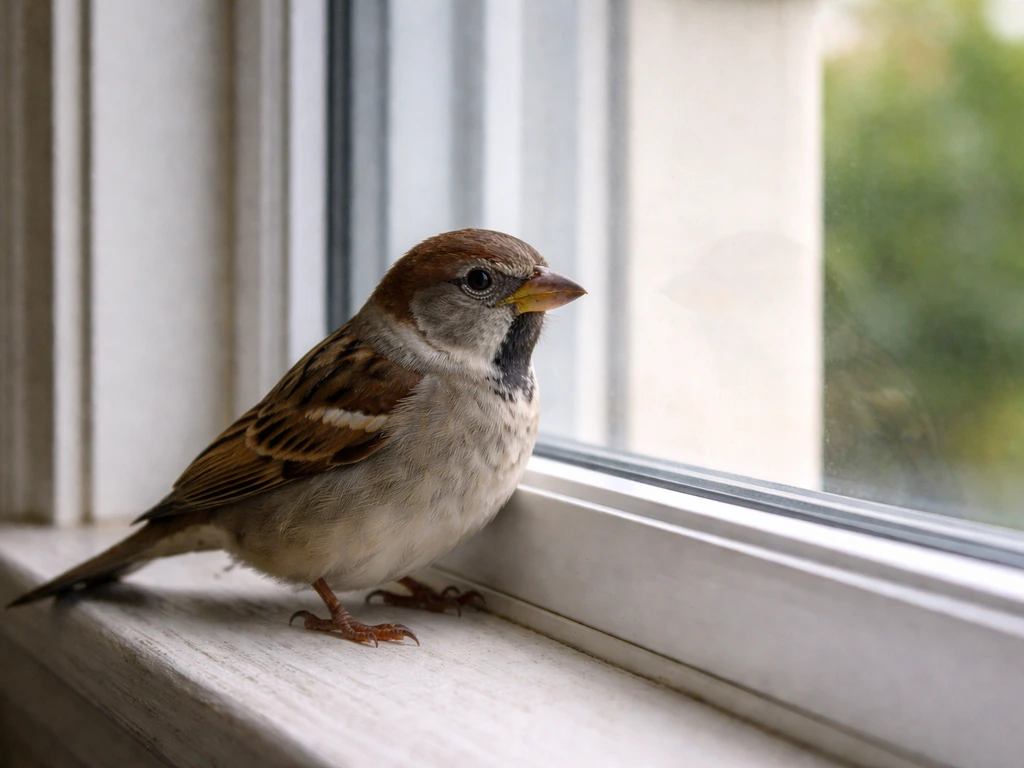
- At a window or door: High symbolic weight in folklore traditions, and also the most common spot for window-strike injuries. Check first whether the bird is hurt.
- On your porch, deck, or in your yard: More neutral territory; this is the bird's world as much as yours.
- Inside your home or car: A more jarring visit that many cultures read as a strong omen. It also has a clear natural explanation: open doors, disorientation, chasing prey.
- At a specific time (dawn, dusk, during a difficult moment, right after a loss): Timing amplifies meaning in almost every symbolic framework.
What small bird visits commonly mean spiritually
Across spiritual and metaphysical traditions, small birds tend to carry lighter, more personal energy than large birds of prey. They're associated with messages, hope, the soul, and everyday grace rather than grand cosmic events. Here are the most common interpretations you'll encounter.
A message from someone who has passed
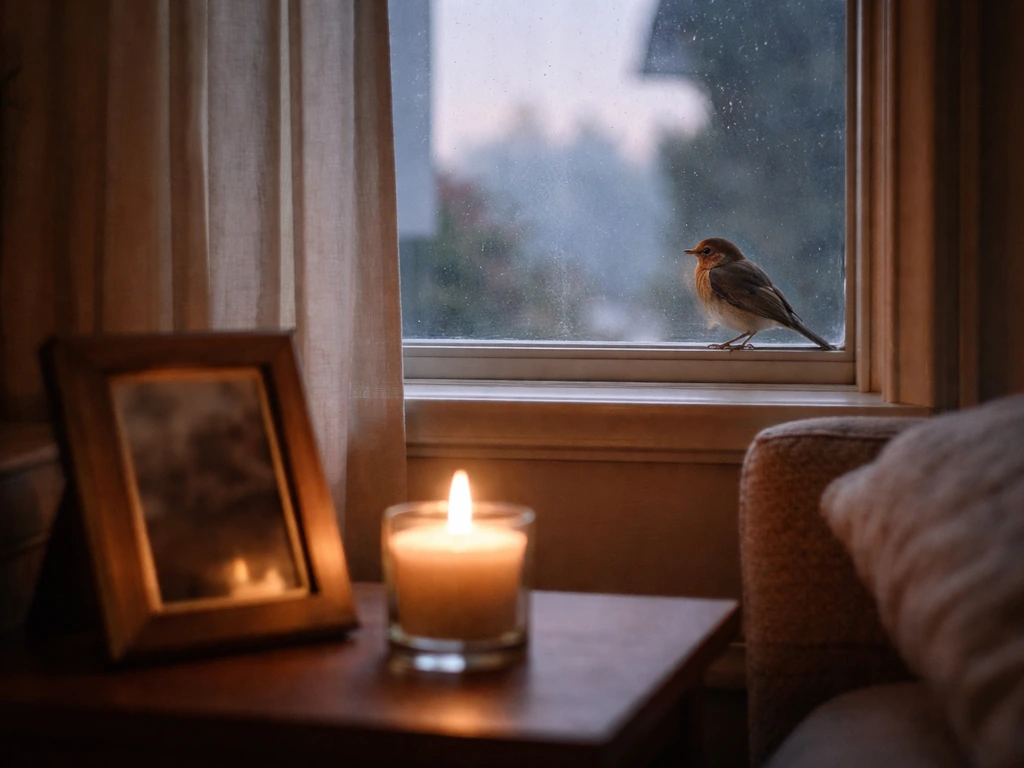
This is probably the most widely held belief around bird visits, cutting across cultures and time periods. When a bird appears shortly after a loss, or in a place or moment where a loved one feels close, many people instinctively feel it's a connection. Psychologists call this a 'continuing bond,' and whether you frame it spiritually or psychologically, the comfort it offers is real. The belief is especially strong in African American and some European folk traditions, where birds are seen as carriers of the soul or as intermediaries between the living and the dead.
Good news or change is coming
In many folklore traditions, a bird arriving unexpectedly signals incoming news or a shift in fortune, usually positive when the bird is small, bright, or singing. This idea appears in Celtic lore (where wrens and robins were considered sacred messengers), in Japanese tradition (where small birds near the home signal luck), and in various Indigenous North American frameworks where birds serve as scouts or heralds. A finch or swallow at your door was historically seen as a good omen for the household.
Protection and spiritual guardianship
Some traditions, including several Indigenous and West African belief systems, hold that birds act as protectors or guides when you need them. A bird that seems to follow you or linger near you during a difficult period may be interpreted as a guardian presence. This idea echoes in the biblical tradition as well, where even sparrows are said not to fall without divine notice, a passage many readers find deeply reassuring.
Joy, hope, and spiritual awakening
In New Age and metaphysical frameworks, small birds, especially hummingbirds and doves, are associated with high-frequency energy, joy, and the opening of spiritual awareness. A hummingbird hovering before you is often read as a nudge to be present, to find sweetness in the ordinary. A dove visit carries associations of peace and divine love in almost every Western tradition. These aren't heavy messages; they tend to feel light, affirming, and personal.
Quick-reference meanings by common 'little bird' species
| Bird | Common Symbolic Associations | Notes |
|---|---|---|
| Sparrow | Simplicity, community, self-worth, soul | Sparrows appear in biblical texts as symbols of divine care for the humble |
| Robin | New beginnings, renewal, spring, loved ones visiting | One of the most commonly cited 'messenger' birds after a loss in Western tradition |
| Wren | Resourcefulness, cunning, sacred messenger | Celtic tradition held wrens as the 'king of birds' and powerful omens |
| Finch | Good luck, happiness, abundance, positive news | Bright finches (goldfinch, etc.) especially associated with joy and blessing |
| Dove | Peace, love, the Holy Spirit, spiritual presence | Near-universal symbol of peace across Christian, Islamic, and secular traditions |
| Hummingbird | Joy, resilience, lightness, spiritual presence | In some Indigenous traditions, hummingbirds carry the spirits of ancestors |
| Swallow/Martin | Safe return, home, loyalty, good fortune | Sailors historically saw swallows as omens of land and safe homecoming |
How timing, repetition, and your feelings shift the meaning
A one-time visit from a bird is interesting. A bird that shows up at the same time for three mornings in a row is harder to dismiss, and most symbolic traditions agree: repetition is the signal to pay attention. If you're seeing the same small bird repeatedly, in the same spot or in different locations, that pattern is worth noting in your own interpretation.
Timing matters too. A bird singing outside your window at 4 a.m. carries different weight than one that appears at noon. Dawn and dusk have long been considered threshold times, moments between states, that many traditions treat as more spiritually permeable. A bird appearing during a moment of prayer, grief, decision-making, or intense thought is more likely to feel like a message than one that shows up while you're loading the dishwasher.
Your emotional response is actually one of the most useful data points you have. Did the visit make you feel calm? Hopeful? Startled in a way that felt significant? Most symbolic frameworks suggest that the feeling you have in the moment is part of the message itself. If you felt an overwhelming sense of peace, that's not nothing, regardless of what caused the bird to land there.
What different traditions say, and how to use them well
No single tradition owns the meaning of bird visits, and that's actually freeing. You can draw on multiple frameworks and find what resonates without feeling like you're cherry-picking. Here's a brief cross-cultural survey.
Biblical and Christian tradition
The Bible references birds frequently as symbols of divine care and communication. The sparrow passage in Matthew 10:29-31 is the most cited: not one sparrow falls without God's awareness, and you are worth more than sparrows. Many Christians interpret a bird visit (especially a sparrow or dove) as a reminder of that care. The dove is explicitly associated with the Holy Spirit in the New Testament. These aren't superstitions in Christian frameworks; they're devotional readings of creation as communication.
Celtic and European folklore
Celtic traditions gave wrens, robins, and swallows particular sacred status. Robins were said to have gotten their red breasts by fanning the flames of Christ's fire, or by being stained with blood at the crucifixion, depending on the telling. Either way, robins became messengers between worlds. Swallows nesting on a house were considered extremely lucky, and harming them was said to bring misfortune. Many of these beliefs are still alive in rural parts of Ireland, Scotland, and Wales.
Indigenous North American traditions
It's important to note that Indigenous traditions are not monolithic; hundreds of distinct nations hold different relationships with birds. That said, many share the view that birds are intermediaries between human beings and the spirit world, and that paying attention to bird behavior is a form of listening to the land. Approaching these traditions as a non-Indigenous reader means holding them with respect and curiosity, not co-opting specific ceremonies or beliefs as personal spiritual tools.
Eastern and Asian traditions
In Japanese culture, certain small birds (especially the crane, though it's not small, and the sparrow) carry luck and divine favor. Chinese tradition associates birds near the home with good news and family harmony. In Hinduism, birds are associated with the soul and with the god Vishnu through the eagle Garuda, but small birds appear in folk practice as omens of daily fortune. These traditions tend to be more attentive to species, color, and direction of approach, details worth noting if you want to work within one of these frameworks.
How to use these frameworks respectfully
The most honest approach is to hold multiple interpretations lightly. Read what several traditions say, notice which one resonates with your own beliefs and background, and let that inform your personal meaning-making. You don't need to commit to one cosmology to find a bird visit meaningful. What you want to avoid is flattening complex living traditions into bite-sized fortune-cookie meanings, especially with Indigenous frameworks that aren't yours to reduce.
Bird visits share interpretive territory with related encounters: a bird crossing your path, a specific color (like a brown or red bird appearing), or a bird flying at a window all carry their own symbolic weight that overlaps with, but differs from, a calm, friendly little bird landing near you. If you’re wondering what it means when a brown bird visits you specifically, start by checking the bird’s behavior and your immediate feelings.
The distinction between a crossing and a visit, or between a passing bird and one that lingers, tends to matter in most of these traditions. If you are wondering about the meaning of a black bird crossing your path, start the same way by observing what the bird did and how it made you feel.
If a red bird is the one that shows up, many people treat that specific detail as a cue to slow down and notice what stands out to you in the moment when a red bird crosses your path. Many people also connect the idea of a red bird crossing your path with messages of guidance and personal meaning.
What to actually do right now
Whether you're coming at this from a spiritual angle or a practical one, here's what I'd recommend doing today.
Step 1: Observe and record the details
Write down (or voice-memo) what happened while it's fresh: the species if you know it, the time of day, where the bird appeared, what it did, how long it stayed, and how you felt. These details matter both for natural identification and for any symbolic interpretation you want to do later. A photo or video, if you can get one without disturbing the bird, helps with species ID.
Step 2: Check whether the bird is safe
If the bird seemed unusually still, was on the ground, or appeared near a window just before or after an impact, check for a window strike. Birds that hit glass often fly away initially and then die within hours from internal injuries or concussion. If a bird is sitting quietly on the ground near a window, it may be stunned. According to the Cornell Lab of Ornithology, you can gently place a stunned bird in a cardboard box with air holes, keep it in a quiet, dark place for up to two hours, and release it when it recovers. If it doesn't recover, contact a local wildlife rehabilitator.
Step 3: Check for hazards around your home
If birds are visiting your windows repeatedly, consider adding external visual markers to the glass. Mass Audubon explains that birds may land near or on windows and collide because they cannot easily distinguish glass from open space, and reflective or transparent surfaces can create the illusion of sky or habitat window strikes happen when birds misjudge glass as open space or habitat.
The U. S. Fish and Wildlife Service recommends spacing visual markers no more than 2 inches apart vertically and 2 inches apart horizontally, creating a pattern the birds can register as a solid barrier rather than open air. Tape strips, bird-safe window film, or external screens all work.
This is genuinely one of the most useful things you can do for visiting birds, regardless of what brought them there.
Step 4: Consider whether a nest is nearby
If a small bird keeps appearing in the same spot on your porch, under your eaves, or near a shrub, look carefully for a nest before disturbing anything. In the U.S., most wild bird nests and eggs are protected under the Migratory Bird Treaty Act. If you find an active nest, leave it alone until the young have fledged. If you have outdoor cats, keep them inside during nesting season, as cats are one of the leading causes of songbird mortality.
Step 5: Engage with the spiritual dimension if that's meaningful to you
If you want to sit with the visit as a spiritual experience, there's no single right way to do that. Some people journal about what was on their mind when the bird appeared and what the visit might be reflecting back at them. Others offer a simple moment of gratitude, acknowledging the encounter without needing to decode it fully. If you've recently lost someone and felt a connection through the bird, let yourself feel that. The meaning you make from an experience is yours to make. What would feel true for you in this moment?
Step 6: When to call for wildlife help
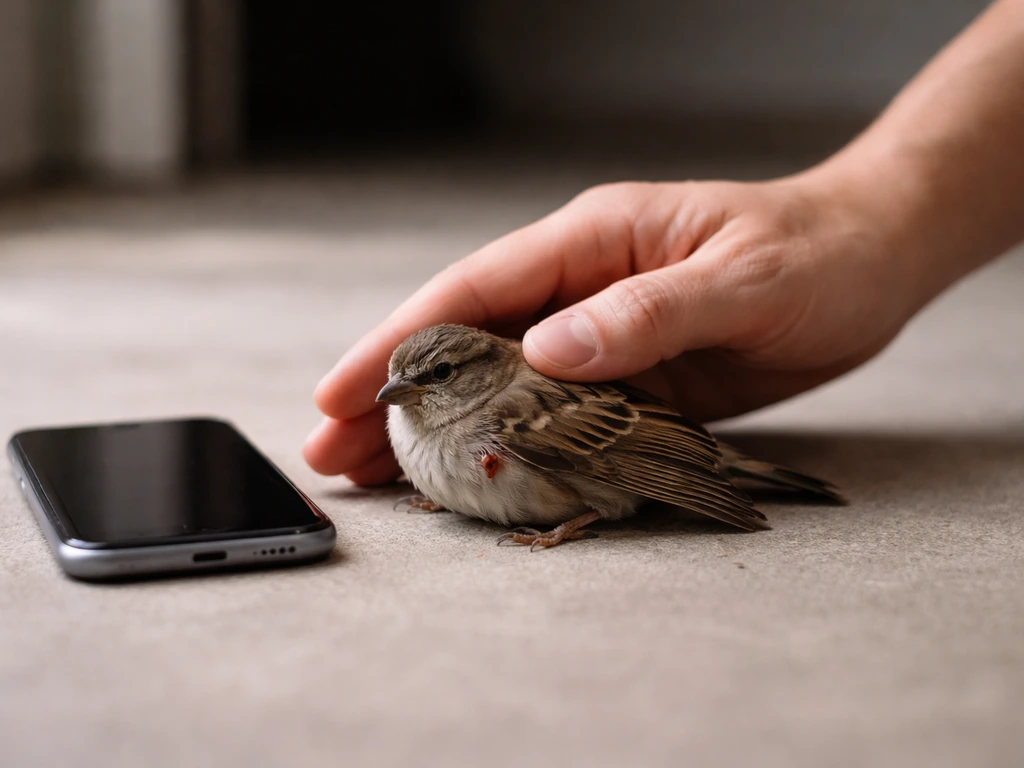
- The bird is on the ground and not flying after more than two hours of rest in a quiet, dark space.
- The bird has visible injuries: drooping wing, bleeding, obvious asymmetry.
- The bird appears lethargic, has its eyes closed, or is breathing with its beak open.
- You've found a nest that has fallen or been disturbed with live eggs or chicks inside.
In any of those cases, search 'wildlife rehabilitator near me' or visit the National Wildlife Rehabilitators Association directory. Don't try to feed or treat a wild bird yourself unless you've had training; well-meaning intervention can do more harm than good.
The truth about a little bird visiting you is that it probably came for reasons both ordinary and, if you're open to it, worth noticing. Pay attention to the details, take care of the bird's physical safety first, and then take whatever time you need with the rest of the meaning. Some encounters are just encounters. Others stay with you for years. You'll know the difference.
FAQ
What does it mean if the bird visits me but doesn’t land, it just hovers or flies close by?
A close pass can still be meaningful, but many traditions treat it as more of a “nudge” than a full “message” because the bird is not engaging with you. Practical check first, watch whether it’s looking for food or nesting sites near your area, especially around porch lights, feeders, or shrubs. If the behavior repeats at the same time of day, note the moment it appears and what you were doing, that repetition is often the most actionable clue.
How can I tell whether the visit is spiritual meaning or just the bird’s routine?
You can use a simple filter: if the bird’s behavior matches normal foraging or migration patterns (scanning, pecking, changing direction quickly), it’s likely ordinary. If the timing lines up with a personal moment you weren’t expecting (a decision point, prayer, grief), your emotional response can be your best data. Reassure yourself with one step, check the environment for easy explanations first, then interpret what you felt rather than forcing a supernatural story.
Does the bird species matter, or is it mostly the fact that a small bird shows up?
Species and even color can matter because different birds have different natural “reasons to visit,” so interpretation should be grounded in identification. A hummingbird hovering usually indicates feeding or territorial behavior near flowers or feeders, while a sparrow or wren near a window may be searching for insects or a safe perch. If you can’t ID it confidently, focus on time, location, and behavior rather than guessing a species-based symbol.
What should I do if a bird keeps hitting my windows and also visits me repeatedly?
Repeated window collisions are a safety issue first, symbolism second. If you notice a bird on the ground, keep people and pets back and check for signs of shock. Then reduce strikes by adding visible patterns to the glass (spaced closely enough to register as a barrier), bird-safe film, or external screens. If the same route continues, move any attractants like feeders or plants within the line of sight.
Is it okay to feed a bird that visits me, or could that change the meaning?
Feeding can be fine, but it can also increase repeated window traffic, aggression at feeders, and dependency. If you want to feed, do it away from windows and use species-appropriate food, for example black-oil sunflower seeds for many small seed-eaters. For birds showing signs of distress or after impacts, do not try to “help” by feeding, focus on recovery guidance or contacting a wildlife rehabilitator.
What does it mean if the bird seems to follow me around the yard or porch?
“Following” is often normal behavior like scouting for food, protecting a nest area, or checking a familiar route for insects. That said, many traditions read lingering proximity as a guardian-like sign, so your interpretation can incorporate what you were doing during those moments. Practical step, look for a nest nearby, and if outdoor cats are present, keep cats indoors during that period to reduce risk to the bird.
If I’m grieving and feel comfort from the bird visit, is that a sign of anything, or could it be coincidence?
It can be either, and both can be true. Your sense of comfort is still meaningful even if the bird’s reasons are ordinary, psychological frameworks describe it as maintaining a continuing bond with the person you lost. If the comfort turns into intrusive thoughts or prevents you from functioning, consider talking with a grief counselor, because support can help whether the experience is spiritual, psychological, or both.
How should I interpret a bird visit that makes me feel scared or uneasy?
Don’t override your feelings, but also don’t assume the message is automatically “bad.” Fear can come from a natural event (the bird startled you, a window strike, an aggressive display) so check what the bird was doing. If you felt sudden calm after the initial startle, you might treat it as a “transition” moment rather than a warning. If there was physical harm or repeated impacts, prioritize action to protect birds first.
What if I see a bird on the ground near my house, should I assume it’s a message?
Treat physical safety first, a grounded bird can be stunned, injured, or temporarily exhausted. If it’s near a window or glass and appears unusually still, check for concussion or shock and keep the area quiet. If you can’t confirm recovery quickly, contact a wildlife rehabilitator rather than trying to decide symbolic meaning, because the bird’s condition often has an immediate, practical explanation.
Is it respectful to use Indigenous bird meanings for my personal interpretation?
Respect means not treating specific Indigenous ceremonies or teachings as personal “fortune tools,” especially if you are not part of that community. A safer approach is to hold broad themes (like listening to the land) lightly while learning from reputable Indigenous voices and frameworks. If you draw meaning, keep it personal and avoid claiming you received an official message tied to a particular nation’s sacred practice.
How do I record the visit so I can interpret it later without overthinking?
Write down concrete details that reduce guesswork: species if known, time of day, exact spot (window, porch step, shrub, hallway), what it did (landed, sang, hovered, followed), duration, and what you felt in two stages (initial emotion, then the emotion after a few minutes). Also note what you were doing immediately before the visit. This creates a clear timeline so you can revisit meaning without rewriting it later.
Next Article
Meaning of a Black Bird Crossing Your Path: What It May Signify
Interpret a black bird crossing your path with spiritual and practical lenses, plus immediate steps and a meaning checkl