A robin visit most often means one very ordinary thing: your yard has something the bird needs, whether that's earthworms in your lawn, fruit in a nearby shrub, or a ledge that looks like a good nesting spot. But robins have also carried symbolic weight for centuries across European, Christian, and folk traditions, and for a lot of people, a robin showing up at just the right moment feels like more than coincidence. Both things can be true at once. This guide walks through the practical reasons robins come close, the symbolism that's grown up around them, and how to sit with the experience in a way that feels honest and useful to you.
What Does It Mean When a Robin Visits You

Maya Hartwell
3 May 2026
Why a robin actually came to your yard or home
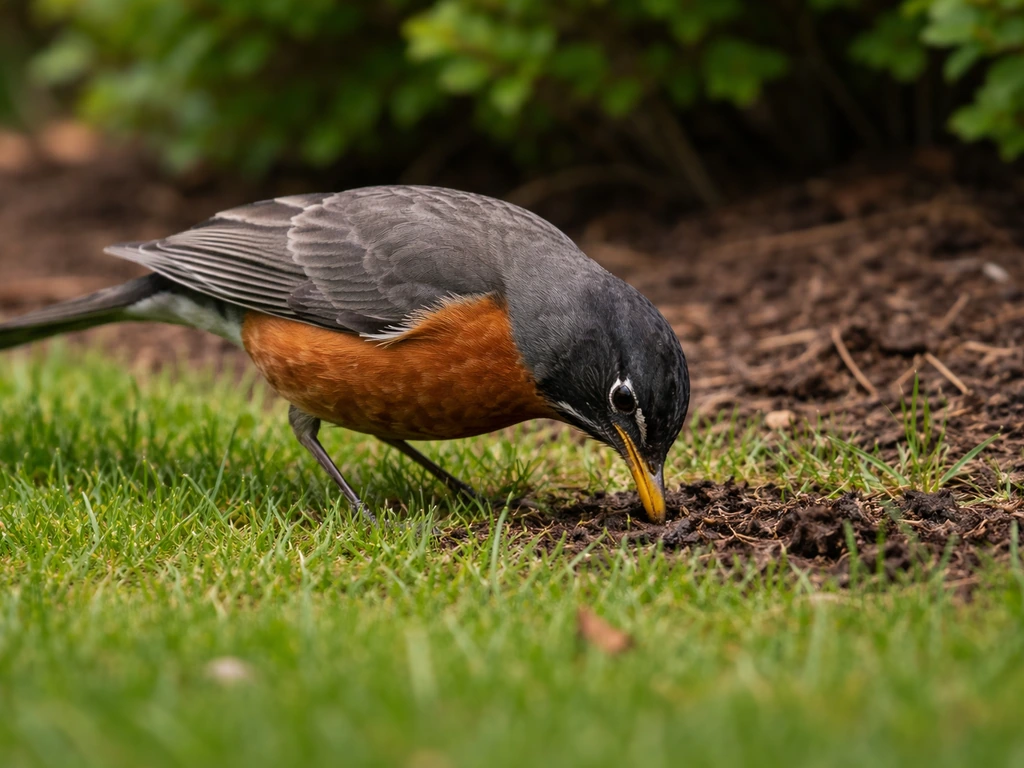
Before anything else, it helps to understand what robins are actually doing when they show up. American robins are foragers, and your yard is essentially a grocery store to them. They spend their mornings pulling earthworms out of soft soil and shift toward fruits and berries later in the day. If your lawn holds moisture or you've been watering recently, the ground is exactly what a robin is looking for. Native berry-producing shrubs seal the deal.
Nesting season is another huge driver of robin activity near homes. Males arrive at nesting grounds before females and immediately get territorial, singing loudly and sometimes fighting to hold their patch. That conspicuous singing near your window or porch isn't aimed at you. It's a male announcing ownership of the surrounding space. Robins also nest at heights of roughly 5 to 25 feet above the ground, and they're happy to use the ledges of houses, barns, and other human structures. American robin nests are commonly placed 5 to 25 feet off the ground and built in bushes, trees, or under building eaves blank" rel="noopener noreferrer">Nesting at heights of roughly 5 to 25 feet above the ground. If a robin keeps returning to the same spot on your home, there's a good chance it's scouting or actively building nearby.
Young robins add another layer. After fledglings leave the nest, they stay close to their parents for a while, begging for food and looking a little awkward in the process. If you spot a robin that seems to be hanging around without doing much, it may be a juvenile still learning the ropes. And in winter, robins shift to flocking behavior, sometimes gathering in large roosts, so a burst of robin activity around your property in cold months is often about a foraging flock moving through rather than a single bird with a message for you specifically.
What robins have meant symbolically across cultures
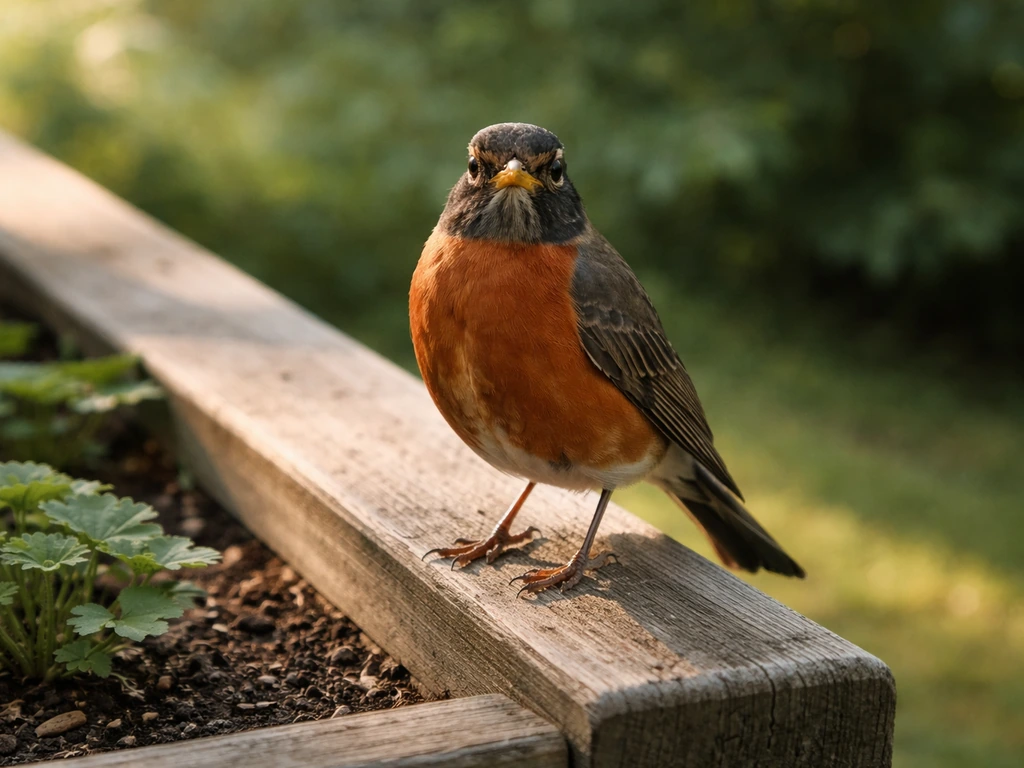
Robins carry a long trail of symbolic meaning, especially in European and British folk tradition. One of the oldest and most persistent themes ties the robin's red breast to blood and sacrifice, with folk stories claiming the bird's chest was stained while trying to pull thorns from Christ's crown or comfort him on the cross. Whether you take that literally or not, it points to something consistent in how people have read this bird: as a creature of compassion, courage, and willing presence in difficult moments.
In folk traditions more broadly, robins have been cast as messengers, sitting at the boundary between the living world and whatever comes after it. There are English folk beliefs that a robin in or near the home signals an important message is coming, or that the soul of someone who has passed is making contact. The robin doesn't have a single universal meaning across every culture, though. Its role as 'messenger' appears in multiple traditions with different specifics, which is actually useful. It means your encounter can be interpreted through whatever lens resonates most with your own background and beliefs.
In a more everyday cultural sense, the robin has become deeply linked to spring and renewal, so much so that the idea of the 'first robin of spring' has become a kind of seasonal shorthand for hope and new beginnings. That's more poetic than literal (robins are present year-round in many regions and don't vanish in winter the way people imagine), but the symbolism of renewal stuck because robins are often the first bird people notice becoming active and vocal as temperatures rise.
Biblical and Christian takes on robin visits
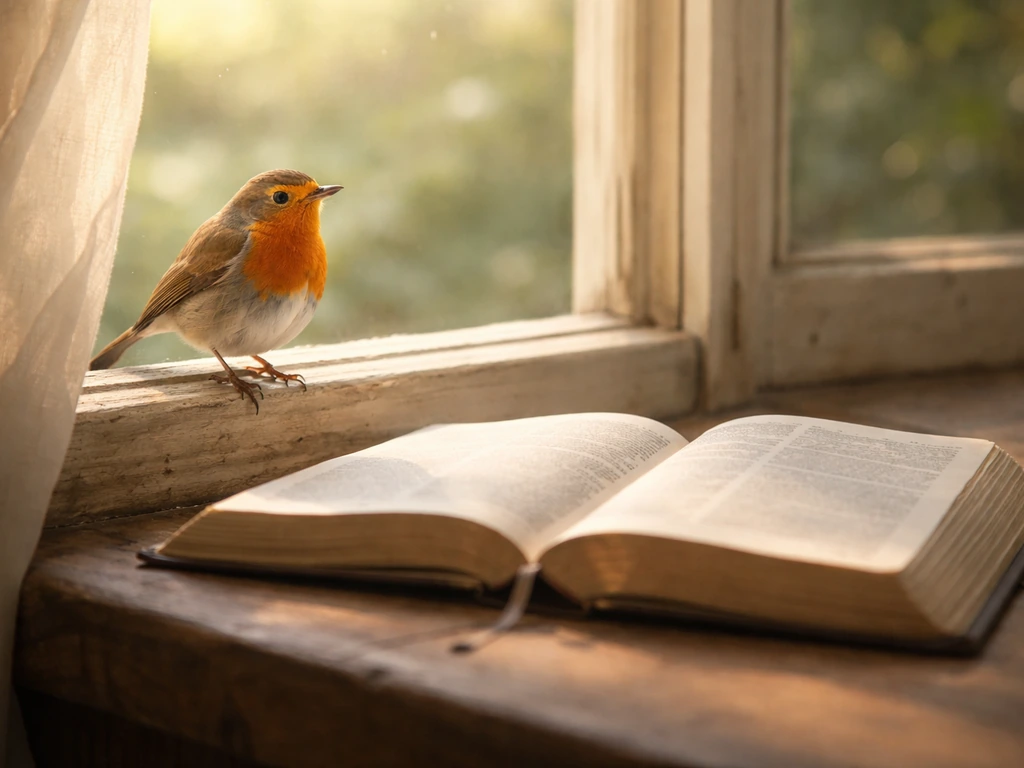
Christianity doesn't name the robin specifically in scripture, but the broader theme of birds as symbols of divine care runs all through the Gospels. In Matthew 6:26, Jesus points to 'the birds of the air' as an example of God's provision, noting that they don't sow or reap yet are fed. Luke 12:6 and 12:24 extend this further, reminding listeners that God counts even sparrows and that the natural world, including birds, reflects a kind of attentive care from above. These passages aren't about omens or predictions. They're invitations to trust. But many Christians who encounter a robin during a difficult or uncertain season find it a natural and meaningful reminder of exactly that kind of comfort.
The folk-Christian tradition layered more specific robin imagery on top of scripture, particularly the legend about the robin's red breast and Christ's crucifixion. This is cultural and extra-biblical, not canon, but it persists because it's emotionally resonant. If you're reading a robin visit through a Christian lens, the most grounded approach is probably to hold it as a gentle prompt toward presence and gratitude rather than treating it as a direct divine directive. The biblical concept of discernment, the idea of 'testing' spiritual impressions thoughtfully rather than accepting them uncritically, applies well here.
Reading the energy: timing, emotion, and what you bring to the encounter
One thing most spiritual traditions agree on is that the meaning of a sign or encounter is inseparable from the context around it. A robin appearing during an ordinary Tuesday afternoon carries a different weight than one that lands near you on the day you scatter a loved one's ashes or the morning you finally make a hard decision. The bird didn't change. The moment did.
Pay attention to what you were thinking or feeling right before you noticed the robin. Were you worried about something? Grieving? On the edge of a new beginning? Spiritual guides across different traditions frame signs and omens as 'information' rather than commands, impressions to sit with rather than act on immediately. That framing is helpful because it keeps you in the driver's seat. The robin isn't making a decision for you. At most, it's offering a moment of pause, and what you do with that pause is entirely yours.
Repeated visits tend to carry more weight in most interpretive frameworks than a single sighting. If the same robin (or what seems like the same one) keeps returning to the same spot in your yard or on your windowsill over several days, that pattern is worth noticing, even if you conclude the pattern has a practical explanation like a nearby nest. If you are wondering what it means when a bird visits you, noticing patterns like repeat visits can help you sort practical causes from the symbolism you feel same robin.
What the robin's behavior during the visit might tell you
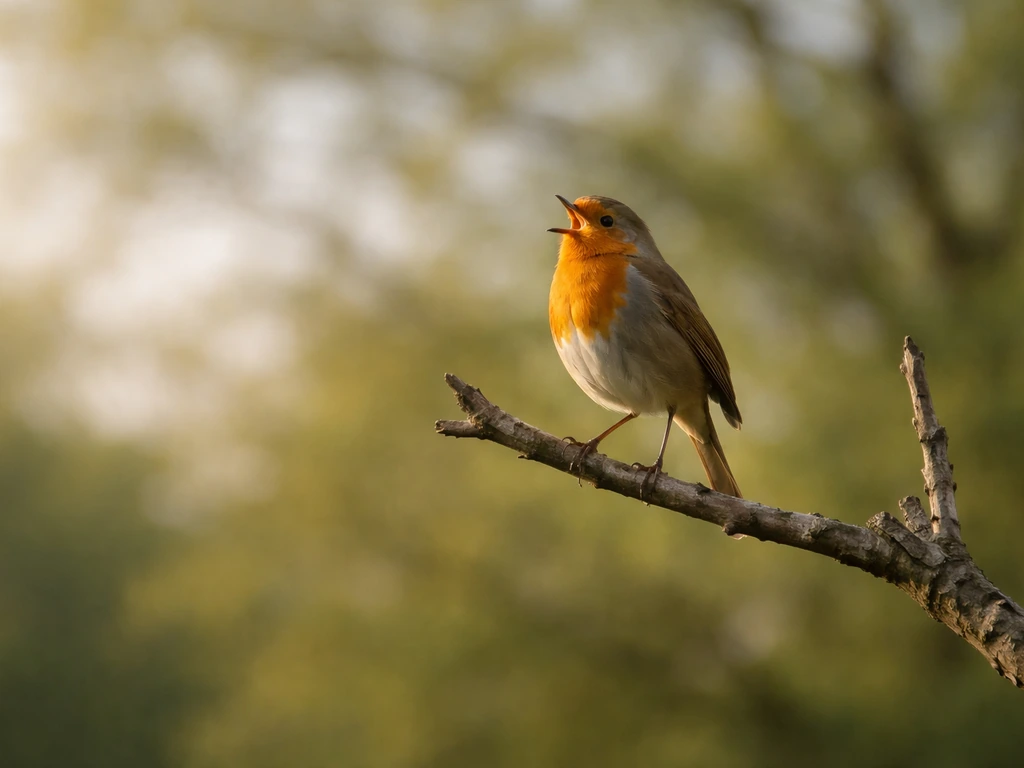
The way a robin behaves when it visits isn't random, and reading that behavior gives you more to work with whether you're thinking practically or symbolically.
| Robin Behavior | Practical Explanation | Symbolic Interpretation |
|---|---|---|
| Loud, repeated singing | Male defending territory or attracting a mate | Voice, self-expression, a call to speak up or pay attention |
| Lingering on one spot without moving much | Juvenile resting, or adult resting between foraging bouts | Stillness, a message asking you to slow down or stay present |
| Landing very close to you | Habituated to humans, foraging near foot traffic | Intimacy, a personal 'visit,' comfort from beyond in grief traditions |
| Tapping or flying at a window | Seeing its own reflection and defending territory | In some folklore, a message from the other side; practically, a hazard to address |
| Bill clacking / defensive posture | Female near nest, feeling threatened | Protection, fierce care for what matters most |
| Bringing food to a spot near you | Feeding a fledgling nearby | Nurturing energy, parental or ancestral care in metaphysical readings |
Singing robins are especially interesting because the robin's song is one of the most recognized in North America and is closely associated with the arrival of spring energy. If a robin sits near you and sings at length, spiritually minded traditions often read that as an encouragement to express yourself, trust your voice, or welcome a new chapter. Practically, it just means there's a male trying to claim territory. You can hold both readings comfortably.
When to actually worry: injuries, hazards, and safety
Most robin visits need no intervention from you at all. Most people also ask what it can mean when a butcher bird visits, and the best answer depends on where you are and what the bird is doing Most robin visits. But a few situations call for practical action rather than reflection.
- Window strikes: If a robin hits your window and is stunned or lying on the ground, place it gently in a dark, ventilated box and contact a licensed wildlife rehabilitation facility as quickly as possible. Don't try to nurse it yourself. If you can't reach a rehabber, your local animal control agency can usually point you to one.
- Visible injuries: Bleeding, a drooping wing, or an inability to stand are signs that a bird needs professional care. Contact a wildlife rehabilitator or Audubon chapter in your area right away.
- Repeated window striking: A robin attacking its own reflection in your window isn't hurt yet, but repeated collisions are a real hazard. Breaking up the reflection with tape strips, strings, or window decals on the outside of the glass is the most effective fix.
- Cats and outdoor predators: If you have outdoor cats, keeping them inside is the single most effective thing you can do to protect birds in your yard. This applies beyond robins to all bird encounters.
- Abandoned-looking fledglings: Young robins on the ground that look healthy but can't fly are usually fine and still being fed by their parents nearby. Leave them alone unless you see an actual injury or a predator threat.
What to do next: reflection, journaling, and making your space welcoming
If the encounter felt meaningful to you, the most useful thing you can do is write it down while it's fresh. Note the date, the time of day, what you were doing beforehand, how you felt in the moment, and any details about the robin's behavior. You don't have to assign a final meaning right away. Sometimes the significance of an encounter only becomes clear weeks later, especially if it turns out to be the first of several visits.
A few reflection questions worth sitting with after a robin visit:
- What was on your mind just before you noticed the robin?
- Is there a theme of new beginnings, grief, or transition in your life right now?
- Did the encounter feel like a coincidence, a comfort, or something else entirely?
- Has a robin (or any bird) visited this spot before, and does the repetition mean anything to you?
- What would you want the visit to mean, and what does that desire tell you about where you are right now?
If you want to make your space genuinely welcoming to robins going forward, focus on what they actually need. Keep your lawn healthy and avoid pesticides, especially neonicotinoids, which can harm birds and the insects they rely on. In a peer-reviewed analysis of U.S. data from 2008, 2014, increased neonicotinoid use was associated with statistically significant reductions in bird biodiversity, especially for grassland and insectivorous birds neonicotinoids, which can harm birds. Add native berry-producing shrubs and plants suited to your region (Audubon's native plant database is a solid place to start). Keep a shallow water source available and clean. These practical steps don't diminish the spiritual dimension of a robin visit. If anything, building a yard that welcomes birds is its own kind of intentional practice, a way of creating conditions for more encounters.
Robins sit at an interesting intersection: common enough that almost everyone has seen one, distinctive enough in their red breast and confident song that the encounter tends to register. Whether you're reading this after a single surprising moment or a pattern of visits that's been nagging at you, you don't have to choose between the practical and the symbolic. The bird came for its own reasons, and you brought your own. If you are wondering what it means when a mockingbird visits you, the same practical and symbolic approach can help you interpret the moment honestly The bird came for its own reasons. What happens at that intersection is yours to interpret. If you have a bird following you, this same mix of practical context and personal meaning can help you interpret what it might be signaling.
FAQ
How can I tell if the robin is just foraging versus “meaning” something to me?
A robin can come closer when it feels safe and when it finds reliable food, but you may notice it behaving like a “targeted visitor” if it keeps choosing the same path or window. The best practical check is to scan for nesting activity (a ledge 5 to 25 feet up, or repeated carrying of nesting material) and for food sources (worms after watering, berries, fruiting shrubs). If those are absent and the bird still returns at similar times, that’s when journaling patterns becomes more useful than guessing an omen.
What should I do if the robin looks injured or can’t fly?
If the robin is acting injured or grounded, treat it as an animal welfare situation first. Look for hazards like cats, windows, or nearby traffic, and contact a local wildlife rehabilitator or animal control for guidance. A “sign” interpretation should not override safety steps, especially if the bird cannot fly or seems to be colliding with glass.
What if the robin visits a lot, and I want fewer birds in my yard?
Because robins are foragers, you can accidentally train them to keep coming by making the yard consistently worm-friendly. If you want fewer visits, reduce exposed soft soil, stop leaving accessible pet food outdoors, and avoid overwatering that keeps the ground ideal for worms. If you want more visits, focus on pesticide-free soil health, native berries, and clean shallow water as described in the article.
Does the meaning change if the robin visits me during grief or a big life decision?
Yes, timing matters, and the most helpful approach is to tie the moment to what was happening in your life rather than to the bird alone. A robin right before a major conversation or decision can be processed as a pause to reflect, while a robin after a loss may feel like comfort. In either case, write down the context you were in so you can tell whether the “meaning” is coming from your emotional moment or from a recurring practical cause.
What does it mean if a robin seems to follow me or watch me?
Many people assume the robin is reacting to them personally, but robins mainly respond to territory and resources. If a robin follows your movements or seems to “watch,” it may be monitoring for threats while it forages nearby. To test this, try stepping away quietly for a few minutes, and see whether it returns to feeding rather than to your position.
If the same robin keeps coming back to my window, what should I check first?
Repeated visits can have an ordinary explanation, especially nesting scouting or a juvenile learning where food is. Use behavior clues: territorial males often sing persistently near a favored area, while juveniles may linger and beg without great roaming. If visits occur at the same spot daily, check that location first (nesting ledge, fruiting shrub, water edge) before concluding it’s symbolic.
Can a robin visit be a warning, and how do I handle that fear?
If you’re worried about the bird being a “bad omen,” a practical alternative is to reframe it as information you can act on gently. For example, if the visit happens when you’re anxious, use it as a cue for a grounding step (breathing, a short journal entry, or a small supportive action for yourself). This keeps you from treating a random wildlife encounter as a prediction.
Should I feed robins if I want them to keep visiting?
You do not need to feed robins to have meaningful encounters, but you should avoid unsafe or harmful setups. If you do provide support, use clean shallow water and consider native plantings rather than irregular feeding. Also remember that robins mainly eat in a way shaped by their natural diet, so “birdseed” may not address what they actually need.
What if I’m not in the same region as the article (is it still a robin)?
Don’t assume a robin is one species everywhere. Depending on location, you may be seeing a similar thrush, but the behaviors described in the article (foraging for worms, seasonal shifts, territorial singing) are most consistent with American robins in North America. If you tell me your region, I can help you identify whether your visitor is likely a robin and what the local patterns typically look like.
What’s the best way to interpret my own robin encounter without overthinking it?
A common mistake is “forcing” a single interpretation too quickly. A better decision aid is to separate observations from meanings: list what you saw (time, behavior, where it landed) and then choose one lens that fits you (practical, spiritual, or both) without turning it into a directive. If the insight is genuinely important, it usually becomes clearer as more data (including repeat visits or changes in your situation) appears.
Next Article
What Does It Mean When a Mockingbird Visits You?
Meaning of a mockingbird visiting you spiritually and culturally, plus practical reasons, symbolism options, and next st