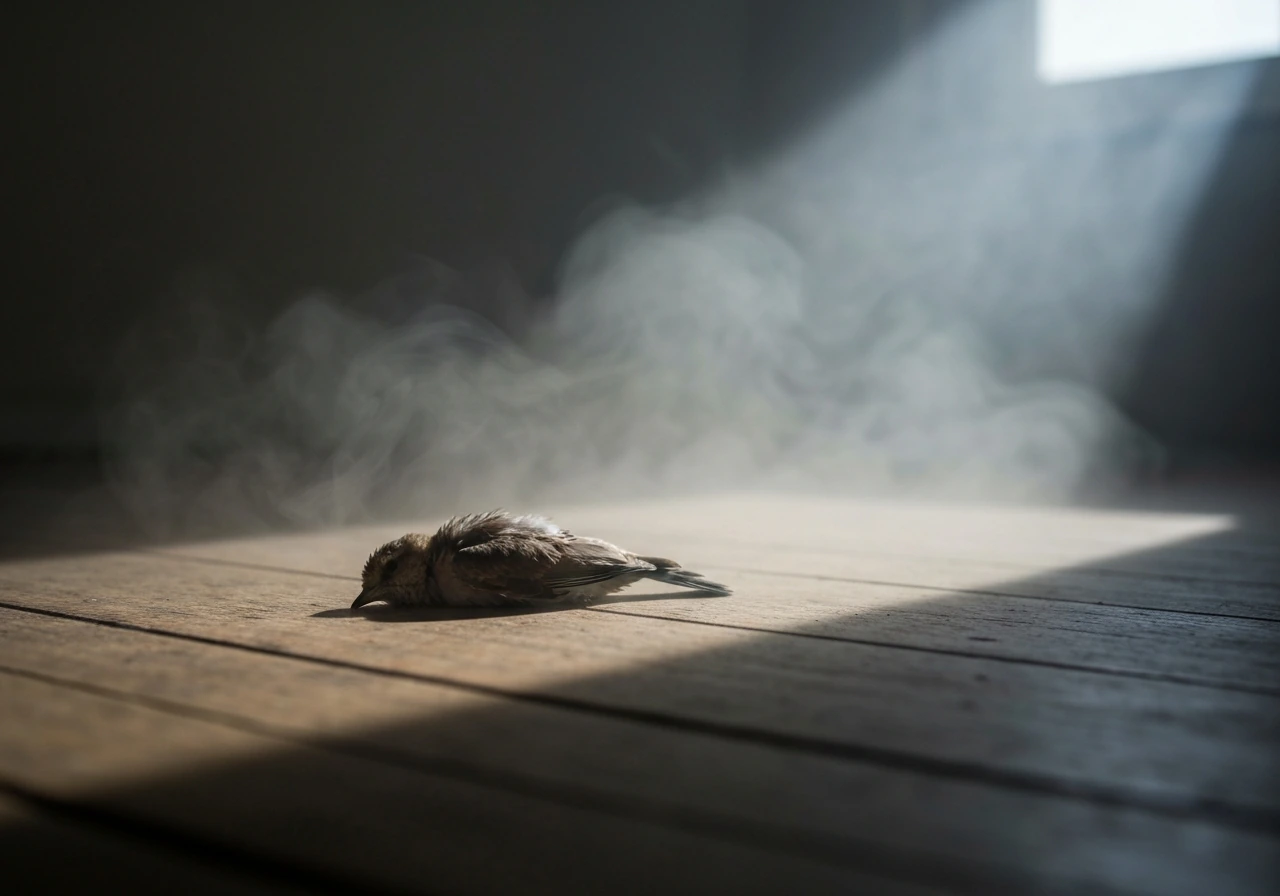
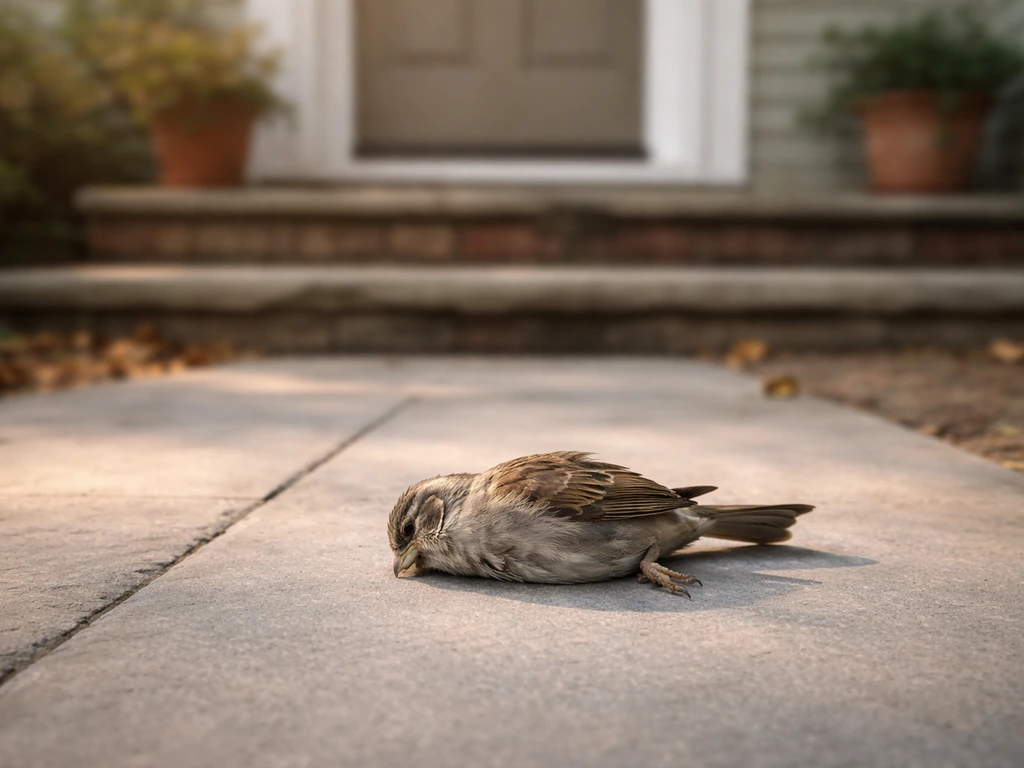
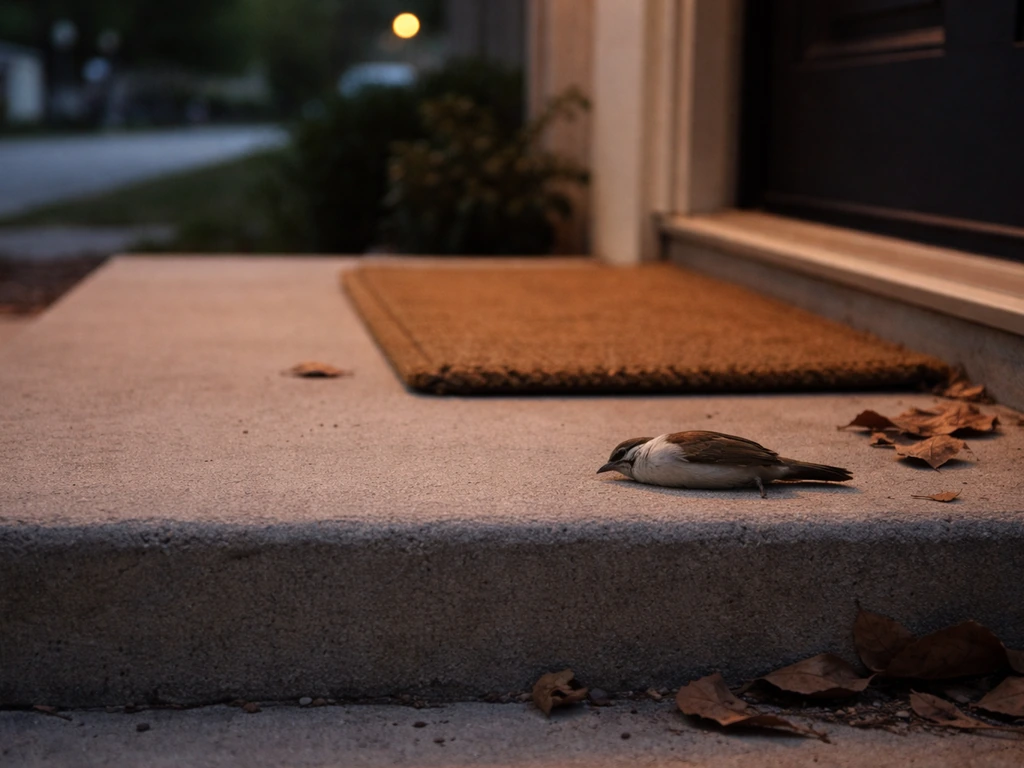
The first thing worth noting is that dreaming of a dead bird is genuinely common, especially during periods of major transition. It shows up when people are leaving relationships, changing careers, grieving losses, or sitting with unresolved fear. If that resonates with something happening in your life right now, the dream is almost certainly reflecting it. If nothing obvious comes to mind, the deeper symbolic and spiritual readings become more interesting to explore.
Common spiritual and symbolic interpretations
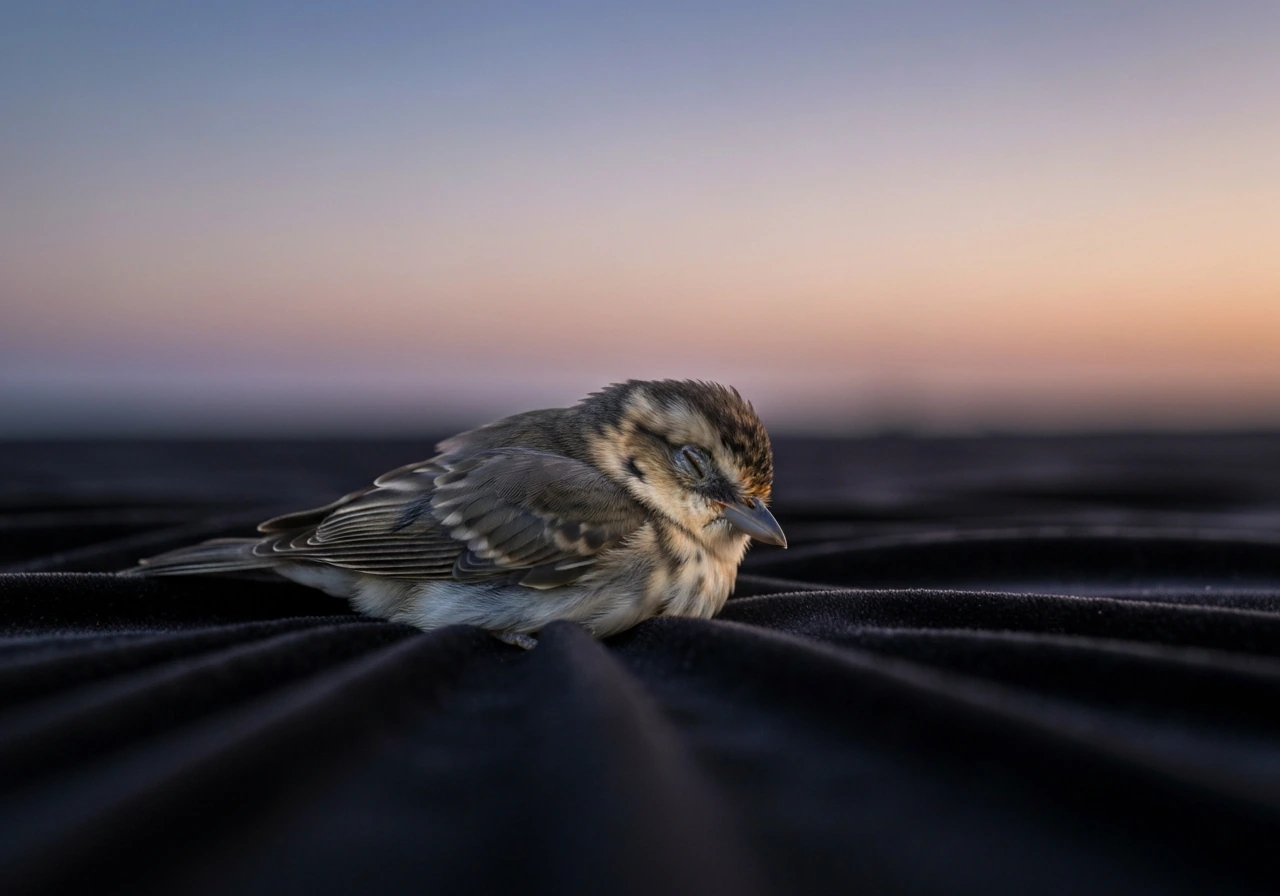
Across a wide range of traditions, birds represent the soul, freedom, communication between worlds, and spiritual aspiration. When a bird appears dead in a dream, those associations shift. The dreaming mind seems to use the image to signal that something once alive, free, or aspirational has come to an end or is being transformed.
In many folkloric and metaphysical traditions, a dead bird is an omen of change rather than necessarily a bad one. Think of it as a doorway image: something closes so something else can open. Celtic traditions, for example, treated birds as messengers between the living and the spirit world. A dead bird in that context could suggest a message that has already been delivered, a cycle completing itself, or an ancestor signaling closure. In some indigenous traditions of the Americas, the death of a bird in a dream is read as the end of a spiritual phase, asking the dreamer to shed old beliefs or habits.
Eastern traditions, particularly in Chinese folk belief and some Buddhist frameworks, read dead birds in dreams with nuance. The species matters. A dead sparrow might signal small worries, while a dead crane, considered sacred, might point to a significant spiritual shift or a need for reverence around something ending in your life. In general, Eastern interpretations lean toward transformation over doom.
Metaphysically, the dream is often read as a message to let go. Holding onto something dead, whether that is a relationship, a version of yourself, or an old ambition, keeps you from what is next. If you physically touched or buried the bird in the dream, many interpretations read that as a positive sign: you are actively processing the ending rather than avoiding it. The same instinct that leads someone to wonder about a dead bird in yard meaning applies here. Proximity, condition, and your emotional response all shape the message.
What the species and color might add
If you remember what kind of bird it was, or its color, that detail carries weight. A dead black bird (especially a crow or raven) is classically associated with endings, shadow work, and confronting things you have been avoiding. A dead white bird, like a dove, often signals the loss of peace, innocence, or hope, though some readers see it as a spirit departing in peace. A dead red bird suggests vitality or passion that has been extinguished. A dead songbird tends to point toward lost joy, creative stagnation, or silenced expression. These are not rules, but they are worth noting when you sit with the dream.
Biblical and religious perspectives on dead birds in dreams

People from Christian, Jewish, and broader Abrahamic traditions often want to know what the Bible says about dead birds, whether in waking life or in dreams. The honest answer is that the Bible does not offer a direct interpretation of dreaming about a dead bird, so anything labeled "the biblical meaning" should be taken as interpretation, not scripture.
That said, birds carry clear symbolic weight throughout biblical texts. In Levitical law, birds were used in purification rituals, including one striking passage in Leviticus 14 where one bird was killed and another released, symbolizing cleansing and freedom. The releasing of the living bird after the death of the other is a vivid image that many theologians connect to themes of sacrifice, renewal, and spiritual liberation. Dreaming of a dead bird through that lens might be read as a call to surrender something to God or to trust that an ending is part of a larger redemptive pattern.
In Matthew 10:29, Jesus references sparrows falling to the ground and notes that not one falls without God's awareness. That passage is often interpreted as a reminder of divine providence even in death or loss. Applied to a dream context, some readers in the Christian tradition take comfort in that framing: the dead bird is not a sign of abandonment, but an invitation to trust. Dreams in general are treated seriously in the biblical tradition (from Joseph to Daniel), though discernment about their source and meaning is always encouraged.
In Islamic tradition, birds in dreams often represent the soul or the human spirit. A dead bird could be read as a warning or a sign of spiritual inattention, or it might simply reflect worldly concerns. Islamic dream interpretation, rooted in the tradition of Ibn Sirin, emphasizes that the emotional tone of the dream and the dreamer's current life circumstances are central to any reading.
Psychological and practical explanations (stress, loss, change)
If you are not drawn to spiritual frameworks, or if you want a grounded explanation alongside the symbolic one, psychology gives you plenty to work with. Dreams about death, including dead animals, are a well-documented way the subconscious processes grief, fear, anxiety, and major life transitions. You do not need to have experienced a literal death to dream about dying things. The image of a dead bird can represent the death of an idea, a relationship, a job, a version of your identity, or even a fear you are finally moving through.
Burnout is another common trigger. People in states of emotional exhaustion often dream in images of stillness, decay, or loss because the mind is trying to signal that something needs to stop. If you have been running hard, ignoring your own needs, or suppressing a difficult emotion, a dead bird in a dream may be your psyche's way of getting your attention.
Anxiety and guilt also show up this way. If you have been carrying guilt about a relationship, a decision, or a person you have not been there for, the dream may externalize that as an image of something fragile that did not survive. Similarly, fear of loss, whether of a person, a period of life, or your own health, can produce death imagery in dreams without any literal threat being present.
It is also worth knowing that disturbing or unsettling dreams (including ones about death) occur most frequently in the second half of the night, during extended REM sleep cycles. If the dream felt vivid and distressing, that timing is likely why. Certain sleep conditions, including obstructive sleep apnea, can also increase the frequency of disturbing dream content, something worth flagging if you are having repeated unsettling dreams and are not sleeping well overall.
How to interpret yours: key details to remember

The most useful thing you can do right now is slow down and recall the specific details of your dream. The same way a waking encounter shifts depending on where you find it (someone curious about a dead bird on porch meaning is asking a slightly different question than someone who found one on their doorstep), the context inside your dream shapes the meaning significantly.
Here are the details most worth capturing while they are still fresh:
- Where was the bird in the dream? Inside your home, in a yard, on a road, in your hands?
- What was its condition? Freshly dead, decayed, or peaceful-looking, as if simply resting?
- What species or color was it, even approximately?
- Who found it or who was present? You alone, or with someone you know?
- What did you feel during the dream? Fear, sadness, calm, guilt, relief, or something else?
- Did you do anything with the bird? Touch it, bury it, walk past it, pick it up?
- Was this a one-time dream or a recurring one?
Location within the dream is especially telling. A dead bird inside your home often points to something personal, domestic, or internal, an aspect of your inner world or home life that feels like it has ended or is ending. A dead bird outside, on a path or in open space, tends to read as more external, perhaps a situation in the wider world or a transition in your social or professional life. Dreams that mirror real-world symbolism (like the way a dead bird in front of house meaning is often read as a threshold or boundary symbol) carry similar layered readings in the dream space.
| Dream detail | Common symbolic reading | Possible psychological angle |
|---|
| Bird inside your home | Ending or shift in personal/inner life | Anxiety about domestic situation or identity |
| Bird in your hands | You are directly involved in the ending or transition | Guilt, responsibility, or grief being processed |
| Burying the bird | Active acceptance; closure and release | Healthy processing of loss or change |
| Recurring dead bird dream | Unresolved message or persistent emotional block | Unprocessed grief, trauma, or chronic stress |
| Dead bird of unknown species | General ending or release; broad transition | Vague anxiety or diffuse sense of loss |
| Dead bird that was once a pet or familiar | Loss of something deeply personal or cherished | Grief, nostalgia, fear of losing what you love |
If the dream is recurring, that is worth paying close attention to. Repeated dream imagery almost always signals something unresolved, whether that is a spiritual message that has not yet been acknowledged or a psychological pattern that needs attention. A one-time vivid dream is often simply your mind processing a current transition. A dream that keeps returning is asking you to engage with it more directly.
What to do next: grounding, journaling, rituals, and seeking help
If the dream left you unsettled, here are practical things you can do today, regardless of your belief system.
Write it down while you still can

Before the dream fades, write down everything you remember using the detail list above. Do not worry about what it means yet. Just get it on paper. Then, once it is captured, sit with how you felt during and after the dream. Often the emotional residue of the dream is more informative than the imagery itself. Ask yourself: does this feeling remind me of anything happening in my waking life right now?
Grounding practices to clear residual distress
If the dream was disturbing, a simple grounding practice can help reset your nervous system. Spend a few minutes outside, feet on the ground, noticing what is alive around you. Make a warm drink. Do something physical and present-tense. These are not spiritual prescriptions, just practical ways to shift out of dream-brain and back into your body. If you practice meditation or breathwork, a short session after a disturbing dream is genuinely helpful.
Rituals and spiritual practices (if that fits your beliefs)
If you work within a spiritual or religious framework, consider a simple ritual that honors the dream's theme of endings and release. For those in a Christian tradition, prayer for peace and discernment around what might be ending in your life is a natural response. For those drawn to more earth-based or metaphysical practices, a small releasing ritual (writing down what you are letting go of and burning the paper, or lighting a candle with intention) can help complete the emotional arc the dream started. Just as waking encounters with dead birds, like a dead bird on doorstep meaning, often prompt people toward symbolic closure, the dream version can do the same. You do not need to follow a script; what matters is that the action feels meaningful to you.
When it is time to talk to someone
If the dead bird dream is recurring, intensely distressing, or connected to real grief, trauma, or ongoing anxiety in your waking life, it may be time to bring a professional into the conversation. This is not a failure of spiritual practice or personal resilience. It is practical wisdom. Research on imagery rehearsal therapy (IRT) shows it can significantly reduce nightmare frequency and distress in people dealing with PTSD and chronic disturbing dreams, with improvements sustained at both 3 and 6 months follow-up in multiple clinical studies. IRT is a structured technique where you rewrite and mentally rehearse a new version of the distressing dream during waking hours, essentially giving your mind an alternative narrative. A licensed therapist, particularly one trained in trauma or sleep psychology, can guide you through it.
If recurring dead bird dreams are accompanied by poor sleep quality, waking in the second half of the night feeling frightened, or significant daytime distress, it is also worth mentioning to a doctor, since some sleep disorders increase nightmare intensity and frequency. You deserve uninterrupted, restoring sleep, and there are real tools to get there.
Ultimately, what matters most is what the dream means to you. The details you remember, the emotions it stirred, and the situation you are living through right now are all part of your personal interpretation. The frameworks offered here, spiritual, biblical, folkloric, or psychological, are just lenses. Try each one on and notice which one illuminates something true for you. That recognition, that quiet sense of "yes, that fits," is usually where the real meaning lives.