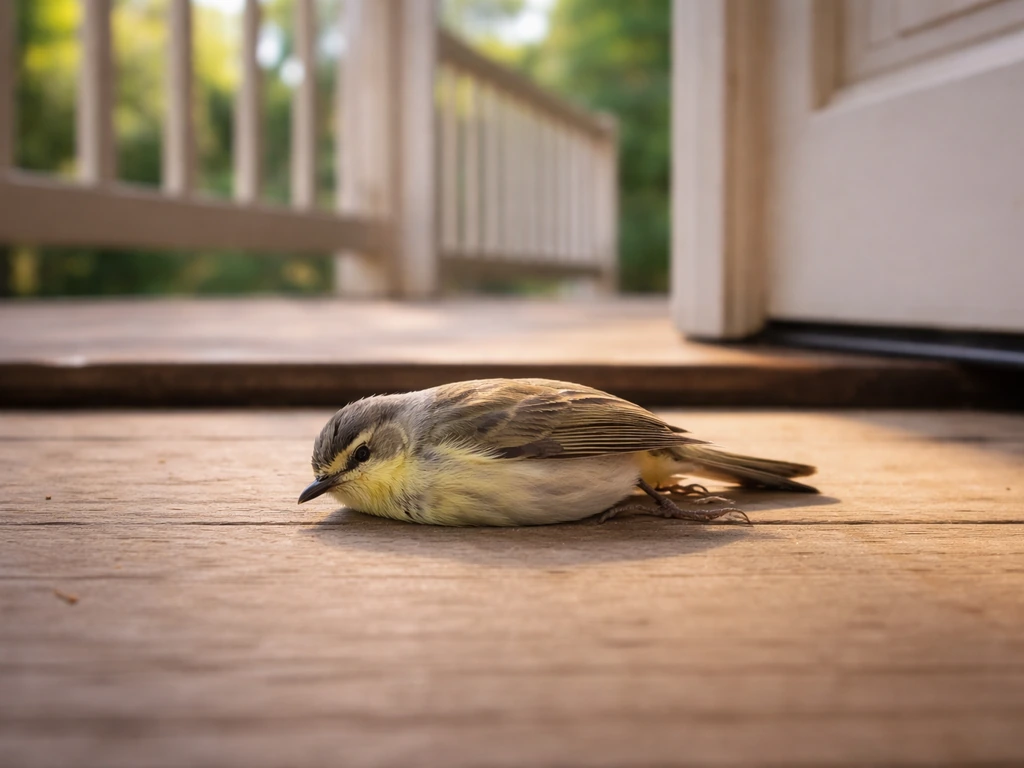
Finding a dead bird on your doorstep, porch, or right outside your front door is jarring. Your first instinct might be to look for meaning, or it might be to figure out what to do with it. Both reactions are completely reasonable, and this guide walks you through both sides: the practical (what likely happened and how to handle it safely) and the symbolic (what different traditions say it might mean for you).
Dead Bird on Doorstep Meaning: Practical and Spiritual Guide

Maya Hartwell
5 Apr 2026
What it usually means in plain terms
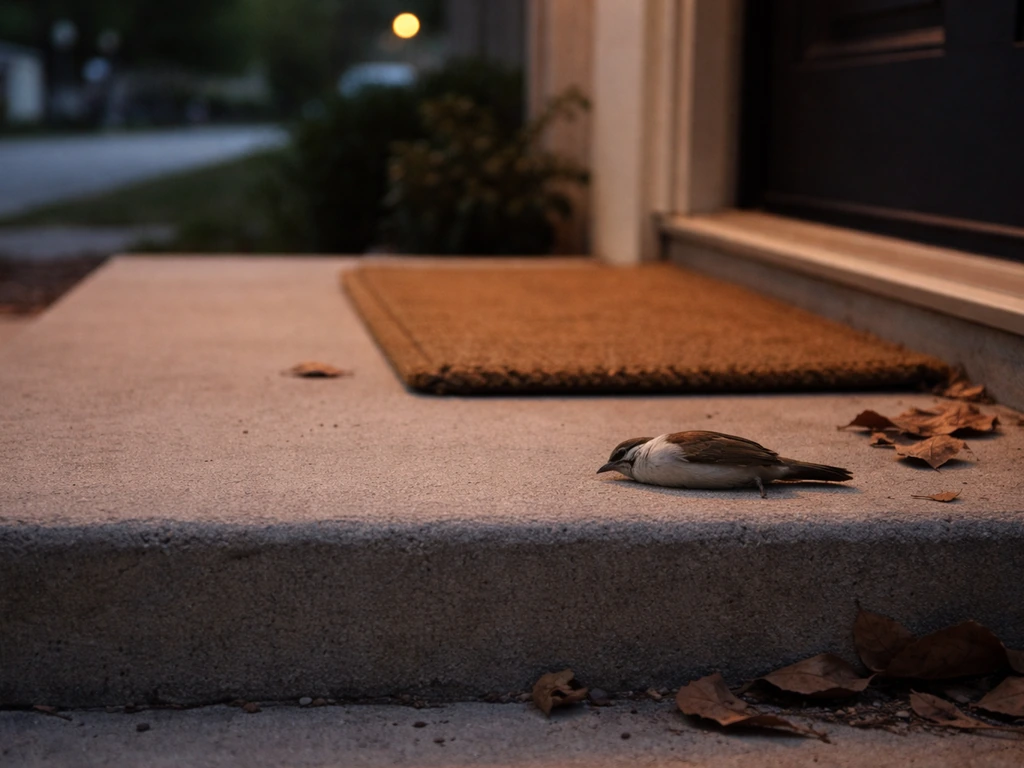
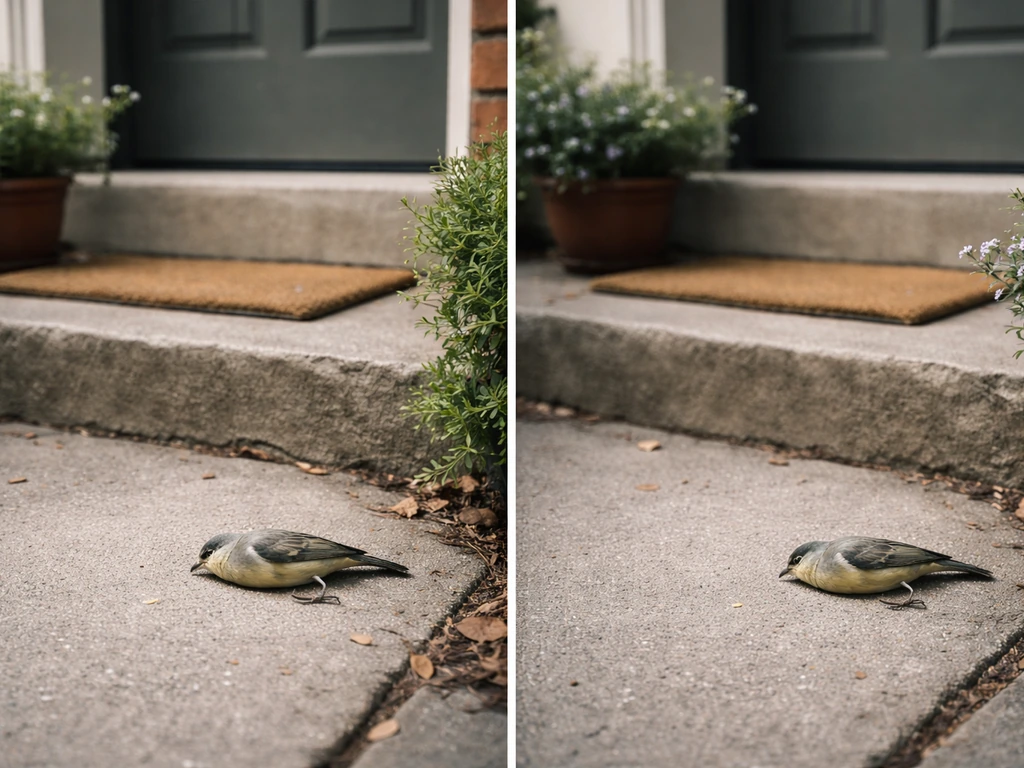
Most of the time, a dead bird on your doorstep has a straightforward natural explanation. Birds die constantly from cold exposure, starvation, illness, predator attacks, and window strikes. Your doorstep, porch, or front entryway happens to be a sheltered, low-traffic spot, which makes it a place birds are drawn to when they're weak or where predators drag their catches. A cat bringing a bird to your door is genuinely one of the most common scenarios. So is a bird that flew into a nearby window and landed at the base of your entry. None of these scenarios carry inherent spiritual weight on their own, and it's worth starting there before assigning meaning.
That said, humans have been interpreting unexpected animal encounters for thousands of years. If the practical explanation doesn't fully satisfy your sense that something significant happened, that's worth exploring too. You're not being irrational. You're doing what people have always done.
Why a bird ends up on your doorstep in the first place
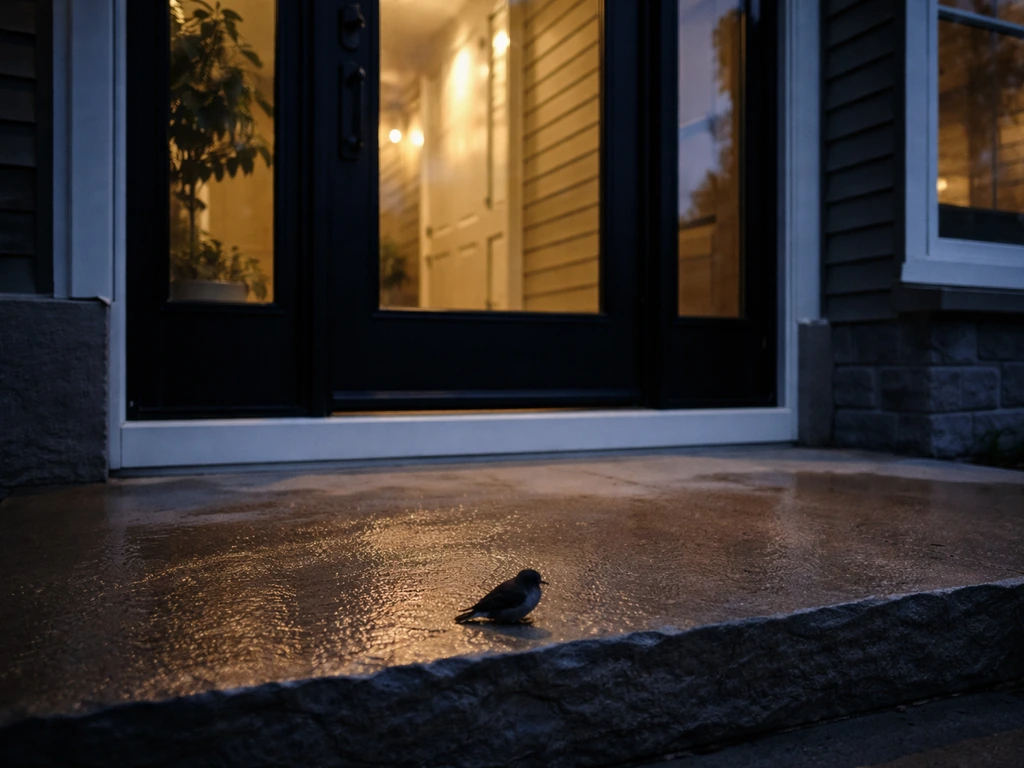
Understanding the physical cause can actually help you decide how much symbolic weight to give the event. Here are the most common culprits:
- Window collisions: Birds can't easily read glass, and a window or glass door near your entryway is a frequent cause. The bird often falls directly below the pane it struck, which puts it right at your door.
- Predator drops: Cats, hawks, and other predators sometimes carry prey to a safe spot and abandon it. If you have outdoor cats in the neighborhood, this is highly likely.
- Extreme weather: Cold snaps, storms, and sudden temperature drops kill birds who are already weakened by food scarcity. Sheltered spots like porches and covered entryways are exactly where a struggling bird might seek refuge before dying.
- Natural illness: Birds die from disease, parasites, and age. A sick bird may simply be drawn to a quiet, sheltered space and expire there.
- Territorial fights: Some birds die from injuries sustained in fights with other birds. You may not see the conflict, just the result.
If you've found a bird specifically on your porch rather than the main doorstep, the causes are nearly identical. A dead bird on your porch is just as likely to be a window strike or a predator drop as one found right at the front door. Location within the property matters less than the physical circumstances around it.
Spiritual and symbolic meanings across traditions
Across cultures and centuries, birds have been seen as messengers between worlds. A dead bird landing at a threshold, specifically, carries extra symbolic weight in many traditions because thresholds are liminal spaces: the boundary between your private world and the outside. Here's how different belief systems tend to interpret the event.
Change and transition
The most widespread symbolic interpretation is that a dead bird signals an ending, which makes space for a new beginning. In many indigenous traditions across North America, death in nature is not a tragedy but part of a continuous cycle. Finding one at your door specifically might be read as a message that something in your life is completing: a relationship, a phase, a belief you've been holding. The door is the entry point to your personal space, which gives the symbolism extra relevance.
Celtic and European folklore
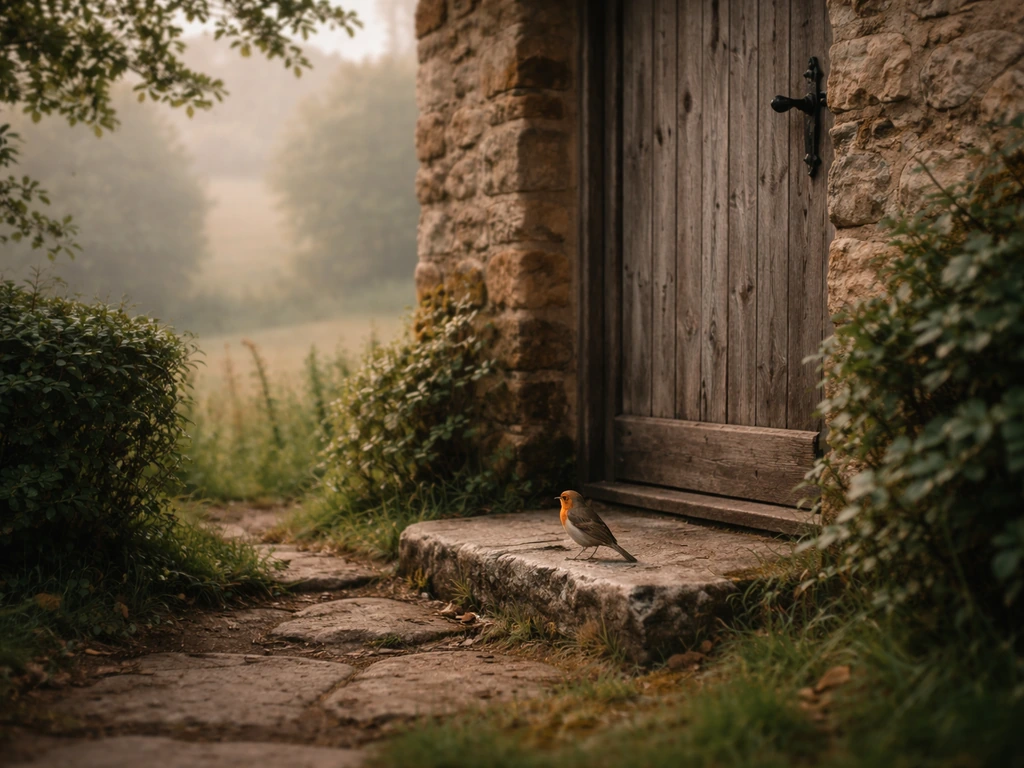
In Celtic traditions, birds were frequently seen as souls or spirit messengers. A bird dying near a home could indicate that the home was being 'noticed' by spirit, or that a message was being delivered from an ancestor. Some European folklore traditions held that birds appearing near doorways or windows were carrying news from the dead, particularly if the bird was unfamiliar to the household. This connects to the ancient practice of ornithomancy, the reading of omens from bird behavior and appearance, which goes back to ancient Greek and Roman augury.
Eastern and metaphysical interpretations
In some East Asian traditions, birds are associated with the soul and with luck, both good and bad depending on the species. A dead bird near the home can be interpreted as a spiritual warning or a sign that negative energy needs to be cleared. In metaphysical circles, particularly those influenced by New Age or spiritualist thinking, a dead bird is often framed as a nudge: pay attention, something is ending, and your awareness is being called to it now.
What the Bible and traditional folklore say
Christian scripture doesn't directly address dead birds as omens, but it does speak to birds meaningfully. Matthew 10:29 notes that sparrows do not fall without God's awareness, and Matthew 10:31 follows with the message 'do not be afraid,' assuring that a person is worth more than many sparrows. Many faith writers use these passages to gently push back against interpreting bird deaths as specific signs of doom or misfortune. The suggestion is that even small, seemingly insignificant events are held within divine awareness, which is comforting rather than ominous.
It's also worth noting that Christian perspectives generally discourage treating bird events as deterministic omens. The emphasis in scripture is on guidance through prayer and discernment rather than through external signs. If you're coming from a Christian background and you feel uneasy, the biblical framing is more likely to offer reassurance than alarm.
In broader European folklore, certain birds near a doorway were treated as portents. Jackdaws settling near a home, for instance, were sometimes considered omens of death in some regional British traditions. Owls near a threshold carried similar weight in many Mediterranean and Middle Eastern cultures. These beliefs were highly specific to bird species and regional tradition, so a general 'dead bird at the door' reading varies enormously depending on where and when you look.
What people in metaphysical circles say it could mean
In metaphysical and intuitive communities, a dead bird at your door tends to be read as one of three things: a message, a marker of timing, or a call for attention. It's rarely framed as purely negative. Instead, the focus is on what you're being asked to notice.
- A message from a loved one who has passed: Birds are one of the most commonly cited 'messenger' symbols in grief and spiritual communities. If you've recently lost someone, a bird appearing and dying near your door is sometimes interpreted as that person making contact.
- A signal that a chapter is closing: The timing matters here. If you're in the middle of a major life change, a dead bird can be read as confirmation that you're at an ending point. Not a bad one, just a real one.
- An invitation to clear stagnant energy: Some practitioners interpret a dead bird near the home as a signal to cleanse the space, both physically and energetically. This might mean burning herbs, reorganizing a space, or simply setting an intention.
- A prompt to pay attention to what you've been ignoring: In many interpretive systems, the arrival of an unusual event is less about what it predicts and more about what it's asking you to look at right now.
If the bird appeared in your dreams rather than in physical reality, the symbolic reading shifts considerably. If you want a quick overview, you can also explore how dead bird dream meaning is commonly explained in metaphysical and psychological terms. Dead bird dream meaning tends to focus more on subconscious processing and internal transformation rather than external messages.
What to do right now: safety and cleanup
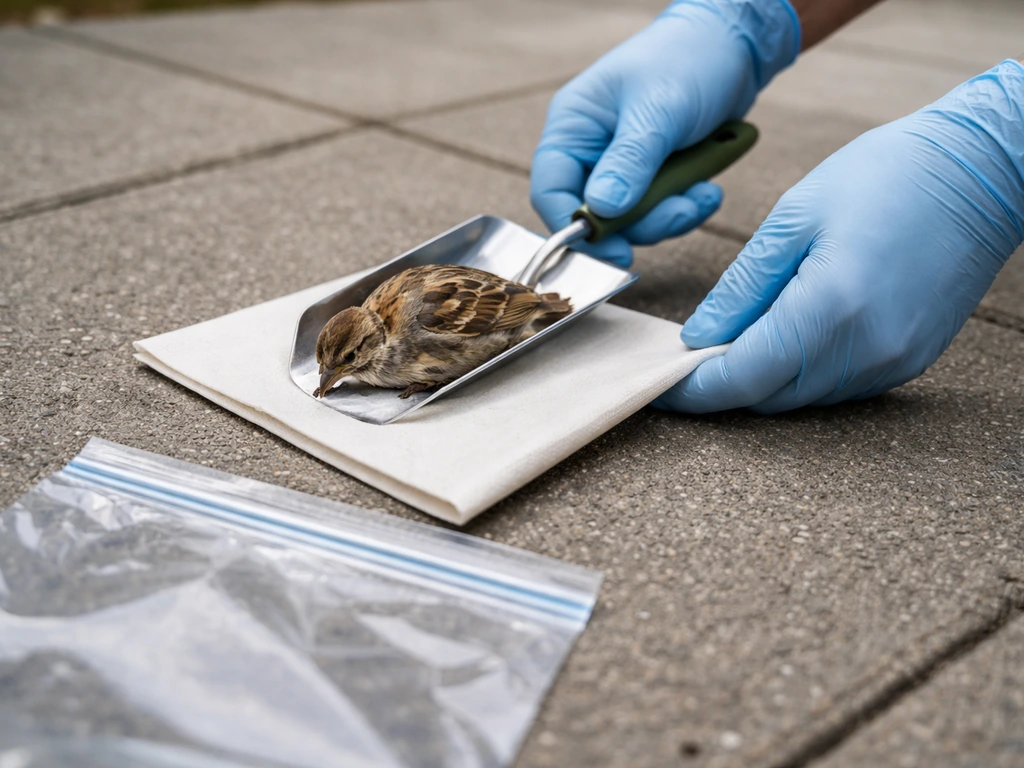
Before you decide what the bird means, you need to handle it safely. Dead birds can carry diseases including West Nile virus and, in some cases, avian influenza. The U.S. Fish & Wildlife Service instructs the public to report mortalities in wild birds to the relevant state wildlife management agency so die-offs can be investigated and tested for avian influenza. Here's the practical guidance from wildlife and public health authorities.
- Do not touch the bird with bare hands. The CDC recommends using disposable gloves or inverting a plastic bag over your hand to pick it up, then sealing the bird inside the bag before placing it in your regular trash.
- Avoid stirring up feathers, dust, or feces near the bird. The CDC specifically advises against this to reduce exposure risk.
- After handling or even being near the bird, wash your hands thoroughly with soap and water.
- Disinfect the surface where the bird was found. The EPA maintains a list of registered disinfectant products that inactivate avian influenza A viruses on hard, non-porous surfaces. Your porch floor or doorstep qualifies.
- If the bird appears sick rather than simply dead (trembling, unable to fly, behaving strangely), do not handle it. Report it instead.
- If you find five or more dead birds in the same location, that's a potential wildlife disease cluster. The USGS recommends contacting your local health department in that scenario. The U.S. Fish and Wildlife Service also advises reporting larger bird die-offs to your state wildlife management agency so the deaths can be investigated and tested for avian influenza.
- For a single bird with no signs of disease clusters, most state agencies (like Oregon's ODFW) suggest you do not need to report it, but you should still handle it safely and dispose of it properly.
When it comes to calling for help: contact your state wildlife agency or local health department if you find multiple dead birds, if you suspect the bird may be a protected species, or if you observe any signs of illness in other birds nearby. Follow the Oregon Department of Fish and Wildlife dead bird reporting protocol, which covers when it is appropriate to contact the agency (and/or your local health department) due to concerns such as avian influenza risk. Wildlife rehabilitators may be able to help with sick birds, though some aren't authorized to accept certain protected species. When in doubt, call before handling.
How to decide what it means for you
Once the practical side is handled, you get to decide what, if anything, you take from this. There's no single correct interpretation. What tends to make one reading feel more resonant than another is the personal context you bring to it. Here are some questions worth sitting with:
- What's going on in your life right now? Are you in a period of change, loss, or transition? Symbolism tends to land harder when it mirrors something already in motion.
- How did you feel when you saw it? Your gut reaction, before you started analyzing, often tells you more than any traditional interpretation.
- Have you had other unusual bird encounters recently? A pattern of bird events can feel more meaningful than a single incident.
- What bird species was it? Different birds carry different symbolic weight depending on the tradition. A crow carries different associations than a sparrow or a dove.
- Does the location matter to you personally? A bird at your front door feels different from one found deeper in your yard. A dead bird in your yard often reads as a more general property-level sign in symbolic traditions, while a doorstep encounter feels more personally addressed.
- Are you looking for comfort, a warning, or just an explanation? Knowing what you're actually hoping to find can help you recognize when you've found it.
It also helps to compare the different placement interpretations side by side. A dead bird in front of your house is sometimes read as a more public or outward-facing omen in symbolic traditions, while one on the doorstep or porch feels more intimate and personal. None of these distinctions are universally agreed upon, but they can help you narrow down which reading feels right for your situation.
Practical vs. symbolic: a side-by-side look
| Perspective | What it says | Best for you if... |
|---|---|---|
| Natural/practical | A bird died near a sheltered spot due to weather, collision, predation, or illness. No deeper meaning required. | You want a clear, grounded explanation and feel no pull toward symbolism. |
| Spiritual/metaphysical | A message, a marker of transition, or a prompt to pay attention. Often linked to change, endings, or contact from spirit. | You're in a period of change and the timing feels significant to you personally. |
| Biblical/Christian | God is aware of every bird that falls. Do not fear. Your life is of great value, and this is not a deterministic omen. | You come from a faith background and want reassurance rather than a sign to interpret. |
| Folkloric/cultural | Depends heavily on the bird species and your regional tradition. Some birds near doors were omens of change; others were messengers of news. | You have a strong connection to a specific cultural heritage and its bird symbolism. |
Most people land somewhere between the practical and the personal. The bird died for a real reason. But the fact that it ended up right at your door, right now, might also be worth a moment of reflection. Both things can be true at once, and you don't have to choose.
FAQ
Does the “threshold” meaning only apply if the bird is right at my front door?
Before assigning any meaning, confirm whether it is truly on your property or simply near it. If the bird is on a neighbor’s side, in a shared entryway, or directly in front of a road, your “threshold” symbolism may not fit as well, and the practical cause (window strike, predator drop, outdoor cat) becomes more likely.
What should I do if I have a cat or dog and the bird might have been brought in?
If you have pets or you saw a cat or dog nearby, prioritize preventing repeat exposure. Keep pets inside while you clear the area, disinfect the spot after removal, and wash your hands thoroughly, because the concern is not just the bird but also contaminated surfaces or saliva.
Does the meaning change if it happens during a personal transition?
Yes, but the timing changes how you interpret it. If it happens during a major transition (moving, breakup, job change), many people find the “ending and new beginning” theme feels more relevant than if it occurs randomly, days after everything is stable.
When is it better to call health services or wildlife officials instead of removing it myself?
Avoid handling it yourself if you suspect illness in nearby birds, the bird is small and looks fragile, or you are immunocompromised. Use gloves if you do pick it up, bag it securely, and consider calling your local health department for advice when multiple birds appear or you notice abnormal droppings.
If there are other birds nearby, should I still interpret the dead bird spiritually?
If you see another live bird acting strangely (uncoordinated flight, obvious injury, lethargy), that often points to a local hazard like a window strike aftermath, toxic exposure, or infection risk. In that case, focus on safety and reporting rather than interpreting the dead bird as a personal message.
What if the bird didn’t just land there, it ended up inside my entryway?
If you find the bird inside the doorway area or trapped and then deceased, treat it as a likely physical event (confusion after entering, collision, dehydration) first. Symbolic readings can still be meaningful, but they usually feel more “about access” or “a boundary being crossed” than about an abstract fate.
If the bird looks intentionally placed, does that change the meaning?
If the bird is clearly intact (not eaten) and positioned in a noticeable way, some people lean toward a “message” theme. Still, scavengers and weather can create apparent placement, so use intactness as a clue for practical explanation, not as proof of symbolism.
How can I tell the difference between a grounded interpretation and forcing a sign?
You can do a quick “closed loop” check: note the species, the condition, weather around the time, whether there are window panels nearby, and whether cats roamed. This helps keep the interpretation grounded while still leaving room for personal reflection.
How should I interpret a dead bird dream meaning differently from finding a bird outside?
If the bird appears in a dream, treat it as internal symbolism unless you also witnessed a real-world incident. Dream meanings often connect to emotions (fear, closure, change) rather than external events, so it helps to ask what was happening in your life emotionally around the dream.
What if I’m Christian and the symbolism feels too scary or deterministic?
Some faith-based discomfort is a valid signal to choose a less deterministic lens. A practical approach is to frame it as a moment for prayer, gratitude, or reflection, rather than a forecast. If it still feels troubling, leaning on guidance from your faith community can help you avoid anxiety-driven interpretations.
Next Article
Dead Bird on Porch Meaning: Practical Causes and Spiritual Interpretations
Learn the dead bird on porch meaning, practical causes, safe cleanup steps, and spiritual interpretations by location.