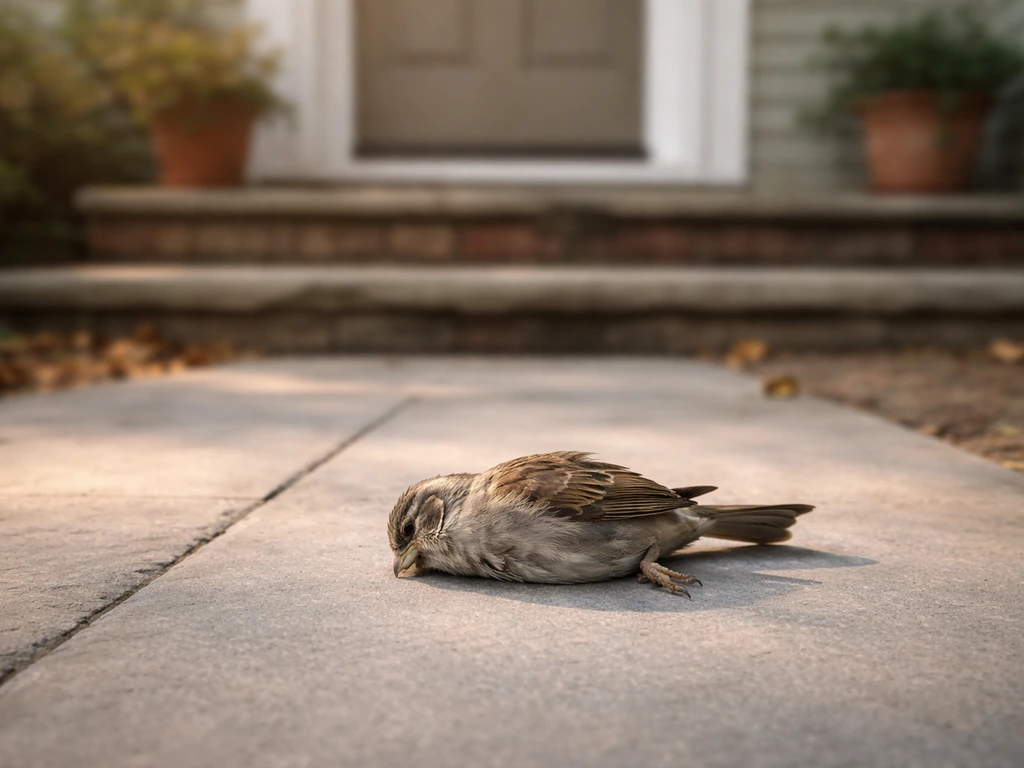
Finding a dead bird in your yard is one of those moments that stops you in your tracks. Your first instinct might be to wonder what it means, whether you should touch it, or whether something bigger is going on. The honest answer is: it can be all three at once. Most of the time, a dead bird on your property has a simple, natural explanation. But that doesn't mean the experience can't carry personal or symbolic weight, and it doesn't mean you should ignore the practical steps that keep you, your kids, and your pets safe. This guide walks you through all of it.
Dead Bird in Yard Meaning: What to Do and Spiritual Signs

Maya Hartwell
6 Apr 2026
Why birds die in yards: the most common causes

Before you assign meaning to the event, it helps to understand what probably happened. Birds die in yards all the time, and the causes are overwhelmingly mundane.
- Window strikes: Window collisions are one of the leading causes of bird deaths around homes. Birds see sky or vegetation reflected in glass and fly straight into it. According to Audubon, the problem is far more widespread than most homeowners realize, with bird-safe window treatments (like dot patterns applied to glass) being one of the most effective prevention tools available.
- Vehicle strikes: Birds foraging near roads or driveways get hit more often than you'd think, and the body sometimes ends up in the nearest yard.
- Cat predation: Outdoor cats are among the top human-linked causes of bird mortality. If you find a bird with feathers scattered nearby or obvious claw marks, a cat is usually the culprit.
- Natural death and old age: Small songbirds have short lifespans. A bird that simply died of old age or an undetected illness may land in your yard after a final perch.
- Disease: Avian diseases including avian influenza (bird flu) and botulism can kill individual birds or cause larger die-offs. Botulism in particular can cycle through a population when maggots feeding on an infected carcass concentrate the toxin and are then eaten by other birds.
- Poisoning: Pesticides, rodenticides, and contaminated water sources can be lethal to birds. If you or a neighbor recently applied chemicals in the area, this is worth considering.
- Powerline or structure strikes: Birds can collide with utility lines, fences, or other structures, especially during low-light conditions or migration.
The location, condition, and number of birds you find are your first clues. A single bird near a large window? Almost certainly a strike. A bird near your feeder with no visible injury? Possible disease or natural death. Multiple birds in the same area over a short period? That's when you need to think more carefully and potentially report it.
Before you do anything: safety first
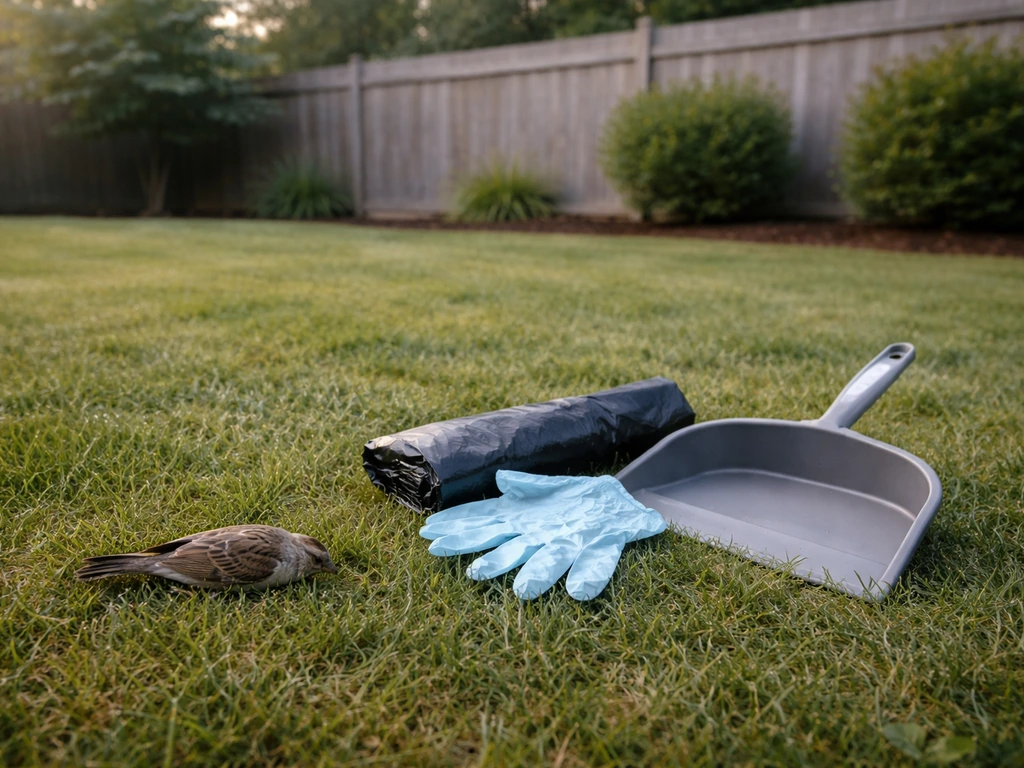
The CDC's guidance is direct: do not touch a dead bird with your bare hands. That applies whether it's a common sparrow or a larger species. Dead birds can carry diseases including West Nile virus, avian influenza, and salmonella, and some of these can transfer to humans or pets. The Philadelphia Department of Public Health echoes this, noting that the safest course is simply to avoid contact with any sick, injured, or dead bird. If you must handle or remove the carcass, here's the right approach.
- Keep kids and pets away from the bird immediately. Don't let dogs or cats investigate it.
- Put on disposable gloves before you do anything else. If you have a mask and eye protection available, use them, especially if you're in an area with known bird flu activity.
- Avoid stirring up feathers, dust, or droppings around the bird. The CDC specifically warns that disturbing this material can aerosolize potentially infectious particles.
- Use a plastic bag turned inside-out over your hand to pick up the carcass, then seal it. Double-bagging is recommended by several state health agencies, including West Virginia's DHHR guidance.
- Place the sealed bag in your outdoor trash bin. Do not compost it.
- Wash your hands thoroughly with soap and water after the entire process, even if you wore gloves.
- Clean any tools or surfaces that contacted the bird using hot soapy water followed by a disinfectant.
Before you dispose of it, take a quick visual inventory without touching anything: note the species if you can identify it, check for obvious injury (broken wing, blood, impact marks), look at how long it appears to have been there (blow flies and maggots arrive within minutes to hours of death and can help estimate time since death based on their development stage), and note whether there are other dead birds nearby. This information matters if you end up needing to report it.
What it might mean: spiritual and symbolic interpretations
Once you've handled the practical side, it's completely natural to sit with the question of what it means. Across nearly every spiritual tradition, birds are messengers, symbols of the soul, and markers of transition. A dead bird in your space can carry several layers of symbolic meaning depending on where you are in life, and what resonated with you in the moment.
The most consistent theme across spiritual frameworks is transformation. Death in nature is rarely interpreted as a pure ending; it's more often read as a signal that something is completing a cycle so something new can begin. If you've been holding onto a situation, relationship, or phase of life that has run its course, many people interpret a dead bird as a nudge to release it. Think of it as the universe underlining what you already sense.
Some traditions read it as a warning: pay attention to what's around you, slow down, or reconsider a decision you've been rushing. Others interpret it as a message from a loved one who has passed, particularly if the bird species carries personal significance. The yard, as a threshold between your private world and the outside, adds weight to the encounter in many metaphysical interpretations, much in the same way that the spiritual significance of finding a dead bird on your porch is often tied to the idea of a message being delivered directly to your door.
The species of bird matters in many traditions too. A crow or raven has long carried associations with transition and the spirit world in Celtic and indigenous traditions. A dove suggests lost peace or a message of hope depending on context. A sparrow, small and overlooked, might point to humility or a quiet personal shift. There's no universal dictionary for this, and that's actually the point: your personal reaction and what arises in you during the encounter is often more meaningful than any fixed interpretation.
It's also worth noting that location shifts the symbolic lens. The meaning attributed to a dead bird discovered in front of your home, for instance, differs in several folk traditions from one found in the back. You can explore those distinctions in more depth through the article on what a dead bird in front of your house might symbolize.
Biblical and religious perspectives
For readers approaching this through a Christian or broadly biblical lens, two passages come up most often in discussions about birds and divine meaning. Matthew 10:29 reads: 'Are not two sparrows sold for a penny? Yet not one of them will fall to the ground outside your Father's care.' This verse is frequently cited to reframe the anxiety around finding a dead bird: rather than reading it as an omen of doom, many Christian thinkers interpret it as a reminder of divine awareness of even the smallest events in creation. Nothing, including a bird's death in your yard, falls outside the scope of God's attention.
Matthew 6:26 extends this: 'Look at the birds of the air; they do not sow or reap or store away in barns, and yet your heavenly Father feeds them.' Within this framework, a dead bird isn't a curse or a warning; it's simply part of the natural order that exists within a larger providential care. Many pastoral voices use these passages to gently discourage reading dead birds as dark omens, framing superstition as a form of misplaced fear rather than spiritual discernment.
That said, birds as divine messengers do appear throughout scripture and religious tradition broadly. In the Hebrew Bible, ravens bring food to the prophet Elijah. The dove returns to Noah as a sign of peace and new beginning. Across Islamic tradition, birds are treated with respect as creatures of God that engage in their own form of worship. In these contexts, the death of a bird near your home can still carry a reflective quality without veering into omen-seeking: it can prompt gratitude, contemplation of life's brevity, or simply a moment of stillness.
What folklore and metaphysical traditions say
Bird-based divination has deep roots across almost every human culture. The formal Roman practice of augury involved interpreting the flight, song, and behavior of birds as omens about the future, and ornithomancy (reading omens specifically from birds) appears as a distinct tradition across Greek, Roman, Celtic, and indigenous cultures worldwide. These weren't fringe practices; they were institutionalized ways of reading the relationship between the natural world and human affairs.
Welsh folklore gives us one of the more vivid specific examples: the 'Aderyn y Corff,' sometimes translated as the 'corpse bird,' was believed to portend death by appearing near or calling at the home of someone who would soon die. This kind of hyper-local, culturally specific belief illustrates how deeply bird encounters have been woven into the fabric of daily spiritual life in many traditions, not as curiosities but as genuine signals worth heeding.
In many Indigenous American traditions, birds carry the souls of the deceased between worlds, and finding a dead bird can be interpreted as a soul that has completed its journey or is pausing near your space as a message from an ancestor. In East Asian spiritual frameworks, a dead bird near the home can suggest stagnant energy that needs clearing, prompting rituals of space cleansing. In some European folk magic traditions, the species, condition, and positioning of the bird would all be read together to form a more specific interpretation.
From a modern metaphysical standpoint, many practitioners treat a dead bird as an energetic marker: the end of a cycle, a prompt to do shadow work, or a call to pay attention to something you've been avoiding. If you've recently been dreaming about birds as well, that layering of waking and sleeping symbolism is worth exploring. If you are also wondering about the emotional side of sleep, the dead bird dream meaning can offer extra context for what your subconscious may be processing. The spiritual meaning of a dead bird in a dream often mirrors the themes that show up in waking life encounters, but with added layers tied to your subconscious processing.
One pattern that appears across many traditions is the threshold: birds found at or near an entrance to the home (doorstep, porch, front yard) are often read as more personally directed messages than those found in the far corner of a field. If the bird appeared at or near your door, the symbolism of a dead bird on a doorstep carries its own set of cultural and spiritual interpretations worth exploring separately.
When it's more than symbolism: signs of a bigger problem
A single dead bird with an obvious cause (window strike, cat predation) is rarely cause for alarm beyond proper disposal. But there are situations where you should take the practical side more seriously and consider reporting the incident to local authorities.
| Situation | What it might mean | What to do |
|---|---|---|
| Multiple dead birds in the same area | Possible disease outbreak, botulism, or poisoning | Do not touch; contact local animal control, wildlife agency, or health department |
| Birds near feeder or water source with no visible injury | Possible disease spread via shared food/water; possible contaminated feeder | Stop use of the feeder; disinfect with 10% bleach solution; report if multiple birds |
| Single bird near a large window | Almost certainly a window strike | Safe to dispose of with PPE; consider bird-safe window treatments |
| Bird with obvious predator marks (feathers scattered, claw wounds) | Cat or raptor predation | Standard PPE disposal; no reporting usually needed |
| Bird in area where pesticides or rodenticides were recently used | Possible secondary poisoning | Note the location; report to local wildlife agency; avoid area until confirmed safe |
| Dead birds near a body of water in warm months | Possible avian botulism (especially waterfowl) | Contact wildlife agency; do not allow pets near the area |
| Unusual bird behavior before death observed (circling, stumbling) | Possible West Nile virus or avian influenza | Report to local health department; CDC surveillance programs rely on these reports |
The CDC has noted that dead bird reporting is a core component of West Nile virus surveillance in many states, and testing policies vary by location. Some jurisdictions actively collect carcasses for WNV or H5N1 testing. If you're in California, you can report year-round through the state's West Nile Virus program online or by calling the reporting line. Los Angeles County specifically maintains a dead bird reporting hotline at 877-WNV-BIRD (877-968-2473). For other states, your first call should be to your local health department or state fish and wildlife agency, who can tell you whether reporting is active in your area and whether your bird is a candidate for testing.
Reducing future incidents around your yard
If you want to reduce the chance of finding dead birds on your property in the future, a few targeted changes make a real difference. For window strikes, apply bird-safe patterns (dots, lines, or UV-reflective film) to large glass surfaces, especially those that reflect trees or sky. Audubon discusses bird-safe glass and notes that the pattern spacing matters, including a common “2x4 rule” for dot placement. Cornell Lab of Ornithology notes that birds strike windows because they see reflections as real space, so breaking up that reflection is the most direct fix.
For feeder-related deaths, clean your bird feeders and waterers with a 10% bleach solution about once a month, as recommended by the Iowa DNR. Dirty feeders concentrate sick birds around a shared food source and accelerate disease transmission. Remove fallen seed from the ground below feeders regularly. If you've had a confirmed disease event near your feeders, pull them down entirely for at least two weeks to disperse the local bird population.
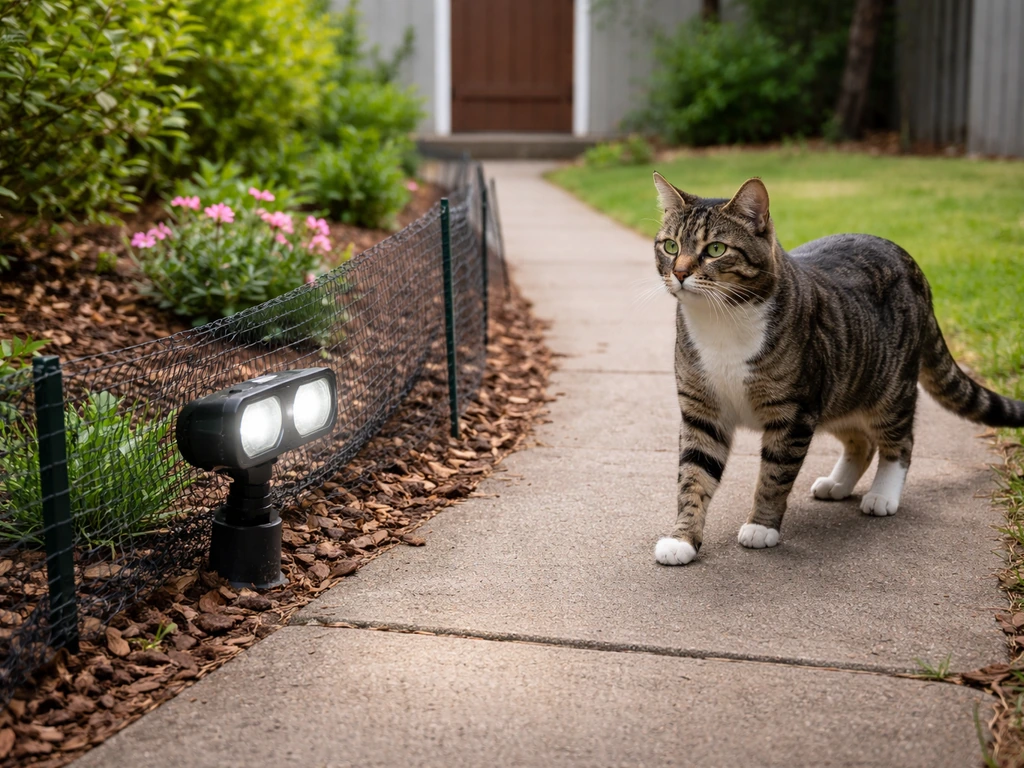
If outdoor cats are a factor (yours or a neighbor's), keeping cats indoors is the single most effective prevention. For raptors and other predators, this is simply part of the natural cycle and not something that needs to be addressed unless the predator is acting unusually or is itself injured.
Avoid using broad-spectrum pesticides or rodenticides near areas where birds forage. Secondary poisoning from rodenticides is a documented and preventable cause of bird death, and there are wildlife-safer alternatives for pest control that your local extension office can recommend.
What to do right now: your next steps
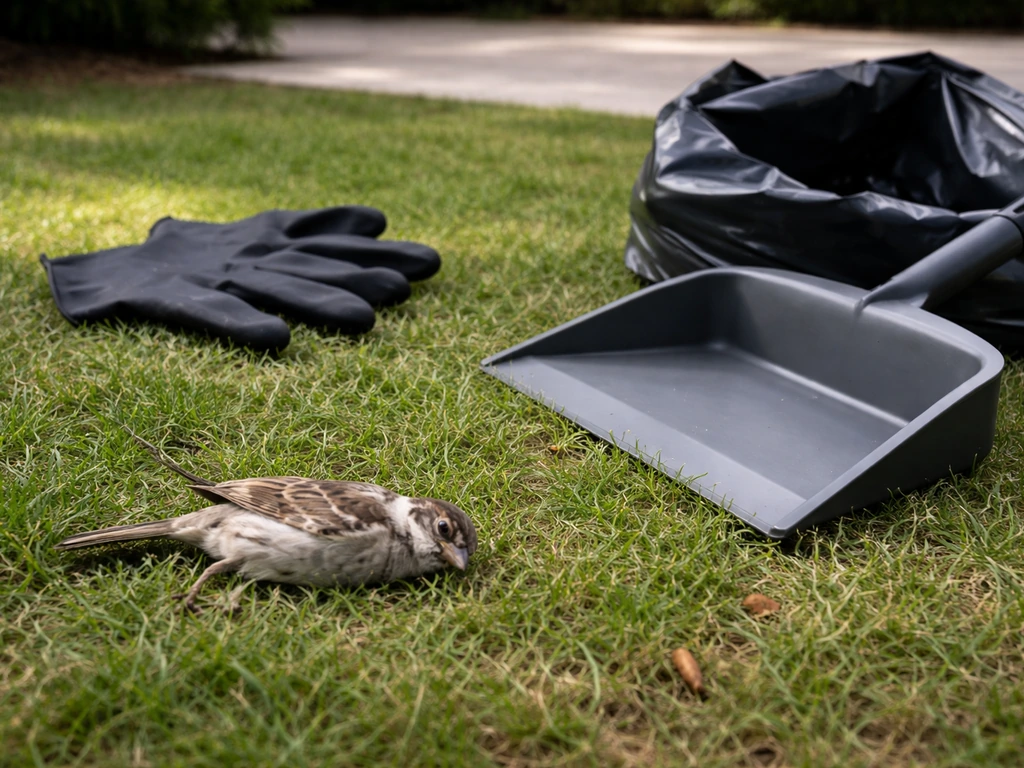
If you're reading this because you just found a dead bird, here's the short version of what to do today. Keep people and pets away. Gear up with gloves and ideally a mask. Double-bag the bird without bare-hand contact. Follow West Virginia DHHR instructions for dead-bird disposal, including blank" rel="noopener noreferrer">double-bagging the carcass by placing it in one garbage bag and then putting that bag into a second bag. Note the species, location, condition, and any others nearby. Dispose of it in your outdoor trash unless you have reason to report it (multiple birds, suspicion of disease or poisoning, active surveillance program in your area). Wash up thoroughly. If anything seems off beyond a single bird with a clear cause, call your local health department or wildlife agency.
Then, when the practical piece is handled, sit with the moment if it feels meaningful to you. What was your immediate reaction? What life circumstances are present right now that might make this encounter feel resonant? Whether you read it through a biblical lens, a folklore lens, or simply as a quiet moment of contact with the natural cycle of life and death, that interpretation belongs to you. The bird landed in your yard, not someone else's. What do you make of it?
FAQ
Is it ever okay to move a dead bird with a shovel or paper towel instead of gloves?
Not if you want to stay safe. Even when the bird looks “fine” (no obvious bleeding or injury), treat it as potentially infectious. Put on gloves (and ideally a mask), double-bag it, then wash hands and forearms thoroughly with soap and water after disposal.
When should I report a dead bird versus handle it as a one-off event?
Yes, that’s a key distinction. If it appears to have been hit (near a window or in a flight path) or eaten (visible punctures, feathers scattered) and you have only one case, it’s usually not worth reporting. If there are multiple birds close together, birds show unusual symptoms, or you see signs consistent with poisoning (for example, birds found dead after pesticide use), contact your local health department or wildlife agency.
What if my dog or cat smelled or touched the bird before I noticed it?
Keep it away from pets and children first. If you have to go near the area, use gloves and avoid sweeping or vacuuming feathers or debris. If a pet already touched the bird, contact your veterinarian for advice, and disinfect the area with an appropriate household disinfectant, then wash any pet bedding or items that were contaminated.
Can I take photos or record details for reporting without increasing the health risk?
Yes. If you’re trying to document for reporting, do it with visual checks only: note species, approximate time of day you found it, location (front/back yard, near feeder, near doors), and whether other carcasses are nearby. Avoid handling details like “checking the wing” or moving it to inspect, since that increases risk.
Does disease risk change based on the bird species I found?
Don’t assume “it’s a sparrow so it’s harmless,” or “it’s cold so it won’t matter.” Disease risk is not species-dependent, and handling still matters most. The article recommends gloves and limiting contact, plus thorough washing after disposal.
How reliable is it to estimate time since death from insect activity?
Time can help with your own assessment, but it is not precise enough for decision-making. Factors like temperature, sunlight, insects, and scavengers affect how quickly blow flies and maggots appear, so use it as rough context only. For reporting, focus on number of birds, unusual patterns, and your location relative to feeders and windows.
What should I change if I keep finding dead birds near windows?
If you suspect window strikes, the “meaning” is usually irrelevant compared with prevention. Apply bird-safe window markings to large reflective panes and try positioning outdoor lighting to reduce night reflections. If you find recurring deaths near the same glass surface, make that specific window area your priority.
How do I prevent feeder-related deaths if birds seem to be getting sick?
Start with feeder hygiene and distance control. Clean feeders and waterers on a schedule, remove fallen seed regularly, and if you’ve had several sick-looking birds, pause or remove feeders for about two weeks to reduce congregation. Afterward, reintroduce only if you can keep the area clean and dry for birds.
Could pest control in my yard be the reason, and what should I do about it?
In most cases, secondary poisoning is the bigger issue. If you or a neighbor uses rodenticides or broad pesticides, stop those products around bird-foraging zones and ask your local extension office for wildlife-safe alternatives. Also, avoid leaving bait stations accessible to non-target wildlife.
What if the dead bird is in a high-traffic area like the porch or entry steps?
Yes, and it’s a common mistake to ignore it. If the bird is located where people repeatedly walk (porch steps, entryway) or where your household might contact it again, block access until it’s removed. Use signage or temporarily keep pets inside, then handle removal with protective gear.
Next Article
Dead Bird in Front of House Meaning: Practical and Spiritual
What a dead bird outside or inside your home means, practical checks, safe cleanup steps, and spiritual interpretations