A dead bird omen most commonly points to one of four themes: transition (something ending so something new can begin), a message from beyond, a warning to pay attention, or a call to grieve and let go. That's the short answer. But the fuller picture depends heavily on context, your own belief system, and where and how you found the bird. This guide walks through all of it, so you can figure out what this moment might mean for you specifically, and what to actually do next.
Dead Bird Omen Meaning: Spiritual Meaning and What to Do

Maya Hartwell
12 Apr 2026
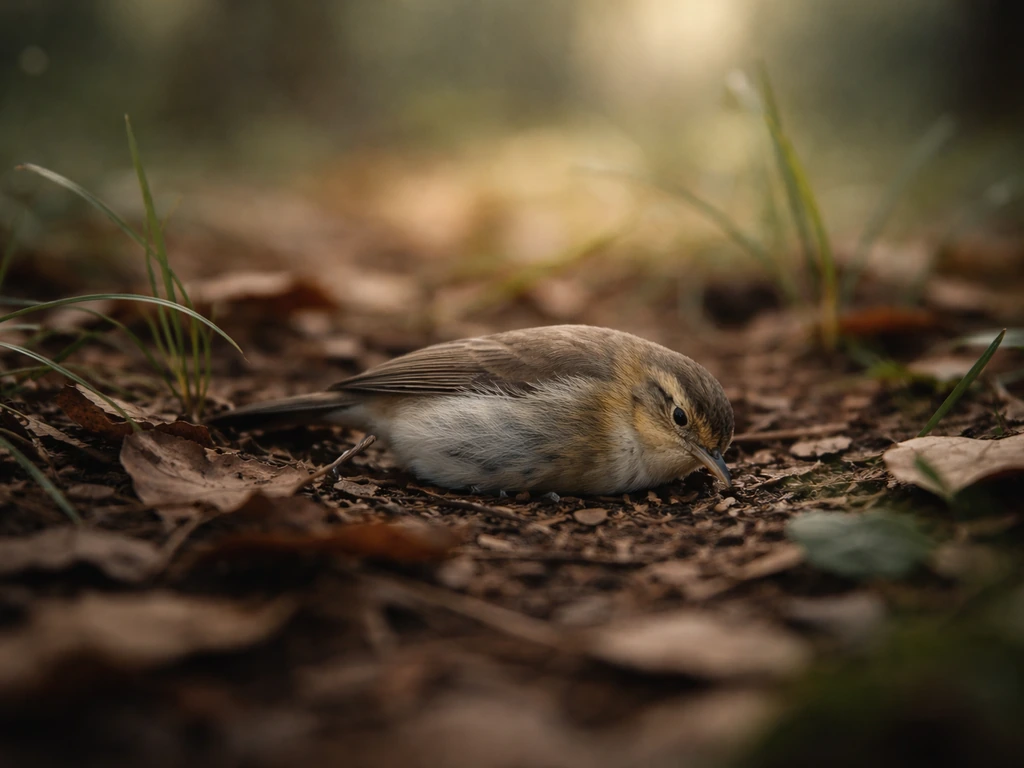
Quick meaning check: what a dead bird omen usually implies
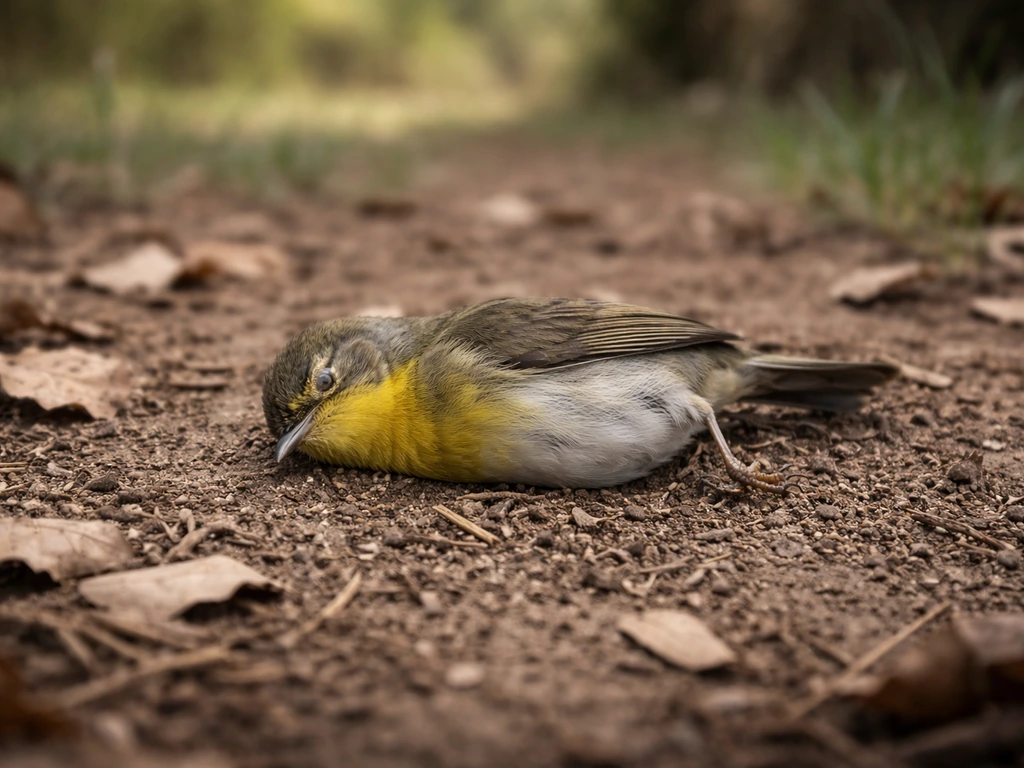
Across cultures and time periods, dead birds have been read as symbolic markers, not random noise. The dominant interpretation threads you'll find are: endings leading to new beginnings, a message arriving from someone or something beyond the ordinary, a gentle warning that something needs your attention, and a prompt to honor grief or release something you've been holding. Some traditions also read a dead bird as a sign of protection, meaning the bird absorbed or intercepted something difficult on your behalf.
Before diving into specifics, it's worth asking yourself a few grounding questions. Where did you find the bird? Was it in a place with personal significance, like your doorstep, your yard, or near a window? What species was it? What's going on in your life right now? The answers shape interpretation more than almost any other factor. A dead bird found during a period of major life change carries different weight than one found on a walk through an unfamiliar neighborhood.
Spiritual meaning interpretations (common themes)
Spiritually, the most consistent theme across modern interpretations is transformation. Birds represent freedom, the soul, and connection between earth and the unseen. When one dies in your presence, many traditions read that as a signal that something in your life is also completing a cycle. It doesn't have to mean something terrible is coming. More often, it's interpreted as a nudge: this phase is done, it's time to move.
Some readers interpret a dead bird as a messenger, either from a loved one who has passed, or from their own higher self or guides, depending on their framework. The message is rarely literal or alarming. It's more often symbolic and personal, something like "you already know what you need to release" or "pay attention to what's shifting around you." Spiritually-oriented traditions, from modern Wicca to animist practices, tend to frame the encounter as an invitation to reflect rather than a definitive prophecy.
Location adds another layer. If you're curious about a specific scenario, there are distinct interpretations depending on context. For instance, finding a dead bird in a pool carries water-related symbolism around emotion and purification, while a bird found suspended or hanging from a tree tends to be read through a lens of liminality, something caught between worlds. These nuances matter when you're trying to figure out what resonates for your specific situation.
Species also affects interpretation. Crows and ravens showing up dead carry different symbolic weight than sparrows or doves in most traditions. A dead dove, for example, tends to be read as a sign involving peace, loss, or grief. A dead crow might be read as a signal that trickery or deceit is ending, or that a period of deep magic is shifting. There's no single universal key, but the species gives you a starting point worth exploring.
Religious/biblical and folklore perspectives
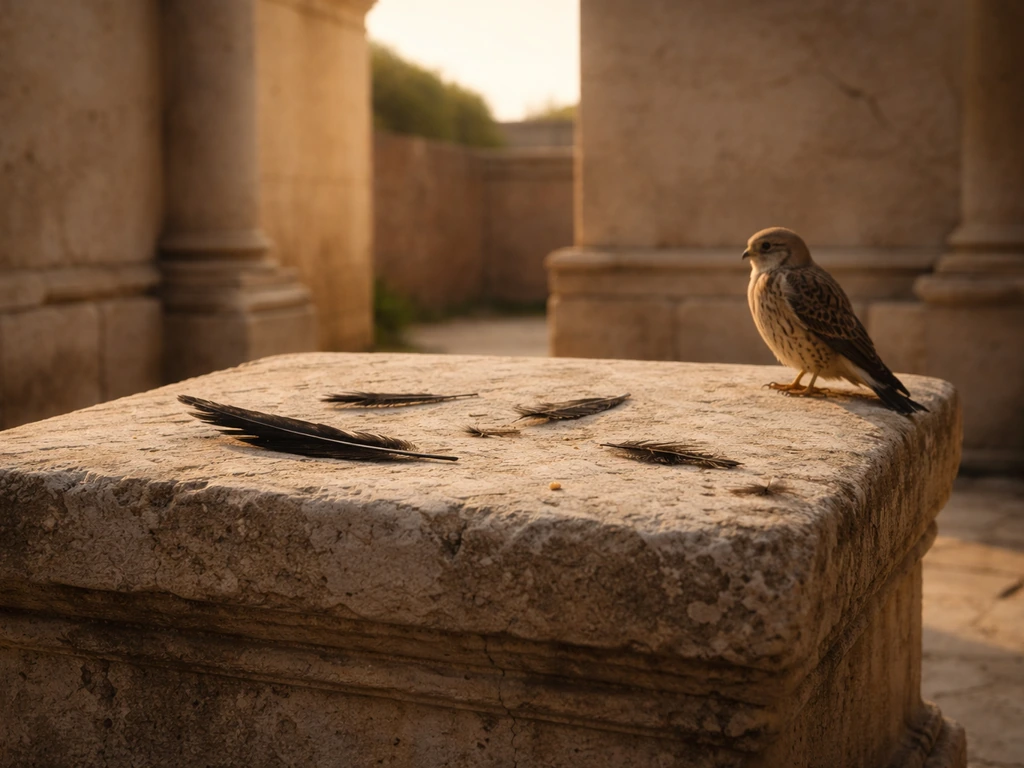
In ancient Rome, specially trained priests called augurs interpreted birds' flights and behavior to determine the will of the gods before major decisions, from battles to elections. This formal practice, known as ornithomancy, treated bird behavior as a direct channel of divine communication. Homer's Odyssey includes a scene where an eagle carrying a dead dove in its talons is read as a significant omen, showing how deeply embedded this interpretive tradition was in ancient Greek culture as well. Ornithomancy also appears across ancient Mesopotamia, Egypt, and pre-Christian cultures in the Philippines, where any bird, lizard, or snake crossing one's path was called a "tigmamanukan" and read as a sign.
Folklore from the American South frames certain birds as death omens, and some traditions interpret these signs as carrying warnings from those who have passed. Similarly, old European folklore connects a bird striking a window to an impending death in the household. The Audubon Society of Western Pennsylvania documents this belief: if a bird accidentally hits your window, it was said that someone in your house would soon die. These are folk beliefs, not predictions, and they've existed for centuries as ways of making sense of jarring, unexpected encounters with death in the natural world.
The biblical tradition is more complex. Birds appear frequently in scripture as symbols of divine provision, the Holy Spirit (the dove at Jesus's baptism), and God's care for creation. However, mainstream Christian theology is generally skeptical of omen interpretation. Some Christian scholars argue there is no biblical basis for reading a bird's death as a specific sign of misfortune, pointing out that Christianity fundamentally rejects fatalism. Thomas Aquinas, writing in the Summa Theologiae, distinguished between divine revelation and divination, cautioning against treating natural events as oracular messages. That said, many people of faith still feel that unusual encounters with death in nature can serve as moments of spiritual reflection, even without assigning them predictive weight.
Metaphysical framing: messages, energy, and warning vs sign
From a metaphysical standpoint, the key question isn't "is this an omen?" but rather "what kind of signal is this?" Theosophical thinking frames omens as symbolic relationships with multiple layers of meaning, meaning a dead bird isn't a literal cause-and-effect event, but a synchronicity that reflects something already in motion in your inner world. The encounter holds a mirror, it doesn't write your future.
To sort out whether you're looking at a comforting sign, a warning, or a neutral natural event, pay attention to your immediate gut response. Many metaphysical practitioners suggest that your first emotional reaction when you find the bird is the most honest signal. If you felt a strange sense of peace or recognition, many would read that as a comforting message. If you felt dread or unease, that might be your intuition flagging something that needs attention in your life, not necessarily something external, but something internal you've been ignoring.
It's also worth noting that not every dead bird carries a message. Reddit's witchcraft communities, which have discussed this topic extensively, often caution that finding multiple dead birds, especially in a specific location, doesn't automatically mean a supernatural message, and that checking for natural causes first is the grounded approach. This is actually consistent with good metaphysical practice: ruling out the mundane before assigning spiritual significance.
| Signal Type | What It Might Mean | Your Emotional Cue |
|---|---|---|
| Comforting sign | Transition complete, release is okay, loved one nearby | Sense of peace, recognition, or gentle sadness |
| Warning | Something in your life needs urgent attention or change | Unease, dread, or a nagging feeling you've ignored something |
| Message from beyond | Communication from someone who has passed or from guides | Feeling of being seen or accompanied in an unusual way |
| Natural event | Window strike, illness, predator, environmental cause | Neutral or curious response, no personal resonance |
The location of where the bird fell can sharpen the metaphysical read considerably. A dead bird falling from the sky tends to carry a more dramatic symbolic charge, often interpreted as a sudden disruption or revelation, while a bird found still and quiet on the ground suggests something slower, more gradual. If you want to understand the falling aspect more specifically, the question of what it means when a bird falls from the sky opens up a slightly different interpretive conversation around sudden change and divine attention.
How to respond today: grounding, reflection, and protective steps
If you're feeling unsettled by the encounter, the most useful thing you can do right now is pause and ground yourself before reaching for meaning. Step outside, put your feet on the earth if you can, take a few slow breaths, and let yourself just be with the experience. Spiritual traditions across the board, from indigenous animist practices to modern energy work, agree that grounding comes before interpretation.
After grounding, try journaling your immediate impressions. Write down where you found the bird, what species it was, what was happening in your life in the days leading up to the encounter, and what your gut reaction was. You don't need to have answers yet. The act of writing opens up the reflective space where meaning tends to surface organically.
If your tradition includes protective or cleansing practices, this is a reasonable moment to use them. Smudging, salt at thresholds, prayer, lighting a candle, or simply setting an intention of protection before sleep are all low-stakes ways to honor the encounter without over-dramatizing it. You're not warding off a curse. You're acknowledging that something shifted your attention and choosing to meet it with intention.
Here are some reflection prompts worth sitting with today:
- What in my life feels like it's ending or completing right now?
- Is there something I've been avoiding looking at honestly?
- Who or what came to mind when I first saw the bird?
- What would it mean for me if this were a message of comfort rather than a warning?
- If I stripped away all omen meaning, what does this encounter with death in nature bring up for me personally?
When to treat it as a practical issue (health and safety)
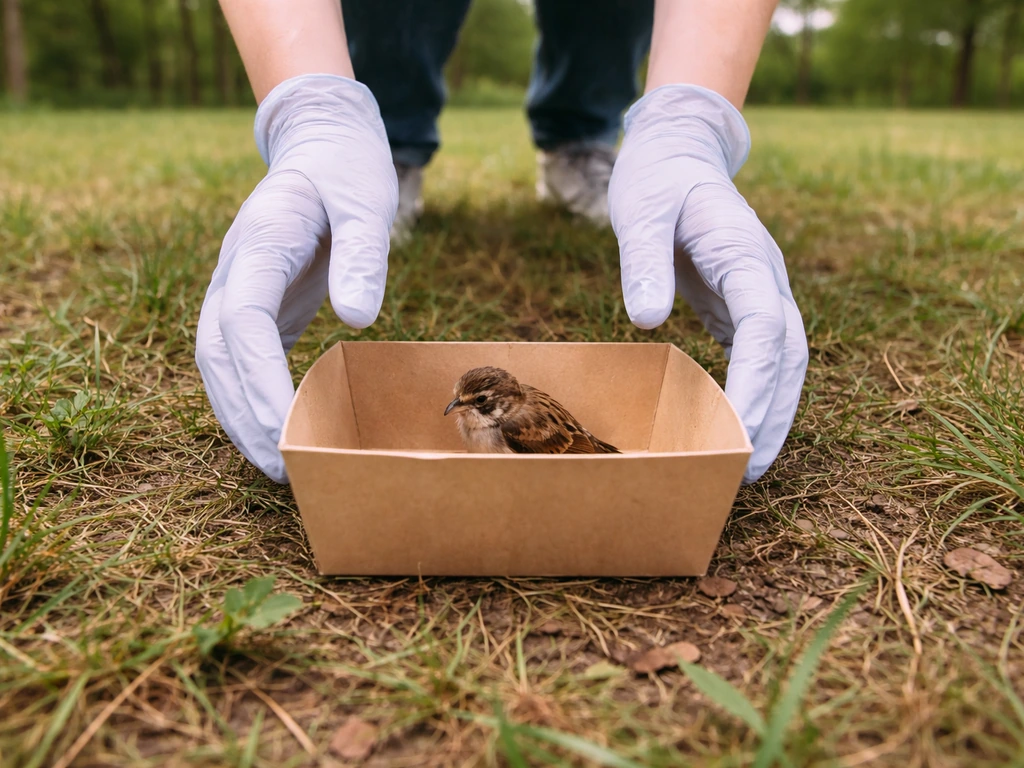
Here's something that gets overlooked in omen conversations: dead birds are also a genuine public health concern, and how you handle the physical bird matters. The CDC is clear that you should not touch a sick or dead bird, its droppings, or any potentially contaminated surfaces without personal protective equipment. If you need to move the bird, use disposable impermeable gloves, place the bird directly into a plastic bag, double-bag it, and tie it off for disposal. Wash your hands thoroughly with soap and water afterward. This applies even if the bird looks completely ordinary, because as the U.S. Fish and Wildlife Service notes, even healthy-looking birds can carry pathogens.
The USDA's Animal and Plant Health Inspection Service (APHIS) recommends contacting your state health department or state wildlife agency if you find dead wild birds, particularly if you find more than one in the same area. This is part of dead bird surveillance programs that help public health officials detect viruses like West Nile or highly pathogenic avian influenza (HPAI) before they spread. Oregon's Department of Fish and Wildlife, Illinois's Department of Public Health, and many other state agencies all have reporting protocols in place for exactly this situation. If you're finding multiple dead birds, reporting is the right practical step alongside any spiritual reflection you do.
It's also worth knowing that many dead birds have completely mundane causes. Window strikes are one of the most common, and they're a worldwide problem. Birds can't see glass the way humans do, and reflective or transparent surfaces cause massive numbers of casualties every year, including a single event in Chicago where nearly a thousand migrating songbirds died after striking an exhibition hall during migration season. If you find a dead bird near a large window or glass building, the cause is most likely a collision rather than anything sinister, natural or supernatural.
So the practical checklist looks like this: don't handle the bird bare-handed, bag and dispose of it properly, wash your hands, consider reporting to your local wildlife or health agency if you're finding multiple birds, and check for obvious physical causes (windows, power lines, predators) before assigning meaning. None of this has to replace spiritual reflection. It just makes sure you're taking care of yourself in the physical world at the same time.
Putting it all together for yourself
The honest truth is that a dead bird can be a profound spiritual encounter, a quiet message from something beyond, a folklore omen with centuries of cultural weight behind it, a public health data point, or just a bird that hit a window. Often it's a blend of more than one of these. The most grounded approach is to handle the physical situation safely first, then give yourself the space to sit with the symbolic question without rushing to a conclusion. The meaning that actually sticks tends to be the one you arrive at through reflection, not the one you borrow from a generic list. Whatever this encounter brought up for you today, it's already pointed you toward something worth noticing.
FAQ
What’s the safest way to handle a dead bird if I want to “save” it or move it for a photo?
Yes, but do it safely. If the bird is fresh or you suspect it could be contaminated, avoid washing, rinsing, or “cleaning it” for display. Instead, use disposable gloves, double-bag it, and dispose of it (or keep it bagged if your local agency asks for submission). Treat it as contaminated even if it looks clean.
How can I tell whether the dead bird is most likely a window strike versus something spiritual?
Start with the simplest rule: if you see a collision pattern (near glass, no obvious predation injuries, feathers scattered on one side), treat it as window strike until proven otherwise. Then watch your surroundings for other causes like cats, nearby predators, power lines, or nearby construction light that can disorient birds.
Do I need to report it if I find only one dead bird, or is reporting mainly for clusters?
If you find one bird, you can reflect privately. If you find multiple dead birds in the same area, contact your state wildlife agency or local public health office as recommended in the article, because clusters can signal outbreaks. Also note dates, exact locations, and species (if known), since agencies often use that information to triage alerts.
Does the meaning change if the dead bird is found inside my home?
Yes. A key practical question is whether the bird was indoors. Indoor dead birds are more likely to involve direct cleanup and airflow considerations, and you may want to keep pets and people away from the area while you bag and dispose of it. Open windows during cleanup if you can, and disinfect any surfaces that were touched or contaminated.
If I feel dread when I find the bird, does that automatically mean something terrible is coming?
Many people jump to doom narratives, but most traditions that emphasize transformation or reflection also treat “warning” as guidance for your choices, not a prediction. A helpful decision aid is to ask, “What is currently asking for my attention and making me uncomfortable to face it?” If the answer points to practical action (health check, boundary setting, finishing a task), that’s usually the most constructive reading.
How do I interpret the omen without turning it into a fear spiral?
If you want to interpret without catastrophizing, avoid “one size fits all” prophecy. Instead, narrow it to a single theme (transition, message, attention, or grief). Then choose one grounding action that matches it, for example closing an old chapter, having a hard conversation, or making space to mourn.
What should I do long-term if I keep finding dead birds near my windows?
Look for cause-and-effect physical correlates before spiritual conclusions. For example, if there is bird-friendly netting, nearby glass, or outdoor lights, those can increase risk. If you live in a high-rise or near reflective surfaces, consider additional mitigation like window decals, screens, or turning off lights at night during migration seasons.
Can I treat it as meaningful even if I don’t believe in omens?
Your belief system can shape the “what it means” layer, but you can still do the same grounded process either way. If you are skeptical, treat it as a meaningful prompt for reflection without assigning supernatural intent. If you are spiritual, use your practice to support intention and closure, then stop checking for confirmation repeatedly.
Does finding multiple dead birds in one location mean the omen is stronger or more specific?
Yes, and it’s a common pitfall. If you find birds around a specific spot, it could be the same hazard repeating (for example, a particular window, a feeder attracting predators, or a nearby roadway). Track patterns for a week before concluding it’s “the same message.”
What if I accidentally touched the bird or the area it was on?
If you suspect illness, avoid contact beyond the minimum cleanup and do not handle droppings, feathers, or contaminated surfaces with bare hands. Also change clothes if you got bird material on them. If symptoms develop afterward, seek medical advice and mention possible bird exposure.