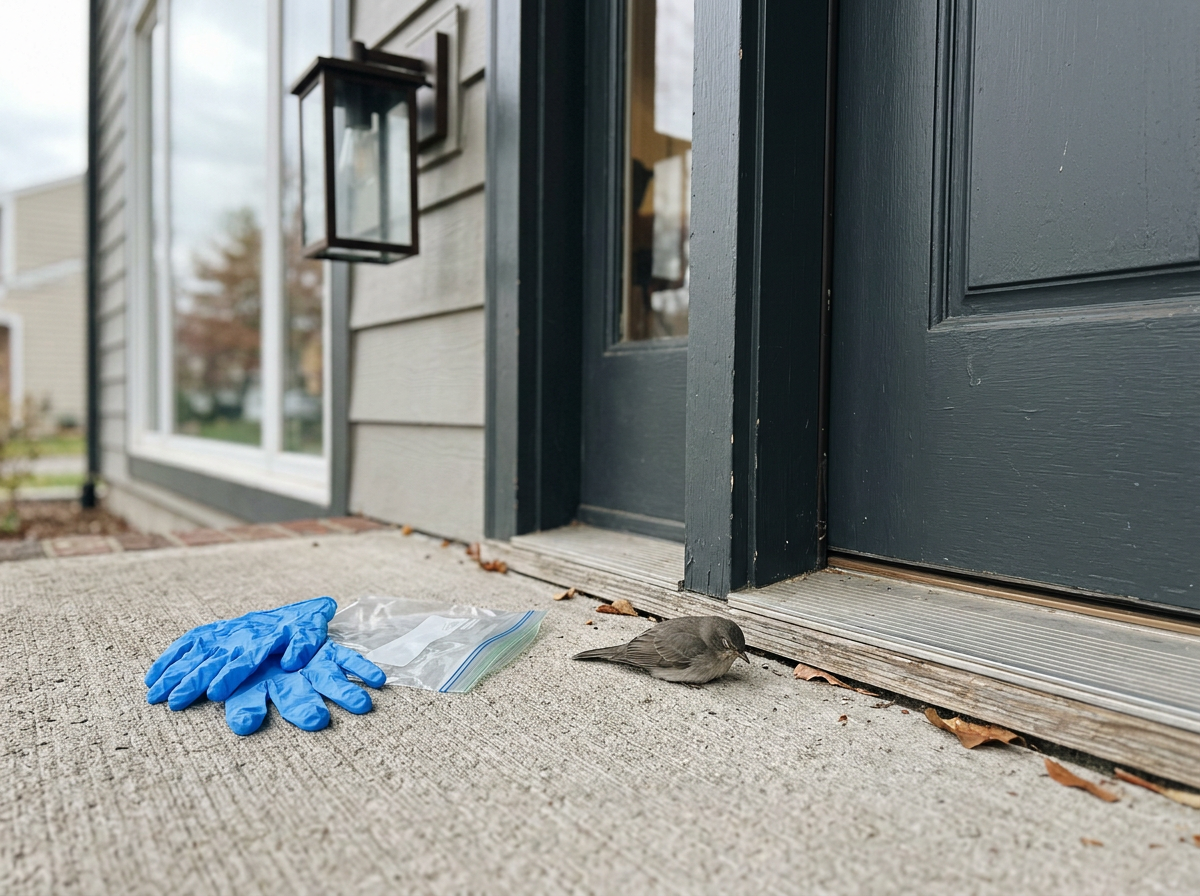
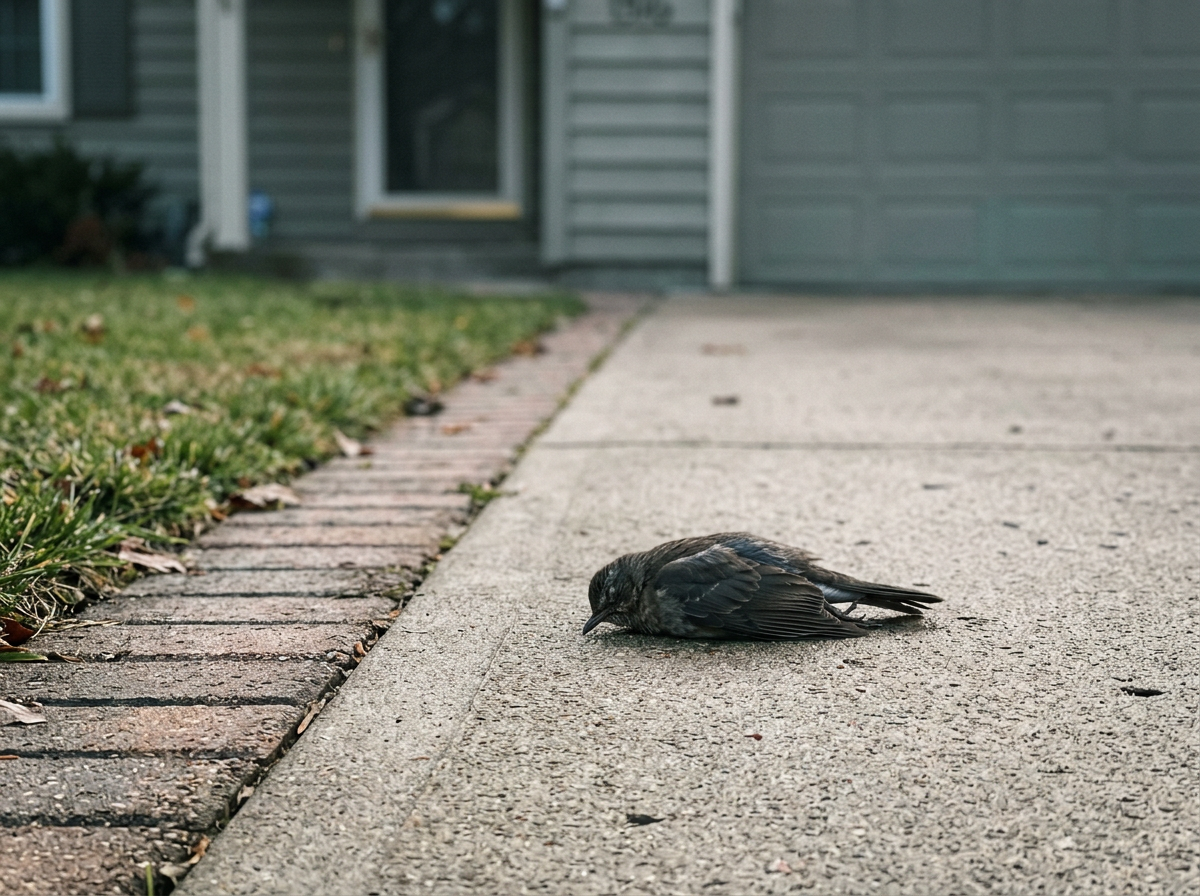
You walked out to your car this morning, and there it was: a dead bird on the driveway. Maybe you felt a small jolt of unease. Maybe you immediately started wondering whether it means something. Both reactions are completely normal, and honestly, the answer is: it probably means a few things at once. There's almost always a real-world cause you can identify if you look closely, and for many people, that physical event also carries a weight that feels symbolic, spiritual, or worth sitting with. This guide will walk you through both sides, starting with the most urgent one.
Meaning of Dead Bird on Driveway: Real Causes and Spiritual Symbols

Maya Hartwell
23 Mar 2026
That First Feeling When You Find It
Finding a dead bird right outside your home hits differently than spotting one in a field or a park. The driveway is a threshold, the line between your private space and the outside world, and something dying there feels personal. That emotional response is worth acknowledging rather than pushing aside. Whether you feel sadness, dread, curiosity, or nothing at all, your gut reaction is often the first clue to what this moment might mean for you spiritually. We'll get to that. But first, let's make sure you're safe and know what you're actually dealing with.
What Most Likely Caused This
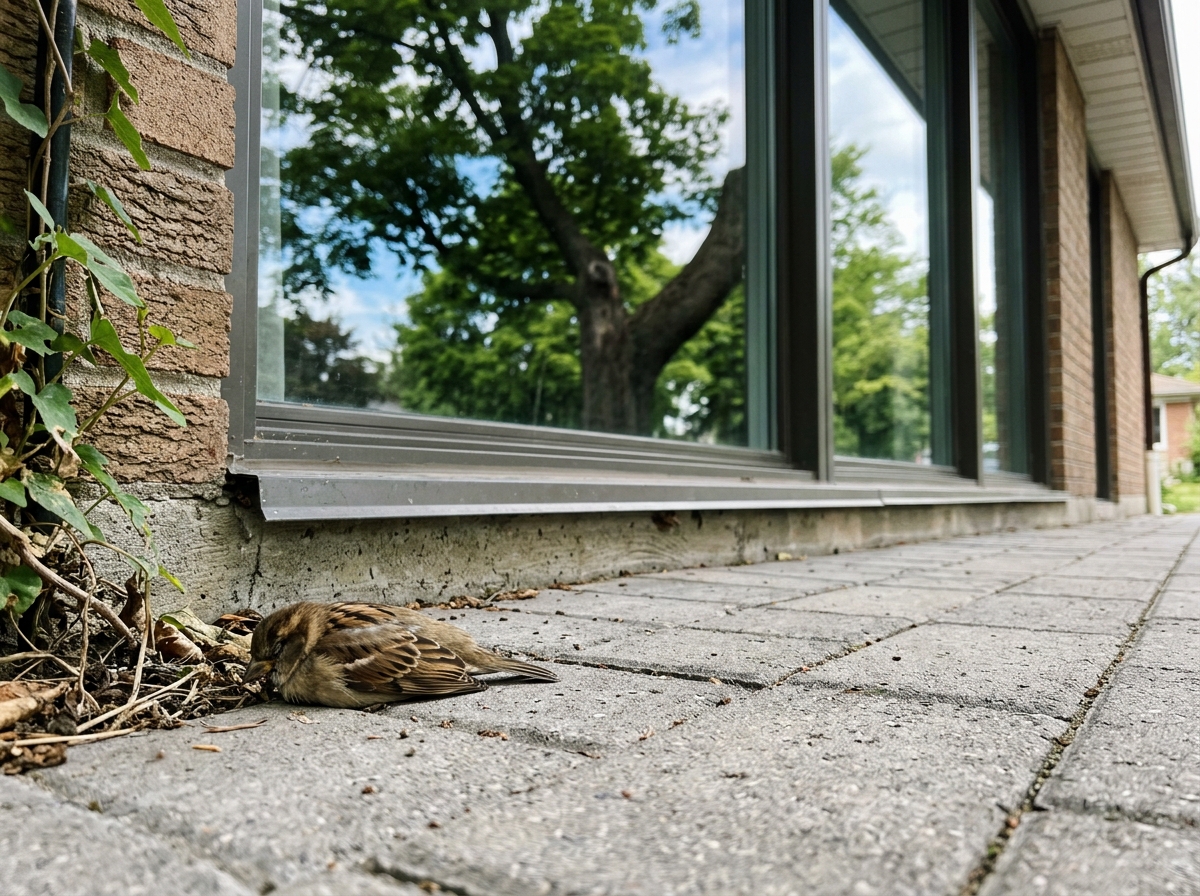
In the vast majority of cases, a dead bird on a driveway has a straightforward physical explanation. Birds die from a surprisingly short list of common causes, and being able to identify which one applies to your situation will help you both respond practically and, if you're symbolically inclined, interpret the event with more nuance.
- Window or vehicle collision: This is the single most common cause. A bird flying at speed strikes a car, a window reflection, or a glass door near the driveway and dies on impact or shortly after. Look for a clean body with no obvious wounds, ruffled feathers, and possibly a faint smudge on a nearby surface.
- Predator attack: Cats, hawks, and other predators frequently drop or abandon prey. Signs include missing feathers, bite marks, torn skin, or the bird being positioned oddly, sometimes headless. If you have outdoor cats, this is a very likely cause.
- Illness or disease: Birds sick with avian influenza, West Nile virus, or bacterial infections often lose their coordination and die in exposed, open areas. A bird that looks thin, has discharge around its eyes or beak, or shows no obvious trauma may have been ill.
- Severe weather: Cold snaps, ice storms, and extreme heat can kill birds that are already stressed or nutritionally depleted, particularly in late winter and early spring.
- Poisoning: Rodenticides and pesticides used in neighborhoods can kill birds through secondary poisoning. If the bird appears intact and healthy but suddenly dead, and you or a neighbor recently treated for pests, this is worth considering.
Reading the Clues You Can See Right Now
Before you do anything else, spend a minute observing. You don't need to touch the bird to gather meaningful information. What you notice will help you figure out the cause, assess any risk, and, if you're spiritually curious, add context to your interpretation.
Species and Color
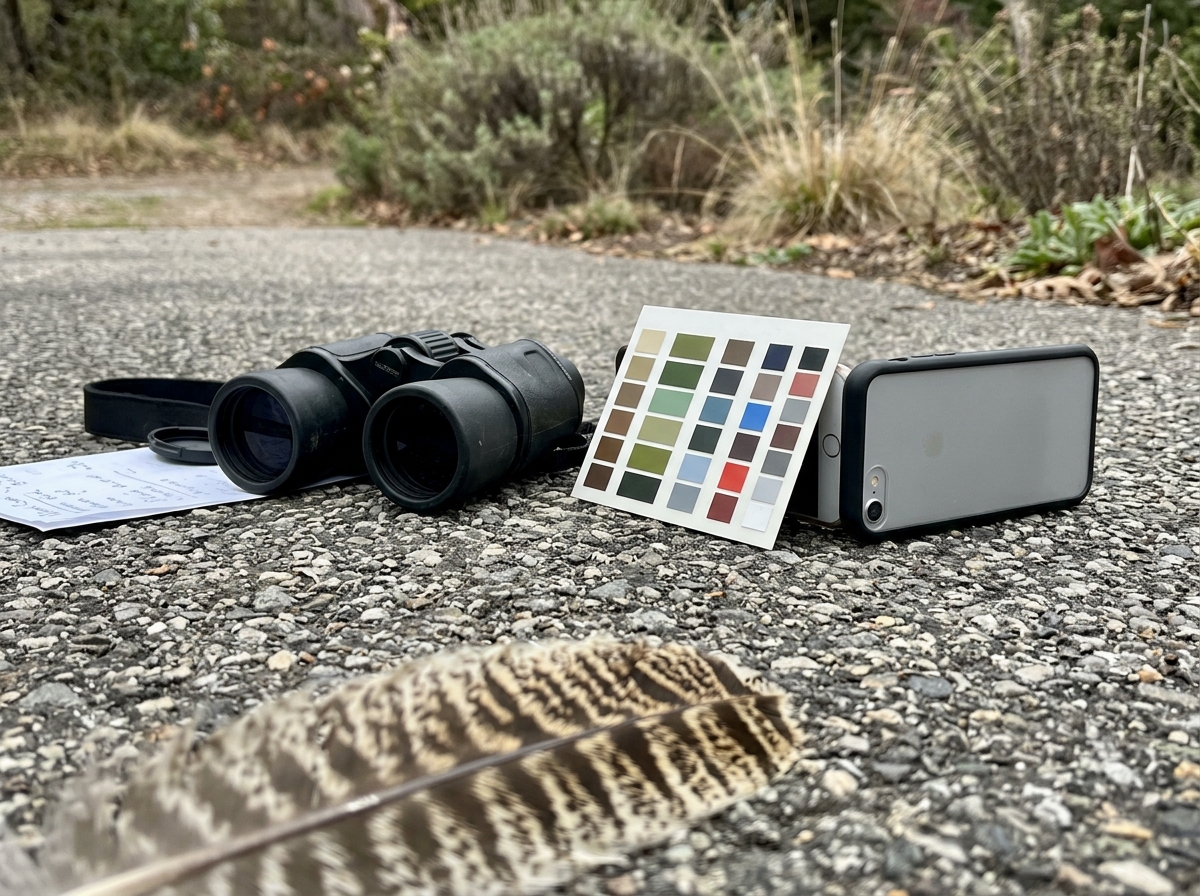
If you can identify the bird, that's useful on both a practical and symbolic level. A dead crow carries very different cultural symbolism than a dead sparrow or a dead dove. Common driveway victims include sparrows, starlings, pigeons, robins, and mourning doves, all of which are high-traffic species near human homes. If you're not sure of the species, note the size (roughly sparrow-sized, robin-sized, or larger), the color of the plumage, and any distinctive markings. A white or pale bird, for instance, carries specific significance in several spiritual traditions, which we'll cover below.
Condition of the Body
A freshly dead bird with no visible trauma points toward collision or sudden illness. A bird with scattered feathers and obvious wounds suggests a predator. A bird that appears to have been dead for a while (stiff, sunken eyes, strong odor) tells you this wasn't a sudden event happening right now, which may change both your cleanup approach and your sense of urgency. Decomposition in mild temperatures can begin within a day or two.
Location and Timing
Where exactly on the driveway matters. A bird directly under or near a window or your car's path suggests collision. A bird right at the base of your front steps, especially near a door or threshold, is the kind of detail people find hardest to write off as coincidence, and that's worth noting if you're thinking symbolically. Timing counts too. Finding a dead bird on the same day as a major life event, a difficult decision, or a period of personal transition is the kind of coincidence that many traditions would say isn't a coincidence at all.
Safe Cleanup and Disposal (Do This Today)
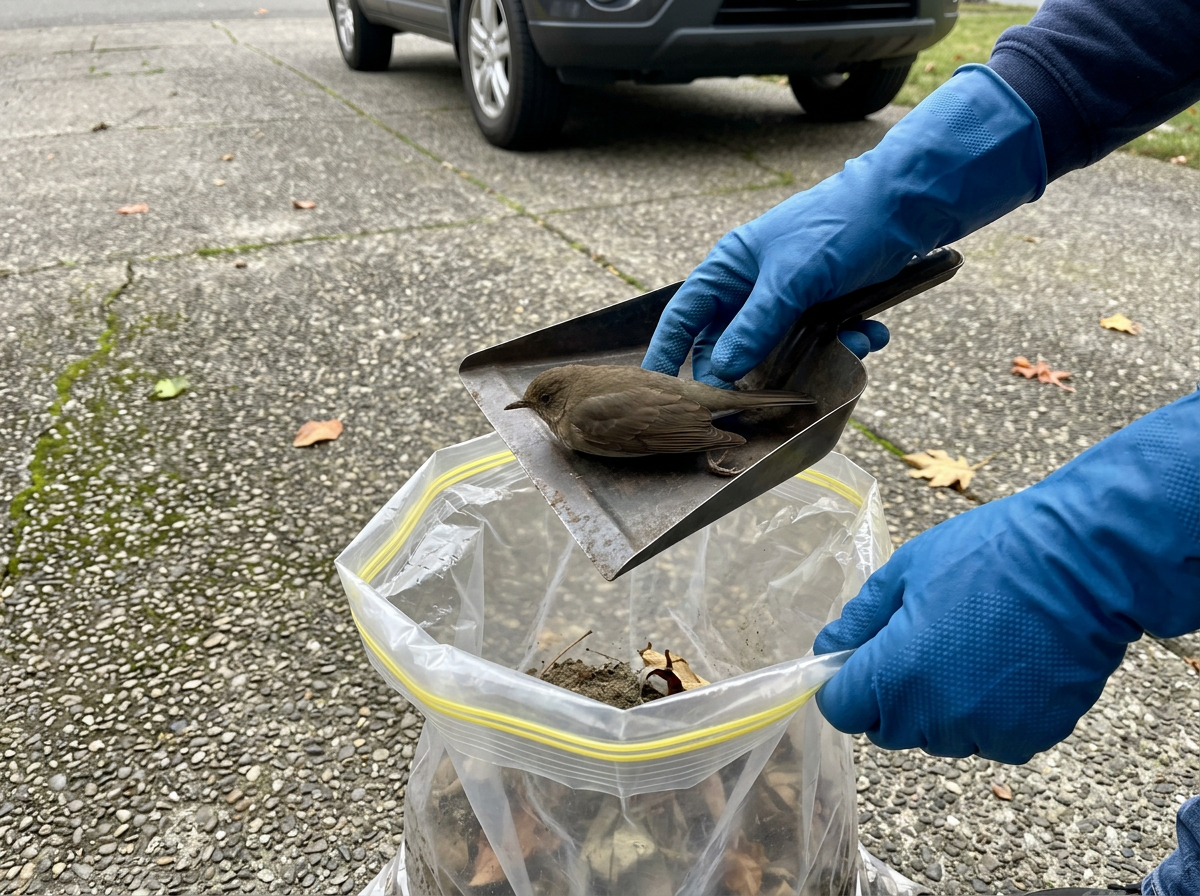
This part is not optional. Handling a dead bird safely matters because wild birds can carry diseases including West Nile virus and, as of 2025, H5N1 avian influenza has been detected in wild birds across multiple regions. That doesn't mean every dead bird is a biohazard, but it does mean you should treat the cleanup with basic precautions every time.
- Put on disposable waterproof gloves before you touch anything. The CDC specifically recommends impermeable disposable gloves for picking up dead birds.
- Place the bird directly into a sturdy plastic bag without touching it with your bare hands. Alternatively, use an inverted plastic bag over your gloved hand to scoop it up, then flip the bag right-side-out to seal the bird inside.
- Double-bag it and seal both bags tightly before placing the package in your outdoor trash.
- Avoid shaking or disturbing the feathers, feces, or surrounding debris. The CDC advises against stirring up dust, feathers, or bird waste during cleanup, as this can disperse particles into the air.
- Remove and discard your gloves after bagging the bird, taking care not to touch your face with gloved or unwashed hands.
- Wash your hands thoroughly with soap and water immediately after. If soap isn't available, use an alcohol-based hand gel as a temporary measure until you can wash properly.
- Clean the area where the bird was lying using a household disinfectant or a diluted bleach solution. Let it sit for several minutes before wiping.
- If children or pets were near the bird before you knew it was there, check them for any visible contact (feathers on hands, mouths). Wash children's hands immediately and monitor pets for any unusual symptoms.
If you or anyone in your household develops flu-like symptoms within a few days of handling a sick or dead bird, the CDC recommends seeking medical attention and letting your doctor know about the exposure, especially given ongoing H5N1 monitoring. This is a precaution, not a prediction, but it's worth knowing.
When to Call Someone Instead of Handling It Yourself
Most of the time, you can handle this yourself with the steps above. But there are situations where you should contact your local animal control, wildlife agency, or public health department: if you find multiple dead birds in the same area in a short period of time (which can signal a disease outbreak or poisoning event), if the bird is unusually large (like a hawk or goose), if you suspect the bird may have been illegally poisoned, or if you have a compromised immune system and want professional guidance. Many states have reporting lines specifically for dead bird clusters, especially for West Nile or avian flu surveillance.
The Spiritual Weight of a Dead Bird Near Your Home
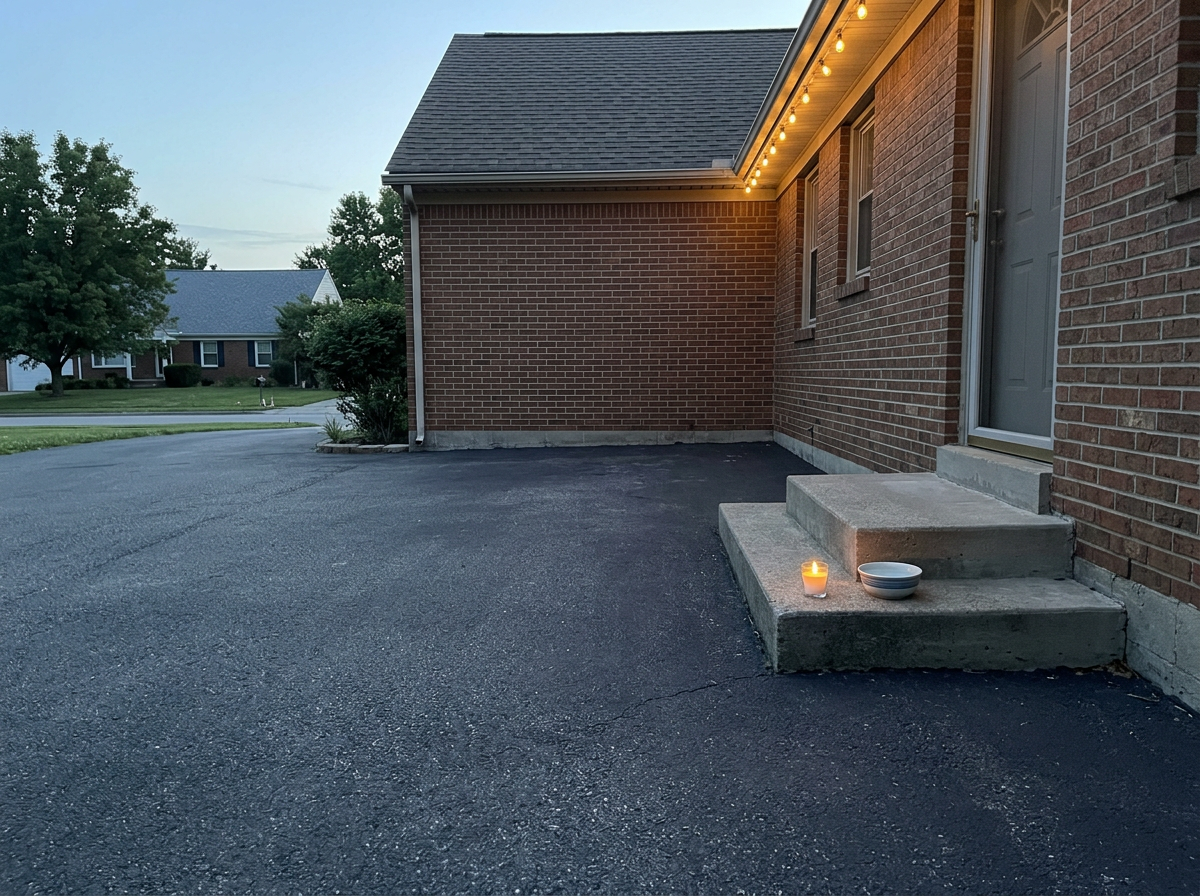
Once the practical side is handled, many people are left with a lingering question: but what does a dead bird mean? That's a fair question, and it's one that humans have been asking across cultures for thousands of years. what does a [dead bird mean Birds have long been understood as messengers, symbols of the soul, omens of change, and bridges between the physical world and whatever lies beyond it.](/dead-bird-meaning/meaning-of-dead-bird-in-your-house) Finding one dead at your threshold, which the driveway effectively is, tends to amplify that symbolic weight. finding a dead bird meaning finding a dead bird outside your house meaning Finding one dead at your threshold, which the driveway effectively is, tends to amplify that symbolic weight. finding a dead bird meaning finding a dead bird outside your house meaning
The most consistent cross-cultural interpretation is that a dead bird near the home signals transition, the end of one phase and the beginning of another. This doesn't have to mean something terrible is coming. In many traditions, death in symbolic language means transformation, release, or necessary change rather than literal loss. If you've been feeling stuck, holding onto something that isn't serving you, or standing at a crossroads, a dead bird on your driveway is the kind of event that invites you to pay attention.
The species matters here too. A dead sparrow, associated in many traditions with community and everyday joys, might point toward a shift in relationships or social dynamics. A dead crow (long linked to mystery, intelligence, and the spirit world) often carries heavier symbolic freight. A dead dove, almost universally read as a symbol of peace, hope, or the Spirit, can signal a disruption to peace or, alternatively, the completion of a period of striving. If the bird was white or pale, that carries its own layer of meaning we'll explore below, including white dead bird dream meaning. You can find more specific interpretations based on where exactly you found it in our deeper guide to finding a dead bird outside your house meaning.
What Different Traditions Say About This
This is where the interpretations spread wide, and I think it's worth presenting them honestly rather than flattening them into one meaning. Different frameworks offer different lenses, and you get to decide which one, if any, resonates with where you are right now.
Biblical and Christian Perspectives
In the Bible, birds appear frequently as symbols of divine care, the soul, and spiritual watchfulness. Matthew 10:29 notes that not even a sparrow falls to the ground outside the Father's awareness, a verse that many Christian readers find genuinely comforting when encountering a dead bird. From this perspective, the death of a bird is not a bad omen but a reminder that nothing goes unnoticed by God, that even small endings are within divine awareness. Some Christian folk traditions do associate birds found dead near a home with a message to pay attention to spiritual matters or to pray for a household member who may be in difficulty. The dove in particular, understood in Christian theology as a symbol of the Holy Spirit, carries especially strong meaning if found dead: it may be read as a call to return to peace, to seek reconciliation, or to examine what has disrupted harmony in the home.
Celtic and European Folklore
Celtic tradition viewed birds as beings that moved between worlds, carrying messages from the Otherworld or the ancestors. A dead bird near the home was taken seriously, not necessarily as a curse, but as a communication. Crows and ravens in particular were associated with the Morrigan and with fate, so a dead crow on your property might be read as a message that a cycle is closing, that something you've been fighting no longer needs to be fought. Older European folk traditions, particularly in Britain and Ireland, associated a dead bird hitting a window or dying on a doorstep with a coming change in the household, sometimes interpreted as a warning, sometimes as a blessing depending on the species and the circumstances.
Indigenous and Shamanic Perspectives
Many Indigenous North American traditions view birds as spirit messengers, each species carrying specific medicine or teachings. Within these frameworks, finding a dead bird is understood as an invitation to receive a message, and the bird is honored rather than feared. The death itself is not seen as a bad sign but as a sacrifice made to deliver something important. The appropriate response in many of these traditions is gratitude, acknowledgment, and reflection: what is this particular bird's medicine, and what might it be asking you to release or recognize? It's worth approaching these traditions with respect for their specificity and depth rather than reducing them to a single universal interpretation.
Eastern and Metaphysical Frameworks
In some East Asian traditions, birds near the home are associated with luck, news, and transition. A dead bird can signal the need to clear stagnant energy in and around the home, which is why some practitioners of feng shui would recommend a thorough space clearing after such an event: opening windows, burning cleansing herbs, or simply decluttering and refreshing the energy of the space. In broader metaphysical and New Age frameworks, dead birds are often interpreted as a sign that something in your life is completing, that old energy, old patterns, or old attachments are being released to make room for something new. This is closely related to the idea of shadow work: the dead bird as a prompt to look honestly at what you've been avoiding.
Is It a Bad Omen?
This is probably the question you most want a direct answer to. Across most traditions, a dead bird near the home is not a simple bad omen in the sense of 'something terrible will happen to you.' It is almost universally read as a signal of change, endings, or transition, which can feel uncomfortable but is not the same as doom. The fear around dead birds as omens is strongest in Western popular culture, where death imagery tends to be read negatively by default. But even in traditions where dead birds carry heavier warnings, the emphasis is usually on awareness and action, not helplessness. If something feels like it's ending in your life right now, this event may simply be a mirror for something you already sense. That's very different from a curse.
Reconciling Natural Causes with Symbolic Meaning
One of the most common tensions people feel is this: if I know the bird hit a window, does the spiritual meaning still count? I'd say yes, and here's why. The two explanations don't cancel each other out. A bird can die from a physical cause, a collision, a predator, illness, and that same event can still arrive at a meaningful moment in your life and carry something worth reflecting on. Meaning doesn't require mystery. Many of the most symbolically resonant moments in life have completely mundane physical explanations. The question isn't only what caused this but what you do with the fact that it happened right here, right now, in front of your home.
If you're interested in exploring the broader symbolic landscape of these kinds of encounters, the deeper guides on seeing a dead bird meaning and what does a dead bird mean cover the wider symbolic terrain in more detail. And if this happened inside your home rather than outside, you might find the piece on the meaning of dead bird in your house more directly relevant.
What to Do Next: Practical and Spiritual Steps
Practical Prevention
If a window collision caused this, you can significantly reduce future incidents by applying window film, decals, or external screens that break up the reflective surface birds mistake for open sky. Window strikes kill hundreds of millions of birds annually in North America, and this is one of the most actionable things a homeowner can do. If you suspect predation by your own cat, keeping the cat indoors or installing a collar with a bright visual alert can help. If you suspect rodenticide poisoning, switching to snap traps rather than poison bait is a change that protects local wildlife including birds of prey.
When to Contact a Professional
Contact your local wildlife or animal control authority if you find more than one dead bird in a short period, if the bird appears to be a protected species (like a raptor or migratory songbird), or if you have any health concerns after handling the bird. If anyone in your household develops flu-like symptoms within days of the encounter, follow up with a healthcare provider and mention the exposure.
Spiritual Reflection, If That Feels Right
You don't have to adopt any single doctrine to find value in pausing after an event like this. A few questions worth sitting with, whether through journaling, meditation, prayer, or simply a quiet walk:
- What phase of my life feels like it might be completing right now?
- Is there something I've been holding onto, a relationship, a belief, a habit, that might need to be released?
- What does this bird's particular qualities, its species, its color, its place at my threshold, remind me of?
- What would it look like to honor this moment rather than simply move past it?
If you practice a specific tradition, this might be a moment for prayer, a brief ritual of gratitude or release, or a conversation with a spiritual community you trust. If you don't, simple acknowledgment, pausing, noticing, and letting the moment mean something, is its own form of spiritual attention. The bird landed in your path. You noticed. What you do with that noticing is entirely yours to decide.
FAQ
Does a dead bird on my driveway mean something bad is about to happen?
If it feels like an omen, try separating timing from prediction. Ask yourself whether you already have an important transition coming up (decision, breakup, career change, moving plans). Then treat the bird as an invitation to act mindfully, not a forecast that you have no control over.
If I think the bird hit a window, should I ignore the spiritual meaning?
Not automatically. If you are confident it was a collision (for example, directly under a window or near reflective glass), the physical cause is likely real. Spiritually, you can still treat the moment as symbolic, but anchor it in “a prompt” rather than “a guaranteed message from beyond.”
What should I do symbolically if I want to honor the bird?
In most cases, no ritual is required. Use practical steps first, then if you want a spiritual practice, choose something low-risk and respectful, like thanking the bird and journaling one sentence about what you are releasing. Avoid practices that involve touching bodily fluids or leaving items where scavengers will interfere.
Is the spot on the driveway (by the car, near steps, near the door) important?
Yes, and the location and orientation can matter for both interpretation and safety. For safety, birds near your car path suggest collisions or reflective surfaces, so also check nearby windshields and side mirrors. For symbolism, many people focus on thresholds, so a bird by the front steps often feels more “about home life” than a bird farther into the yard.
Does how fresh the bird looks change what I should do?
Clean-up timing can change urgency. If the bird looks fresh, treat it as potentially infectious and use protective measures. If it appears decomposed and old, you still should avoid bare contact and strong odor exposure, but it usually indicates the event was not immediate, which can reduce panic about “something happening right now.”
What are common mistakes people make during cleanup?
Avoid “guessing by vibes” when it affects protection. If you suspect illness or poisoning, do not compost it, do not hose it down, and do not use bare hands. Instead, use disposable gloves, place it in a sealed bag, and wash hands and any surfaces the bird contacted.
What should I do if I have a cat or dog that might investigate the bird?
If you have pets, plan for the next 24 to 48 hours. Keep cats indoors if possible, pick up promptly, and prevent dogs from sniffing or chewing remains. Even when the cause was collision, pets can still be exposed to pathogens from contaminated surfaces.
What should I do if I see more than one dead bird?
Yes. If you notice repeated dead birds in a small area over a short period, that can point to an outbreak or poisoning risk rather than a single household event. When that happens, contact your local wildlife authority and also consider reporting the dates and exact locations (especially near water sources or heavy pesticide use).
If I suspect poisoning, how do I handle it safely?
If you suspect rodenticide, do not use poison bait to “fix” the problem on your own. Switching to mechanical traps reduces secondary harm to birds of prey, and it is often safer for kids and pets too. For spiritual interpretation, you can view it as a lesson about hidden patterns, but the practical priority is hazard control.
Does it change anything if the bird is a raptor or looks unusually large?
If the bird seems to be a protected species, the symbolism is secondary to compliance. Many areas restrict handling even for well-meaning individuals, so use a wildlife contact. Also, take a quick photo from a safe distance to help identification, then avoid handling.
Next Article
Finding a Dead Bird Outside Your House Meaning and What to Do
Dead bird outside your house meaning and next steps for safe cleanup, health risks, and spiritual interpretations.