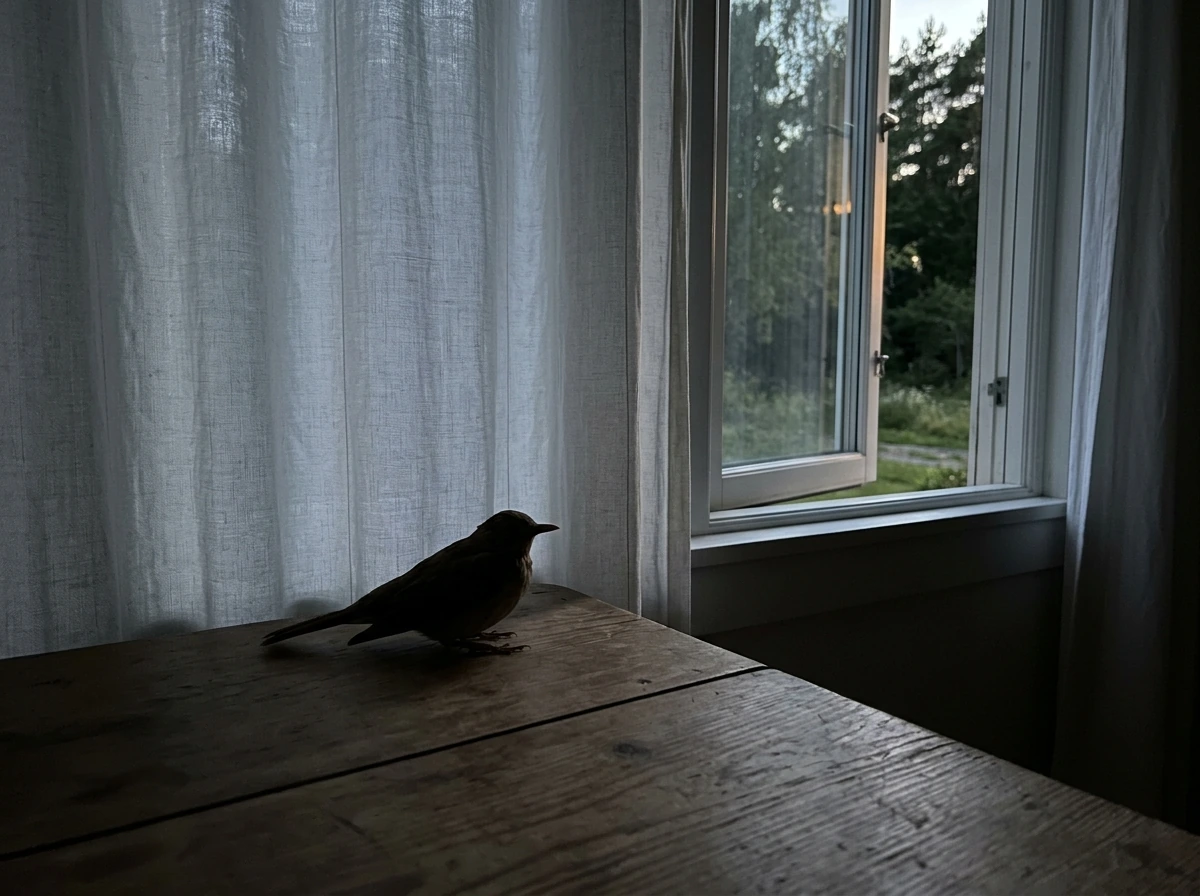
A white dead bird in a dream most commonly points to the end of something that once felt pure, peaceful, or full of promise. That ending could be a relationship, a belief, a phase of life, or even an old version of yourself. The "white" part matters a lot here: white birds carry strong associations with purity, peace, and spiritual clarity across dozens of traditions, so when one appears dead in a dream, the image is rarely just ominous. It tends to signal a transition, not a punishment. But the exact meaning depends heavily on the details of your specific dream, and that is what this guide is designed to help you figure out.
White Dead Bird Dream Meaning: Spiritual, Psychological, and Next Steps

Maya Hartwell
23 Mar 2026
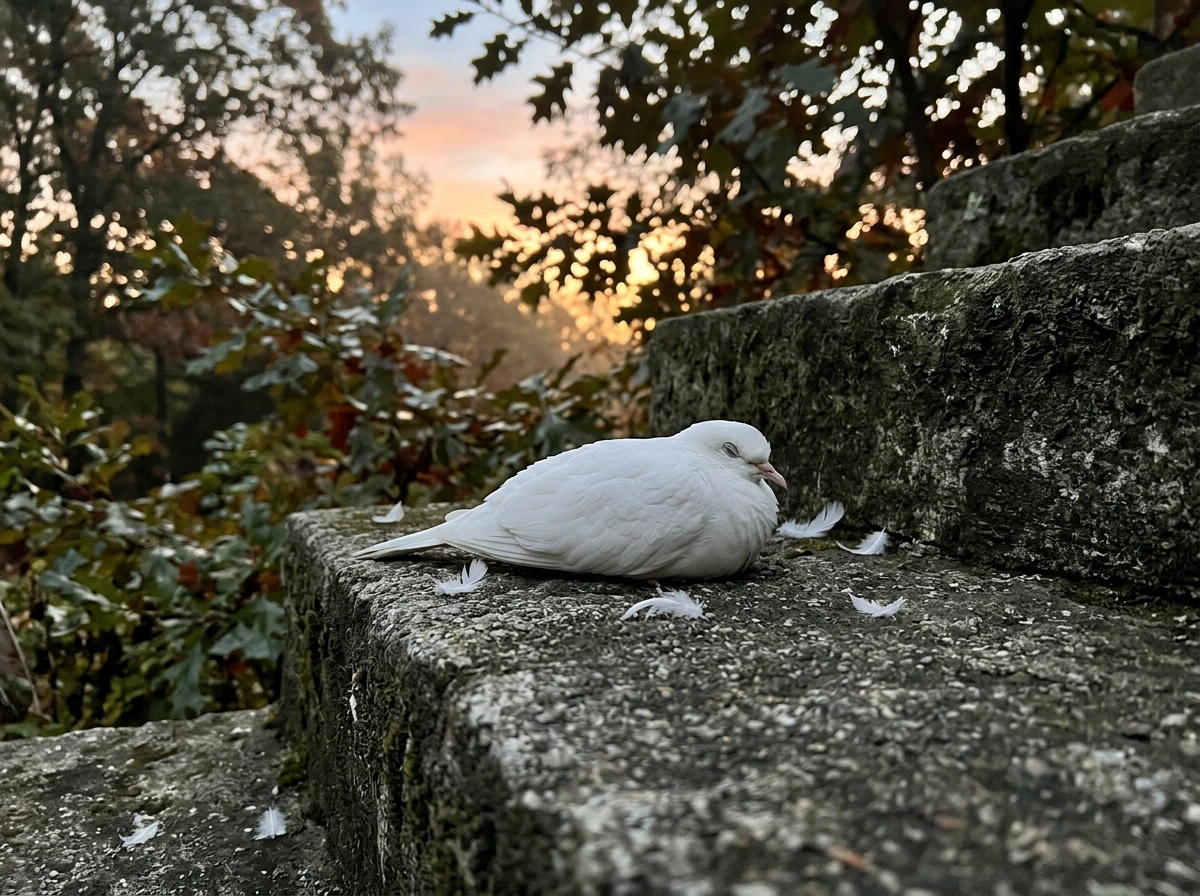
What a white dead bird in a dream commonly symbolizes
Start with the two symbolic layers working at the same time. White in dream imagery is broadly associated with purity, tranquility, harmony, and spiritual openness. Birds, across almost every interpretive tradition, represent freedom, the soul, communication, and the ability to move beyond ordinary limitations. When a bird appears dead, it typically signals that one of those qualities, freedom, peace, a connection, a hopeful belief, has come to an end or has been suppressed.
Some sources that specifically interpret "white bird dying" dreams frame them as pointing toward painful memories and unhealed feelings, particularly around relationships or partnerships that once felt good and clean. Others, interestingly, interpret a dead white bird as a sign that peace and harmony will prevail in future situations, treating the death as a release of something difficult rather than a pure loss. Those two readings are not as contradictory as they sound: in both cases, something is ending so that something else can settle. The question is whether you are in the grief part or the resolution part of that cycle.
A dead canary in a dream, for instance, is often connected to losing optimism or the sense that forward movement is blocked. A dead white dove lands closer to disrupted peace or the end of a conflict-resolution period. The species matters if you can identify it, because the bird's known symbolism layers on top of the death imagery and colors the whole message.
Spiritual and omen interpretations
From a broadly spiritual standpoint, a white dead bird in a dream is rarely read as a simple bad omen. More often, it is treated as a message about transition. The soul or spirit (symbolized by the bird) has moved through one phase and is not available to you in the same form anymore. That could mean a relationship has truly run its course, a spiritual practice has gone stale, or a chapter of your life is genuinely closing.
In many metaphysical frameworks, white animals in dreams are treated as spiritual messengers or guides, so seeing one dead can mean the message has already been delivered and it is now time to act on it rather than wait for more guidance. Some traditions see it as an invitation to grieve consciously and intentionally, rather than letting the loss stay stuck underground where it can generate anxiety.
If the dream felt urgent or emotionally jarring rather than calm, some traditions read that as a warning: something in your waking life may need attention before a natural, peaceful ending becomes a more disruptive one. Think about what area of your life currently feels fragile, a friendship, a creative project, a sense of inner peace. The dream may be pointing there.
Psychological angles: grief, fear, guilt, and resisting change
From a psychological lens, white dead bird dreams often surface during periods of significant personal change, grief, or suppressed emotion. Research on grief dreams specifically notes that images of dead or injured animals are common early in bereavement and tend to reflect the dreamer's own sense of damaged vitality or disrupted life force. If you have recently lost someone (a person, a pet, a relationship), this dream may be your mind's way of processing that loss visually and emotionally.
Guilt is another common thread. Dreams involving dead birds falling or being found have been associated with feelings of guilt and a fear of consequences. If the bird in your dream feels like something you should have protected or saved, your subconscious may be working through responsibility, real or imagined, over something in your waking life.
From a Jungian perspective, the dead bird as a symbol can be amplified through your personal associations: What does a white bird mean to you specifically? What does its death bring up emotionally? Jungian-influenced approaches treat dream symbols not as fixed codes but as images to be unpacked through both universal associations and deeply personal ones. The bird may represent an aspect of your own psyche, your freedom, your innocence, your creative spirit, that feels blocked or lost right now.
If the dream recurs or leaves lasting anxiety, it is worth noting that therapies like Imagery Rehearsal Therapy (IRT), a CBT-based approach, have strong evidence for reducing nightmare frequency and the anxiety attached to distressing dreams. The basic framework involves rehearsing a changed or resolved dream ending while awake for 10 to 20 minutes daily. This is not about forcing positive thinking: it is about giving your nervous system a different emotional outcome to work with.
Biblical and religious perspectives
In biblical dream interpretation frameworks, birds frequently represent the Holy Spirit, freedom, peace, and divine messages. A dead bird within that lens is often read as a disruption or loss in one of those areas: a loss of spiritual peace, the end of a season of divine communication, or a warning that something sacred in your life (a relationship, a calling, a set of values) has been wounded or abandoned.
Some Christian interpretive sources connect dead bird imagery to broader scriptural themes of mourning, suffering, and even resurrection, treating the death not as a final statement but as a stage before renewal. In that reading, the white dead bird is not a verdict but a invitation to examine what needs to die so that something truer can rise.
In Jewish tradition, birds carry significant weight in concepts of ritual purity and permitted versus forbidden animals. While this is more applicable to waking-life encounters than dreams specifically, the underlying symbolic logic, that certain birds represent cleanness, holiness, or their absence, can inform how Jewish dreamers might interpret a dead white bird as touching on themes of purity lost, a broken covenant, or the need for ritual acknowledgment of an ending.
If you come from a faith tradition, it is worth sitting with the question of what birds represent in your specific spiritual context, because that framing will make the dream feel more personally resonant than any generic interpretation.
Cultural and folklore symbolism: white birds and dead birds together
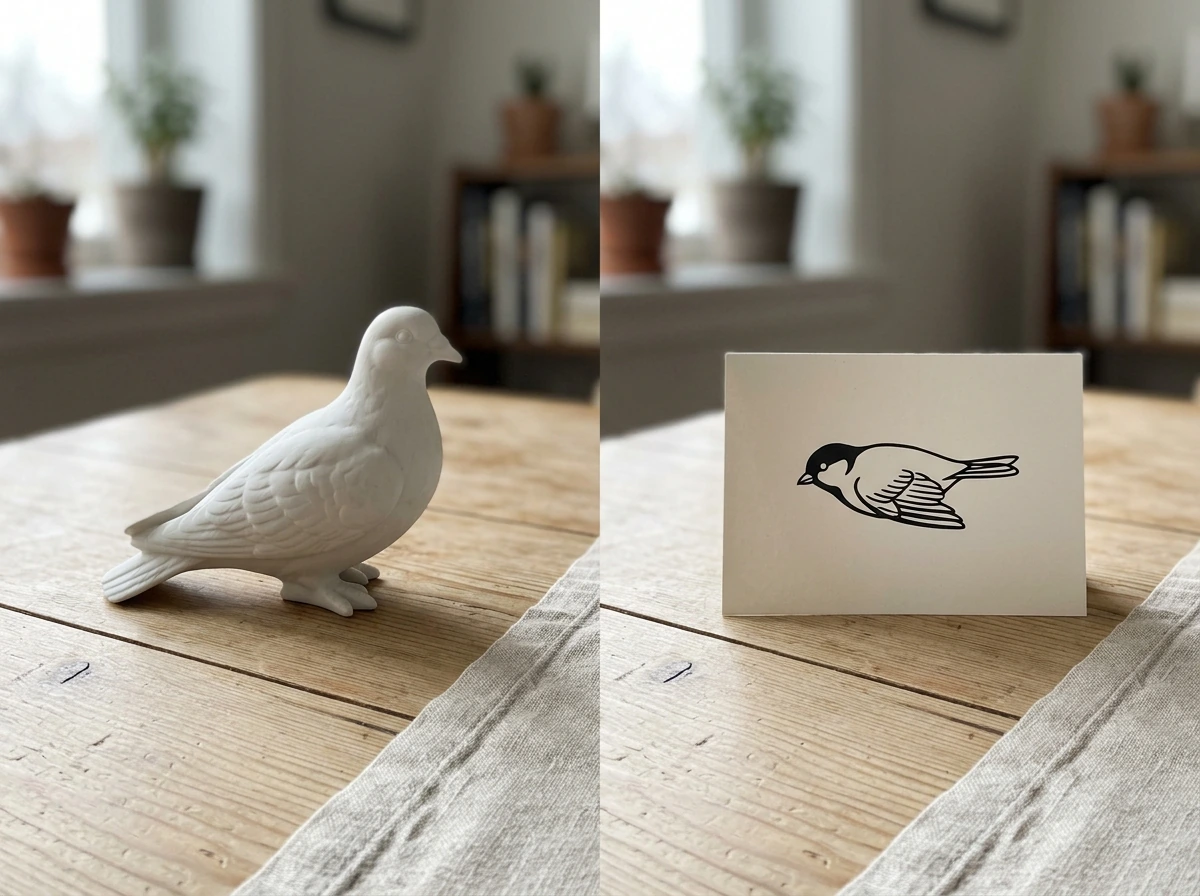
White birds carry overwhelmingly positive symbolism across cultures before death enters the picture. Doves represent peace in Abrahamic traditions and across the secular West. White cranes are symbols of longevity and good fortune in East Asian traditions, particularly in Japan and China. White swans in Celtic and Northern European folklore are associated with the soul, transformation, and the boundary between worlds. White herons in some Indigenous North American traditions carry spiritual messenger status.
When death modifies that white-bird symbolism in folklore, the result is rarely pure bad luck. More often, a dead white bird in folk traditions signals the end of a protected or blessed period, a threshold moment rather than a curse. In some European folklore, a dead white bird is treated as a sign that a spirit has delivered its message and departed. In other traditions, it marks a necessary sacrifice or release before a new cycle begins.
Compare this to the symbolism of black birds in death-related dreams or omens, which more often carry warnings of external threats or bad news. The white dead bird sits in a different emotional register: more inward, more personal, more about your own spiritual or emotional state than about outside danger.
| Symbol | General cultural meaning | When found dead in dreams |
|---|---|---|
| White dove | Peace, resolution, Holy Spirit | End of a peaceful period, disrupted harmony |
| White swan | Soul, transformation, grace | Major life transition, crossing a threshold |
| White crane | Longevity, good fortune, wisdom | End of a protected or fortunate phase |
| White canary | Optimism, freedom, joyful expression | Loss of hope or inability to move forward |
| White heron | Patience, spiritual vision | Spiritual message delivered, time to act |
How to interpret your specific dream: a details checklist
The most useful thing you can do right now is reconstruct your dream with as much detail as possible before those details fade. The meaning of a white dead bird shifts significantly depending on context. Here is what to ask yourself:
- Where was the bird? Indoors (your home, a specific room) suggests something personal and private is ending. Outdoors (garden, street, forest) points more toward your outer life or social world. If the location was recognizable, what does that place mean to you?
- Who found or noticed the bird? If it was you, the message is likely directed inward. If someone else found it in the dream, consider what that person represents in your life right now.
- What was your emotional state in the dream? Sadness, shock, calm, relief, or fear each change the interpretation. Calm or peaceful emotions around the dead bird often signal acceptance of an ending. Distress or guilt points toward something unresolved.
- What condition was the bird in? A bird that appeared peaceful in death feels different from one that was broken, damaged, or decaying. Peaceful death tends toward completion. Disturbing imagery tends toward suppressed grief or avoidance.
- How large was the bird? Larger birds in dreams often carry bigger symbolic weight, representing something significant in your life rather than a minor shift.
- Were other people or animals present? Their identity and behavior can add layers: a comforting presence suggests support is available; a threatening presence might indicate the ending feels forced or unwelcome.
- Did you touch, move, or bury the bird? Taking action in the dream (burying, covering, or caring for the bird) often signals a readiness to process the ending and move on. Avoiding it or walking away may reflect emotional avoidance in waking life.
- Did the bird revive or was there any movement? Any sign of life shifts the meaning toward something that is not fully over yet, or a situation that still has some energy in it worth paying attention to.
Once you have answered these questions, Look for the pattern. If you are trying to interpret the exact “finding a dead bird meaning” angle, focus on how and where you found it and what emotion that moment brought up. If you are trying to understand what a dead bird means in particular, focus on how and where you found it in the dream and what emotion it stirred what does a dead bird mean. finding a dead bird meaning If most of your answers point toward loss, grief, or guilt, your dream is likely processing an emotional wound. finding a dead bird outside your house meaning If most point toward calm, completion, or relief, your dream may be marking a healthy ending and clearing space for something new. If the dream left you anxious or confused, that is a signal to sit with it longer rather than rush to a single definitive meaning. If you are wondering what seeing a dead bird meaning actually points to in your life, use that same pause to notice the strongest emotion and what it is trying to resolve.
What to do next: grounding, reflection, and practical steps
Dreams about white dead birds rarely require dramatic action. They do, however, tend to call for honest reflection. Here is a practical approach you can start today, whatever your belief system.
Ground yourself first
Before interpreting, give yourself a few minutes to settle. Sit quietly, breathe slowly, and let the emotional residue of the dream surface without judgment. Write down everything you remember about the dream, immediately if possible, because details fade fast. Even rough notes are better than nothing.
Reflection questions to sit with
- What in my life right now feels like it is ending, fading, or needs to be let go?
- Is there a relationship, a belief, or a habit I have been holding onto even though it no longer feels alive?
- Am I carrying unresolved grief, guilt, or a loss I have not fully acknowledged?
- What does "peace" mean to me right now, and is it present or missing in my daily life?
- Is there something I have been avoiding confronting that the dream might be surfacing?
Spiritual practices (choose what resonates)
If prayer is part of your life, consider a brief, honest prayer acknowledging the ending the dream seems to point toward and asking for clarity or peace around it. If meditation is more your path, a short session focused on the image of the bird, letting it exist without forcing a meaning, can be surprisingly clarifying. Journaling is useful across traditions: write a letter to whatever the bird represents in your dream, say what you need to say, and see what comes up.
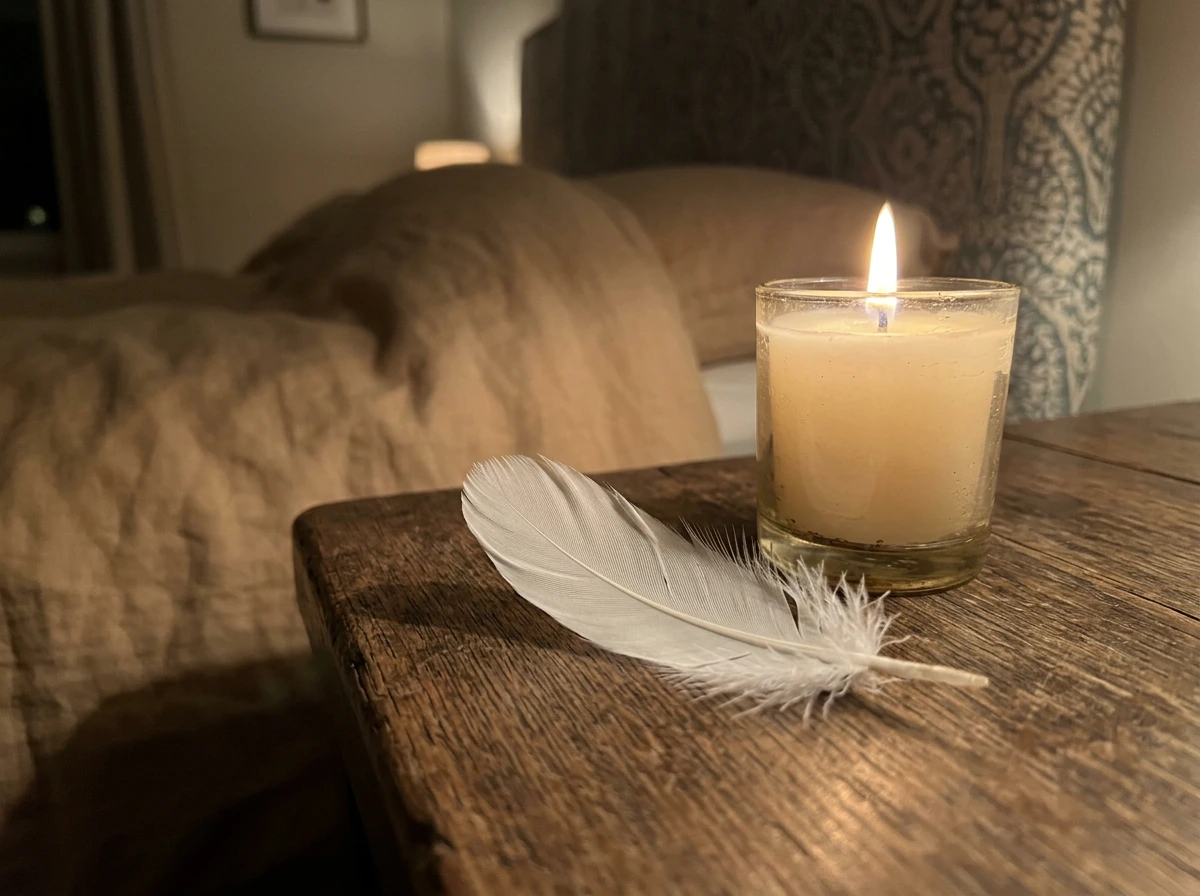
Some people find a small closure ritual helpful, not as superstition but as a concrete way to acknowledge an ending. This might be as simple as lighting a candle and naming out loud what feels like it is ending, then letting the candle burn down. The act of naming something releases it from staying stuck in the background.
Practical life guidance
Check your current stress levels honestly. Dead bird dreams tend to spike when people are carrying unprocessed emotional weight, whether from grief, a difficult relationship, a stalled life situation, or general anxiety about change. If you have been putting off a hard conversation, a decision, or an honest look at something in your life, this dream may be your subconscious pushing you toward it.
If the dream felt particularly distressing or has recurred, consider spending 10 to 15 minutes each day imagining a gentler or more resolved version of the dream while you are awake. This is the core of Imagery Rehearsal Therapy, a well-researched approach where you rehearse a changed ending to reduce the emotional charge of the dream over time. A meta-analysis of randomized controlled trials has found Imagery Rehearsal Therapy to be effective for trauma-related nightmares, including reductions in nightmare frequency and related symptoms versus control conditions. You do not have to be in therapy to try a basic version of this technique.
If you are in a period of active grief (over a person, a pet, a relationship, or a major life change), be gentle with yourself about the timing. Grief dreams, including those with animal imagery, are a normal part of how the mind processes loss. They are not predictions and they are not warnings that something worse is coming. They are the psyche doing its work.
When to seek support
If this type of dream is recurring, significantly disrupting your sleep, or leaving you anxious for hours after waking, that is a signal worth taking seriously. A therapist familiar with CBT or dream work can help you use the dream content productively rather than letting it cycle. You do not need to have a diagnosable condition for this kind of support to be useful; sometimes a few sessions specifically focused on processing a recurring dream theme can make a real difference.
Dreams about dead birds, whether white or otherwise, are one of the more common symbolic dream themes. If you want to explore how dead bird symbolism plays out in waking-life encounters too, rather than just in dreams, that is a related area worth looking into separately, as the symbolic weight shifts somewhat when you are dealing with something you physically found versus something your sleeping mind generated.
Ultimately, the most honest thing anyone can tell you about a white dead bird dream is this: take the emotional truth of it seriously, even if you hold the specific interpretation lightly. Something in you chose that image for a reason. Whether you read that through a spiritual, psychological, or intuitive lens, the invitation is the same: pay attention to what is ending in your life, honor it properly, and ask yourself what comes next.
FAQ
What if I saw the white dead bird outside my house versus inside my house?
Outside locations often point to something you can see from the “world” side (a situation, social environment, or public peace), while inside imagery more often maps to inner life (home stability, identity, emotional safety). If the bird was on your doorstep or windowsill, treat it as a threshold theme, something ending right at the boundary of what feels safe.
Does a white dead bird dream always mean a bad omen or danger is coming?
Not usually. A white dead bird more often signals an ending of a pure or hopeful phase, but it can still feel like a warning when the dream mood is urgent. If you felt calm or relieved, the “danger” reading is less likely, and it is more useful to look for closure needs rather than forecasting threats.
Why do some white dead bird dreams feel like grief, while others feel like relief?
The emotional tone is a key decision aid. Grief-leaning dreams often include images of loss, searching, or helplessness, while relief-leaning dreams tend to include resolution, clarity, or a sense the conflict is over. Ask whether the dream leaves you with tears and attachment, or with emotional space and readiness.
What if I cannot identify the bird species in the dream?
If species is unclear, default to the combined color-plus-death message rather than forcing a dove or canary meaning. Focus on action details instead (fallen, carried, found, stepped on) and your reaction in the dream, because those elements usually explain the psyche’s emotional target more reliably than the exact type of bird.
What does it mean if I am the one who finds, kills, or removes the bird?
Being the finder often links to “noticing” an ending, while being responsible for harming the bird can connect to self-blame or guilt about a belief, relationship, or version of yourself you think you failed to protect. If you remove or bury it, that leans toward processing and closure, not punishment, especially when you feel calmer afterward.
How do I interpret it if the bird is dead but untouched, or if it is decaying or bloody?
Untouched death imagery often suggests something ended but remains “contained,” meaning you have not fully metabolized it yet. Visible decay or blood can indicate ongoing emotional activation, like lingering resentment, fear of consequences, or unfinished grieving that still affects your day-to-day nervous system.
Can a white dead bird dream be about a relationship that is not actually ending?
Yes. Dreams can symbolize boundaries and emotional availability even when the relationship is technically ongoing. If the dream feels like a loss of peace or communication, it may reflect emotional distance, unresolved conflict, or a need to renegotiate expectations rather than a definite breakup prediction.
What should I do if the dream recurs and I wake up anxious?
Use a structured approach rather than reinterpreting repeatedly. Try writing a one-sentence “ending” you want (for example, I release the need to keep this pure and I choose peace), then rehearse a calmer version of the dream for 10 to 15 minutes daily. If anxiety lasts all day or disrupts sleep, consider CBT-based dream work with a professional.
Is it worth talking to a therapist even if I have no major loss or grief?
Yes, because grief dreams can also arise from suppressed stress, guilt, or identity change. If the dream reflects recurring themes like blocked progress, self-criticism, or fear of consequences, therapy can help you identify the waking-life pattern the symbol is translating.
Could this be spiritual rather than psychological, and how can I tell?
Use your lived meaning test. If you consistently feel guided toward prayer, forgiveness, or a “release then renewal” stance, a spiritual frame may fit. If the dream repeatedly maps to interpersonal guilt, anxiety spirals, or avoidance, a psychological frame is likely more actionable. You can also combine both by doing closure practices while tracking the emotional trigger.
What is the best way to reconstruct the dream before I forget details?
Do a quick “5-minute capture” the moment you wake. Write the setting, the bird’s position (on ground, in water, in the air), who is present, what happens immediately before the death is noticed, and your feeling in the dream versus your feeling on waking. Even partial notes usually outperform trying to remember later when emotions have faded.
Could this dream relate to my creativity, beliefs, or spiritual practice drying up?
Yes. In many interpretations, the bird represents the soul or communication, so “white” peace plus death can signal that a practice or hope has become stale or no longer fits. Look for what has stopped functioning for you recently, for example, a habit you cannot bring yourself to continue or an old belief you keep pretending still works.
Next Article
Dream Meaning Dead Bird: Common Interpretations and Next Steps
Dead bird dream meaning explained with scenarios, emotions, bird type, spiritual and psychological interpretations plus