Finding a dead bird outside your house is one of those moments that stops you in your tracks. Your first instinct might be to Finding a dead bird outside your house is one of those moments that stops you in your tracks. Your first instinct might be to wonder what it means, or it might be to figure out how to safely deal with it, or both at once. This guide does both. You'll get the practical cleanup steps you need right now, a clear look at the natural reasons birds die near homes, and a honest walk through the spiritual and symbolic meanings people have attached to this experience across different traditions. There's no single "correct" interpretation here, so take what resonates with your own beliefs and leave the rest., or it might be to figure out how to safely deal with it, or both at once. This guide does both. You'll get the practical cleanup steps you need right now, a clear look at the natural reasons birds die near homes, and a honest walk through the spiritual and symbolic meanings people have attached to this experience across different traditions. There's no single "correct" interpretation here, so take what resonates with your own beliefs and leave the rest.
Finding a Dead Bird Outside Your House Meaning and What to Do

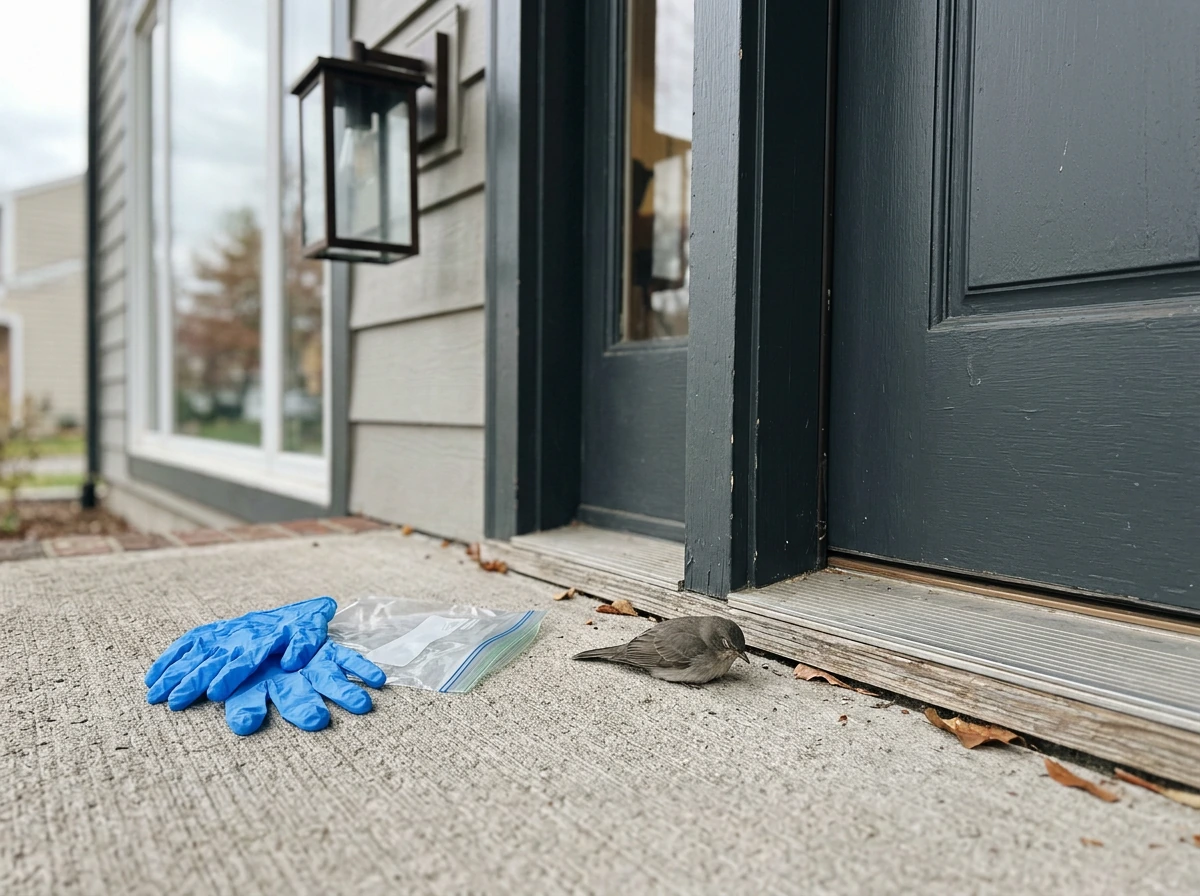
Handle it safely first: cleanup steps that matter
Before anything else, the practical reality: dead birds can carry bacteria, parasites, and in some cases viruses like avian influenza. The risk to a healthy adult is generally low, but it's not zero, so take a few minutes to do this right.
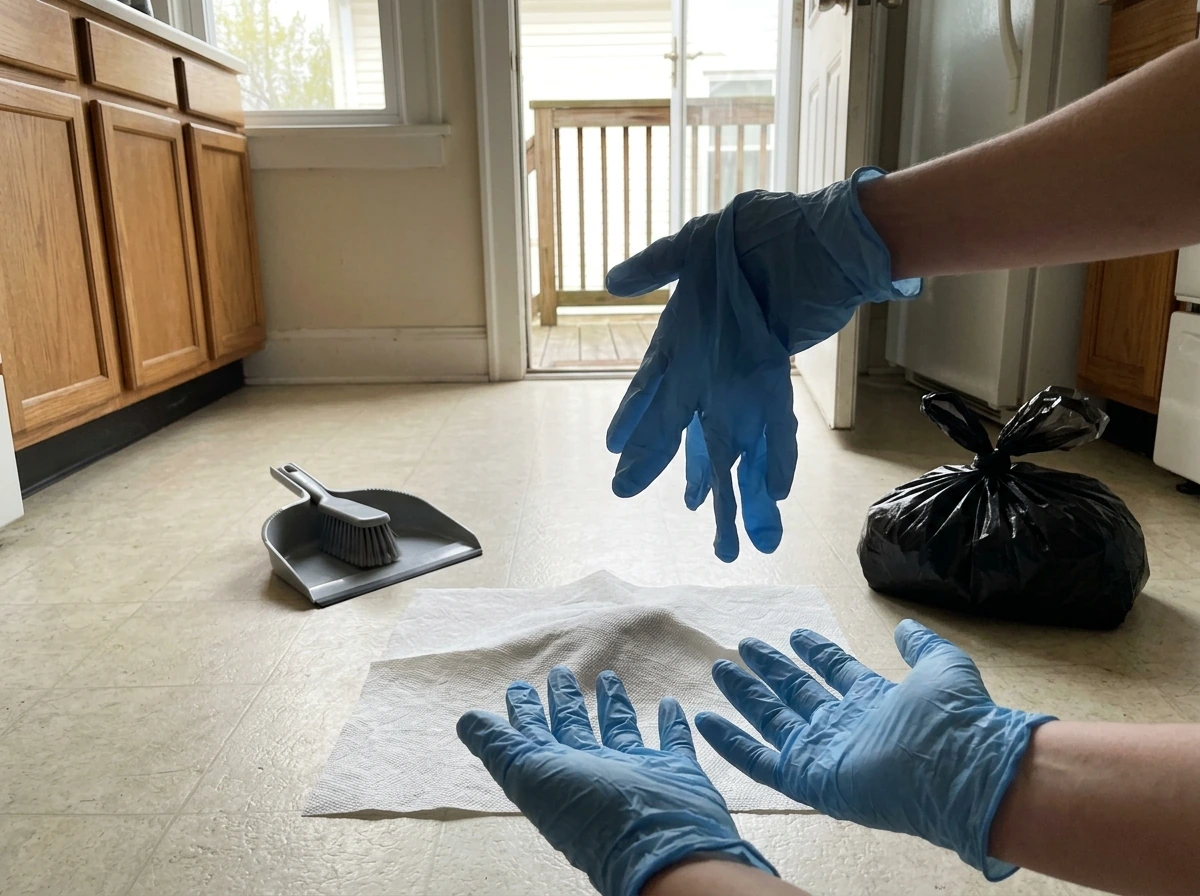
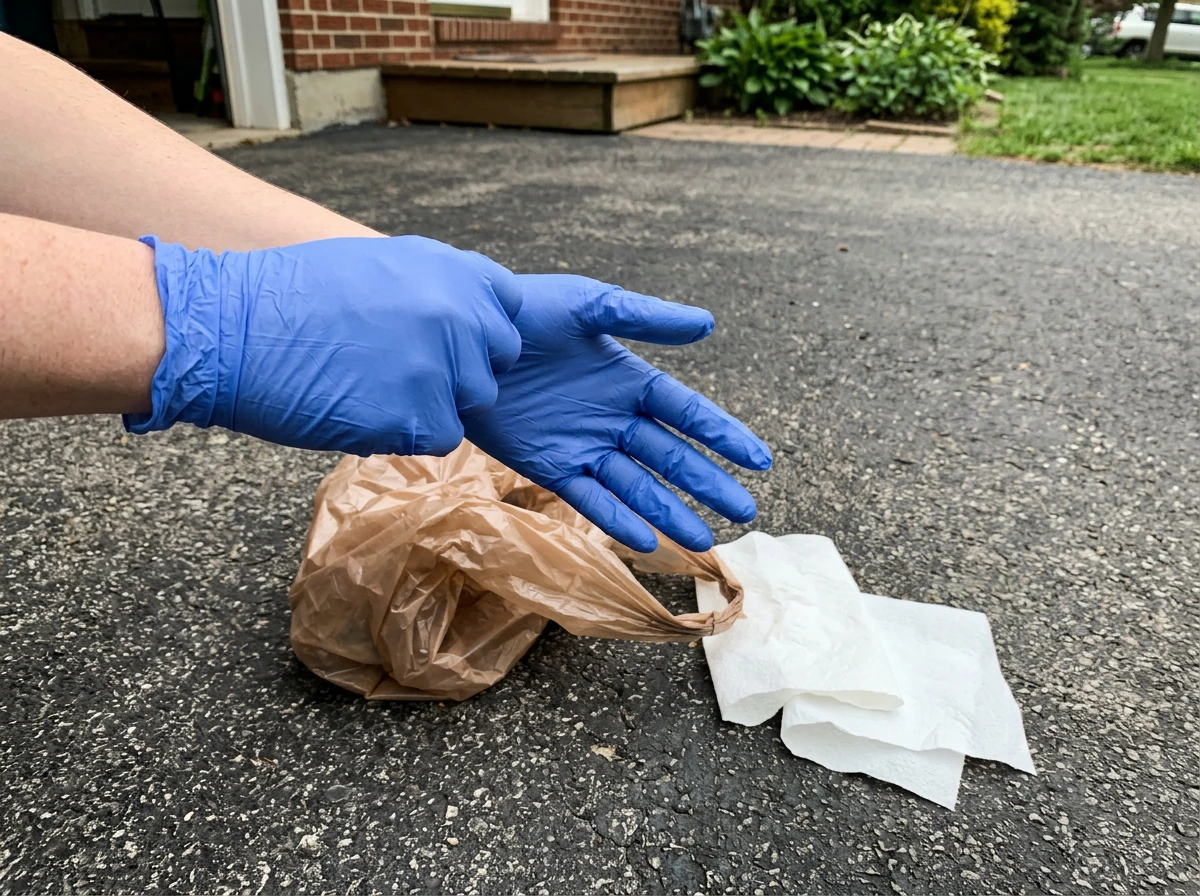
- Put on disposable waterproof gloves before you touch anything. If you don't have gloves, invert a plastic bag over your hand to create a barrier.
- If the bird is wet, decomposing, or the cleanup involves any splashing, add an N95 mask and safety goggles or glasses as well.
- Use a second plastic bag or a doubled bag to pick up the bird. Seal the inner bag, then place it inside the outer bag and seal that too. Double-bagging is the standard guidance for small numbers of birds.
- If the area where the bird was found is on a hard surface (like a porch, step, or driveway), clean it with an EPA-registered disinfectant following the label directions exactly. Do not substitute with improvised or unlabeled cleaning products.
- Wash your hands thoroughly with soap and water after removing gloves, even if you never directly touched the bird.
- Dispose of the sealed bag in your regular household trash unless local regulations specify otherwise.
This guidance applies when you're dealing with a single bird or a small cluster of fewer than five. If you're finding multiple dead birds in the same area or on the same day, that changes the picture, and I cover that further below.
Why birds actually die outside your house
Before diving into meaning, it's worth being honest about the natural side of things. Birds have short lifespans compared to mammals, and they die constantly throughout the environment. Most of the time, we just don't find them. When a dead bird appears near your home specifically, there's almost always a straightforward reason.
Window collisions
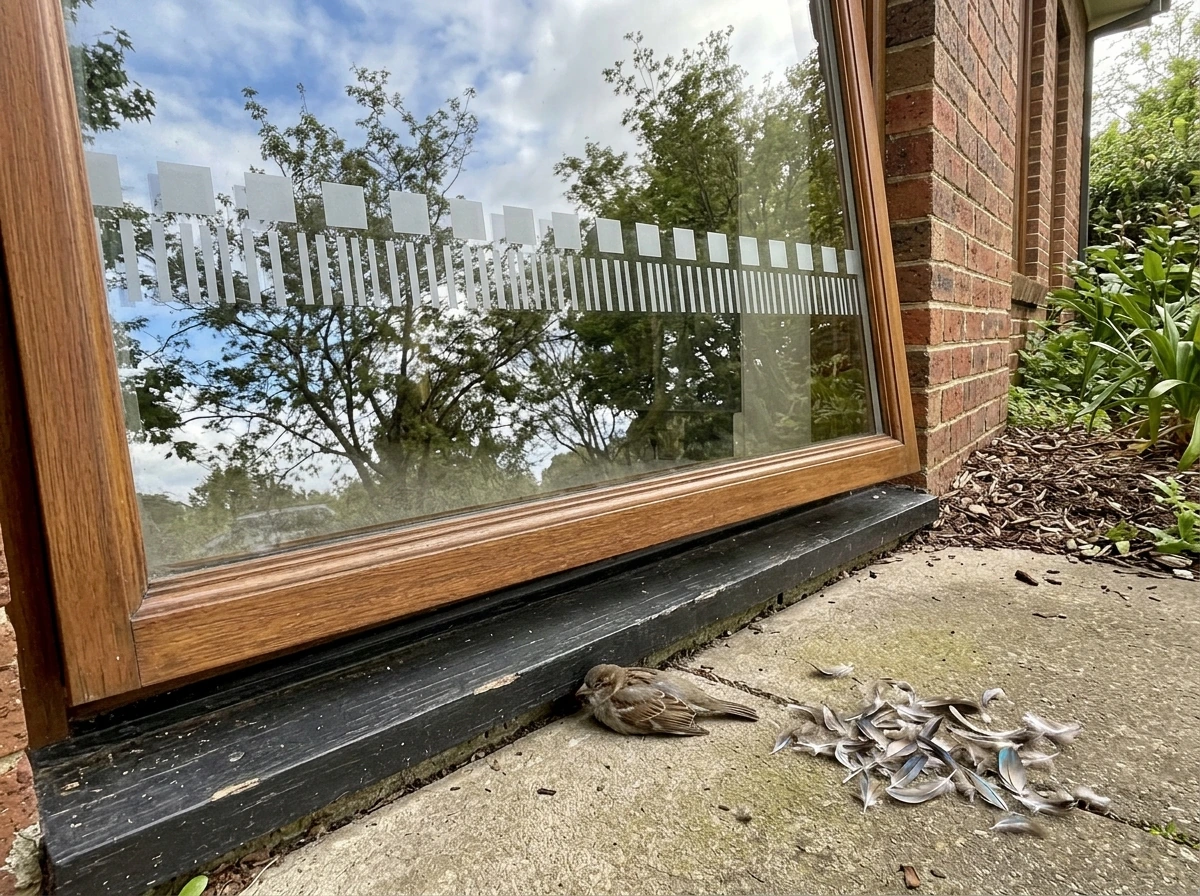
This is the single most common cause. Birds can't see glass the way we do. They see the reflection of sky and trees and fly straight into the window at full speed. All About Birds (Cornell Lab) explains that birds often crash into windows because they see reflections of the sky and trees and fly straight into the glass blank" rel="noopener noreferrer">birds see reflections of the sky and trees and fly into windows. The American Bird Conservancy estimates that blank" rel="noopener noreferrer">hundreds of millions of birds die from window strikes in North America each year. If the bird is found directly below a window or glass door, a collision is almost certainly what happened.
Light attraction at night
Artificial lighting confuses migrating birds, especially during spring and fall migration seasons. Birds flying at night can be drawn to lit windows, porch lights, or brightly lit buildings, becoming disoriented and exhausted. Some collide with structures; others simply expend energy they can't recover. If you're finding birds in spring (like right now, in late March) or in fall, night lighting and migration fatigue are very relevant possibilities.
Predators near the home
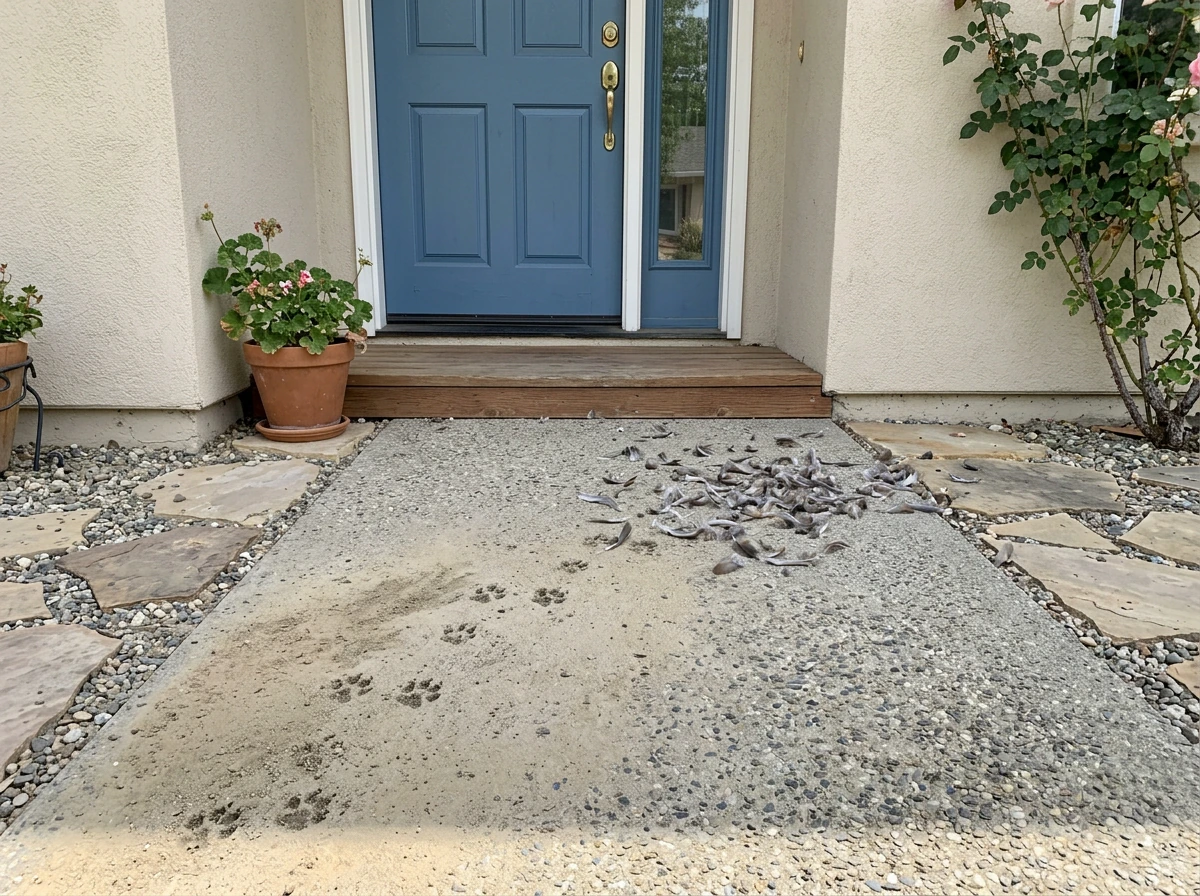
Cats, hawks, and other predators often catch birds near homes where feeders or dense plantings attract prey. Sometimes the predator drops or abandons the bird nearby. You might notice ruffled or scattered feathers around the carcass if this is the case.
Illness and disease
Birds that are sick tend to become lethargic and ground-level, which makes them more visible near human structures. Avian influenza, salmonella, and other pathogens can cause birds to die in clusters during outbreaks. A single sick bird dying near your home is not cause for alarm, but it's a reminder to use proper PPE during cleanup.
Extreme weather
Cold snaps, heat waves, or severe storms can kill birds that are already weakened by illness, migration stress, or food scarcity. Homes provide windbreaks and microclimates that birds seek out, which can mean they die close to structures when weather is the underlying cause.
What it might mean spiritually: reading the different lenses
People across virtually every culture have found meaning in bird deaths, and the range of interpretations is wide. To get a clearer answer, you can also look at what people mean by what a dead bird symbolizes. None of these are provable facts, and none cancel each other out. The lens you choose depends on your own spiritual background and what feels true to your experience. Here's how different traditions have historically framed this kind of encounter.
Transformation and endings
The most common thread across many traditions is that a dead bird signals the end of one phase and the beginning of another. In this framing, the bird isn't a bad omen so much as a messenger of transition. Something in your life, whether a relationship, a job, a belief, or a way of living, may be completing its natural cycle. Finding it outside your house, at the threshold between your private world and the outside world, adds a layer of meaning about what you're leaving behind or what's shifting in how you engage with the world, including the stepping on a dead bird meaning people discuss. If your experience centers on a dream, you may also be looking for dream meaning dead bird interpretations. white dead bird dream meaning
Biblical and Christian traditions
In biblical tradition, birds hold layered symbolism. Sparrows, famously, are said not to fall without God's awareness (Matthew 10:29), which some readers take as a message of divine attention during difficult moments. Rather than reading a dead bird as an omen of doom, many Christians interpret such an encounter as a prompt to trust in Providence, a reminder that even small deaths are held in awareness. It can also be a call to reflect on mortality and the brevity of earthly things, without fear, but with intentional attention.
Celtic and European folklore
In older Celtic and general European folk traditions, a dead bird near the home was often read as a warning: something in or around the household needed attention. This wasn't necessarily catastrophic. It was more like a nudge to pay closer attention to your home life, your relationships, or your personal wellbeing. Some traditions associated specific bird species with specific warnings (a dead robin, for instance, was sometimes considered a more serious sign than a common sparrow), and the location near the front door or entrance was seen as especially significant.
Indigenous and animist perspectives
Many indigenous traditions, across Native American cultures, African traditions, and other animist frameworks, view birds as messengers between the physical and spiritual worlds. A dead bird appearing at your home could be interpreted as a spirit messenger completing its task, having delivered a message or fulfilled its role. In some traditions, the right response is to offer gratitude and perhaps a small ceremony of acknowledgment, honoring the animal's life rather than treating it as a bad sign.
Eastern and metaphysical traditions
In some Eastern frameworks and modern metaphysical thinking, a dead bird near your home is sometimes read as a sign that negative energy or a difficult cycle has been absorbed or redirected away from you. The bird, in this interpretation, acts almost as a kind of energetic buffer. This is a more protective reading than the warning-based folk interpretations, and it invites you to clear your space (literally and energetically) and move forward with fresh intention.
Bad luck? The honest answer
Some people find a dead bird and immediately worry about bad luck. It's worth saying plainly: the superstition around dead birds and bad luck is not a single consistent tradition. It varies wildly by culture, species, and context. In many traditions, the dead bird is entirely neutral or even positive in meaning. If the "bad luck" interpretation doesn't resonate with your beliefs or feels harmful to dwell on, you have plenty of other frameworks to draw from, and those are equally valid.
How to interpret this for your specific situation
If you want to explore the symbolic dimension, a few factors can help you find a more personal interpretation rather than a generic one.
Species and color
Different birds carry different symbolic weight. A white bird (like a dove or white pigeon) near your home is widely read as a sign connected to peace, purity, or spiritual messages. A crow or raven is associated in many traditions with transformation, magic, and the unseen. A robin, often a symbol of new beginnings, dying outside your door adds a layer of complexity to the "transition" interpretation. If you know what species it was, that's worth factoring into your personal reading. If the color was notable, that's meaningful too. If you want a broader takeaway, you can also explore the seeing a dead bird meaning guides for common symbolic interpretations.
Timing and what's happening in your life
Spiritual interpretation is often most resonant when it connects to something you're already feeling or navigating. Are you in a period of major change? Facing a difficult decision? Feeling stuck? A dead bird appearing during a time of transition tends to feel more significant than one appearing on an otherwise ordinary day, and your gut response to finding it often tells you something worth paying attention to. Finding it in late March, during the very start of spring, also sits at a symbolically loaded time: a season of renewal in which death can feel particularly pointed.
Location specifics
Where exactly the bird was matters in folk and spiritual traditions. A bird found at the front door or entry of the house is often given more interpretive weight than one found in a back corner of the yard, since doorways and thresholds are symbolic boundaries in many traditions. A bird found on the driveway, for instance, carries its own set of associations that you can explore in related reading on the meaning of dead bird on driveway. The closer to your active living spaces it appears, the more traditions treat it as personally directed.
Your gut reaction
This sounds simple, but it's actually worth reflecting on: how did you feel when you found it? Sad, unsettled, curious, calm, or something else entirely? Your emotional response to a symbolic encounter is often the most honest starting point for interpretation. If you felt a wave of grief, maybe there's something you're processing around loss. If you felt surprisingly calm, maybe the "completed cycle" interpretation fits better than a warning. You're not reading tea leaves here; you're paying attention to your own inner response.
How to stop more birds from dying near your home
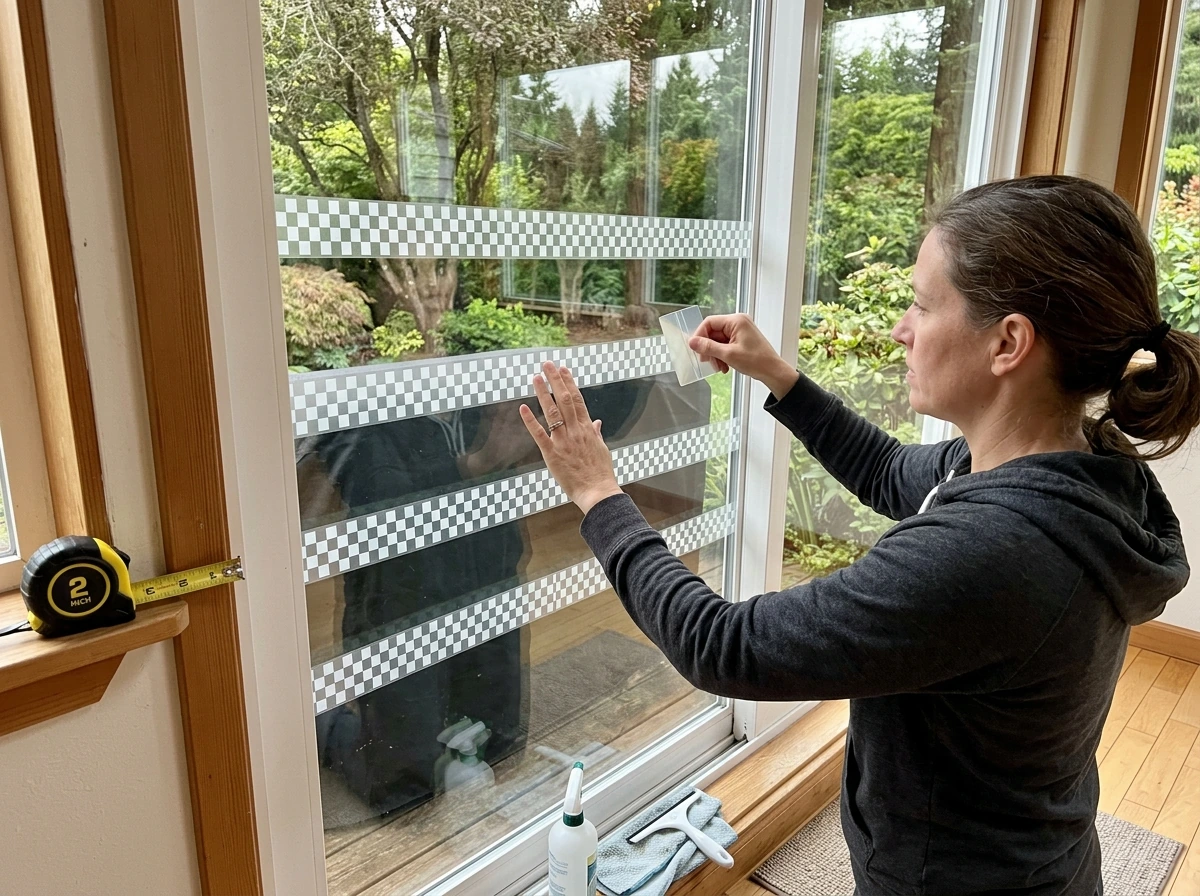
If you suspect window collisions, lighting, or other preventable causes, there are concrete steps you can take to reduce repeat incidents. These are good for the birds and, if the symbolic dimension matters to you, they're a meaningful practical response to the encounter.
Window collision prevention
- Apply bird-safe window film or decals to glass surfaces, especially large picture windows and glass doors. Patterns need to be spaced no more than 2 inches apart vertically or 4 inches apart horizontally to be effective.
- Move bird feeders either within 3 feet of windows (so birds don't build up striking velocity) or more than 30 feet away (so they approach from a safe angle).
- Install external screens or netting over problem windows. These work even when decals aren't aesthetically appealing.
- Use CollidEscape or similar external window films that appear opaque from outside but transparent from inside.
- Consider Acopian BirdSavers (closely spaced paracord strands hung in front of windows), which are effective and low-cost.
Reducing light attraction at night
- Turn off or dim non-essential exterior and interior lights during peak migration periods, typically March through May and August through October.
- Switch to motion-sensor lights so they're only on when needed.
- Use warm-spectrum (amber or yellow) bulbs for outdoor lighting, which are less disorienting to birds than cool white or blue-spectrum LEDs.
- Close blinds and curtains at night if interior lighting is bright and windows are large.
When to call wildlife control or report the bird
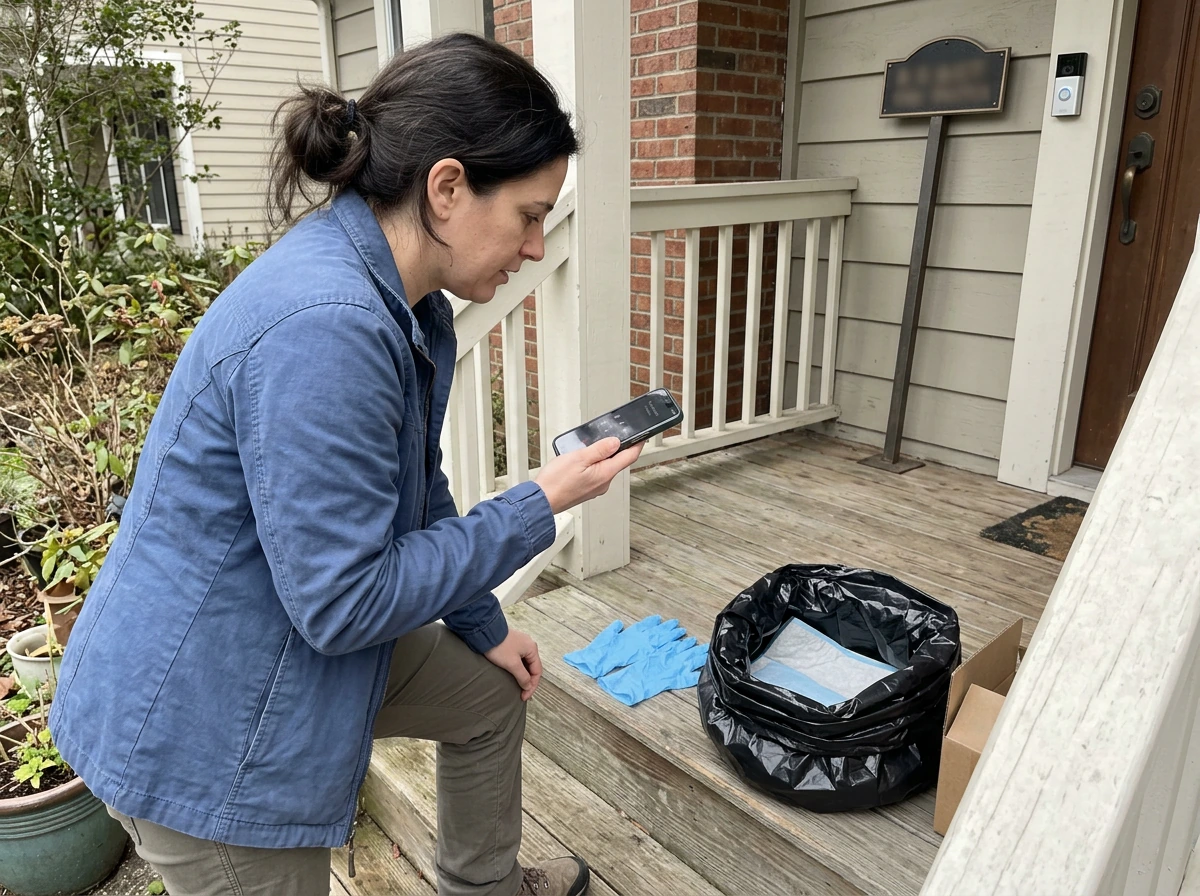
A single dead bird handled with the steps above typically doesn't require you to call anyone. But there are situations where getting outside help is the right move.
Multiple dead birds
If you find five or more dead birds in a concentrated area, or multiple birds dying over a short period, contact your state or local wildlife agency. This can be a sign of a disease outbreak (avian influenza being the most significant current concern), a pesticide or contamination event, or a broader environmental issue. Many states have dead bird reporting hotlines or online forms specifically for this. Do not handle large numbers of birds without full PPE, and contact your local health department as well if you're concerned about human exposure.
A lingering smell or possible nest nearby
If you notice a persistent bad smell after cleanup, or you suspect a bird (or multiple birds) have died inside a wall cavity, in a vent, or near an active nest on your property, call a wildlife removal professional. Birds sometimes nest in eaves, attic vents, or soffits, and a dead bird in an inaccessible location creates both a sanitation problem and, potentially, a sign that something is wrong with the nest or with conditions attracting birds to enclosed spaces near your home.
If you're concerned about disease exposure
If you handled a dead bird without gloves, especially one that appeared sick rather than the result of a collision, wash your hands and any exposed skin thoroughly and monitor for any unusual symptoms over the following days. The risk is low for most healthy adults, but if you have concerns, contact your healthcare provider and mention the exposure. For context, avian influenza transmission to humans is rare and typically associated with prolonged, unprotected exposure to large numbers of sick birds, not a single backyard encounter.
Practical vs. spiritual: which reading is right for you?
| Lens | Core interpretation | What it asks of you |
|---|---|---|
| Practical / Natural | Birds die near homes due to window strikes, predators, illness, or weather | Safe cleanup, prevention measures, report if multiple birds |
| Transformation / Universal | A cycle or chapter in your life is ending; change is coming | Reflect on what you're releasing or moving on from |
| Biblical / Christian | Divine awareness of even small losses; a prompt toward trust or reflection | Sit with gratitude or prayer; notice what's drawing your attention |
| Celtic / Folk warning | Something in your home life or relationships may need attention | Check in with household relationships or personal wellbeing |
| Animist / Indigenous | A spirit messenger has completed its role near your home | Offer acknowledgment or gratitude; clear and renew your space |
| Eastern / Metaphysical | Negative energy or a difficult cycle has been absorbed or redirected | Clear your space intentionally; set fresh intentions going forward |
None of these lenses are mutually exclusive. You can clean up the bird safely, make a note to check your windows, and still sit quietly for a few minutes to reflect on what feels significant about the timing. The practical and the symbolic don't compete with each other; they answer different questions.
If this encounter is weighing on you, it might be worth asking: what does this moment want me to pay attention to? Not what does it predict, but what does it invite you to notice, release, or begin? That's usually a more useful question than searching for a definitive omen, and it's one only you can answer.
FAQ
Does finding a dead bird outside my house mean there’s an illness outbreak nearby?
Usually it does not. A single bird is often explained by collision, predation, or weather stress. It becomes more concerning if you see multiple dead birds in the same area within a short time, or you notice unusual behavior in nearby birds (for example, many are lethargic, uncoordinated, or gathering on the ground). In those cases, contact your local wildlife agency and, if you’re worried about exposure, your local health department.
What if the bird hit a window, but there are no feathers or it looks intact?
A bird can sometimes fly into glass and land out of sight or recover partially before dying later. Check within a few yards of the window or along the window line, and look for the bird’s body or scattered feather pieces. If it was in a heavily trafficked area and you notice repeated strikes, treat it as a collision risk even if you only find one carcass.
I found the bird near my front door. Does the location change what it could mean symbolically?
Many traditions treat doorways and thresholds as more personally directed than, say, the back of the yard. Symbolically, that can shift the “focus” from general transition to something about your home life, boundaries, or what you’re letting into your private space. If the bird was right by the entry, it can help to reflect on what you recently decided to accept or stop allowing.
Should I clean up immediately, or is it better to wait?
Clean up soon, but don’t rush without basics. If you’re concerned about illness, use gloves and avoid creating dust or splashes. If the bird appears to have been poisoned or you suspect a pesticide issue, stop and consider contacting local wildlife authorities for guidance before disturbing the area.
What’s the safest way to dispose of the bird after cleanup?
Put it in a sealed plastic bag (or double-bag if needed) and place it in your household trash, unless local guidance directs otherwise. Avoid dragging it across soil or grass if possible, and wipe the area afterward. For added safety, disinfect tools used during cleanup with household disinfectant and wash hands thoroughly.
If I have pets, should I keep them away from the spot even after cleanup?
Yes. Pets may investigate the area, contact contaminated surfaces, or pick up feather fragments you missed. For the first day or two, keep pets indoors or supervised, and re-check the immediate area after cleanup to ensure no small pieces remain.
What should I do if the dead bird is on a balcony or in a tight corner I can’t reach safely?
Don’t climb or step into unsafe positions to retrieve it. Use a long tool or reach with assistance if available. If you can’t safely access the location, wildlife removal professionals can handle retrieval, especially if it’s in an enclosed nook where you also might need sanitation.
Does touching a dead bird without gloves require medical attention?
For most healthy adults, a single brief contact is low risk, but wash exposed skin and hands promptly. If the bird looked sick (not just collision-related), or you had prolonged contact, consider contacting a healthcare provider and mention the exposure. Seek care sooner if you develop symptoms such as fever or severe respiratory illness, and mention possible animal exposure.
How do I prevent repeat incidents if I suspect window strikes?
Start by adjusting what the bird sees: reduce reflections at problem windows (curtains or blinds, especially at night), turn off unnecessary exterior lights during peak migration hours, and consider adding window treatments like decals or screens designed to break the collision risk. Also check for nearby “attractors” like feeders, birdbaths, or reflective surfaces that keep birds flying into the same spot.
When should I report dead birds to wildlife authorities?
Report if you find five or more dead birds in a concentrated area, if birds are dying repeatedly over a short period, or if you suspect contamination (for example, an odd smell, dead insects nearby, or pesticide concerns). Reporting also makes sense if the birds appear sick or you find them with no obvious collision pattern. Don’t handle large numbers without appropriate PPE.
Meaning of Dead Bird in Your House: Safety and What It May Mean
Meaning of dead bird in your house, plus safe disposal, causes, spiritual interpretations, and prevention tips