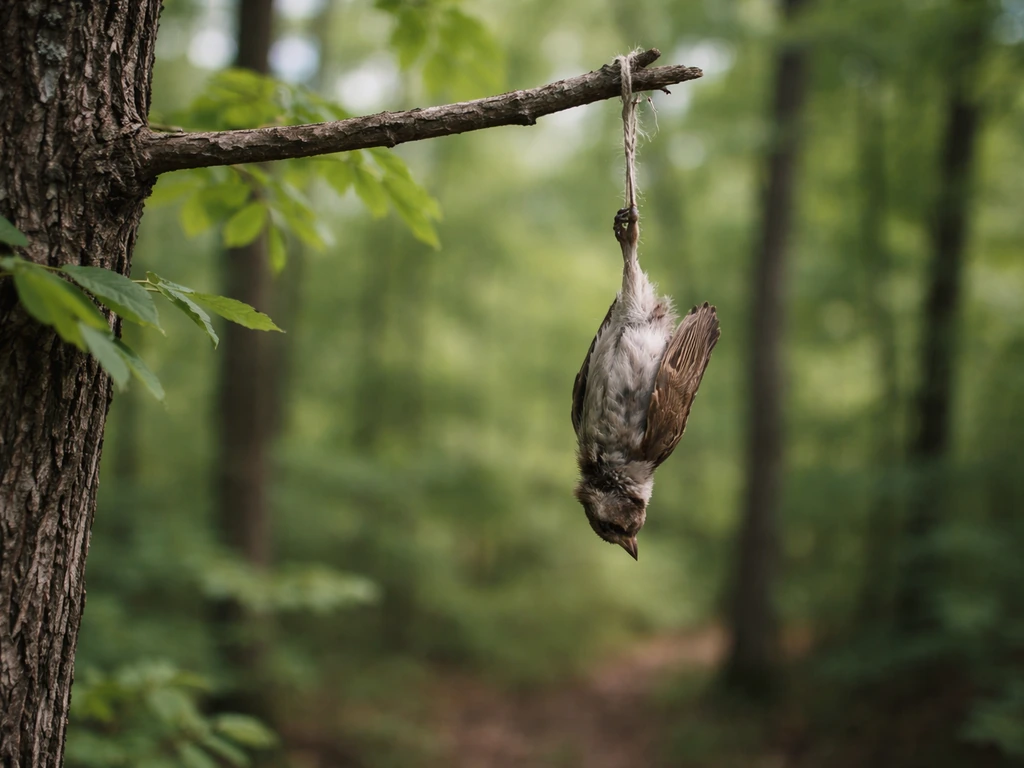
A bird falling from the sky most often means one of a handful of completely natural things: a window strike, exhaustion from migration, illness, poisoning, or a run-in with a predator. In the U.S., wildlife rehabilitation guidance notes that migratory birds are federally protected under the Migratory Bird Treaty Act (MBTA) window strike, exhaustion from migration, illness, poisoning, or a run-in with a predator. That's the practical answer. But if you're here, you probably also want to know whether this moment carries a deeper message, and the honest answer is that it might, depending on your tradition and what you observed. Both questions deserve a real answer, so this guide covers the immediate what-to-do steps alongside the spiritual and symbolic meanings, in that order.
What Does a Bird Falling From the Sky Mean? What to Do

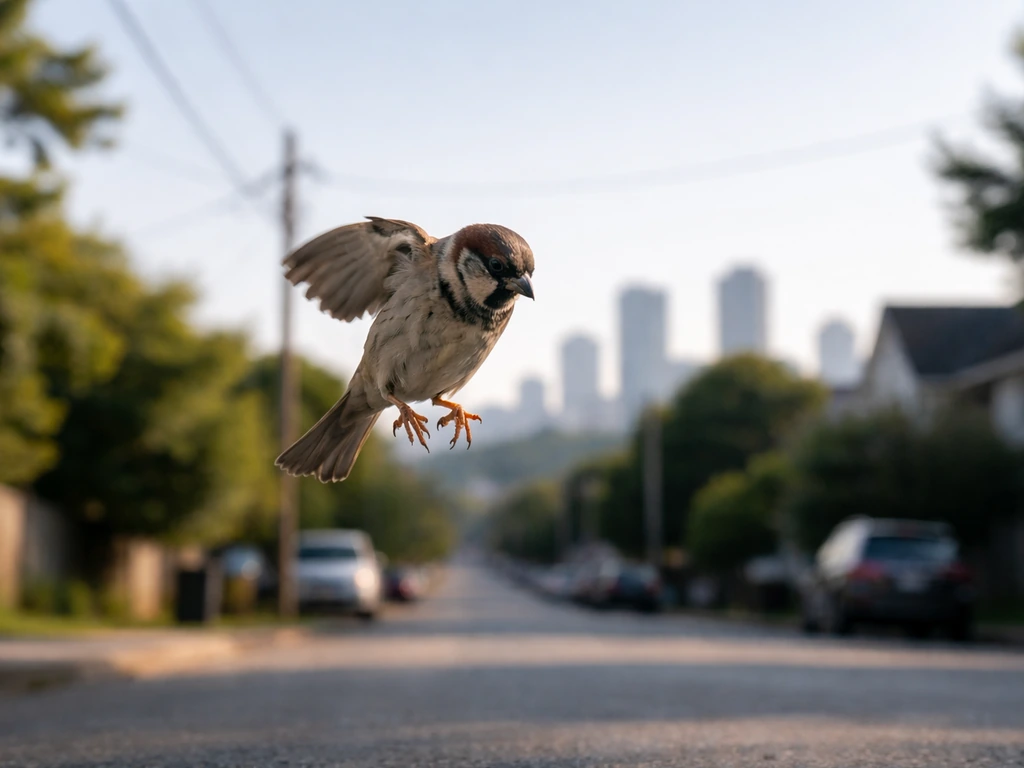
Why birds actually fall from the sky
Before you assign any meaning to what you saw, it helps to know what's actually happening in the physical world. Most bird falls have a clear, diagnosable cause.
Window and glass collisions
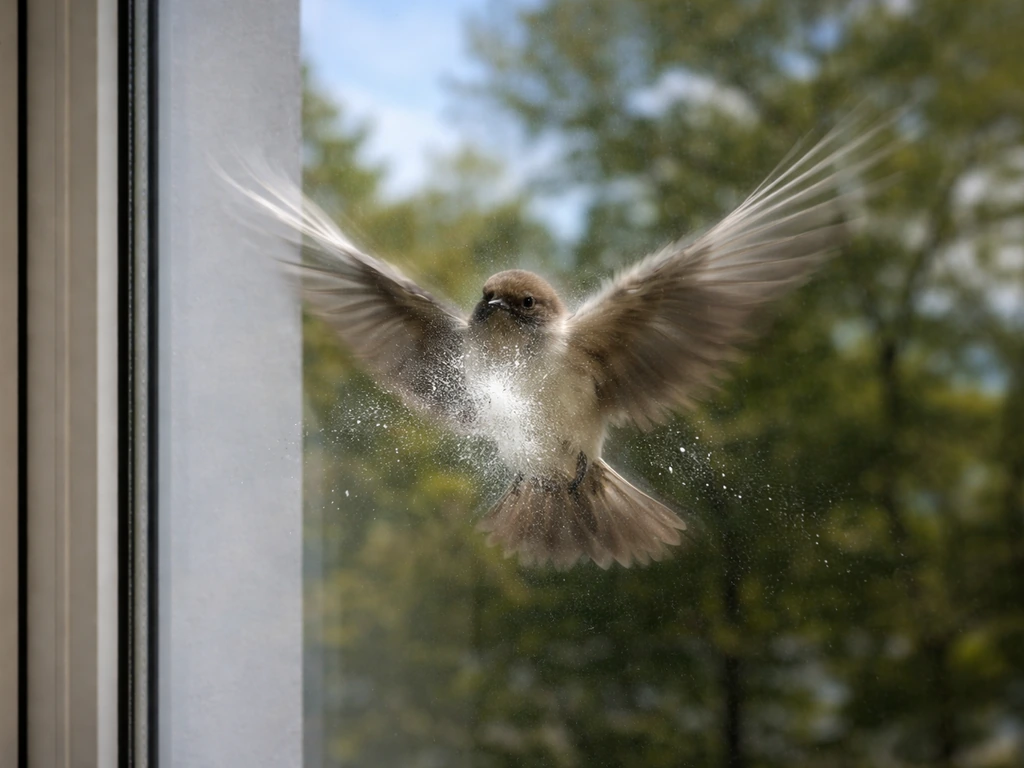
This is by far the most common cause. The U.S. Geological Survey estimates that window strikes kill up to two billion birds in the United States every year. Birds can't perceive glass as a barrier, especially when it reflects trees or open sky. They hit at full speed, and even if they flutter away afterward, many die hours later from internal bleeding or head trauma. If a bird fell near your home, near a school, or in any built-up area, a window or glass door is the first suspect.
Migration exhaustion and disorientation
Migrating birds can fly hundreds of miles in a single night, burning through fat reserves and relying on landmarks, stars, and Earth's magnetic field to navigate. The U.S. Fish and Wildlife Service points out that artificial nighttime lighting disrupts this entirely: birds circle illuminated buildings, waste critical energy, and become vulnerable to collision or simply collapse from exhaustion. If you found a bird during spring (March to May) or fall (September to November) migration season, especially near bright urban lighting, exhaustion is a strong candidate.
Illness, injury, and poisoning
Sick birds lose their coordination and thermoregulation quickly. Avian influenza, West Nile virus, salmonella, and respiratory infections can all cause a bird to drop suddenly or be found grounded. Poisoning from rodenticides, pesticides, or contaminated food sources is another real possibility, especially in suburban and agricultural areas. A bird that appears drunk, circles in place, or has visible discharge from its eyes or beak is showing signs of illness rather than injury.
Predator attacks and territorial fights
Hawks, falcons, and owls strike fast enough to knock a bird out of flight entirely. Even cats, which are responsible for billions of bird deaths annually in the U.S., can cause a bird to fall and then survive in a stunned or injured state. Territorial fights between birds of the same species, particularly during breeding season, can also send one bird spiraling down.
Severe weather and wind events
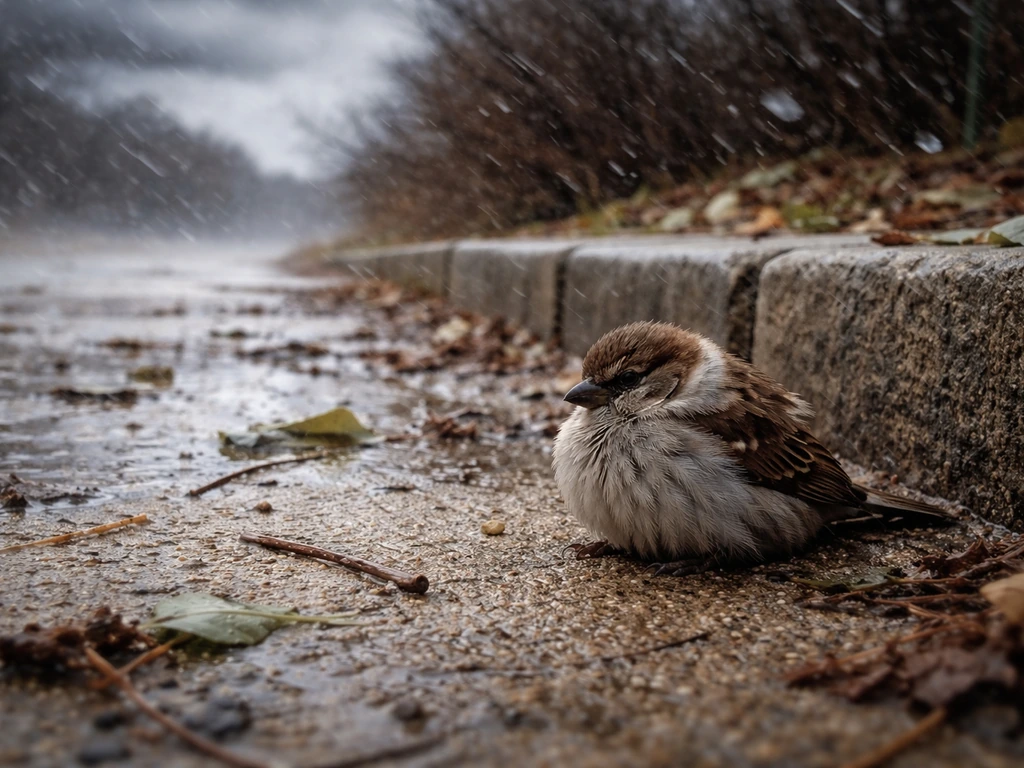
Sudden storms, strong wind shear, hail, and temperature crashes during migration can ground or knock down birds en masse. If you saw multiple birds fall or behave erratically during a storm, weather is almost certainly the reason. Single birds dropping in calm weather point more toward illness, collision, or injury.
What to do right now if you found the bird
Your first instinct might be to scoop the bird up immediately, but slowing down for 60 seconds first leads to a much better outcome for both of you.
Step one: observe before touching
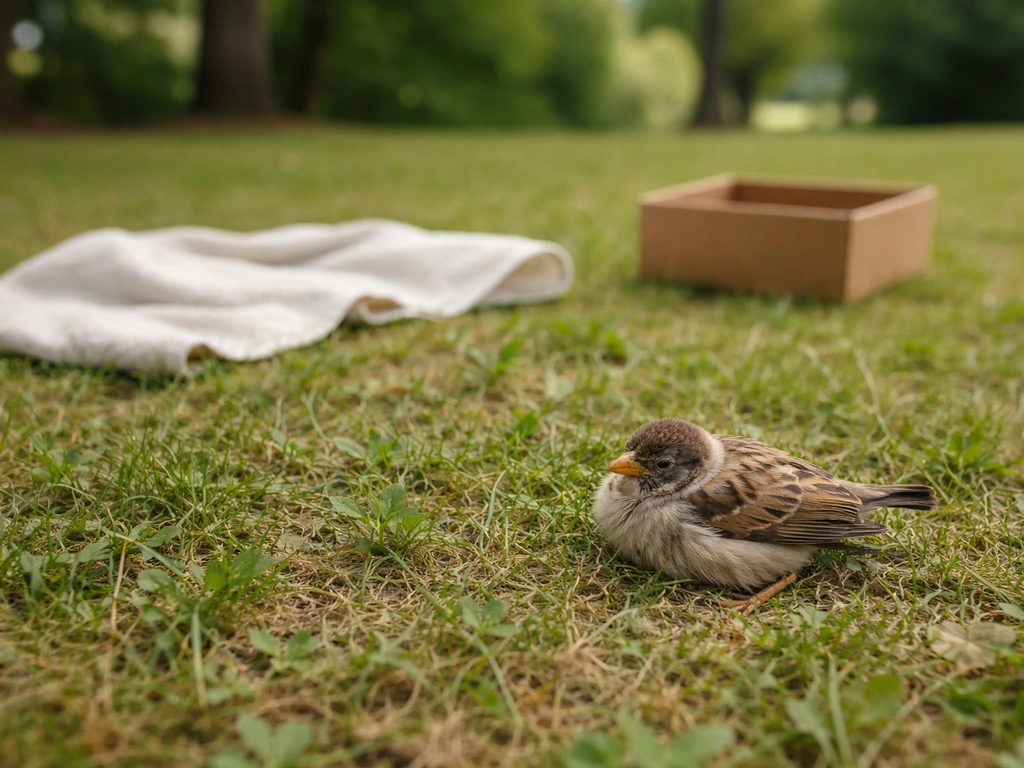
Watch from a few feet away. Is the bird breathing? Is its chest moving? Is it blinking, shifting its feet, or holding its wings in an unusual position? A bird that is alert, blinking, and gripping the ground is alive and likely stunned. A bird that is completely still with its eyes closed, feet curled upward, and no chest movement has most likely died.
Step two: handle safely if needed
- Wash your hands before and after any contact. Birds can carry salmonella, avian influenza, and parasites.
- Use gloves if you have them. A light garden glove or even a folded towel works.
- Cup the bird gently in both hands, keeping its wings against its body. Don't squeeze.
- Place it in a cardboard box lined with a small cloth or paper towels. Poke air holes in the lid.
- Put the box somewhere quiet, dark, and warm (around 85 to 90 degrees Fahrenheit for most songbirds). A warm heating pad set to low under half the box works well.
- Do not give it water or food. This is the most common mistake people make. Force-feeding or watering a stunned bird can cause aspiration and death.
- Do not keep it as a pet or inside your home longer than necessary. Most wild birds are protected under the Migratory Bird Treaty Act.
When to call wildlife rehab vs. when to wait
A stunned bird from a window strike sometimes recovers on its own within 15 to 30 minutes. Place it in the box, wait 30 minutes, and take it outside. If it flies off, great. If it doesn't, that's your signal to escalate.
| Situation | What to do |
|---|---|
| Bird is stunned but alert, no visible wounds | Box it, keep it quiet and warm, release after 30 minutes if it can fly |
| Bird has visible blood, broken wing, or cannot stand | Call a licensed wildlife rehabilitator immediately |
| Bird is unconscious but breathing | Box it, keep warm, call rehab within the hour |
| Bird shows neurological signs (circling, trembling, seizures) | Call rehab immediately, do not delay — possible poisoning or disease |
| Bird is dead | Do not handle with bare hands; report to local animal control or your state wildlife agency if multiple birds are affected |
| Multiple birds fell in the same area | Report to your state wildlife agency or USGS Wildlife Health Lab — this can indicate a disease event |
To find a licensed wildlife rehabilitator near you, the National Wildlife Rehabilitators Association (NWRA) and the Wildlife Rehabilitators Directory maintained by many state agencies are good starting points. Mass.gov says that to care for migratory birds, wildlife rehabilitators must have a Federal Migratory Bird Rehabilitation permit. Search '[your state] wildlife rehabilitator' or call your local humane society, which can usually direct you quickly.
The spiritual meaning of a bird falling from the sky
Across cultures and throughout history, birds have been seen as messengers between the earthly world and whatever lies beyond it. Their ability to fly, to navigate vast distances, and to appear seemingly from nowhere has made them natural symbols of the divine, of the soul, and of transitions. A bird that falls, then, carries a particular weight in spiritual traditions: it's the messenger interrupted, the sky-dweller brought low.
A call to pay attention
In many metaphysical and New Age frameworks, an unusual bird event, especially one that happens right in front of you or near your home, is interpreted as a sign that the universe is asking you to slow down and notice something you've been moving past. The falling bird isn't necessarily a bad omen. It's an interruption. A sudden landing in your awareness. The question in this tradition isn't 'is this bad?' but 'what have I been ignoring?'
Transition and transformation
In many Indigenous North American traditions, birds are carriers of spiritual messages, and a bird falling or becoming grounded can symbolize a period of necessary rest before renewal. The bird isn't defeated; it's in a liminal state. Some traditions interpret this as mirroring something in the observer's own life: a project, relationship, or personal ambition that needs to pause before it can rise again.
Warning or vulnerability
In Celtic tradition, birds, particularly ravens, wrens, and sparrows, were treated as omens when they behaved unexpectedly. A bird falling near a home could be read as a warning to tend to something fragile in your life. Not impending doom, but an invitation to look at what feels unsteady. Celtic folklore was practical in this way: omens were meant to prompt action, not dread.
Soul symbolism and death's messenger
In some Eastern European and Asian folk traditions, a bird falling near a home, especially a dying or dead one, was historically seen as a potential sign of illness or death in the family. This interpretation deserves honest acknowledgment here, but also context: these traditions emerged in times before germ theory, when unusual natural events were the only framework people had for understanding coming illness. Most people today who encounter a dead or fallen bird near their home are not receiving a literal death warning. If you want the folklore side more directly, you can also look up dead bird falling from sky meaning as a comparison point. To understand the dead bird omen meaning, it helps to consider both the spiritual tradition you follow and the real-world cause behind the bird’s fall. Holding this symbolism lightly, as a prompt for reflection rather than fear, is a healthier approach.
What the Bible says, and what folklore gets wrong
The most cited biblical reference when it comes to birds falling is Matthew 10:29, in which Jesus says 'Are not two sparrows sold for a penny? Yet not one of them will fall to the ground outside your Father's care.' This passage is often quoted as proof that a fallen bird carries divine significance, but its original intent is almost the opposite of an omen. It's a reassurance: even the smallest, most overlooked thing is within God's awareness. In this reading, a bird falling is not a warning or a punishment. It's a reminder of presence, care, and the sacred in the ordinary.
The folklore traditions that attach specific misfortune to a fallen bird, such as the idea that a bird hitting your window means someone will die within the week, appear to be largely Western European in origin and were passed down through oral tradition rather than religious text. They've taken on a life of their own in popular culture, but they have no consistent theological or cross-cultural backing. If the idea resonates with you spiritually, sit with it. If it just creates anxiety, there's no tradition that requires you to adopt it.
It's also worth noting that the related symbolism around dead birds varies considerably depending on the context. If you are wondering about a dead bird in a pool meaning, the context of where and how you found it can help guide a more grounded interpretation. A bird found dead in a pool, hanging from a tree, or falling from the sky each carries its own layered interpretations across different traditions, and those distinctions matter when you're trying to find meaning that fits your specific experience. If you are trying to interpret a dead bird hanging from a tree, the meaning can differ from what people assume about a bird that simply fell from the sky dead bird hanging from tree meaning.
How to find the meaning that fits your situation
Not every bird encounter carries the same message, even spiritually. The details of what you witnessed matter. Here are the questions worth sitting with.
- What species was the bird? Sparrows, hawks, doves, crows, and owls each carry distinct symbolic histories worth exploring separately.
- Was the bird alive or dead when you found it? A bird that survives and flies away carries very different energy than one that didn't make it.
- Where did it fall? Near a window suggests a collision. Near your front door has different folklore associations than near a garden or workplace.
- What time of day was it? Dawn and dusk have long been considered threshold times in many spiritual traditions, times when messages are more likely to come through.
- What were you thinking about or doing right before it happened? Many people find that an unusual encounter punctuates an important moment or decision.
- Was the weather unusual? Did multiple birds fall? Multiple birds suggest a natural event. A single bird on a clear, calm day invites more reflection.
- How did you feel in the moment? Fear, sadness, wonder, and calm each point toward different personal interpretations.
A simple way to process this experience
If this encounter felt significant to you, write about it. Not to decode it definitively, but to capture what was real. Note the species, the time, the location, the weather, what you were doing, and what you felt. Sit with the questions above. Spiritual meaning is often less a fact to be found and more a resonance to be noticed. What landed for you in this moment, quite literally, might be pointing toward something worth examining in your own life. That's less mysticism than it is honest self-reflection using an unexpected catalyst.
The bird that fell in front of you today had a physical story: a window it couldn't see, a storm that caught it off guard, a body stretched past its limits. Whether it also carried a message for you is something only you can answer. Both things can be true at once, and neither one cancels out the other.
FAQ
How can I tell if a fallen bird is stunned or already dead?
If you can, confirm whether the bird is breathing and whether its chest is moving while you wait before picking it up. A bird that is blinking and gripping is more likely stunned than dead, and those recover best if you keep it quiet and warm, then reassess after about 30 minutes rather than immediately assuming it is fatal.
What should I do during the first hour, and should I try to feed it?
In that first hour, avoid feeding or giving water, because birds can aspirate and worsen stress. Keep it in a shaded, dark container, minimize handling, and do not place it in a bathtub or outdoors in cold wind unless a rehabilitator advises, since temperature swings can be the difference between recovery and death.
Is it safe to touch a fallen bird, and what precautions should I take?
Handle the bird only if you must, use a towel or gloves, and keep pets and kids away. For safety, wash hands after touching it, and if the bird seems sick or has discharge from its beak or eyes, do not try to transport it long distances yourself, since some illnesses can spread through contact.
When should I stop waiting and call a wildlife rehabilitator right away?
Yes. If the bird is alive but cannot right itself, it likely needs professional help, and you should escalate beyond waiting 30 minutes. Also escalate if it has obvious injuries (broken wing, bleeding, inability to stand), if it fell near heavy traffic, or if multiple birds are affected at once.
What should I do if the bird is already dead?
If you find a dead bird, do not leave it where pets or children can contact it. Use gloves or a bag to move it, then bag it securely and contact local wildlife services or a rehabilitator for disposal guidance, especially if it’s near areas where people gather (schools, playgrounds, parks).
How can I prevent birds from hitting windows after an incident?
To reduce future window strikes, cover or reposition one or more surfaces that reflect sky or trees, such as closing blinds at night during migration, adding exterior screens, or applying window decals. The key is changing what the bird perceives (reflections and open-sky cues), because interior curtains alone may not solve glare.
If this happened near bright lights at night, what practical steps can I take?
Artificial lights are a major factor during migration nights, so if it happened near illuminated buildings, turn off or reduce nonessential exterior lights for a few hours, use motion-activated lighting where possible, and keep curtains closed on interior lights that create strong reflections.
What if the bird seemed “drunk” or neurologically uncoordinated?
If the bird appears intoxicated, is wobbling, has head tilting, or shows neurological symptoms like circling, treat it as illness or toxin exposure rather than a simple stun. Contact a rehabilitator sooner and avoid backyard cleanup that could disturb potential bait or contaminated debris.
Does the pattern of behavior (circling lights, then dropping) change what it likely means?
If you saw it repeatedly circle an illuminated area and then drop, that pattern fits light-disruption behavior more than predation or window strike. In that case, the most helpful next step is to adjust lighting and report the incident to a local wildlife group, since it can indicate a broader migration impact.
How do I approach the spiritual meaning without getting anxious or doom-focused?
If you feel pulled toward a specific spiritual interpretation, keep it tied to a question you can act on. For example, ask what you have been rushing past, then choose one concrete change (slower schedule, check-in with someone, or pausing a project), rather than trying to predict outcomes or adopt fear-based folklore.
Dead Bird Hanging From Tree Meaning: Safety and Spiritual Interpretations
Learn dead bird hanging from tree meaning: safety steps, sanitation, disposal, and common spiritual and biblical interpr