"Shooting a bird" means different things depending on where you encounter the phrase. In plain English, it almost always refers to hunting or killing a bird with a firearm or projectile. In symbolic and spiritual contexts, especially dreams, it carries layered meanings tied to intent, control, guilt, and the disruption of messages. If you landed here because you had a vivid dream, experienced a real-life bird encounter, or are trying to make sense of a strange feeling after an incident involving a bird, this guide will help you sort through which interpretation actually applies to you.
What Does Shooting a Bird Mean: Practical and Spiritual Read

Maya Hartwell
16 Apr 2026
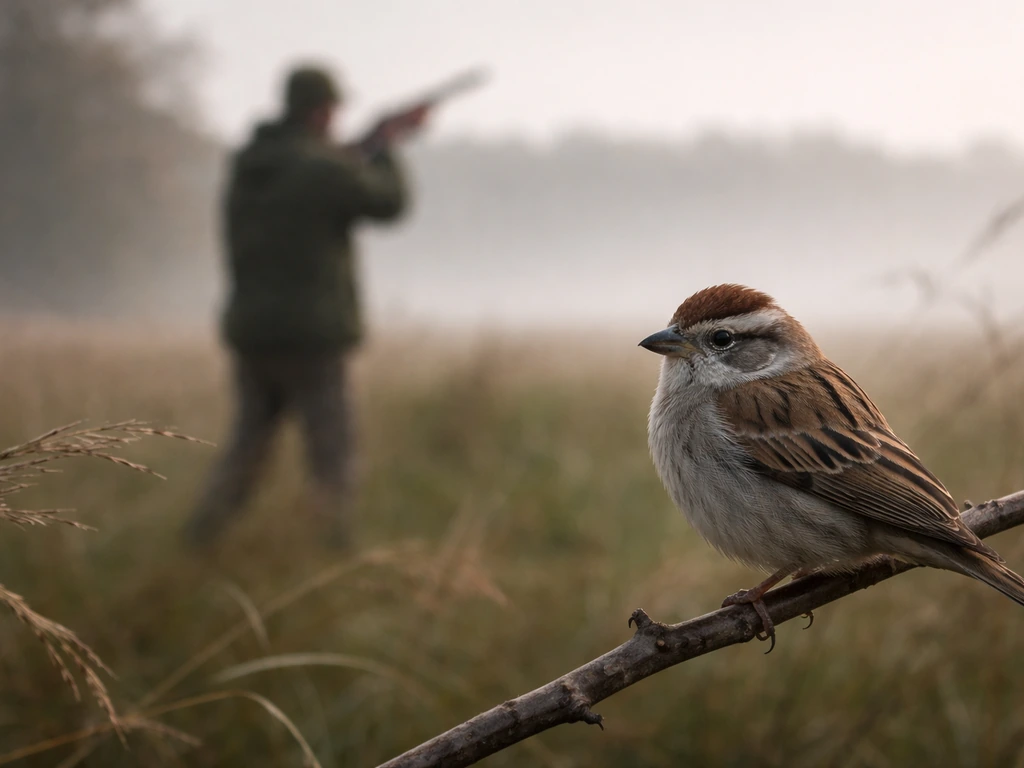
Everyday phrase vs spiritual phrase: "shooting a bird" explained

In everyday English, shooting a bird is almost entirely literal. It refers to hunting birds with a gun or bringing one down with a projectile. That's the default, dictionary-level meaning, and it's worth being clear about that upfront so we're not reading mystical significance into something that was simply a hunting reference.
There is also a figurative English idiom at play here. The phrase "shoot down" commonly means to reject or dismiss something, as in "my idea got shot down." In that sense, dreaming about shooting a bird could symbolize shooting down a message, a feeling, or an impulse rather than literally destroying something alive. It's worth holding both meanings loosely.
You may also have searched "shooting the bird meaning," which is a slightly different phrase. Online, "shoot the bird" actually has its own separate idiom entry distinct from the literal hunting meaning, suggesting it carries a conventional social meaning (extending a middle finger as a gesture of contempt). So if that's the phrase you came in with, it may not have the spiritual weight you were expecting. "Shooting a bird," on the other hand, is the version that most commonly shows up in dream dictionaries and symbolic interpretation guides, and that's where things get genuinely interesting.
Common interpretations in dreams and symbolism
Dream-interpretation sources are consistent on a few core themes when it comes to shooting a bird. The most common reading is about intent and control: you are taking deliberate aim at something that represents freedom, spirit, or a message. What that means for you depends heavily on whether you hit your target or miss.
Some dream guides describe hitting the bird as symbolizing a favorable outcome, the overcoming of an obstacle, or a sense of triumph. Missing the target, by contrast, is often read as a sign of misfortune or an unresolved problem. That binary is worth sitting with: in the dream, were you successful? How did that feel?
The emotional texture of the dream matters as much as the action. Several interpretation sources specifically highlight guilt and remorse as key signals. If you woke up feeling sick about what happened in the dream, that guilt is part of the message. Some guides link shooting a bird directly to fear, negative influence, or negligence, framing the bird as a symbol of something innocent or spiritually significant that you harmed through carelessness or aggression. Your emotional response during and after the dream is not incidental. It is often the clearest interpretive data you have.
There is also the theme of control versus interference. Birds in symbolic systems frequently represent freedom, divine messages, or the soul. Shooting one in a dream can suggest an attempt to control something that resists being controlled, or a part of yourself that is trying to silence an intuitive signal. If the bird in your dream felt like it was carrying something (a message, a warning, a memory), shooting it down might reflect an internal resistance to receiving that information.
Cultural and biblical angles on killing birds

Birds have carried spiritual weight in nearly every major tradition, and killing one is rarely treated as morally neutral. In the Old Testament, birds appear in specific ritual and sacrificial contexts. Leviticus, for example, describes birds being brought as offerings in purification rites, placing them within a sacred framework rather than treating them as ordinary creatures. USCCB notes that in Leviticus 5, when someone cannot afford an animal from the flock, the purification and burnt offerings can include “two turtledoves or two pigeons.” Leviticus 5 provides an offering option including two turtledoves or two pigeons. The implication is that birds occupy a position close to the divine in these traditions.
Jewish religious law goes further. It includes explicit restrictions around how birds may be treated, including prohibitions involving mother birds and their nests. The underlying principle is that even permitted acts involving birds must be carried out with awareness and reverence. Killing birds carelessly, or with cruelty, is not considered acceptable even when killing is otherwise permitted. This cultural framework shapes how many people instinctively react to harming a bird, even in a dream.
Beyond biblical tradition, the reading of birds as omens is ancient and widespread. Ornithomancy, the practice of divining meaning from birds' behavior, flight, and appearance, is documented across Greek, Roman, and many other ancient cultures. Interestingly, biblical scholarship has also explored arguments connecting certain bird-omen practices to prohibitions on divination, suggesting that the spiritual power attributed to birds was taken seriously enough to require specific religious rules about it.
Folklore across cultures doubles down on this. In Welsh tradition, for instance, certain birds are associated with portending death. Sri Lankan folklore includes the "Devil Bird," whose cry is considered an omen of disaster. In these traditions, a bird is not just an animal. It is a carrier of information from a realm beyond ordinary perception. Shooting one, even in a dream, could therefore be understood as an act that disrupts or destroys that communication. If you come from a cultural background that holds any of these beliefs, that context is a meaningful filter for your interpretation.
Metaphysical and energy-based meanings
In metaphysical and energy-based frameworks, birds are commonly understood as messengers, carrying information between the physical and spiritual worlds. Shooting one introduces a specific kind of disruption: you are not just witnessing the bird, you are actively intervening in whatever message it carried. That's a different energetic position than, say, what it means when you hit a bird by accident, where the harm was unintentional.
From a metaphysical standpoint, the intentionality is everything. An accidental collision with a bird carries its own symbolism (and you can explore that in depth if that's closer to your experience), but deliberately shooting at one suggests that something in you is actively working against receiving a message. This could be interpreted as self-protection, denial, or even a kind of spiritual defense if the message felt threatening. The question isn't just "what does the bird mean" but "why did I shoot it, and what was I trying to stop?"
Some metaphysical perspectives frame this as a warning scenario: the bird was trying to deliver a signal, and the act of shooting it represents the dreamer (or the person processing a real event) blocking that signal. Others read it as an interference with natural energy flow. If you believe in spiritual communication through animals, then disrupting a bird mid-message carries energetic consequences that deserve reflection, not necessarily punishment, but acknowledgment and a willingness to reopen the channel.
There is also a protective reading available here. In some belief systems, shooting a bird could represent cutting off a negative influence or defending your spiritual space against something that arrived in bird form. Context, especially the type of bird and the emotional tone of the event, determines whether this was a defensive act or an obstructive one.
How to figure out what it means for you
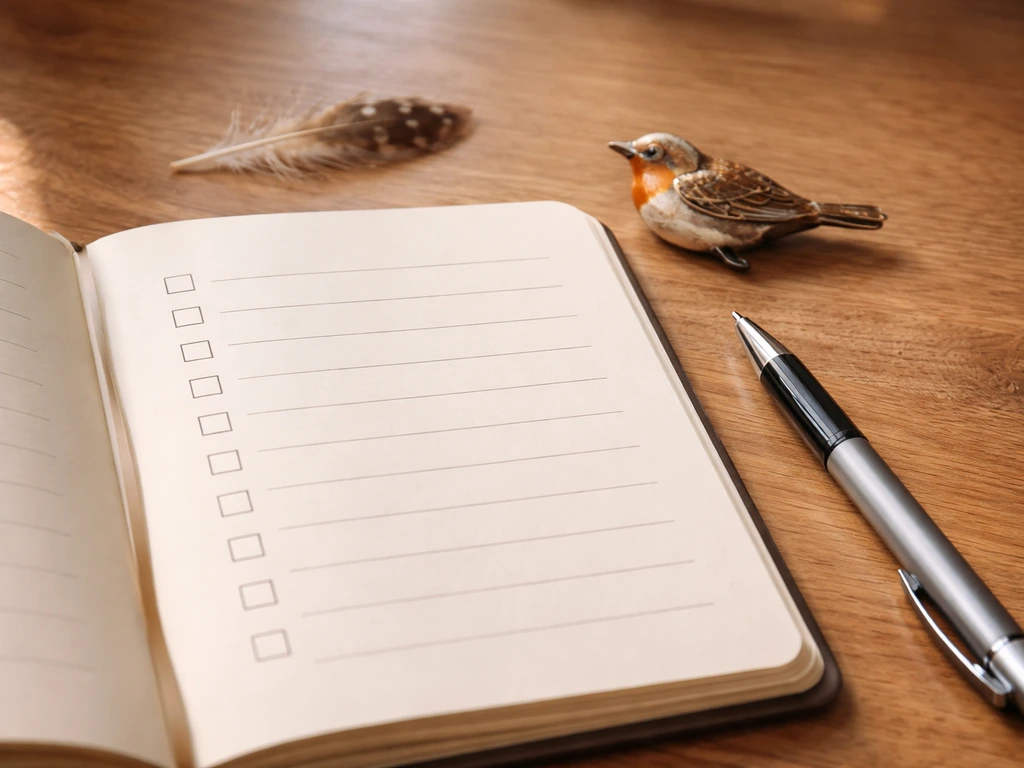
The most useful thing you can do right now is sit with a handful of specific questions. These questions work whether this came up in a dream, a real-world event, or a persistent thought pattern you're trying to decode.
- Was this in a dream or did it happen in waking life? Dreams are symbolic territory by nature. Real-world events, like accidentally striking a bird with your car, carry their own meaning. If you're exploring what hitting a bird means after an actual encounter, that's a slightly different interpretive path than processing a dream image.
- What emotions were present during and immediately after? Guilt, triumph, fear, sadness, relief, numbness, these all point in different directions. Guilt and remorse are among the most spiritually significant responses and are worth taking seriously as part of the message.
- What type of bird was it? A dove carries different symbolic weight than a crow, a hawk, or a small songbird. Species matter in virtually every cultural and spiritual tradition. If you remember the species, look into its specific symbolism.
- Was the bird doing anything before you shot it? Was it flying toward you, sitting still, singing, or delivering something? The bird's behavior before the act matters as much as the act itself.
- Are there other bird signs showing up nearby? If you've recently had a dead bird appear near your home, or a bird flew inside your space, those events may form a pattern. Killing a bird by accident and then dreaming about shooting one, for example, could indicate an escalating symbolic theme worth paying attention to.
- Did you hit the target or miss? As noted in dream symbolism, hitting versus missing often determines whether the reading leans toward resolution or unfinished business.
If this happened in real life and involves an actual bird you struck while driving, questions about intent still apply symbolically. Some people wonder what it means when you run over a bird, and a lot of the same emotional and contextual questions apply there too. The common thread across all these events is this: the bird's death, however it happened, puts you in relationship with something that was alive and free a moment before. What you do with that relationship is where the meaning lives.
It's also worth asking honestly whether this event felt like a bad omen to you before you even started searching. Many people have an instinctive reaction to harming a bird, and that gut response is worth honoring. If you've been wondering whether it's a bad omen to hit a bird, your own emotional certainty on that question is meaningful data.
What to do next: reflection, grounding, and when to get support
Practical reflection steps
If this came up in a dream or a spiritually charged real-life event, the most grounded next step is to write it down with as much detail as you can remember: the bird species, the emotions, the outcome, the setting, and anything that happened in the days before. Patterns often emerge when you see the material laid out in front of you. From there, sit with the question: what message might I be resisting right now? What feels like it's trying to get through that I've been pushing away?
If you feel a pull toward spiritual acknowledgment, many traditions offer simple acts of respect following harm to a bird, intentional or accidental. Lighting a candle, spending time in nature, or offering a brief moment of stillness can function as a way of honoring the symbolic weight of the event without committing to any particular doctrine.
When the dream or thought becomes distressing
It's important to distinguish between spiritually meaningful dreams and distressing nightmares that are affecting your sleep or daily functioning. If you're having recurring nightmares about shooting or harming a bird and waking up anxious, exhausted, or distressed, that's a signal worth taking seriously on a practical level. Nightmare disorder, when nightmares are frequent and impair your ability to function, is a recognized condition with effective treatments. Imagery Rehearsal Therapy (IRT), a technique where you consciously rewrite the dream's ending while awake, is a clinically validated method that has helped many people break the cycle.
If the dream is accompanied by persistent intrusive thoughts about harming birds or other living things, it's worth knowing that intrusive thoughts are extremely common and do not define your character or predict your actions. There is a psychological concept called thought-action fusion where people mistakenly believe that thinking something makes it more likely to happen or reflects their true desires. It doesn't. If this kind of guilt-driven thought loop feels overwhelming, speaking with a therapist, particularly one familiar with OCD or anxiety, can be genuinely helpful.
If the imagery is connected to a traumatic experience involving an actual bird or a broader traumatic event, recurring nightmares may be part of a PTSD symptom pattern. NHS and other reputable health resources describe recurring distressing dreams as a recognized feature of trauma responses, and there are effective therapeutic pathways for this. You do not need to keep sitting alone with it.
The spiritual and the practical are not in conflict here. You can honor the symbolic meaning of a bird encounter and also recognize when your nervous system needs real support. Seeking help is not an act of dismissing the spiritual dimension. It's an act of taking your whole experience seriously.
A few reflection prompts to close with
- What was the bird in this experience trying to carry, and what part of you wanted to stop it?
- Is there a message, a feeling, or a change in your life that you've been avoiding or shutting down?
- If the bird represented freedom, what kind of freedom feels threatening or unwelcome to you right now?
- What would it look like to reopen the channel, to let the message land instead of shooting it down?
There are no universally correct answers here. The meaning of shooting a bird, in any context, depends on your own emotional landscape, your cultural background, and what's happening in your life right now. What matters most is that you're asking the question at all. That curiosity is usually the beginning of whatever the symbol was trying to point you toward.
FAQ
Is “shooting a bird” in a dream always a bad sign?
Not necessarily. Many interpretations focus on intent and emotion, so a dream can be read as “overcoming an obstacle” if you felt relief or empowerment after the event. A consistent pattern of dread, however, leans more toward guilt, suppression, or fear of missing an important message.
What if I shot the bird by accident in a dream, not intentionally?
Accidental harm usually shifts the reading from “actively silencing” to “uncontrolled consequences” or anxiety about causing damage unintentionally. It can also point to feeling powerless in a situation, because the psyche is showing harm without clear agency.
Does the bird species in the dream change the meaning?
It can. Since birds often symbolize freedom and messages, the species can influence what “message” you associate with that freedom. For example, a bird that feels familiar or sacred to you personally may map onto a specific concern, while an unfamiliar bird may reflect a more general intuition or unknown information.
What does it mean if I missed or the bird escaped?
Missing is often read as a warning that an issue is still unresolved, or that your attempt to control a situation is not working. If the bird escaping felt frightening, it may symbolize something you cannot stop from “coming through.” If it felt like you dodged trouble, it may indicate restraint or readiness to listen.
Why do I feel guilty even though it was only a dream?
Guilt in the waking emotional tone is common because the dream gives your mind a symbolic rehearsal of harm and consequence. If guilt persists, try asking what real-world boundary or choice you are uneasy about, because the dream may be reflecting moral tension, not literal desire.
Can “shooting down” an idea explain a bird dream too?
Yes. If the dream lacked a hunting or weapon context and instead felt like you were dismissing or stopping “a message,” the “shoot down” idiom can fit alongside the bird symbolism. A practical check is whether you woke up thinking about rejecting an opinion, plan, or intuition.
What if the phrase I saw online was “shoot the bird” instead of “shooting a bird”?
Those are different. “Shoot the bird” can refer to a specific social gesture in some usage, which makes it more about contempt or hostility than spiritual disruption. If your search results centered on the gesture, interpret it as cultural language first, not dream symbolism.
How should I interpret it if the event happened in real life (like hitting a bird)?
In real life, many people benefit from focusing on aftermath actions and feelings rather than supernatural certainty. Ask how it affected you emotionally, whether you feel responsible, and what practical steps you can take now (for example, being more cautious, cleaning safely, or reporting wildlife incidents if relevant).
What should I do if I’m worried I’m “supposed” to fix something spiritually after this dream?
You can acknowledge the symbolism without turning it into an obligation. A useful middle step is a brief respect ritual (quiet reflection, candle, or time outdoors) combined with a practical journal prompt like “What message am I resisting?” If it starts causing compulsion or fear, consider grounding or professional support.
Could this be related to anxiety, OCD, or intrusive thoughts rather than a spiritual warning?
Yes. Intrusive thoughts about harming animals are very common and do not predict intent or character. If the dream triggers a loop of moral panic or repeated checking, it may be more consistent with anxiety or OCD patterns (including thought-action fusion), which is treatable with targeted therapy.
When should I treat it as a health concern instead of a meaning problem?
If nightmares about harming a bird are recurring and you are waking exhausted, anxious, avoiding sleep, or it is affecting work or relationships, it may be worth seeking help. Imagery Rehearsal Therapy (where you rewrite the dream outcome while awake) and trauma-focused therapy approaches can be effective, especially if a traumatic event is involved.
How can I figure out which interpretation fits me quickly?
Use three questions: What was my emotion during and after (guilt, fear, relief, power)? Did I have clear intent (deliberate action vs accident)? What real-life situation feels “message-like” right now (a decision, conflict, warning, or intuition you are resisting). Your answers usually narrow the meaning faster than researching symbolism alone.
Next Articles
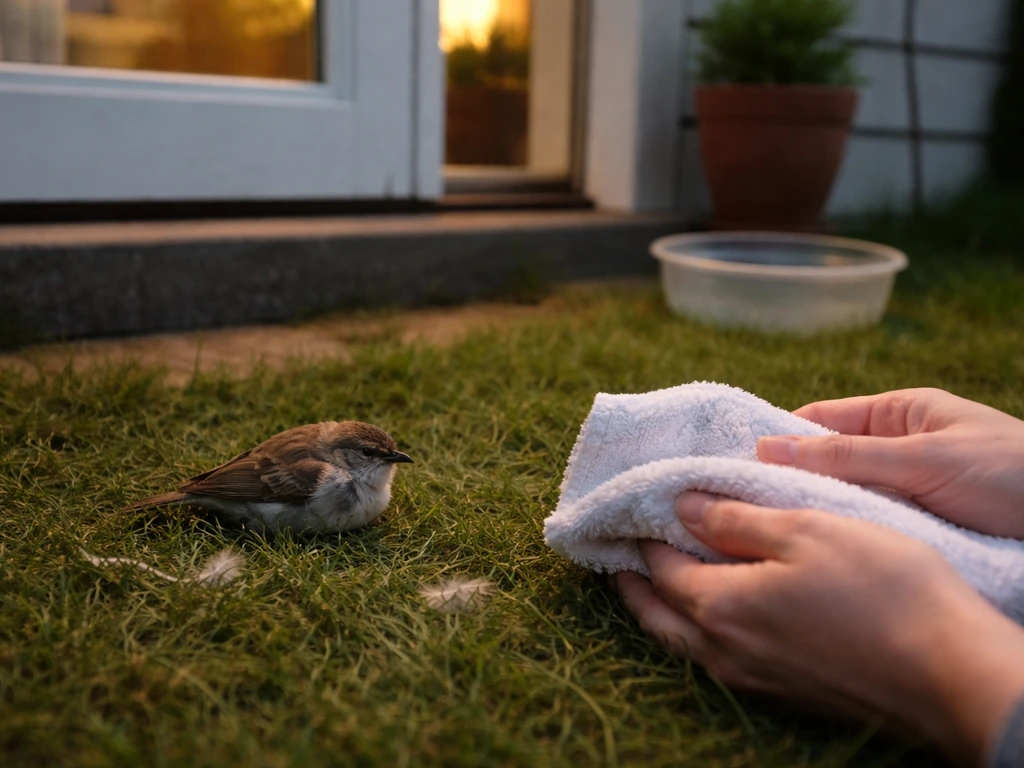
Killing a Bird by Accident Meaning: What to Do Now and Why It Feels Significant
Learn the meaning of killing a bird by accident and get steps for what to do now, plus spiritual interpretations.
Hitting a Bird Meaning: Literal and Spiritual Interpretations
Learn the meaning of hitting a bird and near misses, with practical steps and spiritual interpretations across beliefs.

What Does It Mean When You Hit a Bird Right Now
What hitting a bird means now: safety steps, injury checks, driver guidance, then spiritual and symbolic interpretations