When you hit a bird, it means something happened that deserves your immediate attention on two levels: the practical one (your safety, the bird's welfare, and what to actually do right now) and the symbolic one (what many traditions say this kind of encounter signals). The short answer is that no single universal meaning exists, but there are well-established interpretations across spiritual, biblical, and folklore traditions that can offer real perspective, once you've handled the physical situation first.
What Does It Mean When You Hit a Bird Right Now

Maya Hartwell
7 Apr 2026
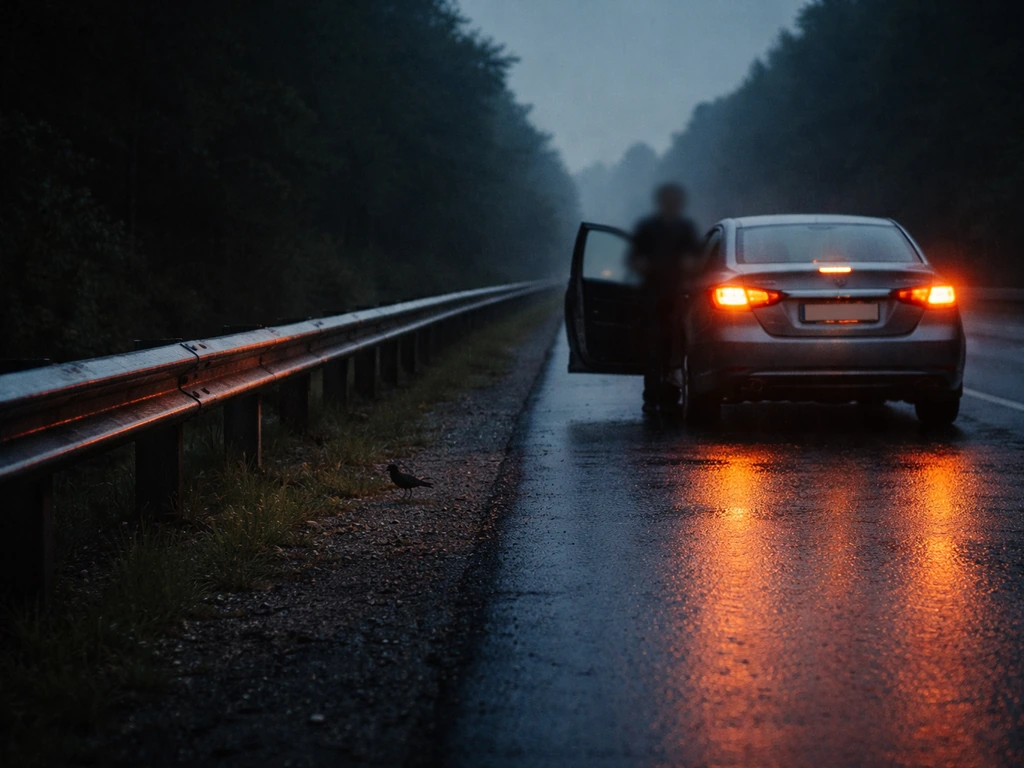
Right now: what to do immediately after hitting a bird
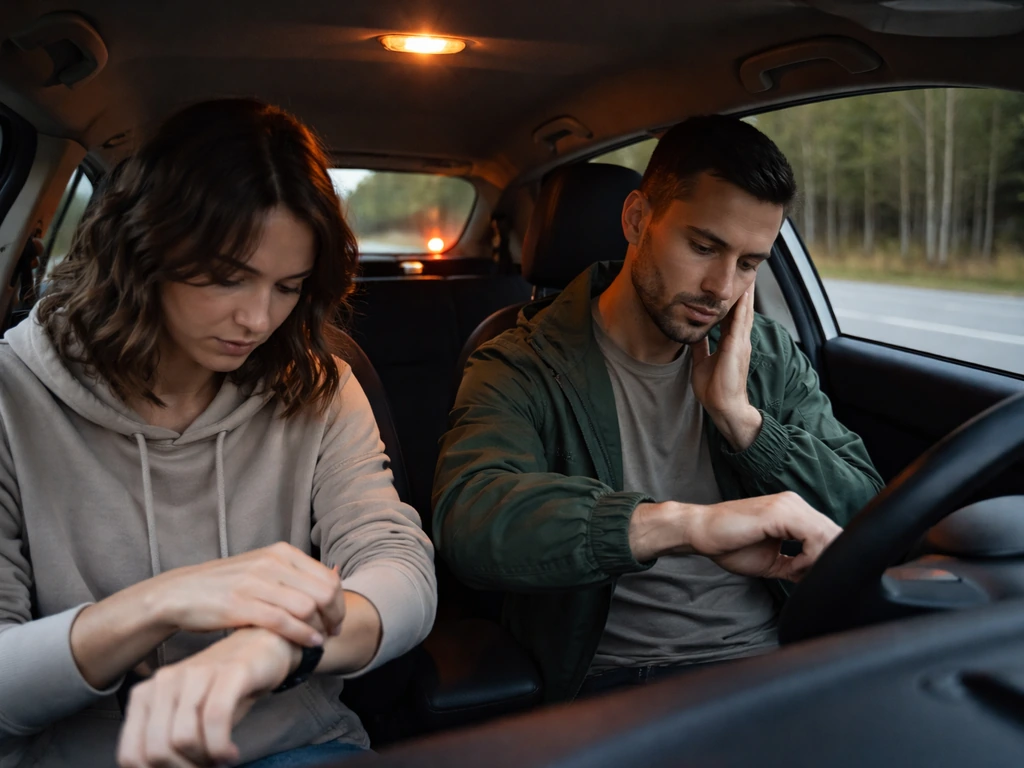
Before you go looking for spiritual meaning, you need to handle the scene safely. That's true whether you hit a bird with your car at 60 mph, walked into one that flew at your face, or a bird struck your window and ended up on the ground. The order of operations matters.
First, check yourself and any passengers. If you're in a vehicle, pull off the roadway as far as possible and activate your hazard lights immediately. This isn't optional. Roadway incidents are genuinely dangerous because other drivers don't always see a stopped vehicle in time, especially at highway speeds. Once your hazard lights are on and you're clear of moving traffic, assess whether anyone in the vehicle has been injured. A bird strike at high speed can crack windshields or cause sudden panic braking, which can lead to secondary accidents. If there are injuries, call emergency services before anything else.
If a bird physically struck you (scratched, grazed, or made direct contact with your skin), wash the affected area immediately with soap and water. Standard first-aid guidance for animal contact wounds emphasizes thorough wound cleaning and watching for infection signs. If there's a visible scratch or puncture, contacting a healthcare provider is a sensible precaution, particularly for tetanus considerations.
If it happened while driving: specific steps for a vehicle bird strike
A bird strike while driving is more common than most people realize, especially during migration seasons when birds are moving in high numbers across roads, fields, and open highways. Here's what to do step by step.
- Pull well off the roadway as soon as it's safe to do so, and turn on your hazard lights.
- Check your vehicle for damage: a large bird hit at speed can crack a windshield, damage headlights, or lodge debris under the hood or in a grille.
- If the windshield is cracked or your visibility is compromised, do not continue driving until it's assessed. Even a small crack can spiderweb under temperature changes.
- Look back (safely, from the shoulder) to check if the bird is on the road. A large carcass in an active lane can be a hazard for other drivers.
- Document the incident: note the time, location, the type of bird if you can identify it, and take a photo of any vehicle damage for insurance purposes.
- Contact your insurance provider if there is vehicle damage. Bird strikes are generally covered under comprehensive auto coverage in most U.S. policies.
If you're on a bicycle and a bird strikes you or you swerve and hit one, your main concerns are staying on the bike safely (or recovering after a fall), checking for road rash or cuts, and cleaning any wounds quickly.
Checking on the bird: injury, death, and handling it responsibly
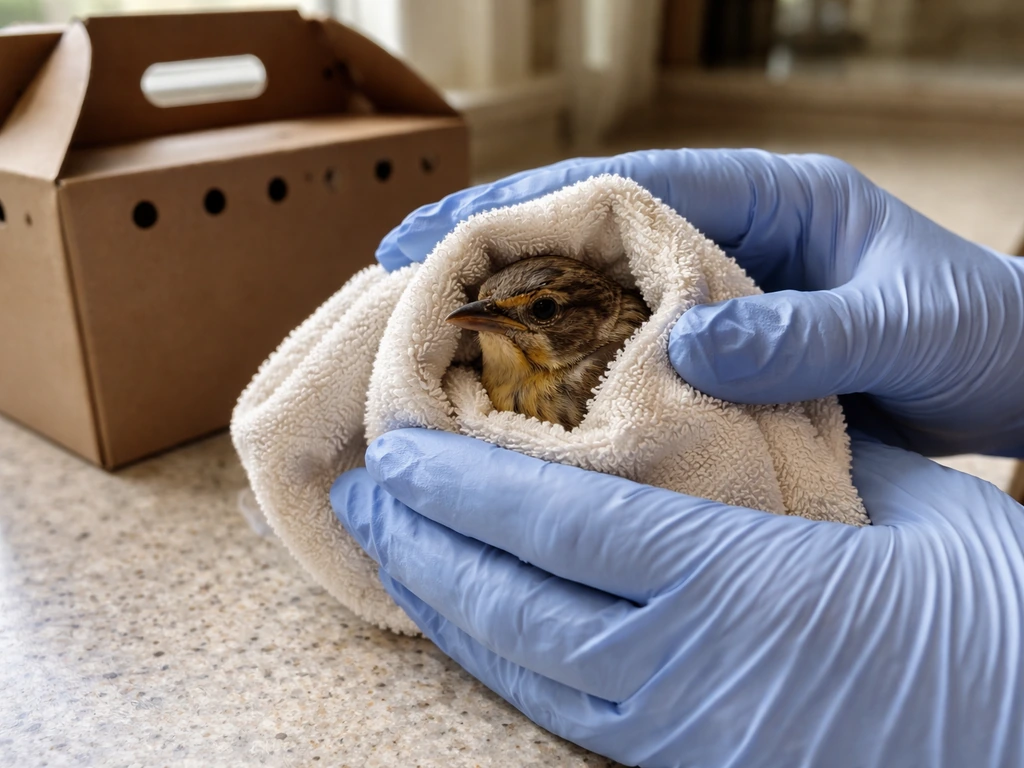
If the bird is injured but alive, the Audubon Society's guidance is clear: treat it as seriously injured even if it looks okay. A bird that survived a strike may have internal injuries that aren't visible, and a layperson's assessment isn't reliable enough to determine whether it's fine. The right move is to contact a licensed wildlife rehabilitator. You can find one in your area through the National Wildlife Rehabilitators Association or your state wildlife agency.
The American Bird Conservancy also points out that even birds that appear able to fly may have injuries that are ultimately fatal. If the bird is stunned and sitting on the ground, you can gently place it in a ventilated box (with air holes) in a quiet, dark, warm space while you arrange for professional help. Do not try to feed it water or food.
If the bird is dead, use disposable gloves to handle or move it. The Oregon Department of Fish and Wildlife and USDA APHIS both specifically advise using disposable gloves when handling dead wild birds, and double-bagging the carcass if you need to dispose of it. Avoid touching your eyes or mouth during or after handling, and wash your hands thoroughly with soap and water when done. If you had direct skin contact with a dead bird, Colorado Parks and Wildlife recommends contacting your local public health department, especially in areas with known bird disease concerns like avian influenza.
You hit the bird vs. the bird hit you: why the direction matters
This distinction comes up in almost every spiritual and folkloric tradition that addresses bird encounters, and it's worth taking seriously because it genuinely changes the interpretive frame. The deeper symbolic meaning of hitting a bird varies depending on whether your action caused the collision or whether the bird flew into you, your car, or your space without you initiating it.
When you hit a bird (meaning your motion, your vehicle, or your action caused the strike), many traditions interpret this as you being an instrument of disruption in a natural cycle. It doesn't automatically mean something terrible. But it does often carry themes of unintended consequence, a call to pay closer attention to your path, or a nudge to slow down and notice what's around you. Some interpretive frameworks link this to a moment where your forward momentum is at odds with something in your environment.
When a bird hits you (the bird flew into you, struck your windshield uninvited, or descended on your space), the interpretive weight shifts entirely. In this framing, the bird brought the message. You were the recipient. Many traditions treat this as more directly significant, reading it as a clear sign or communication from another realm, a spirit, or a natural warning system. The bird wasn't passive; it acted. That's seen as intentional, symbolically speaking.
What spiritual traditions say about hitting a bird
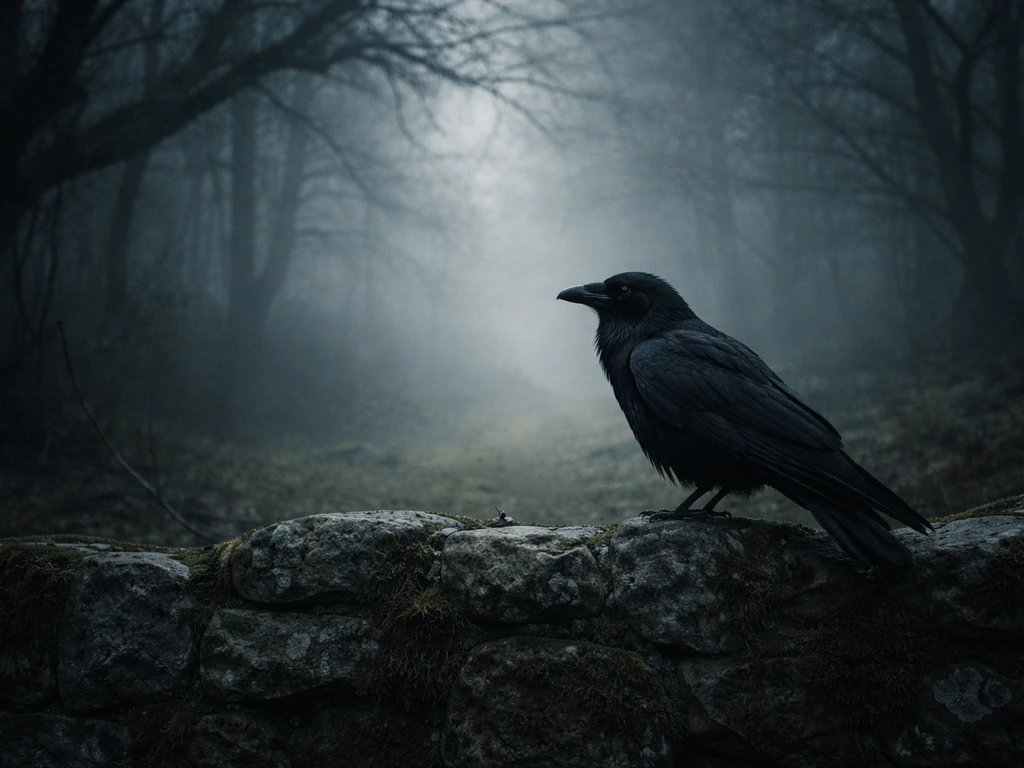
Across cultures, birds occupy a unique symbolic position. They move between earth and sky, which makes them natural messengers between the human world and something larger. When a collision happens, that messenger role is interrupted or forcefully delivered, and different traditions read that interruption differently.
Celtic and European folklore
In Celtic tradition, birds are soul carriers, often seen as vessels for the souls of the dead or as guides to the otherworld. Accidentally harming a bird in this tradition could signal that a soul's passage has been disrupted, or that you're being reminded of your connection to something beyond your daily life. Certain birds, like robins and wrens, carried particularly strong protective symbolism, and hitting one was historically treated as significant enough to require a ritual acknowledgment or apology.
Biblical and Christian symbolism
Birds appear throughout the Bible as messengers, symbols of God's care, and signs of spiritual presence. The dove carries peace and divine affirmation; sparrows are referenced as known individually by God (Matthew 10:29). In this lens, accidentally killing a bird may prompt reflection on carelessness, humility, or gratitude for life. It's less about punishment and more about awareness: are you paying attention to the small, sacred things?
Indigenous and shamanic perspectives
Many Indigenous North American traditions view birds as direct messengers from spirit guides or ancestors. In this context, a collision with a bird is treated as a forceful message that demands reflection. The specific bird species matters greatly here. A hawk carries different meaning than a crow or a hummingbird. The general principle across many of these traditions is that the encounter is not accidental; the bird arrived at the right moment to deliver something you needed to receive.
Eastern and metaphysical traditions
In Chinese and Japanese folk traditions, birds are often associated with the souls of ancestors and with luck (both good and bad, depending on the species and context). A sudden, unexpected bird encounter, especially one involving physical contact or death, can be read as a disruption of the energy flow around you. Some metaphysical practitioners interpret it as a sign that you're in a period of transition, and that something old must make way for something new. The collision is the universe's version of a tap on the shoulder.
Folklore, omens, and the metaphysics of the moment
Whether hitting a bird is considered a bad omen depends heavily on context: the species, the direction it was flying, whether it survived, and even the time of day. In older European superstition, a bird flying toward you (rather than away) was generally seen as a positive omen, while a bird that died during the encounter was sometimes read as an ill sign. But these readings were never unanimous and varied by region and species.
Some traditions draw a meaningful distinction based on the action involved. There's a notable difference, symbolically, between what it means to intentionally shoot a bird versus hitting one by accident. The element of intention factors heavily into most symbolic frameworks: an accident is treated as a message or an omen, while an intentional act carries themes of agency, power, and consequence.
In metaphysical thinking, there's also a concept sometimes called the "interruption sign": when something in nature (especially a bird, which normally avoids humans) crashes into your world, it's read as a moment where the veil between spiritual reality and physical reality is thin. The bird, in dying or being injured, has "used up" its symbolic charge to reach you. What you do next, how you respond, what you reflect on, becomes part of the meaning.
There's a related dimension worth noting for those who encountered a bird while in a vehicle: running over a bird while driving carries its own distinct folkloric weight, often interpreted as a sign related to the journey itself rather than just the individual. Are you headed in the right direction? Is this path the one you truly want to be on?
Comparing spiritual interpretations by scenario
| Scenario | Common Spiritual Theme | Folkloric Tone | Metaphysical Reading |
|---|---|---|---|
| You hit a bird while driving | Disruption of your forward path; call to slow down | Neutral to cautionary; depends on species | Transitional energy; a message about your journey |
| A bird flew into you / hit you | You are the recipient of a message; the bird acted intentionally | Often seen as a sign or omen sent to you | Spiritual tap; something is trying to get your attention |
| The bird died in the collision | A soul has passed; reflection on life's fragility | More traditionally treated as an omen, often cautionary | A sacrifice of symbolic charge; heightened significance |
| The bird survived and flew away | Resilience; disruption resolved | Generally a positive or neutral sign | Message delivered; energy released and cleared |
| Bird struck a window and fell near you | Boundary between worlds temporarily breached | Omen of news or change coming | A spirit or guide trying to cross through |
When there's no spiritual meaning: natural explanations and red flags
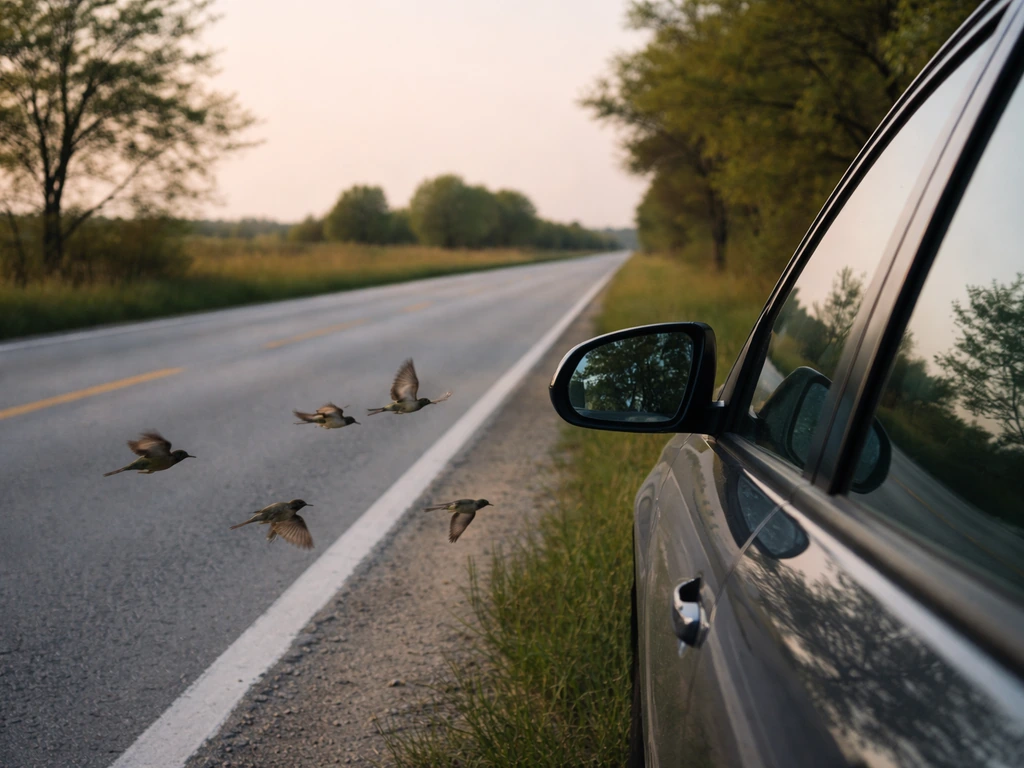
It's important to be honest here. Birds hit cars, windows, cyclists, and people for straightforward biological reasons. During migration periods (spring and fall in North America), billions of birds are moving at low altitudes, often disoriented by artificial light, heat haze off roads, or reflective glass surfaces. A bird hitting your windshield in October on a major migration corridor isn't necessarily a cosmic message. It may just be a migrating warbler that misjudged a thermal.
Birds also have limited forward visual field awareness at speed. A hawk diving on prey can miscalculate trajectory relative to a moving vehicle. Starlings and other flock birds sometimes scatter into traffic as a group panic response. None of this is mystical. It's biology and physics.
That said, here are the practical red flags that deserve immediate attention regardless of spiritual interpretation:
- Windshield cracks or vehicle damage that affects visibility or safety: do not drive on without assessment.
- Any direct skin contact with a sick or dead bird: wash hands thoroughly, use gloves, and contact public health if you're in an area with active avian disease alerts.
- A scratch, bite, or graze wound from a bird: clean with soap and water immediately and consider a healthcare consultation for tetanus and infection risk.
- Emotional shock or delayed reaction after a startling strike: give yourself a moment. Pull over safely, breathe, and don't rush back into traffic while shaken.
- Repeated bird encounters or large numbers of dead birds in one area: this can be a sign of disease or environmental hazard and should be reported to your state wildlife agency.
There's real wisdom in holding both perspectives at once: taking care of the physical realities completely and thoroughly, and then allowing yourself the space to reflect on what the encounter might mean to you personally. These two approaches don't cancel each other out.
What this experience might mean for you, specifically
The most honest thing to say is this: the meaning of hitting a bird is partly universal (the broad symbolic frameworks above offer a genuine starting point) and partly deeply personal. What were you thinking about right before it happened? Were you distracted, rushing, or at a crossroads in your life? Were you on a significant journey, literally or metaphorically? Those contextual details are the ones that most spiritual traditions actually ask you to examine, because the encounter's meaning is shaped by the moment it arrived in.
If you're drawn to the spiritual dimension of what happened, sit with it for a while before reaching for a definitive answer. Notice if anything shifts in you over the next day or two. Many people who research bird symbolism after an unexpected encounter report that the meaning becomes clearer in hindsight, once they stop trying to force it into a single interpretation and simply let the question stay open.
Whatever you take from this experience, start from a place of care: care for your safety, care for the bird, and care for the reflection you're being invited into. That's a response that holds up across every tradition explored here.
FAQ
What should I do if I hit a bird and I am worried about disease risk?
If the bird was dead or injured, limit what you touch and use gloves if you have them, because the main practical concern is exposure to bird-borne pathogens. Afterward, wash hands with soap and water and avoid touching your eyes, mouth, or food until you have cleaned up.
What does it mean if the bird hit my windshield but got away?
When a bird hits your windshield but flies away, treat it as you would a near-miss for safety (check for anything that could have cracked the glass, drove your wipers off balance, or caused you to brake hard). Symbolically, many traditions still interpret it as a message encounter because the bird initiated the disruption, but the practical next step is confirming your vehicle is safe to continue.
Do I need to clean my car differently after a bird strike?
Clean and inspect immediately if the bird struck your hood, windshield, or side mirror. Bird residue can be acidic and can damage paint or glass if left to dry, so wipe it off as soon as possible using a gentle vehicle-safe cleaner, then check for cracks or chips.
What if I hit a bird while walking instead of driving?
If you accidentally bumped a bird while walking, the “order of operations” still applies: make sure you are not injured and that you are not in traffic. Then, if the bird is alive but on the ground, contact a local wildlife rehabilitator rather than assuming it will recover, especially if it is unable to hop away.
I’m on a bike, what should I prioritize first, me or the bird?
If you are on a bicycle and you swerve, prioritize stabilizing and assessing injuries first, then check for road rash and bleeding, and only then decide about the bird. In most areas, calling a wildlife rehabilitator or animal control is better than trying to transport a bird yourself unless you can do so safely in a ventilated container.
Does an indoor window bird strike count differently from a car strike?
If you are at home and a bird hits an indoor window, it can look “small” but still cause concussion or internal injury. Keep pets away, reduce light around the bird, and seek wildlife help if it is stunned or repeatedly disoriented, even if it seems to recover quickly.
What if it happens at night, does that change anything?
Timing matters for interpretation, but practically, it matters for your response: after dark, disorientation from artificial light is more likely. Reduce further harm by dimming exterior lights, closing blinds near the impact area, and calling for help if the bird is grounded or bleeding.
How does the meaning change if the strike feels intentional or careless rather than truly accidental?
Yes, the symbolism frameworks generally shift with intention. If you had reason to believe the bird could have been harmed purposefully (for example, you struck it intentionally or you were targeting birds), most traditions read this as agency and consequence rather than a message or interruption, and the ethical next step is making amends and changing behavior going forward.
Should I identify the bird species first to know what to do?
Species can influence the lore, but for real-world decisions, the safest rule is function over symbolism: if the bird is unable to fly normally, has visible bleeding, or shows abnormal behavior, treat it as injured and get professional wildlife support.
What if it keeps happening in the same place, how should I respond?
If you keep seeing birds hit the same stretch of road or property, that points to an environmental cause rather than a single message. Practical next steps include reporting the hazard to local authorities and reducing attractants (lighting, reflective surfaces, and bird feeders near roads), which also helps you move from interpretation to prevention.
Next Articles
Why Is My Bird Flapping Its Wings at Me? Causes and What to Do
Understand why your bird flaps wings at you and what to do, from hormones and stress to attention and warnings.
Makes My Bird Twitch Meaning: Causes, Fixes, and Red Flags
Understand why your bird twitches, what to check now, red flags, first-aid steps, and symbolic meaning safely.
Why Does My Bird Chirp When I Leave the Room? Causes and Fixes
Understand why your bird chirps when you leave and follow a step-by-step plan to reduce stress, plus optional spiritual