Your bird follows you everywhere because you are, quite simply, its flock. Birds are deeply social creatures wired to stay close to their group, and when you're the most important relationship in their world, you become the flock. Most of the time this is healthy, normal bonding behavior. But it can also tip into something worth addressing: stress, boredom, over-dependency, or even territorial behavior. Knowing which one you're dealing with changes everything about how you respond.
Why Does My Bird Follow Me Everywhere? Reasons and Next Steps
Maya Hartwell
24 May 2026
What 'following' actually looks like (and when it's normal)
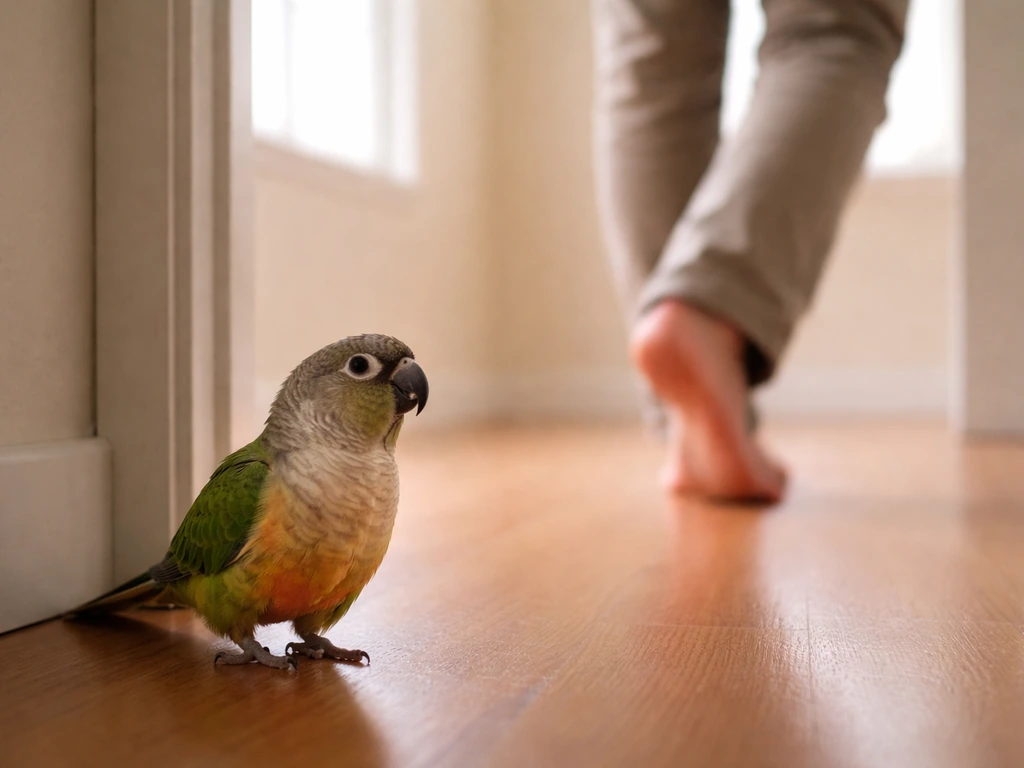
Before you diagnose anything, it helps to get specific about what your bird is actually doing. 'Following' shows up in a few different ways, and not all of them mean the same thing.
- Walking or climbing after you whenever you move through a room
- Flying to wherever you land, even when you've given no invitation
- Calling loudly (contact calls) the moment you leave their sight
- Waiting at the cage door or climbing to the highest point to watch you
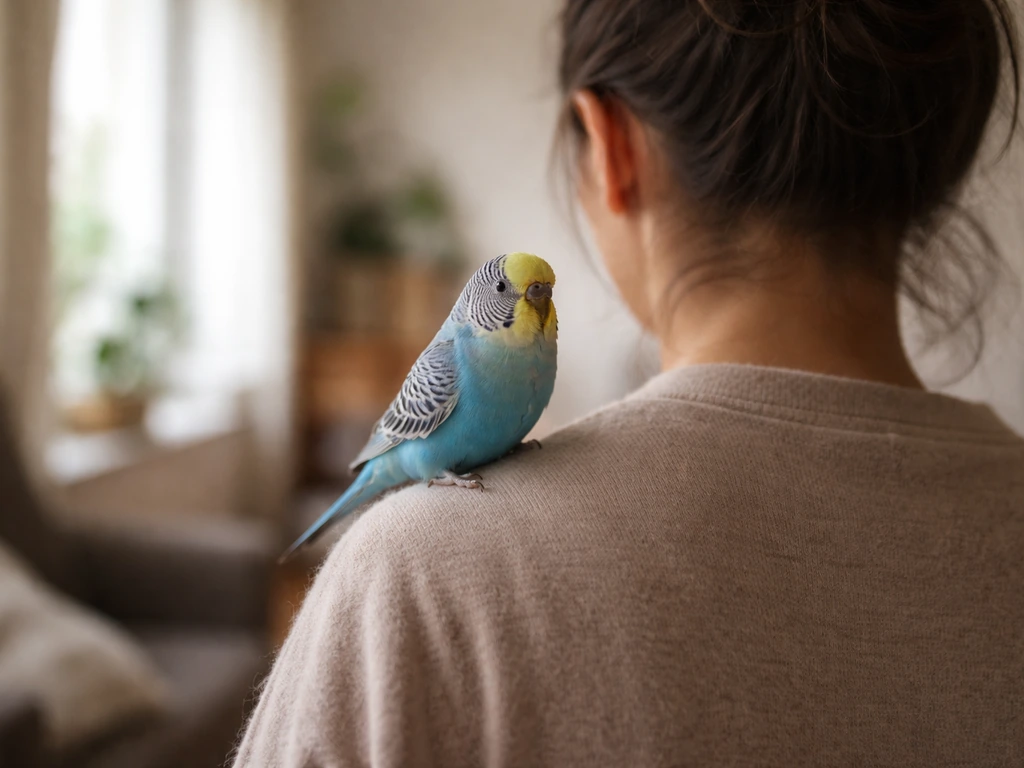
- Sitting on your shoulder, head, or feet for extended periods
- Refusing to stay on a perch or play stand when you step away
Most of this is completely normal, especially in highly social species like cockatiels, African greys, conures, and caiques. These birds evolved to live in flocks where isolation literally meant danger, so staying physically close to a trusted companion is instinctive, not needy or broken. If your bird follows you calmly, plays independently when you're nearby, and doesn't panic when you leave the room briefly, you're looking at healthy attachment. The concern kicks in when the following becomes frantic, non-stop, or is accompanied by other stress signals.
The most common practical reasons your bird follows you
Bonding and flock instinct
This is the big one. In the wild, a bird that wanders away from its flock is a bird that gets eaten. That survival wiring doesn't disappear in captivity. When your bird has bonded to you, you become its safety. Following you is how it keeps its 'flock' together. This is especially strong in species that pair-bond in the wild, like cockatiels and lovebirds. If your bird is calm while it follows you, chattering softly or just hanging out near you, this is affection in its most literal form.
Imprinting and early handling
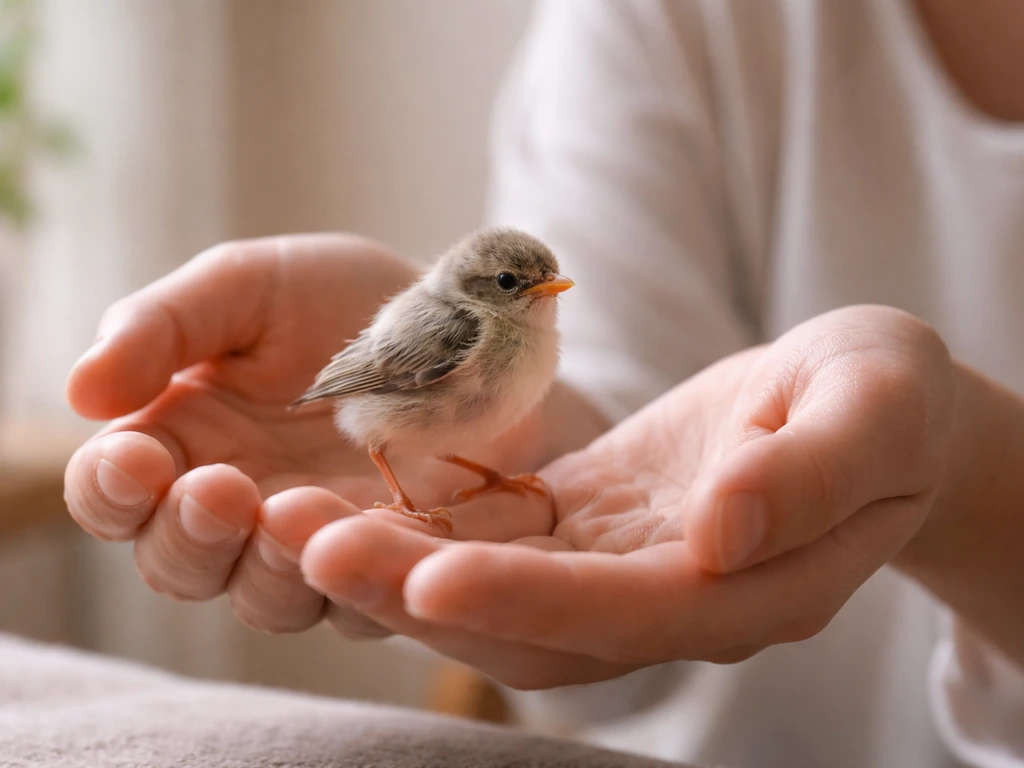
Birds that were hand-raised or heavily socialized with humans from a young age often imprint on people. They may not fully recognize themselves as birds, which means they look to you not just as a companion but as a parent figure. Hand-fed parrots in particular tend to be especially 'Velcro' in their following behavior. It's not a problem in itself, but it does mean independence needs to be taught rather than assumed.
Attention, play, and interaction
Your bird may simply want something to do, and you're the most interesting thing in the room. Parrots especially are intelligent animals that crave mental stimulation. If the enrichment in their environment isn't cutting it, following you around becomes the activity. Think of it as the bird equivalent of a bored teenager following a parent around the house.
Food association and routine
If you've ever given your bird a treat from the kitchen, congratulations: you have been trained. Birds learn routines and associations incredibly quickly. If following you has historically led to treats, scratches, or playtime, your bird has made a very logical connection. The same applies to time of day. Many birds follow more intensely in the morning or around their regular out-of-cage time, simply because routine has taught them that's when good things happen.
Curiosity
Some birds just want to know what you're doing. This is especially true of naturally curious species like African greys, eclectus, and mynah birds. If your bird is watching you cook, sitting on the edge of your laptop, or investigating every room you enter, that's often just an inquisitive mind at work. It doesn't always have a deeper cause.
When following signals stress, boredom, or territorial behavior
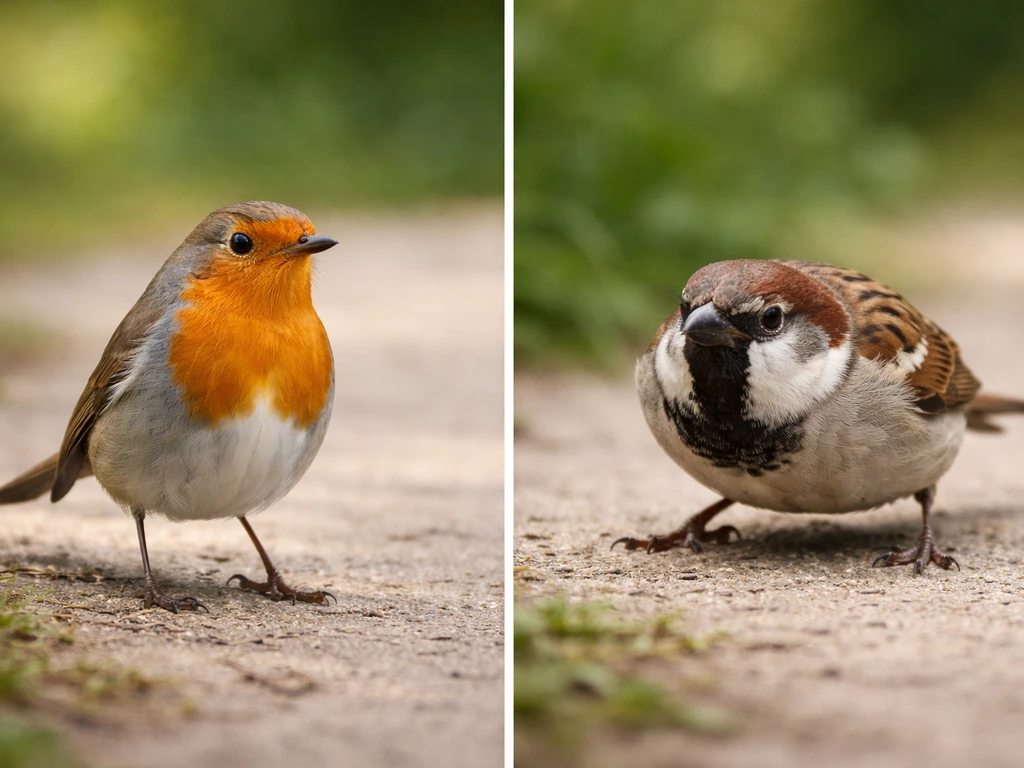
Healthy following is calm and flexible. Stressed following is urgent, relentless, and often accompanied by other warning signs. Here's what to watch for.
| Behavior | What it might mean | Action needed? |
|---|---|---|
| Calm following, independent play nearby | Normal bonding and curiosity | No, this is healthy |
| Loud screaming when you leave the room | Separation anxiety or stress | Yes, address enrichment and training |
| Pacing, rocking, or repetitive movements | Stress or environmental problem | Yes, evaluate environment |
| Feather plucking alongside following | Boredom, stress, or health issue | Yes, avian vet visit |
| Biting others who approach you | Territorial/mate-guarding behavior | Yes, behavioral intervention |
| Sudden increase in following after a change | Stress response to change | Yes, identify and reduce stressor |
Territorial following is a specific pattern worth naming. Some birds, especially during hormonal periods, will follow you and then aggressively defend your person from other people or pets. This isn't affection, it's guarding. The bird has decided you are its mate or territory, and it's protecting its claim. This can lead to biting of family members and is a behavior pattern that needs to be addressed with consistent training.
Feather plucking alongside constant following is a red flag. blank" rel="noopener noreferrer">PetMD identifies feather picking as a potential outward sign of stress and boredom, and it warrants both a behavioral review and a veterinary check to rule out underlying health causes. Similarly, repetitive, functionless behaviors like continuous cage pacing, bar biting, or rocking alongside anxious following are recognized welfare concerns that signal something in the environment needs to change.
What it might mean spiritually and symbolically
This site sits at the intersection of the practical and the meaningful, so it's worth pausing here. If you're drawn to the question of what it means when a bird follows you, you're not alone. Across many traditions, a bird that persistently seeks out a specific person is considered significant.
Spiritual and metaphysical interpretations
In many spiritual frameworks, birds are seen as messengers or guides. A bird that chooses to remain consistently close to you is sometimes interpreted as a sign that you are being watched over, guided, or accompanied by a protective energy. Some metaphysical traditions suggest that a bird's persistent presence reflects a soul-level connection, a recognition of something between you that goes beyond the physical. Whether you hold that belief or not, there's something worth sitting with in the idea that this creature, capable of flying anywhere it wants, chooses to stay near you. It can also show up in subtler ways, like when a bird sits on a branch and stays very still and attentive sits near you.
Biblical and Christian symbolism
In biblical tradition, birds frequently appear as symbols of divine care and presence. The dove is perhaps the most iconic, representing the Holy Spirit and peace. A bird that follows closely could be seen, through this lens, as a living reminder of the biblical promise that you are seen and not alone. Proverbs and Psalms both use birds as metaphors for protection and divine watchfulness. For those who hold a Christian worldview, a persistently close bird might feel like a gentle nudge from the divine.
Celtic and folklore traditions
Celtic traditions held birds as liminal creatures, beings that moved between the world of the living and the spirit world. A bird that followed a person was sometimes said to carry a message from an ancestor or to signal that the person was under spiritual protection. In various folk beliefs across Europe and the British Isles, a bird that stayed unusually close to a home or individual was read as an omen of change, transition, or important news on the horizon.
Indigenous and Eastern perspectives
Many Indigenous North American traditions view birds as spirit guides or totems, and a bird that gravitates toward a particular person may be understood as claiming that person as a companion or delivering a message specific to their life path. In Eastern philosophies, the crane and other birds symbolize longevity, wisdom, and the soul's journey. A bird that mirrors your movement might be seen as reflecting your own spiritual energy back to you, inviting self-awareness and reflection.
These interpretations won't resonate with everyone, and that's completely fine. What might you take from this persistent closeness? That's a question only you can answer. (You might also find it interesting to compare this experience to what it means when a bird simply sits on your porch or perches nearby without following, which carries its own set of symbolic readings.)
What you can do today: observe triggers and stop reinforcing the behavior
If you want to understand what's driving the following behavior, start with observation before you change anything. Spend a day or two noticing patterns.
- Note the time of day the following is most intense. Morning and evening are common peaks tied to routine and light changes.
- Track what happens right before the following starts. Did you just come home? Walk toward the kitchen? Pick up your phone?
- Check whether the following spikes after any recent changes: a new pet, a new person in the home, moved furniture, a change in your schedule, or increased noise.
- Watch your own responses. Do you talk to the bird when it follows? Give it a treat? Pick it up? If so, you may be reinforcing the behavior without realizing it.
- Notice whether the following is calm or anxious. Body language matters: a relaxed bird following you is different from a bird with raised head feathers, wings held away from the body, or rapid breathing.
The single biggest trap owners fall into is accidentally rewarding the following by giving attention in response to it. If your bird screams when you leave the room and you immediately come back or call out to reassure it, you have just taught the bird that screaming works. This doesn't mean ignoring distress, it means being intentional. Wait for a moment of quiet before returning. Reward calm behavior, not urgency.
Training and enrichment steps to build calm independence
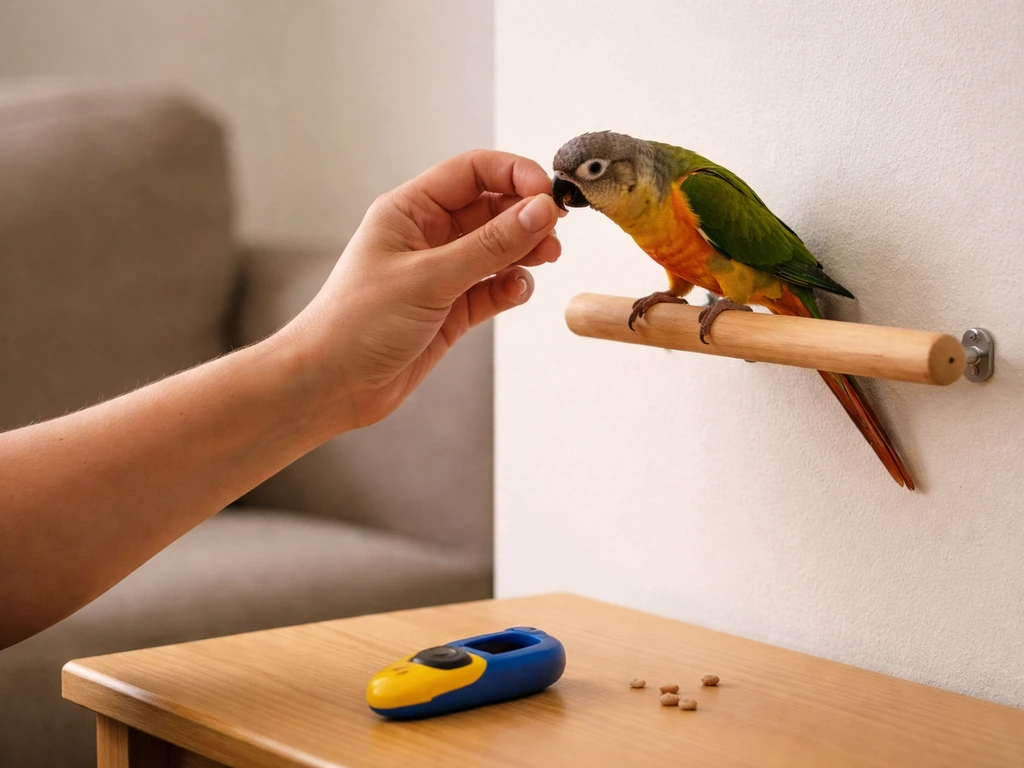
The goal isn't to make your bird stop loving you. It's to give it the confidence and tools to feel safe even when you're not right next to it. Here's what actually works.
Teach 'step up' and 'stay'
A bird that knows 'step up' on cue and can stay on a designated perch or stand has a foundation for independence. Practice stepping the bird onto a perch, rewarding it for staying there while you take one step away, then two, then more. Gradually increase distance and duration. This teaches the bird that being apart from you is safe and even rewarding.
Introduce foraging and enrichment
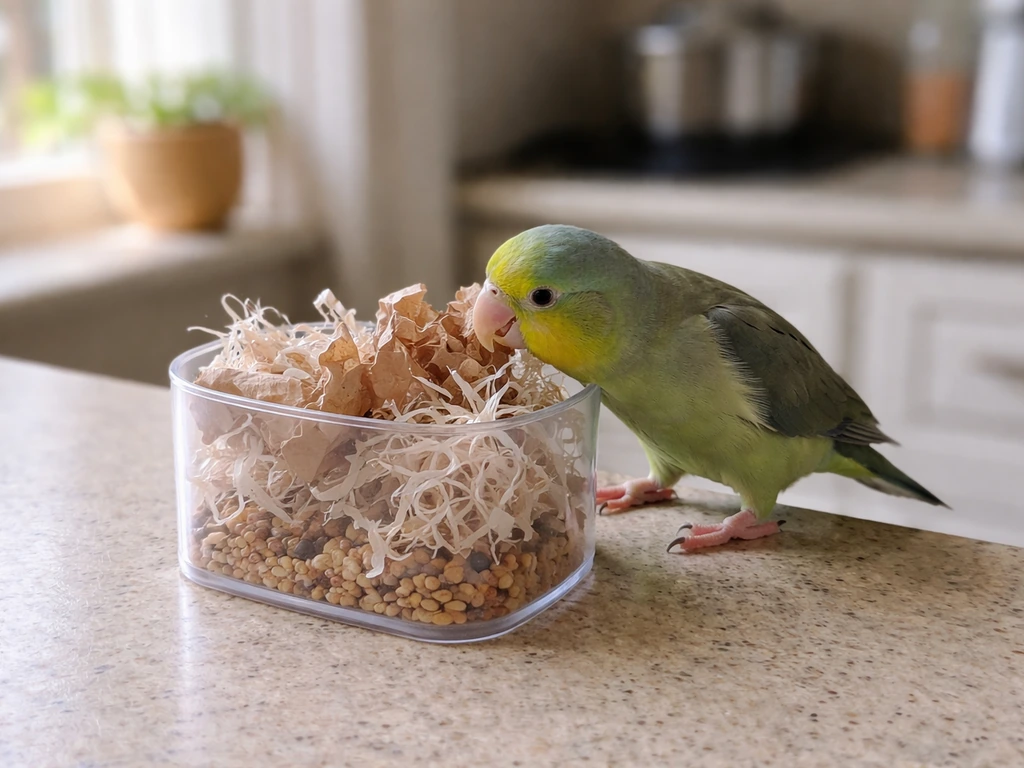
Wild birds spend most of their day foraging. A pet bird that gets food handed to it in a bowl has almost nothing to do with its time. Replace at least some meals with foraging opportunities: food wrapped in paper, hidden in cardboard tubes, or embedded in a shreddable toy. A bird that is genuinely busy with something interesting is a bird that isn't scanning the room for you every five seconds.
Schedule interaction rather than responding on demand
This is counterintuitive but important. Rather than responding every time your bird calls for you, establish set interaction times and stick to them. This gives the bird a predictable rhythm it can rely on, which reduces anxiety, and teaches it that your presence runs on a schedule rather than being summoned by behavior.
Add perch variety and visual access
Sometimes birds follow because they don't have a good vantage point to watch you from a distance. A tall play stand positioned where your bird can see the main areas of your home lets it feel connected to you without physically needing to be on you. If your bird chooses to sit on your head specifically, it can be a sign of strong bonding, seeking security, or asking for attention without physically needing to be on you. Many birds settle significantly once they have a high perch with a good view.
Protect sleep and reduce environmental stress
Birds that don't get 10 to 12 hours of uninterrupted sleep are more anxious and clingy during waking hours. Cover the cage at night, keep the sleeping area quiet, and be consistent about the schedule. Also audit recent changes in the household: new pets, new noise sources, rearranged furniture, or new people can all elevate stress and increase following behavior.
When to get professional help
Most following behavior is manageable at home with patience and consistent training. But there are situations where you genuinely need expert eyes.
Contact an avian veterinarian if the following is sudden and uncharacteristic (behavioral changes can signal illness), if it's accompanied by feather plucking or self-destructive behavior, if there are any changes in droppings, appetite, or energy alongside the behavioral change, or if your bird is screaming in a way that seems pained or urgent rather than social. PetMD notes that any change in vocalizations can be a signal worth veterinary evaluation, especially when it comes on suddenly.
Seek a certified parrot behavior consultant or avian trainer if the following is accompanied by aggression toward other people or pets, if territorial guarding behavior is escalating, if your own attempts to establish independence training aren't working after several weeks, or if the bird seems genuinely distressed rather than just socially attached. Avian welfare experts recognize that repetitive, functionless behaviors alongside anxiety signals (like wings held away from the body or raised head feathers combined with frantic following) can indicate a welfare concern that goes beyond normal attachment.
A good avian vet or certified trainer isn't just for emergencies. Bringing in a professional early, when things are manageable, often means less work in the long run and a genuinely happier bird. If the behavior that brought you here feels more urgent than normal curiosity, trust that instinct.
And if you're sitting with the softer question underneath all of this, what does it mean that this creature chooses you, day after day, that's worth reflecting on too. There may not be one answer. But there is something real in being chosen, whether you frame it as biology, bond, or something more.
FAQ
Is it normal if my bird follows me even when I’m just walking around the house?
Often, yes. If the bird follows you more after you leave the room, screams loudly, or becomes distressed when you are out of sight, it is usually anxiety or a learned response. Track whether following is calm and flexible or urgent and escalating, then avoid reinforcing panic with immediate attention when the bird is loud.
How can I tell the difference between affectionate following and stress following?
Not always. Some birds mirror your movement just out of curiosity, and the difference is behavior context. Curious following typically includes normal body language (relaxed posture, soft vocalizations, ability to pause or explore), while stress following is continuous and urgent, often paired with pacing, bar chewing, or feathers affected by ongoing plucking.
Why does the following get worse at certain times of day?
If the bird gets more intense in the morning, right before out-of-cage time, or around specific routines, it is commonly a timing-and-reward association. Use consistent schedules for out-of-cage time and meals, then reward quiet waiting during the lead-up so the bird learns that good things happen even when it is not physically attached to you.
Could my reaction to my bird be causing the following behavior?
Yes, especially if you have unintentionally built a reward loop. A common pattern is “bird follows or calls, owner talks or returns, bird calms.” Break the cycle by responding to calm behavior only, waiting for quiet before re-engaging, and keeping your return behavior predictable.
What’s a practical first training step if I want my bird to be less “Velcro”?
Start with the goal of distance plus calm, not only “stop following.” Practice a short routine: place the bird on a designated perch, reward staying there while you step away one pace, then come back calmly only after the bird remains settled. Increase duration and distance gradually, and if the bird panics, scale back to the last level it could handle.
My bird follows me onto my shoulder or head. Is that okay?
Sometimes, but it depends on what happens next. If it stays calm while on or near your body and can settle after a brief interaction, it can be normal bonding. If it is paired with territorial behavior, biting when others approach, or the bird cannot relax when you do not give contact, it is more likely attachment with stress or guarding, and you should address the triggers.
What should I do if following seems like boredom?
Yes, and it’s a frequent issue in homes where the bird has limited ways to forage. Replace part of the daily hand-fed routine with foraging activities, such as shreddable paper with food, cardboard tube treats, and scatter feeding (only if your floor setup is safe). A busier bird often checks in less often for human attention.
When should I stop trying to train and call a vet?
Look for a “sudden change” threshold. If following increases quickly, especially within days, or comes with appetite changes, altered droppings, reduced energy, or pain-like screaming, treat it as potentially health-related. In that case, contact an avian veterinarian rather than only adjusting training.
What if following includes biting or guarding other people or pets?
With aggression, assume it is not just normal bonding. If the bird guards you from other people or pets, escalates during hormonal periods, or bites during independence attempts, use a certified parrot behavior consultant or avian behavior-focused trainer. Early guidance helps prevent reinforcement of guarding and can reduce risk.
Could lack of sleep make my bird follow me more?
It can be, particularly if the bird has limited sleep. If you are not consistently providing 10 to 12 hours of uninterrupted darkness, or if there is nightly noise or light, the bird may become clingier and more reactive. Keep a steady sleep schedule, reduce disturbances, and keep the daytime routine predictable.
We recently changed something at home, and the following got worse. Is that connected?
Yes, and it can be a simple but overlooked cause. After moving furniture, adding pets or loud devices, changing household traffic, or welcoming new people, many birds become more vigilant and choose the “safety” option, which is the primary person. Reintroduce stability, keep stressors predictable, and allow time for adjustment.
What should I avoid doing if my bird screams when I leave?
If you use “attention as currency,” it usually backfires. Avoid calling the bird back or speaking while it is screaming or in a panicked posture. Wait for a brief calm moment, then reward calm proximity, use a scheduled interaction window, and continue independence training from a perch or stand where the bird can see you without climbing onto you repeatedly.
Next Article
Why Is a Bird Sleeping on My Porch? What to Do Today
Reasons a bird sleeps on your porch, how to tell roosting vs injury, and what to do today safely.