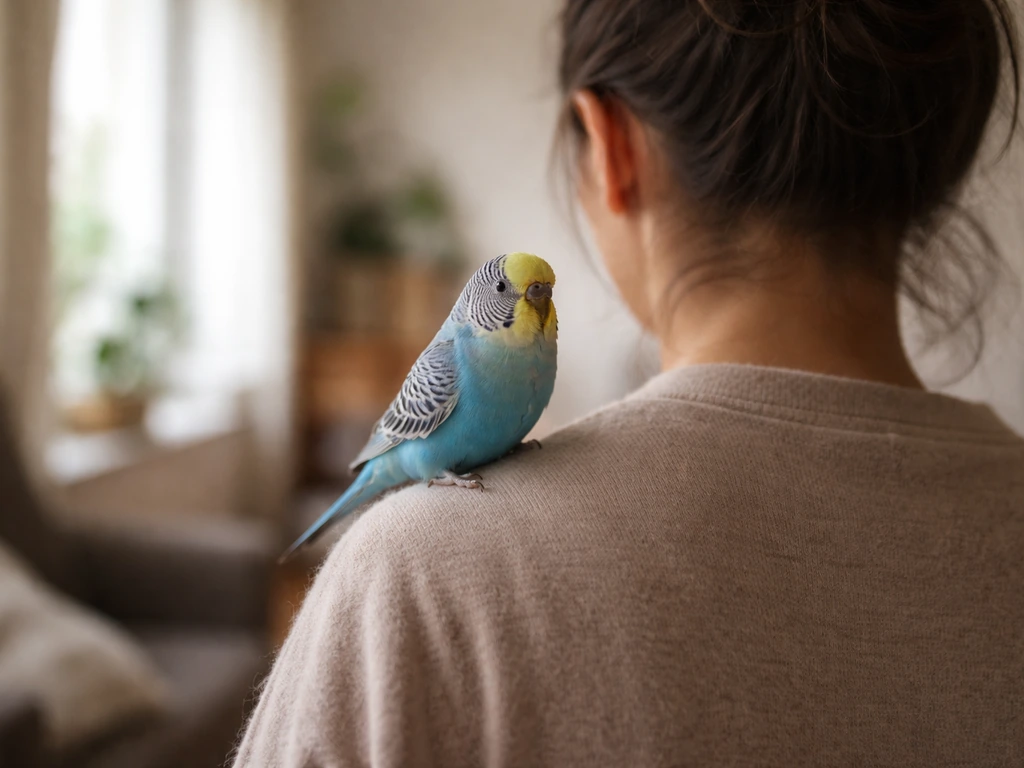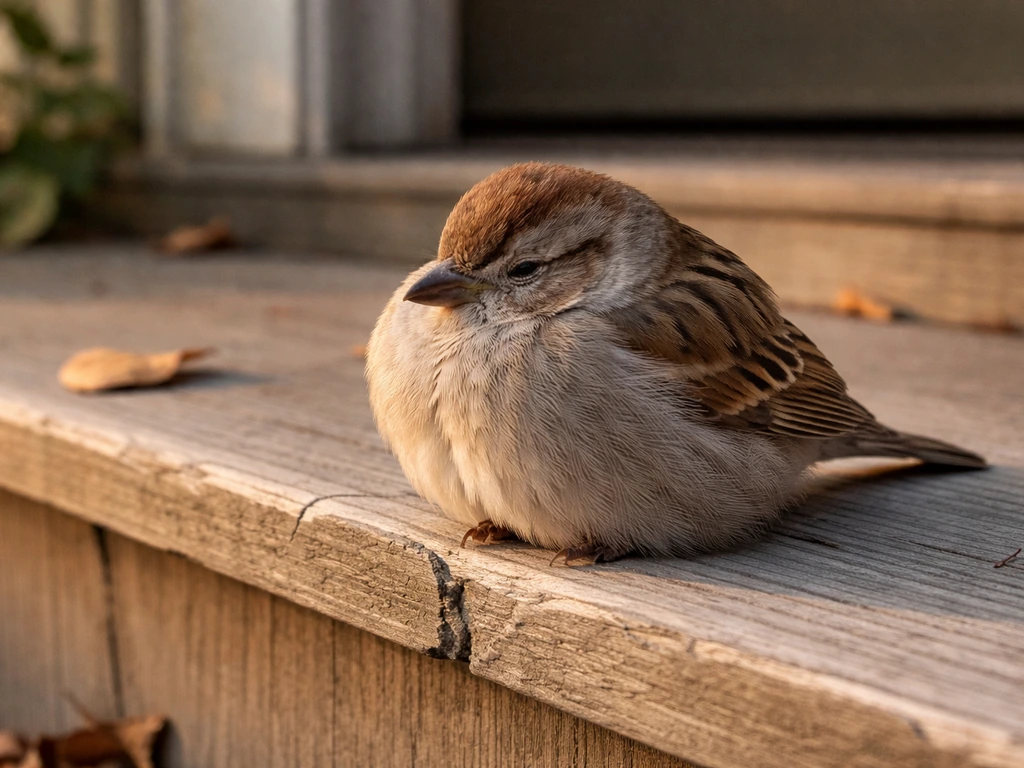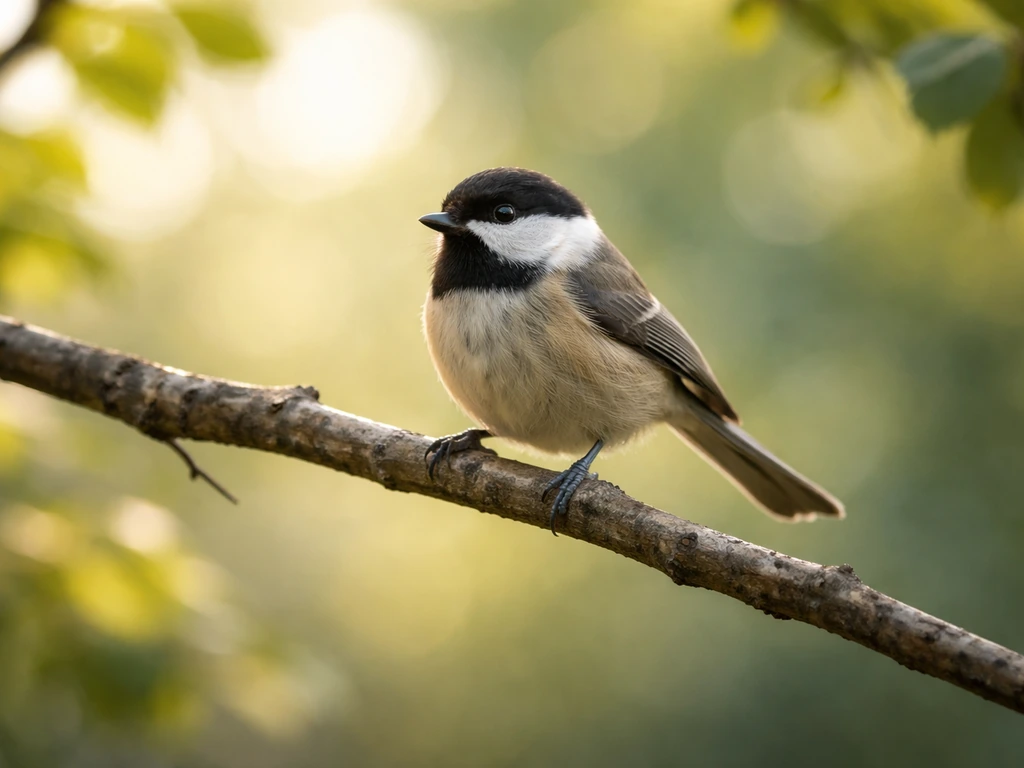
A bird sitting on your porch is almost always doing exactly what it looks like: resting, sheltering, or scoping the area for food and water. Most porch visits have a completely ordinary explanation rooted in weather, season, or the simple fact that your porch offers something useful. That said, a bird that stays unusually long, looks puffed up, or won't move when you get close could need your attention. And if you're on a site like this one, you're probably also wondering whether there's something more to the visit. Both questions deserve a straight answer.
Why Is a Bird Sitting on My Porch? Causes and What to Do

Maya Hartwell
31 May 2026
Why birds choose porches in the first place
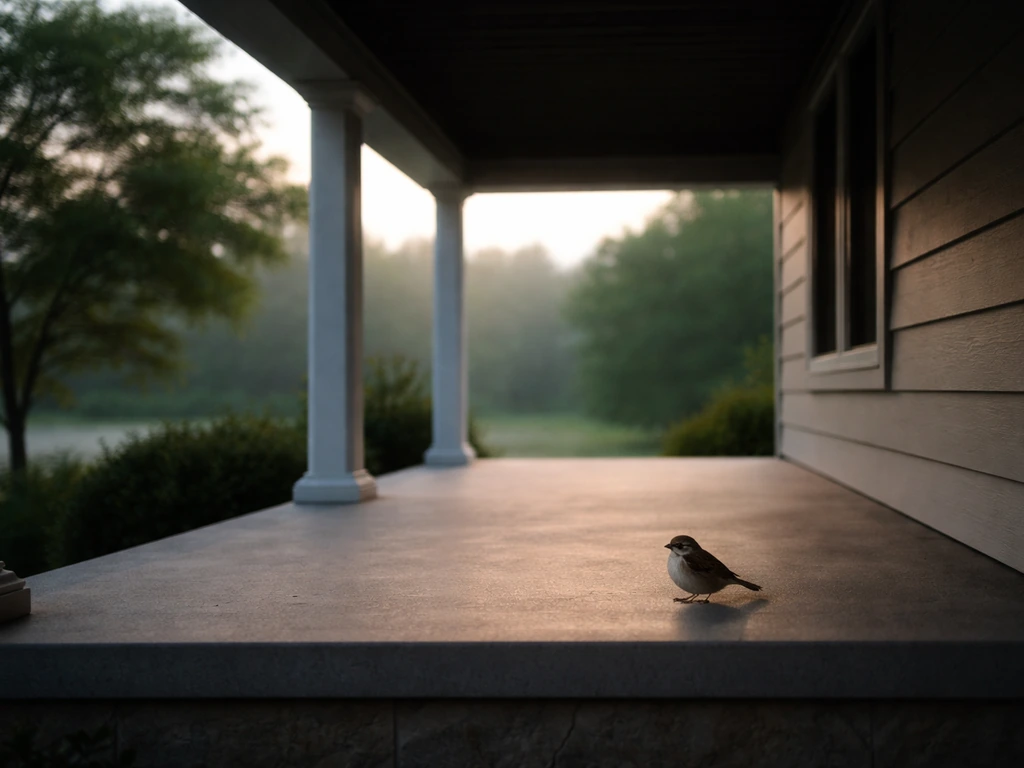
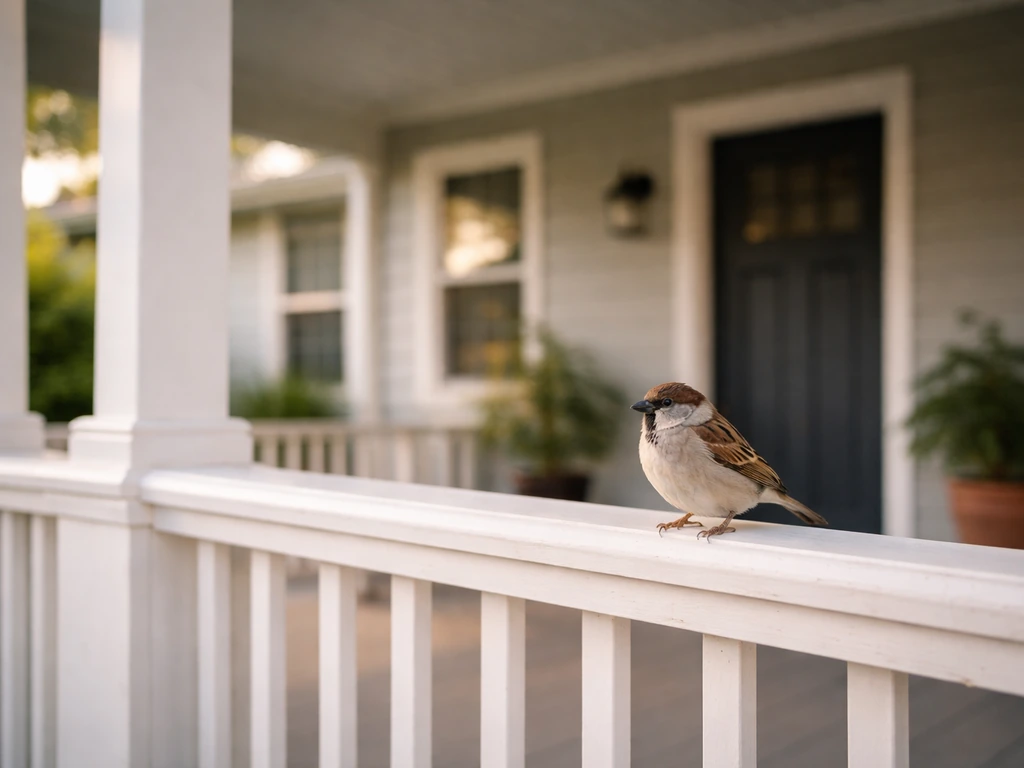
Porches are genuinely useful to birds. From a bird's perspective, a covered porch is an overhang that blocks rain, wind, and direct sun. It's elevated enough to offer a wide view of the yard and any predators nearby. It often has railings, ledges, or furniture that serve as perfect perching spots. And it's close to humans, which, oddly enough, can deter some predators. These are real advantages.
The most common natural reasons a bird sits on your porch include:
- Shelter from rain, wind, or a sudden storm. When weather turns rough, small birds stop flying and find the nearest protected spot. Your covered porch is a logical choice.
- Heat management. In hot conditions, birds reduce activity during the warmest parts of the day and seek shade. If your porch is shaded and it's a warm afternoon, that bird is doing the bird equivalent of sitting under a ceiling fan.
- Nearby food or water. Birdbaths, feeders, standing water, or even a dripping spigot can pull birds onto your property and keep them close.
- Migration stopover. Especially in spring and fall, birds traveling long distances may land anywhere convenient. Precipitation and headwinds can force even strong fliers to stop and wait.
- Territorial or scouting behavior. Some species perch high in a visible spot to survey territory or watch for a mate. Your porch rail might be the best vantage point in your yard.
- Exhaustion or disorientation. Birds that have recently hit a window, flown a long distance, or encountered a predator may land somewhere seemingly random just to recover.
- Nesting interest. If it keeps returning, especially if it's carrying material, it may be checking your porch as a potential nest site.
Is it resting, injured, or nesting? Here's how to tell
Before you do anything, just watch for a few minutes from a comfortable distance inside your home or back from the doorway. Most of the information you need comes from observing behavior without disturbing the bird.
Signs it's just resting
- It's alert, head upright, eyes open, scanning the area.
- It reacts to movement or sounds by tensing up or looking toward them.
- It flies away when you get close, even if it takes a few seconds to decide to go.
- It's there during a storm or on a very hot day and gone once conditions improve.
Signs it might be injured or sick
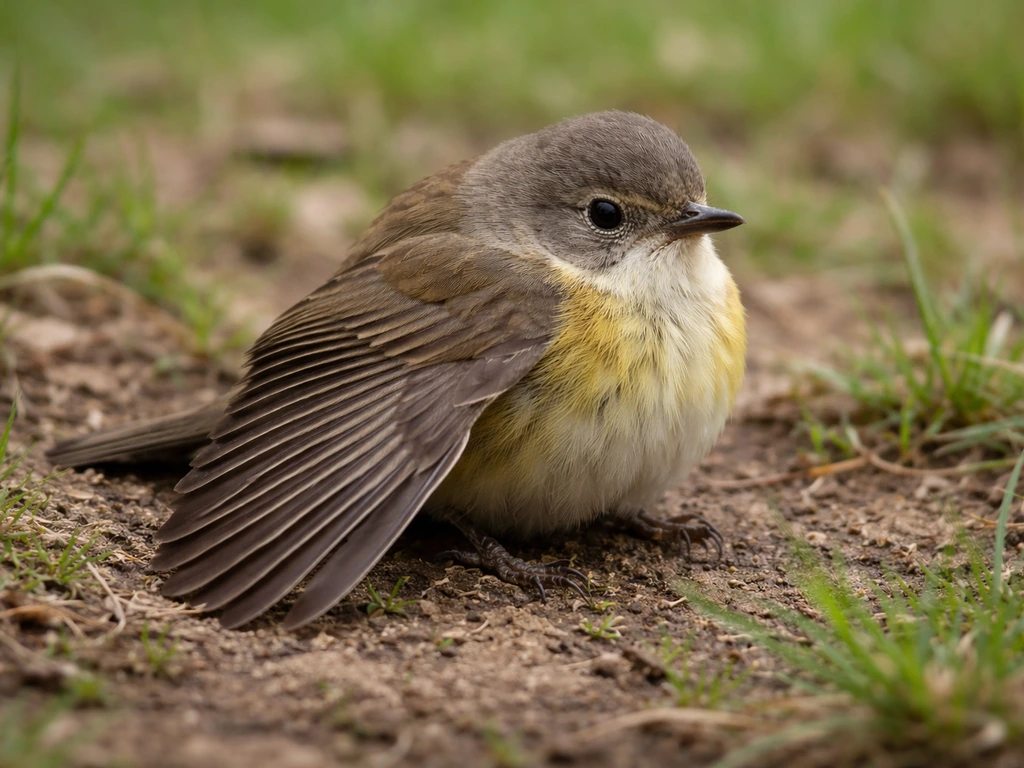
- It doesn't move even when you walk within a few feet of it.
- A wing is drooping or held at an odd angle.
- It's breathing with its mouth open, gasping, or gaping repeatedly. This is a red flag.
- It's unable to stand or keep its balance on the perch.
- It has visible wounds, blood, or missing feathers in an irregular pattern.
- Eyes are closed or half-closed and it looks generally dull and puffed up.
Signs it might be a fledgling
If the bird looks young, has short tail feathers, and is sitting quietly but seems otherwise alert, it may be a fledgling that recently left the nest. Fledglings spend days on the ground and on low perches while their parents continue feeding them. They're supposed to look a little helpless. Unless it shows injury signs, the best thing you can do is leave it alone and keep pets away.
Signs it might be nesting
If the same bird keeps returning to one specific corner, ledge, or spot and you notice twigs, grass, or other material accumulating, nesting is likely. This matters legally: under the Migratory Bird Treaty Act, active bird nests (with eggs or young) are federally protected in the United States. You cannot legally disturb, move, or destroy an active nest. If nesting has already started, work around it and wait.
Safe steps to take today
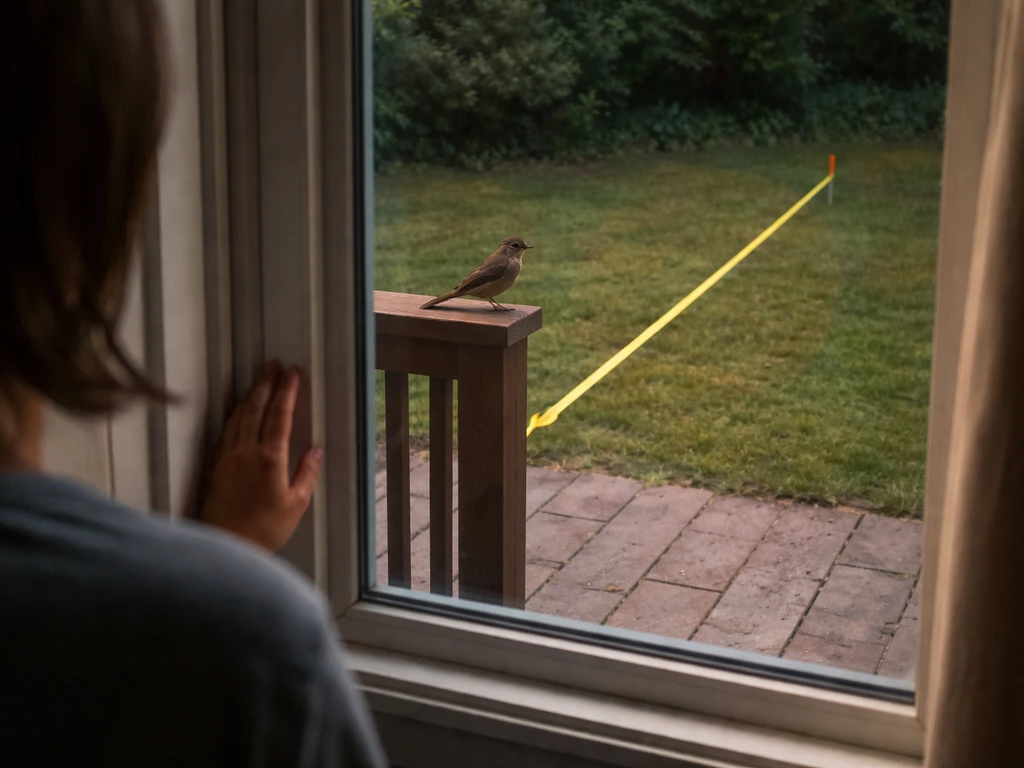
If the bird looks healthy and is just hanging around, your job is mostly to not make things worse. Here's what I'd recommend:
- Keep your distance. Give it at least 10 to 15 feet and observe from inside or from across the yard. Repeated close approaches stress the bird and may cause it to flee into a dangerous situation.
- Bring pets inside. Dogs and cats are genuine threats, even well-behaved ones. If a bird is already exhausted or disoriented, it may not be able to flee quickly enough.
- Don't offer food or water directly. It sounds counterintuitive, but placing food or water right next to a potentially stressed or injured bird can cause more harm. If you want to help, set a shallow dish of clean water a few feet away and step back.
- Clean droppings carefully. If the bird has been on your porch for a while, wear gloves when cleaning up droppings and dampen the area lightly before wiping. Avoid sweeping or doing anything that kicks up dust or dried material into the air. The CDC advises against actions that aerosolize bird waste, so a damp paper towel or cloth works better than a dry broom.
- Skip the hands-on approach unless it's an emergency. Wild birds carry stress well beyond what's visible, and unnecessary handling can be fatal. If you don't see injury signs, hands off.
What to do if the bird won't leave or seems sick
If the bird has been in the same spot for several hours and shows any of the injury or illness signs listed above, it's time to act more deliberately. Don't leave it overnight without doing something, especially if temperatures are extreme or if there are cats, dogs, or other animals around.
If it seems injured or stunned (for example, after a window strike), here's the sequence I'd follow: get a cardboard box or paper bag, line it loosely with a soft cloth or paper towels, and gently guide or place the bird inside without squeezing it. Put a few small air holes in the box, close the top, and keep it in a quiet, dark, room-temperature space. Do not give it food or water. Then call a wildlife rehabilitator immediately. The dark, enclosed space calms the bird and reduces further injury while you get help.
If the bird is breathing with its mouth open, gasping, or clearly can't stand, don't wait and watch. That level of distress means something is seriously wrong. Get it contained and get on the phone.
Why it's probably happening right now: seasonal and weather context
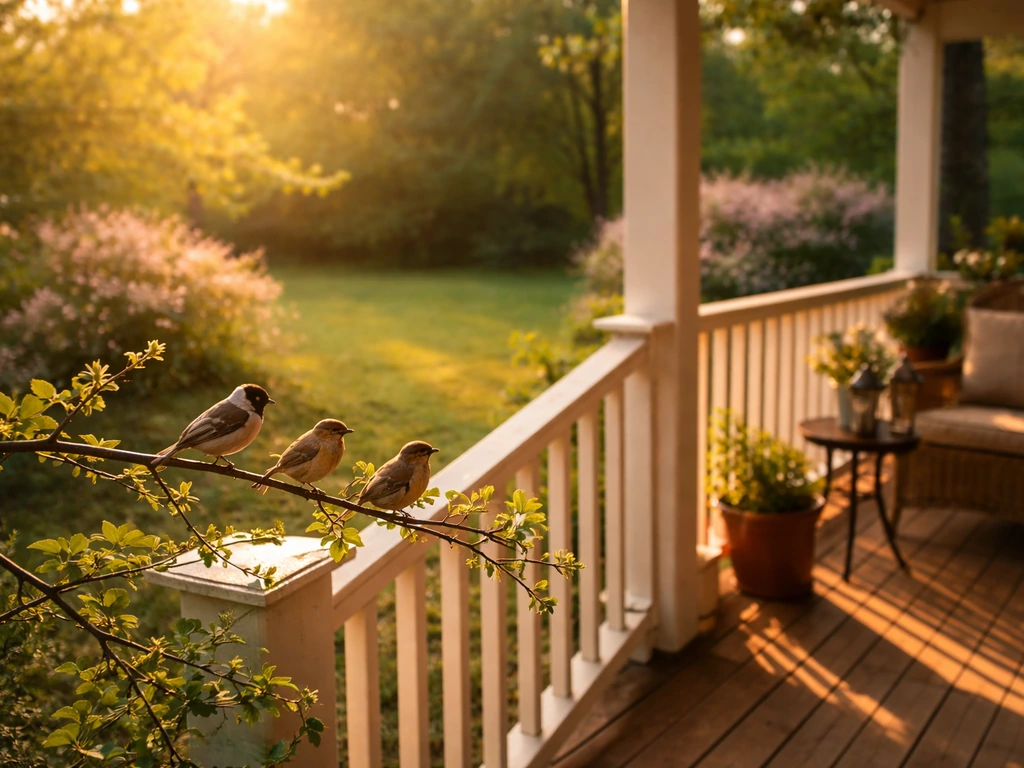
Late May and early June is an active time for birds across most of North America. Migration is winding down but not over, and breeding season is in full swing. That means you'll see more bird activity in general, more birds exploring potential nest sites, and young fledglings starting to show up on surfaces they shouldn't be on. It also means parent birds are more protective and more visible, which can make it seem like a bird is targeting your porch when it's really just working a territory that includes your yard.
Heat is also a major factor right now. In warm late-spring and early summer conditions, birds actively seek shade and cut back on foraging during the hottest hours of the day. If your porch gets afternoon shade, it's a prime resting spot. Research consistently shows that birds in hot weather reduce movement, seek cooler microclimates, and rely heavily on shade and water sources. If your porch has both, expect visitors.
Storms and sudden weather shifts can also push birds onto porches with very little warning. Strong winds and rain make flight dangerous and exhausting. Birds will land wherever offers protection, and a covered porch does exactly that. Once the weather passes, they typically move on within minutes to a few hours.
If you want a spiritual meaning: what a porch bird visit can represent
Across cultures and centuries, birds arriving near the home have carried meaning. The practice of reading omens from birds, known as ornithomancy, dates back to ancient Rome, Greece, and Celtic traditions. In many frameworks, a bird choosing to sit near your threshold isn't random. The porch, as the boundary between your private world and the wider one, gives the visit a particular kind of symbolic weight.
In biblical and Christian folklore, birds visiting the home are often associated with divine messages, presence, or guidance. The dove, sparrow, and dove carry specific associations (peace, God's awareness of small things, the Holy Spirit), but many traditions extend this general sense of messenger to other birds as well. A bird that lingers rather than passing through is sometimes interpreted as a sign asking you to pay attention.
In Celtic and broader European folklore, a bird at the threshold was a visitor from another realm, sometimes carrying news of change, warning of difficulty ahead, or announcing a blessing about to arrive. The specific meaning often depended on the species, the direction it faced, and whether it sang. A bird sitting quietly was sometimes read as a presence watching over the home.
In various indigenous and Eastern traditions, birds are understood as intermediaries between the visible world and unseen forces. A bird that chooses your space, especially one that lingers, may be interpreted as a spirit guide making itself known, or a message from an ancestor. Many of these traditions also emphasize attention: the bird isn't the message itself, it's the prompt to slow down and notice what's present in your life right now.
Metaphysically, a bird visiting the porch is often read through the lens of timing. What were you thinking about when you noticed it? What question had you been sitting with? Many people who work with signs and synchronicities treat the bird's arrival as less about a fixed meaning and more about what it mirrors back to them in the moment. That kind of interpretation is entirely personal, and there's no wrong answer.
It's worth noting that if you've also noticed a bird sleeping on your porch recently, or a bird following you around your property with unusual persistence, the symbolic weight of those experiences tends to compound in many traditions. If you're also asking why does my bird follow me everywhere, that unusual persistence can help point to whether the bird is resting, nest-related, or reacting to your presence bird following you around. Repeated, close bird encounters are often read as more deliberate signals than a single passing visit.
What might you take from this particular visit? That's the question worth sitting with, regardless of which tradition (if any) resonates with you.
When to call for help: wildlife rehab and local resources
If you've watched the bird for a reasonable amount of time (30 to 60 minutes) and it still hasn't moved, is showing distress signs, or appears injured, contact a licensed wildlife rehabilitator. Don't try to nurse it back to health yourself. Wild birds have specific dietary, environmental, and medical needs that most people aren't equipped to meet, and well-meaning care can cause more harm than leaving it alone.
Here's how to find help quickly:
- Search 'wildlife rehabilitator near me' plus your city or state. Most results will include licensed centers with phone numbers.
- The International Wildlife Rehabilitation Council maintains a directory of rehabilitators across multiple countries if you're outside the US.
- Pacific Wildlife Project has a searchable tool to find rehabilitators by location.
- Your state's fish and wildlife agency or department of environmental management typically maintains a directory of licensed rehabilitators, often organized by species and county.
- If you're unsure whether the bird needs help, most wildlife rehab centers are happy to walk you through a quick assessment over the phone. Call and describe what you're seeing before doing anything.
Also worth knowing: if you suspect the bird is sick rather than just injured (unusual behavior, discharge, neurological signs like circling or head tilt), your local animal control or state wildlife agency may want to know. In some cases, sick wild birds can be part of disease surveillance programs, and reporting matters.
Most porch bird visits are completely benign and resolve on their own within a few hours. Your job is usually just to observe, keep pets away, and let the bird make its own decision about when to leave. If it’s a bird that keeps hopping onto your head, check for signs it’s resting safely versus getting injured or acting sick, and follow the same observation and safety steps. But when something looks off, trust that instinct and make the call.
FAQ
How long should I wait before I worry about a bird sitting on my porch?
A good rule is to observe from a distance for 30 to 60 minutes. If it shows no improvement, stays low to the ground, or becomes unresponsive, treat it as more than normal resting and contact a licensed wildlife rehabilitator. If it perks up and relocates within a few hours, it is usually fine to keep watching and let it leave on its own.
Is it ever dangerous to approach a bird on my porch?
Yes, especially if it is protecting a nest, incubating eggs, or you are close to fledglings. Even without direct contact, repeated attempts to scare it off can cause an adult to abandon young or can increase stress and injury risk. Back off, keep pets inside, and only intervene if the bird appears injured, overheated, or in distress.
What does “injury signs” actually look like from a porch view?
Look for obvious asymmetry (one wing drooping), inability to stand or walk, heavy bleeding, visible broken feathers or legs, extreme lethargy, uncontrolled shaking, or open-mouth gasping. Neurologic signs like circling, repeated head tilt, or falling over are also strong indicators that you should not wait to “see if it recovers.”
If the bird is nesting on my porch, what should I do about normal porch activities like sweeping or mowing near it?
Avoid any actions that shake, block access, or create constant vibration near the nest. If you must move around, do it slowly and from the side, and do not haul away twigs, grass, or nesting material. Work around the nest location until the young fledge, then clean only after the nest is no longer active.
Can a bird’s behavior mean it is sick even if it looks uninjured?
Yes. Sick behavior can include disorientation, trouble perching, cloudy eyes, discharge from the beak, very ruffled feathers for long periods, or a failure to respond normally to nearby movement. If you notice combinations of those signs, contact wildlife help promptly, since early treatment can matter.
What should I do if the bird keeps landing on my porch during the day but flies off at night?
That pattern usually points to resource use, like shade, a regular water source, or a safe perch. The practical next step is to reduce attractants you do not need, such as leaving food scraps out or leaving doors open to create easy access. You can also check if there is a nearby cat or reflective surface encouraging repeated visits.
Could the bird be there because of my porch light or reflections?
Absolutely. Bright porch lights and mirrors, windows, or glossy surfaces can confuse birds, especially during dusk and foggy weather. If you suspect this, switch off exterior lights for a period, cover or adjust window coverings at night, and look for nearby window-strike casualties so you can prevent repeat incidents.
Do I need to report the bird to anyone if it seems sick?
Often yes, depending on your location and the specific circumstances. If the bird looks neurologic, has discharge, or multiple birds are showing similar symptoms in your area, local animal control or your state wildlife agency may want to know. For injured birds, a rehabilitator typically handles intake, but reporting can still help with disease awareness.
What if I accidentally scare the bird and it flies into a window or railing after I noticed it?
If it hits something, treat it as potentially injured even if it seems to bounce back. Contain it gently if it cannot fly normally, use a lined box, keep it dark and warm, and call a rehabilitator. Avoid repeated chasing, because additional stress can worsen an underlying concussion or stress-related shock.
Is it okay to put out water or food to help a bird on my porch?
For an adult wild bird that is healthy enough to move normally, you can offer clean water in a shallow dish. For a bird that seems stunned, injured, or unable to stand, do not feed it, since wrong food can cause aspiration or digestive problems. In that case, focus on containment and getting professional help.
How can I keep pets safe without trapping or stressing the bird?
Bring cats and dogs indoors immediately, and keep them away from doors and windows. If the bird is on an accessible ledge, close exterior doors and use a barrier like a screen door rather than opening and approaching directly. You can also supervise from inside, then allow the bird to leave once you see it settle or recover.
If the porch bird is a fledgling, how can I tell if I should intervene?
If it looks young, stays low, and appears otherwise alert but unable to fly, that is often a fledgling situation, and leaving it alone is usually best unless there is clear injury. Intervene only when you see trauma, bleeding, an obvious predator attack, or prolonged distress plus threat from pets or traffic. In those cases, call wildlife help rather than trying to relocate it yourself.