Your bird sits on your shoulder because it feels safe there. Heights offer birds a natural sense of security and visibility, your body warmth is genuinely comforting, and if you're a bonded companion, your shoulder is simply the closest it can get to you. For pet parrots, cockatiels, and budgies especially, shoulder-sitting usually signals real trust and affection. But the behavior is more layered than it looks, and understanding what's actually driving it helps you decide whether to encourage it, redirect it, or rethink it entirely.
Why Does My Bird Like to Sit on My Shoulder?

Maya Hartwell
13 May 2026
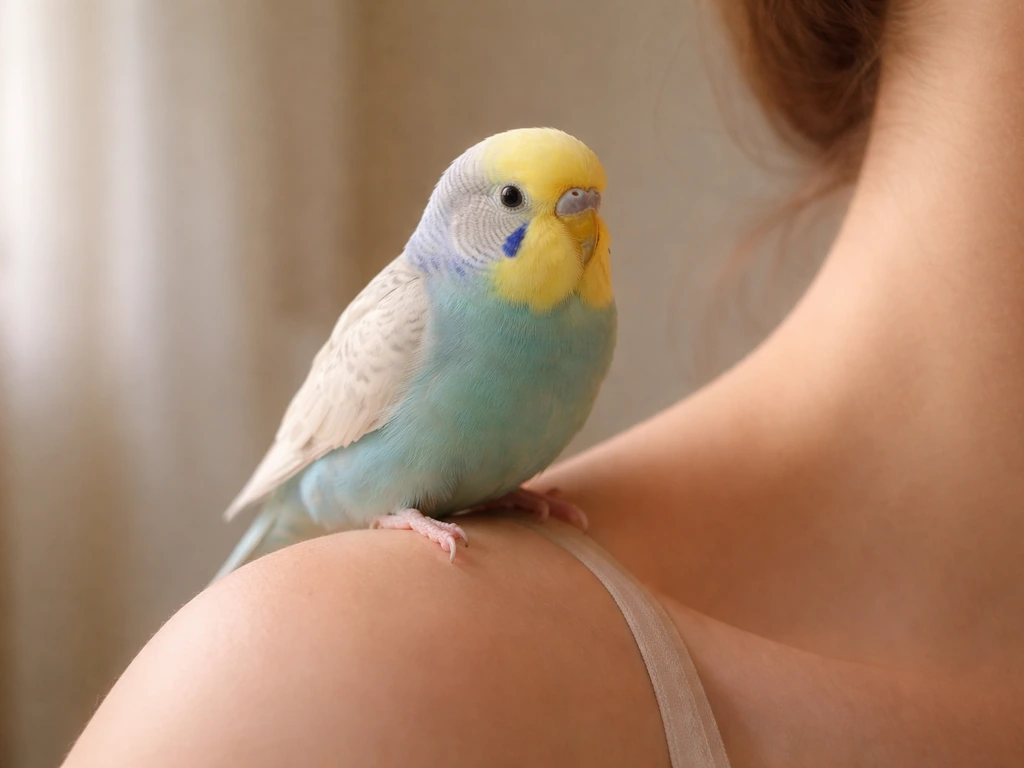
Why birds choose shoulders in the first place
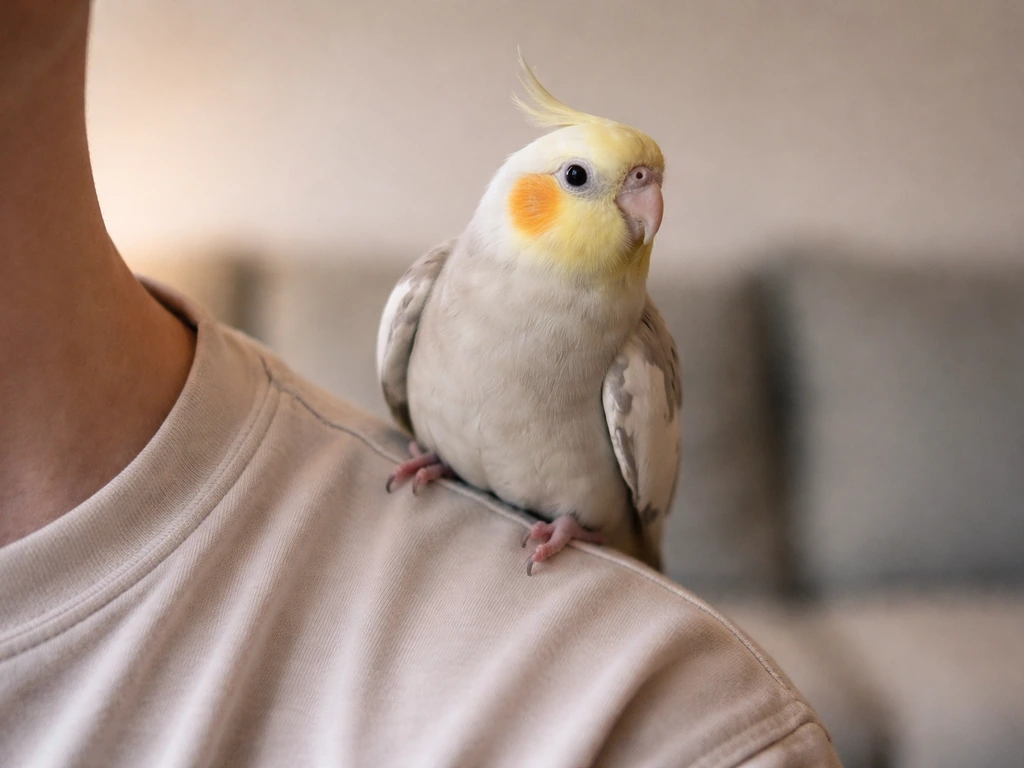
Birds are wired to seek elevation. In the wild, height means a broader field of view, earlier detection of predators, and access to the best food. Your shoulder is essentially a moving, warm, safe perch at eye level with their favorite creature. That instinct doesn't disappear in domesticated birds. It just gets redirected onto you.
For pet birds, a few specific drivers tend to explain the shoulder habit:
- Safety and height: Your shoulder is one of the highest accessible spots in the room, satisfying that hardwired need to be up high and scan the environment.
- Warmth: Birds run a higher core body temperature than humans, and they actively seek warmth. The side of your neck and shoulder area radiates steady, comfortable heat.
- Bonding and imprinting: A bird that is closely bonded to you treats you as its flock. Being on your shoulder puts it as physically close to its flock-mate as possible.
- Curiosity and stimulation: From your shoulder, a bird can observe everything you do, follow your movements, and stay engaged. It's enriching from their perspective.
- Learned habit: If shoulder-sitting has been allowed and even reinforced with attention or treats, the bird has simply learned that it's a great place to be.
- Comfort during stress: Some birds default to their bonded person's shoulder when they feel anxious or overwhelmed, seeking that flock-proximity as a calming signal.
Wild birds landing on a person's shoulder are rarer and usually involve birds habituated to humans, injured or disoriented individuals, or birds drawn by food. A truly wild bird choosing your shoulder unprompted is unusual enough to be noteworthy, which is part of why the encounter feels so charged.
Bonding, stress, or just habit? What the behavior really means
Shoulder-sitting doesn't mean the same thing in every bird. Context and body language together tell the real story. In healthy bonding, the bird chooses your shoulder voluntarily, settles calmly, may preen itself or even gently preen your hair or ear, and steps off without protest when asked. That's a bird that feels secure with you and is expressing genuine affiliation. If you are wondering why your bird stares at you, the same mix of security, communication, and body-language context can help explain it why does my bird stare at me.
Stress-driven shoulder-seeking looks different. The bird may land suddenly when startled, hold its feathers tight against its body, keep its eyes wide and darting, or refuse to leave even when the environment is still chaotic. It's using you as a refuge rather than genuinely enjoying your company, and that distinction matters for how you respond.
Height dominance is a third factor worth acknowledging. Some avian behaviorists note that repeatedly allowing a bird to perch at head height can contribute to posturing behaviors where the bird begins treating the owner as subordinate in the flock hierarchy. This doesn't happen with every bird, but if yours has become nippy or demanding specifically when it's on your shoulder, that dynamic is worth examining.
Plain habit is also real. If the bird has been allowed and rewarded for shoulder-sitting since it was young, it may simply be doing it because that's the established routine. Neither deeply meaningful nor problematic on its own, but easiest to redirect early rather than late.
Reading your bird's body language from up close
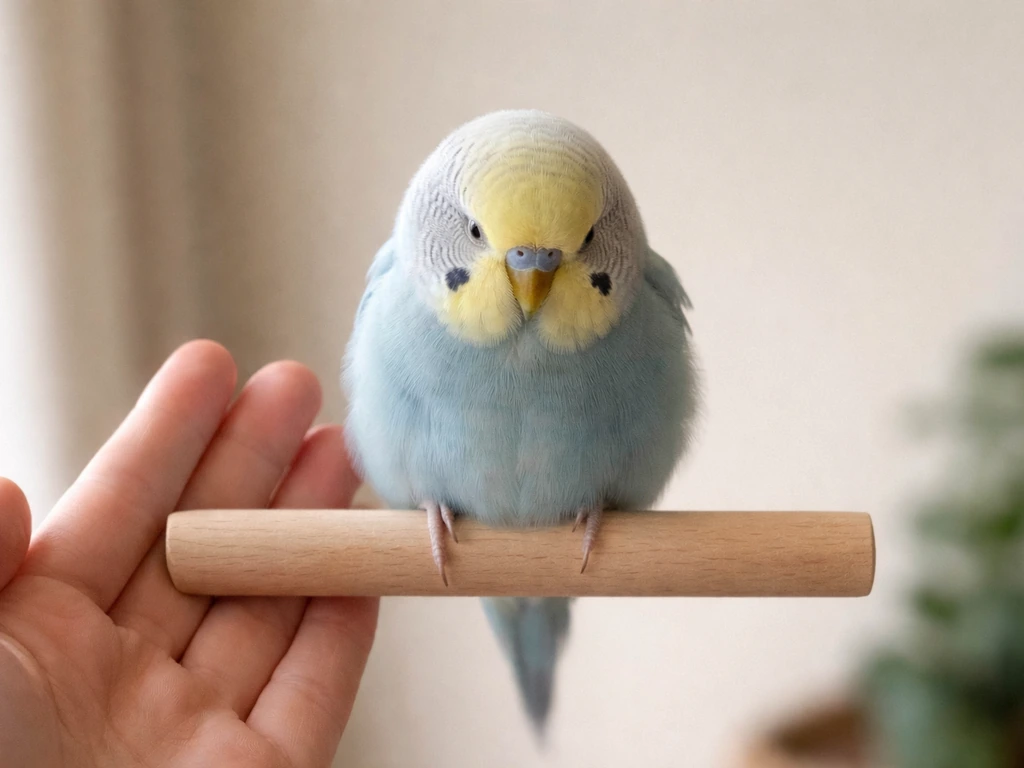
Here's the practical challenge: when your bird is on your shoulder, you genuinely cannot see it well. Best Friends Animal Society also cautions that when a bird is perched on your shoulder, you cannot see and read its body language cannot see it well. This is one of the main reasons avian experts at Best Friends Animal Society and PetMD flag shoulder-perching as a concern. You're working mostly blind to the signals your bird is sending. That's why it helps to know the key signals before the bird climbs up, and to periodically move it to a hand or perch where you can actually look at it.
Body language should always be read as a pattern rather than a single sign, but here are the signals that matter most:
| Signal | Likely Meaning | What to Do |
|---|---|---|
| Relaxed feathers, one foot tucked, eyes softly blinking | Content and comfortable | All good, enjoy the moment |
| Feathers puffed and eyes closed (when not sleepy) | May indicate illness or feeling cold | Move bird to warm perch, monitor closely, vet if persists |
| Feathers tight to body, wide eyes, alert posture | Fearful or stressed | Reduce stimulation, place bird in a calm, familiar spot |
| Tail bobbing with each breath, open-mouth breathing | Possible respiratory distress | Veterinary evaluation urgently needed |
| Beak grinding softly | Contentment, often before sleep | Normal healthy sign |
| Raised crest (cockatiels), wing spreading, lunging | Agitation or warning display | Step the bird down immediately, give space |
| Excessive preening or feather-pulling | Stress or boredom | Evaluate enrichment and interaction quality |
Open-mouth breathing and tail bobbing with each breath are not normal comfort signals. If you see those, especially paired with weakness or unusual posture, treat it as an urgent situation and contact an avian vet. Respiratory issues in birds can escalate quickly.
Real safety and health risks you should know about
Most shoulder-sitting interactions with healthy, well-cared-for pet birds are low-risk. But there are a few real hazards to take seriously rather than dismiss.
Bites and scratches near the face
A bird on your shoulder puts its beak within centimeters of your eye, ear, and cheek. Even a normally gentle bird can bite hard when startled, and a bite near the eye is a medical concern. Clipped wings don't guarantee safety either. A panicking bird can still lurch, tumble, or grip painfully when surprised by a sudden noise or movement.
Droppings and hygiene
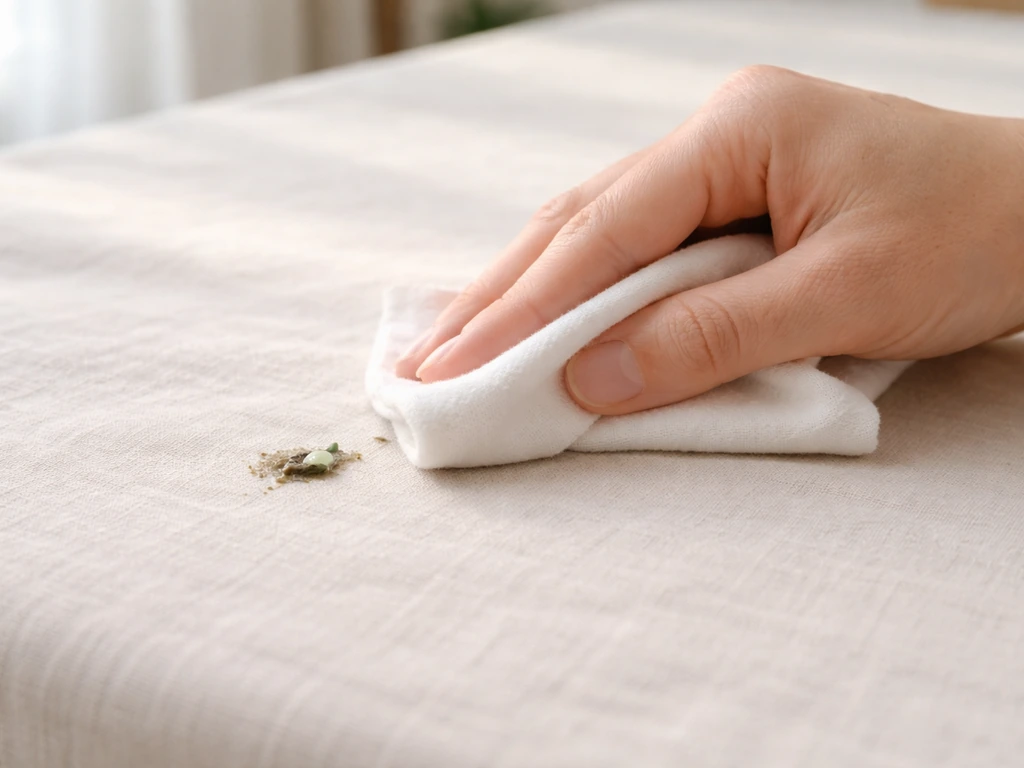
Birds don't signal when they're about to defecate, and they do so frequently. Droppings on clothing is a minor inconvenience, but droppings near your mouth or on food prep surfaces are a hygiene issue. If you use a shoulder cape or poop cloth under the bird, as PetMD recommends, you significantly reduce the mess and the contact. Wash hands after handling any bird, and keep bird droppings away from your face.
Psittacosis and zoonotic disease
Psittacosis is a bacterial infection (caused by Chlamydia psittaci) that birds can carry and transmit to humans through dried droppings, respiratory secretions, and feather dust. You don't need to handle an obviously sick bird to be exposed. The CDC recommends avoiding dry sweeping or vacuuming around bird areas because it aerosolizes contaminated dust. Wet-cleaning, gloves, and proper ventilation around cages reduce risk significantly. If you or a family member develops flu-like symptoms after close bird contact, mention the bird exposure to your doctor specifically. Routine veterinary care for your bird, including testing if your vet recommends it, is the best prevention.
What about parasites?
Bird mites are occasionally a concern, particularly with wild birds or birds kept in unsanitary conditions. With regularly vet-checked pet birds in clean environments, the risk is low but not zero. If your skin feels irritated after close bird contact, or you notice tiny moving specks in the bird's feathers or cage, have the bird examined.
What to do today: encourage it, redirect it, or stop it
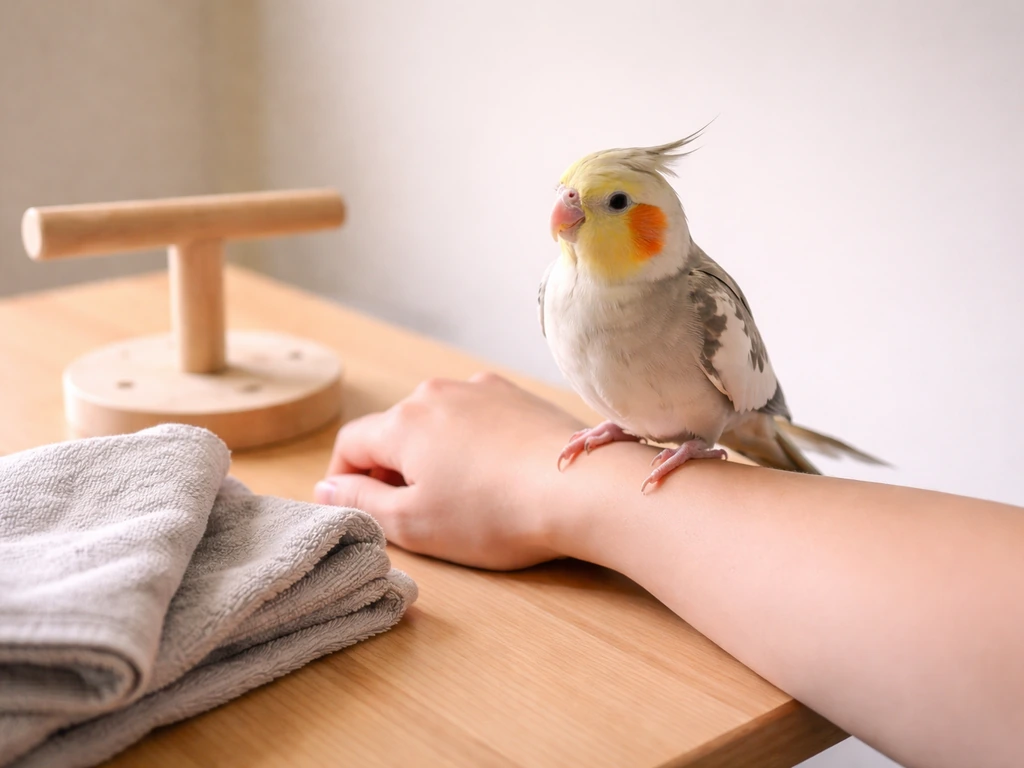
The right next step depends on what's actually going on with your bird and what outcome you want. Here's how to approach each scenario practically.
If you want to keep allowing shoulder-sitting
Go ahead, but build in a few harm-reduction habits. Drape a small cloth or dedicated poop cape over your shoulder before the bird climbs up. Periodically move the bird to your hand so you can actually look at it and read its body language. Watch for stress signals especially in noisy or busy environments, and never carry a shoulder-perching bird near open windows, doors, or ceiling fans. Teach a solid step-up cue so you can move the bird when you need to without a conflict.
If you want to redirect the behavior
Start reinforcing a hand-perch or designated stand as the preferred location. When the bird tries to climb to your shoulder, calmly and consistently step it back down to your hand or the perch. Don't scold, don't make it dramatic. Just redirect, then reward the hand-perch with attention or a small treat. Best Friends Animal Society suggests teaching the bird to step up onto a small towel or washcloth as an alternative, which gives you a portable, hygienic perching option. Consistency is everything here. If you redirect some days and allow it on others, the bird will always try.
If the bird seems fearful or is acting aggressively
Don't force handling at all. An aggressive bird on your shoulder is a bite-near-the-face waiting to happen. Back up, stay calm, and let the bird step off on its own terms. Then work on trust-building from a lower-pressure distance: offer treats from your hand, let the bird approach you rather than the reverse, and consider working with an avian behaviorist if the aggression is persistent. Fear-based shoulder-clinging is different from affection, and treating it as affection can reinforce a stress cycle.
If it's a wild bird
A wild bird that lands on your shoulder is probably habituated to humans through regular feeding in your area, or it may be disoriented, injured, or exhausted. Enjoy the moment briefly, but don't try to keep it or handle it excessively. If the bird seems unable to fly or is behaving strangely, contact a local wildlife rehabilitator. Wild birds can carry external parasites and may not be healthy. Wash your hands and clothing afterward.
If the encounter feels like more than just a bird being a bird
There's a reason people have assigned meaning to birds landing on them across centuries and cultures. If you're looking for a bird sitting on a tree quote meaning, it can also fit this idea of messages and personal symbolism. If you've been thinking about that angle alongside the practical one, you're in good company. Bird encounters, especially unexpectedly intimate ones like a bird choosing to land on your shoulder, carry rich symbolic weight in traditions worldwide.
In Christian and biblical symbolism, a bird resting near or on a person is sometimes connected to the image of the Holy Spirit as a dove descending gently, a symbol of peace, divine presence, and guidance choosing to draw close. The imagery implies being chosen or visited rather than the encounter being random.
In Celtic and broader European folklore, birds were seen as messengers between worlds, and a bird that chose to land on a person was often interpreted as a message from an ancestor, a spirit guide, or a natural force trying to get your attention. The shoulder specifically, being close to the head and heart, was sometimes read as the message being meant for your intuition rather than your logic.
In many metaphysical and spiritual traditions today, a bird landing on your shoulder is interpreted as a sign of protection, an affirmation that you're on the right path, or an invitation to pay attention to something in your life you may be overlooking. Some totemic traditions associate the specific bird species with particular qualities. A sparrow may represent community and resilience; a parrot, communication and expression; a hawk or corvid, heightened perception.
These interpretations sit alongside, not in place of, the practical explanations. SacredSymbolism notes that shoulder-sitting birds are sometimes interpreted spiritually as guidance or protection, but those ideas are not evidence-based health guidance and should not replace safety and veterinary precautions Bird on Your Shoulder. Your bird choosing your shoulder is a real behavior with real drivers. It may also be an encounter that holds personal meaning for you, and that meaning is yours to interpret. The two aren't mutually exclusive. If you've noticed your bird behaving differently around you lately, or if a wild bird landing on you happened at a significant moment in your life, it's worth sitting with that as well as checking the practical box.
This kind of layered thinking, practical and symbolic at once, also shows up in related bird behaviors people often wonder about. Why does a bird follow you? Why does it stare directly at you or tilt its head sideways to look? Those encounters carry their own behavioral explanations and their own symbolic echoes, and each is worth exploring on its own terms.
One caution worth naming: spiritual meaning should never override a physical or behavioral red flag. If your bird seems unwell, frightened, or is showing distress signals, the first step is always the practical one. A bird that is safe, healthy, and comfortable with you is the foundation for any meaningful encounter, symbolic or otherwise. What does this moment mean to you, given everything happening in your life right now? That question is always worth asking.
FAQ
Does shoulder-sitting automatically mean my bird is happy and bonded?
Not always. Affection usually looks like relaxed body posture, steady breathing, and calm eye contact, while stress often shows sudden mounting, tight feathers, wide darting eyes, or refusal to step down. If you see open-mouth breathing, tail bobbing with each breath, or weakness, treat it as urgent and contact an avian vet immediately.
When should I stop letting my bird sit on my shoulder?
For most pet birds it can be fine, but only if the bird stays relaxed and you can monitor it. If the bird climbs up during tense times (guests, loud TV, vacuuming) or becomes nippy or frantic specifically on your shoulder, that points more to coping behavior. In that case, redirect to a hand-perch and reduce the triggers before you continue.
What is the best way to redirect my bird to a perch without creating conflict?
The hand-perch can be taught the same way as step-up, using a consistent cue and reward right after the bird chooses the perch. Keep sessions short, redirect immediately when the bird tries shoulder height, and avoid letting it “win” on some days. If you reward shoulder attempts accidentally, you will reinforce the unwanted behavior.
How do I handle it if my bird gets nippy only when on my shoulder?
If your bird is already aggressive, avoid training while it is on your shoulder. Make the safe plan first: keep a perch or towel ready, keep your face away, and let the bird step off on its own. Then do lower-pressure trust work (treats offered, bird approaches you, step-up from the floor or table). If aggression persists, an avian behaviorist can help identify whether it is fear, territory, or learned dominance.
Can shoulder-sitting be risky for hygiene and sickness?
Yes, especially if the bird is newly stressed, shedding, sick, or kept in dusty conditions. Shoulder position brings beak and droppings very close to eyes and mouth, so hygiene matters even with a healthy bird. Use a small poop cloth or shoulder cape, and avoid letting the bird sit near your face during eating or food prep.
What should I do to prevent surprise bites near my face?
Bites can happen even from “gentle” birds if they are startled, overheated, or uncomfortable. If you notice rigid posture, quick head movements, or the bird suddenly leans forward, move it to your hand before it commits. Teach an easy step-up cue so you can remove the bird calmly instead of swiping or trapping it.
How can I reduce the chance of droppings getting on my face or food?
Bird droppings are frequent and birds usually do not warn you. A practical rule is to treat your shoulder like a close-contact area, not a “mess-free” perch. If droppings contact your mouth, food, or kitchen surfaces, clean and disinfect properly, and wash hands thoroughly after any bird handling.
What’s the safest cleaning routine if I’m worried about infections like psittacosis?
If you are trying to prevent disease transmission, avoid dry sweeping or vacuuming around the bird area because it can aerosolize contaminated dust. Prefer damp cleaning around cages and bird rooms, and make sure ventilation is good. If you or a family member develops flu-like symptoms after close contact, tell your doctor about the bird exposure.
Could shoulder-sitting mean my bird has mites or skin irritation?
It can happen, but you should assume it could be something more than “just play” if the bird’s body language changes. Watch for itchiness, fluffed feathers, excessive preening, visible moving specks, or skin irritation after contact. If you suspect mites or your bird seems uncomfortable, arrange an avian exam so treatment is targeted, not guesswork.
What are signs that my bird is clinging to my shoulder out of stress rather than trust?
It should not. A healthy perch-sitting bird should be able to step off when asked, and it should not panic when you move or change activities. If the bird clings tightly, refuses to leave during calm moments, or escalates when you try to adjust, reconsider and work toward step-down and safer perching with rewards.