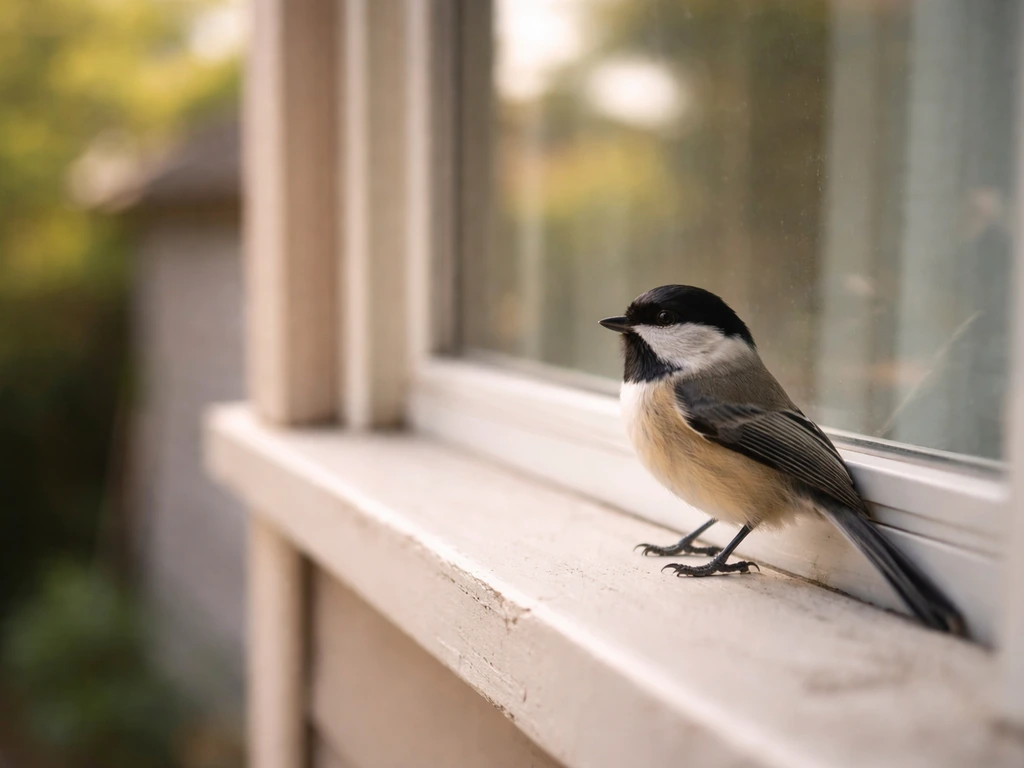
When a bird opens its mouth, the most likely explanation is completely ordinary: it's calling, begging for food, cooling itself down, or just yawning. Most of the time, there's nothing alarming happening. But if the beak is open continuously, the bird looks hunched or labored, or you hear wheezing or gurgling, that's a different story and it may need help today. On this site, we also take seriously what these encounters mean symbolically, because sometimes a bird catching your attention in an unusual way feels like more than coincidence. If you are wondering what it means when a bird lights on you, the symbolic context can be similar to what an open-mouth encounter suggests what does it mean when a bird lights. Some readers also wonder what finding a bird feather might mean and how it fits with the same symbolic themes what these encounters mean. If you're wondering what does it mean when a bird appears and opens its mouth, start by checking whether the bird looks healthy or distressed. This guide covers both angles so you can assess what's actually happening, act if needed, and reflect on the meaning if that resonates with you.
What Does It Mean When a Bird Opens Its Mouth?

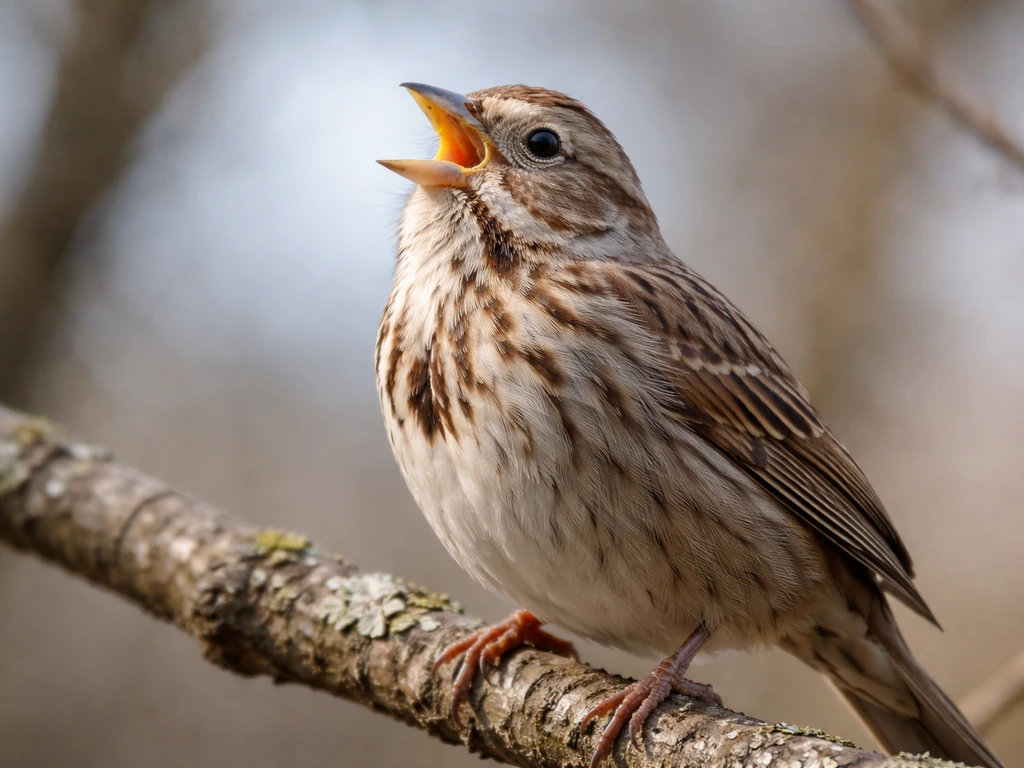
Common real-world reasons a bird opens its mouth
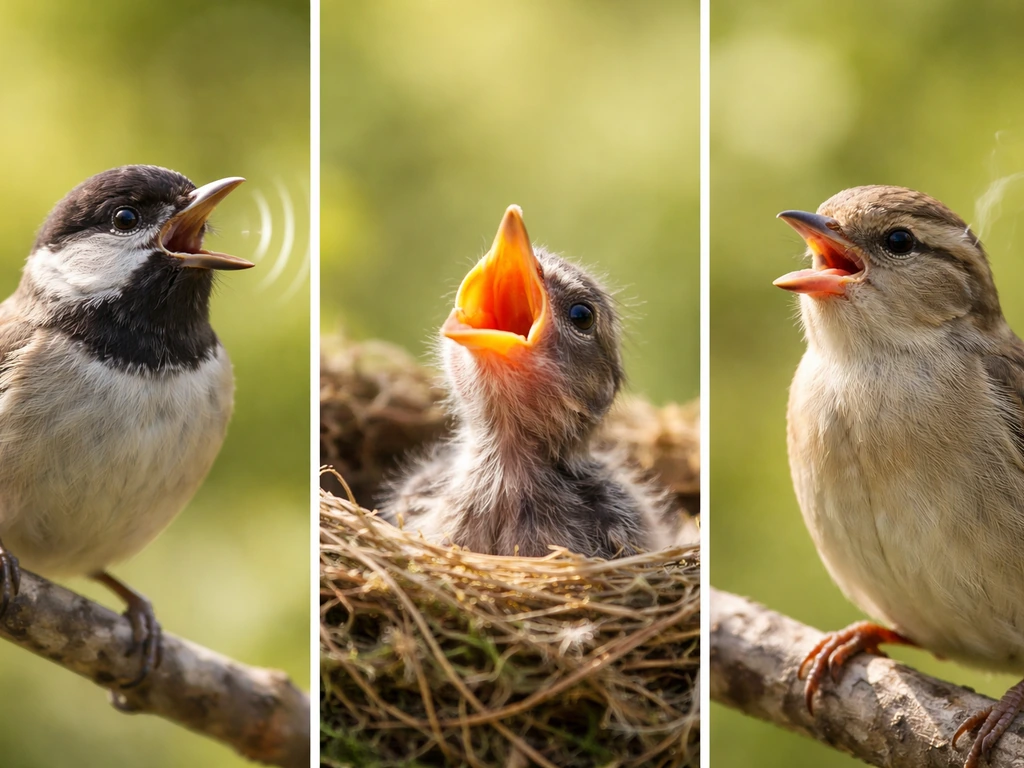
Birds open their beaks for a surprisingly wide range of normal, healthy reasons. Understanding what's most common will help you quickly rule out anything worrying.
Calling and communication
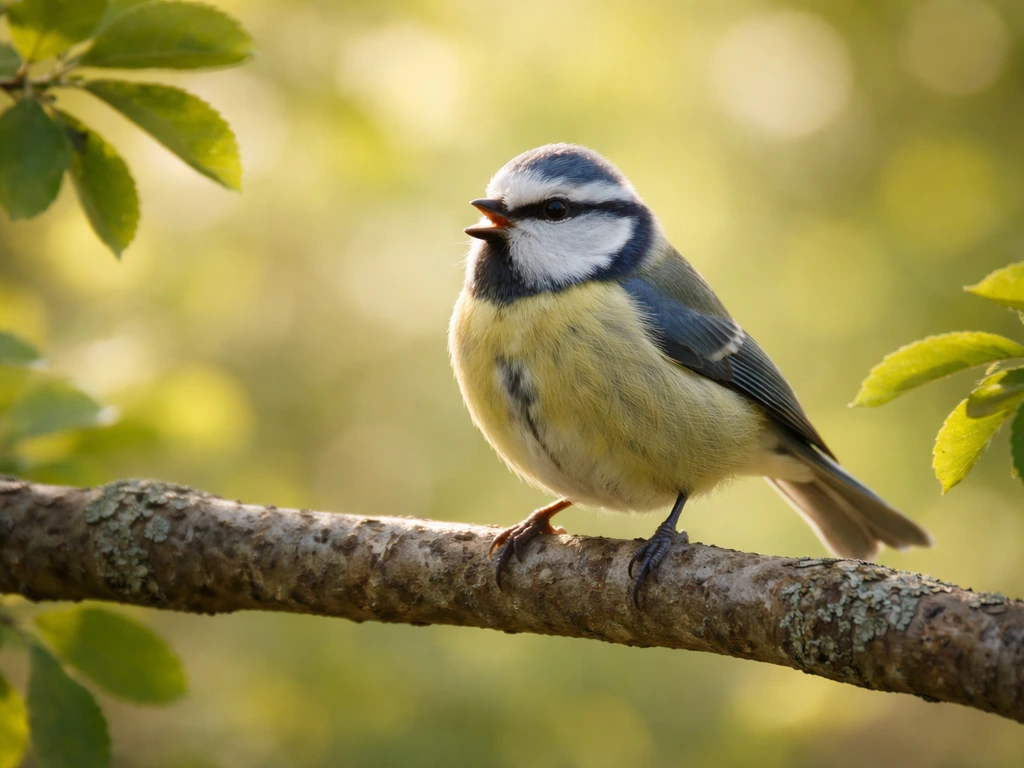
This is far and away the most frequent reason. Singing, alarm calls, contact calls between mates, and territorial warnings all require an open beak. If you see a bird with its mouth open and sound is coming out, or if its throat is visibly moving, it's almost certainly just talking. Birds communicate constantly and an open mouth is part of that process.
Begging and feeding behavior
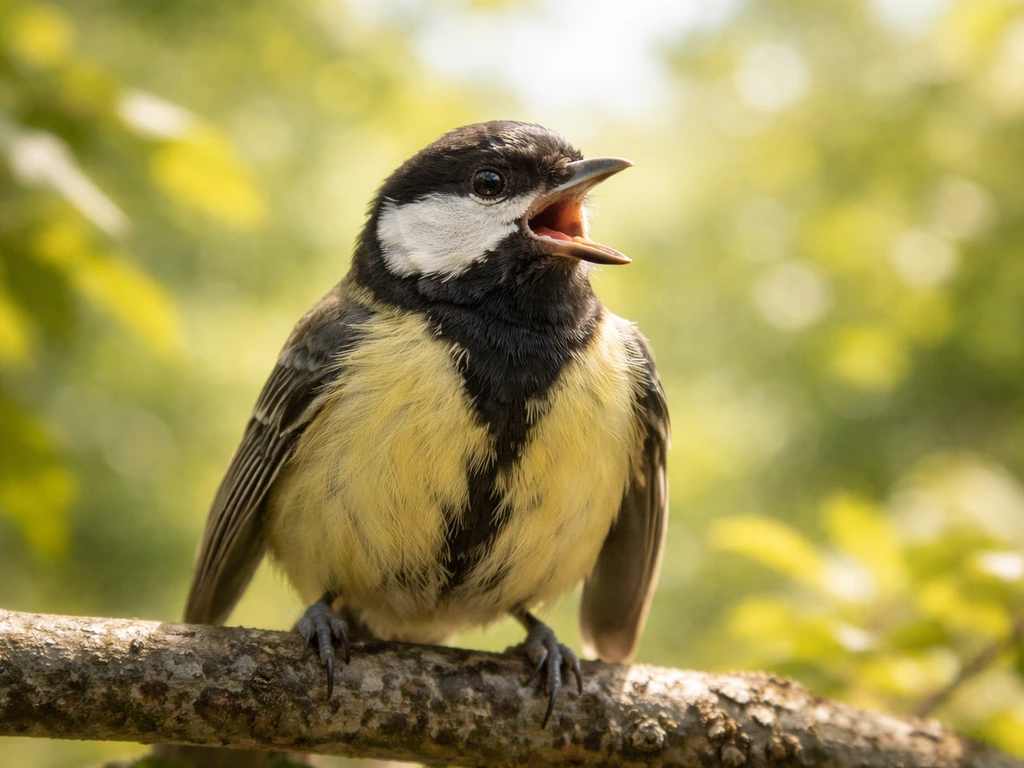
Nestlings and fledglings gape, meaning they hold their mouths wide open, as a hardwired begging signal. Research on species like black-capped chickadees shows that nestlings respond to parental calls and other stimuli by immediately opening their beaks wide, ready to receive food. If you see young birds doing this, especially in or near a nest, it's completely normal. Even juvenile birds that have already left the nest will beg from parents for weeks, following them around with beaks open and wings fluttering.
Thermoregulation and panting
Birds don't sweat, so when they overheat, they open their mouths to cool down. This works through evaporative cooling, where airflow over moist membranes in the mouth and throat pulls heat away from the body. Some species, particularly large-bodied birds like pelicans and cormorants, use a more specific behavior called gular flutter, where the throat vibrates rapidly to maximize evaporative cooling with minimal energy. If it's a hot day and you see a bird sitting in shade with its beak open and breathing rapidly, it's almost certainly just hot. The behavior typically stops once the bird moves somewhere cooler or the temperature drops.
Threat displays and aggression
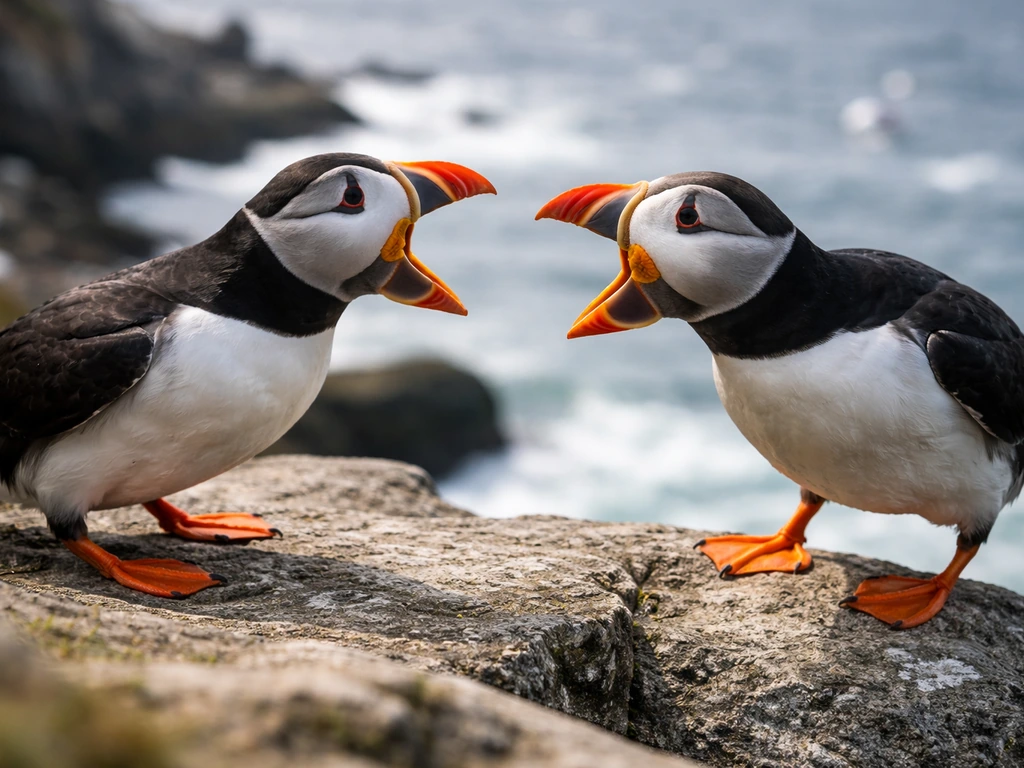
Some species use a wide-open beak as a threat or warning display. Atlantic puffins, for example, commonly begin aggressive encounters with a gaping display before any physical contact happens. Raptors, herons, and many other birds will gape at perceived threats as a way of saying "back off." If you see a bird doing this toward you or another animal, it's communicating a warning, not experiencing distress.
Courtship displays
Open-mouth postures also appear in courtship. Puffins have a well-documented billing display where pairs touch beaks, which can involve open or partially open mouths. Many songbirds also open their beaks during courtship feeding, where males offer food to females as part of pair bonding. If you see two birds face to face with beaks open or touching, and the body language looks relaxed rather than tense, it's likely a courtship or bonding interaction.
Yawning and stretching
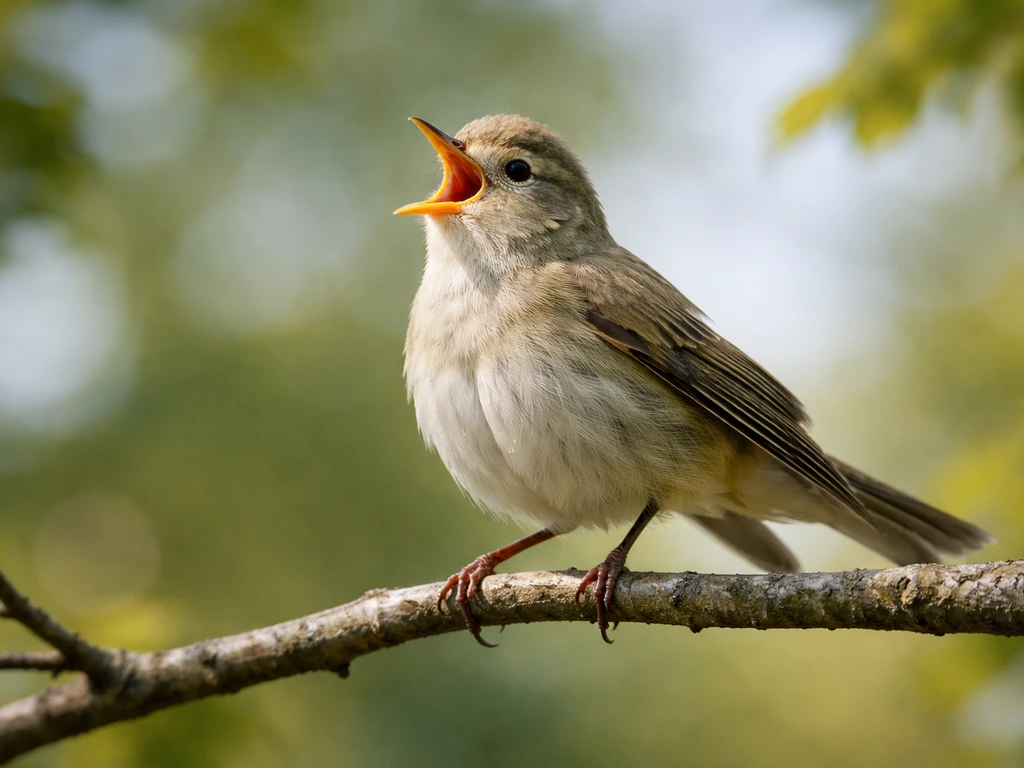
Yes, birds yawn. It's brief, the whole body often stretches slightly, and it happens once and is done. Completely normal and honestly one of the more endearing things birds do.
Bird behavior cues to look for right now
Before you decide whether what you're seeing is normal or concerning, run through these quick checks. Context is everything here.
- Species and size: A nestling with an open beak is almost always begging. A large adult bird panting on a hot day is almost always thermoregulating. Knowing roughly what kind of bird you're looking at helps a lot.
- Alone or with others: A bird begging near a parent is fine. A bird sitting alone on the ground with its mouth open, unable to fly, is more worrying.
- Time of day and temperature: Open-mouth breathing on a hot afternoon is expected. The same behavior on a cool morning or at night is a potential red flag.
- Posture: A healthy bird holds itself upright and alert. A bird that is hunched, feathers puffed out, or leaning to one side while its mouth is open needs attention.
- Throat and chest movement: Rapid, labored chest heaving is different from the normal rise and fall of breathing. Gular flutter looks like a rapid, controlled vibration, not a struggle.
- Sound quality: Normal calls and songs sound clear. Wheezing, clicking, rattling, or gurgling sounds from the throat are abnormal and suggest a respiratory problem.
- Duration: A brief open mouth for a call or yawn is normal. A mouth that has been hanging open for several minutes with no clear vocalization happening is a warning sign.
- Surroundings: Is there debris near the beak or signs the bird has been in contact with something? Is there oil, netting, or other material that could indicate an injury?
How to tell if the open mouth means distress or danger
This is the most important practical section in this guide. Most open-mouth behavior is completely benign, but there are specific combinations of signs that mean you should act rather than watch.
| Sign | Likely Normal | Possible Distress |
|---|---|---|
| Beak open briefly with sound | Yes, vocalization or yawn | No |
| Beak open on a hot day, bird alert | Yes, thermoregulation | No |
| Nestling with wide-open beak | Yes, begging for food | No |
| Beak open continuously, no sound | Unlikely | Yes, possible choking or illness |
| Rapid, labored chest heaving | No | Yes, respiratory distress |
| Wheezing, clicking, or gurgling | No | Yes, respiratory infection or obstruction |
| Hunched posture, puffed feathers | No | Yes, illness or injury |
| Unable to fly, sitting on ground | No | Yes, needs help |
| Head tilted or bobbing abnormally | Possibly normal curiosity | Possibly neurological issue |
Respiratory infections, mites in the airway, foreign objects stuck in the throat, and heatstroke can all cause a bird to hold its mouth open in distress. If you see two or more of the distress signs above together, especially labored breathing, inability to fly, and abnormal posture, treat it as an emergency and contact a licensed wildlife rehabilitator or veterinarian as soon as possible. Do not try to feed water to a bird in distress, as it can enter the lungs. Keep the bird calm, minimize handling, and get professional help.
The spiritual and symbolic meaning of a bird opening its mouth
Once you've ruled out an immediate health concern, or if the bird you saw was clearly healthy and just caught your attention with its open mouth or song, it's worth sitting with what that encounter might mean to you. This site holds space for that kind of reflection, and there are some rich interpretations across traditions.
The open mouth as a message being delivered
Across many spiritual traditions, birds are understood as messengers between the earthly and the divine. An open mouth amplifies that: a bird that is singing, calling, or even gaping in your direction might be interpreted as actively trying to get something across. In this reading, the bird isn't just present, it's speaking. If you are trying to pin down the bird ruffling feathers meaning, start by comparing the moment you noticed the bird with what you felt it was trying to say symbolic meaning. If a bird opened its mouth directly toward you and held your attention, many would interpret that as an invitation to listen, to pay attention to what's being communicated in your life right now, whether from your own intuition, from a loved one's memory, or from something larger.
Speaking truth, finding your voice
The open mouth is also a natural symbol of expression and truth-telling. Seeing a bird boldly singing or calling, especially at an unexpected moment, is sometimes read as an encouragement to speak up, to say the thing you've been holding back, or to trust that your voice matters. This is a common interpretation in intuitive and metaphysical communities, and it connects to the throat chakra in Eastern spiritual frameworks, the seat of authentic communication and expression. A bird singing right outside your window when you've been struggling to say something hard can feel like a very direct nudge.
Awakening and calling attention
In some symbolic readings, a bird making itself seen and heard, especially in an unusual way, is a sign that something is trying to wake you up to a situation. The open mouth symbolizes urgency, a call that's hard to ignore. If the encounter felt surprising or out of place, like a bird appearing and vocalizing at a moment that felt charged with significance, this awakening interpretation may resonate. Related to this, a bird that seems to be warning (like a threat display directed at an unseen force) is sometimes taken as a protective omen, a sign that your spiritual or intuitive awareness is being activated.
Needing to be heard
Some people feel drawn to a more reflective interpretation: what if the open-mouth bird reflects something in you that needs to be heard or acknowledged? Rather than a message coming in, this reading treats the encounter as a mirror. Is there a part of your own story, grief, desire, or truth that is straining to be expressed? Many people find this kind of encounter most meaningful precisely when they've been suppressing or ignoring something important.
Biblical and folklore angles on birds and the open mouth
The Bible is full of bird imagery connected to divine communication and provision. Ravens and doves appear as messengers and symbols of covenant. In Psalm 104, birds are described as singing among the branches, connected to the theme of creation praising its maker. While no single verse directly addresses "a bird opening its mouth" as a spiritual sign, the broader biblical tradition treats birds and their voices as part of creation's ongoing testimony. Many Christian folk traditions have held that an unexpected bird song, particularly at a window, carries a spiritual message, sometimes a visitation from a departed soul or an angelic prompt.
In Celtic folklore, birds were regarded as creatures that existed between worlds. Certain species, especially wrens and robins, were believed to carry the souls of the dead or to deliver messages from ancestors. A bird that sang or called insistently near a person was often interpreted as a departed loved one making contact, or a warning of change ahead. The open mouth in this context is the conduit, the point where the invisible world becomes audible.
In various Indigenous North American traditions (which are diverse and should not be flattened into a single interpretation), birds are frequently understood as carriers of spiritual communication, and bird song specifically is considered a form of sacred language. Hearing an unexpected bird call at a significant life moment is often understood as guidance or affirmation from the spirit world.
Eastern and Far Eastern traditions similarly elevate the bird as a spiritual intermediary. In Chinese symbolism, birds singing are considered auspicious, connected to joy, good news, and positive energy. A bird that appears and sings vigorously near your home is often read as a favorable omen for the household.
What to do next: practical steps and reflection
If the bird showed signs of distress

- Do not handle the bird unless it is in immediate danger (like a road or near a predator). Unnecessary handling adds stress.
- Keep any pets indoors and give the bird space.
- Contact a licensed wildlife rehabilitator. In the US, the Wildlife Center of Virginia and the National Wildlife Rehabilitators Association (NWRA) have directories to find local help. In the UK, the RSPCA handles injured wildlife.
- If you must move the bird briefly, place it gently in a box with air holes, lined with a soft cloth. Keep it dark and quiet. Do not give it food or water.
- Get it to professional care as quickly as possible.
If the bird was healthy and you're here for the meaning
Sit with the encounter rather than immediately reaching for a definitive answer. The most honest spiritual approach is to let the interpretation emerge from your own life context rather than a fixed rulebook. These questions can help you do that.
- What was I thinking about, feeling, or worrying about right before I noticed the bird?
- Is there something in my life right now that feels like it needs to be said or expressed?
- Did the encounter feel like a warning, an encouragement, or simply a moment of unexpected presence?
- If someone I've lost were trying to get my attention today, what would they most want me to hear?
- What would it mean for me specifically if this were a message? What would I be called to do or change?
Journaling the answers to even two or three of these questions after a bird encounter often reveals more than searching for a universal meaning online. The significance is almost always personal, shaped by what's actually happening in your life at the moment the bird appeared.
It's also worth paying attention to the bird's other behaviors around the same encounter. How a bird holds its body, whether it tilts its head toward you, how it moves its tail, and whether it fluffs or ruffles its feathers all carry their own layers of meaning, both behavioral and symbolic. A single moment of an open beak is one piece of a larger picture. A bird that tilts its head can also be part of the same attention-seeking behavior, with different reasons depending on context what does it mean when a bird tilts its head.
Whatever you take from the encounter, you don't need to interpret it in fear. A common question people ask is what it means when a bird wags its tail, and the same idea applies here. Whether the bird was begging, singing, panting, or doing something harder to name, the instinct to look up and pay attention is its own kind of gift. Birds have been prompting humans to slow down and notice for as long as we've been around each other. That alone is worth something.
FAQ
How can I tell the difference between normal gaping and something seriously wrong?
If the bird’s mouth is open only briefly, especially with visible sound, head movement, or relaxed body posture, it’s usually communication or a normal behavior like cooling or a yawn. “Concerning” is more about duration and breathing quality: continuous open-mouth posture, hunched posture, and any wheeze or gurgle, especially together, are the combination that warrants urgent help.
What signs should I look for if the bird looks “too focused” on keeping its mouth open?
If a bird is begging or calling, it will typically interact with the environment in a coordinated way, like following a parent, moving toward a food source, or keeping balance while vocalizing. In respiratory distress it often looks unable to control posture, may stay low to the ground, and breathing is visibly effortful, with the throat and chest working harder than normal.
Can threat displays or courtship look like distress?
Courtship or threat displays can mimic distress because both can involve gaping, but the body language is usually the clue. Displays are often short bursts, occur between specific birds or toward a perceived rival, and the bird remains alert and mobile. Distress is usually paired with labored breathing, inactivity, or abnormal posture and may come with sounds like wheezing.
What if I see open-mouth behavior in cold or mild weather?
Yes, but temperature helps interpret it. Panting with an open beak is common on hot days, and it often improves once the bird moves into shade or the air cools. If the weather is mild yet the bird keeps its mouth open and acts weak, treat it as a possible medical emergency rather than heat-related cooling.
Is it always okay to leave a baby bird with its mouth open?
Nestlings and fledglings gape reliably, but the context matters. If you find a baby that is fully feathered and can’t hop or fly, has a drooped posture, or is making unusual gurgling noises, that is not “just begging” and should be assessed by a licensed wildlife rehabilitator.
What should I do (and not do) if I suspect respiratory trouble?
Avoid water-feeding a bird that seems sick or unable to breathe normally, because liquids can enter the lungs. If you must intervene at all, keep the bird in a quiet, dim, secure box, limit handling, and contact a wildlife professional. For heat, you can keep the bird cool indirectly by offering shade and airflow, not by forcing fluids.
How do I know if rapid throat movement is cooling rather than a breathing problem?
Often, yes. An open mouth with rapid throat movement can be normal gular flutter during overheating, but if you also see weakness, inability to perch, bluish discoloration around the mouth, or persistent gaping that does not ease, switch from “watch” to “get help.”
Does a bird opening its mouth at me mean it wants something?
If the bird is singing from a branch nearby, there may be no “need” for help. Try to base your interpretation on whether the bird can fly, perches confidently, and shows normal alertness between calls. When the bird repeatedly opens its mouth toward you while remaining otherwise healthy, many people read it as attention or communication rather than an emergency.
How can I make a symbolic interpretation more grounded and personal?
If you’re going to interpret the moment symbolically, one useful approach is to write down three details: what the bird did right before it opened its mouth, what you were feeling in that moment, and whether anything in your life is calling for “voice,” urgency, or communication. This keeps the meaning personal instead of guessing a single universal definition.
What information should I record right after an open-mouth bird encounter?
If you want to document without stressing the bird, note the time of day, weather, approximate location, and how long the open-mouth behavior lasted. Avoid approaching closely or trying to “test” reactions. A few objective notes are far more useful for deciding whether to seek help.
What Does It Mean When a Bird Lands? Practical and Symbolic
Understand what it means when a bird lands: practical reasons plus spiritual and biblical symbolism, and steps to respon