A bird in a dream almost always carries meaning around freedom, perspective, and transition. That is the short answer. The longer, more useful answer is that the specific message depends heavily on which bird showed up, what it was doing, how you felt, and what is happening in your waking life right now. This guide walks through all of those variables so you can land on an interpretation that actually fits your dream rather than settling for a vague, one-size-fits-all answer.
Bird in Dreams Meaning: How to Interpret Each Detail Step by Step

Maya Hartwell
2 Apr 2026
What a bird in a dream usually symbolizes
Across most dream traditions, birds cluster around a handful of core themes: freedom (because flight is their defining trait), spirituality or a higher vantage point, hope and optimism, and movement through a transition or toward a goal. If you dreamed of a bird and you are not sure where to start, those four themes are your default anchors. Ask yourself which one resonates most with where you are in life right now, and you will already be closer to a personal interpretation than any generic dictionary entry can get you.
Birds are also widely treated as messengers, both in everyday symbolism and in formal dream interpretation. The idea is intuitive: something that can travel between the ground and the sky, between the visible and the unseen, feels like a natural carrier of information. That messenger quality is why so many people wake from a bird dream with the sense that something was being communicated to them, even if they cannot articulate what. What does dreaming of a bird mean at its core? Usually it is an invitation to look at your life from a higher vantage point, something you may have been too close to see clearly.
Species, color, and size: the details that shift the meaning
The species of bird is probably the single biggest modifier in any bird dream. Dream symbol systems lean heavily on cultural associations rather than biology, so the meaning of an owl is not about owls' hunting habits, it is about what owls represent across cultures: wisdom, intuition, and the ability to see what is hidden. An eagle or hawk typically signals ambition, a large-scale perspective, or a call to step into personal power. A robin or bluebird leans toward renewal and emotional warmth, the so-called bluebird of happiness that appears in folklore as a symbol of hope arriving. A dove, as most people already sense, points toward peace, gentleness, or spiritual blessing.
Crows and ravens deserve their own note because people often feel unsettled when they appear in a dream. Culturally, they carry an ominous reputation in many Western and European traditions, but that reading is not universal. In some Indigenous and Norse traditions, ravens are intelligence and magic, not doom. If a crow or raven appeared in your dream, the emotion you felt during the dream matters enormously (more on that below). A crow that felt threatening is a very different symbol than one that simply watched you calmly.
Color works as a secondary layer on top of species. Blue birds or blue feathers in dream symbolism are commonly linked to calm thought, clear communication, and truthful speech. Red typically signals passion, urgency, or strong emotion. White birds almost universally point to purity, peace, or spiritual presence. A black bird pulls in mystery or the unconscious. If you dreamed of an unusual color that does not match the bird's real-world appearance, that incongruity is worth noting because your dreaming mind chose it deliberately.
Size is a simpler modifier: a large, imposing bird tends to amplify the symbol's weight, suggesting the theme is a major one in your life right now. A tiny bird often signals something delicate, something that needs gentle handling or that could easily be lost.
What the bird was doing: behavior as the main story
Behavior is arguably more important than species for pinning down what a dream is telling you. The same bird doing different things sends completely different messages. Here is a practical breakdown of the most common bird behaviors in dreams and what they typically point toward.
- Flying freely: Your sense of optimism, forward movement, or desire to rise above a current situation. This is generally the most positive bird behavior you can dream of.
- Singing or calling: Communication, self-expression, or a message trying to reach you. Ask yourself whether you have been holding something back in waking life.
- Landing on you or near you: An invitation to pay attention. Something is trying to get close enough for you to notice it, whether that is an opportunity, a feeling, or a relationship.
- Nesting: Themes of home, stability, preparation, and nurturing. You may be building something important or craving security.
- Attacking or dive-bombing: A part of yourself or a situation in your life that feels threatening. It can also signal that you are defending something you care about deeply.
- Trapped or in a cage: Restriction, unexpressed voice, or feeling stuck. This is one of the more urgent bird dream scenarios to sit with.
- Escaping or being released: A positive sign, often interpreted as finding a way out of a difficult situation or reclaiming your freedom.
A trapped bird dream and a freely soaring one are almost opposite messages, even if the species is identical. That is why jumping straight to species symbolism without accounting for what the bird was actually doing will almost always give you a partial reading at best.
If the bird in your dream was unwell or hurt, that is a specific scenario worth exploring carefully. A dream about an injured bird often reflects a part of yourself that feels damaged or vulnerable, or it can mirror concern for someone in your life who is struggling. Likewise, a sick bird dream can be your subconscious flagging something fragile in your emotional world that needs attention before it worsens.
Your role in the dream matters just as much
What were you doing in the dream? Your own actions and your relationship to the bird are part of the symbol, not just background context. Holding a bird in your hand is traditionally associated with opportunity, particularly around work or personal advancement. The bird is within your grasp, which suggests you have more agency than you might realize in your waking situation.
If you were setting a bird free in your dream, the interpretation leans toward release, letting go of control, or consciously choosing liberation for yourself or someone else. That act carries emotional weight whether you felt relief or grief doing it in the dream, both are valid and both tell you something different about your relationship to what the bird represents.
Dreaming of killing a bird is one that often alarms people, but it does not carry the straightforward negative reading most people fear. It more commonly points to ending something, cutting off a pattern, or making a decisive move. The question to ask is: what quality does that bird represent, and is there something in your life that quality belongs to that you are ready to end or transform?
Similarly, eating a bird in a dream sounds strange but tends to point toward internalizing qualities, taking in the energy or essence the bird represents. If the bird was an eagle, you might be absorbing courage or ambition. If it was a dove, you might be drawing peace inward.
The setting matters too. A bird inside your house shifts the symbolism toward your personal or domestic life, something private is being touched or disrupted. A bird in the open sky is about larger life themes, direction, and vision. An empty bird cage in a dream is a particularly loaded image: the freedom has already happened, or the voice that once filled that space is now gone. Whether that reads as loss or liberation depends entirely on your emotional response to the image.
Spiritual, biblical, folklore, and metaphysical perspectives
Spiritual and metaphysical
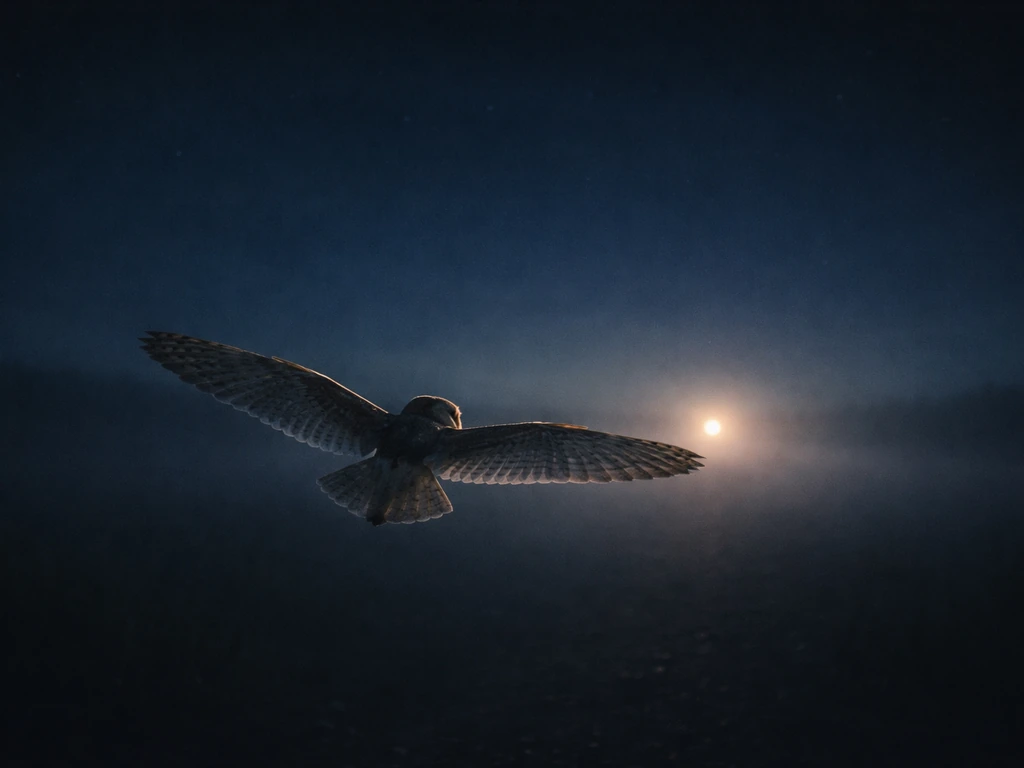
From a spiritual standpoint, birds in dreams are frequently read as guides, messengers, or confirmations from a higher source. The owl carries strong associations with intuition and hidden wisdom in metaphysical traditions, which is why many people interpret an owl dream as a prompt to trust their gut or look more deeply at a situation. In energy-based or metaphysical frameworks, birds are often seen as representations of the soul or of spiritual aspiration, reaching upward, transcending the physical.
Biblical and Christian
Biblical symbolism for birds is rich and specific. The dove is the most prominent: it appears at Jesus' baptism as the Holy Spirit descending, and in Genesis 8:11, a dove returns to Noah carrying an olive branch, serving as a sign that the flood had ended and a new beginning was possible. In Christian tradition, the dove became inseparable from peace, purity, and divine presence. Ravens carry a different biblical story: in 1 Kings 17, God directs ravens to feed the prophet Elijah during his time in hiding, which reframes the raven not as an omen of doom but as an instrument of provision and care. So if a raven or crow appears in your dream and you come from a Christian background, that biblical narrative of unexpected provision is worth holding alongside the more common cultural reading of foreboding.
Folklore and cultural traditions
Folklore approaches to bird dreams often overlap with omen reading. In ancient Greek practice, ornithomancy, which was the formal art of reading omens from birds' flight and calls, birds were treated as direct messages from the divine. Many cultures developed specific bird-omen systems: in some Cherokee traditions, an owl was seen as a harbinger of death, while Chinese culture tied the owl more to mystery and intelligence. Crows were considered bad omens in certain Roman and European contexts but were revered in others. The takeaway here is that cultural framing matters, and your own cultural background will naturally color which interpretation feels true to you.
How to choose your lens
You do not have to pick just one framework, and you probably should not. The most honest approach is to hold the interpretation that resonates most with your own life and beliefs while staying aware that other traditions read the same image differently. If you come from a faith background, let biblical associations lead and treat the others as supporting context. If you are drawn to metaphysical frameworks, let the energetic and intuitive readings take center stage. What matters most in personal dreamwork is not which tradition is right, it is which interpretation produces a useful insight for your current situation.
Positive signs, warning signals, and when not to overthink it
| Dream scenario | Common positive reading | Possible warning reading |
|---|---|---|
| Bird flying freely | Forward movement, optimism, liberation | Avoidance, running from something |
| Bird singing to you | Message incoming, self-expression needed | Noise you are not listening to |
| Bird landing on you | Opportunity close at hand, connection | Burden or responsibility arriving |
| Bird in a cage | Contained potential, protected creativity | Suppressed voice, feeling trapped |
| Bird escaping | Freedom found, way out of difficulty | Loss of something you were holding onto |
| Bird attacking | Strong self-defense energy, urgency | Anxiety, aggression in a relationship |
| Flock of birds | Community, collective momentum | Overwhelm, mob mentality pressure |
| Dead bird | Ending of a cycle, transformation near | Loss of hope, grief, or missed opportunity |
A genuinely important caution: not every bird dream is a profound message. Dreams also process stress, sensory input, and recent experiences. If you watched a nature documentary the night before, or if a bird flew into your window that morning, your brain may simply be filing that away. The question to ask is whether the dream felt significant, emotionally charged, or unusually vivid. Recurring bird dreams are much more worth investigating than a single passing image, and if you notice the same bird type or scenario appearing repeatedly, that repetition is your strongest signal that something deserves your attention.
How to interpret your specific bird dream today

Here is a practical routine you can use right now, even if the dream was last night or a few days ago. The goal is to move from a vague impression to a specific, personally relevant interpretation.
- Write it down before you do anything else. If you just woke up, grab your phone or a notebook and record everything you remember: the bird species or description, its color and size, what it was doing, what you were doing, the setting, and anyone else present. Do not filter or edit, just capture. The more detail you preserve in the first few minutes, the more you have to work with.
- Identify your dominant emotion during the dream, not your reaction upon waking. Fear, calm, wonder, grief, joy: that emotional tone is the most reliable compass for whether the dream leans positive or cautionary. A beautiful eagle that filled you with dread carries different weight than the same eagle that made you feel expansive and free.
- Apply the species and color layer. What does that particular bird mean to you personally? Set aside dictionary meanings for a moment and ask: what is my gut association with this bird? Then cross-reference with cultural and spiritual symbolism to see where they overlap.
- Factor in the behavior. Go back to the behavior list above and identify which category the bird's actions fall into. This is usually the most specific and actionable part of the interpretation.
- Check your waking life for parallel themes. What is currently unresolved, changing, or pressuring you? Bird dreams almost always rhyme with something happening in waking life. Freedom themes may mirror a decision about a job or relationship. Nesting themes may connect to home or family situations. The parallel is rarely hidden once you look for it.
- Consider any real-world bird encounters recently. If you have had an unusual bird interaction in waking life, your dream may be extending or deepening that encounter's meaning. This site covers many of those waking-life bird encounters in detail and they often inform each other.
- Ask the resonance question. Of all the possible interpretations you have generated, which one makes you feel something, a sense of recognition, relief, or even uncomfortable truth? That response is your signal. Dream interpretation is not about finding the objectively correct answer, it is about finding the personally true one.
- Decide whether to act on it. If the dream feels like guidance rather than stress processing, write down one small action or reflection it is prompting. If it feels like your brain working through anxiety, acknowledge that and let it go without over-analyzing.
One last thought: if a bird dream stays with you for days or keeps returning, that persistence is data. Recurring dreams are your mind's way of flagging something unresolved. Keep a simple dream journal by your bed and note each occurrence with the date, the bird, and the emotion. Patterns become visible over weeks in a way that a single dream rarely reveals. The bird in your dream showed up for a reason, but what that reason is belongs entirely to you to discover.
FAQ
If I dream of a bird, what should I interpret first when the meaning feels unclear?
Start with emotion first, then ask what felt most “inside your control.” If the dream left you calm or hopeful, the default themes (hope, perspective, transition) likely apply. If it felt tense or urgent, treat the bird behavior (trap, chase, attack) as the main message rather than the species.
How can I tell if a bird in my dream is just random brain processing versus a real symbolic message?
Yes, you can have a “memory effect” where your brain recombines real inputs. A quick check is whether the dream matches something you saw or heard recently (a TV clip, a specific bird outside, a conversation). If the dream is routine, low emotion, and not repeated, it is more likely processing than a symbolic directive.
What should I do if I keep seeing the same bird in my dreams?
If the same bird type keeps appearing, treat it as consistent symbolism and track only two variables each time: the bird’s behavior and your emotional response. Species symbolism matters, but behavior plus emotion tends to explain why the theme keeps resurfacing.
What if I do not know what kind of bird it was in my dream?
When you cannot decide between two species interpretations, use a “theme override.” Pick the core action or scenario (messenger, trapped, flying, injured, in a cage) and then only use species as a modifier. This prevents overfitting to the wrong cultural association.
Does the bird’s movement direction (toward me vs away from me) change the meaning?
In dreams, the “direction” of movement often shifts the message. A bird moving toward you can suggest something arriving or being offered, while a bird flying away can point to withdrawal, distance, or letting go. Pair this with your reaction, surprise versus relief, to refine the reading.
What does it mean if the bird keeps showing up near my windows, doors, or in transition spaces?
Pay attention to the scene hierarchy: is it in your house, around your workplace, or outside in open space? A bird repeatedly appearing at a boundary location like a doorway or window often symbolizes changes that are about to enter your personal life, or information you are close to acknowledging.
How do I interpret the bird dream if I felt helpless or in charge in the dream?
Yes. You can use a “replacement test” for agency: if you felt like a watcher, the dream may be about perspective. If you felt responsible for the bird’s outcome (helping, freeing, protecting), the dream is more likely reflecting duty, choices, or control patterns in waking life.
What is the best way to connect an injured or sick bird dream to something actionable in waking life?
If you dream of an injured or sick bird, look for a specific area that feels vulnerable rather than a broad “something is wrong.” A helpful next step is to identify one concrete emotional need (rest, support, honest conversation) and ask whether you are currently ignoring it.
I dreamed of killing a bird, and I feel disturbed. How should I interpret that safely and realistically?
Do not treat “killing” as automatically predicting harm. Instead, treat it like symbolic closure, if the dream emotion supports that. Ask, “What pattern am I ready to end, and what belief or identity am I transforming?” If the dream emotion is guilt or fear, the act may reflect internal conflict about a necessary boundary.
How do I interpret bird colors if they do not match what the bird looks like in real life?
Color can work like a mood filter, but it should not override strong details like behavior and setting. If the dream includes multiple colors, prioritize the one that is most vivid or emotionally charged, since that is the one your mind likely wants you to notice first.
What does it mean if I dream of a bird being eaten, not me eating it?
If you dream of a bird eating or another creature eating the bird, focus on themes of internalizing versus taking energy from something. Ask what “quality” the bird represents to you (courage, peace, wisdom) and whether you are trying to absorb it or whether it feels taken from you.
I am not spiritual or religious. Can I still use bird-in-dream interpretations effectively?
If you are not religious or metaphysical, you can still use the “confirmation” idea without literal belief. Translate it into a practical prompt: the dream highlights what needs attention now. If the dream is recurring, your best next step is journaling plus one small real-world experiment related to the theme.
What if my bird dreams are upsetting and start affecting my sleep or mood?
Yes, but handle it gently. If a bird dream is repeatedly linked to distressing themes, consider whether anxiety, grief, or stress is spiking around the same time each week. If the dream content triggers panic, sleep disruption, or significant distress, talking to a mental health professional can be a helpful additional step.