Dreaming of a bird almost always carries some kind of symbolic weight, whether you're the type who logs every dream in a journal or the type who forgets everything by breakfast. In general, birds in dreams are associated with freedom, communication, the soul, and transitions. But that's a very broad starting point, and the specific details of your dream, the species, color, what the bird was doing, and how you felt, are what actually tell you something useful. This guide walks through all of it in a practical, layered way so you can land on an interpretation that actually fits your life.
What Does Dreaming of a Bird Mean? Key Scenarios

Maya Hartwell
4 Apr 2026

Start with the basics: dreams vs omens
Before we dig into symbolism, it's worth being honest about what dreams are and aren't. Psychology Today emphasizes that dream content is shaped by your thoughts, emotions, memories, and what you have been processing, and it is not a reliable way to predict the future [Understanding Dreams](https://www. psychologytoday. com/us/basics/sleep/understanding-dreams?
msockid=3b7edd9a9ff266ac2706cb509e58675f). Sleep researchers are pretty clear that dreams are shaped by your thoughts, emotions, memories, and the things you've been processing, not by outside forces sending you coded messages. The Sleep Foundation notes that dream content is influenced by your inner emotional life and that dreams are not a reliable way to predict the future. So if you dreamed of a bird flying away last night, you probably aren't receiving a prophecy about something you're about to lose.
That said, dismissing bird dreams entirely misses the point. Dreams are a legitimate window into your subconscious. The imagery your sleeping mind reaches for, including birds, which carry centuries of symbolic meaning across virtually every culture, can tell you something real about what you're feeling, fearing, hoping for, or working through. The healthiest approach is to treat a bird dream as a prompt for reflection, not a divine instruction manual. Keep that balance in mind as you read through the interpretations below, and you'll get a lot more out of this.
One more thing: a single dream rarely means much in isolation. Dream researchers like William Domhoff have argued extensively that patterns across many dreams carry more interpretive weight than any one isolated image. If you're seeing birds in your dreams repeatedly, that's when it's worth paying closer attention. A one-off bird dream? Interesting, maybe meaningful, but probably not a life-altering sign.
Match the bird details: species, color, and setting

The first thing to do when you wake up from a bird dream is try to remember the specifics. What kind of bird was it? Where were you? What time of day did it feel like? These details genuinely shift the interpretation, and the deeper layers of bird in dreams meaning often live in those particulars rather than in the general category of 'bird.'
Species matters more than you'd think
Different bird species carry very different symbolic histories. An eagle is almost universally tied to power, vision, and ambition. A dove is associated with peace, the Holy Spirit in Christian tradition, and hope after hardship. An owl appears in many traditions as a messenger between the living and the dead, or as a symbol of hidden wisdom. A raven or crow tends to carry transformation, trickster energy, or in some traditions, death and prophecy. A robin signals renewal and new beginnings. A parrot might point to communication or repetition of patterns. If you can identify the species, look it up with that context in mind.
Color carries its own layer of meaning
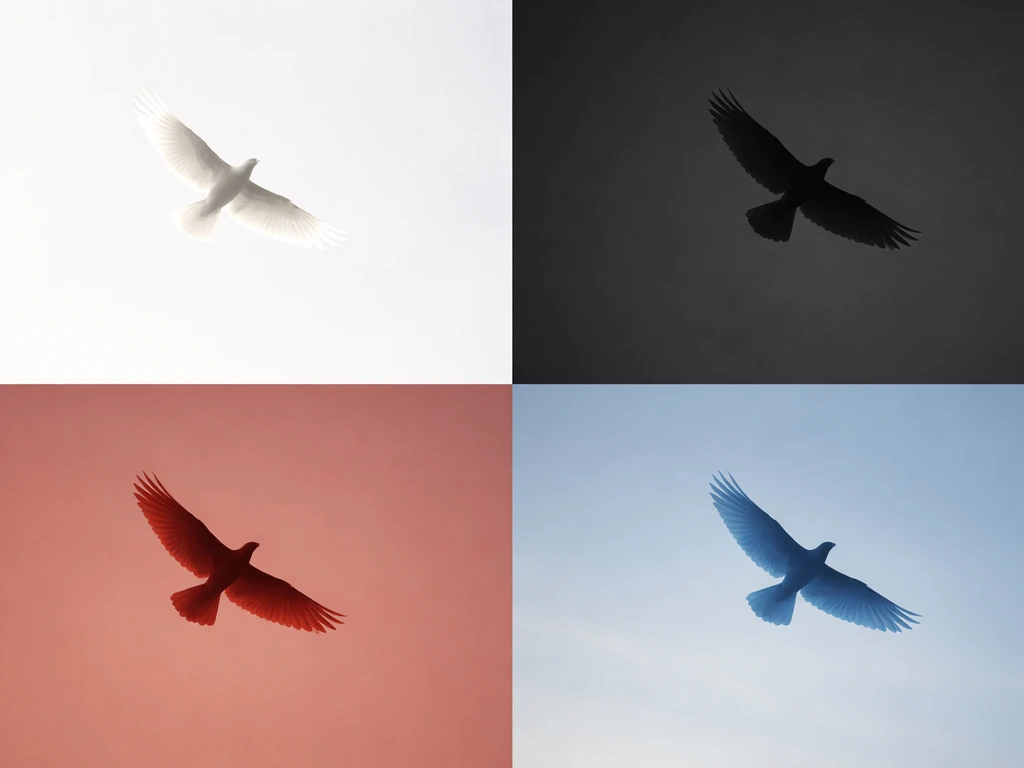
| Bird Color | Common Symbolic Association | Practical Reflection Prompt |
|---|---|---|
| White | Purity, peace, spiritual presence, hope | Am I seeking clarity or relief from conflict? |
| Black | Mystery, transformation, the unconscious, endings | What am I afraid of losing or changing? |
| Red | Passion, urgency, vitality, warning | What is demanding my attention right now? |
| Blue | Communication, calm, spiritual connection, truth | Is there something I need to say or hear? |
| Yellow/Gold | Joy, creativity, intelligence, optimism | What new idea or opportunity am I sitting with? |
| Green | Growth, healing, renewal, nature | Where in my life do I need to heal or start fresh? |
| Multi-colored | Complexity, creativity, many facets of a situation | Am I dealing with something that has no simple answer? |
The setting shapes the tone
A bird soaring over an open sky feels expansive and hopeful. A bird inside your house is a very different energy, one that often signals an unexpected message, a boundary crossing, or something emotional entering your personal space. A bird in a cage, even a decorated one, introduces themes of restriction, potential, and whether freedom is being withheld or chosen. Pay attention to whether the setting felt comfortable, threatening, strange, or peaceful, because your emotional response to the setting is data too.
Bird actions and what they usually symbolize
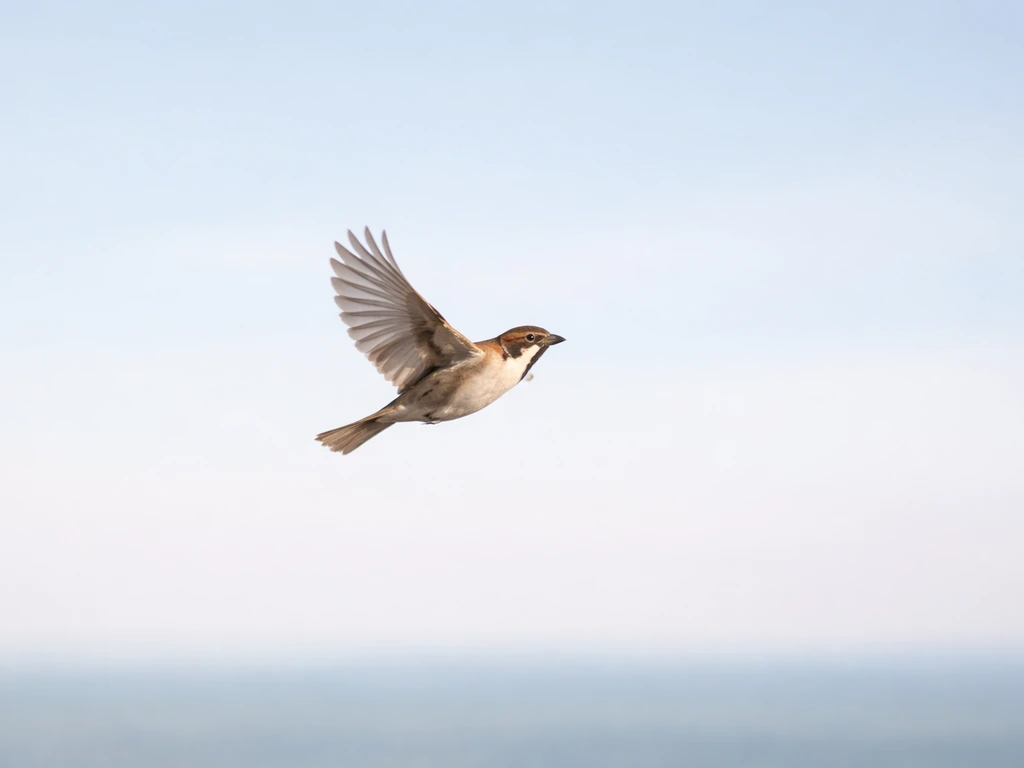
What the bird was doing in your dream is often the most telling detail of all. The same species doing two different things can mean something quite different.
- Flying freely: Liberation, ambition, rising above a problem, or a desire for independence. This is one of the most positive bird dream scenarios and often appears during transitions, job changes, moves, or personal growth moments.
- Landing on you or near you: A message being delivered, a need for attention, or a sign of trust and connection. In many folk traditions, a bird landing on you is considered an omen of news or a spiritual visitation.
- Singing: Good news, joy, or a call to express yourself. A singing bird in a dream is widely interpreted as a positive sign across traditions, symbolizing communication and celebration.
- Nesting: Domesticity, home, family, nurturing, building something lasting. If the nest was full of eggs, that often adds a layer of new beginnings or creative potential.
- Attacking or swooping: Fear, feeling threatened, external pressure, or your own aggression turned outward. It may point to a situation or relationship that feels hostile.
- Perching silently and staring: Waiting, observation, a message not yet delivered, or a feeling that something is being withheld.
- Migrating in a flock: Community, belonging, cycles, the passage of time, or a collective movement in your life.
If the bird in your dream was setting off on a journey or you watched it fly away from you, that action often reflects a desire for release or a fear of loss. Dreams where setting a bird free is the central action tend to show up during moments when someone is ready to let go of something they've been holding tightly, a relationship, a habit, a version of themselves.
Scary or intense variations: injured, trapped, or dead birds
Not every bird dream feels good, and the uncomfortable ones often carry the most to unpack. These variations tend to surface when something in your waking life is stuck, threatened, or ending.
A dream meaning injured bird scenario often reflects vulnerability, something precious to you that's been damaged, whether that's your confidence, a relationship, or a creative project. It can also signal that you're aware someone around you is hurting and needs care. The key question to ask yourself is: did you try to help the bird, or did you feel helpless watching it? That emotional response points directly to how you're relating to the wounded thing in your real life.
Dreams of a trapped bird are among the most emotionally charged bird dream experiences. They almost universally reflect a feeling of confinement, being stuck in a job, a relationship, a belief system, or a circumstance that doesn't fit who you are anymore. The more distressed the bird in the dream, the more urgent that feeling of restriction probably is in your waking life.
A sick bird dream meaning follows a similar thread but tends to carry more of a slow decline quality. It might reflect anxiety about your own health, worry about someone close to you, or a sense that something in your life is fading or losing its vitality before it's gone entirely.
Dreaming of a dead bird is probably the scenario that most often sends people searching for answers. In most symbolic traditions, a dead bird represents the end of something, a phase, a hope, a relationship, or an old version of yourself. It rarely signals a literal death omen (and as noted above, dreams are not predictive in that way). More often it marks a transition. Something has to end for something new to begin. If the dead bird felt peaceful in the dream, the ending may already feel resolved. If it felt shocking or distressing, you may be resisting a change that's already underway.
Then there are the more visceral scenarios: killing a bird in a dream tends to reflect feelings of suppression, either of your own freedom and expression, or of something you feel you've had to destroy or cut off to move forward. And dreaming of eating a bird often relates to absorbing qualities associated with birds, taking in wisdom, freedom, or spiritual energy, though it can also reflect dominance or consumption of something you value.
One scenario worth its own mention: the empty bird cage dream. This is a quietly powerful image. The cage is there, but the bird is gone. It can mean freedom has been achieved (a positive reading) or that something precious has already left (a loss reading). Your emotional tone in the dream, whether you felt relief or grief when you saw the empty cage, is the best clue to which one applies.
Spiritual, biblical, folklore, and metaphysical angles
Birds have carried spiritual meaning across virtually every human tradition for as long as we have records. Rather than picking one tradition as 'correct,' it's more useful to see where they converge and where they differ, then let your own background and belief system guide which resonates.
Biblical and Christian traditions
In the Bible, birds serve as divine messengers and symbols of God's provision. The dove is the most prominent example, representing the Holy Spirit at Jesus's baptism and bringing the olive branch of hope to Noah after the flood. Ravens fed Elijah in the wilderness. Sparrows are used by Jesus himself as symbols of divine care ('not one sparrow falls to the ground without your Father knowing'). Dreaming of a dove in this framework carries strong associations with peace, the presence of the Holy Spirit, and divine reassurance. An eagle, also prominent in scripture, signals strength and spiritual renewal ('they will soar on wings like eagles,' Isaiah 40:31).
Celtic and European folklore
In Celtic traditions, birds were frequently seen as messengers between the human world and the Otherworld, or as the souls of the dead. The wren was considered sacred and sometimes a carrier of secret knowledge. Ravens were the companions of the Morrigan, the goddess of fate and war, and seeing or dreaming of them was taken seriously as a potentially prophetic sign. Swallows nesting at your home in waking life was considered good fortune; in dreams, they might signal the same. European folklore broadly treated unusual bird appearances in dreams as omens or messages from ancestors.
Eastern and Indigenous traditions
In Chinese tradition, the crane is one of the most auspicious birds you can dream of, associated with longevity, wisdom, and good fortune. The phoenix (Fenghuang) represents transformation, renewal, and the cyclical nature of life. In many Indigenous North American traditions, specific birds are considered totems or spirit guides, and dreaming of them is understood as direct communication from the spirit realm or from ancestral guides. The specific meaning depends heavily on tribal tradition, so it's important not to flatten these beliefs into a single 'Indigenous' category. Broadly, though, birds in these traditions are often honored as bridges between the physical and spiritual worlds.
Metaphysical and intuitive frameworks
In more contemporary metaphysical thinking, birds in dreams are often interpreted through the lens of chakras, energy, and spiritual awakening. A bird flying upward might be read as the soul ascending or the dreamer's consciousness expanding. Specific colors align with chakra meanings (blue birds with the throat chakra and communication, white birds with the crown chakra and spiritual connection). These frameworks don't come with the same textual or cultural history as the traditions above, but many people find them personally resonant, and that's a legitimate reason to explore them.
What your emotions and real-life situation are probably reflecting
Here's something dream researchers consistently find: your dream imagery tends to map onto the emotional texture of your waking life, even when the imagery seems unrelated. If you're feeling trapped at work, a caged bird is a pretty natural symbol for your brain to reach for. If you're on the verge of a big decision that could free you from something, a bird taking flight makes a lot of emotional sense. If someone close to you is struggling, a sick or injured bird might be your mind's way of processing that.
So before you go deep on symbolic meaning, ask yourself what's actually going on in your life right now. Are you feeling free or restricted? Are you expecting news or waiting for something to happen? Are you in the middle of a transition, a grief, a new beginning? The answers to those questions will probably make the bird dream feel a lot more personally legible than any generic symbol dictionary. The symbolism gives you a language, but your life gives the meaning.
It's also worth noting the emotional quality of the dream itself. A bird dream that left you feeling peaceful and expansive is a very different experience from one that left you anxious or sad, even if the surface-level image is similar. Your emotional response to the dream is as much a part of the interpretation as the image itself. Don't skip that layer.
Quick self-check and next steps
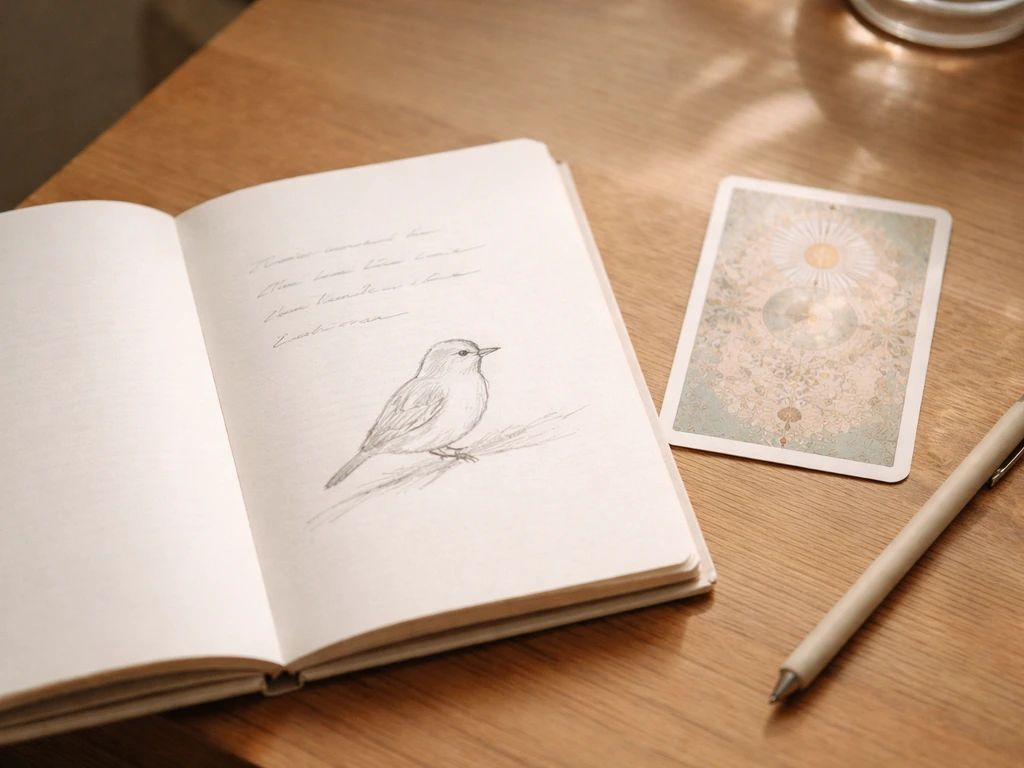
If you want to make actual use of this bird dream, here's a practical sequence to follow. It doesn't take long, and it's genuinely more useful than just reading symbol lists.
- Write it down now: Even a few sentences. Include the bird's appearance, what it was doing, the setting, and most importantly, how you felt during and after the dream. Memory fades fast.
- Note whether the dream repeats: A single bird dream is interesting. A recurring one is significant. If you keep dreaming about birds in similar scenarios, that pattern is worth taking seriously and tracking over time.
- Match the details to your life: Spend five minutes honestly asking what in your current life connects to the themes the dream raised. Freedom, restriction, communication, loss, new beginnings. Don't force a connection that isn't there.
- Use these journaling prompts: 'What feels like it's flying away from me right now?' / 'What am I feeling trapped by?' / 'What message am I waiting to send or receive?' / 'What phase of my life feels like it might be ending or beginning?'
- Decide how to hold it: If the dream was positive and resonant, let it be a source of encouragement. If it was unsettling but a one-off, you can acknowledge it and move on. If it was distressing and recurring, that's worth taking seriously, either as a reflection of real stress that needs attention, or, if nightmares are disrupting your sleep regularly, as something to discuss with a clinician who might recommend approaches like Imagery Rehearsal Therapy.
- Don't force a definitive meaning: If the dream doesn't clearly connect to anything right now, that's fine. Not every dream is a dispatch from the universe. Sometimes a bird is just a bird.
The goal isn't certainty. It's clarity. Bird dreams, at their best, are an invitation to pay attention to something you might be glossing over in your waking life. Take what's useful, leave what isn't, and trust your own read on your own experience more than any symbol guide, including this one.
FAQ
What does dreaming of a bird mean if I cannot remember any details besides “there was a bird”?
When recall is fuzzy, rely on the strongest leftover emotion (calm, fear, excitement) and the dominant life theme that felt active right before bed (waiting for news, feeling trapped, planning a change). Without specifics like species or setting, the meaning is usually broad: communication, transition, or freedom is being highlighted, but you should treat it as a prompt rather than a prediction.
Does the meaning change if the bird is my favorite type, or a bird I see often in real life?
Yes, personal association can override generic symbolism. If you have a strong real-life connection to that bird (gardening, living near that species, childhood memories), your dream may be processing those memories and their feelings. In that case, interpret “bird symbolism” through what that bird represents to you personally.
What does dreaming of a bird mean if the dream felt extremely vivid or emotional?
High vividness usually means your mind attached the image to a stronger emotional network. Focus on what you felt during the peak moment (before it flew, when you saw it in the cage, after it died). That emotional peak often points more directly to the waking-life issue than the bird image alone.
Is there any difference between hearing a bird (song or calls) versus seeing one?
Hearing often links to communication, messages, or thoughts trying to “get through.” Seeing without sound can still signal transition or freedom, but the lack of auditory cues may mean the issue is more about what you are noticing rather than what you are receiving. If the call felt urgent or comforting, treat that as the key indicator.
What does dreaming of a bird mean if it keeps repeating across many nights?
Repetition suggests an ongoing loop in your waking life, especially if the emotions stay consistent. Track recurring patterns (same location, same bird behavior, similar feelings). If the dream changes gradually over weeks, that can mirror progress, like moving from stuck to seeking an exit.
What if I dreamed of a bird flying away, but I felt relief instead of loss?
Relief usually points to release and completion, even if the dream involved letting something go. Pair that with any waking-life context where you are ending a commitment, breaking a habit, or choosing distance from a situation. The “loss” symbol becomes a “closing chapter” when the dominant feeling is lighter.
What does dreaming of a trapped, caged, or indoor bird mean if I felt protective toward it?
Protection can indicate you are motivated to help yourself or someone else, not just to escape. Ask whether you have been managing a situation by controlling outcomes (like keeping things “safe” but limiting growth). Protective feelings can mean readiness to change the approach, for example setting boundaries rather than enduring confinement.
What should I do if the dream involved death, killing, or eating a bird and I feel guilty or disturbed?
Treat those images as symbols of endings, suppression, or absorbing qualities, not literal intent. If guilt is strong, reflect on where you may be harsh with yourself or where you fear consequences of change. A useful question is, “What part of my life am I ending or forcing to stop, and what am I afraid will die with it?”
Do bird dream meanings differ during major life events like grief, divorce, or a job change?
They often intensify and get more literal emotionally. During grief, birds may represent messages, souls, or transitions, and the emotional tone matters more than the species. During major change, flying and nesting imagery can reflect readiness, uncertainty, or building a new “home base” mentally.
Can dreaming of a bird mean something spiritual, or is it always just psychology?
Both can be “true” depending on your framework. If you have spiritual beliefs that resonate with birds, you can treat the dream as symbolic guidance or a contemplative cue. If you do not, a psychological interpretation (emotions, stress, transitions) is still likely to be accurate. The best test is which approach helps you make a clearer, kinder decision in waking life.
How can I interpret the same bird dream differently for different people in my life (partner, friend, me)?
Avoid one-size-fits-all symbolism. Each person should interpret through their own recent stressors, feelings, and relationships. The bird’s role (messenger, captive, wounded) can mean different things depending on what each person feels constrained by or hopeful about. If you’re discussing a shared dream, ask about the emotional moment, not just the image.
When is it worth bringing a bird dream to a professional (therapist or counselor)?
If the dream repeatedly triggers intense anxiety, panic, trauma-like reactions, or if it interferes with sleep and daily functioning, consider talking to a professional. Also consider it if the dream themes align with unresolved trauma, persistent hopelessness, or thoughts of self-harm. Symbol work can help, but support may be needed for the underlying mental health strain.
Next Article
Bird in Dreams Meaning: How to Interpret Each Detail Step by Step
Interpret a bird in dreams with step-by-step detail reading, spiritual, biblical, and emotional meanings for each scenar