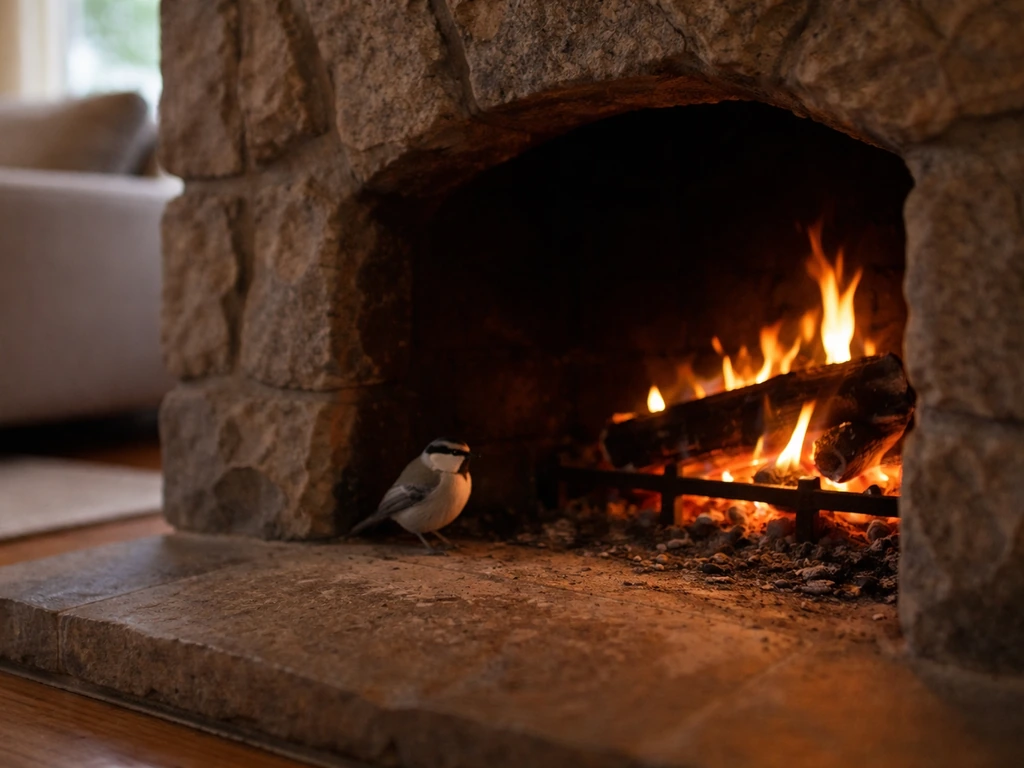
A bird coming down a chimney almost always means one thing physically: the bird fell, glided, or fluttered into the flue and cannot get back out on its own. That's the starting point, and it matters because the bird needs help right now. But if you're also asking what it means on a deeper level, that's a completely fair question, and there's a rich tradition of spiritual, biblical, and folkloric interpretation tied to exactly this kind of unexpected bird encounter. This guide covers both sides, starting with what's actually happening and then walking through the meaning frameworks so you can land wherever feels right for you.
Bird Coming Down Chimney Meaning: Safe Causes and Symbolism

Maya Hartwell
15 May 2026
What's Actually Happening When a Bird Comes Down the Chimney
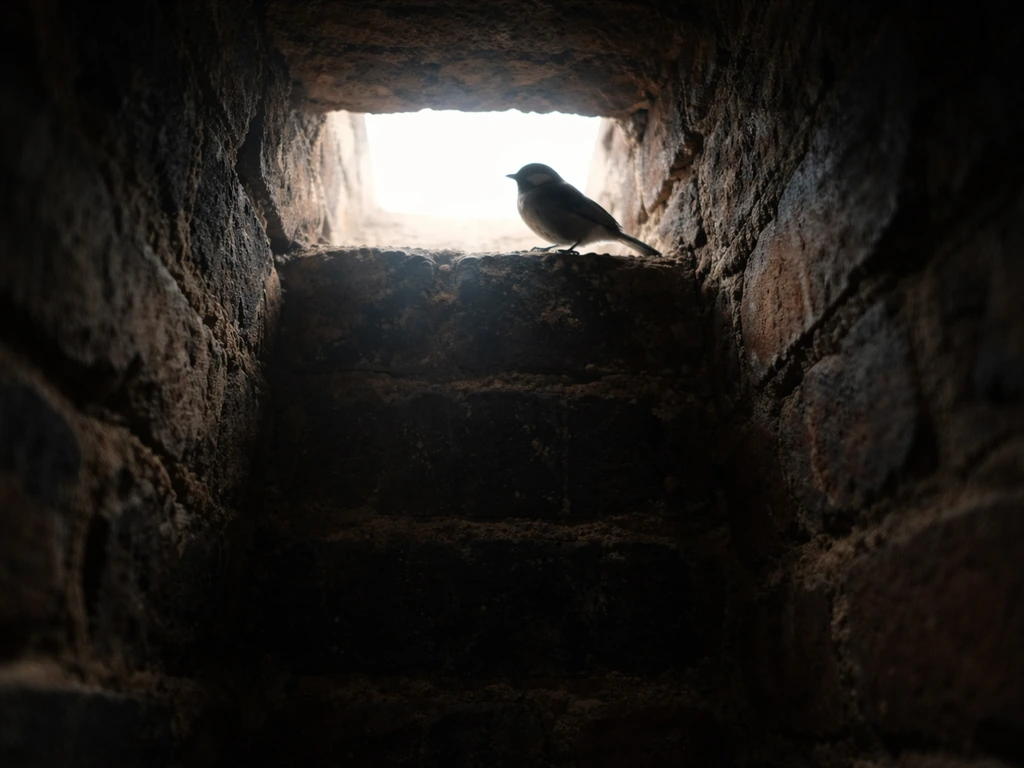
Birds end up inside chimneys for a few very practical reasons. Open or uncapped flues are the most common entry point. A bird perching or flying near the top of the chimney can fall in, especially if startled. Once inside, the smooth interior walls offer almost nothing to grip, and flying straight up out of a narrow vertical shaft is extremely difficult. The Wisconsin Humane Society is direct about this: any wild bird that gets into a chimney (with one specific exception) cannot get out on its own. That exception is the Chimney Swift, a small sooty-grey bird that actually nests and roosts inside chimneys by design, clinging to the inner walls with specialized feet.
Chimney Swifts are worth knowing about because they cause a lot of alarm. Their rapid, high-pitched twittering chirps are distinctive and can sound frantic to a homeowner who doesn't recognize them. If you're hearing sounds but haven't seen a bird yet, there's a real chance it's a Swift nest with nestlings that are close to fledging. The Tennessee Wildlife Resources Agency notes that sounds from a chimney can often come from active nests with young birds rather than a single trapped adult. If you do have Swifts, they're federally protected in the US, which means the nest has to be left alone until the birds naturally leave.
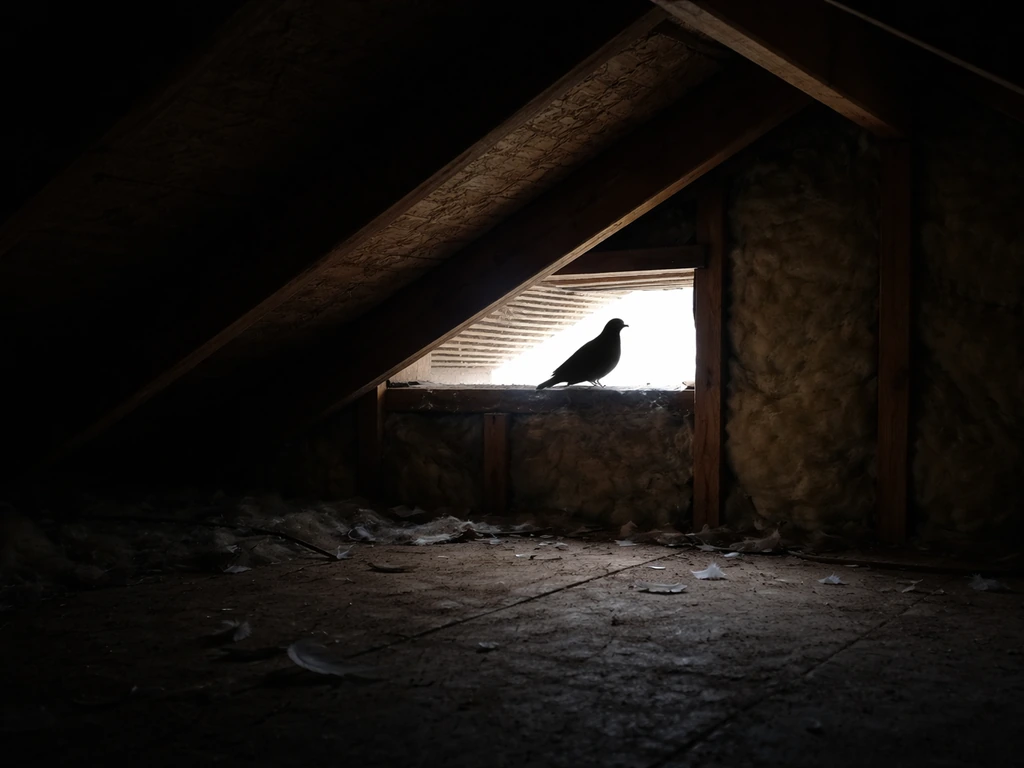
For all other birds, the chimney's design and the fireplace damper are what determine whether the bird gets into the living space. If the damper is open, the bird can travel all the way down and end up in your fireplace or room. If it's closed, the bird is trapped in the flue. Either way, the situation is urgent and the bird is stressed. If you also mean a bird getting into an attic, the same rescue and safety steps apply, but you may need to block the entry and seal gaps once it is gone urgent.
Spiritual and Symbolic Meanings of a Bird Entering Through the Chimney
The chimney has long carried symbolic weight in many traditions. It's a threshold between the outer world and the inner home, between the sky and the hearth. When a bird, itself a near-universal symbol of the soul, freedom, and spiritual messengers, uses that passage to enter your space, many traditions read it as intentional. The bird didn't come through a window or a door. It came through the smoke path, the vertical channel connecting earth and sky, which gives this particular type of bird encounter a specific flavor in metaphysical interpretation.
In many spiritual frameworks, a bird arriving unexpectedly in your home is understood as a message arriving from outside your normal awareness. The chimney route adds a layer: messages from ancestors, from spirit guides, or from a higher source are often imagined as descending from above. Whether or not you hold those beliefs literally, it's worth sitting with the timing. Was something on your mind? Were you at a crossroads or in a period of transition? Many people who experience this describe the moment as feeling significant, regardless of their specific belief system.
The specific species of bird can refine the interpretation for those who work with animal symbolism. A dark bird like a crow or starling carries different associations than a small songbird. But across most frameworks, the core themes are consistent: the arrival of a message, a call to pay attention, a nudge toward something you may have been ignoring, or simply a reminder that the boundaries between the ordinary world and something larger are more porous than they appear.
Biblical and Religious Views on Birds Entering Homes
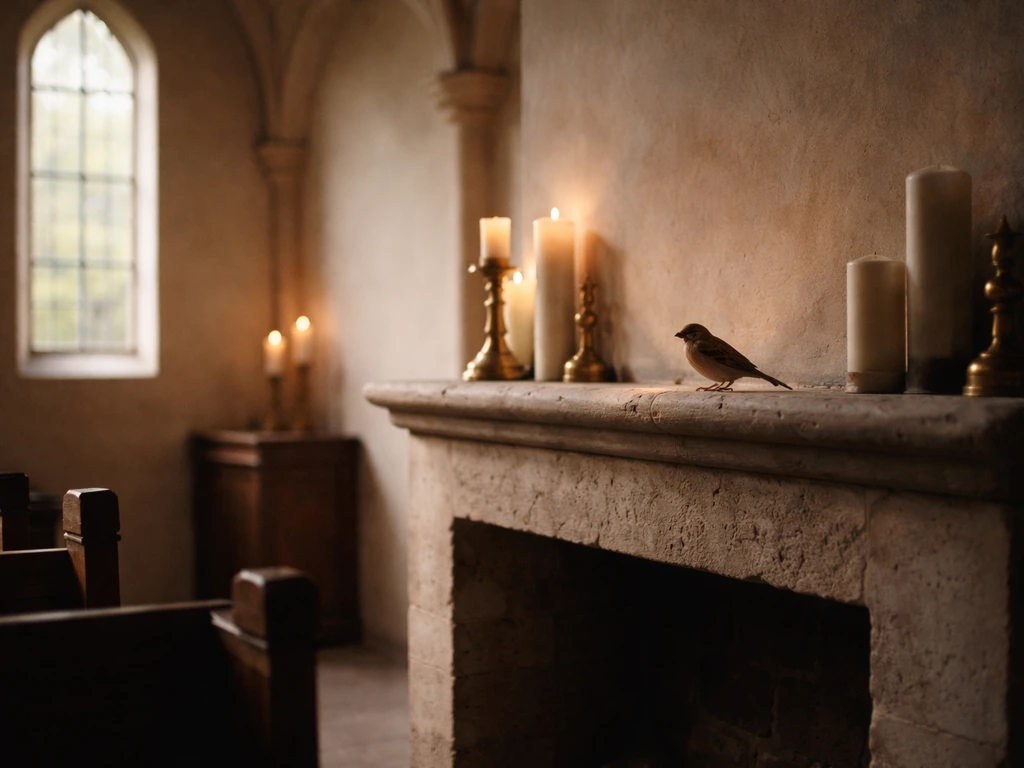
Christian tradition holds birds in notable regard. In Matthew 6:26, Jesus points to birds as evidence of divine care and provision, noting that they are fed without planting or storing, and asking whether humans should therefore worry less. In Luke 12:6-7, he goes further, saying that even sparrows, sold cheaply in the market, are not forgotten by God. The Sermon on the Mount's famous 'birds of the air' passage has been a touchstone in Christian teaching about anxiety, trust, and the idea that the natural world carries signs of God's attention.
In this framework, an unexpected bird entering your home isn't necessarily an omen of doom. Many Christian readers would interpret it as a gentle reminder of providence, a moment to notice that life and wildness are still moving through the world around you, and perhaps a prompt to release worry. Some evangelical and charismatic traditions do treat unusual animal encounters as possible moments of divine communication, though they typically emphasize discernment and prayer in interpreting them.
In Islamic tradition, birds are considered signs of God's creation and some hadith traditions associate specific birds with spiritual significance. In Celtic Christian thought, birds (especially the wild goose as a symbol of the Holy Spirit) were seen as messengers moving between worlds. Jewish mystical tradition, particularly Kabbalah, sometimes links birds to the soul's freedom and the movement of divine energy. Across these traditions, the common thread is that birds arriving in unexpected ways deserve notice, even if the interpretation stays personal and prayerful.
Folklore and Cultural Omen Traditions Around Birds in the House
Bird-in-the-house superstitions are among the most persistent in Western and Appalachian folklore. Snopes has documented multiple regional variations, with the most common themes being that a bird entering a home signals either an important visitor or, in the darker versions, a death in the family. The Appalachian and Southern tradition described in Hillbilly Slang is specific: a bird in the house means a visitor or death is coming, but if the bird quickly finds its way out, the omen may be considered softened or broken.
The chimney entry specifically adds older layers. In European folk traditions, the chimney was seen as a vulnerable point in the home's protective boundary, a place where spirits and entities could enter or exit. Witches in English folklore were said to use chimneys as entry points. The hearth itself was considered sacred in many cultures, a site of family protection. A bird descending through that opening carried more weight than one flying in through a broken window, because it arrived through the home's spiritual threshold rather than by accident.
In some Indigenous North American traditions, specific birds are associated with messages from ancestors or with transitions between worlds, though interpretations vary enormously by nation and must be understood in their own cultural context rather than flattened into a single 'meaning.' In Eastern European folk belief, a bird inside the house could signal change, unexpected news, or a need to prepare for something. The consistent pattern across nearly all of these traditions is that the event demands attention, not panic, but awareness.
If This Happened in a Dream Instead of Real Life
If you're reading this because you dreamed about a bird coming down a chimney, the meaning framework shifts in an important way. Dreams use your personal emotional vocabulary, which means the 'bird in the chimney' image is less likely to be a literal prediction and more likely to be your subconscious working through something. Dream sources consistently frame chimneys as symbols of communication, releasing pressure, or the passage of something through a threshold. A bird in that context could represent a thought, a feeling, or an aspect of yourself trying to find its way into your conscious awareness.
Some dream dictionaries associate birds with freedom and the voice, or with feeling constrained (the caged or trapped bird image). Dream-dictionary.com includes “bird” as a symbol with meanings such as constraints, including a caged bird representing feeling restricted or having a suppressed voice birds can symbolize being constrained or having a suppressed voice. A bird coming down through a chimney, descending rather than rising, might point to something you're being asked to receive or acknowledge rather than something trying to escape. Dreamspoken's approach, which emphasizes personal reflection over cookie-cutter dream-dictionary answers, is a useful model here. The question isn't 'what does this symbol mean universally?' but 'what does this image mean given what I've been experiencing lately?'
If the dream felt alarming, sit with what aspect of it felt most charged. Was it the bird itself, the chimney, the feeling of something entering uninvited, or something else? That emotional texture is usually more useful than the symbol's traditional definition.
What to Do Right Now: Rescue, Safety, and Cleanup
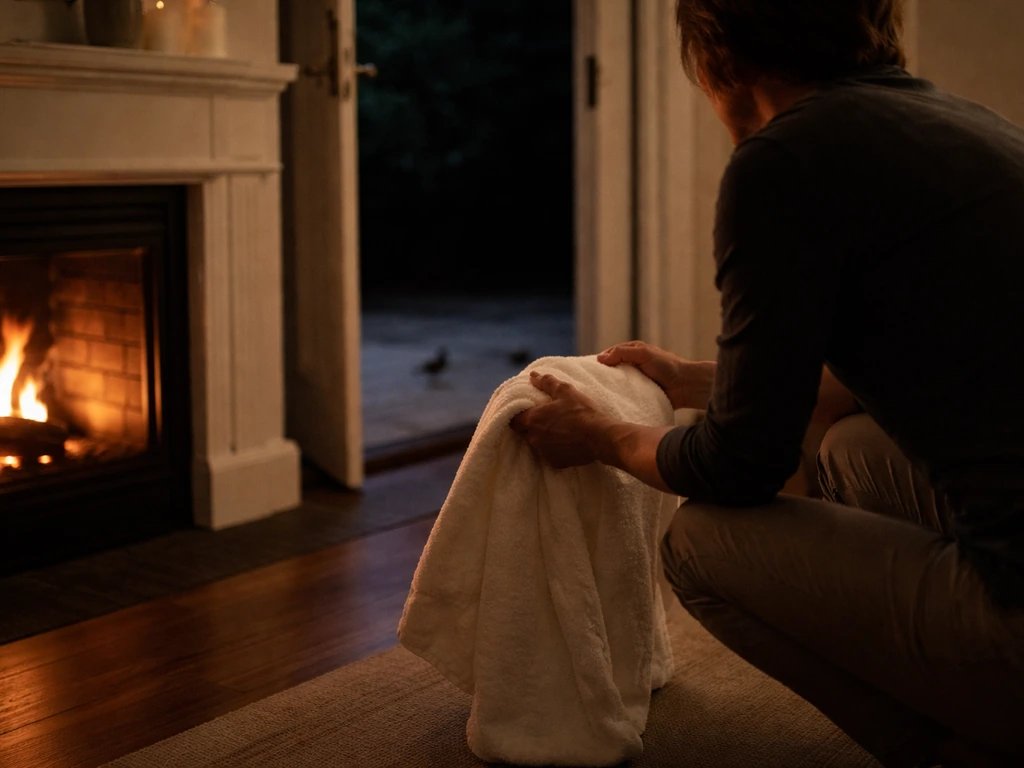
If this is happening in real life right now, the bird needs you to act. If you need a quick check on what a bird in my house could mean, start with the sections on symbolism and what to do right now a bird is in my house. If you are still wondering how the bird got in, the quick answer is that open chimneys or flues can let birds slip in and then get stuck in the vertical shaft how did a bird get in my house. Here's the order of operations.
Step 1: Help the Bird Find the Exit
- Turn off all lights in the room where the bird is, or where it will enter from the fireplace.
- Open one external door or window wide, ideally the one with the most natural light coming through.
- Draw curtains over any closed windows so the bird doesn't fly toward glass.
- Open the fireplace damper fully so the bird can travel down into the room.
- Open the fireplace curtain or glass doors.
- Leave the room quietly and close any interior doors to other parts of the house so the bird doesn't go deeper inside.
- Give the bird time. It should move toward the light source and find the open door or window.
The Wisconsin Humane Society and All About Birds both emphasize the same core principle: the bird needs a clear visual path toward light and an open exit. Turning off interior lights removes competing light sources so the outdoor light from the open door is obvious. Don't chase the bird or try to grab it. Stress makes the situation worse and the bird may injure itself against walls or windows.
Step 2: If the Bird Needs Guiding
If the bird is down but not finding the exit on its own after a reasonable wait, the Canadian Wildlife Federation suggests a gentle guiding method using a sheet hung between two broom handles to create a visual barrier that slowly directs the bird toward the open exit. Keep movements slow and calm. Never corner the bird against a wall.
Step 3: Know When to Call for Help
If the bird is covered in soot, appears injured, is moving abnormally, or is clearly a very young bird (no full feathers, not flying), contact a local licensed wildlife rehabilitator. The Wisconsin Humane Society recommends this specifically for soot-covered, sick, or juvenile birds because those animals need expert care beyond what a homeowner can safely provide.
Step 4: Clean Up Safely

Once the bird is out, treat any droppings, feathers, or soot seriously from a health standpoint. Bird droppings can carry histoplasmosis (a fungal infection from dried droppings), cryptococcosis, and psittacosis (a bacterial infection). The CDC and Washington State University EHS both emphasize that the primary risk comes from breathing in dust from dried droppings, so controlling dust during cleanup is critical.
- Wear gloves and a properly fitted N95 or better respirator mask.
- Dampen droppings with water or a disinfectant spray before cleaning to prevent dust becoming airborne.
- Place all materials in a sealed bag for disposal.
- Wash hands thoroughly afterward.
- Ventilate the area during and after cleanup.
How to Interpret This for Yourself
Once the practical side is handled, you have space to sit with what this experience might mean personally. If you want to connect that moment to a real-life cause, start with the practical explanation for why a bird is trying to get in your house meaning frameworks. The meaning frameworks above offer many lenses, but the one that fits you best will depend on your own beliefs, your current life context, and honestly, how the moment felt when it happened. Here's a reflection checklist to help you work through it.
| Reflection Question | What It Might Point To |
|---|---|
| What was I thinking or doing right before the bird appeared? | Moments of transition, stress, or decision often feel more charged when an unusual event occurs alongside them. |
| What species was it, if I could tell? | Different birds carry different symbolic weight in various traditions. A dark bird, a songbird, and a raptor each have distinct associations. |
| Did I feel the moment was significant while it was happening? | That immediate felt sense is worth trusting as data, even if you can't explain it yet. |
| Am I in a period of change, loss, or new beginning? | Folklore and spiritual traditions consistently link unexpected bird arrivals to transitions, not static periods. |
| Does any one tradition's interpretation resonate with my own beliefs? | You don't need to accept all frameworks. Find the one that speaks honestly to where you are. |
| Was this a real event or a dream? | Dream interpretations emphasize personal emotional meaning. Real events also carry meaning, but add practical responsibility. |
| Did the bird leave safely or struggle? | Folklore notes that a bird leaving quickly softens the omen. Spiritually, a bird that finds its way out may represent resolution rather than warning. |
There's no single correct answer here, and any framework that insists there is should be treated with skepticism. What most traditions agree on is that an encounter like this is worth pausing for. The bird descended through the passage between sky and hearth and ended up in your space. Whatever you believe about why, it's a rare moment. After you've handled the practical side and the bird is safely outside, take a few minutes to sit with what came up for you. That's usually where the real meaning lives.
If you're curious about related experiences, a bird you can hear but can't see yet raises its own questions, and birds found inside the home through other means each carry their own set of practical and symbolic considerations worth exploring separately.
FAQ
If a bird was in the room, does “coming down the chimney” still apply?
Yes. If the damper is open, a bird can move from the flue into the room, even if it “came down the chimney.” After rescue, verify the flue path is sealed or closed properly to prevent repeat entry (and keep an eye out for lingering chirps that suggest another bird or nest activity).
How long should I wait before I intervene if the bird won’t leave?
Use the same “no chasing, calm guidance” approach, but add a timer. If the bird is not clearly orienting toward the exit after about 10 to 15 minutes of low-stress setup (lights adjusted, door open), switch from waiting to gentle guiding with a sheet or contact wildlife help sooner.
What if I hear chirping but never see a bird, could it still be trapped?
Don’t assume it’s a single bird. Distinct calls, fluttering in bursts, or repeated chirps from inside the chimney can mean a swift nest with young, or multiple birds using the chimney as a temporary landing spot. In that case, look for an exit near the top and avoid prolonged fumbling that can injure nestlings or cause parents to abandon the nest.
After it gets out, how do I stop it from happening again?
If the bird is inside the chimney channel, the quickest way to prevent re-entry is to close the fireplace damper once the bird is confirmed out (and keep the chimney cap or screen in good condition). If you cannot close it safely right away, temporarily block the opening with a rigid screen while arranging rescue guidance.
What should I do if the bird is not obviously injured but covered in soot?
If it looks healthy but soot-covered, treat it as a contamination issue first and a welfare issue second. Bag and contain any heavily soiled paper towels and avoid dry sweeping. If the bird has visible injuries, abnormal movement, heavy labored breathing, or is clearly a juvenile that cannot fly, prioritize wildlife rehab over DIY cleanup.
How risky is it to clean up droppings and soot?
Wear respiratory protection if you have to handle dried droppings or soot dust (at minimum, a properly fitted mask and eye protection), and mist the area lightly before cleanup to reduce airborne particles. Also, keep kids and pets away until everything is wiped and disposed of.
What if I suspect the bird is a Chimney Swift using the chimney to nest?
If you’re in the US and it is a Chimney Swift (often sooty-grey) or you suspect active nest activity, avoid sealing or removing anything until the birds have naturally left. You can still perform lighting and exit guidance carefully, but don’t disturb the interior of the chimney or attempt to evict the nest.
If I treat this as symbolism, how do I figure out what it meant for me?
Yes. A “bird coming down the chimney” meaning depends on your own emotional state at the moment. A useful check is to separate symbolism from fear, ask whether you felt curiosity, dread, urgency, or relief, then link that feeling to a current life transition, decision, or something you need to acknowledge.
I dreamed about a bird coming down a chimney, does that mean something specific?
If the encounter happened during a dream, the most practical “next step” is reflection rather than prediction. Focus on the portion that felt most intense (the chimney, the bird, being inside the home, or the attempt to escape) and write one sentence about what in your life feels like a threshold right now.
Next Article
How Did a Bird Get in My Attic? Find Entry, Remove Safely
Find how the bird got in your attic, safely remove it, spot nesting, clean droppings, and seal entry points to prevent r