A bird just pooped on you. Your first instinct is probably a mix of mild disgust and maybe a laugh, followed quickly by the question: what does this actually mean? The honest answer is that it means two things simultaneously. Biologically, a bird relieved itself at exactly the wrong moment and you happened to be underneath. Symbolically, across dozens of cultures and centuries of folklore, being marked by a bird from above carries a surprisingly consistent message: you may be in for some good fortune. Both of those things can be true at once, and this guide walks you through both, starting with the part that matters most right now: cleaning up safely.
Meaning of Bird Poop on You: Real Causes and Symbolic Meanings

Maya Hartwell
2 Apr 2026
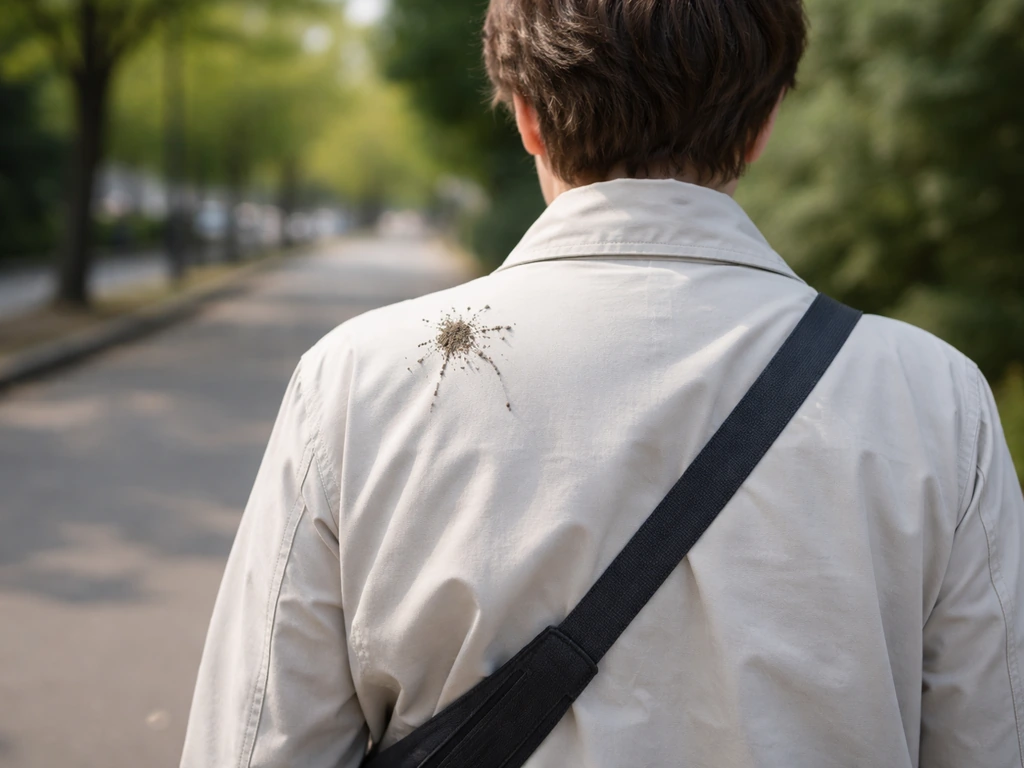
Random event or real message? Setting expectations first
Let's be direct: birds poop every 15 to 30 minutes depending on species and diet. They have no sphincter muscle control, so when the urge hits, they go. The fact that it landed on you is almost certainly geometry and timing, not intention. Psychologists have a name for the mental habit of finding patterns in random events: apophenia, the tendency to perceive meaningful connections between unrelated things. Humans are wired to do this, and a surprising, visceral event like getting hit by a bird dropping is exactly the kind of moment that triggers meaning-making instincts.
That said, the impulse to ask "what does this mean?" is deeply human, and there is a rich tradition of interpreting exactly this kind of encounter. getting pooped on by a bird has been treated as an omen in Russian, Turkish, Hindu, and Celtic traditions for centuries, and those cultural lenses are worth exploring after you have cleaned up. The goal here is to hold both layers honestly: the random, biological reality and the symbolic frameworks that humans have built around it.
Clean it up first: safe removal from skin, clothes, and surfaces
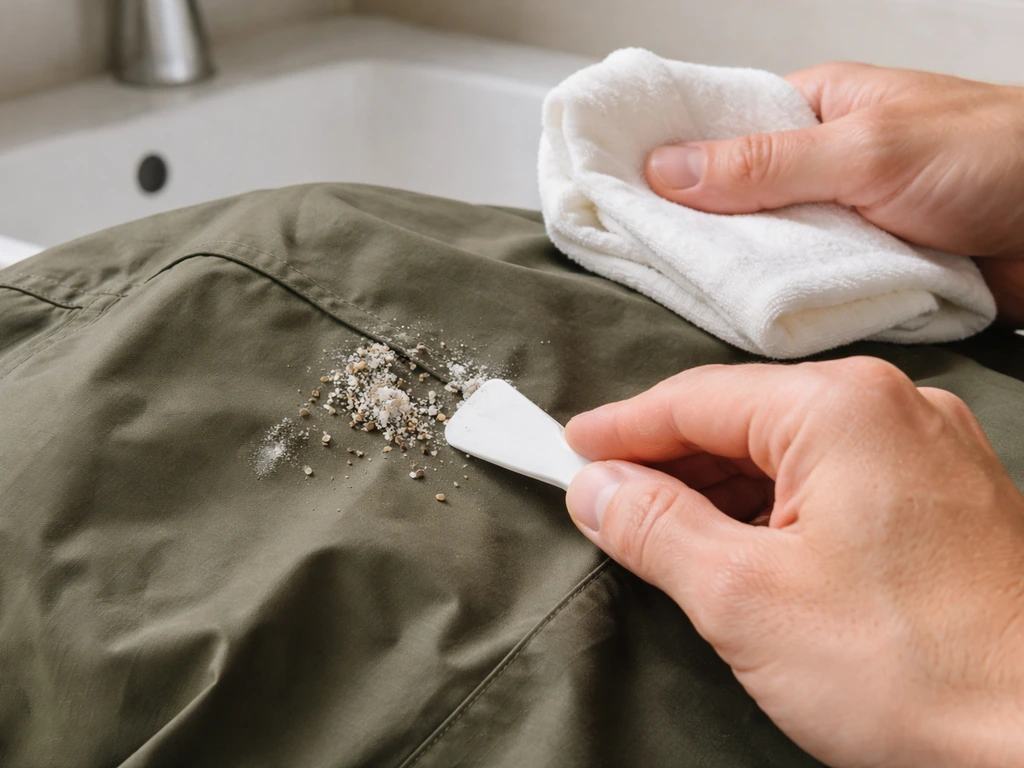
Before any reflection or meaning-making, handle the practical side. For most people hit by a single dropping in everyday outdoor life, the health risk is low, but proper cleanup still matters and the approach depends on what got hit.
Skin and hands
Wash the affected area thoroughly with soap and water as soon as possible. The CDC recommends washing hands with soap and water after any contact with birds, their droppings, or items that have been near them. Rinse well and dry with a clean towel. If the dropping landed near your mouth, nose, or eyes, rinse with clean water immediately. Avoid touching your face before washing.
Clothing and fabric
Do not rub a fresh dropping into the fabric. Gently scoop or scrape off any solid material first, then rinse from the back of the fabric to push residue out rather than in. Wash the garment in warm water with regular laundry detergent. For dried droppings, soak the stained area in cold water to rehydrate it before attempting removal; rubbing dry droppings tends to grind them deeper into fibers and can spread residue.
Hard surfaces (including car paint)
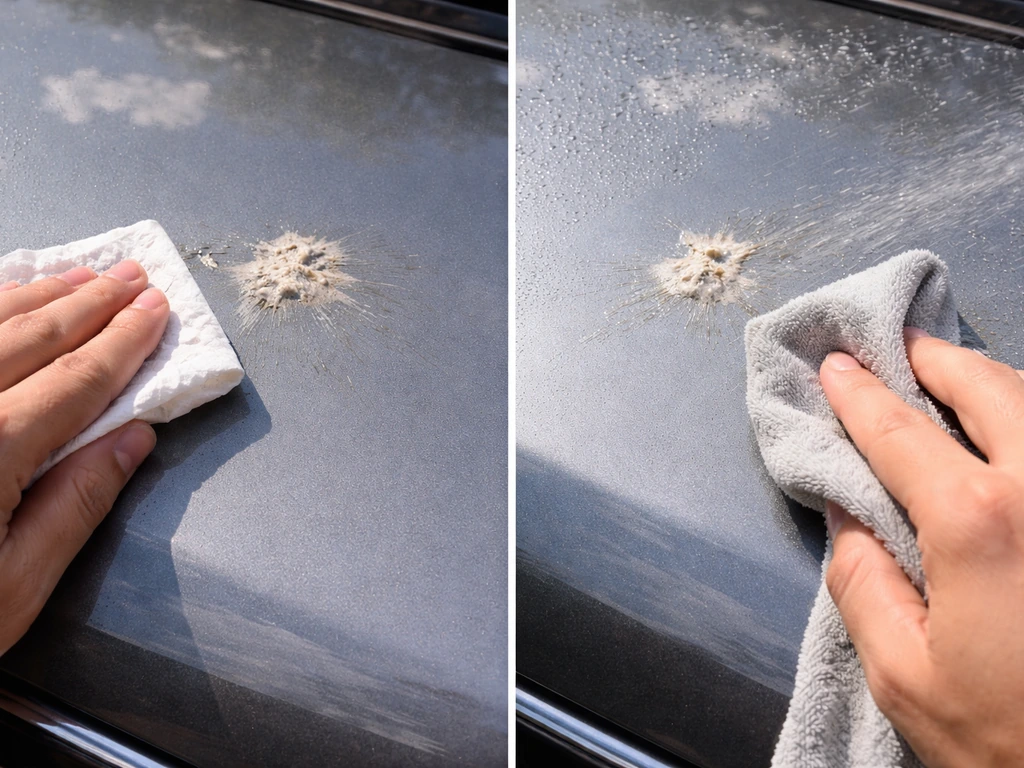
Never dry-wipe bird droppings off a car or other painted surface. The uric acid in droppings is corrosive and can etch or dull paint within hours, especially on warm days. Soak the area first with water or a damp cloth for several minutes to soften it, then gently blot and lift rather than scrub. For larger or dried deposits, use a dedicated detailing spray or diluted car wash solution. Once visible material is removed, you can apply an EPA-approved disinfectant appropriate for hard, non-porous surfaces if needed, following the product label instructions. The workflow is always: clean first with soap or detergent to remove visible soil, then disinfect.
Real health concerns: when a dropping is more than a nuisance

A single dropping from a passing bird landing on your arm or shoulder in an ordinary outdoor setting is a low-risk event. The CDC's guidance on bird-related health risks focuses primarily on two scenarios that are worth understanding, even if neither applies to your situation today.
The first is histoplasmosis, a respiratory infection caused by a fungus that can live in soil contaminated by bird or bat droppings. According to the Mayo Clinic and the American Lung Association, you acquire it by breathing in airborne fungal spores, not by skin contact. The risk goes up significantly when large accumulations of dried droppings are disturbed, for example during construction, demolition, or cleaning out a barn or attic.
The CDC’s NIOSH guidance on histoplasmosis emphasizes that disturbing large accumulations of bird or bat droppings significantly increases exposure risk large accumulations of dried droppings are disturbed.
The CDC notes that large amounts of accumulated bird or bat droppings should be cleaned by professional hazardous waste companies. A single fresh dropping landing on you outdoors does not create this risk. The spores are a concern when dried waste is stirred up and becomes airborne, not from a fresh hit.
The second concern is psittacosis, a bacterial infection sometimes transmitted from birds (particularly parrots and poultry) through dried fecal dust. CDC states that psittacosis (avian chlamydiosis or ornithosis) is most commonly acquired by inhaling dust containing dried bird secretions or droppings psittacosis, a bacterial infection sometimes transmitted from birds. Again, the transmission route is inhalation of dried, aerosolized material, not fresh contact. The CDC advises wetting surfaces before cleaning bird cages specifically to prevent dust from becoming airborne.
For the typical person who just got hit by a wild bird outdoors: wash the area with soap and water, avoid touching your face beforehand, and move on. However, if you develop flu-like symptoms, chest tightness, or fever in the days following any significant exposure to bird droppings (especially in enclosed spaces), the Mayo Clinic recommends calling a healthcare professional.
| Scenario | Risk Level | What to Do |
|---|---|---|
| Single fresh dropping on skin or clothes (outdoors) | Low | Wash with soap and water; no special precautions needed |
| Dried dropping on hard surface, light cleanup | Low to moderate | Wet before wiping; use gloves; wash hands thoroughly after |
| Large accumulated droppings indoors (attic, barn, coop) | Moderate to high | Wear respiratory protection; consider professional cleanup |
| Flu-like symptoms after significant exposure | Seek medical advice | Contact a healthcare provider; mention the exposure |
What bird droppings on you mean spiritually
Once you have cleaned up and confirmed there is no health concern, it is entirely reasonable to ask what the experience might mean on a deeper level. Across many spiritual and metaphysical traditions, birds are regarded as messengers between the earthly and the divine. Their ability to move freely between the ground and the sky positions them symbolically as intermediaries, creatures that carry awareness from a higher vantage point down to our level.
Being marked by one, even in the most undignified way, is interpreted in many of these traditions as being singled out for contact. Some practitioners read it as a sign that a spiritual cleansing is underway, that something old, heavy, or stagnant is being released from your energy field in the same way the bird releases waste. Others frame it as a signal of incoming abundance: that something valuable is being deposited into your life, even if the delivery method is unpleasant. There is also a "wake-up call" reading, where the jarring surprise of the event itself is the message, pulling you out of autopilot and back into presence.
If you are curious about how bird encounters translate into the dream realm, the dream meaning of bird poop follows similar symbolic threads: themes of release, cleansing, embarrassment, and unexpected change appear frequently in dream interpretation sources, and many of those themes echo what waking-life folklore traditions say about the same event.
What cultures around the world say about bird poop luck
The "bird poop is good luck" belief is one of those rare superstitions that turns up independently across multiple, unconnected cultures, which makes it worth taking seriously as a widespread human pattern even if you do not personally ascribe to any one tradition.
In Russian folklore, if a bird defecates on you or your property, it is considered a sign of incoming wealth and financial luck. There is even a ritual response described in Russian superstition: after removing the affected clothing, the person may step on it as part of a luck-sealing gesture. The saying "someday a bird will poop on you" carries almost a fatalistic acceptance in some cultures: the event is not an accident but an eventual certainty, and when it arrives, it carries a blessing.
Turkish tradition holds a similar belief, connecting the event to financial prosperity. Hindu traditions associate birds closely with divine messages and with souls of ancestors, so a bird making contact with you, even this way, can be read as ancestral acknowledgment. In Western folk tradition, the luck framing is often connected to the sheer improbability of being hit: the odds are low, so being selected by chance carries the weight of a rare favorable sign.
Not all folklore is positive, though. In some traditions, the species of bird matters. A crow or raven dropping, for example, might be read more as a warning or an omen requiring attention than a simple luck blessing. A dove or sparrow, on the other hand, tends to carry associations with peace and divine favor. The context of the bird and the moment both factor into how different traditions interpret the encounter.
It is also worth noting that seeing a bird poop without being hit carries its own symbolic weight in some traditions, sometimes read as a vicarious luck omen or as a reminder to pay attention to what is being released or let go in your own life.
Where it landed changes the meaning

Context matters in both practical and symbolic terms. Different landing spots have attracted different interpretations across folklore and spiritual traditions.
If it landed on your head, many traditions treat this as the most auspicious version of the event. And if you are wondering what the same encounter means when it lands on your head specifically, look at the head placement interpretation next what it means when a bird poops on your head. The head is considered the seat of thought, intention, and spirit in numerous cultural frameworks. What it means when a bird poops on your head specifically has its own body of interpretation: blessings descending from above, clarity arriving after confusion, or a particularly direct "message" from whatever spiritual forces you recognize. It is the most commented-upon placement for good reason.
If the dropping landed on your shoulder, some readers connect this to the idea of a burden being placed or released. On your hands or arms, it might relate to your work, your actions, or what you are currently building. On your feet, some traditions link it to the path you are walking, suggesting a change in direction or a fortunate step forward. If the dropping landed while you were in a particular emotional state or mid-decision, that situational overlay is worth noting.
If the dropping hit your car rather than your body directly, that is its own category. The symbolic meaning of bird poop on a car often connects to themes of protection, transition, and material fortune. Some traditions treat your vehicle as an extension of yourself and your personal journey, so a bird marking it carries significance for what lies ahead on your path.
If you dreamed this happened rather than experiencing it waking, the dream meaning of a bird pooping on your head adds another interpretive layer: dream-state encounters with this image often carry emotional content around vulnerability, visibility, and unexpected transformation that waking events do not always hold.
Putting it together: what to actually do right now
Here is a grounded sequence for handling what just happened, whether you lean toward the practical, the spiritual, or both.
- Clean it up immediately using soap and water on skin; blot and soak (never dry-rub) on fabric or painted surfaces.
- Wash your hands thoroughly, even if the dropping did not land on your hands directly.
- Assess the situation: was this a single fresh dropping outdoors (low risk) or are you dealing with a large accumulation or an enclosed space (higher risk, see the health section above)?
- If any flu-like symptoms develop in the following days, contact a healthcare provider and mention the exposure.
- Once you are cleaned up, pause for a moment. What were you thinking about or doing when it happened? Where were you headed? What has been weighing on you lately?
- Look up the bird if you noticed the species. Different birds carry different symbolic weight across traditions, and the species can add nuance to any interpretation you choose to explore.
- Decide consciously what, if anything, you want to take from this. You do not have to assign meaning, but if the event feels resonant, give yourself permission to sit with what it might be pointing at.
The honest truth is that a bird pooping on you is almost certainly a random event of biology and geometry. And also: humans have been finding meaning in exactly this kind of sky-sent surprise for thousands of years, across cultures that never shared notes. You get to decide whether this was just a nuisance, an invitation to reflect, a streak of incoming luck, or some combination of all three. Clean up first. Then ask the better questions.
FAQ
If a bird poop hit me while I was driving or working, do I still need to worry about health risks?
Yes, treat it like low risk for most people, but do not skip the basics. Wash with soap and water, avoid touching your face until cleaned, and if it splashed near your eyes or mouth rinse immediately with clean water. Seek medical advice sooner if you wear contact lenses and feel persistent eye irritation after rinsing.
Does one fresh bird dropping on my shirt create the same infection risks as cleaning out a space full of droppings?
If it was truly a single fresh dropping, the histoplasmosis and psittacosis risks discussed for bird droppings are generally not triggered the way they are in enclosed, high-accumulation cleanouts. The higher concern is when dried material is disturbed and becomes airborne. If you have ongoing exposure in a barn or attic, that is different from one outdoor hit.
What is the correct way to clean up if the dropping already dried on my clothes?
Wet it first. For fabric, scrape off solids gently, rinse from the back, then wash with regular laundry detergent in warm water. For skin, wash thoroughly with soap and water. Avoid wiping dry first because residue can spread and you can still transfer germs to your hands and face.
Can I disinfect and move on, or do I need both cleaning and disinfection?
For safety, assume it can be contaminated until cleaned. Use soap and water on skin, and for nonporous surfaces follow a clean-then-disinfect routine (clean to remove visible soil first, then disinfect if needed). If the area is on a countertop or another surface people eat from, rinse after disinfecting as directed on the label.
Why should I never dry-wipe bird poop off my car, and what should I do instead?
Avoid rubbing or brushing it off dry, especially on cars or painted surfaces. Uric acid can dull or etch paint when it dries. Let water soften it for several minutes, lift blot gently, then proceed with car-safe cleaning and, if desired, an appropriate disinfectant for that surface.
What should I do if bird poop landed on my hair or close to my eyes?
If it landed on hair, wash the area with soap and water, then rinse well. If you use hair products, wash thoroughly so residue is fully removed, because you could transfer it when styling. If you got it near your eyes, rinse the eye area immediately with clean water.
What if I suspect there is more than one dropping, like near a window or on a balcony rail?
Yes, especially if you were near a nest or you notice a larger amount than a single accidental hit. Use practical precautions like wetting before any cleanup in enclosed spaces, wearing gloves if you have to remove material, and avoid stirring dusty droppings. For large accumulations, professional hazardous waste cleaning is the safer route.
When should I contact a doctor after being hit by bird droppings?
If you develop flu-like symptoms, chest tightness, or fever in the days after significant exposure (particularly in enclosed spaces or after disturbing dried droppings), contact a healthcare professional. For minor single-event exposures, symptoms are still worth monitoring, but the urgency is generally lower.
Does the bird species change how I should handle cleanup or only the symbolic meaning?
Species can matter in folklore, but for real-world health risk, a single fresh event outdoors still mainly comes down to cleanup and avoiding face-touching. If you are repeatedly exposed near a particular type of bird, address the environment (remove attractants, cover areas) and consider pest or property management advice.
How can I use the symbolic meaning productively without turning it into anxiety or overthinking?
If you want a “best next step” without getting lost in superstition, choose one meaning lens to act on. For example, treat it as a reminder to pause and reset, or as a nudge to clean up something lingering in your routine. You can also write down what you were thinking about right before it happened, that makes later reflection more grounded.
If the meaning depends on placement, how do I decide which interpretation fits my situation?
Yes, the same symbolic themes often get interpreted differently depending on where it landed. In many traditions, head is seen as especially significant, shoulders and arms can be read as burden or actions, and feet connect to your path. If you want a practical tie-in, match the location to the area of life you were actively focusing on.