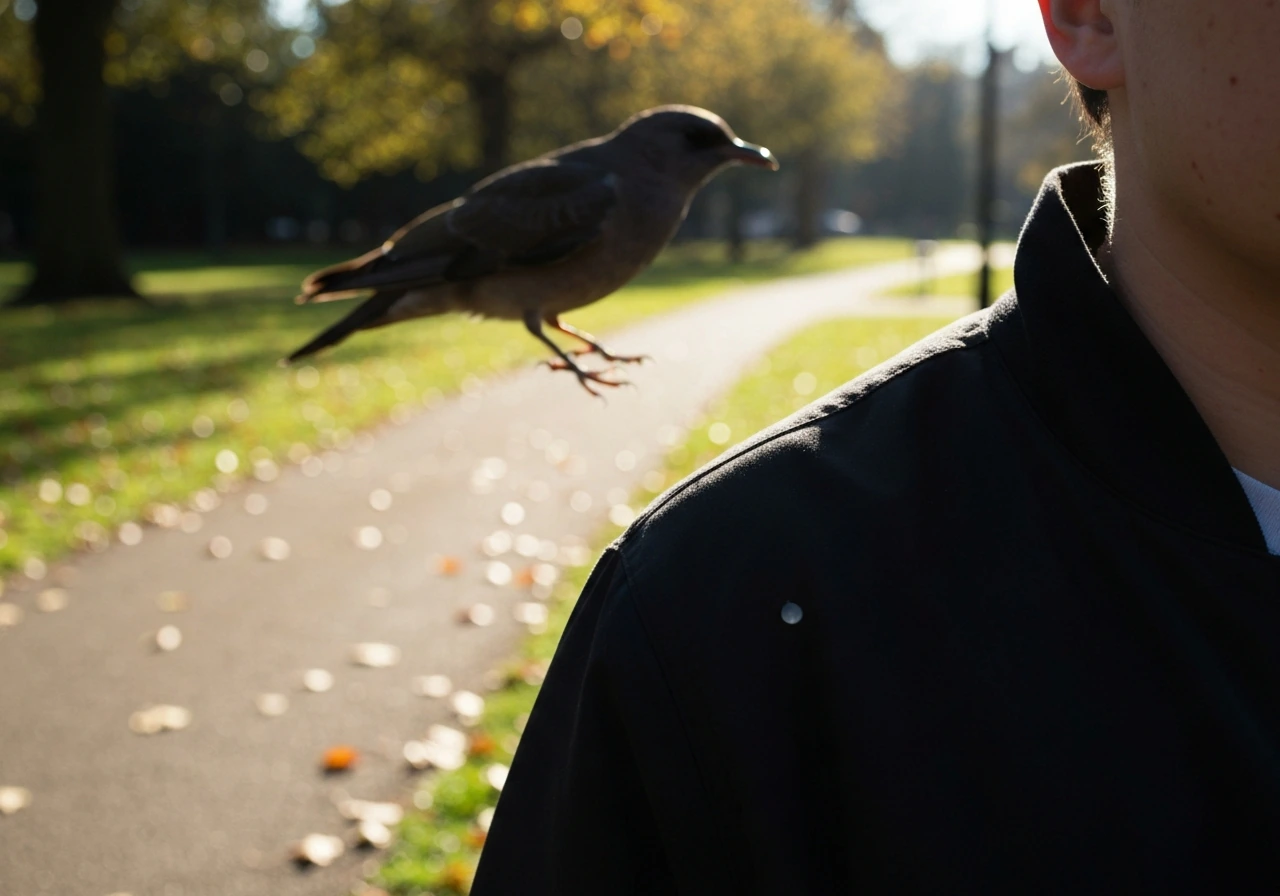
Dreaming about a bird pooping on your head most likely signals one of a handful of themes: unexpected good fortune arriving in a disruptive way, a cleansing or reset of stagnant energy, a message demanding your attention, or your sleeping brain processing a recent surprise or anxiety. It is almost certainly not a literal warning, and it is not a guaranteed omen of anything. What it means for you depends heavily on the bird, how you felt during the dream, and what is happening in your waking life right now.
Meaning of Bird Pooping on Your Head Dream: Interpretations

Maya Hartwell
15 May 2026
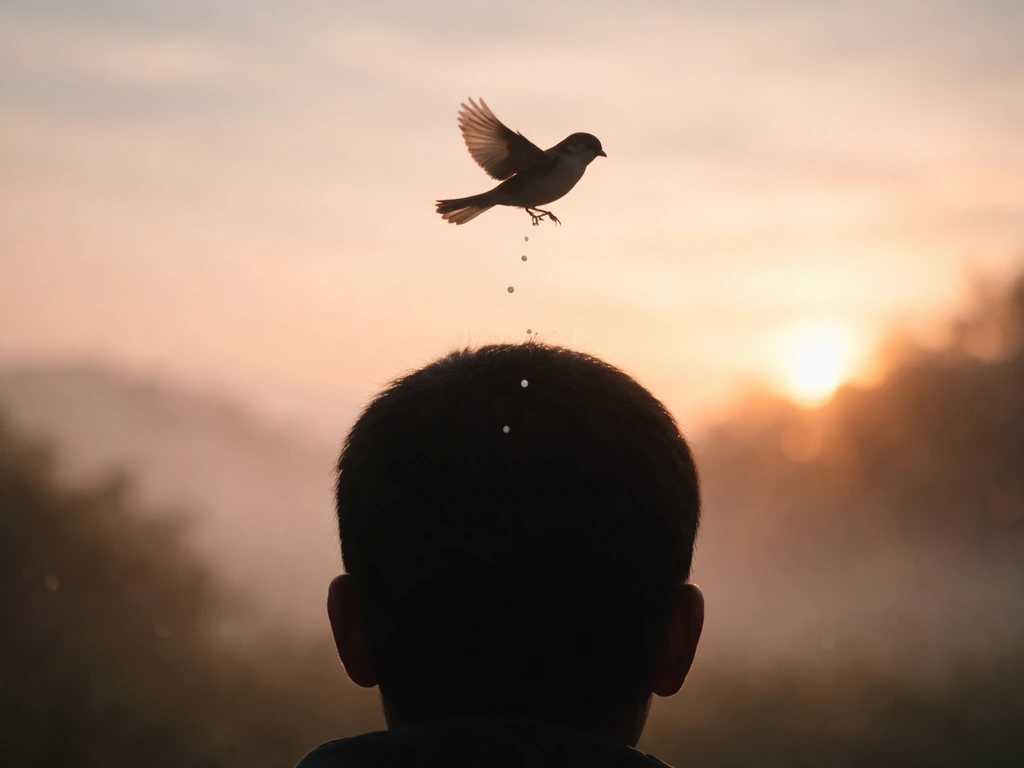
Why dreams happen and what 'meaning' actually means here
Before diving into symbolism, it helps to understand what you are actually working with. Dreams are strongly associated with REM sleep, but vivid, attention-grabbing imagery can also appear during other sleep stages as your brain shifts gears. Research in dream psychology suggests that memory, emotion, and especially perceived threats or surprises all play a role in shaping dream content. Threat Simulation Theory, for example, links the presence of startling dream events to stress levels and emotionally loaded experiences from your recent waking life, not to external prophecy.
Your body also talks to your brain while you sleep. Interoceptive signals (sensations from inside your body) get modeled during sleep and can surface as vivid physical images. A dream about something landing on your head could partly reflect bodily sensation being processed while you were unconscious. External stimuli can also get woven in: research shows that sounds or physical sensations during sleep can be incorporated into dream content. So a bird dropping hitting your head in a dream might be your brain's creative remix of a real-world sensation, an emotional tag from something that startled you recently, or both.
Freud was careful to point out that dreams are not a fixed symbol dictionary where every image equals one meaning. Psychology Today describes dream interpretation as more art than science. That is not a reason to dismiss what you dreamed. It is a reason to treat the symbolism as a conversation starter with yourself rather than a verdict handed down from somewhere above.
Common symbolic meanings of this dream

Even without a spiritual framework, birds in dreams are widely associated with themes of freedom, new beginnings, and messages from beyond your usual awareness. Add droppings to the picture and the imagery becomes more specific: something unexpected, slightly undignified, and impossible to ignore has landed directly on you, on the crown of your head no less.
The head is significant in dream symbolism across many traditions. It is associated with thought, identity, authority, and consciousness. Something dropping onto your head from above can symbolize a shift in perspective arriving from outside your control, an idea or realization falling into your awareness, or a disruption that breaks you out of a mental rut.
- Unexpected fortune or windfall: drawing on the real-world superstition that bird droppings on the head signal incoming luck, the dream version can carry the same flavor of surprise-blessing energy.
- Cleansing or transformation: droppings in several symbolic traditions represent the release of what is no longer needed, a messy but necessary clearing.
- A message demanding attention: birds as messengers appear across virtually every culture. This dream may be your subconscious flagging that something in your waking life needs a harder look.
- Disruption of a pattern: the sudden, unavoidable nature of the event in the dream may reflect a real-life disruption that is shaking up your routine or plans.
- Being singled out or 'chosen': whether that feels flattering or unsettling depends on your emotional state in the dream.
None of these interpretations are deterministic. They are lenses, not verdicts. And the specific details of your dream matter a great deal, which is why personalizing the reading (covered below) matters more than picking the most dramatic interpretation off a list.
Spiritual and faith-based interpretations
In many faith traditions, birds carry divine significance. In Christian scripture, the dove is the most explicit bird symbol, representing the Holy Spirit. The Gospel accounts of Jesus's baptism describe the Spirit of God descending 'like a dove,' and Christian symbolism has associated birds (especially doves) with divine presence and guidance ever since. Within this framework, dreaming of a bird interacting with you directly, even in an unexpected or messy way, could be interpreted as a spiritual prompt: something is trying to get your attention from a higher plane.
Islamic dream interpretation traditions also engage with droppings specifically. In that framework, details like the type of bird and where the dropping lands affect the reading significantly. A dropping from a bird associated with provision or blessing can be read as a sign of incoming abundance, while the context of the dreamer's life and emotional state shapes the interpretation further. Importantly, Islamic tradition encourages consulting a learned interpreter rather than relying solely on a symbol dictionary.
From a broader spiritual perspective, many traditions hold that birds act as messengers between the earthly and spiritual realms. If you hold a faith that includes this view, the dream could be read as a message or prompt from a guide, ancestor, or spiritual force. The disruptive delivery (droppings rather than, say, a gentle landing) might suggest urgency: something is trying very hard to break through your usual mental static. That said, religious scholars and psychologists of religion both emphasize that spiritual dream interpretation should account for the dreamer's personal context, emotional state, and the norms of their own tradition rather than universal claims.
Metaphysical and energy-based takes

In metaphysical and new-age frameworks, birds are often understood as spirit messengers or symbols of higher-frequency energy. A bird interacting with your head in a dream, a point associated with the crown chakra in several Eastern and Western esoteric traditions, can be read as energetic information arriving at your highest point of consciousness. The crown area is associated with spiritual connection, clarity, and divine input. Something landing there from above fits neatly into a narrative of a message or energetic shift arriving from beyond ordinary awareness.
The 'messy' nature of droppings in this framework is often reframed as release or energetic clearing. The idea is that what looks undignified on the surface may actually be removing something stagnant from your energy field and creating space for new growth. Think of it as a reset rather than a negative event.
Some metaphysical practitioners also tie bird dream imagery to timing. A dream like this appearing during a period of transition, around seasonal shifts, a birthday, or a life milestone, is sometimes interpreted as a green-light signal that you are aligned with a change that is already in motion. If you have been waiting on a decision or sitting on an idea, some readers of this tradition would say the dream is the universe's way of saying: go.
What folklore and superstition say
The waking-life version of this experience (an actual bird dropping landing on your head) is one of the most widespread good-luck superstitions across cultures. The USC Digital Folklore Archives document this belief in anecdotal form, and BirdFact confirms that the 'bird poop equals good luck' interpretation is not confined to a single region or culture but has diffused broadly across multiple traditions. The superstition frames the unexpected, involuntary nature of the event as precisely what makes it lucky: you did not seek it out, it was given to you, and that randomness is a marker of fortune.
When this superstition bleeds into dream space, it carries a similar energy. Dreaming of the event is often treated in folklore-adjacent readings as an amplified version: a preview or premonition of incoming luck, a windfall, or a positive surprise. Dreams are considered by many folk traditions to be thin places where waking-life signs can appear in magnified form. Whether you find that compelling or not, it is worth knowing that across the span of human storytelling, this particular image is almost never read as a curse or a warning. It leans decidedly positive.
This connects naturally to a broader pattern of bird-related dream and waking symbolism. If you have been curious about related experiences like what it means when a bird poops on you in waking life, or the specific symbolism of seeing a bird poop in your environment, those threads share common folkloric roots with this dream image. If you want more detail, you can also explore what it means when a bird poops on you in waking life.
If you are also wondering about the symbolic meaning of bird poop on car, many of the same themes like interruption, surprise, and personal context tend to apply. If you are also wondering about the real-life symbolism, seeing a bird poop meaning is often linked to luck, cleansing, or an unsolicited message that grabs your attention.
If you are wondering about the same idea in a dream, the dream meaning of bird poop often points to unexpected but potentially beneficial change or a reset of stagnant energy bird poops on you. When you see this idea in waking life, it often gets framed as the same kind of surprising, slightly undignified luck people connect to the dream symbol someday a bird will poop on you. If this image comes up again, you may wonder what it means when someday a bird will poop on you in waking life.
How to personalize the interpretation for your dream
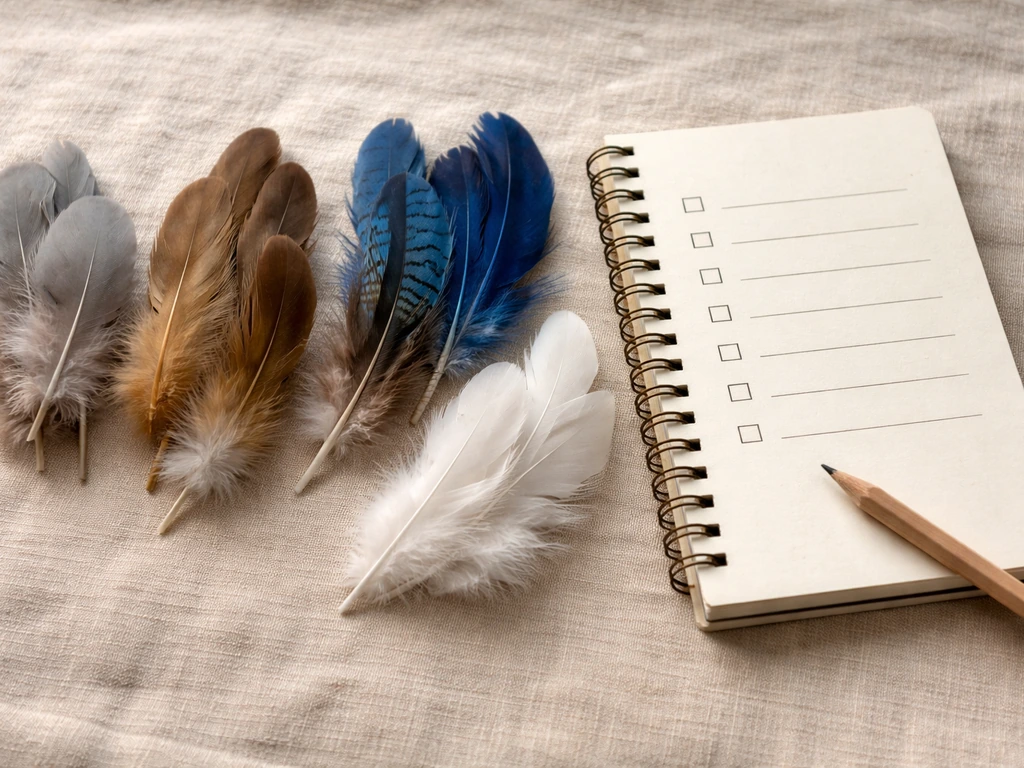
This is where generic dream guides fall short and where your specific experience becomes the most important data. The bird type, your emotional state, and the dream's context all shift the meaning considerably.
The bird type and color
| Bird Type/Color | Common Symbolic Association | How It Shifts the Dream |
|---|---|---|
| Dove (white) | Peace, Holy Spirit, divine presence | Leans strongly toward spiritual message or blessing |
| Crow or raven (black) | Transformation, intelligence, shadow work | May signal a deeper inner shift or change coming |
| Parrot or colorful tropical bird | Communication, creativity, playfulness | Could point to something you need to say or express |
| Eagle or hawk | Vision, authority, power | Suggests a higher-perspective message or leadership moment |
| Small sparrow or common bird | Simplicity, everyday life, community | Points to something ordinary but overlooked in daily life |
| Unknown or vague bird | General messenger energy | Focus more on your emotions than the bird's identity |
Your feelings during and after the dream
This is probably the most important factor. Did you feel disgusted, startled, or humiliated? The dream may be processing a real-life experience where you felt caught off guard or exposed. Did you feel amused, relieved, or oddly lucky? That emotional signature points toward the good-fortune interpretation. Did you feel calm or unbothered? The dream may simply be your brain tagging an unusual image without strong emotional weight. The emotion is the message, more than the image itself.
Context: was it accidental or intentional?
If the bird in your dream seemed to deliberately target you, that 'being chosen' angle is worth sitting with. Were you singled out from a crowd? Did the bird make eye contact before it happened? These details shift the interpretation toward intentional communication or a specific message aimed at you. If it felt random and the bird was indifferent, the disruption or luck themes may be more relevant.
What is happening in your life right now?

Dreams process recent emotional material. If you are in the middle of a major transition (a career change, a relationship shift, a creative project, a health concern) the dream is very likely to be reflecting that. A bird dropping on your head during a period of uncertainty could be your subconscious saying: something is about to land, and you cannot avoid it, but it might actually be fine. If life feels stuck and stagnant, the cleansing or disruption themes are especially relevant.
What to actually do after this dream
You do not need to do anything dramatic. But if the dream stuck with you enough that you are here reading about it, it is worth a few minutes of intentional reflection. Here is a practical sequence that works whether you are coming from a spiritual angle or a purely psychological one.
- Write it down immediately: Even a brief summary captures details that fade fast. Note the bird type, what it felt like, and what was happening in the dream before and after. The Cleveland Clinic recommends dream journaling as a way to track emotional patterns over time rather than treating each dream as a standalone omen.
- Answer three questions on paper: What is the biggest surprise or disruption in my waking life right now? Is there something I have been avoiding thinking about clearly? What would I do if I knew good luck was genuinely on its way?
- Notice your gut interpretation: Before reading anything, your first instinct about what the dream meant is valuable data. Did it feel like a warning, a blessing, or just noise? Trust that initial read alongside any symbolic framework you find resonant.
- Ground yourself if you feel unsettled: If the dream left you anxious, Healthline's guidance is worth remembering: anxiety dreams do not mean events will happen. A short walk, a glass of water, or five minutes of slow breathing brings you back to the present. The dream cannot hurt you.
- Revisit it in a week: If the image keeps surfacing or if something relevant happens in your waking life, note the connection. Recurring imagery or a real-life echo of a dream theme is more meaningful than a one-off event.
- Decide what you want to do with it: You can hold it as a spiritual prompt and meditate on the message. You can treat it as psychological information about your emotional state. You can simply note it as an interesting vivid dream and move on. All three are valid. The dream is yours to interpret, and no single framework has a monopoly on what it means.
If the dream felt deeply disturbing rather than just surprising, you do not need to force a positive meaning onto it. Dreamspoken's journaling guidance suggests that for emotionally intense dreams, writing only a brief summary is fine. You do not owe the dream a full symbolic autopsy. Dream journaling can help you explore your emotional states and subconscious mind, and Cleveland Clinic notes there is not a right or wrong way to interpret dreams, emphasizing “interpret as information, not fear.”. Sometimes the most useful thing is to acknowledge it, give it a moment of attention, and let it move through.
The bottom line: dreaming about a bird pooping on your head is one of those images that feels more alarming than it reads. It can also help to consider the meaning of bird poop on you in waking life, because that real-world context often shapes the symbol in a dream. Across folklore, spiritual traditions, and even the emotional logic of dream psychology, it almost always lands on the side of unexpected good, necessary disruption, or a message worth paying attention to. The work is figuring out which of those fits your life right now, and that is a question only you can answer.
FAQ
What does it mean if I felt disgusted or embarrassed in the dream?
If you felt fear, disgust, or humiliation, interpretations that focus on “luck” or “release” may be less accurate. In that case, a more useful reading is that the dream is processing a sense of being exposed or powerless, often triggered by recent social stress (criticism, public mistakes, or feeling judged).
Does the meaning change if the bird is a specific type or looks familiar?
Yes. If the bird is familiar or strongly tied to you (your neighborhood bird, a bird from childhood, a pet bird), it can shift the meaning from universal symbolism to personal associations. Consider what that specific bird represents for you emotionally, for example comfort, freedom, or a reminder of a person.
What if the bird seemed to choose me or aim at my head?
Likely, but not always. A deliberate-feeling “targeting” can point to an issue you perceive as singled out, such as a deadline, an upcoming conversation, or a responsibility you feel “chosen” to handle. It is still not a literal message, but it can reflect how your mind is emphasizing one problem over others.
Is this dream more likely to relate to an upcoming event or a current life transition?
Look for emotional timing and waking context. If you have a decision, a deadline, or a transition underway, the dream may mirror the feeling that something is coming “from above,” meaning outside your control. A practical next step is to write down what you are trying to control versus what you can influence.
If I didn’t feel much in the dream, does it still have a meaning?
A calm or unbothered reaction usually suggests low emotional charge, meaning your brain may be cataloging a striking image without heavy symbolism. In that case, interpret it more as a mental “tag” (surprise, randomness, curiosity) than a high-stakes omen.
What does it mean if the poop is easy to clean versus it won’t come off?
If droppings appear as a wipeable mess or you clean it up, that supports the “reset” lens (clearing, moving on, removing something unwanted). If you cannot remove it or it keeps happening, the dream may highlight ongoing stress or a feeling that consequences are lingering.
What if the dream included pain, slipping, or a bigger physical problem?
When the dream includes being wet, slipping, or feeling physically harmed, treat it as an “impact and consequence” metaphor rather than spiritual timing. It can reflect fears about losing control, making a mistake, or reputational harm, especially in work or public-facing situations.
Could it be related to real-world stress or anxiety rather than symbolism?
It can, especially if you are worried about contamination or safety in waking life. This dream can blend actual environmental cues (seeing birds, hearing them near you, feeling a sensation) with anxiety themes. If this pattern repeats around stress periods, consider it a stress signal and adjust your coping routine.
How do I personalize the interpretation without overthinking it?
Try a quick two-question journal: “What was my dominant feeling?” and “What waking situation feels like it landed on me unexpectedly?” Then choose the closest lens (luck, reset, message, processing). The goal is decision support, not certainty.
What should I do if this dream is disturbing or keeps coming back?
If the dream feels threatening or keeps replaying, your priority is emotional regulation, not decoding. Practice grounding before bed, reduce doom-scrolling or anxiety triggers, and if it persists or worsens with daytime distress, consider talking with a therapist who works with sleep and intrusive imagery.
Does dreaming it mean guaranteed good luck?
In many traditions the “bird poop equals good luck” idea is used as a comforting frame, but even in that frame it is not a guarantee. A balanced approach is to treat it as permission to expect a positive shift while still acting on real opportunities (follow up, apply, communicate).
How can I interpret it in a faith-based way without turning it into fortune-telling?
If you are in a religious or spiritual framework, you can treat it as a prompt, for example making time for prayer, reflection, or a conversation you have been avoiding. If your faith discourages “fortune” readings, focus on the attention aspect (what it is asking you to notice) instead of predicting outcomes.