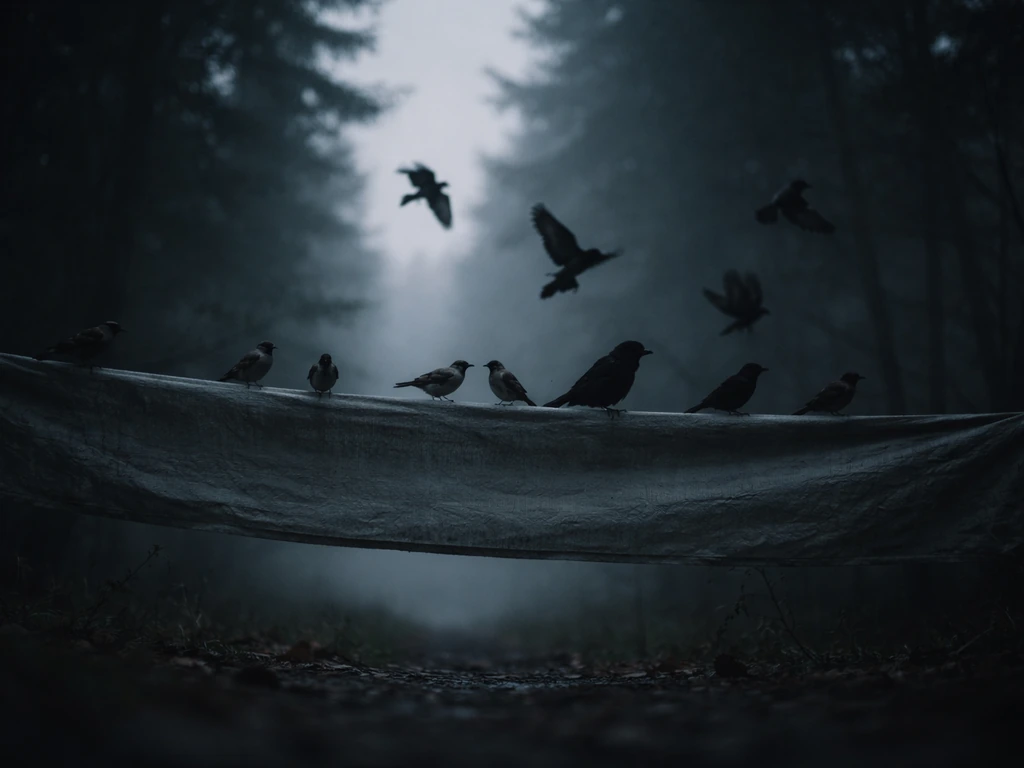
A bird flying into your house is one of those moments that stops you cold. Across dozens of cultures and centuries of folklore, the most common interpretation is that the bird carries a message or signals change, sometimes welcome, sometimes not. Depending on the tradition you lean toward, it can mean an important visitor is coming, that spiritual attention is being called to your home, or in older and more sobering folklore, that a death or loss may be near.
Bird in House Meaning: Superstition, Causes, and What to Do

Maya Hartwell
29 May 2026
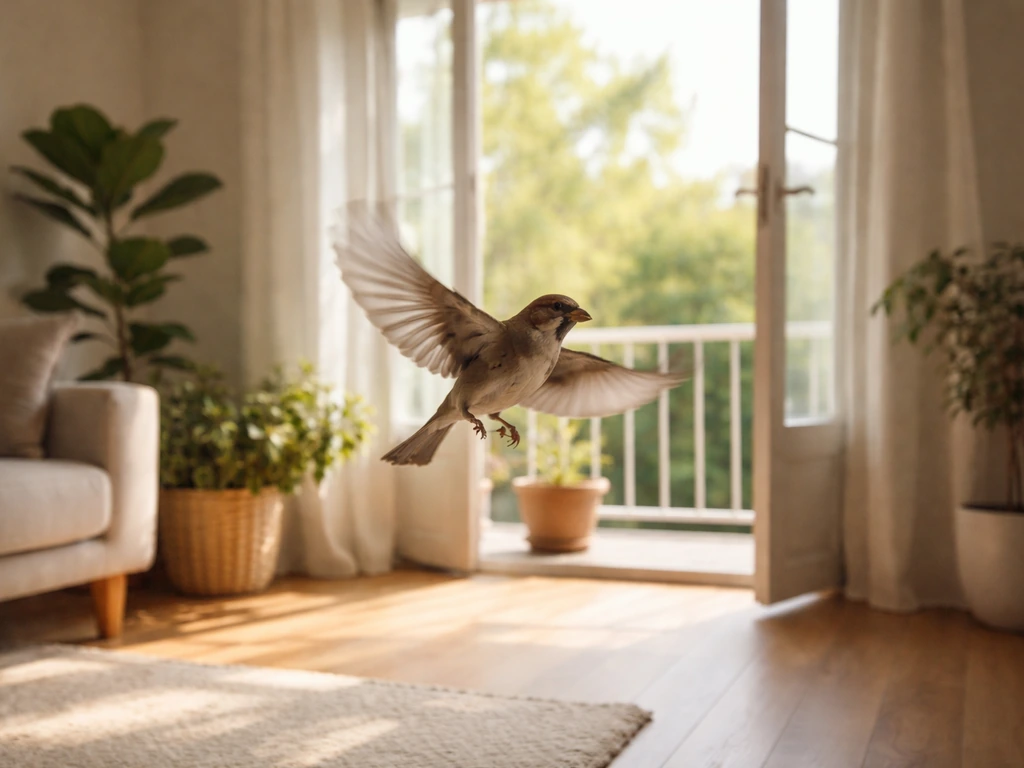
None of those meanings are settled fact, and later in this article I'll walk through why birds enter homes for perfectly mundane reasons too. But if you're here because it just happened and you want to know both what it might mean and what to do right now, you're in the right place.
What people actually mean by 'a bird in the house'
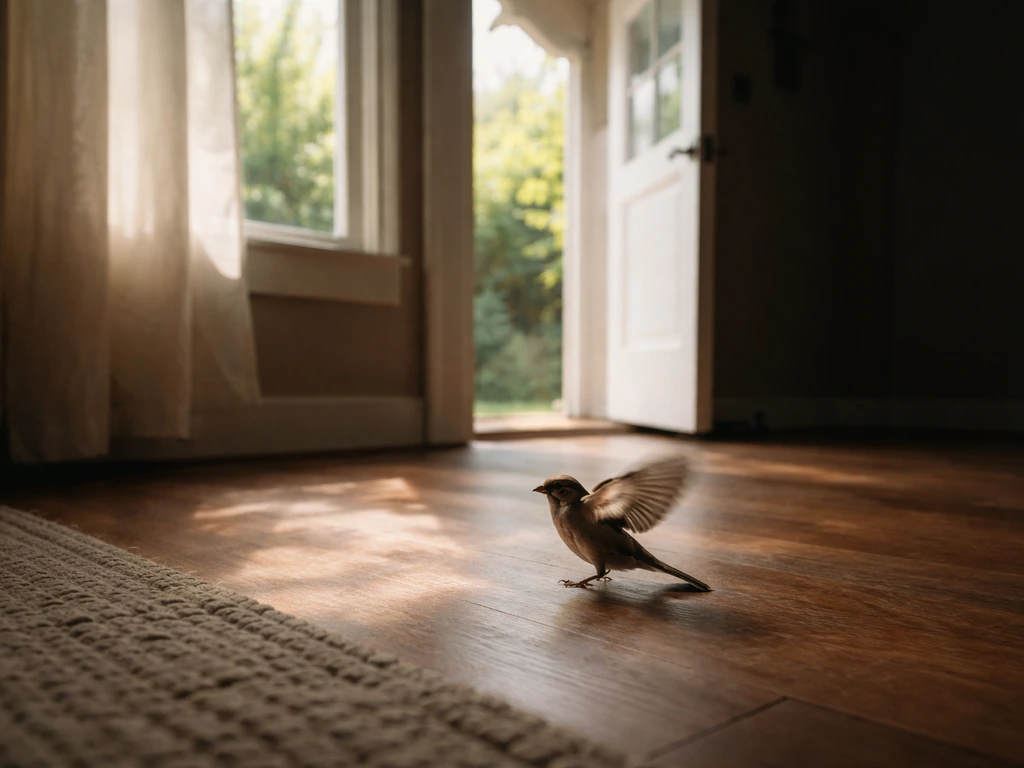
When someone searches for 'bird in house meaning superstition,' they're almost always describing a live bird that has flown through an open door or window and is now trapped inside, flapping against glass or perched somewhere it clearly doesn't belong. That's the scenario this article is built around. It's different from finding a dead bird inside (which carries its own set of folklore interpretations, generally leaning negative), and it's different from a bird tapping at a window from outside without entering. The 'bird inside the home' event is its own distinct folklore category with a surprisingly consistent thread running through many unrelated cultures: the home is considered a protected, private space, and a wild creature breaching that threshold uninvited is treated as symbolically loaded.
The species matters in some traditions too. A robin entering a home carries different weight than a crow, and a white bird carries different weight than a sparrow. If you want a deeper dive into what a specific species might mean, there are separate discussions worth exploring, for example, a robin appearing inside a home has its own rich symbolic layer in British and Celtic folk tradition. Wild birds that enter homes unexpectedly also get their own cultural framing in some belief systems. But the core superstition framework I'll cover here applies broadly across most bird species.
The main superstition interpretations: good, bad, and in between
The most repeated version of this superstition, especially in American Appalachian and British Isles-descended folklore, frames the event with a two-option fork: either a visitor is coming, or someone in the household will die. That 'visitor or death' split is surprisingly persistent in hillbilly and settlement-era folklore rooted in Irish, Scottish, and English traditions. It sounds dramatic, but it's worth understanding it in context, in pre-modern communities, unexpected events were read as signs, and a wild animal entering a human dwelling was considered deeply unusual.
Beyond that binary, there are several other common interpretive frameworks people bring to this experience:
- Message incoming: Many traditions, and most contemporary spiritual interpretations, frame the bird as a messenger. Something important is on its way — news, a shift in circumstances, or a prompt to pay attention to something you've been ignoring.
- Change and transition: A bird entering your home is widely read as a sign that change is coming, not necessarily bad, but significant. The disruption mirrors an internal disruption on the horizon.
- Death or serious loss: This is the darkest reading and the most culturally widespread. It shows up in Irish, Scottish, Welsh, and English folklore, and variations of it appear in many other cultures. One specific variant describes a bird circling a room and landing on the back of a chair as a particularly strong omen of impending death.
- Good luck or a blessing: Not all traditions treat it negatively. Some read the bird as a welcome spiritual visitor, bringing good fortune or confirming that you are being watched over.
- A deceased loved one: A common modern spiritual interpretation holds that birds — especially ones that linger or seem unusually calm — may represent the spirit or presence of someone who has passed.
The live bird vs. dead bird distinction is important here. Finding a live bird inside is generally read as ambiguous (change, message, warning), while finding a dead bird inside skews toward negative omens like loss or hardship in most traditions. If the bird you found was injured or died after entering, that layering can shift how people interpret it spiritually.
Biblical and spiritual angles worth knowing
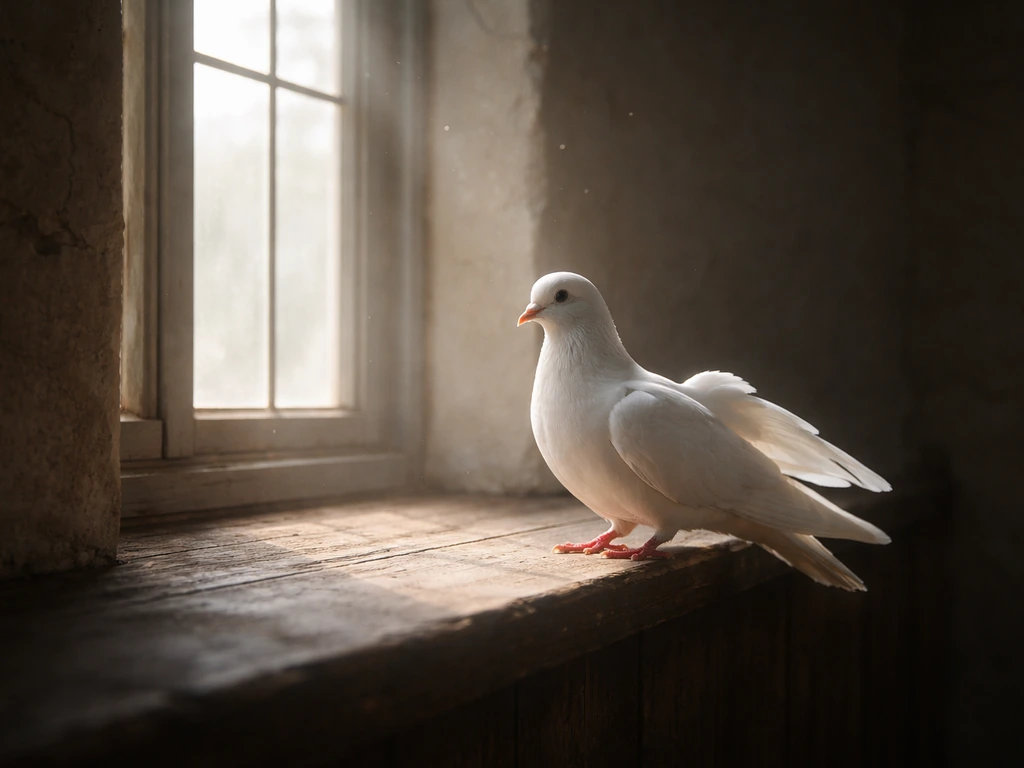
Biblically, birds are consistently used as messengers and symbols of divine attention. The Holy Spirit descends as a dove in the Gospels. Ravens bring food to Elijah in the wilderness. Sparrows are cited as evidence that God attends even to small creatures. While the Bible doesn't specifically address a bird flying into a house as an omen, the broader biblical framework treats birds as creatures under divine care and sometimes as instruments of divine communication. Some readers naturally extend that symbolic logic to a bird appearing in their personal space, interpreting it as a form of spiritual attention or prompting.
In broader metaphysical and spiritual traditions (not tied to a specific religious text), the bird-in-home event is often framed as a threshold crossing. Your home represents your inner world, your private energy, your sanctuary. When something from the wild crosses that threshold, it's read as the outer spiritual world reaching into your inner one. California Psychics and similar contemporary spiritual sources summarize it this way: an important message is on its way, and the bird's appearance is the universe's way of telling you to prepare to receive it. That framing is gentler than the death-omen tradition but takes the event just as seriously.
How folklore varies around the world
This superstition is remarkably cross-cultural, though the specifics shift significantly depending on region and species. Spanish accounts documented a pre-Christian Philippine practice where any bird that crossed one’s path could be treated as an omen, with versions that could be interpreted as evil or good This superstition is remarkably cross-cultural.
| Region / Tradition | Primary Interpretation | Notable Variants |
|---|---|---|
| Ireland / Scotland | Death omen or serious bad luck | White bird or crow flying against a window at night foretells death within a year |
| Wales | Death omen (Aderyn y Corff, the 'Corpse Bird') | A specific folkloric bird figure associated with foretelling death; connected to broader Celtic omen-bird tradition |
| England / Appalachian (US) | Visitor coming or death in the family | The 'circles the room, lands on a chair back' variant is a stronger death warning |
| Philippines (pre-Christian) | Omen (good or evil depending on context) | Tigmamanukan — any bird crossing one's path or entering a space read as an omen requiring interpretation by a ritual specialist |
| Contemporary Western spiritual | Messenger, spiritual attention, change incoming | Dead loved ones sending signs; prompts to pay attention to something important |
| General Eastern European folklore | News or message arriving soon | Often read positively as advance notice of communication from distant family |
What strikes me about this spread is that the 'messenger' thread runs through almost all of them, even when the message is bad news. Very few traditions treat the event as random or meaningless, which tells you something about how deeply humans have projected significance onto birds entering domestic spaces across history.
What to do right now: safety, calm, and release
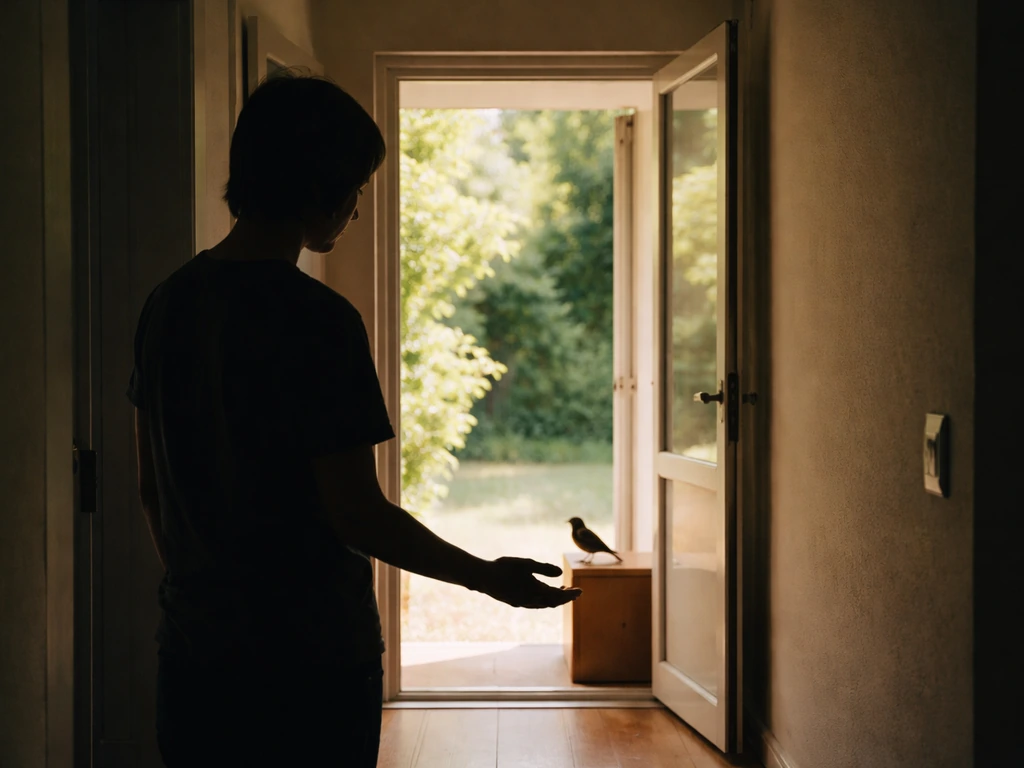
Whatever your interpretation of the spiritual meaning, the immediate practical priority is getting the bird out safely, for the bird and for everyone in the house. The RSPCA advises providing only one exit point so you do not confuse the bird, and once it can fly again you should let it escape through an open door or window. Birds in enclosed spaces panic, exhaust themselves, and can injure themselves against glass or furniture. Here's what to actually do:
- Clear the room of pets and small children first. A frightened bird flapping at eye level is stressful for everyone and dangerous for the bird if a cat or dog is involved.
- Close interior doors so the bird is contained to one room. This prevents a chaotic chase through multiple spaces.
- Open one exit point only — one window or one door, not multiple. The RSPCA specifically recommends a single exit to avoid confusing the bird with competing light sources. Close or cover other windows if possible.
- Turn off interior lights in the room and let natural light from the single open exit draw the bird toward it. Birds orient toward light.
- Step back and give the bird time and space to find the opening on its own. Human presence adds to its stress.
- If the bird is dazed, injured, or not flying: place it gently in a shoebox or paper bag with small air holes and some crumpled paper towels. Keep it in a warm, dark, quiet space. Do not offer food or water. Contact a local licensed wildlife rehabilitator as soon as possible — federal regulations (50 CFR § 21.14) require that trapped or injured migratory birds be released humanely or handed to a permitted rehabilitator, not held at home.
If the bird collided with a window before entering or right after, it may be stunned rather than seriously injured. Cornell Lab's guidance suggests that a dazed bird has the best chance of recovery in the hands of a wildlife rehabilitation facility, not recovering on your windowsill. Audubon's advice is consistent: secure it in a ventilated box, keep it quiet and dark, and get professional help rather than assuming it will bounce back on its own.
Preventing repeat visits
Birds entering homes is more common during spring and fall migration. There are a few reliable steps that reduce the chances of it happening again. Turn off or dim interior lights at night during migration seasons, light attracts birds off course, and the U. S.
Fish and Wildlife Service specifically recommends reducing unnecessary nighttime lighting as one of the most effective collision-prevention measures. Close blinds or curtains on windows that are directly opposite open doors or other windows, since birds perceive glass as open space when they can see through it. If a particular window keeps causing collisions (birds hitting it from outside), apply window tape, decals, or screens to break up the reflective surface that makes the glass invisible to birds.
When a bird in your house is just a bird
I think it's worth being honest about this: most birds enter homes for straightforward reasons that have nothing to do with omens. The most common causes are window and glass confusion (birds see a reflection of sky or trees and fly toward what looks like open space), light attraction (interior lights draw birds in, especially at night), open doors and windows during warm weather, extreme weather pushing birds to seek shelter, or a bird simply following a food source like an insect that wandered in first. During migration periods, disoriented birds are more common than at any other time of year.
None of that means the experience isn't meaningful to you personally. These two things can both be true at the same time: the bird flew in because your kitchen light was on and the door was open, and you still find yourself sitting with a feeling that it meant something. Folklore and personal spiritual experience don't require a supernatural mechanism to be valuable.
What's interesting about the bird-in-house superstition is that it consistently points people toward reflection, toward asking what messages or changes they might be ready for. If you're wondering about a bird in bedroom meaning specifically, it's worth comparing how the broader bird-in-home superstition is often treated as a symbolic prompt rather than fixed proof.
If you are looking for the wild bird in house meaning, this is the moment to balance folklore with what is actually happening around you. Whether the bird is a literal messenger or an accidental visitor, the question it leaves behind, what might be coming, what do I need to pay attention to, is usually worth sitting with.
If you're wondering what do the birds mean in bird box specifically, the same idea applies: look for patterns of message and change, not certainty what do I need to pay attention to. If you're asking what do the birds mean in Bird Box, the answer is also about symbolism, not a guaranteed omen.
So after you've safely guided your visitor back outside and checked your screens and window situations: what does this moment stir up for you? Sometimes the most useful thing a superstition does is give you a frame to ask that question out loud.
FAQ
Should I interpret a bird flying into my house as bad luck if I feel scared or the bird seems “wrong” somehow?
Not automatically. Feeling frightened is common when an animal is trapped or panicking, but fear is not evidence of a specific omen. Use the superstition frame for reflection if it helps you process emotions, then prioritize immediate safety and recovery steps for the bird.
What’s the safest way to get the bird out without making it worse?
Create an escape route by opening the nearest exit (door or window) and dimming lights elsewhere so it faces outward. Avoid chasing, grabbing, or forcing it into a corner, because panic can cause collisions with glass, furniture, or interior walls.
Does it matter if the bird flew in through a door versus a window?
Yes for practical causes, not for fixed meaning. Door entry often points to an open door during warm weather or a bird attracted to insects or food near the entrance, while window entry often points to glass reflection or the bird misreading reflective surfaces as open space.
If the bird perches quietly inside, does that change the situation?
A quieter bird may be stunned, overheated, or simply disoriented, so treat it seriously even if it seems calm. Keep it in a ventilated, secure container if you need to move it, reduce noise and light, and avoid lingering handling that can stress it further.
What should I do if I can’t catch the bird easily or it keeps flying around?
Limit the area and use a step-by-step approach: close interior doors to confine it, open one exterior exit, and turn off lights in the rest of the home. If it cannot be guided out within a short time, consider contacting a local wildlife rehabilitator for guidance.
What if the bird hits the window multiple times or appears injured?
Assume there may be head or wing injury even if it is still able to move. Do not just “wait for it to recover,” especially if it is bleeding, dragging an injured wing, or clearly dazed. Quiet, darkness, and professional help give it the best odds.
Is it better to release the bird immediately, or wait until it seems calm?
Wait until it is stable enough to fly and you have a clear exit. Releasing too soon can lead to re-entry, especially if interior lighting remains bright or the escape route is confusing. A dark, quiet period often helps before release attempts.
Do bird species “mean” something specific in a reliable way?
Folklore assigns different symbolic weight by species, but it is not consistent or provable. If you want to use species symbolism, treat it as a lens for interpretation, not a certainty, and still follow the same safety and prevention steps based on what actually caused the entry.
What should I do if I find a dead bird inside?
This is a different scenario than a live trapped bird. Handle it carefully, prevent pets from investigating, and consider contacting local wildlife authorities if you suspect window strikes or if there are multiple birds. For prevention going forward, reassess nighttime lighting and window visibility immediately.
Can I prevent this from happening again without changing my whole home?
Start with the highest-impact fixes: reduce nighttime interior lights during migration periods, close blinds or curtains on windows facing open doors, and add decals or window tape to problem glass. Even one repeatedly affected window usually responds well to surface-visibility changes.
Is superstition harmful if it makes me dwell on death-omens?
It can be if it drives anxiety or delays practical action. A safer approach is to treat the omen story as a prompt to check on what matters to you, then ground yourself in concrete steps like bird safety, household lighting adjustments, and, if you want, journaling what the event triggered emotionally.
What if the bird keeps tapping at a window but never enters?
That often points to the same issue as collisions, reflection, or perceived open space. Keep the bird out of the interior by managing lights and visibility, then address the specific window with decals, tape, or screens so it stops repeatedly attempting entry.
Next Article
What Do the Birds Mean in Bird Box and in Real Life
Bird Box birds as early-warning plot signals, plus real-life meanings and calm next steps for sightings and symbols