
When a bird roosts, it is simply resting or sleeping, settling onto a branch, ledge, rafter, or eave to restore energy, digest food, stay warm, and stay safe from predators. It is not the same as building a nest or raising young. Roosting is the bird's version of calling it a night, and it happens every single day for every wild bird on the planet. Where it gets interesting is when a bird chooses to roost near your home, repeatedly, or in large numbers, because that is when the behavior shifts from background wildlife noise into something you need to understand, manage, or maybe reflect on a little more deeply.
What Does It Mean When a Bird Roosts? Practical and Spiritual Insights

Maya Hartwell
25 Apr 2026
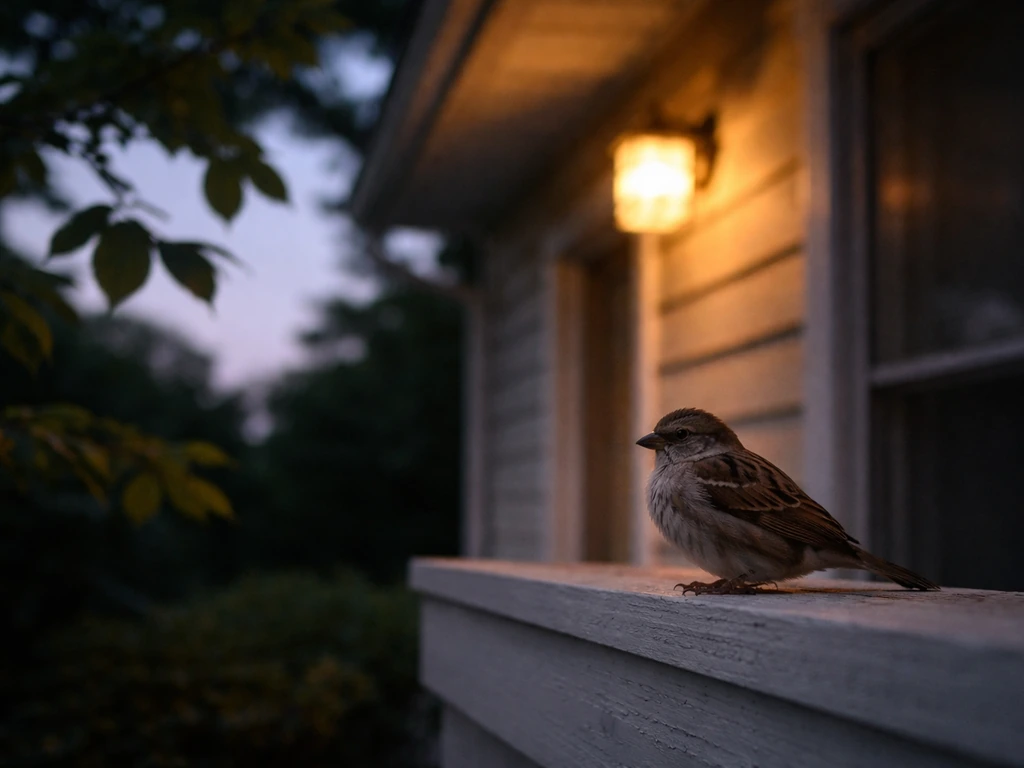
What roosting actually means (the bird behavior basics)
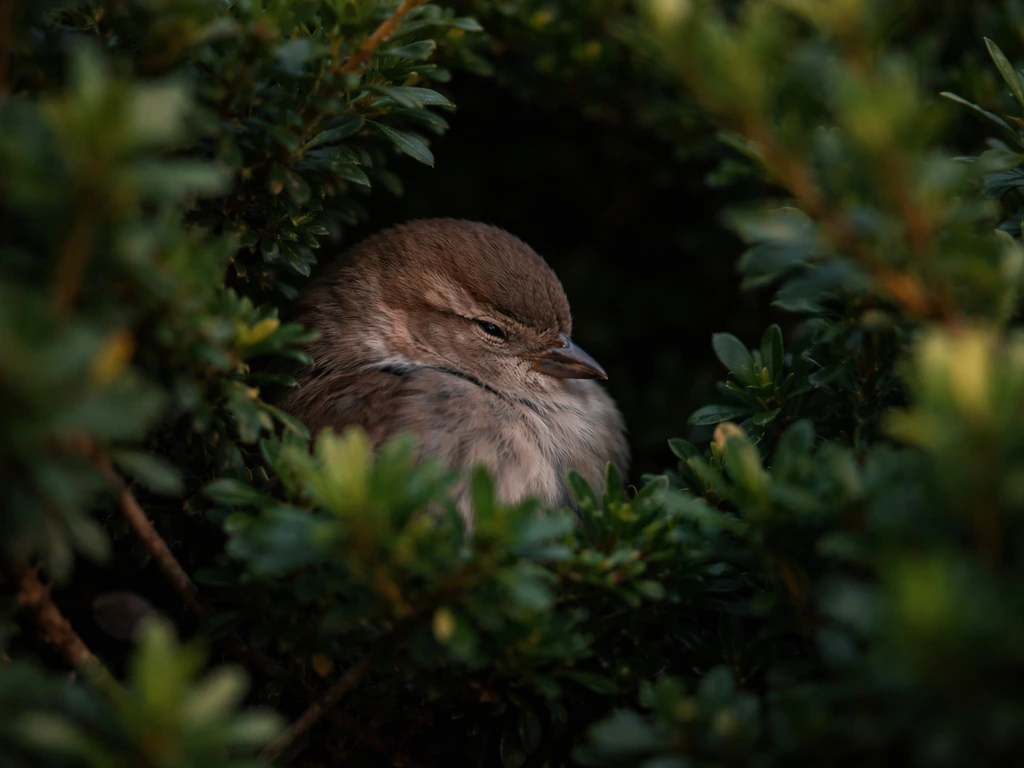
Roosting is a resting or sleeping site used by birds between periods of activity. It covers sleep, but also digestion and preening. A bird that has finished feeding for the day will fly to a roost site, settle in, and stay there until it is time to move again, often until dawn. This is different from nesting, which involves a specific structure built for laying eggs and raising chicks. A roosting bird is not raising young. It is just resting.
Some birds roost alone, tucked into a dense shrub or cavity in a tree. Others roost communally, meaning dozens, hundreds, or in some cases thousands of birds gather at the same site every evening as a group. Communal roosting is especially common in fall and winter and has been documented in robins, starlings, grackles, crows, and swallows among many others.
Cornell Lab research shows American robins, for example, often shift from solitary summer behavior to large communal roosts during fall and winter, spending much more time in trees as a group rather than foraging on lawns. blank" rel="noopener noreferrer">All About Birds (Cornell Lab of Ornithology) also notes that American robins form large roosts in trees during fall and winter spend much more time in trees as a group rather than foraging on lawns.
One of the most notable features of roosting is fidelity. Birds tend to return to the same roost site night after night. Radar studies on tree swallows have confirmed this, showing consistent use of the same locations from evening to evening. So if a bird shows up at your window ledge, gutter, or tree three nights in a row at dusk, it has chosen that spot as a regular roost. That is worth knowing before you decide how to respond.
Why birds pick the spots they do
Birds are not choosing roost sites randomly. There are specific biological drivers behind every roosting decision, and once you understand them, the location a bird chooses will start to make a lot of sense.
- Safety from predators: Dense vegetation, high ledges, building eaves, and cavities all offer protection that an open field does not. Communal roosts also create safety in numbers, making it harder for a predator to single out one individual.
- Thermoregulation and warmth: Birds sharing body heat in cavities is a documented survival strategy, especially in cold months. South-facing walls, heated building surfaces, and sheltered eaves can all offer extra warmth that a bird actively seeks out.
- Weather protection: Overhangs, dense conifers, and covered ledges shield birds from rain and wind. Your porch overhang or building facade can look extremely appealing compared to an exposed branch.
- Proximity to food sources: Birds roost near where they feed. If you have berry-producing shrubs, birdfeeders, open compost, standing water, or insect-attracting lights nearby, you are essentially advertising a convenient roost location.
- Artificial light: Audubon's Lights Out research shows that unnecessary artificial light at night draws birds toward buildings. This is especially relevant during spring and fall migration windows.
Normal roosting vs. a real problem: how to tell the difference
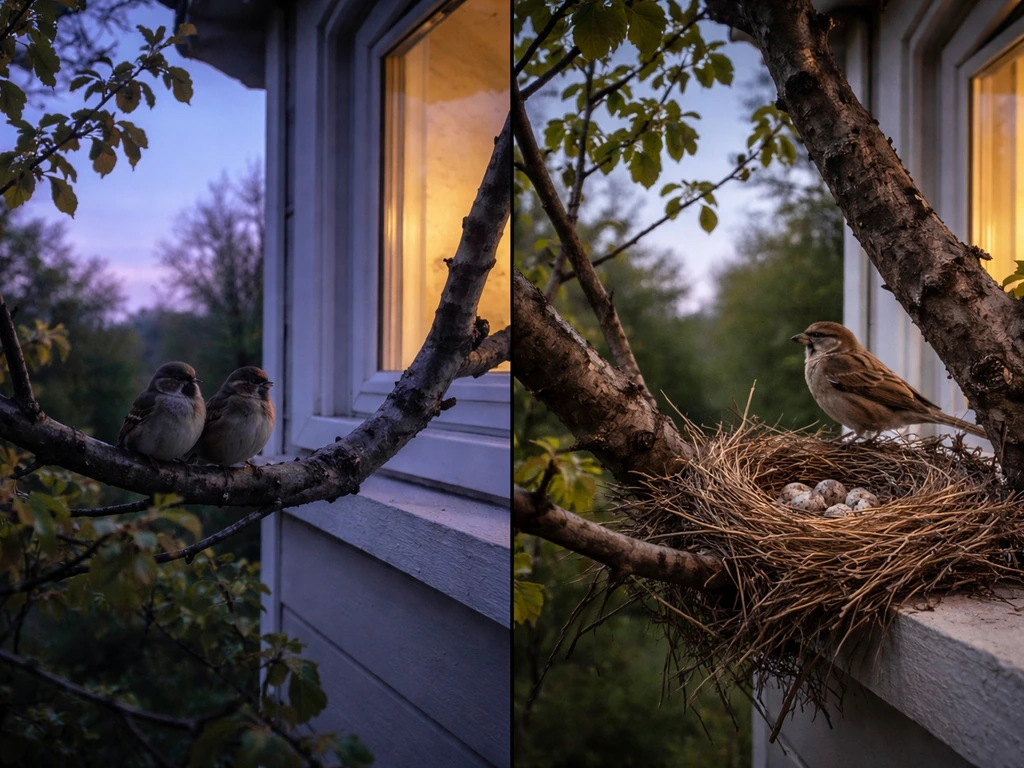
Most of the time, a bird or two roosting in your tree or on your ledge is completely normal and temporary. But there are situations where what looks like roosting is actually something that needs attention, either because it has crossed into nesting, because numbers have grown to problem levels, or because there is a health risk developing. Illinois Department of Public Health warns that the most serious health risks come from disease organisms growing in nutrient-rich accumulations of bird droppings, especially when roosts have been active for years health risk developing.
Signs it's normal roosting
- One or a handful of birds arrive at dusk and leave at dawn
- The bird is sitting still, not actively gathering material or repeatedly entering a cavity
- No nest structure is visible at the site
- Behavior has been consistent for a short period, especially during migration season or winter
- Droppings are minimal and localized under a single perch point
Signs it may be a problem
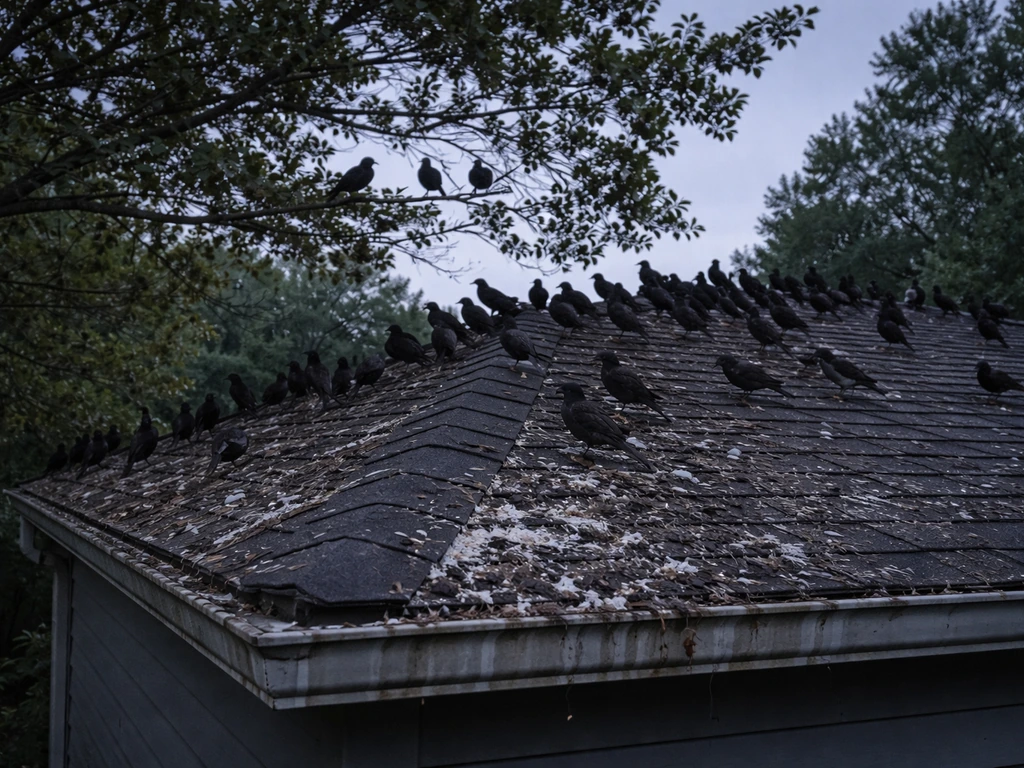
- Large communal roosts of dozens to thousands of birds are creating significant noise, especially crows, grackles, or starlings gathering nightly
- Droppings are accumulating heavily under eaves, on walkways, vehicles, or ventilation openings
- Birds are entering openings in the building, such as vents, gaps in soffits, or attic louvers
- You find nest material, eggs, or chicks, which means this has shifted from roosting to nesting and the situation has different legal and practical implications
- The same roost has been active for many months or years, which dramatically increases health risks from droppings accumulation
- Nighttime vocalizations are persistently disruptive, which can happen with large communal roosts where territorial calls or group noise continues after settling
The key distinction is this: roosting is temporary nightly rest; nesting is active breeding with eggs or chicks present. If a bird is repeatedly entering a gap in your structure and you are seeing nesting material, you are dealing with a nesting situation, which has different wildlife rules and cleanup considerations. If birds are only perching externally overnight, you are dealing with a roost.
What to do right now if roosting is happening near your home
If you are dealing with roosting near your home today, you have several practical options, and the approach depends on whether you are dealing with a small roost or a large communal one, and whether birds have accessed the interior of your structure.
For small roosts on ledges, porches, or trees
- Reduce light attraction tonight: Audubon's Lights Out program recommends turning off or shielding unnecessary exterior and interior lights from 11 p.m. to 6 a.m., especially during peak migration windows. Closing blinds and dimming outdoor fixtures can reduce how appealing your building looks from above.
- Remove food sources: Take in birdfeeders, secure compost, and eliminate standing water in the evening. Birds roost near where they feed, so cutting off the food signal is one of the most effective deterrents.
- Create a physical deterrent on perch points: Bird-proof spikes, angled surfaces, or reflective tape on ledges make a spot uncomfortable to land on. These are humane and effective for small roosts.
- Do not disturb a roosting bird directly at night: Flushing a roosting bird in cold or wet conditions forces it to use energy reserves it needs to survive. If it is not causing a safety problem, let it rest and address the deterrents tomorrow.
For birds entering your structure or large communal roosts
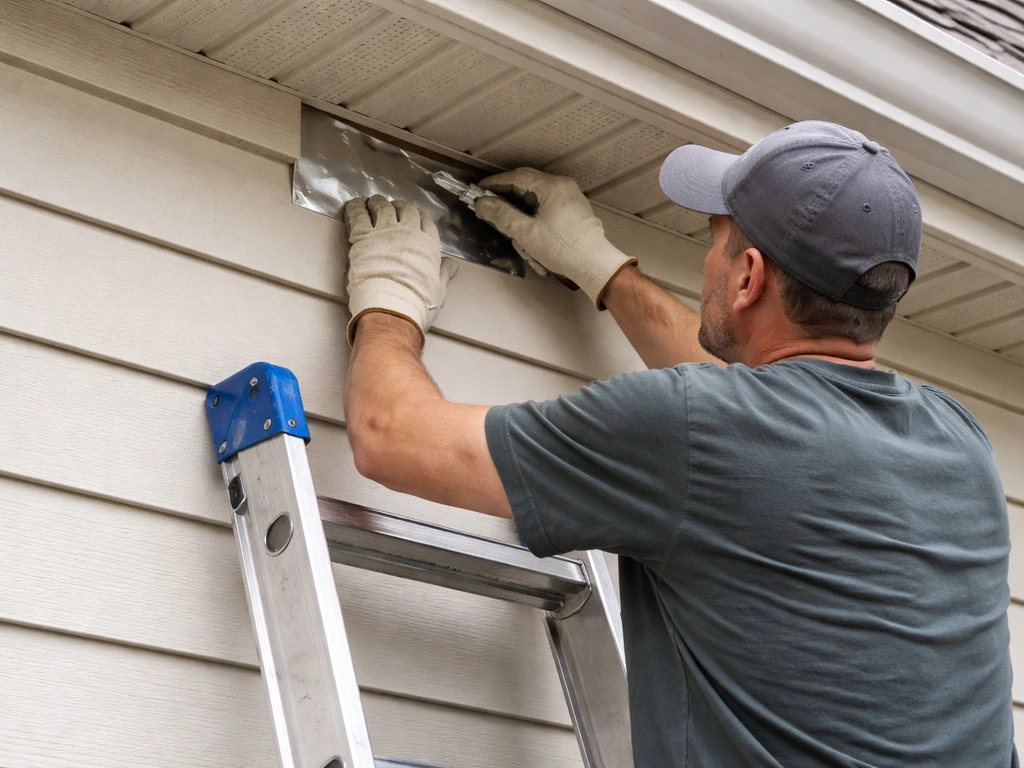
- Block entry points: Penn State Extension and Illinois Department of Public Health both recommend sealing openings like vents, eaves, loft gaps, and soffits with wood, metal sheeting, hardware cloth, or screen wire. Do this outside of nesting season and only after confirming birds are not actively inside or nesting.
- Call your local wildlife control or a licensed wildlife removal professional: For large communal roosts or any situation involving birds inside a structure, professional help is the safest path. They can identify species, confirm legality of removal, and manage exclusion correctly.
- Do not disturb large accumulations of droppings yourself: If droppings have been building up under a long-established roost, do not sweep, vacuum, or disturb them without protection. Large quantities of dried bird droppings can contain Histoplasma capsulatum, the fungus responsible for histoplasmosis, a serious lung infection. The CDC and NIOSH recommend that significant accumulations be handled by professional hazardous waste companies. If you must clean a smaller area, use an N95 respirator, gloves, and wet the area before cleaning to suppress dust.
| Situation | What it likely is | Recommended action |
|---|---|---|
| 1-3 birds on a ledge at dusk, gone by dawn | Normal roosting | Monitor, add deterrents to the perch if unwanted |
| Dozens of birds gathering nightly with noise and droppings | Communal roost | Reduce food/light attractants, contact wildlife control |
| Bird repeatedly entering a gap in eaves or soffits | Possible nesting or internal roost | Inspect for nest/eggs, seal opening if clear, call wildlife professional |
| Heavy dropping accumulation under a long-term roost | Established roost, health hazard risk | Do not disturb; call professional for safe cleanup |
| Bird inside the building | Accidental entry or internal roost | Open windows/doors to encourage exit; see Cornell Lab indoor guidance |
The spiritual meaning of a bird roosting near you
Now for the part that brought many of you here. In spiritual traditions and symbolic interpretation, roosting carries a distinctly different weight than other bird behaviors like singing, flying, or nest building. If the question you are really asking is about bird nest meaning, remember that nesting symbolism often centers on new beginnings, commitment, and the start of family life roosting carries a distinctly different weight.
Some people also wonder what it means when a bird building nest in my house happens instead of just roosting bird building nest in my house meaning. Because roosting happens at the transition between day and night, and because it represents deliberate rest and chosen shelter, the symbolic interpretations that have grown up around it tend to cluster around themes of stillness, protection, home, and timing.
This is related to the bird-on-the-nest meaning, where the bird’s chosen shelter symbolizes rest, safety, and readiness for what comes next the bird is on the nest meaning.
When a bird chooses to roost near you or your home, many traditions interpret this as the bird placing trust in your space. It has surveyed its options and decided your presence or your home offers safety. Spiritually, some see this as a reflection of the energy your home or aura projects outward: a calm, sheltered, welcoming vibration that is literally attracting living things to rest in your orbit.
The timing matters too. Roosting happens at dusk and through the night, which is the liminal period in many spiritual systems, the threshold between what has happened and what is coming. A bird settling near you at nightfall can be interpreted as a prompt to do the same, to release the day, to pause before moving forward. There is a message in that, if you are open to receiving it: this is a moment for rest, not action.
If a bird roosts at or near your door, the connection to home and family protection is especially strong in folk interpretation. If you have noticed a bird nest on a door wreath, the meaning is often linked to protection, new beginnings, and the idea that your home is being watched over bird roosts at or near your door.
If you are wondering about the bird nest in front of house meaning, many of the same themes of protection and new beginnings show up in folk interpretations. This mirrors themes you will find around bird nests at the front door or on a wreath, which are widely seen as signs of incoming blessings, new beginnings, or the household being watched over by something benevolent.
This mirrors themes you will find around bird nests at the front door or on a wreath, which are widely seen as signs of incoming blessings, new beginnings, or the household being watched over by something benevolent.
Some spiritual readers also pay attention to which bird is roosting and what that species carries symbolically. A crow or raven roosting near you carries different cultural weight than a robin or a dove. A crow's roost might be read as a call to introspection, a watchful messenger, or a reminder that endings and beginnings travel together. A robin roosting near you, especially in winter, is often associated with hope, endurance, and the quiet promise of renewal. Consider what species showed up for you, and follow that thread if it resonates.
It is worth sitting with this question: did something happen in your life recently around rest, home, safety, or transition? Spiritual encounters rarely feel meaningful in isolation. If you are navigating a period of upheaval, change, or grief, a bird choosing to roost quietly at your window might feel less like coincidence and more like an answer to something unspoken.
What cultures and traditions say about birds settling at night
Across many traditions, birds have long served as messengers between the human world and the divine, and their nighttime behavior has drawn particular attention because darkness has always carried spiritual weight.
Biblical and Abrahamic traditions
In biblical scripture, birds are frequently used as symbols of divine provision and watchfulness. Passages in the Psalms and in Matthew describe God's awareness of every sparrow, emphasizing that not one falls without divine notice. The image of birds finding a nest and a resting place near the altar (Psalm 84) connects roosting directly to sanctuary, to being sheltered under something sacred. While the Bible does not specifically interpret roosting as an omen, the broader framework it establishes treats birds near the home or sacred space as signs of peace, provision, and divine presence watching over a dwelling.
Celtic and European folklore
In Celtic traditions, birds served as soul-carriers and were closely associated with the Otherworld, the realm beyond the visible. A bird settling on or near a home at dusk was often interpreted as a spirit pausing near the threshold, either delivering a message, watching over the household, or indicating a nearby presence of an ancestor. Some European folk traditions specifically associated birds roosting on a rooftop with the protection of the home and a watchful spiritual guardian. Owls roosting near a house carried a more complex dual meaning: wisdom and forewarning, depending on the circumstances and the tradition.
Indigenous and Eastern traditions
Many Indigenous North American traditions treat birds as direct messengers from spirit, with their behavior and location providing context for the message. A bird choosing to rest near a person or their home is often read as affirmation, a sign that the person is on the right path or that their home is spiritually grounded. In various East Asian traditions, birds are associated with luck, prosperity, and the health of the household. A bird resting peacefully near the home is broadly considered auspicious, while a bird that appears agitated at roost time may prompt reflection on what unsettled energy needs addressing.
General folklore and omen traditions
In broader Western and folk omen traditions, a single bird roosting quietly near your home is generally considered a positive sign: peace, stability, and protection over the household. In some traditions, people connect a bird nest in front of the house with meanings tied to home, protection, and new beginnings bird nest in front of the house meaning. A sudden large flock descending to roost unexpectedly has a more complex reading, with some traditions interpreting it as a message of collective energy, a shift in circumstances, or a call to pay attention to what is gathering around you. The fact that birds return to the same roost faithfully each night is itself meaningful in folk symbolism, a sign of loyalty, constancy, and the cyclical nature of renewal.
No tradition offers a single locked-in interpretation for every roosting encounter, and that is actually the point. The invitation is to bring your own context to the moment. What are you seeking right now: rest, protection, direction, or reassurance? Whatever it is, consider whether the bird settling near you at dusk might be the universe answering in a language quieter than words.
FAQ
How can I tell whether birds are roosting or nesting when I see them near my house?
If birds are only perched externally at night, that’s typical roost behavior. If you see repeated entry into a cavity or opening, see fresh nesting material, or hear constant chirping after dusk, that points to nesting, not roosting, and you should handle cleanup and wildlife timing differently.
Why do birds suddenly roost in large numbers near my home in fall or winter?
Yes. Some species switch to communal roosts in cold months to conserve heat and share vigilance, so a sudden jump in numbers is often seasonal rather than a sign of an infestation. Still, if the roost is producing heavy droppings daily or birds are aggressive at dawn, treat it as a management issue, not just “wildlife.”
If a bird roosts in the same place every night, does that mean I should do something now?
Roosting fidelity means they often come back to the same exact spot, which is why “waiting them out” sometimes fails if the underlying attraction remains. Changing conditions before the next dusk, like removing easy landing areas or securing access points, generally works better than actions taken mid-day after birds have already selected that night’s location.
Are roosting birds a health or mess problem, even if they are not nesting?
Droppings, noise, and smell can be strong even when the birds are only roosting. As a precaution, avoid sweeping immediately at dawn when birds are still present, wear gloves and a mask for cleanup, and disinfect the area afterward because accumulated droppings can create hygiene and slip hazards.
What does it mean if the bird seems restless during roost time?
A bird can look calm but still be choosing a roost due to heat, protection from wind, or safety from predators. If the bird seems agitated, repeatedly repositions, or there’s consistent “inspection” of openings, that can signal a shift toward nesting behaviors, so it’s worth checking for access points and signs of material carrying.
Why do different types of birds roost near the same area of my home?
If multiple species use the same area, it can be normal because each bird group targets slightly different shelter types. However, mixed-species crowding near one structure may increase competition and aggression, so expect more noise and more droppings than with a single species roosting.
What’s the best first step to take if I want to discourage roosting near my property?
Start by identifying the species and whether it is solitary or communal, then note timing (same dusk window, same duration, same location). For prevention, focus on removing the features that made the site attractive, like exposed ledges, unsecured vents, or gaps in soffits, rather than chasing birds each night.
Can a roost near my home happen because of something besides my roof or trees?
Yes, and the key is not just the roost spot but the surrounding environment. Birds often choose places that are both sheltered and easy to reach, for example near dense shrubs, covered rafters, or areas with nearby food sources, so addressing only the visible roost may not solve the underlying lure.
If I get a spiritual “message” from a roosting bird, how do I keep it grounded and not take it too literally?
Spiritual interpretations are usually less “fixed” than people expect, especially because the bird’s species, your emotional context, and the timing (dusk versus early morning) change the meaning. If you feel it’s meaningful, use it as a prompt to reflect, not as a certainty that predicts a specific event.