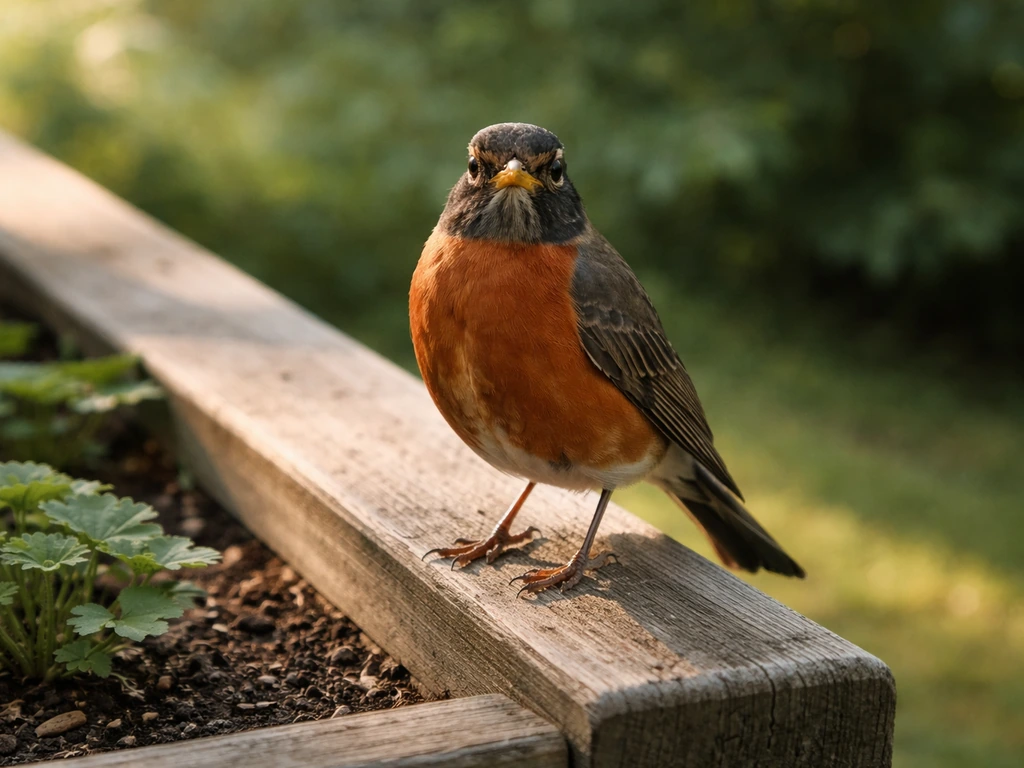
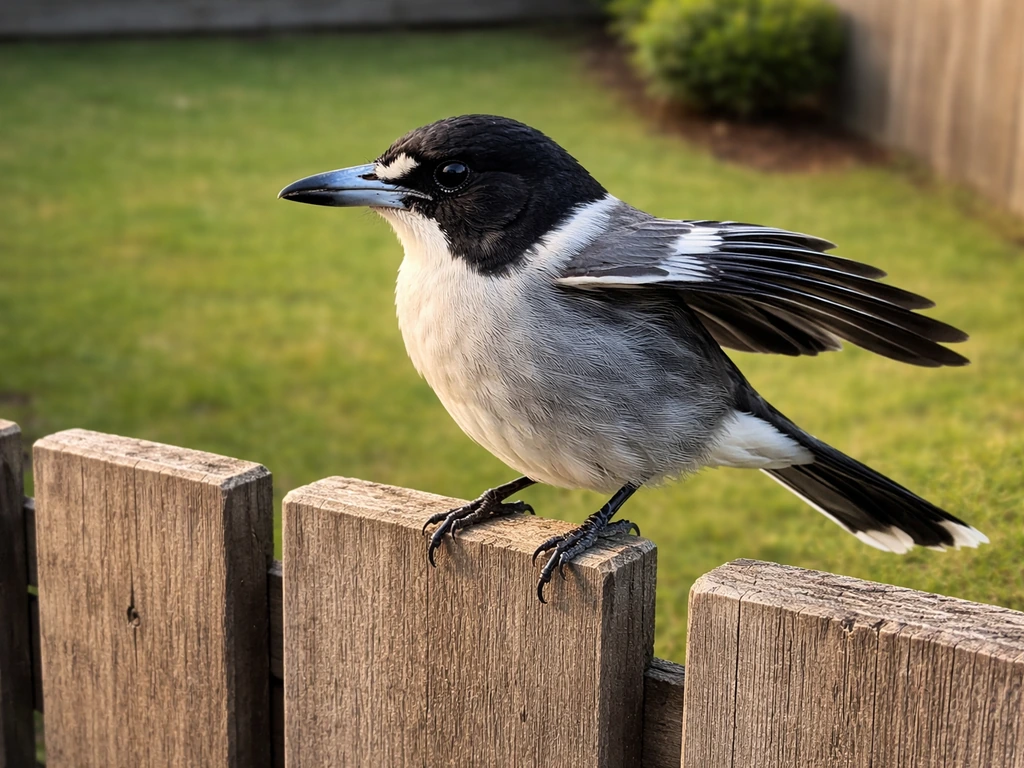
A butcher bird visiting you most likely means one of two things: it's defending its nesting territory (especially between August and December in Australia), or it's been drawn to your yard by food sources like insects, lizards, or scraps. Spiritually and symbolically, many traditions interpret a butcher bird's visit as a call toward clarity, decisiveness, and cutting away what no longer serves you. Both readings are worth sitting with, but understanding the practical side first helps you respond safely and gives the symbolic layer more grounding. You might be wondering, what does it mean when a robin bird visits you, and whether the same practical and symbolic approach applies.
What Does It Mean When a Butcher Bird Visits You?

Maya Hartwell
31 May 2026
What a butcher bird actually is (and why the name matters)
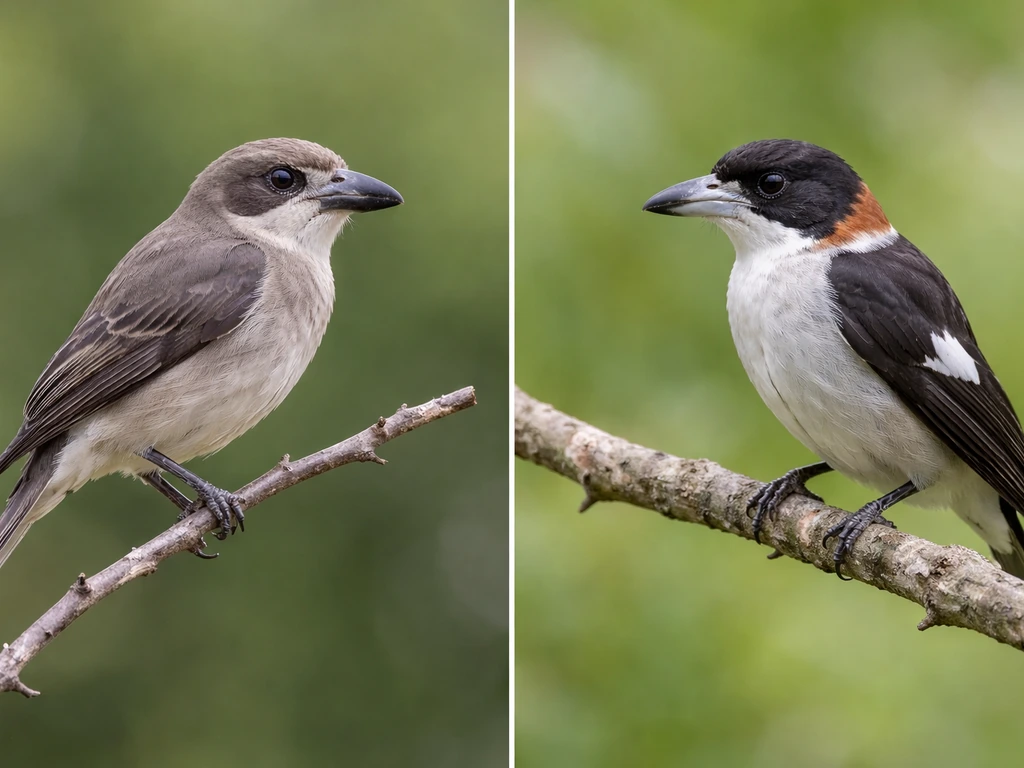
The name "butcher bird" gets applied to two different groups of birds, and knowing which one you're looking at shapes everything that follows, including the symbolism. In North America and Europe, "butcher bird" is a nickname for shrikes (family Laniidae), named for their habit of impaling prey on thorns like a butcher hanging meat on hooks. In Australia, "butcherbird" refers to a separate but behaviorally similar group, the Cracticus species, which are black, gray, and white songbirds related to the Australian magpie. The two most commonly encountered Australian butcherbirds are the pied butcherbird (Cracticus nigrogularis), which has a distinctive black hood and white underparts, and the blank" rel="noopener noreferrer">grey butcherbird (Cracticus torquatus), which has a subtle hooked tip on its beak. Both groups share that same larder behavior of wedging or impaling prey to tear it apart, and that's the biological detail that threads through most of the bird's symbolic associations.
If you're in the United States and someone calls a bird a "butcher bird," they almost certainly mean a shrike. If you're in Australia, they almost certainly mean a Cracticus species. The reason this disambiguation matters is that online spiritual content often blends the two, pulling symbolism from one and applying it to the other. The core themes (strength, precision, resourcefulness, a willingness to do what's necessary) apply to both, but local folklore and cultural meaning differ significantly by region.
Practical reasons a butcher bird visits your yard or home
Before you reach for symbolic meaning, it's genuinely useful to understand why this bird showed up in the first place. Most butcher bird encounters have a straightforward ecological explanation.
- Territory and nesting defense: During breeding season (roughly August through October for grey butcherbirds in southeastern Australia, though it varies across the continent), butcherbirds become noticeably bolder near their nest sites. They'll approach, call loudly, or even swoop people who get too close. This isn't a message directed at you personally; it's a parent doing its job.
- Food sources: Butcherbirds are carnivorous. Insects, lizards, small rodents, and even other birds' eggs attract them. If your yard has long grass, garden beds, compost, or bird feeders that draw smaller birds, you're essentially running a butcherbird buffet.
- Curiosity and human habituation: Suburban butcherbirds, especially pied butcherbirds, are intelligent and can become remarkably bold around people who haven't threatened them. A bird calmly perching near you or following you at a short distance is often simply a curious, habituated individual.
- Shelter and perching spots: Trees, fences, and rooflines near open ground are ideal hunting perches. If your property offers a good vantage point over open lawn or garden, expect butcherbirds to use it regularly.
- Seasonal movement: Outside of breeding season, young birds dispersing from family territories can appear in unfamiliar areas. A single visit from an unfamiliar-looking individual often just means a young bird is exploring its range.
How to read the details of your specific encounter
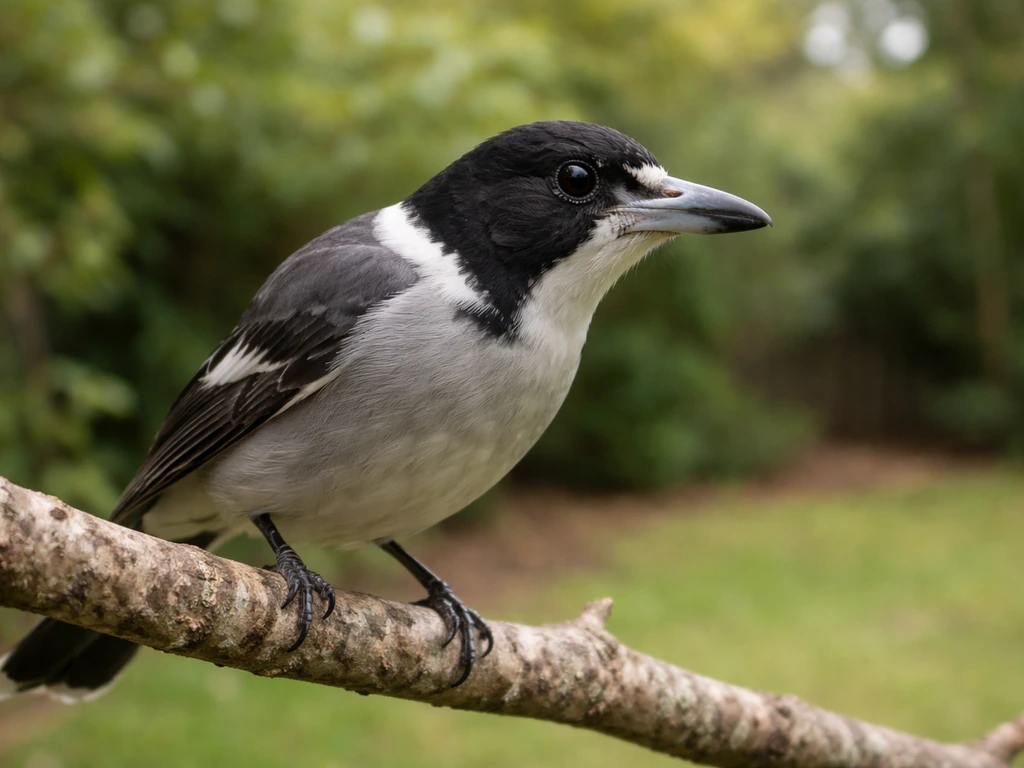
Not all butcher bird visits carry the same weight, whether you're reading them practically or symbolically. The specifics of your encounter shift the interpretation considerably.
What the bird was doing
| Behavior | Practical meaning | Symbolic angle |
|---|---|---|
| Calm perching nearby, making eye contact | Habituated or curious individual; low threat | Stillness, observation, a message asking you to pause and notice |
| Loud, persistent calling near you | Territory alarm or contact call; may be near nest | A call to attention; something in your life may need your voice |
| Following you at a distance | Learned behavior (you may have inadvertently fed it before); curious juvenile | Accompaniment, guidance, or a theme being repeated until you notice |
| Swooping or dive-bombing | Active nesting defense; you're within the nest zone | Urgency, boundary-setting, a push to move away from something |
| Appearing injured or lethargic | Needs wildlife help; do not handle without guidance | Vulnerability; a prompt toward compassion or caregiving |
Timing and repetition
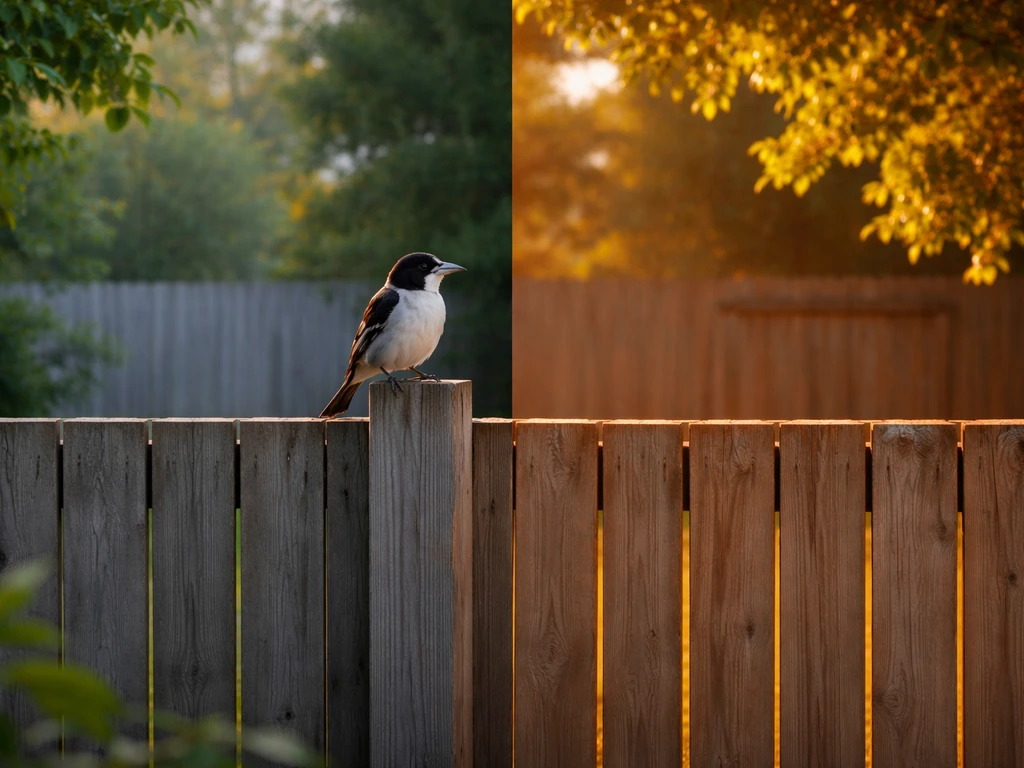
A one-time visit from a bird perched on your fence during spring is probably just a bird passing through or patrolling its territory. But if a butcher bird appears repeatedly, especially at the same time of day or in response to specific moments in your routine, that pattern is worth reflecting on. Many spiritual traditions across cultures treat repetition as the universe's way of underlining a message. Dawn visits especially, when the bird's rich, fluting song often fills the air, are associated in various folk traditions with new beginnings and clear-eyed perspective. Dusk or late-afternoon encounters are sometimes interpreted as prompts toward reflection or completion.
Proximity and whether the bird seems healthy
A healthy butcher bird that approaches within a meter or two of you and shows no signs of distress (no labored breathing, no inability to fly, no visible injury) is simply a confident, curious animal. That proximity, from a symbolic standpoint, is often read as directness: this bird isn't hiding, and neither should the message. A bird that appears unwell or is behaving erratically requires practical action before any spiritual reflection. Unusual behavior in a wild bird can also indicate disease, which is a reason to keep distance and contact a wildlife rehabilitator rather than attempting to help on your own.
Spiritual and metaphysical meanings of a butcher bird visit
Across the broad landscape of modern spiritual interpretation, birds appearing near you are commonly read as messengers or markers of attention. The butcher bird carries a specific symbolic profile rooted in its nature: it is precise, strategic, fearless, and fiercely territorial. It doesn't wait for things to come to it; it acts with intention and stores resources for later. These qualities tend to shape the spiritual meanings attributed to an encounter.
- Clarity and decisiveness: The butcher bird's defining behavior is cutting through and separating. Symbolically, many interpret a visit as a nudge to make a decision you've been avoiding, to cut ties that have grown unhealthy, or to get precise about what you actually want.
- Resourcefulness and preparation: The larder habit (storing food for later) speaks to forward thinking. An encounter might prompt reflection on whether you're preparing wisely for what's ahead.
- Fearlessness and boundary-setting: A swooping or boldly approaching butcher bird embodies the energy of someone who defends what matters to them without hesitation. This can be interpreted as encouragement to hold your own ground.
- Vigilance and awareness: Butcherbirds are sharp-eyed hunters with excellent situational awareness. Their presence is sometimes read as a prompt to pay closer attention to your environment, relationships, or inner life.
- Protection: A bird singing loudly near your home or watching over your yard carries, for many people, a strong sense of guardianship. This is a theme that comes up across many bird encounter traditions, not just butcherbird-specific ones.
It's worth noting that spiritual interpretations of animal encounters are personal, not predictive. The meaning you find in a butcher bird visit should resonate with something already alive in your own life. If none of these themes land for you right now, the most honest interpretation might simply be: interesting bird, interesting moment.
Biblical and faith-based angles on the encounter
The Christian biblical tradition doesn't single out butcher birds specifically, and it's important to approach this lens carefully. Scripture is actually quite direct about the risks of seeking meaning or predictions from natural omens. Jeremiah 27:9 warns against prophets, diviners, and those who interpret omens, and the Old Testament broadly cautions against treating observable events as guaranteed revelations about the future. So a faith-based reading of a butcher bird visit doesn't treat it as a divine prophecy.
What a reflective Christian reading might offer instead is this: creation is full of God's craftsmanship, and paying attention to the natural world is a form of gratitude and wonder. The butcher bird's qualities (diligence, precision, fearlessness in protecting its young) can be read as reminders of virtues worth cultivating. The bird's song at dawn might be experienced as a natural call to prayer or mindfulness rather than a coded message. Many people of faith find that bird encounters function less as omens and more as invitations to slow down, notice the world around them, and reflect on what's present in their lives. That's a meaningful and grounded way to engage with the experience.
Folklore and cultural symbolism around butcher birds
Folkloric meanings attached to the butcher bird vary widely and shouldn't be universalized. In parts of Australia, Aboriginal and Torres Strait Islander communities have their own local relationships with birds including butcherbirds, but these meanings are specific to particular groups and Country, and it's not appropriate to flatten them into a single pan-Indigenous symbol. If you're curious about the cultural significance of butcherbirds in a specific region's First Nations traditions, local community resources and cultural centers are far better guides than general spiritual websites.
In broader Australian folk culture, the pied butcherbird has a strong reputation as a skilled vocalist, one of the most musically complex songbirds on the continent. This has given it an informal association with creativity, expression, and the courage to be heard. Hearing a butcherbird sing near your home is, in the general bush tradition, often considered good fortune simply because it's a beautiful and relatively rare sound in many urban areas.
For shrikes (the "butcher birds" of North America and Europe), folk traditions in various European cultures have historically treated them with a mixture of respect and unease, partly because of the impaling behavior. A shrike's presence was sometimes seen as a sign that hard but necessary work was ahead, or that someone in the household needed to make a difficult decision. These themes of cutting through, separating the useful from the useless, and doing the hard thing with precision are consistent threads whether you're looking at Australian or Northern Hemisphere folklore.
If you've encountered a bird that follows or watches you in a sustained way, the themes around butcherbirds can feel similar to the meanings explored around birds that follow you more generally, where persistent bird attention across traditions often signals something worth reflecting on in your current life chapter.
What to do after the encounter: safety, documentation, and reflection
Responding safely to a swooping or aggressive bird
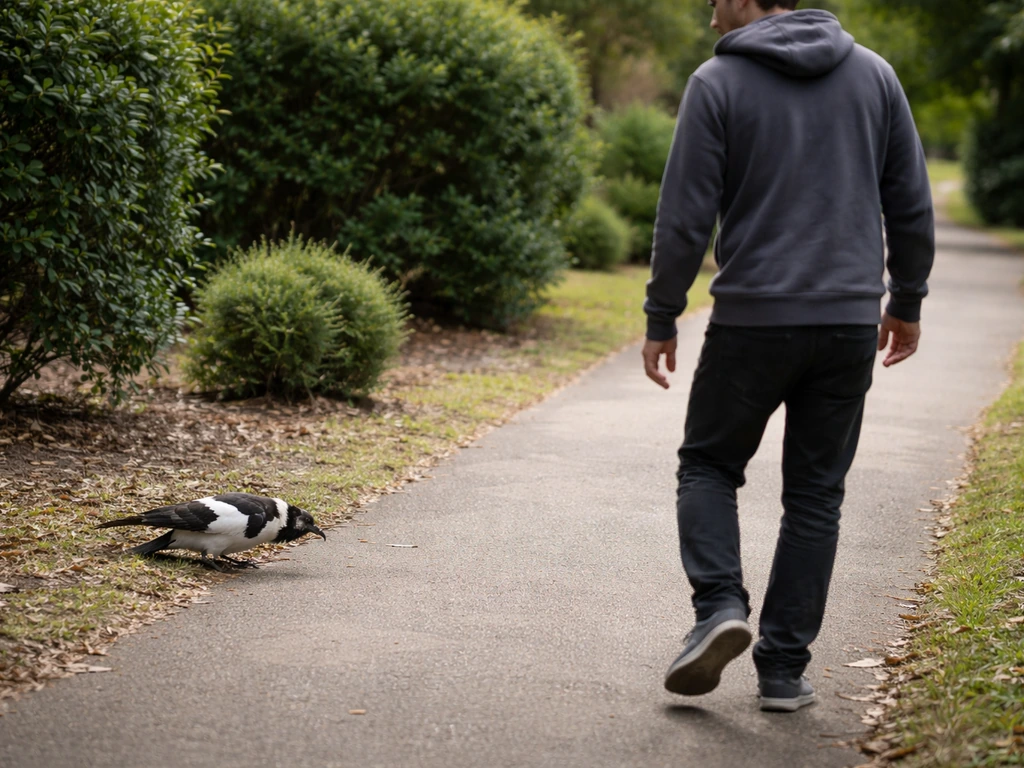
If the butcher bird is swooping you, the most effective response is calm distance. Walk away from the area briskly but without running or flailing. Do not throw objects, yell at the bird, or wave sticks. Queensland Government advises that swooping is a territorial response during breeding season to protect eggs and young, and that yelling or throwing objects can increase a bird’s future aggression by heightening its perception of threat. Counterintuitively, retaliation makes the bird more aggressive on future encounters because it perceives you as a greater threat to its nest. The swooping period is temporary and tied to the nesting cycle; once the young have fledged, the defensive behavior usually stops within a few weeks. If the swooping is happening in a public area or near a school or high foot-traffic path, contacting your local council to report the location is a sensible step. Some councils map swooping birds so people can plan alternate routes.
If the bird seems injured or unwell
Don't attempt to handle a wild bird that appears injured. Wild birds can carry disease, and attempting a rescue without experience often causes additional stress and harm to the animal. Contact a licensed wildlife rehabilitator or your state or national wildlife agency. In Australia, Wildlife Victoria, WIRES, and local council wildlife officers are good starting points. In the United States, the U.S. Fish and Wildlife Service advises contacting a licensed rehabilitator rather than intervening directly.
Documenting your encounter
If the visit feels significant to you, whether practically or spiritually, write down the details while they're fresh. Note the time of day, the bird's behavior, how long it stayed, what you were doing or thinking about beforehand, and how you felt during the encounter. A photo or short video is useful both for species identification and for revisiting the memory later. If you want to track patterns, a simple journal entry every time the bird appears can reveal whether visits cluster around specific times, moods, or life events.
Sitting with the symbolic meaning
Once the practical side is handled, the symbolic layer is worth exploring on your own terms. If you're trying to understand what does it mean when a mocking bird visits you, look first for the practical reasons, then consider how the symbolism might connect to your life. Ask yourself: What's happening in my life right now that the butcher bird's qualities might be reflecting back at me? A quick way to get perspective on what does it mean when a bird visits you is to connect your encounter to what's happening in your life right now butcher bird's qualities. Is there a decision I've been putting off? A boundary I've been reluctant to set? Something I need to cut loose or prepare more carefully for? The most useful thing about animal symbolism isn't that it tells you what's true, it's that it gives you a frame for asking questions you might not have thought to ask otherwise. Let the encounter be a prompt, not a prophecy.
Like encounters with robins, mockingbirds, or other birds that seem to seek out human proximity, a butcher bird visit is ultimately what you make of it. The bird has its own reasons for being there. What you do with the moment is entirely yours.
FAQ
What should I do if the butcher bird seems to target me, swoops near my face, or follows me around my yard?
It is usually a defense cue. If the bird is swooping, dive-bombing, or repeatedly flying at your head or shoulders, treat it as nest defense even if the timing feels “spiritual.” Move away calmly, keep your eyes up, avoid sudden gestures, and plan an alternate route until the behavior stops.
How can I tell the difference between a normal territorial visit and a sick or injured butcher bird?
Look for injury or illness signs before you assign any meaning. If you notice drooping wings, labored breathing, inability to fly, disorientation, or repeated stumbling, do not try to “comfort” it or feed it. Increase distance and contact a licensed wildlife rehabilitator so the bird can be assessed safely.
If the butcher bird visits repeatedly, does that automatically mean it has a special meaning?
Birds often pick predictable routes and perches, so a “repeated visit” can be consistent habitat use rather than a message. Track whether the visits cluster around the same physical locations (fence line, patio, nest area) and specific attractants (open trash, outdoor pet food, accessible insects). If the trigger disappears and visits drop, the cause is likely practical.
Should I feed or attract a butcher bird if it keeps coming to my yard?
Feeding is generally not recommended because it can increase unwanted contact and train birds to associate people with food. If the bird is attracted to scraps or prey around your yard, the safer step is to remove easy food sources (secure trash, stop leaving pet food out, reduce exposed compost) rather than offering handouts.
How do I identify whether the bird is an Australian butcherbird (Cracticus) or a North American or European shrike?
The two common types can be hard to separate at a glance. In Australia, Cracticus butcherbirds often have distinctive patterning, and some have a more hooked-looking bill tip, while North American shrikes are more often identified by their “impaling” larder behavior and overall shrike build. A clear photo of the head, bill, and body markings is usually enough for reliable ID.
A butcher bird is watching me from a branch or fence. Is it safe to approach for photos?
If it is perched and watching, use distance and cover. Keep pets inside, avoid blocking the bird’s escape path, and do not try to approach for a better look. Being near a meter or two can be curiosity or surveillance, but closing the gap can trigger defensive behavior.
What details should I write down or photograph to understand the pattern of the visit?
Yes, but do it in a way that reduces risk. The most helpful record includes time of day, duration, behavior type (perched, following, swooping), location, and what was happening around you (walking path, garden work, yard cleaning, pet activity). A short video helps confirm behaviors that a still photo might miss.
If a butcher bird is swooping in a public area, should I report it, and who do I contact?
If you are in Australia, check local guidance for wildlife incidents and nest defense areas, especially if the swooping happens near a school, playground, or busy walkway. Reporting helps councils create avoidance routes and can reduce repeated close calls for multiple people.
What is a safe way to take the spiritual symbolism seriously without treating it like a prediction?
For most healthy birds, there is no need for “spiritual action.” The practical approach is the priority: stay calm, keep distance if defensive, and remove attractants if it is drawn to food sources. If you still want to reflect, frame it as a prompt for a specific real-life check-in (a boundary, a decision, a task), not as a forecast.
Next Article
What Does It Mean When a Robin Visits You
Meaning behind a robin visit: practical reasons, spiritual and biblical symbolism, folklore, and what to observe next.