Finding a dead bird stops you in your tracks. If you are looking for the deeper interpretation, you can also explore what people mean when they talk about finding a dead bird outside your house. Whether it was on your front step, in your yard, or somewhere you weren't expecting it, that moment tends to land differently than other everyday things. You're probably here because something about it felt significant, or at the very least, you want to know what to do next. The honest answer is: it can be both a completely natural event and a meaningful one, depending on how you choose to engage with it. This guide walks you through the practical side first, then gets into the symbolic, spiritual, and cultural layers so you can decide what resonates. If you are mainly trying to interpret the symbolism, you can start with what does a dead bird mean and then compare it to the more practical steps and safety guidance in this article.
Finding a Dead Bird Meaning: Safety and Symbolic Interpretations

Why Dead Birds Show Up (The Natural Causes)
Before jumping to omens, it helps to understand why dead birds appear so often. Birds have relatively short lifespans compared to many animals, and because they're everywhere, their deaths are simply more visible than those of creatures that hide or burrow. Most of the time, a dead bird is the result of one of a handful of very common causes.
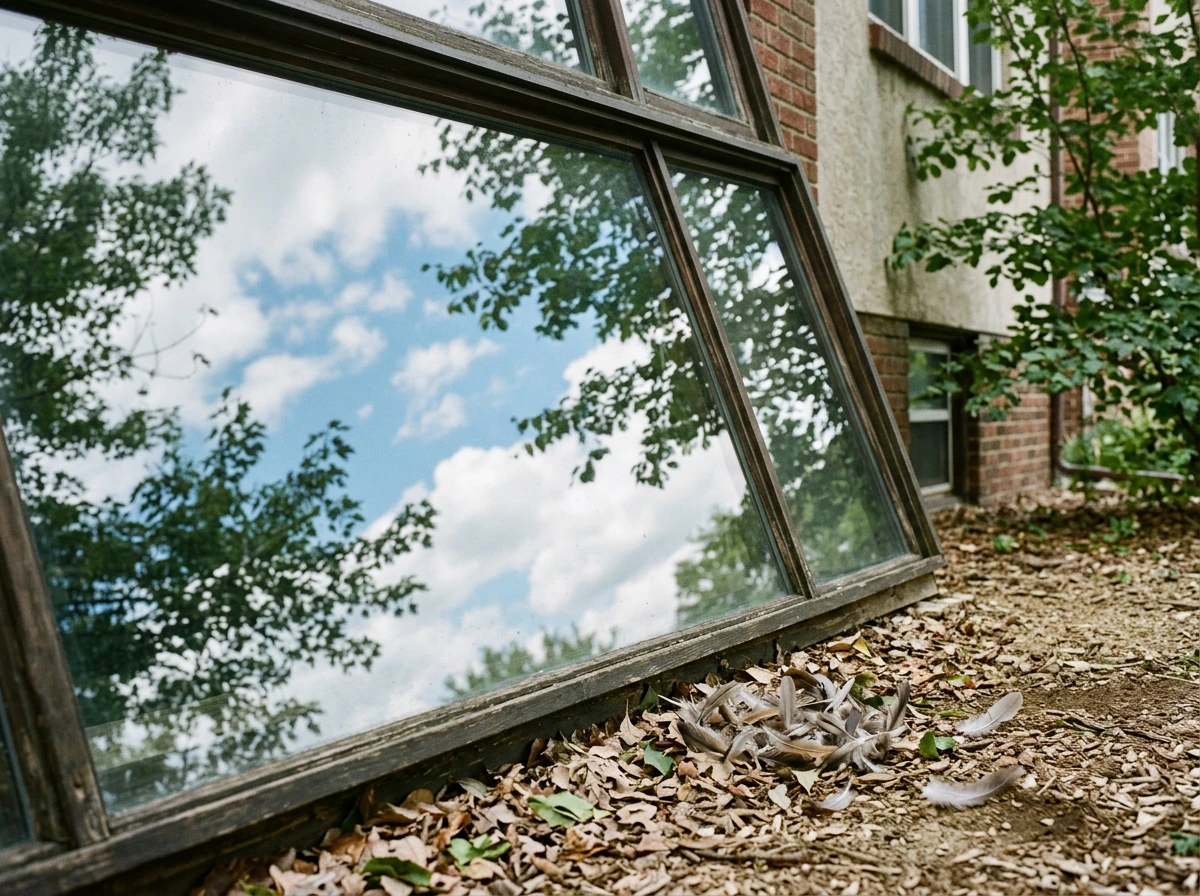
- Window strikes: Birds can't distinguish reflective glass from open sky. The American Bird Conservancy estimates that up to one billion birds die from window collisions in the US each year. If you find a bird near a window or glass door, this is almost certainly what happened.
- Predator attacks: Cats, hawks, and other birds of prey kill and sometimes drop or abandon birds. You may find a bird that was caught and then released, or one that escaped but died shortly after from its injuries.
- Disease: West Nile virus, avian influenza, and other illnesses regularly move through bird populations. The CDC notes that infected birds often die from West Nile virus, which is one reason public health agencies track dead bird reports as part of disease surveillance.
- Poisoning: Rodenticides, pesticides, and treated seeds can kill birds that eat contaminated insects or grain. If you find multiple dead birds in the same area, this is worth considering.
- Natural old age or starvation: Especially in winter or after severe weather, birds that couldn't find enough food may simply die of exhaustion or cold.
- Collision with vehicles: Birds crossing roads or flying low near traffic are frequently struck.
If you find one dead bird, a natural cause is almost always the explanation. If you find several dead birds in a short span of time or in the same location, that's when it's worth contacting your local wildlife or public health agency, because it could indicate a disease event or environmental hazard worth investigating.
What to Do the Moment You Find One
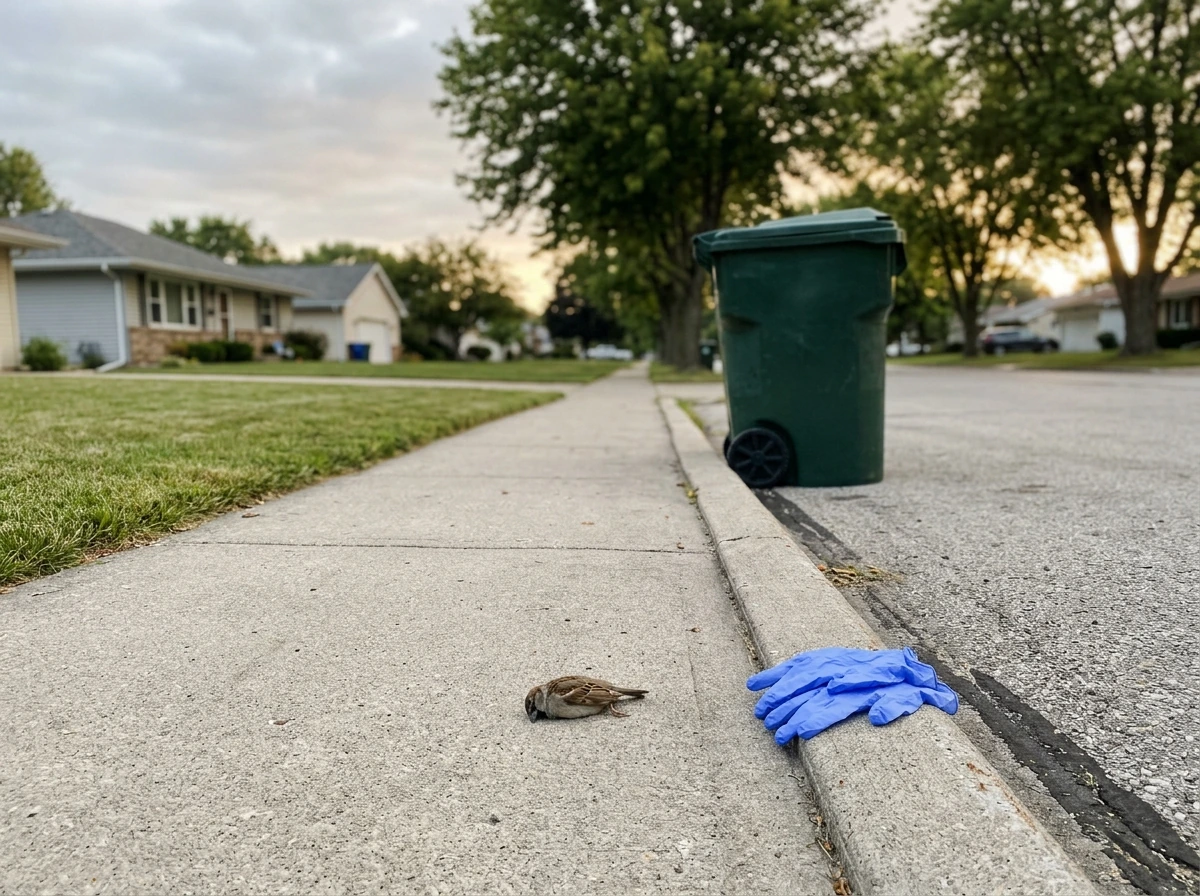
This part matters regardless of your spiritual beliefs. Dead birds can carry pathogens, so handling one carelessly isn't a good idea. The CDC and USGS are both clear on this: if you're going to touch or move a dead bird, wear disposable impermeable gloves, or at minimum place a plastic bag over your hand before picking it up. After handling it, discard or disinfect the gloves, then wash your hands thoroughly with soap and water. If soap isn't available, an alcohol-based hand sanitizer will work as a temporary measure until you can wash properly.
For disposal, the CDC recommends placing the bird directly into a sealed plastic bag. For disposal, the CDC recommends placing the bird directly into a sealed plastic bag, and then you can also review Finding a dead bird outside your house meaning as the adjacent symbolic layer. From there, you can double-bag it and put it in a covered trash bin. If you live in an area with active West Nile virus surveillance or avian flu monitoring, check with your local or state health department before discarding it, because they may want to collect it for testing. Reporting procedures vary by state and region, so a quick call or website check will tell you what applies where you live. <a data-article-id="23AB5086-9E72-4205-81C3-E3E30E0184AB"><a data-article-id="23AB5086-9E72-4205-81C3-E3E30E0184AB">Finding a dead bird outside your house meaning</a></a>
A few other practical things to keep in mind: don't let children or pets near the bird before it's been handled and removed. If a cat brought it to your door, wash the cat's paws and monitor it, since cats can carry bird-borne parasites. And if the bird is still alive but clearly injured, contact a local wildlife rehabilitator rather than trying to care for it yourself.
What It Means Symbolically: The Core Interpretations
Once the practical side is handled, many people still find themselves sitting with a feeling that the encounter meant something. That instinct has deep roots. Across many cultures and throughout history, birds have been seen as messengers, as souls in transit, as omens of change. Finding one that has died naturally carries its own layer of symbolic weight.
The most widely shared interpretation of finding a dead bird, <a data-article-id="CCBAB7F2-6C95-4BBB-98AA-E5478F68C53A"><a data-article-id="CCBAB7F2-6C95-4BBB-98AA-E5478F68C53A">what does a dead bird mean</a></a>, is that it signals the end of one phase and the beginning of another. Death in symbolic language is rarely taken literally. Instead, it tends to represent transformation, release, or closure. If you've been holding onto a situation, a relationship, or a version of yourself that no longer serves you, a dead bird encounter is often read as a nudge to let it go.
Another common thread across traditions is that a dead bird is a reminder of mortality in a way that isn't meant to frighten, but to refocus. It asks: what are you doing with the time and freedom you have? Birds, with their ability to fly, often symbolize freedom, aspiration, and the spirit. A dead bird, then, can symbolize a freedom or dream that has been lost, suppressed, or that has simply run its course, including how <span>white dead bird dream meaning</span> can be interpreted as a sign of transformation.
Some interpreters also read it as a warning: something in your life may need attention before it reaches a point of no return. This is different from a doom-laden omen. Think of it more like a signal flare. The bird draws your eye to something you may have been avoiding.
The Spiritual and Energetic Angles
From a metaphysical standpoint, many practitioners view the moment of finding a dead bird as a disruption in the ordinary flow of a day, and disruptions like that are considered meaningful. The idea is that the universe, or the divine, or your own higher awareness, often communicates through the unexpected. A dead bird landing in your path is unexpected enough to make you stop, and that's part of the point.
In energy-based frameworks, birds are often understood as beings that operate at a high vibrational frequency. When you encounter one that has died, some traditions suggest it has completed its energetic role or has delivered a message that it was carrying. The encounter, in this view, is the message itself.
Some spiritual traditions teach that finding a dead bird near your home specifically is a sign that you're being protected from something: the bird absorbed or redirected a negative energy that might otherwise have reached you or your household. This is a fairly consistent belief in several folk magic and energy-healing traditions, and while it's not universally held, many people find it comforting rather than alarming.
Others interpret the encounter as the bird acting as a spirit guide or messenger, particularly if it's a species that holds personal meaning for you. If a bird that you associate with a lost loved one turns up dead near your home or during a significant time in your life, it's natural to wonder if it's a communication of some kind. You don't have to resolve that question definitively to let it carry meaning for you.
Biblical and Cultural Folklore Perspectives
Biblical Interpretations
In Judeo-Christian tradition, birds appear throughout scripture as symbols of divine care and spiritual watchfulness. The most referenced passage when it comes to dead birds is Matthew 10:29, in which Jesus says that not a single sparrow falls to the ground outside of God's will. This verse is often interpreted to mean that even the smallest death is witnessed and held within a larger divine awareness. For many people coming from a Christian background, finding a dead bird is less an omen and more a moment to reflect on trust, surrender, and the reality that endings are part of a larger story.
In the Hebrew Bible and early Jewish tradition, birds also appear in purity and sacrifice laws, and in prophetic literature as symbols of nations, souls, and divine messages. The raven and the dove in the story of Noah are among the most iconic examples of birds as divine communicators. While scripture doesn't offer a specific interpretation for finding a dead bird in everyday life, the broader symbolic language suggests attentiveness: if something catches your attention, it may be worth sitting with.
Celtic and European Folklore
In Celtic traditions, birds were seen as messengers between the world of the living and the world of the dead. The wren, the crow, the raven, and the robin all carried specific omens and meanings. Finding a dead bird, particularly near a doorway or threshold, was often read as a communication from the otherworld, a reminder that the boundary between life and death is thinner than we usually think.
European folk traditions more broadly tended to treat dead birds near the home as omens of change, sometimes negative, sometimes neutral. In some English and Scottish folklore, a bird dying against your window was seen as a harbinger of news, not necessarily bad news, just significant news coming your way. The superstition around robins, in particular, held that harming or disturbing one brought bad luck, which suggests that finding one dead naturally carried a very different weight than causing the death.
Indigenous and Eastern Traditions
Many Indigenous North American traditions hold birds as sacred beings and treat the discovery of a dead bird with reverence rather than fear. The meaning often depends heavily on the species, the circumstances, and the relationship the person has with that particular bird totem. In some traditions, finding a feather from a dead bird is considered a gift, while others observe specific protocols around not disturbing bird remains at all.
In several Eastern traditions, including some schools of Chinese folk belief, birds are associated with the soul and with ancestral communication. A dead bird found unexpectedly can be read as a message from an ancestor, a signal that someone in the spirit realm is trying to reach you, or a prompt to tend to your ancestors through prayer or offering.
How Location and Context Change the Meaning
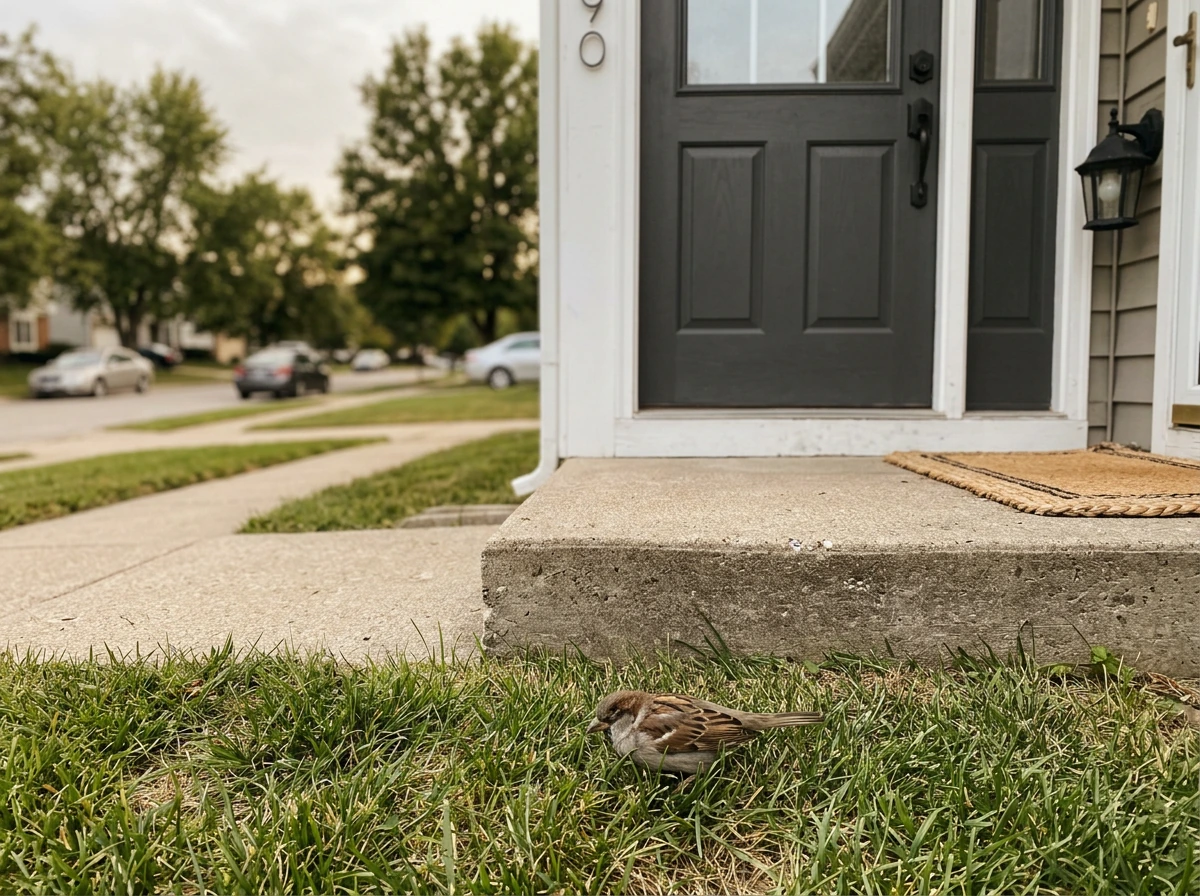
One of the most important questions to ask when interpreting a dead bird encounter is: where exactly did you find it? Location shifts the symbolic reading significantly across almost every tradition. Here's a practical breakdown.
| Where You Found It | Practical Consideration | Common Symbolic Reading |
|---|---|---|
| On your doorstep or threshold | High foot traffic area; could be predator drop or window strike nearby | Messages arriving at a threshold; change entering your home life; protection of the household |
| In your yard or garden | Common; birds die near feeders, trees, or in open grass frequently | Something in your personal space or private life is shifting or concluding |
| On your driveway | May have been struck nearby or brought by a cat | A transition or journey-related change; a path forward being cleared or blocked |
| Inside your home | Rarer; likely entered through an open door or window and could not escape | Strongly symbolic in many traditions; often read as an urgent message or need for energetic clearing |
| Near your workplace or car | Common urban areas with glass buildings or high traffic | May relate to professional life, ambitions, or daily routines undergoing change |
| Far from home, on a walk or commute | Likely a natural death in that bird's territory | A more impersonal encounter; may still carry symbolic weight depending on species or timing |
| Multiple birds in the same spot | Potential disease or poisoning event; contact wildlife authorities | Amplified symbolic message; major transition; worth serious reflection regardless of belief system |
The condition of the bird matters too. A bird that appears peaceful and intact reads differently than one that shows signs of struggle. The species, if you can identify it, adds another layer. A dead crow, raven, or owl carries different cultural weight than a sparrow or a pigeon, simply because of how those species have been symbolized across time. If you want to go deeper on specific species or locations, there's more detailed guidance on what it means to find a dead bird outside your house, or the meaning of a dead bird specifically on a driveway, which can help you narrow the interpretation.
What to Do Next: Reflection, Practices, and When to Get Help
Sit With It Before Drawing Conclusions
The best first step after handling the practical side is to simply notice what you're feeling. Are you unsettled? Sad? Strangely curious? Your emotional response is data. Many people find that their gut reaction to an unexpected encounter like this tells them something about where they are right now, emotionally and spiritually. If you feel a pang of grief, it may connect to something already present in your life that the encounter surfaced.
Reflection Prompts Worth Sitting With
- What was I thinking about or going through when I found it? Is there a connection?
- Is there something in my life that feels like it's ending or needs to end?
- Does the location where I found it feel significant to me personally?
- Do I have any personal association with this bird species?
- What would I want this encounter to mean, if it could mean anything?
Rituals and Practices That Feel Right
You don't need an elaborate ritual to honor the encounter. Many people find it meaningful to say a few words of acknowledgment before the bird is removed, something as simple as thanking the bird for its life, or asking whatever you believe in to receive its spirit. If you come from a tradition that includes prayer or intention-setting, this is a natural moment for that.
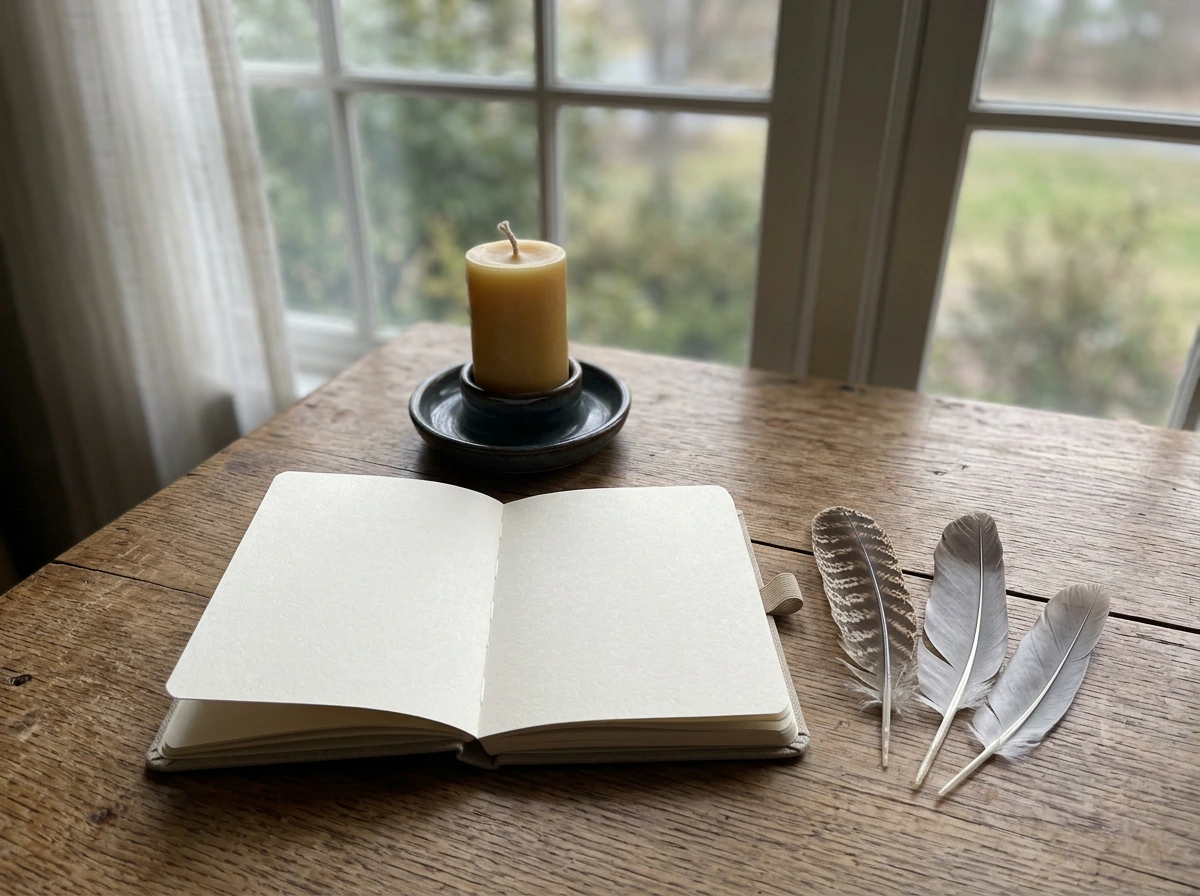
If the encounter has left you feeling energetically heavy or unsettled, some practices that many people find grounding include: burning sage or another cleansing herb in your space (especially if the bird was found inside), opening windows and allowing fresh air to move through the area, or spending time in nature intentionally. Journaling about what came up for you is another simple and practical way to process the experience without needing to reach a definitive conclusion.
If you're drawn to a more ceremonial approach, some traditions suggest burying the bird in the earth rather than placing it in the trash, as a way of returning it to the cycle of nature with intention. This is a personal choice and should always be done in compliance with local wildlife laws, some jurisdictions have regulations around burying wild birds.
When to Reach Out for Help
On the practical side, contact your local or state health department or wildlife agency if you find multiple dead birds, if the bird was found in a public water source, or if you're in a region with active avian disease surveillance. They can advise on whether the bird should be collected for testing and what reporting is appropriate.
If the encounter has triggered something emotionally heavy, that's worth taking seriously too. Sometimes a dead bird is a dead bird, and sometimes it lands on a day when you're already carrying a lot, and the combination is more than expected. Talking to someone you trust, whether that's a friend, a spiritual advisor, or a counselor, is always a valid next step.
And if you're sitting with genuine uncertainty about what the encounter meant for you specifically, that's okay. Most meaningful encounters don't resolve neatly into a single interpretation. The invitation is to stay curious, to notice what arises in the days that follow, and to let the meaning become clearer over time rather than forcing a conclusion right now.
FAQ
What should I do if I found a dead bird but I cannot handle it safely right now?
Avoid moving it until you can use protective gloves and proper disposal. If pets or kids are around, block access with a temporary barrier, then contact local wildlife or a non-emergency public health line for guidance. If it is on a walkway, place a sign or tape nearby so someone else does not accidentally step close to it.
Does the meaning change if the bird is at a window, on a balcony, or inside the house?
Yes, location can shift both symbolic framing and practical risk. Inside the home is more likely to raise contamination concerns, so ventilate the area and do not sweep it dry. Window strikes are often caused by reflective glass or disorientation, which makes a purely symbolic “message” feel less certain compared with events tied to a specific personal context.
How many dead birds in a short time counts as a “reportable” pattern?
There is not one universal number, because reporting thresholds vary by state and season. A safer decision rule is to report if you find multiple birds in the same area within a few days, if they look similar, or if there are reports already in your region. When in doubt, call your local health department and ask what they recommend for your county.
What if the bird is not fully intact or parts are on the ground?
Treat fragments as potentially contaminated. Use disposable gloves, place all pieces into a sealed plastic bag, and double-bag if you can. Avoid vacuuming or sweeping dry debris, because that can disperse microscopic material into the air.
Should I be concerned about pets that sniffed or touched the bird?
Yes. Wash your pet’s paws if they came close, and prevent licking of any residue on fur or feet. If your pet seems ill, shows vomiting or unusual lethargy, or if you know they ate part of the bird, call a veterinarian promptly and mention possible exposure to bird remains.
How can I interpret the encounter without turning it into a fear spiral?
Ground it by separating “what happened” from “what it must mean.” Give yourself a short, specific reflection prompt, such as, “What am I currently resisting?” then return to practical steps and normal routines. If you notice repeated anxiety or intrusive thoughts, consider discussing it with a counselor rather than trying to force a single omen-based conclusion.
Is it okay to bury the bird, and what legal limits should I check?
It can be okay in some places, but it is not universally allowed. Wild bird disposal and burial may be restricted by local wildlife laws, especially if the cause might be disease or if the species is protected. If you want to bury it, confirm local rules first, and only do it after the bird is double-bagged or otherwise handled safely.
If I want a spiritual practice, what is the safest way to do it?
Keep it simple and low-contact. You can offer a brief acknowledgment, light a candle in a safe location away from ventilation issues, and then remove the bird using gloves and sealed bag disposal. Avoid smoke or cleansing rituals that require direct handling of remains or create additional respiratory exposure indoors.
Can I take a photo of the dead bird to look up the species, and how do I do it safely?
Yes, but prioritize distance and containment. Do not crouch close, do not touch the bird for identification, and wash hands after any attempt to document it. If you need better information, consider photographing from multiple angles while staying far enough that you do not disturb debris.
What if I cannot identify the bird species, does that make symbolic interpretation meaningless?
Not necessarily. You can still interpret based on factors the article already highlights, especially location, your emotional response, and whether it was a single event versus multiple sightings. Even without species, you can focus on the “end of a phase, closure, or change” theme while staying grounded in the practical safety steps.