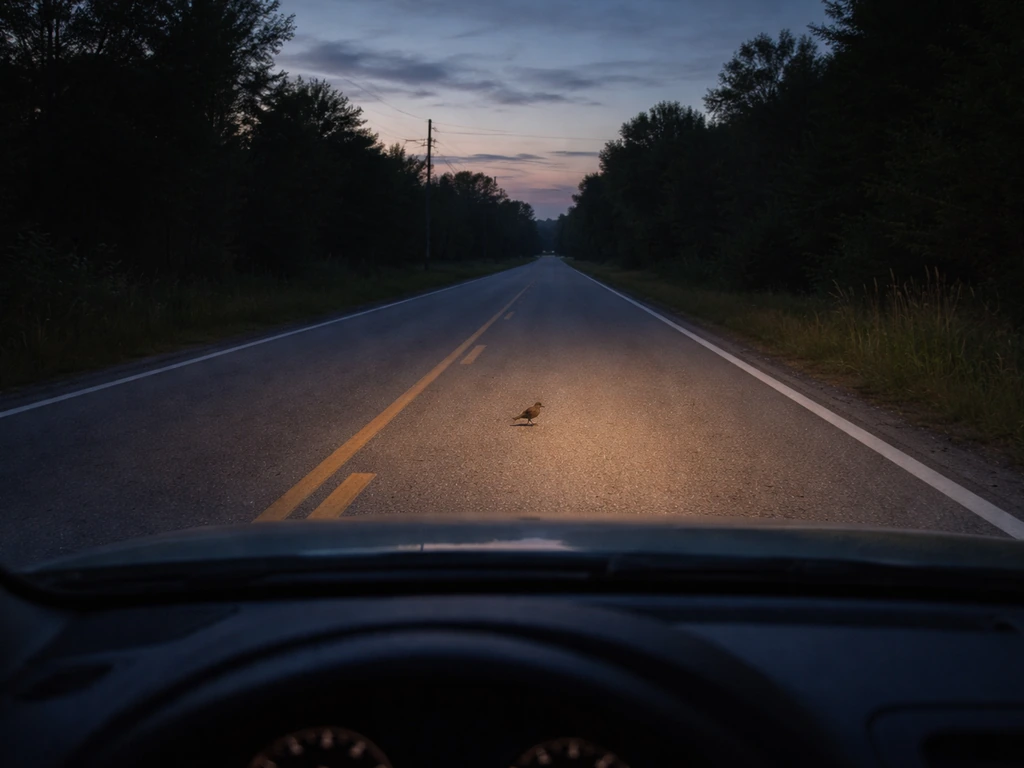
Almost hitting a bird usually means one of two things: a perfectly ordinary wildlife event that your nervous system is treating like a big deal, or a moment so striking that it feels like it deserves a second look. If you are wondering about the phrase running over a bird meaning, this kind of experience is often approached as a sign to slow down, reflect, and notice what your mind is trying to process. Both interpretations can be true at the same time. Practically speaking, birds fly unpredictably, especially near roads, and near-misses happen to everyone. Spiritually speaking, many traditions treat sudden, startling bird encounters as meaningful messages worth pausing over. You don't have to choose between those two readings. The most useful thing you can do right now is handle any immediate safety concerns first, then give yourself space to sit with the experience and see what it stirs up.
What Does It Mean When You Almost Hit a Bird and What to Do Next

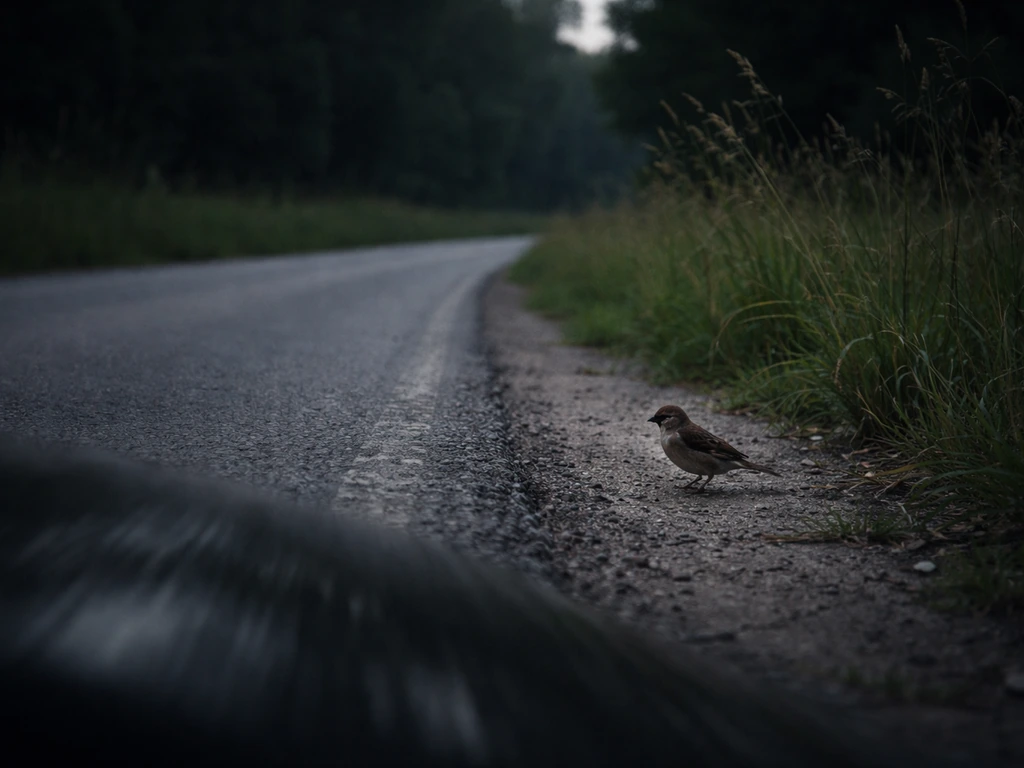
Why almost hitting a bird is more common than you think
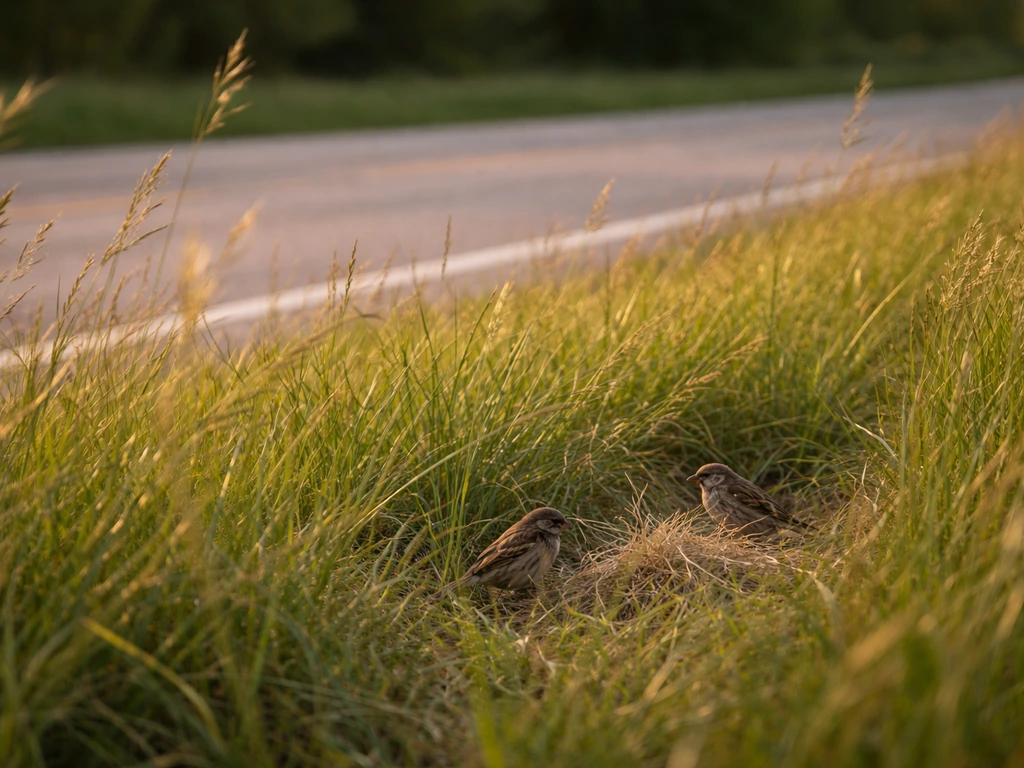
Before we get into meaning, it helps to understand why this happens at all. Birds that nest in tall grass along highway right-of-ways are especially vulnerable to vehicle encounters. When they dart out suddenly, it can feel shocking, but from an ecological standpoint, it's an everyday hazard for birds and drivers alike. Research on wildlife-vehicle collisions consistently shows that factors like traffic volume, vehicle speed, low light conditions, and bird behavior all increase collision risk. Most wildlife-vehicle incidents cluster between dusk and dawn, when visibility is limited and both birds and drivers are working with less information. Headlight glare makes it worse: the scattered "veil" of light it creates over your visual field can delay detection of fast-moving targets like birds crossing a road.
Speed plays a big role too. Studies on birds like cowbirds show that when vehicles exceed about 120 km/h, the bird's built-in escape response becomes essentially ineffective because there simply isn't enough time to recalibrate and flee safely. So the bird darts out, you swerve or brake, and everyone barely makes it through. That's not mystical bad luck. It's physics and biology colliding in real time. Knowing that can actually make the experience feel less scary, while still leaving room to ask what else it might mean.
Weather adds another layer. Wind, inclement conditions, and even directional sunlight affecting reflected images can disorient birds in flight, pushing them into paths they wouldn't normally take. If your near-miss happened during a storm, on a bright glaring afternoon, or in a high-traffic area near fields or water, there's solid natural context for why it occurred exactly then.
Safety first: what to do in the next few minutes
If you're still on or near a road, handle the practical side before anything else. In an emergency, the NYC Bird Alliance recommends using appropriate containment guidance, such as securing an injured bird in a breathable container rather than attempting DIY care. A startling near-miss can spike your heart rate and cloud your focus, which actually increases your risk of a second incident. Breathe, slow down, and get yourself to a safe spot if needed.
- If you swerved, braked hard, or are shaken, pull over safely and turn on your hazard lights. All 50 states have Move Over laws, and hazard lights signal other drivers to give you space.
- Check yourself first. A surge of adrenaline can mask minor injury. Take 30 seconds to assess how you're feeling physically before stepping out of a vehicle.
- Check your vehicle for any damage if contact occurred. Even a glancing blow can leave marks or affect a windshield.
- Look back (safely, not while driving) to see if the bird is on the ground. If it is, it may be stunned rather than dead. A bird can sustain internal injuries that aren't immediately visible, even if it flew away.
- If the bird is grounded and you can safely approach, place it gently in a breathable container and contact a local wildlife rehabilitator. Don't attempt DIY care. Monitor every 30 to 60 minutes if you're waiting for help.
- Once you're calm and safe, ground yourself with slow breaths before continuing to drive. NIH grounding guidance recommends breathing slowly and counting exhales as a quick way to reduce acute stress.
One more practical note: areas with roadkill attract scavengers like hawks, eagles, crows, and ravens who feed along roadsides. If you're in a stretch of road where this near-miss happened, stay alert because other birds may be in the area for the same reason, increasing the chance of another encounter.
Spiritual meanings of a near-miss bird encounter
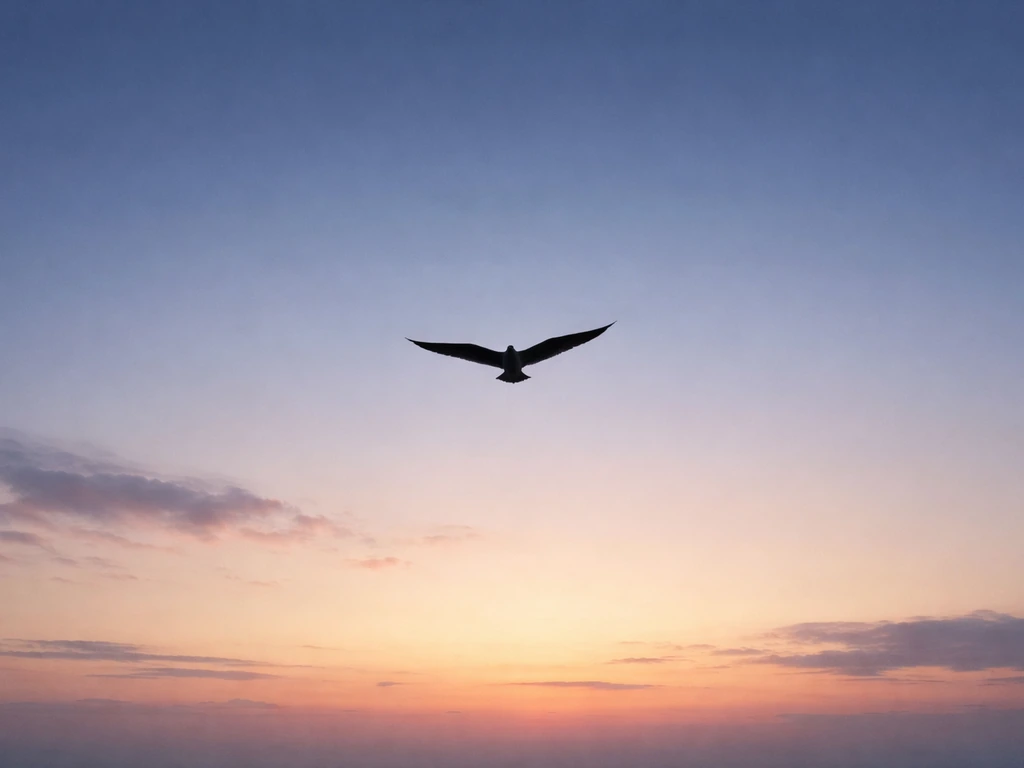
Across a wide range of spiritual traditions, birds are understood as messengers: beings that move between worlds, carrying communication between the earthly and the divine. A bird that nearly collides with you and then survives, or veers away at the last second, is a particularly charged version of that encounter. It demands your attention in a way that a bird singing in a distant tree simply doesn't.
Here are the interpretations that come up most consistently across traditions, offered not as certainties but as possibilities worth holding:
- Protection and intervention: Many people who experience a bird near-miss describe a strong feeling that something "just happened" beyond ordinary luck. In spiritual frameworks that include angelic or spirit-guide presence, a sudden, startling near-miss can be read as a protective interruption, a moment where your awareness was snapped into the present before something else could go wrong.
- A warning or a pause signal: If you were moving fast, distracted, or running on autopilot, the near-miss can feel like a firm tap on the shoulder. Some traditions interpret birds that dart across your path as signs to slow down, reconsider, or not proceed with a current course of action.
- Redirection: In Celtic and indigenous traditions alike, birds crossing your path, especially unexpectedly, can symbolize a course correction. You may be headed somewhere physically, emotionally, or in a decision, and the bird interrupts to ask: is this really where you want to go?
- Heightened timing: Birds are connected symbolically to the concept of kairos, the idea of the "right moment." A near-miss can signal that you are at an important threshold, a juncture where paying attention matters more than usual.
- A message about freedom or perspective: Birds universally symbolize freedom, lift, and seeing from above. If a bird nearly hits you and then soars away, one reading is that something in your life is asking to be released or seen from a higher vantage point.
None of these interpretations are mutually exclusive with the natural explanations. The bird darted out because of road ecology and speed dynamics, and it may also have carried a message. Some people also wonder what it means to flip someone the bird, but that is a separate kind of symbolic gesture carried a message. Many spiritual traditions don't draw a hard line between those two things.
What the Bible and folklore say about birds and omens
In Christian scripture, birds appear frequently as symbols of divine attention and provision rather than as omens to fear. In Matthew 10:29, Jesus teaches that not a single sparrow falls to the ground without God's awareness, framing birds specifically as markers of divine care and notice. Matthew 6:26 uses birds of the air to illustrate a lesson about trusting in provision rather than anxious striving. From a biblical standpoint, then, a near-miss with a bird doesn't need to be read as a threat or a bad omen. It can be received as a reminder that you are seen and held, even in a frightening moment.
Folklore traditions across Europe and North America have long treated bird encounters as potential omens, though interpretations vary wildly by species, direction of flight, and cultural context. In Celtic traditions, birds were considered messengers from the Otherworld, and a bird that nearly struck you could signal that the veil between worlds was thin in that moment. In various folk traditions, a bird flying suddenly across your path from left to right was sometimes considered favorable, while right to left signaled caution. A bird that swooped low over your head and then rose again was often read as a sign of something passing over you, a threat averted, or a difficult period lifting.
Indigenous traditions across North America treat specific birds as sacred messengers and view unexpected encounters with them as highly personal communications. Hawks, for instance, are widely associated with observation and clear vision. A hawk that nearly strikes you and then circles overhead carries a very different symbolic weight than a sparrow darting out from a hedgerow. The species matters, and so does what it does after the near-miss.
How the details of your encounter shape the meaning
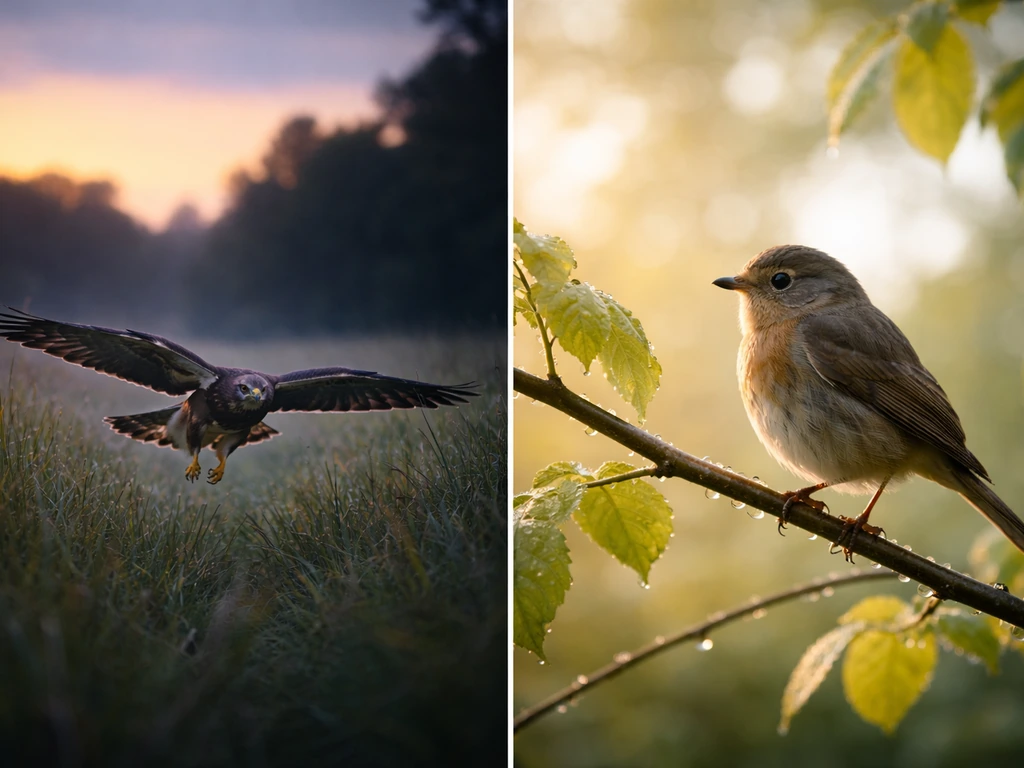
Context is everything in symbolic interpretation. The same near-miss can carry different resonances depending on what kind of bird it was, what it did, where you were, and honestly, what's happening in your life right now. Here's a simple way to think about it: If you’re wondering what might prompt you to flip the bird after a near-miss, that reaction is often about frustration, adrenaline, and the sense that something out of your control happened too close.
| Detail of the encounter | Common symbolic reading |
|---|---|
| A hawk or eagle swoops low and pulls away | Clarity, vision, a call to see your situation from above; warning with authority |
| A small songbird (sparrow, wren) darts out and escapes | Fragility protected, divine care, small but significant message about attention |
| A crow or raven cuts across your path | Transition, transformation, a liminal moment; pay close attention to what follows |
| A white bird (dove, egret, gull) appears suddenly | Peace offered, spiritual presence nearby, cleansing or renewal signal |
| The bird hovered near you before flying off | Lingering message, something asking to be consciously acknowledged |
| The bird fell or seemed injured after the near-miss | A more urgent prompt: something needs care, attention, or healing in your life |
| You felt calm despite the near-miss | Grounded readiness; you may already be aligned with the message |
| You felt deeply shaken or tearful | Emotional resonance worth exploring; this likely touched something personal |
Your reaction is part of the reading too. A near-miss that leaves you trembling and thinking about it hours later is asking for more attention than one you barely registered. Spiritual traditions that work with signs and omens generally agree that the intensity of your response is useful data. The more a moment arrests you, the more it may have to say.
It's also worth noting how this experience fits alongside related bird encounters. If you've recently had other unexpected bird interactions, such as a bird getting unusually close to you, or a bird behaving strangely around your home, those experiences together can create a pattern worth sitting with. A near-miss is one data point; a cluster of unusual bird encounters may feel like a more sustained message. On the other end of the spectrum, actually hitting a bird while driving carries its own distinct symbolic and emotional weight, and how you handle that is a somewhat different conversation. Many people also search for getting hit by a bird meaning, which is closely related but distinct from a near-miss. This includes the meaning of killing a bird while driving, which can feel especially heavy and confusing even when it happened despite your best efforts. If you did end up killing a bird, the meaning people look for often shifts from a near-miss message to questions about guilt, symbolism, and how to respond responsibly actually hitting a bird while driving.
What to do now: reflection, journaling, and finding your own meaning
Once the adrenaline has settled and you've handled any practical safety matters, the most valuable thing you can do is slow down and give the experience some intentional space. You don't need to decide right now whether it was a sign or a coincidence. You just need to notice what it stirred up.
A few grounded practices that work whether you lean spiritual, skeptical, or somewhere in between:
- Journal it while it's fresh. Write down exactly what happened: the bird, the direction, your reaction, the time of day, the weather. Then write one honest sentence about what you were thinking about just before it happened. That pre-encounter mental state often holds the most useful clues.
- Sit with the question: What do I most need to hear right now? You don't need to answer it immediately. Let it stay open for a day or two and see what surfaces.
- If you're spiritually oriented, offer a brief prayer or intention. Something as simple as: I received this moment. Help me understand what it's asking of me. That kind of open-handed acknowledgment tends to feel more honest than forcing a specific interpretation.
- Meditate on the image of the bird. Even five minutes of quiet visualization, seeing the bird's movement, the near-miss, the escape, can help you access a felt sense of the experience that words might not capture. NCCIH research supports mindfulness meditation as effective for reducing the stress and anxiety that can follow startling events.
- Notice what comes up over the next few days. Near-miss encounters that carry personal meaning tend to echo. A song lyric, a conversation, a repeated image. Stay open to the thread without forcing it.
- Give yourself permission to let it just be what it was. Not every bird encounter needs to become a spiritual revelation. Sometimes a bird darted out because of road ecology and imperfect animal instincts. That's okay too.
The goal here isn't to land on the correct meaning. It's to use the moment as a doorway into more intentional awareness, whether that leads you to a personal insight, a shift in how carefully you're driving, a prayer of gratitude for both your safety and the bird's, or simply a renewed sense that the world is stranger and more alive than your daily routine usually lets you see. NHTSA notes that all 50 states have Move Over laws, and in some states Washington, DC and 19 other states also extend heightened caution to vehicles stopped with flashing or hazard lights. All of those are legitimate destinations from one startling moment on a road.
FAQ
If I almost hit a bird, should I stop and check for injuries or roadkill afterward?
If it is safe to do so, pull over only after traffic permits, then scan from a distance. The article focuses on immediate safety while driving, but checking later can matter for compassion and cleanup, especially if the bird appears stunned or injured nearby.
What if it happened in my neighborhood driveway or on foot, not while driving?
The physics factors described (speed, visibility, headlight glare) are road-specific. On foot, near-misses often relate to how close you were to nesting areas, hedges, or low branches, so the practical takeaway is to give the bird space and avoid walking through dense cover again right away.
Does the bird’s direction of flight (left to right, right to left) change the meaning?
Some folk traditions use direction as a symbol, but the article emphasizes context and species. A useful decision aid is to treat direction as one variable, not a rule, and focus on what your mind was doing at the moment (fear, urgency, frustration), since reaction intensity is described as meaningful.
How long should I sit with the experience before deciding what it meant?
The article advises giving yourself space without demanding an immediate conclusion. A practical approach is a short “cooldown” window (for example, a few minutes after you are safe), then a longer reflection later the same day or the next day, once adrenaline is gone.
What if I’m repeatedly having near-misses or other strange bird events?
The article notes that a cluster can feel like a pattern. A grounded next step is to track where and when it happens (time of day, weather, specific road stretch) because repeat occurrences often indicate a nesting area, scavenger hotspot, or consistent low-light visibility problem.
I flipped someone the bird or felt angry. Does that affect the spiritual interpretation?
The article treats the “flip the bird” idea as a separate symbolic gesture tied to frustration and adrenaline. Practically, it is a cue to self-regulate, take a breath, and re-center on safe driving or walking, because emotional spillover is a real factor that can increase risk of another incident.
If I’m a Christian and the Bible mentions birds, does that mean I should never treat it as an omen?
The article presents scripture as framing birds more as markers of care than fear. You can reconcile both by using the event as a prompt for gratitude and calm attention, rather than trying to predict a specific threat or outcome from it.
Could this just be bad luck, and not have any meaning at all?
Yes. The article explicitly says spiritual and natural explanations can coexist. If you prefer the skeptical route, you can still use the moment as feedback to slow down, scan longer ahead, and adjust for conditions like dusk, glare, and traffic density without requiring any supernatural meaning.
Meaning of Killing a Bird While Driving: What to Do Now
Learn the meaning of killing a bird while driving and get immediate safety steps plus spiritual interpretations and ritu