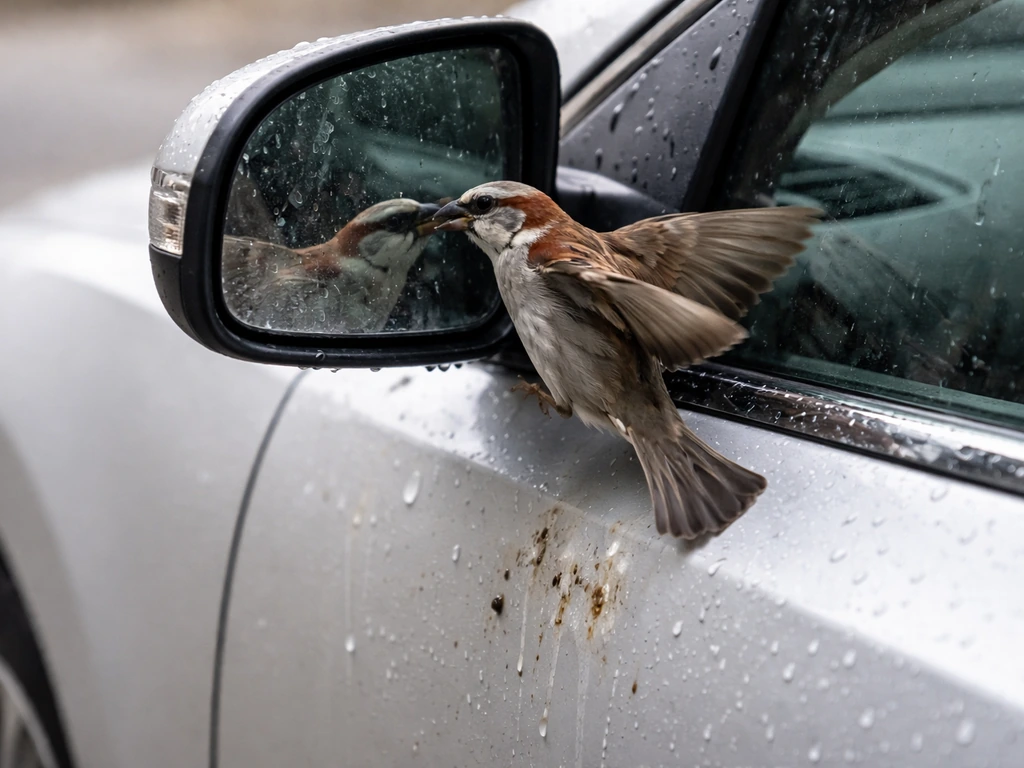
A bird keeps sitting on your car because the car offers something the bird genuinely wants: warmth from the engine or sun-heated metal, a high and stable perch with a good sightline, a reflective surface it mistakes for a rival, or sometimes food and water sources right at hood level. In most cases, the behavior is practical and instinct-driven, not random. Once you figure out which of those draws is pulling the bird in, you can usually stop it within a day or two using simple, bird-safe deterrents. If you are wondering why bird suddenly appear, start by identifying what the bird is seeking, like warmth, shelter, food, or a reflection.
Why Does a Bird Keep Sitting on My Car? Causes and Fixes

Maya Hartwell
8 Jun 2026
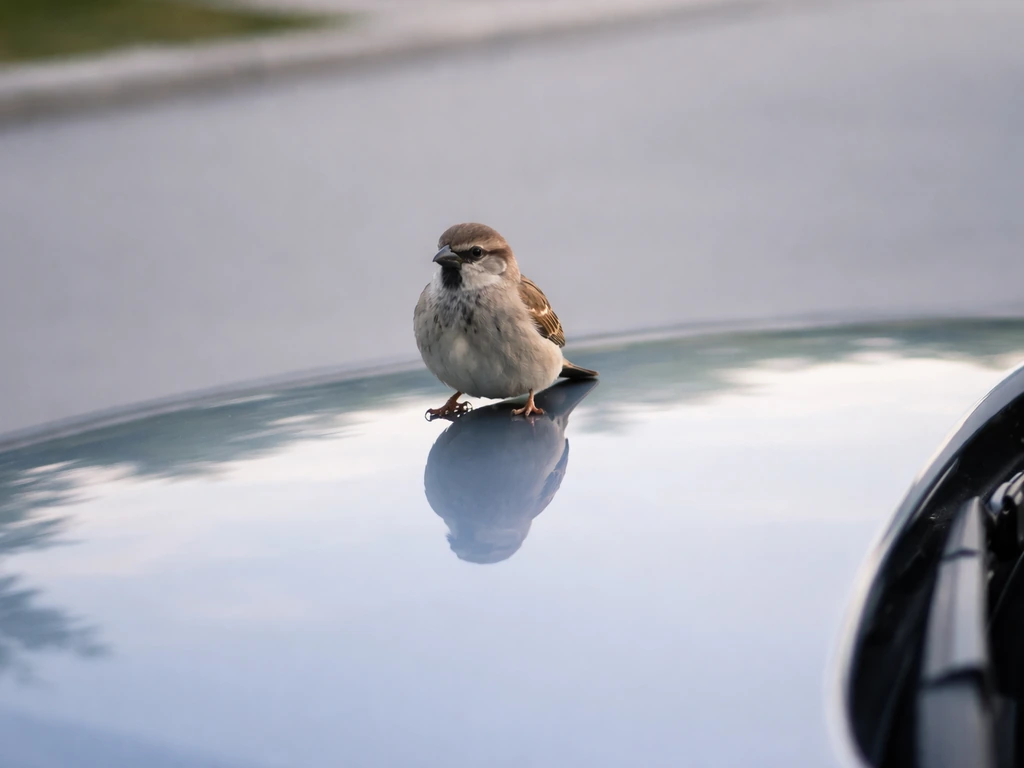
Why birds choose cars in the first place
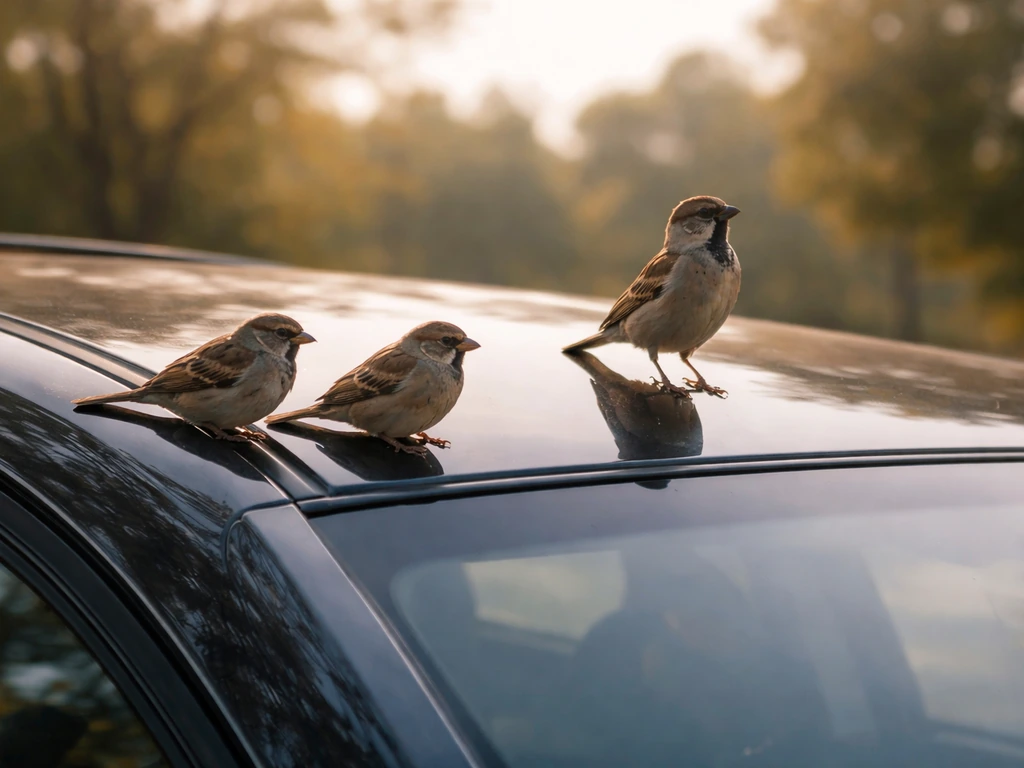
Cars are oddly perfect bird habitat when you think about it from a bird's point of view. A dark hood absorbs solar heat and radiates warmth long after the engine cools, which makes it feel like a sun-warmed rock ledge. The roof sits elevated above the surrounding ground, giving perching birds a clear 360-degree view to watch for predators and locate food. The smooth, flat surface is easy to stand on and offers grip along roof edges, mirrors, and antenna posts. So before you assume anything unusual is going on, know that the most common explanation is simply that your car is the best seat in the parking lot.
Beyond warmth and elevation, cars parked near trees drop into a zone of shade and shelter that birds instinctively gravitate toward during hot afternoons or light rain. If your car sits near a bird feeder, a garden bed, a fruit tree, or a water feature, the bird may be using the car as a staging area between feeding runs. Insects are also a real draw: bugs collect on warm hoods, get stuck in grille slats, and hover near the residue left by previous splatter on windshields. A resourceful bird will notice all of this.
Reading the behavior: perching, nesting, or something else?
Not all bird visits to your car mean the same thing, and watching what the bird actually does when it lands will tell you a lot about its motivation and how urgently you need to act.
Brief or casual perching
If the bird lands, sits quietly for a few minutes, then flies off and repeats this pattern across the day, it is almost certainly using your car as a resting or lookout spot. This is the most common scenario and the easiest to redirect. The bird has found a comfortable habit, but it has no deep attachment to the car specifically.
Aggressive or frantic behavior
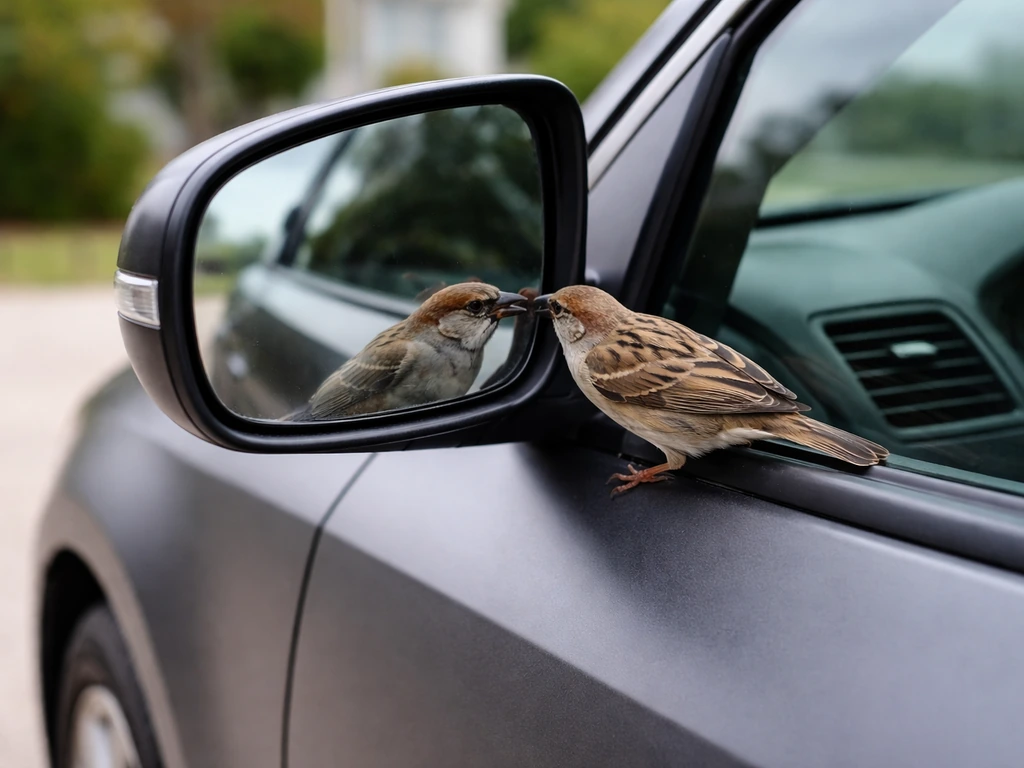
If the bird pecks at windows or mirrors, hovers and dives repeatedly, or seems agitated rather than calm, it is almost certainly responding to its own reflection. The glass or chrome is throwing back an image the bird reads as a territorial intruder. This is especially common with robins, cardinals, and mockingbirds during breeding season (roughly March through July in most of North America). The behavior can go on for weeks and will chip away at both the bird's energy and your paint if left unaddressed. This is closely related to what people describe when a bird is attacking or is obsessed with their car, which are worth understanding as distinct patterns.
Collecting material or spending extended time in one spot
If you see the bird carrying grass, twigs, or debris onto or near the car, or if it is spending 30 minutes or more in the same sheltered spot like the gap behind a side mirror or under a wiper arm, take that seriously. These are early nesting cues. A nest on or inside a car is a situation you want to catch before eggs are laid, because once eggs are present, most wild birds (especially songbirds in the US) are protected under the Migratory Bird Treaty Act, and disturbing an active nest can create both legal and ethical complications. Act early.
Foraging or pecking at the surface
Some birds, particularly sparrows, starlings, and certain corvids, will actively peck at the car surface looking for insects trapped in grilles, seeds stuck in trim gaps, or even residue from bug splatter on the hood and windshield. If you watch closely and see the bird bending down and pecking methodically rather than sitting still, insects or food residue are the draw.
What on your car is attracting the bird
Being specific about the attractant helps you fix the right thing. Here is a breakdown of the most common culprits:
| Attractant | Why it draws birds | Where to look on the car |
|---|---|---|
| Warm metal surfaces | Residual engine heat and solar absorption make the hood and roof feel like a heated rock perch | Hood, roof, trunk lid |
| Reflective glass and chrome | Bird sees its own image and reads it as a rival or mate | Side mirrors, windows, chrome trim, sunroof |
| Insects and bug residue | Dead or living bugs accumulate in grille slats and on warm glass after highway driving | Front grille, windshield base, hood edge |
| Seeds and dust | Cars parked under trees collect pollen, sap, seed debris, and leaf litter in every crevice | Roof, trunk, wiper wells, window channels |
| Water and condensation | Overnight condensation on glass is a water source, especially in dry weather | Windshield, side windows, roof |
| Sheltered cavities | Gaps near mirrors, under wipers, or inside open vents feel protected and enclosed | Side mirrors, wiper arms, engine vents |
| Proximity to feeders or food sources | Car sits in the path between a food source and a perch | Any flat surface facing the food source |
What you can do today to stop the bird
All of the following approaches are bird-safe. The goal is to make the car less appealing or mildly uncomfortable to land on, not to harm or trap the bird.
Block the reflection
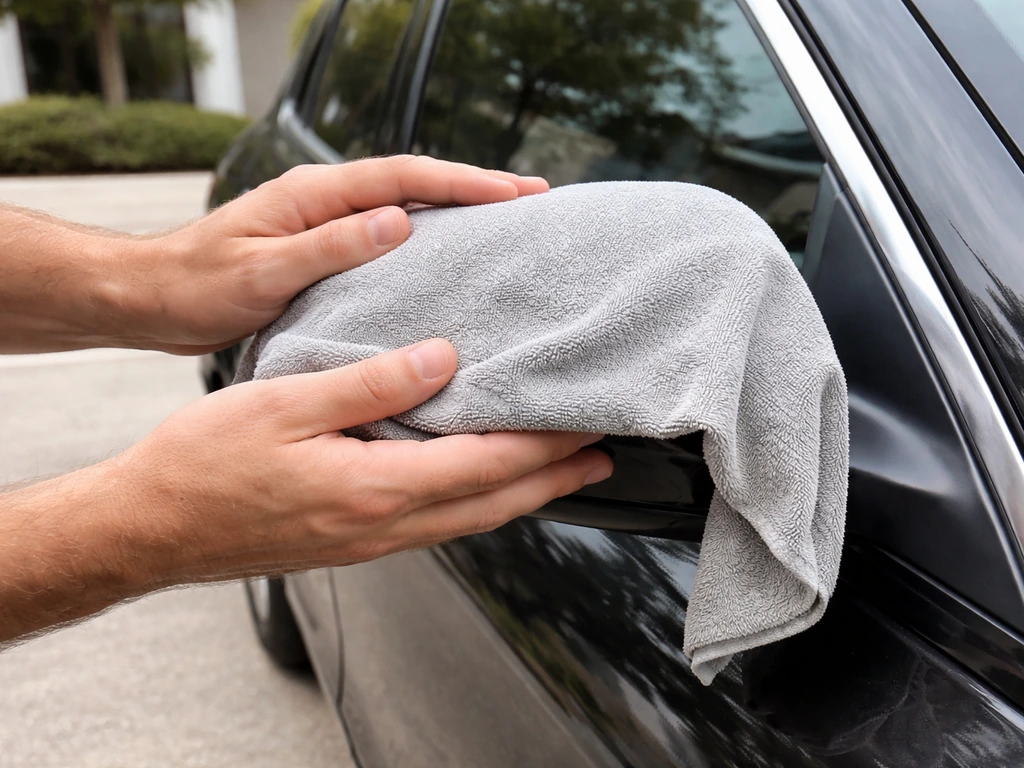
If aggressive window or mirror behavior is the issue, the fastest fix is covering the reflective surface. Tuck a microfiber cloth over each side mirror when the car is parked. Place a sun shade inside the windshield. The bird cannot fight a reflection it cannot see, and most birds stop the behavior within two to three days once the visual trigger disappears.
Use visual deterrents
Hang reflective tape strips, old CDs, or commercially available bird flash tape from your antenna or mirror posts. Motion-activated, shiny objects that spin or flutter in the wind are particularly effective because birds are wary of unpredictable movement. Owl or hawk decoys can work short-term, but birds learn quickly that a static decoy is not a real threat, so move it every day or two if you use one.
Cover the car
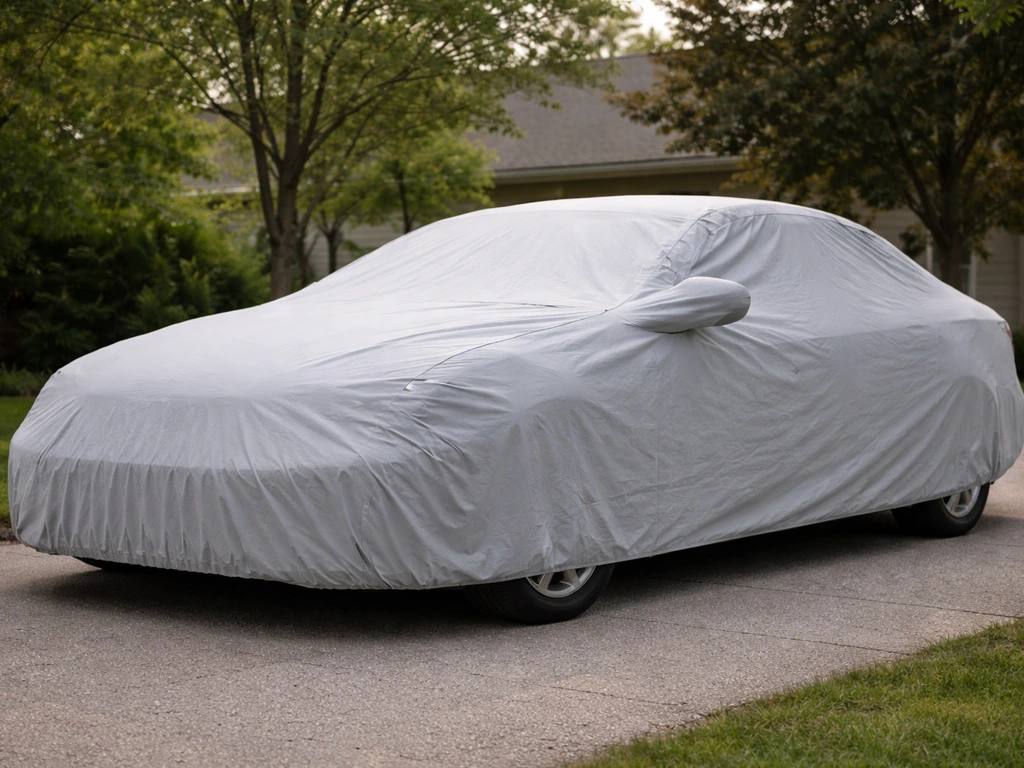
A fitted car cover is the most comprehensive same-day solution. It eliminates every attractant at once: no warm metal exposed, no reflection, no crevices, no surface for droppings to land on paint. If you have a cover already, use it every time the car is parked. If the bird has been leaving frequent droppings, this also protects the clear coat while you work on longer-term fixes.
Remove food and water sources near the car
Move any bird feeders, water baths, or fruit trees so they are not directly adjacent to where you park. If birds are staging on your car between the feeder and a fence post, moving the feeder 10 to 15 feet changes the flight path and often eliminates the car stop entirely.
Clean the surface today
Remove bug residue, food debris, and droppings promptly. USDA APHIS notes that wild birds are a primary source of HPAI transmission and that droppings can contaminate water sources during migratory seasons. Bird droppings are mildly acidic and can etch clear coat within 48 hours, especially in warm weather. Use a gentle car-wash soap, not a pressure washer pointed directly at the same spot repeatedly, and avoid scrubbing dry droppings which can scratch. When cleaning up accumulations of droppings, work in a ventilated area and consider wearing a simple dust mask. The CDC and USDA have both noted that dried bird droppings can harbor Histoplasma spores, which cause histoplasmosis when inhaled, so it is worth being cautious if there has been a heavy accumulation.
Keeping the bird away long-term
Short-term fixes work quickly but need to be reinforced or the bird will return once the novelty of a new deterrent fades. Birds are smart and adaptive, so vary your deterrents and address root causes.
- Park in a garage or under a carport if you have access. Removing the car from the bird's territory entirely is the only guaranteed solution.
- Rotate visual deterrents every few days so the bird does not habituate to a static object.
- Apply a hydrophobic car wax or ceramic coating. It does not deter perching directly, but it makes the surface easier to clean and removes the texture that can make warm metal feel like natural rock to a bird's feet.
- Trim back tree branches that hang over your parking spot. Overhanging branches are natural launching pads and give birds a staging perch right above the car.
- If the car is parked on a driveway with a seeded lawn nearby, mow regularly so that grass seeds are not sitting out as an obvious food source in front of or beside the car.
- Keep the car clean between details, especially the windshield base and wiper wells where debris and condensation pool.
- Consider where and when you park: a spot with afternoon shade is cooler and less attractive than a sun-exposed spot to a heat-seeking bird.
When should you actually be worried
Paint and surface damage from droppings
Fresh droppings left to bake in the sun for more than a day or two will begin to etch into your clear coat. If a bird has been a regular visitor for weeks, inspect the hood and roof carefully in good light. Light etching can often be buffed out with a paint correction compound, but deep damage may need professional attention. Clean every dropping as soon as you notice it, and apply a quality wax or sealant as a barrier layer.
Health considerations from accumulated droppings
For most people, an occasional bird dropping on the car is not a health concern. The risk increases with large accumulations over time, particularly in enclosed or poorly ventilated spaces. The USDA has specifically flagged large accumulations of droppings from roosting blackbirds and starlings as raising histoplasmosis concerns, and the NPS notes that stirring up dust in areas with significant bird dropping buildup puts people at risk of breathing in Histoplasma spores. If a bird has been roosting regularly for weeks and there is a notable buildup, clean carefully with a damp method, wear a dust mask, and ventilate well.
Active nests and protected species
If you find a nest with eggs or chicks already in or on your car, stop and do not disturb it. In the United States, nearly all wild songbirds are protected under the Migratory Bird Treaty Act, which makes it illegal to destroy an active nest with eggs or young. Contact your local wildlife rehabilitator or state fish and wildlife agency for guidance. If nesting is still in the material-gathering stage and no eggs are present, you can safely remove nesting material and immediately deploy deterrents to prevent the bird from completing the nest. Catching it at that stage matters.
HOA, shared parking, and rental situations
Some deterrents, particularly those you attach to a building or permanent structure (like spike strips on a ledge above your spot), may need HOA or landlord approval. Stick to deterrents that are car-mounted or portable when you are in shared or rented situations.
What it might mean spiritually: a bird that keeps finding your car
If you are here because the practical explanation feels incomplete, that is a fair instinct. Across many traditions, a bird that returns repeatedly to a person's space, especially an unexpected one like a car in a parking lot, is considered worth paying attention to as a possible message or sign. The spiritual reading does not cancel out the natural explanation. If you are wondering why this keeps happening, you can trace it back to the car's warmth, perch value, and nearby attractants that pull the bird in repeatedly why is a bird obsessed with my car. Both things can be true at once.
A messenger pausing on your path
In many indigenous and folk traditions across cultures, birds are seen as intermediaries between the physical and spiritual worlds. A bird that repeatedly returns to something you use every day, your car being a vessel of movement and transition, can be interpreted as a reminder to slow down or pay attention to where you are headed. The car represents your daily journey, and the bird interrupting that journey by sitting on it could be read as a nudge to be more conscious about your direction, literally or figuratively.
Biblical and Christian folklore readings
In biblical tradition, birds appear frequently as messengers of divine attention, from the dove returning to Noah's ark with an olive branch (Genesis 8) to the sparrow used in Matthew 10:29-31 as evidence that nothing escapes God's notice. In folk Christianity and older European traditions, a bird that persistently visits or lingers near a person is sometimes read as a sign of divine protection or as a spirit attempting to communicate care or a warning. The specific meaning is often linked to the species: a robin might bring hope or renewal, while a crow or raven, long associated with prophetic knowing, might signal a time for discernment.
Celtic and European folklore
In Celtic traditions, birds were considered souls in transit and messengers from the Otherworld. A bird repeatedly landing on a person's belongings was sometimes read as the presence of an ancestor checking in. In broader European folklore, the specific species matters enormously: a wren was considered sacred and lucky, a blackbird was associated with the threshold between worlds, and a robin returning consistently to a person's space was often tied to the memory of someone who had passed. If you have recently lost someone and a bird keeps appearing on your car, this framework might feel personally resonant.
Eastern and metaphysical perspectives
In some Eastern traditions and modern metaphysical frameworks, birds are associated with the element of air, thought, and higher perspective. A bird that keeps landing on your car but does not seem distressed or aggressive might be interpreted as an invitation to rise above whatever you are currently grinding through, to get some aerial perspective on a situation that has you feeling stuck at ground level. Repeated encounters with the same behavior, especially when they feel noticeable enough to make you stop and wonder, are often flagged in these traditions as synchronicities worth sitting with.
As with any encounter that seems to repeat in an unusual way, the most useful question is personal rather than universal: What is happening in your life right now, and does anything about this bird's behavior feel like it mirrors or speaks to that? You do not have to commit to a single interpretation to find one meaningful.
Your next steps: a practical checklist
Work through this in order. Most people solve the repeat-perching problem by step four or five.
- Watch the bird for a full day before doing anything. Note whether it is perching calmly, pecking aggressively at reflections, foraging along the hood, or carrying material. The behavior tells you the cause.
- Identify the primary attractant: reflection, warmth, food/insects, water, or proximity to a feeder. Focus your fix on that specific draw.
- Clean the car today. Remove all droppings (with a damp cloth, not dry scrubbing), clear bug residue from the grille and windshield, and check for debris in the wiper wells and mirror gaps.
- Cover side mirrors with cloth when parked if reflection aggression is the issue. Use a sunshade in the windshield.
- Hang reflective tape or a motion flash deterrent from the antenna or mirror. Rotate or reposition it every two to three days.
- Move or remove nearby food and water sources that put the car in the bird's regular flight path.
- If nesting material is present but no eggs, remove it immediately and apply deterrents to prevent the bird from completing the nest.
- If you find eggs or chicks, do not disturb the nest. Contact your local wildlife agency or a licensed wildlife rehabilitator.
- Apply a quality car wax or sealant to protect the paint from future droppings while you work on deterrence.
- If the problem continues after two weeks of deterrents, try a car cover or change your parking location.
- Reflect on the species and behavior if the spiritual dimension feels relevant to you. What do you notice about the timing, and what might this particular bird be bringing to your attention right now?
Most birds are creatures of habit who found something useful about your car and will keep returning until something better presents itself or until you make the car less convenient than the next available option. Deal with the practical side confidently and completely, and if the experience leaves a residue of meaning that the checklist does not fully address, that part is yours to sit with.
FAQ
How long should I wait before the deterrents start working?
If the bird is coming for warmth or a visible perch, you should see fewer landings within 24 to 72 hours after you remove the trigger (cover mirrors or add a windshield shade). If it keeps repeating after several days, switch to a car cover or address the nearby attractant, like bugs on the hood or a feeder within the bird’s routine flight path.
What if I only have street parking or I cannot cover the car every time?
Use portable, high-visibility deterrents that you can deploy quickly, like mirror cloths and a windshield sun shade inside the glass, then add motion-based items on the antenna or mirror posts. The key is consistency, do it every time you park until droppings and landings drop, then rotate deterrents so the bird does not adapt.
Will using bird spikes or harsh methods solve it?
Avoid anything that can injure or trap the bird. Even “humane” spikes on a ledge or roofline can create injury risk when birds are forced to land elsewhere, and permanent installs may require HOA or landlord permission. Safer alternatives are temporary car covers, blocking reflections, and removing what the bird wants (heat source exposure, insects, and sheltered crevice access).
Why does the bird keep coming back even after I cleaned the droppings?
Droppings removal helps paint damage, but it does not remove the real attractant. The bird may still find warmth on the hood, a good lookout from the roof, or insects and residue left on the windshield and grille areas. After cleaning, also wash bug splatter residue and reduce landing options, especially under wiper arms or around mirror gaps.
Is there a way to tell if it is nesting versus just resting?
Nesting behavior usually includes materials being carried (grass, twigs, debris) and extended time in the same sheltered spot, often 30 minutes or more, like a gap near a side mirror. Resting or lookout visits tend to be sit quietly for a few minutes, then leave and repeat elsewhere. If you see material gathering, treat it as urgent.
Can this be a reflection problem if the bird mainly pecks at one spot?
Yes. Reflection-triggered behavior often concentrates on a specific mirrored surface, like the side mirror or a particular window angle. Test by covering just that surface during one parking session and see if the pecking stops. If it does, you have your culprit and you can use a targeted mirror cloth instead of broader changes.
Are bug residue and grille insects really the reason birds peck at the car?
Often, yes, especially if the bird repeatedly bends down and taps or pecks rather than sitting. Warm hoods encourage insects, and grille slats can trap them. A practical check is whether pecking aligns with hood areas that collect splatter or near vents. Next step, wash the hood and front grille gently and keep the windshield and headlights free of accumulated residue.
What is the safest way to clean droppings if I am worried about health risk?
Use a damp cleaning approach so you do not stir up dust, ventilate the area, and consider a dust mask if there is a heavy buildup. For spot cleaning, start with gentle car-wash soap and water rather than aggressive brushing or pressure washing in the same spot repeatedly.
If the bird has already etched the clear coat, can I fix it myself?
Light etching can sometimes be improved with a paint correction compound and then sealed with a quality wax or sealant to slow further damage. If the area feels rough, spreads quickly, or you notice deeper pitting, professional correction is safer because buffing too aggressively can thin the clear coat further.
Can seasonal timing change what is happening with the bird?
Yes. Aggressive territorial reflection behavior often spikes during breeding season (roughly March through July in much of North America). Nesting cues like carrying material can also ramp up in spring, so if visits start increasing during these months, prioritize looking for material gathering and sheltered spots early.
Do I need to worry about legality if I remove nesting material?
If eggs or chicks are present, do not disturb. If the bird is only gathering material and no eggs are present, the article’s guidance suggests you can remove material and then deploy deterrents to prevent completion. When in doubt, contact your local wildlife or state fish and wildlife agency before acting.
What should I do if the bird returns to the same parking spot every day?
Treat it like a learned routine location. Reinforce deterrents long enough for the bird to switch to a different parking choice, typically several days of consistent application. Also remove the nearby staging cues, like shifting feeders or water baths 10 to 15 feet away from where the bird lands, so the flight path no longer routes through the car.
Next Article
Why Is a Bird Attacking My Car? Causes and What to Do Today
Identify bird attack causes on your car fast and take safe steps today to stop it, clean damage, and interpret meaning.