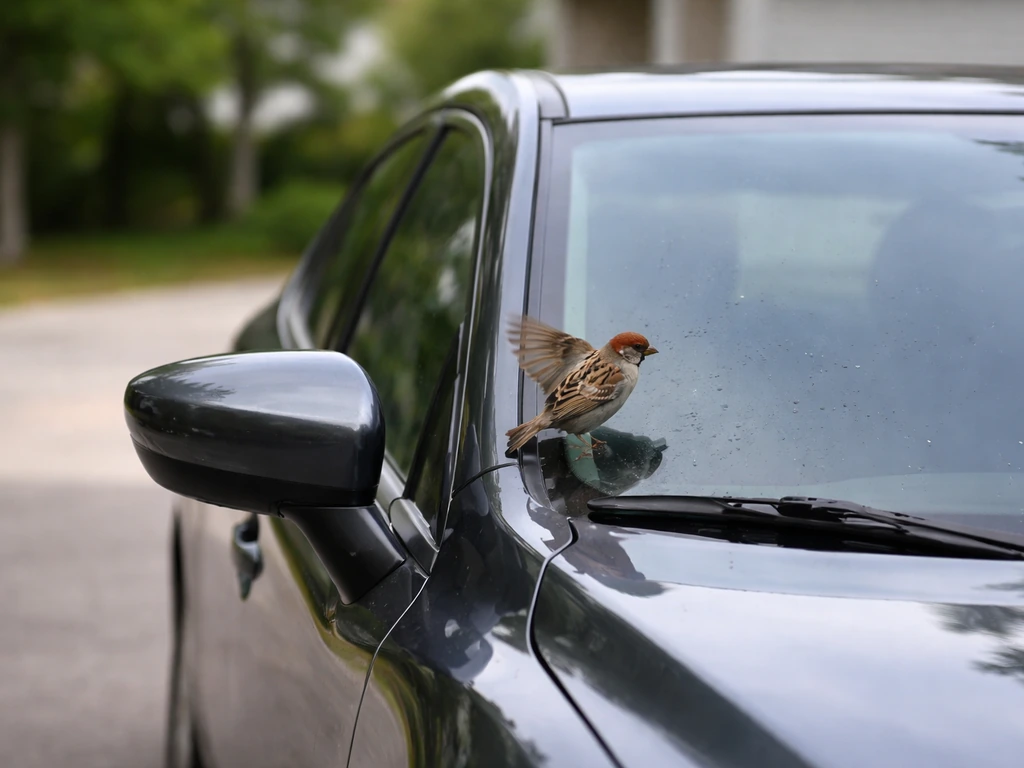
A bird trying to get into your car is almost always doing one of three things: attacking its own reflection in your window or mirror (especially if it's breeding season), seeking shelter or warmth, or panicking after accidentally getting partially inside. The most common culprit by far is territorial reflection behavior, which peaks between late April and early August. That same kind of behavior is often the reason a bird suddenly appears at your car window territorial reflection behavior. The good news is this is solvable, and no one, including the bird, has to get hurt. If you are still wondering why a bird keeps sitting on your car, the most common causes are territorial behavior and easy access to shelter or warmth why does a bird keep sitting on my car.
Why Is a Bird Trying to Get in My Car? Causes and What to Do

What to do right now: fast checklist
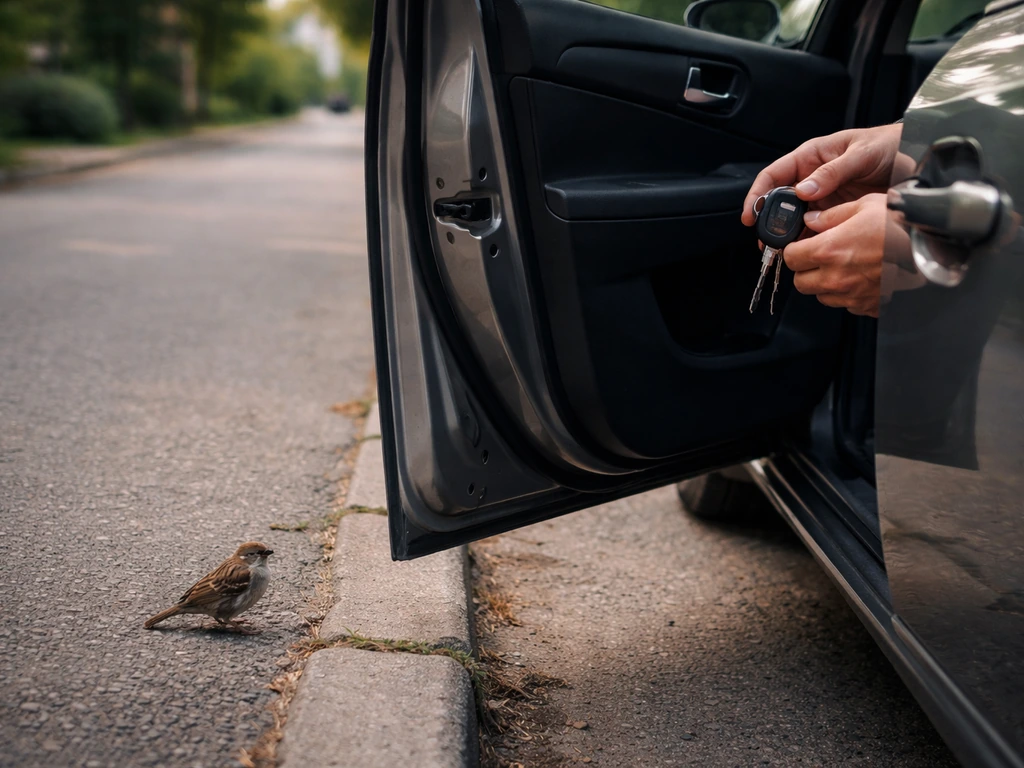
If this is happening as you're reading this, here's the quick-action list before we go deeper into why and what it all might mean.
- Stay calm and move slowly — sudden movement or noise will panic the bird and make things worse.
- If the bird is outside the car pecking at windows or mirrors, do not open doors or windows. You don't want it inside.
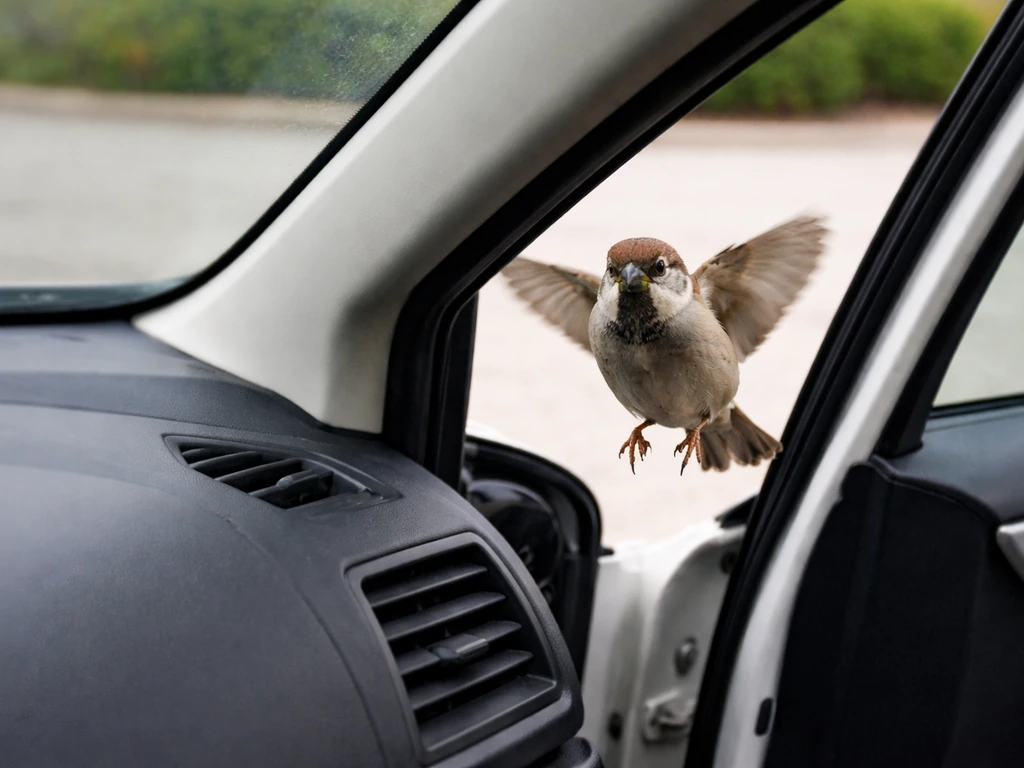
- If the bird is already inside the car, open all doors and windows wide, then step back and give it space to find the exit on its own.
- Turn off any interior lights — birds fly toward light, and a dark interior sends them back toward the daylight outside.
- Cover your side mirrors with a cloth, bag, or painter's tape if the bird is repeatedly charging them. This breaks the reflection trigger immediately.
- If the bird is stuck and won't leave after a few minutes, use a light towel or jacket to gently guide it toward the open door — never grab it bare-handed.
- Once the bird is out, do a quick check: is it flying normally? If it's grounded and dazed, it may need help (more on that below).
- Move or repark your car if possible — sometimes simply shifting location ends the encounter entirely.
Why birds target cars in the first place
There's usually a logical, natural explanation behind this. Once you know which one fits your situation, the fix becomes obvious.
Territorial reflection attacks
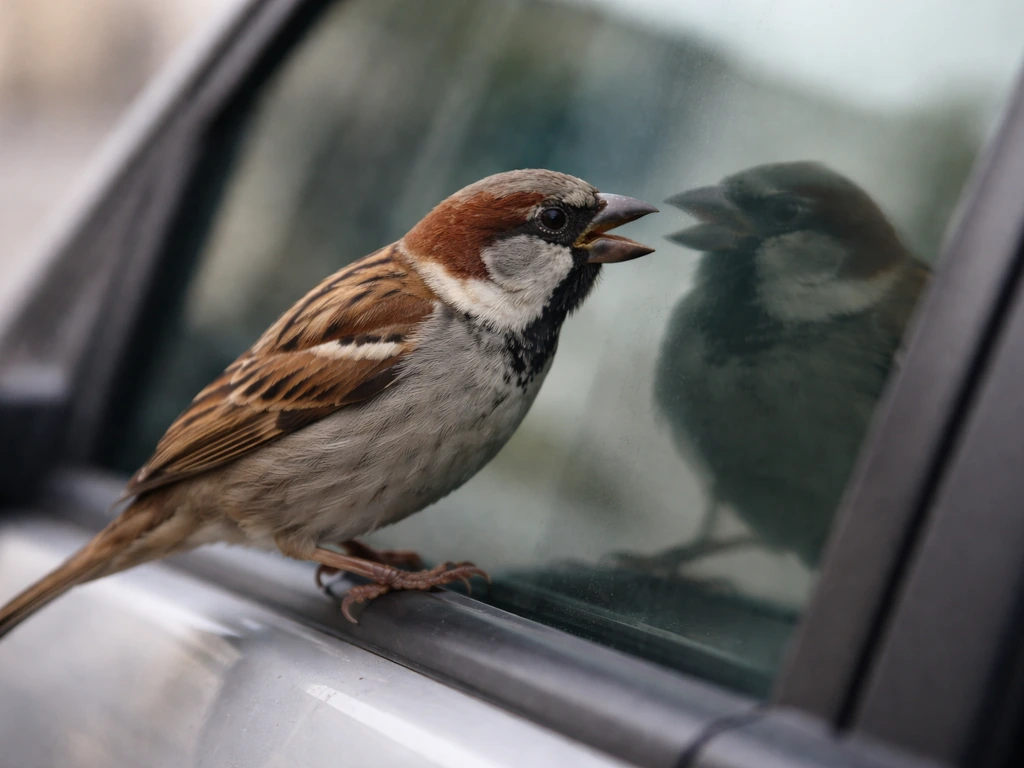
This is the big one. When a bird sees blank" rel="noopener noreferrer">its own reflection in your window or mirror, it doesn't recognize itself. It sees a rival bird invading its territory. So it blank" rel="noopener noreferrer">charges, pecks, and circles back to fight the intruder, relentlessly. This behavior is especially intense during breeding season (late April through early August, roughly) when territorial instincts are at their peak. Male songbirds, cardinals, robins, and mockingbirds are frequent offenders. If the bird keeps returning to the same spot on your car and the attacks seem almost obsessive, this is almost certainly what's happening.
Seeking shelter, warmth, or a nesting spot
Cars are warm, enclosed spaces, and that's genuinely attractive to birds looking for a safe place to roost or nest. Engine compartments, wheel wells, windshield wiper recesses, and open sunroofs are common entry points. If you've left a window cracked or a sunroof open, a bird may have simply wandered in looking for shelter. Check your hood vents and wiper area if you suspect nesting, a bird returning daily to the same spot near your car (rather than pecking at the glass) is more likely pursuing a nesting site than fighting a reflection.
Confusing glass for open space
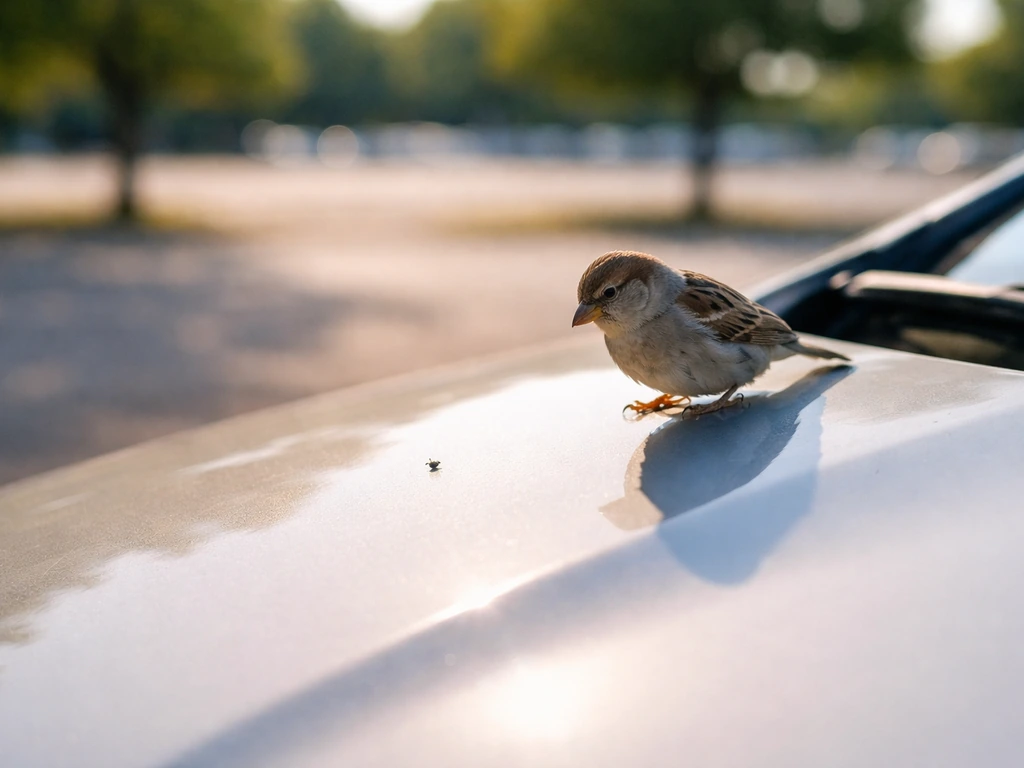
Birds don't always understand glass the way we do. A large windshield reflecting sky, trees, or open habitat can look like a flight path to a bird, causing it to fly directly at it. This is more of a collision risk than an intentional entry attempt, but from a distance it can look like the bird is desperately trying to get in. If the bird is hitting the glass and bouncing off rather than hovering, investigating gaps, or returning to mirrors specifically, this is likely the scenario.
Chasing insects or following light
Engine heat draws insects, and insects draw birds. A car that's been sitting in the sun is basically a warm buffet near the hood, vents, and undercarriage. Similarly, if interior lights are on, you're advertising to any insect-hunting bird in the vicinity. Birds following this kind of food source may hover near open windows or gaps in the car's body.
Escape from a nearby threat
Sometimes a bird isn't targeting your car at all, it's fleeing a cat, hawk, or other predator and your car just happens to be the nearest available cover. This tends to be a one-time event. The bird ducks in, catches its breath, and leaves. If the bird only entered once and seemed frantic, this is likely what happened.
How to safely get the bird out
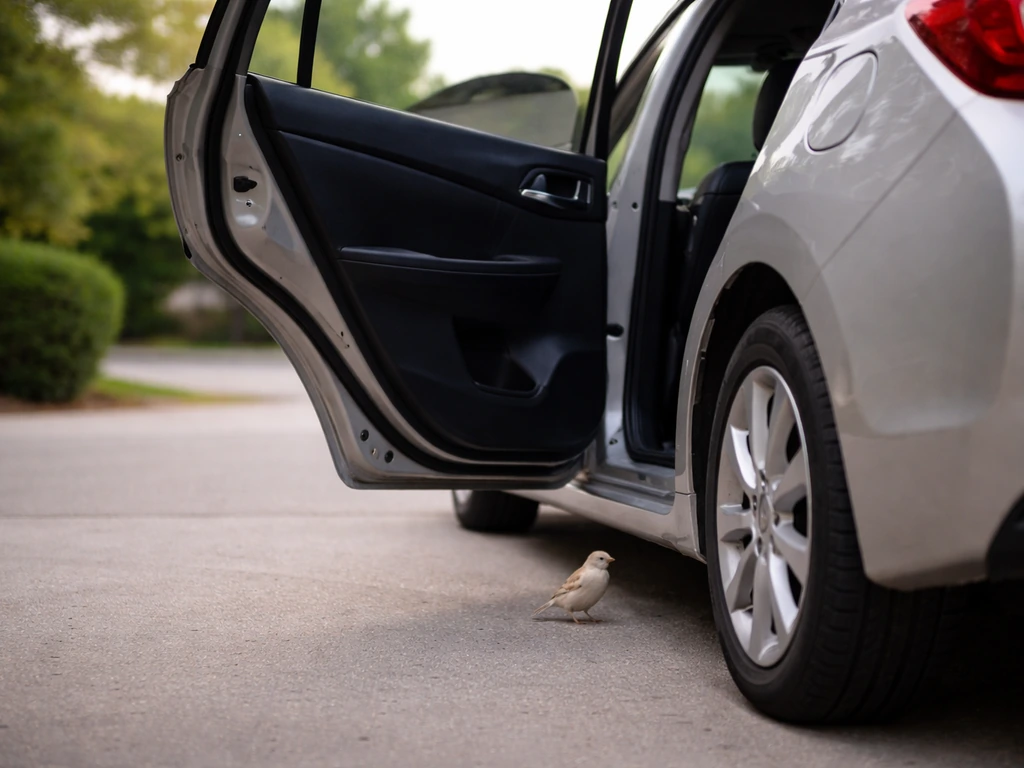
Whether the bird is currently inside or you're preparing for next time, this step-by-step approach keeps both of you safe.
- Clear the space: Remove people, pets, and distractions from around the car. A calm environment is the single most important factor.
- Open maximum exits: Open all doors, the sunroof if you have one, and any windows the bird could realistically fly through. More options means faster exit.
- Kill the lights: Turn off interior cabin lights. Birds instinctively move toward natural light, so making the outside brighter relative to the inside nudges them in the right direction.
- Step away: Move at least 10 to 15 feet from the car. Your presence near the exits is probably blocking the bird from using them.
- Wait quietly: Give the bird 5 to 10 minutes. Most birds will find their own way out given a clear, calm path.
- If it's still stuck: Drape a light cloth or jacket over the bird gently to calm it (covering the eyes reduces panic in birds), then carry it loosely cupped — not gripped — to the open door and release it outside.
- Never corner the bird: A panicked bird will injure itself, and a frightened bird can scratch or peck. Always create a path out rather than chasing it toward you.
- After release: Watch for a moment. If the bird flies off normally, you're done. If it flutters to the ground and can't take off, it may have stunned itself and needs the next level of help.
Stop it from happening again
Once is an incident. Three times in a week is a pattern worth addressing. Here's how to break the cycle.
Block the reflections
If territorial reflection-attacking is the cause, blocking the reflection is the fastest fix. Cover your side mirrors with plastic bags, old socks, or strips of painter's tape when the car is parked. You can also drape a painter's drop cloth or old sheet over the windows and mirrors, this diffuses the reflection while still letting light through, which can help if the bird is attacking the windshield too. Keep the covers on for a few weeks, even after the attacks seem to stop, because territorial behavior during breeding season is persistent.
Close off entry points
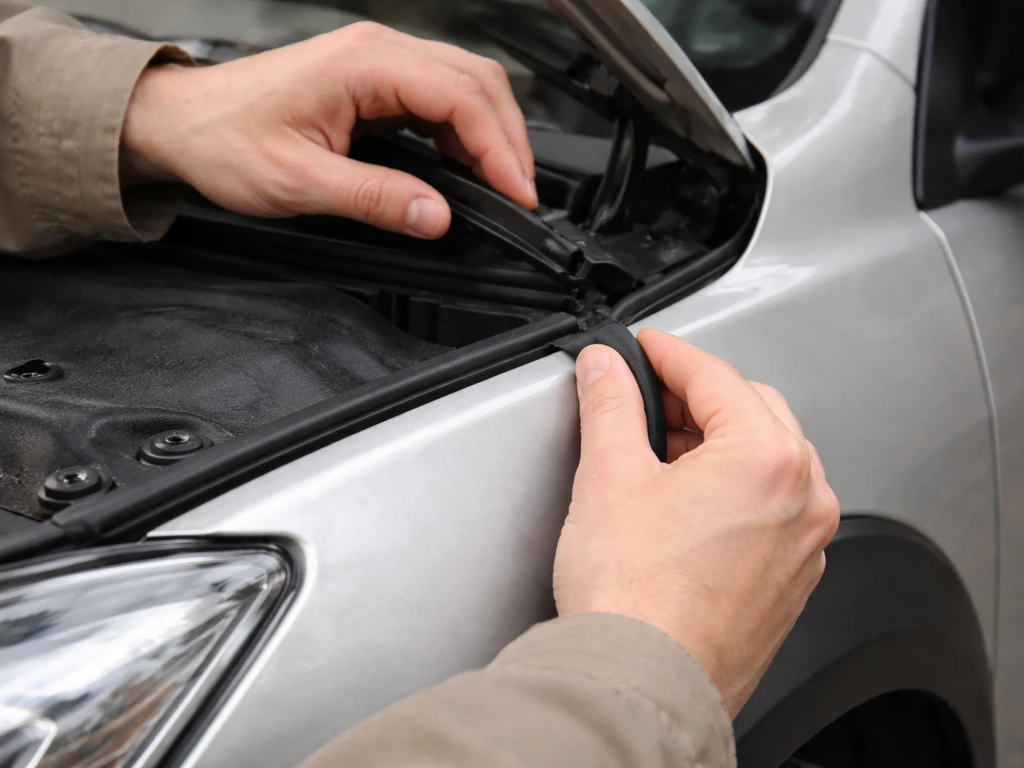
If the bird is trying to nest or shelter in or around your car, do a physical inspection: check the wiper recess, hood vents, wheel wells, and the gap between the hood and windshield. If you find nesting material early (before eggs are laid), you can remove it and block that gap with mesh or a cloth. Once eggs or chicks are present, the situation becomes protected under wildlife law in most places and you'll want to contact your local wildlife rehabilitator before doing anything.
Remove attractants
- Don't leave food wrappers, crumbs, or open food containers in your car.
- Keep windows and sunroofs fully closed when parked, especially in wooded or suburban areas.
- If insects are consistently gathering near your car, check whether there's a moisture or food source underneath it.
- Move the car to a different parking spot if attacks are persistent — sometimes changing location is enough to remove the bird's territorial trigger entirely.
Clean up safely after the fact
Bird droppings on your car aren't just unsightly, the uric acid in them can etch paint if left for more than a day or two. Clean affected areas with a damp microfiber cloth and a gentle car-safe cleaner. If you're cleaning up inside the car after a bird was trapped inside, use gloves and avoid breathing in dried droppings, which can carry bacteria and fungi. Ventilate the car well before spending time inside it.
What this encounter might mean spiritually
If you're here partly because this felt like more than just a random bird incident, you're not alone in that instinct. Across cultures and centuries, birds attempting to enter a human's personal space, including their home or vehicle, have been read as meaningful encounters. A car, like a home, is a kind of mobile shelter: it's the space you move through the world in, and many traditions see birds seeking entry into such spaces as symbolic of something pressing for attention.
Biblical and faith-based interpretations
In biblical tradition, birds frequently appear as messengers or signs of divine attention. The dove and the raven in Genesis both served as scouts carrying information about change. Many faith-oriented readers interpret a persistent bird at their window or car as a nudge from the divine to pay attention to something in their life, a decision pending, a boundary that needs setting, or a call to return to what matters. The repeated, almost insistent quality of a bird trying to get in can feel, through this lens, like persistence from something beyond the ordinary.
Folklore and metaphysical perspectives
In Celtic tradition, birds were often seen as messengers between worlds, with certain species (particularly robins and wrens) associated with carrying word from the spirit realm. Indigenous American traditions vary widely by nation and region, but many hold that unexpected, persistent animal behavior signals that the animal has something to teach or communicate. From a broader metaphysical perspective, a bird trying to enter your vehicle, your moving shelter, the space where you travel your path, is often read as a sign of incoming opportunity, a message asking you to open a door (literally or metaphorically), or a reminder to examine what you're protecting inside your own life.
The symbolic thread across traditions
What's striking is that across very different cultural frameworks, the common thread is attention and transition. The bird isn't threatening, it's insisting. Whether you interpret that through a spiritual lens or see it simply as a fascinating behavioral event, the question worth sitting with is: what is it that you've been avoiding looking at? What door have you kept closed that maybe wants to be opened? You don't have to commit to any single interpretation. Sometimes the encounter is just an interesting thing that happened. But if it's stayed with you enough to search for meaning, that feeling itself is worth paying attention to.
When it's urgent: injury, nests, and who to call
Most bird-car encounters resolve on their own with the steps above. But a few situations call for faster, more serious action.
| Situation | What to do |
|---|---|
| Bird is inside your car, panicking and won't leave | Follow the step-by-step above; if still trapped after 15 minutes, call a local wildlife rehabilitator for phone guidance |
| Bird flew into your windshield and is now on the ground, stunned | Place it gently in a ventilated box in a quiet, dark place; contact a wildlife rehabilitator — do not try to feed or give water |
| You found a nest with eggs or chicks in your car's engine or wipers | Do not remove it; contact your local wildlife agency or rehabilitator immediately — active nests are protected in most regions |
| A bird has been attacking your car daily for more than 2 to 3 weeks | Cover all reflective surfaces completely; if this doesn't stop it within a week, contact your local wildlife extension office for species-specific advice |
| The bird appears injured (bleeding, dragging a wing, unable to stand) | Use a towel to gently contain it, place in a ventilated dark box, and contact a wildlife rehabilitator within the hour — do not delay |
| You're seeing an aggressive species like a red-winged blackbird or mockingbird dive-bombing you near the car | Avoid the area temporarily; this is usually nesting protection behavior and will pass within a few weeks |
To find a wildlife rehabilitator near you, search your country's wildlife agency website or look for a local wildlife rescue organization. In the US, the National Wildlife Rehabilitators Association directory is a good starting point. In Canada, the Wildlife Rescue Society of Saskatchewan and similar provincial groups can help. Most will offer phone guidance for free even if you can't bring the bird in person.
One thing worth noting: if a bird is being persistently drawn to your car in ways that feel unusual, not just territorial attacks but repeated attempts at the same gap, daily roosting, or following your vehicle, it may be worth looking at the sibling behaviors of birds fixating on cars in general, or the related experience of a bird that keeps returning to your home. These overlapping patterns often share the same root causes and the same solutions, and sometimes the same symbolic undercurrents, too.
Whatever brought the bird to your car today, the most important thing is that both you and the bird come through it safely. After that, you get to decide what, if anything, it meant.
FAQ
If the bird is already inside my car, what’s the safest way to get it out?
Don’t try to grab the bird or block its exit with your body. First, close off any nearby gaps that could trap it further (for example, keep the hood closed if the bird is inside the engine area), then open a clear exit route like a door or window and move away to reduce panic. If it is inside the cabin, turn off interior lights to stop insect attraction and let it find the open exit naturally.
How can I tell whether this is reflection behavior or nesting/shelter seeking?
If the bird keeps pecking at the same window or mirror area and returns within minutes or hours, it usually points to reflection behavior. If instead it repeatedly investigates specific openings such as the wiper recess or hood gap, it’s more likely shelter or nesting. Observing whether it targets visual surfaces versus physical entry points helps you choose the correct fix.
Can I cover my windows or mirrors to stop the bird, and is it safe around the car’s systems?
Use physical covers only while the car is parked, and avoid leaving them on while driving. Also remove any covers before you drive so you don’t restrict your view, ventilation, or sensors. If you use tape, use painter’s tape that won’t damage paint or mirrors, and don’t let fabric covers touch hot engine parts.
If I clean the droppings, will the bird stop coming back?
Yes, but cleaning and blocking are separate steps. Clean droppings as soon as practical to prevent paint etching (especially on clear coats and chrome), then address why it was there by sealing entry gaps or stopping access to mirrors/reflections. If you only clean but don’t change the environment, the bird often returns.
Where exactly should I look for entry points if I suspect the bird is nesting in/near the car?
Check for “hot spots” first: the hood vents, windshield wiper recess, wheel wells, and any spaces around the door seals. If you find feathers, twigs, or nesting material early, remove it when the area is unoccupied and then block the gap with mesh or a cloth barrier. Don’t rush to handle active nests if eggs or chicks are present.
What should I do if the bird keeps flying into the windshield instead of trying the doors or gaps?
If it hits the windshield and bounces off repeatedly, that’s a glass-collision scenario rather than intentional entry. The practical step is to reduce reflections before the bird has a chance to charge again, for example by covering the relevant windows or using a temporary visual deterrent on the most reflective surfaces.
How do I know whether the bird was just panicking, versus something like nesting or reflection?
If a bird entered once during an escape from a predator, you can focus on prevention rather than long-term changes. However, if attempts continue across multiple days, treat it like a pattern and address reflection, access points, and nearby shelter. A truly one-off event usually leaves quickly and does not repeatedly return to the same spot.
Are there health or hygiene precautions I should take when cleaning bird waste inside the car?
Use gloves if you have to wipe inside or near dried droppings, and avoid sweeping dry material that can aerosolize particles. Let the car air out well before you sit in it for extended periods, and use a damp method for cleanup rather than dry brushing.
What if I find eggs or chicks near the car, can I remove them or block the area immediately?
If the bird is protected by local wildlife rules (common when eggs or chicks are present), you should avoid removing nests or blocking access yourself. The best next step is to contact a local wildlife rehabilitator or wildlife agency for guidance on exclusion timing and how to make the area safe.
When should I contact a wildlife rehabilitator even if I’m able to handle the situation myself?
If it’s more than behavior you can influence, such as repeated daytime following of your vehicle, daily roosting on the same spot, or repeated attempts that don’t improve after blocking reflections, it’s worth escalating. A wildlife rehabilitator can also advise whether the bird may be injured or behaving unusually.