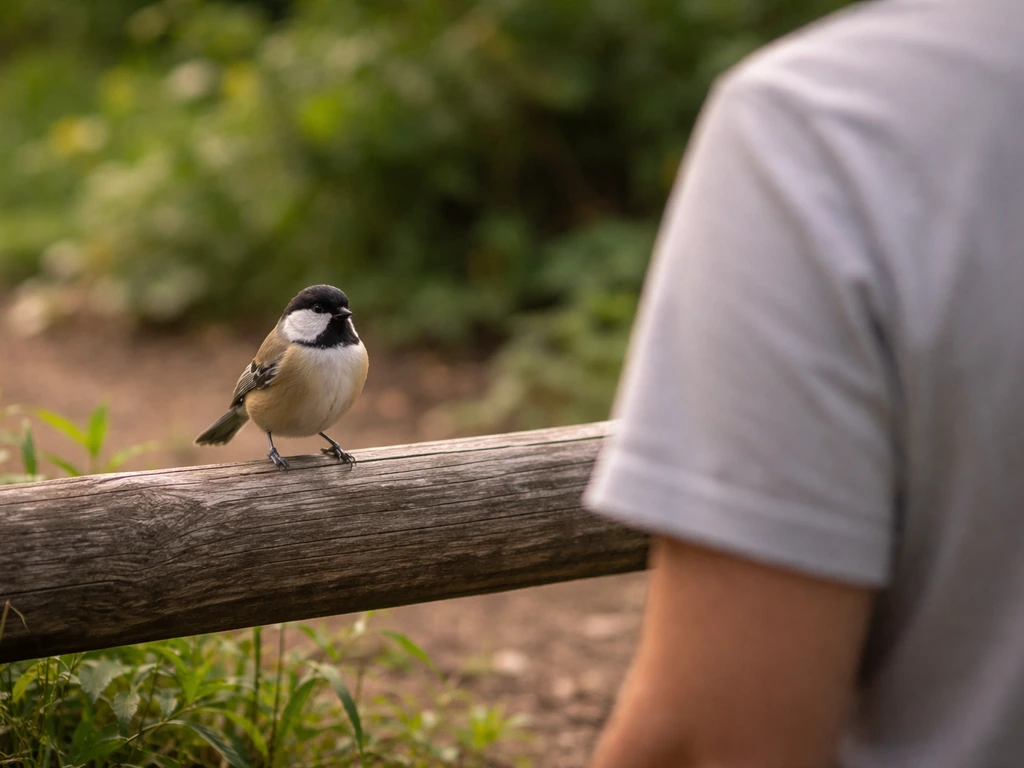
A bird that has imprinted on you treats you like its flock, its parent, or its mate, not just a food source. The clearest signs are: it follows you from room to room, calls out specifically when you leave, chooses to step onto you over anyone else, tries to preen or feed you, and becomes visibly distressed (not just quiet) when you're gone. That combination of behaviors, especially in a hand-raised or young rescued bird, is about as close to blank" rel="noopener noreferrer">true imprinting as you'll see outside a research setting. But there's an important distinction to make before you decide what's happening with your bird.
How to Tell If a Bird Has Imprinted on You: Signs

Maya Hartwell
30 May 2026
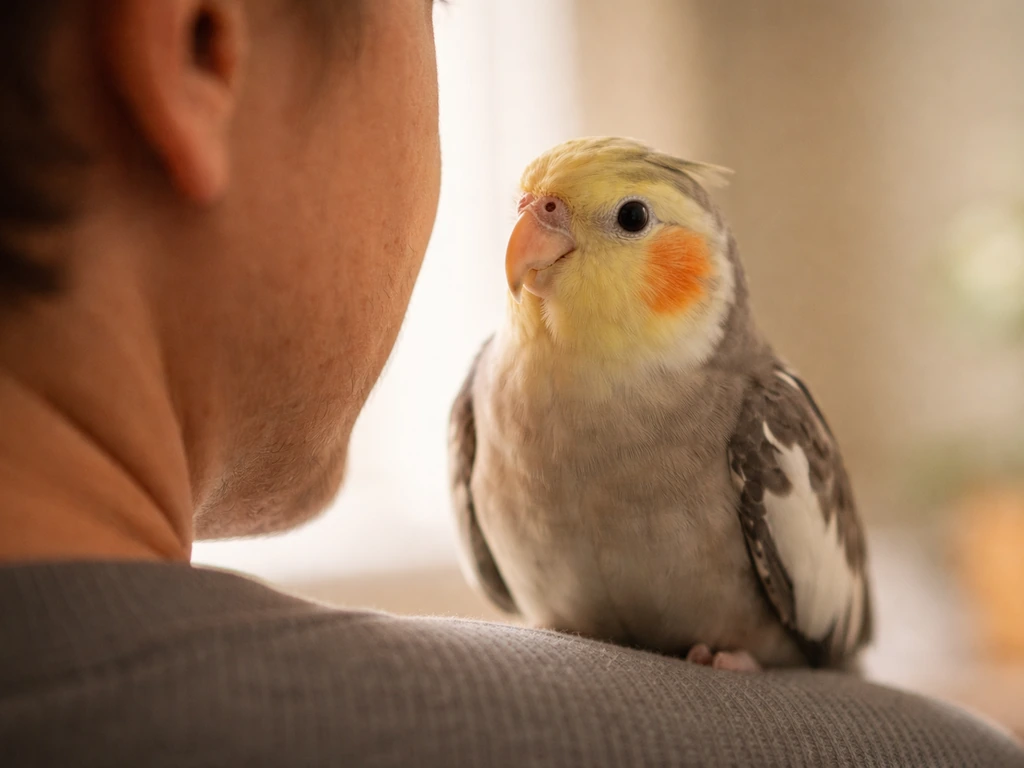
What 'bird imprinting' actually means (and what it usually isn't)
Imprinting, in the strict ethological sense, is a type of automatic early-life learning during which a young bird forms its core sense of species identity. It happens during a sensitive developmental window, typically within the first weeks after hatching, and it's largely irreversible. A bird that imprints on humans during that window doesn't just learn to tolerate people; it fundamentally identifies itself as one. That's the definition used in falconry regulations (50 CFR § 21.6 defines an imprinted bird as one hand-raised from about two weeks of age until fledging), and it's the concern wildlife rehabilitators work hard to prevent when caring for orphaned birds.
What most pet bird owners actually experience is something slightly different: intense bonding. Bonding can happen at any age, builds gradually through shared time and positive interaction, and doesn't necessarily rewire a bird's species identity. The practical overlap is significant, though. An imprinted bird and a deeply bonded bird can look almost identical in daily life, both follow you, both vocalize for you, both prefer you above all others.
The difference matters most for wild birds (who cannot be released if truly imprinted) and for understanding why the attachment is so intense. For your pet parrot, cockatiel, or rescued corvid, the behaviors you're noticing likely fall somewhere on a spectrum between 'strong bond' and 'full human imprint', and either way, the signs and next steps are similar.
Behavior signs: how to tell if a bird has bonded or imprinted on you
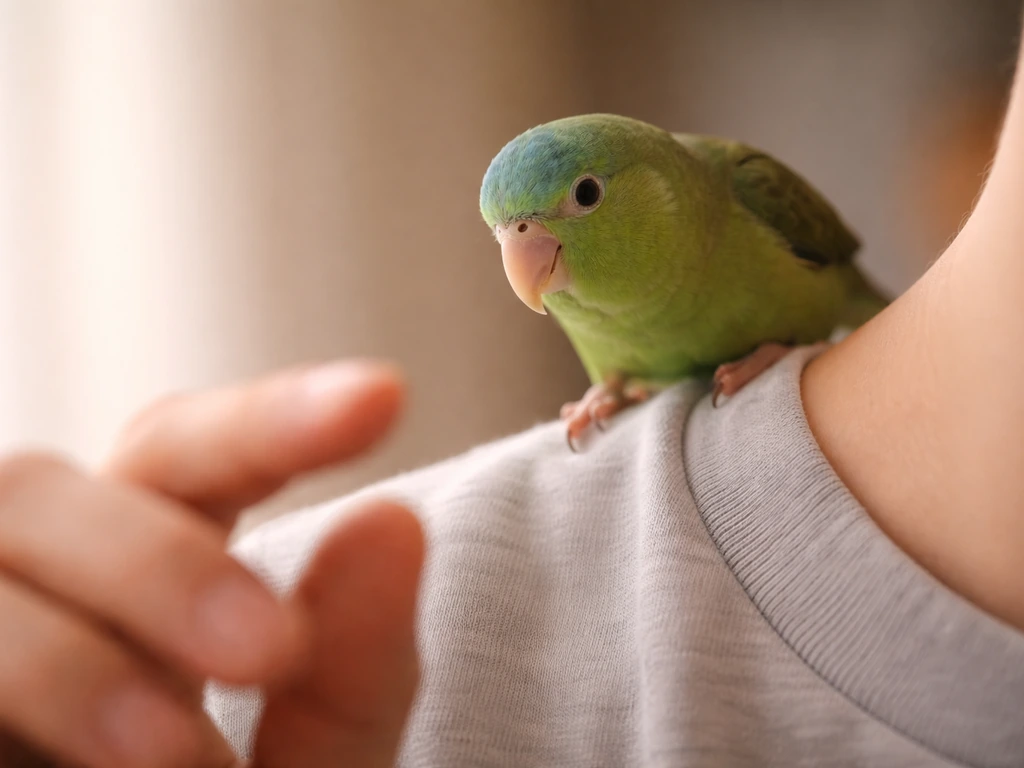
You're looking for a cluster of behaviors, not just one. Any single sign in isolation could be normal curiosity or learned behavior for food. What makes it imprinting or deep bonding is when these patterns show up together, consistently, and especially when they show up during moments that have nothing to do with feeding.
- Following you: The bird physically tracks your movements around the space — not just when food is involved, but whenever you walk away. It may fly or hop to stay within a few feet of you.
- Contact calling: It makes specific vocalizations when you leave its line of sight. These aren't general chirps; they're directed sounds that stop when you respond or return.
- Voluntary step-up and body contact: It steps onto your hand, arm, or shoulder without being prompted — and actively seeks out skin-to-skin or feather-to-skin contact like sitting tucked against your neck.
- Allopreening: It tries to preen your hair, eyebrows, eyelashes, or fingers. This is a profoundly social behavior birds use with their closest companions.
- Regurgitation toward you: Especially in parrots and some other species, attempting to regurgitate food for you is a high-level bonding signal — the bird is treating you as a mate or dependent.
- Distress when you leave: Visible agitation, repetitive calling, or feather-ruffling that begins when you leave the room and stops when you return. This goes beyond mild restlessness.
- Guarding or protecting you: The bird positions itself between you and others, lunges or vocalizes at people who approach you, or shows possessive behavior around your space.
- Calm during stress: When something frightens the bird, it moves toward you rather than away — using you as its safe anchor the way a chick would use a parent.
If you're seeing five or more of these behaviors regularly, the attachment is deep and likely crosses into imprinting territory, particularly if the bird was hand-raised from a very young age. If you're seeing two or three, you have a strongly bonded bird, which is still meaningful and requires thoughtful management.
It looks different depending on the bird and how it was raised
The species, age at first human contact, and circumstances of the bird's early life all shape how imprinting or bonding shows up. Here's how the picture changes across the most common situations.
| Bird Type | How Imprinting/Bonding Typically Shows Up | Key Consideration |
|---|---|---|
| Hand-raised from hatch (parrots, raptors, corvids) | Full imprint behavior: follows, calls, seeks contact, shows aggression toward others, may attempt to mate with owner at maturity | Likely a true imprint; will show these behaviors for life |
| Rescued baby/fledgling (wild bird) | Reduced fear of humans, seeks proximity, may follow or call for you; less species-directed behavior | Risk of malimprinting; wild birds should not be kept as pets — contact a wildlife rehabber |
| Adult pet bird re-homed or adopted | Gradual bonding over weeks to months; follows, prefers you, but usually maintains some species-appropriate behavior | Bonding, not classic imprinting — still intense, still needs management |
| Parent-raised bird with later human socialization | Trusts humans, can bond strongly, but retains species identity; less likely to show mate-directed or parent-directed behavior toward you | Healthier baseline; more flexible social behavior |
| Juvenile bird during socialization window | Can imprint quickly if primary contact is one person; shows fast attachment, strong preference | This window closes — attachment formed now tends to be long-lasting |
Age matters enormously. A bird that came to you as a hatchling or nestling is far more likely to have formed a true imprint than one that arrived as a juvenile or adult. With older birds, what you're usually seeing is a very strong bond, which is real, significant, and worth taking seriously, but is not the same neurological phenomenon as early-life filial imprinting.
The four big imprinting signals explained
Following
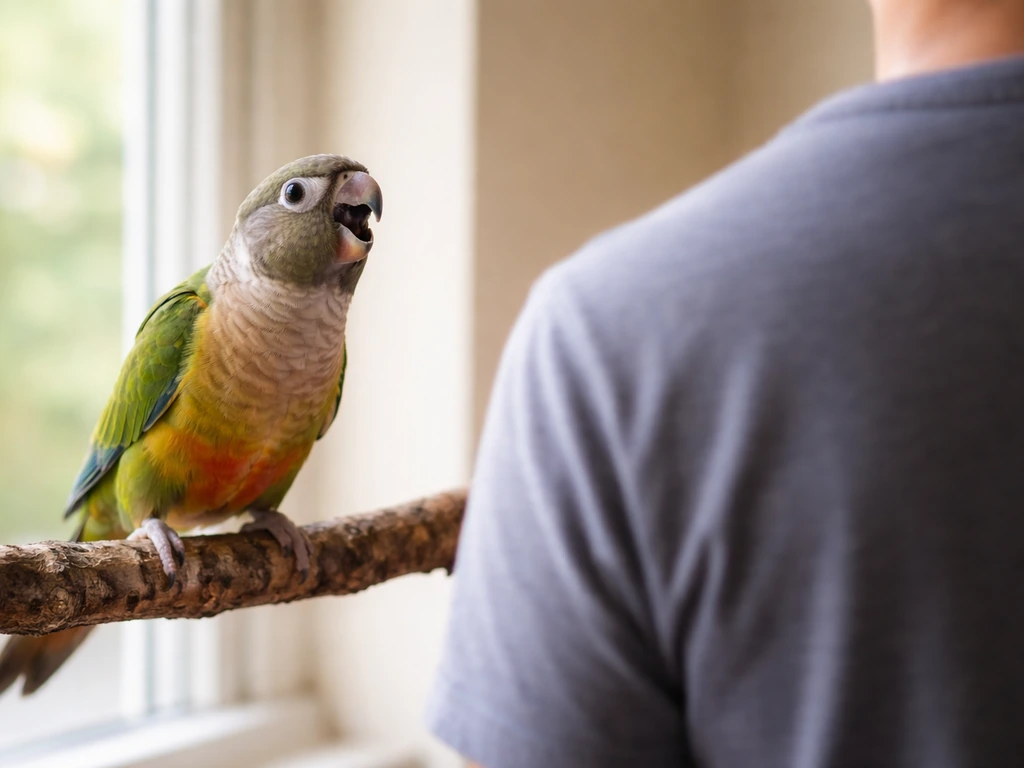
A bird that follows you isn't just being social, it's treating you as its flock anchor. For an imprinted bird, being separated from you feels like being abandoned by the group. You'll notice it moves toward you when you shift positions, orients its body toward you even when it's perched and not moving, and shows visible distress if you leave through a door it can't follow you through.
Calling specifically for you
Contact calls in the wild are how flock members keep track of each other. An imprinted or deeply bonded bird directs these calls at you. If you leave the room and the bird starts vocalizing, and the vocalizations stop or change when you respond, that's a contact call loop. It's not just noise. The bird is checking that its primary attachment figure is still reachable. Clinical avian behavior guidance (IVIS) frames screaming in terms of its function and recommends a functional analysis to determine what leads to and maintains the behavior (for example, screaming when a caregiver leaves the room) , https://www.ivis.org/library/clinical-avian-medicine/concepts-behavior-section-i-natural-science-of-behavior Concepts in Behavior – Section I: Natural Science of Behavior (IVIS / Clinical Avian Medicine).
Stepping up and choosing you
An imprinted bird steps up voluntarily, without hesitation, and often steps away from other people to get to you. The 'choosing you' element is the key signal. If the bird has the option to go to several people and consistently chooses you, especially if it actively moves toward you when you enter the room, that's bonding behavior at a high level.
Guarding and protective behavior
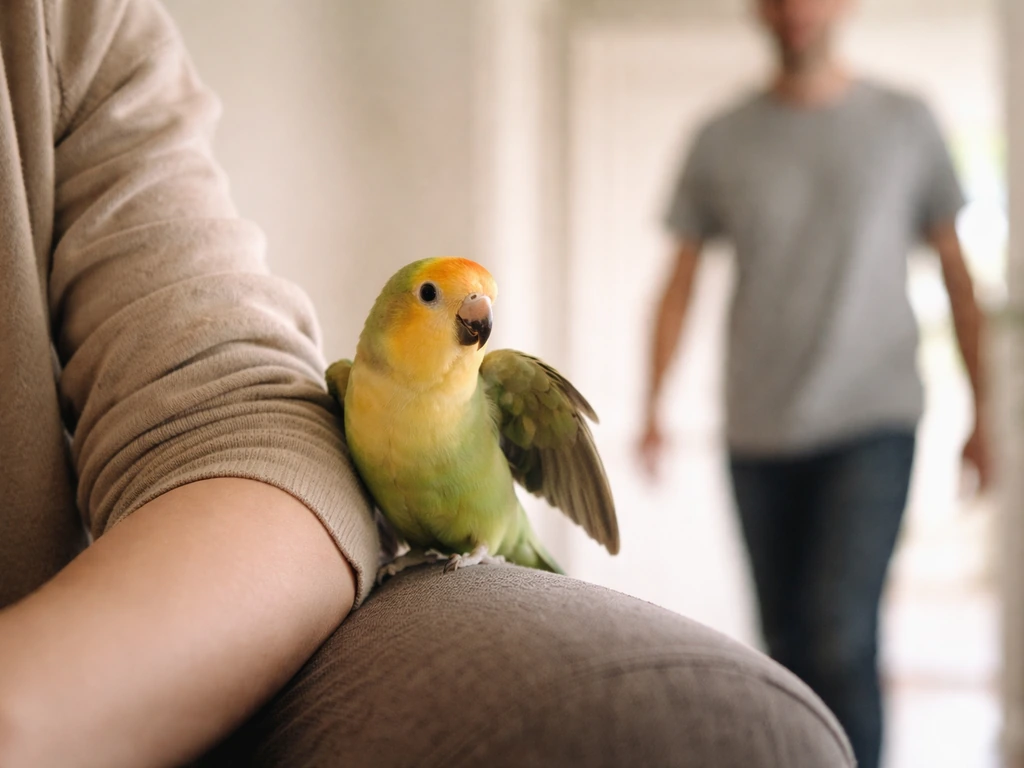
This one surprises people. An imprinted bird may lunge at, chase, or vocalize aggressively at other people who come near you. It's not being mean for the sake of it, from the bird's perspective, it's protecting its flock member (you) from potential threats. You may also notice it places itself physically between you and a perceived intruder, or puffs up and postures when a new person approaches. This can escalate at hormonal maturity, especially in parrots, so it's worth managing early.
How this kind of attachment forms, and what you can do to keep it healthy
For true imprinting, the mechanism is early-life contact during the sensitive developmental window. Handle a hatchling exclusively for the first weeks of its life and you've shaped its social identity permanently. But for the more common scenario, a bird that was hand-fed as a baby, or that has lived with you and one or two other people for years, the attachment builds through repeated positive interactions, your presence during stress, consistent feeding, and what's sometimes called social deprivation of other bird contact. When a bird's only meaningful social relationships are with the humans in the household, those bonds intensify.
To encourage a healthy attachment (rather than an anxious, over-dependent one), a few things consistently make a difference. First, expose the bird to other people regularly, not just you. An imprinted or deeply bonded bird doesn't have to be a one-person bird; with patient socialization, many learn to accept and even enjoy other trusted humans. Second, avoid being the only one who feeds, handles, or interacts with the bird.
When you become the single source of everything the bird needs, the dependency intensifies. Third, give the bird independent enrichment, foraging toys, puzzles, appropriate mirrors or visual stimulation, so it has ways to meet its own needs when you're not present. Purdue's veterinary guidance specifically notes that humans become a bird's primary social contact when other stimulation is absent, which amplifies one-person attachment patterns.
If you have a wild bird that has come to you already imprinted (for example, you found and raised an orphan before knowing better), the most important next step is to contact a licensed wildlife rehabilitator immediately. An imprinted wild bird cannot be released safely, it may approach humans inappropriately in the wild and face serious danger. Rehab centers have protocols for managing these cases, sometimes including placement as an education or ambassador animal.
Red flags: when attachment tips into stress or aggression
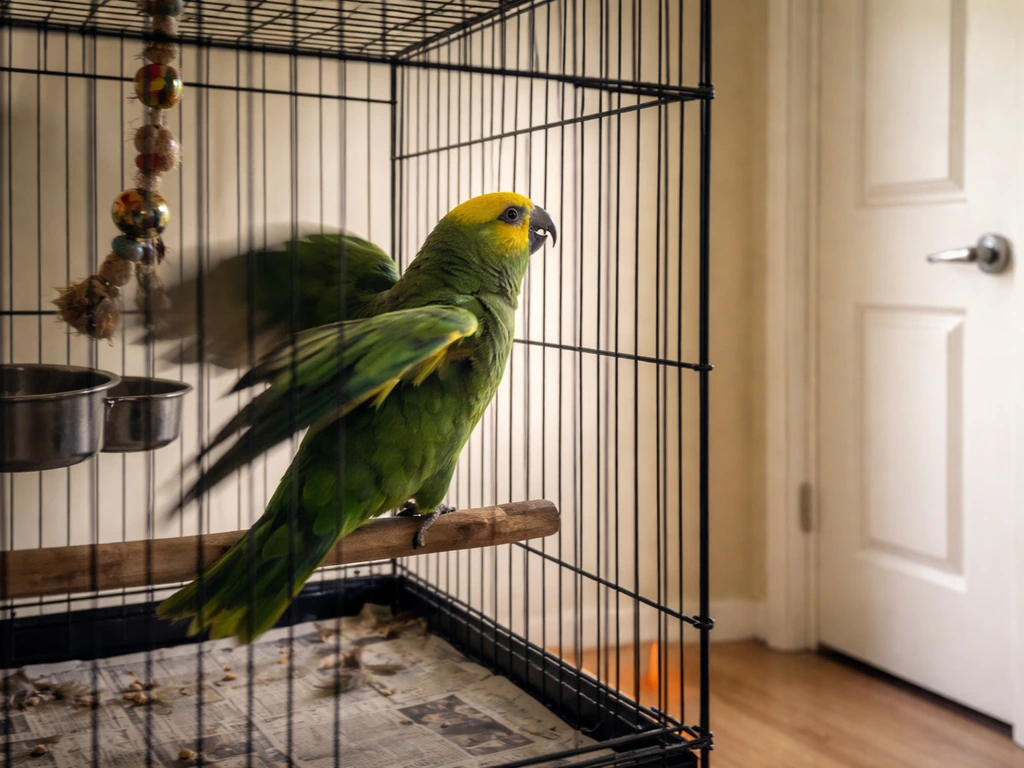
Not all intense attachment is healthy, and it's worth knowing where the line is. A loving bond makes a bird calmer, more confident, and more resilient. An anxious over-attachment does the opposite, it makes the bird fragile, reactive, and increasingly difficult to manage. Here's what to watch for.
- Frantic screaming that begins immediately when you leave the room and doesn't settle — not just a few contact calls, but sustained, escalating distress vocalizations
- Feather-destructive behavior like plucking or barbering, especially if it started or worsened around a change in your schedule or availability
- Sudden biting or lunging, particularly directed at other people in the household or at you during handling — PetMD notes that biting is often a fear/stress response, not just aggression
- Repetitive stereotyped movements like head-bobbing, pacing, rocking, or spinning — Purdue advises these warrant a vet exam as they may signal chronic stress or neurological issues
- Territorial or possessive aggression that escalates around hormonal seasons, especially in parrots at sexual maturity
- Visible physical symptoms of stress: fluffed feathers when not cold, loss of appetite, changes in droppings, or lethargy
If you're seeing these signs, the first call is to an avian veterinarian, not a general small-animal vet, but one with specific bird experience. Rule out medical causes first, since pain and illness can look identical to behavioral distress. If the bird gets a clean bill of health and the behavior continues, ask your vet for a referral to a certified avian behavior consultant. The International Association of Avian Trainers and Educators (IAATE) is a solid starting point for finding professionals who work specifically with birds in human care. Severe separation anxiety sometimes requires behavioral medication alongside training, and there's no shame in that. The goal is the bird's wellbeing.
The spiritual and symbolic side of a close bird bond
If you've landed here from a place of wondering what it means, not just behaviorally but in a deeper sense, that a bird has chosen you so intensely, you're not alone in asking that question. Across cultures and traditions, an unusually close bond between a human and a bird has long been read as something more than biology.
In Christian symbolism, birds carry consistent weight as messengers of divine care, sparrows appear in the Gospels as emblems of God's attention to even the smallest creature, and the dove is connected directly with the Holy Spirit. Celtic and indigenous traditions have long held that certain birds serve as spirit guides or messengers between worlds, with a bird that returns repeatedly to a specific person sometimes interpreted as a guardian presence.
Learn Religions notes that some traditions interpret recurring bird visits as spiritual messages or omens, including the idea of animal angels or guardian messengers a bird that returns repeatedly to a specific person sometimes interpreted as a guardian presence. In many Eastern and African cultural traditions, a bird that attaches itself to a human is read as a sign of fortune, a delivered message, or a soul connection that transcends ordinary relationship.
Some folklore frames it simply: the bird sees something in you worth staying near.
Whether or not you hold any of these beliefs, there's something worth sitting with. A creature that has no obligation to you, that could fly away at any moment, chooses proximity with you over and over. That's not nothing. The science explains how it happens, the sensitive developmental windows, the attachment neurology, the social bonding mechanisms. But the felt experience of being genuinely chosen by a bird is something many people describe as spiritually significant, regardless of their tradition. You might ask yourself: what does this closeness invite in you? What does it feel like to be someone a wild thing trusts completely?
What matters practically is that no spiritual interpretation replaces responsible care. The bird's welfare, its physical health, behavioral needs, and quality of life, comes first, always. The meaning you draw from the bond is yours to explore. The obligation the bond creates is real and grounded in the animal's actual needs.
Quick next steps based on what you're seeing
- Count the behaviors from the list above. Five or more together, especially in a hand-raised bird, points strongly toward imprinting or deep bonding.
- If it's a wild bird, contact a licensed wildlife rehabilitator today — do not attempt to keep it, regardless of how attached it seems.
- If it's a pet bird showing healthy attachment signs, focus on socialization with other trusted people and provide independent enrichment to reduce over-dependency.
- If you're seeing stress signals (frantic screaming, feather destruction, aggression), book an avian vet appointment before doing anything else.
- For persistent behavioral issues after a medical clearance, find a certified avian behavior consultant through IAATE or your avian vet's referral network.
- Take time to notice what this bond means to you personally — the practical care and the personal significance can coexist without one undermining the other.
A bird that has imprinted on you or bonded with you deeply is a serious responsibility and, for many people, one of the most remarkable relationships they'll ever have with an animal. If you're trying to figure out whether your bird likes you, look for consistent behaviors like following, vocalizing for you, and choosing you over other people how to tell if a bird likes you.
Understanding what's happening, and why, makes you a better caretaker and lets you appreciate the connection for what it genuinely is. Wondering whether your bird is actively watching you? If you want to encourage your bird to come closer to you on cue, the basics of safe, consistent training will help you build that behavior how to tell a bird to come here.
Look for steady eye contact and consistent orientation toward you even when it is not moving. If you want to judge whether your bird truly trusts you, look at these patterns together over time rather than reacting to one-off behavior.
FAQ
Can a bird imprinted on a previous person imprint again on me if I bring it home?
Usually no in the strict sense, because early-life imprinting is largely irreversible. What can change is your bond strength, so the bird may shift its primary attachment figure to you over time, especially if you become the main caregiver. If the bird was hand-raised very young, expect stronger attachment patterns from day one and manage them proactively.
Is it normal if my bird follows me but doesn’t get distressed when I leave the room?
Yes, that can happen with strong social interest or routine familiarity. Distress is the key difference for “imprint-like” attachment, look for additional signs such as contact calling when you leave, purposeful orientation toward you from a distance, or changing behavior when you return. If it never shows stress, it’s more likely a healthy bond than anxious over-attachment.
What should I do if my bird only becomes intense when I’m the one feeding or handling it?
That pattern suggests the behavior may be strongly linked to reinforcement rather than attachment. Reduce the “you are everything” effect by varying who feeds, using enrichment and foraging when you are present, and rewarding calm interactions at other times. Also check for medical causes if the intensity spikes suddenly or comes with aggression, puffing, or sudden vocal changes.
How can I tell contact calls from normal chatter or asking-for-attention behavior?
Contact calls tend to form a response loop: the bird calls when you move away, call rate or tone changes when you respond or reappear, and calling is directed at you even when there is no food or obvious stimulus. Normal chatter is more likely to be time-of-day, mood, or activity dependent and not consistently tied to your position changes.
My bird lets others pet it but won’t leave my shoulder, is that imprinting?
Not necessarily. Imprinting is identified by the bond level plus flock-anchoring behavior, such as consistently choosing you among options and showing distress at separation that feels like loss of the group. If the bird can interact with others without escalation, it may be deeply bonded to you while still maintaining flexibility (which is often healthier).
What does “distressed” look like in birds, and when is it a red flag?
Distress often includes frantic searching, loud sustained calling, pacing, lunging at barriers preventing access, or body postures that signal agitation (not just quiet preference). A red flag is behavior that escalates quickly, includes self-harm behaviors or feather damage, or persists even after the bird has access to normal perches and enrichment. That’s when an avian vet and then a bird behavior professional become important.
Are there situations where a bird follows me because of fear rather than imprinting?
Yes. Fear can drive close proximity and “shadowing,” especially if the bird is intimidated by other people, noises, or changes in the home. In fear-based attachment, approach may look cautious (freezing, wide eyes, crouching, or avoidance after attention), while secure bonding usually includes calmer body language and curiosity when you return. A vet check can rule out pain, and a qualified behavior consultant can separate fear from attachment.
If I want to reduce dependency, what is the safest approach for training or socialization?
Start with gradual changes that keep the bird’s welfare stable: introduce other trusted people slowly, vary your routines so the bird learns predictable departures and returns, and reward independent behaviors (foraging, staying on a station, playing with toys) when you are nearby. Avoid abrupt separation, because sudden loss of the attachment figure can intensify anxiety even if your goal is healthy independence.
Does mirror use or visual stimulation increase imprinting or one-person attachment?
It can, depending on the mirror setup and what the bird is expecting to interact with. A mirror may reduce loneliness for some birds, but for others it can reinforce attention toward the “one presence” the bird focuses on, especially if that presence is you. If you notice your bird becomes more intense when you are away, adjust the mirror strategy and offer real enrichment and contact opportunities with multiple people.
What should I do if I found a wild baby bird and now it follows me everywhere?
Contact a licensed wildlife rehabilitator as soon as possible. In many cases, the most important early step is management to prevent long-term human reliance, including limiting your role as the only attachment source. If you delay, the bird can become hard to release later and may approach humans in unsafe ways.
When should I seek professional help, even if the bird seems “happy” to be with me?
Seek help if the behavior is interfering with health or safety, such as blocking doorways and becoming unmanageable, escalating aggression toward others who approach you, harming itself during separation, or preventing normal husbandry (bathing, nail trims, vet exams). A qualified avian veterinarian should rule out medical triggers first, then consider an avian behavior consultant if the attachment-related distress continues.
Next Article
How to Tell If a Bird Is Looking at You Safely
Spot bird cues to tell if it’s focused on you, plus safe next steps and respectful symbolic meaning.