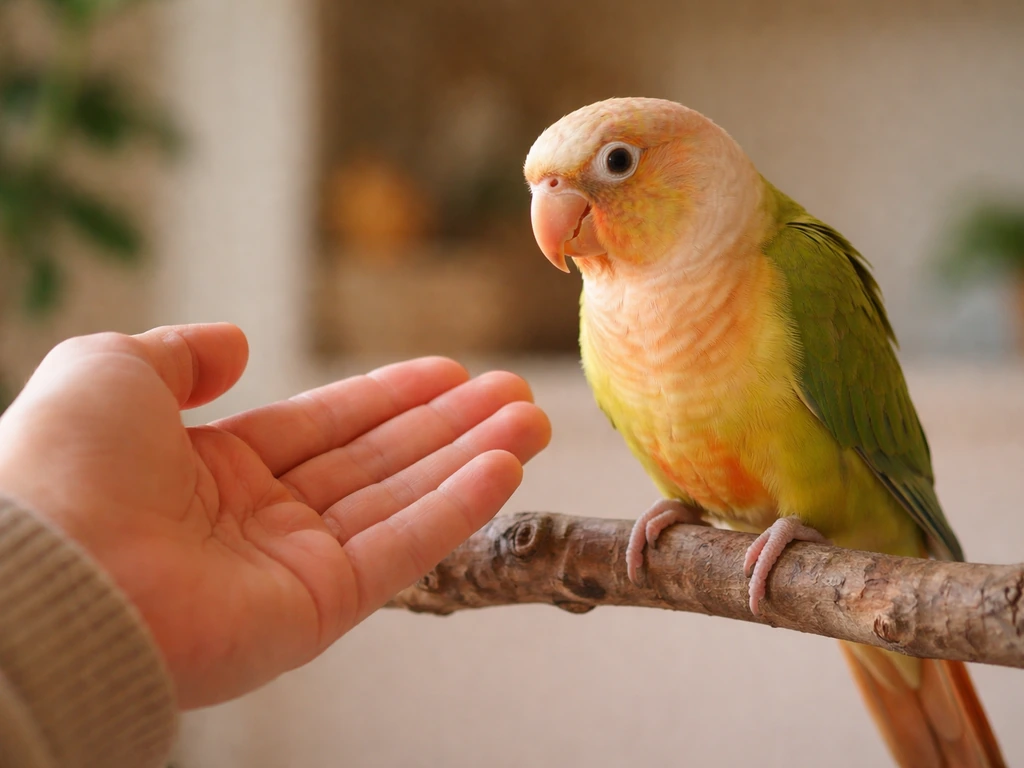
A bonded bird seeks you out. It calls when you leave the room, flies or walks toward you when you enter, relaxes its feathers and half-closes its eyes near you, and tolerates (or actively invites) touch. That consistent, voluntary closeness is the clearest signal you can look for. Imprinting can look similar to bonding, so it helps to know the specific signs to tell if a bird has imprinted on you. If your bird is doing those things regularly and calmly, you're in each other's flock.
How to Tell If Your Bird Is Bonded to You: Signs

Maya Hartwell
27 May 2026
What 'bonded' actually looks like
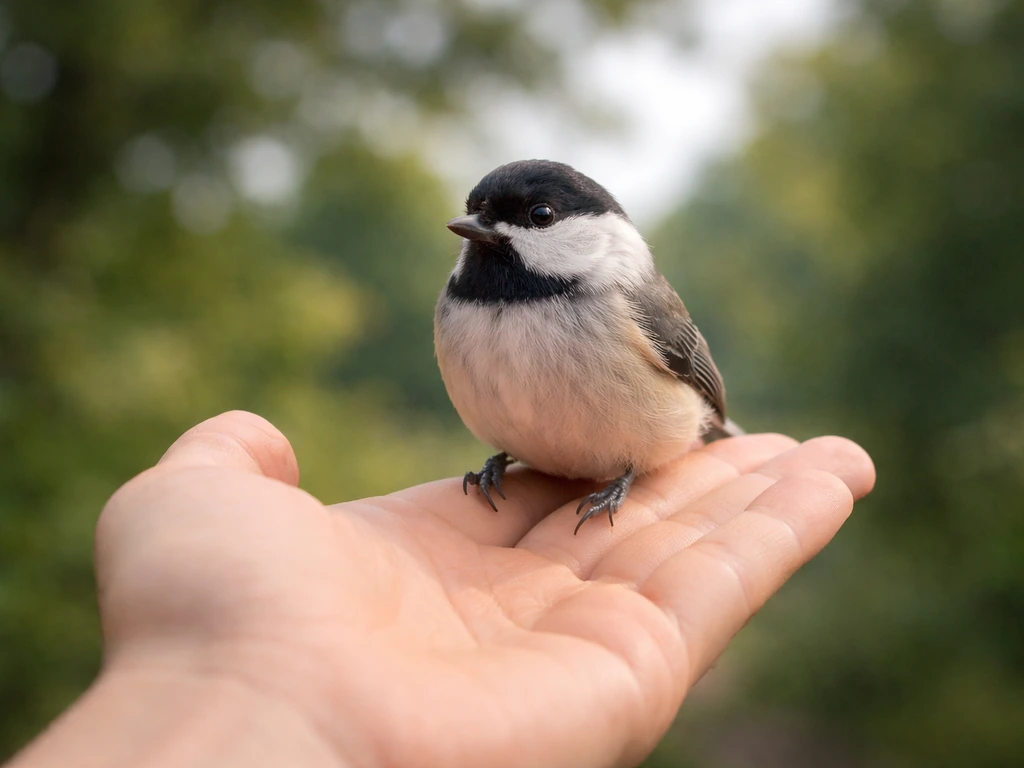
Bonding in birds is a flock concept. In the wild, birds live in tight social groups where members share contact calls, preen each other, follow each other around, and sleep within a safe distance. When a pet bird bonds with you, you become that flock. The bond isn't just the bird tolerating your presence. It's the bird actively choosing you, over and over, when it has other options.
A securely bonded bird is relaxed around you specifically. Its feathers sit smoothly against its body (not puffed stiffly, not slicked down in alarm), its crest (if it has one) is in a neutral or gently raised curious position, and it moves toward you rather than away. You'll notice it seeks physical contact on its own terms, not just accepts handling when it has no choice. That distinction matters more than almost anything else.
Quick bond checklist: proximity, trust, and touch
Run through these observable behaviors. If you are wondering whether your bird truly trusts you, look for a consistent pattern of relaxed approach, voluntary closeness, and calm contact over time. The more your bird does consistently and voluntarily, the stronger the bond:
- Moves toward you or lands on you when given a choice to go elsewhere
- Contact calls (persistent calling, whistling, or chirping) when you leave the room and quiets down when you return or answer
- Greets you when you enter with a soft flock-call whistle or relaxed chirping, not an alarm call
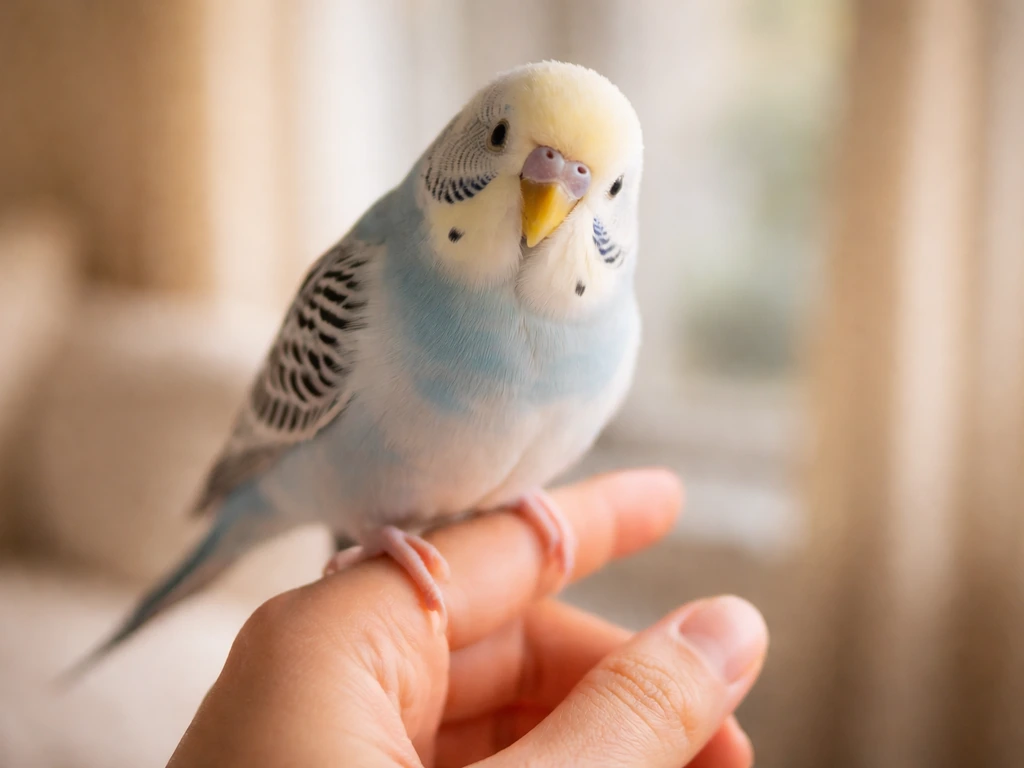
- Steps up onto your hand without hesitation, without lunging or biting first
- Allows or requests head scratches, accepting touch around the head and neck
- Relaxes visibly in your presence: smooth feathers, half-closed or slow-blinking eyes, soft chattering
- Follows you around a room or tracks your movement with calm, curious attention
- Preens or grooms you (nibbling your hair, fingers, or clothing gently)
- Offers regurgitation (in some species, especially parrots and lovebirds, this is a significant bonding gesture)
- Falls asleep or grinds its beak near you (beak grinding in budgies and cockatiels signals deep comfort)
- Tolerates your presence during vulnerable moments like eating, bathing, or napping
One or two of these behaviors appearing occasionally doesn't lock in a bond. What you're looking for is a pattern: multiple behaviors showing up consistently, especially the voluntary approach and relaxed body posture. A bird that only steps up because it wants to get to a perch across the room isn't demonstrating trust; it's using a tool. A bird that steps up and then leans into your hand, that's different.
Vocal, social, and routine signs of attachment
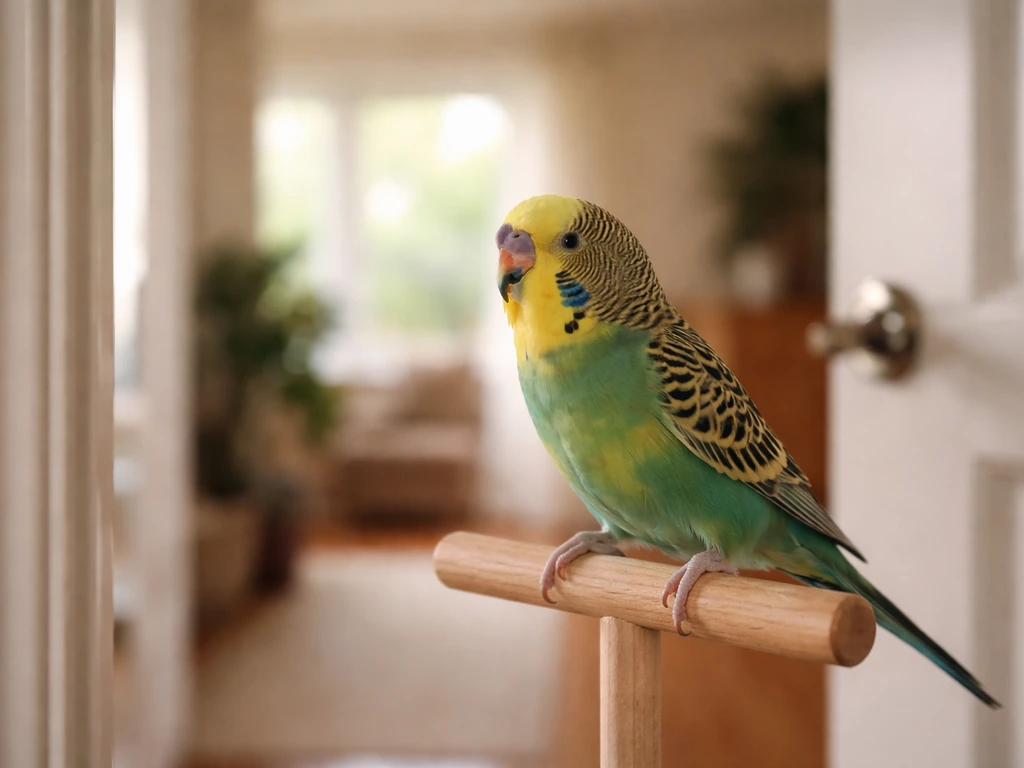
Contact calling is one of the most reliable vocal signs of attachment. If your bird calls persistently when you're out of sight and settles down once you're back in the room (or answer with a whistle or word), it's tracking you as its flock mate. This is social behavior, not anxiety, as long as the bird is calm and interactive once you reappear. If you want a quick way to confirm how to tell if a bird likes you, look for consistent, voluntary approach plus relaxed body language and specific social signs like contact calling or preening directed at you. Responding to your bird's contact calls actually reinforces the bond and builds trust, so don't ignore them.
Routine-based attachment is another strong sign. Bonded birds often synchronize their activity to yours. They get active when you wake up, calm when you wind down, and vocalize in patterns tied to your comings and goings. Soft chatter, quiet singing, or beak grinding (especially in budgies and cockatiels) while you're nearby signals deep comfort. Frequent, relaxed chirping and gentle whistling generally indicate engagement and ease, not stress.
Social preening directed at you is meaningful across species. In natural flock dynamics, birds only preen flock members they trust. When your bird nibbles your eyebrows, works through your hair, or gently chews your fingers without clamping down, it's offering you flock-mate status. Allopreening like this, paired with calm body language, is one of the most consistent indicators of genuine bonding across parrot species, lovebirds, and finches alike.
Bond look-alikes: fear, stress, hormones, and tolerance
This is where things get tricky. Several behaviors can look like bonding from the outside but are actually driven by fear, hormonal surges, or simple tolerance. Knowing the difference protects both you and your bird.
Fear and stress
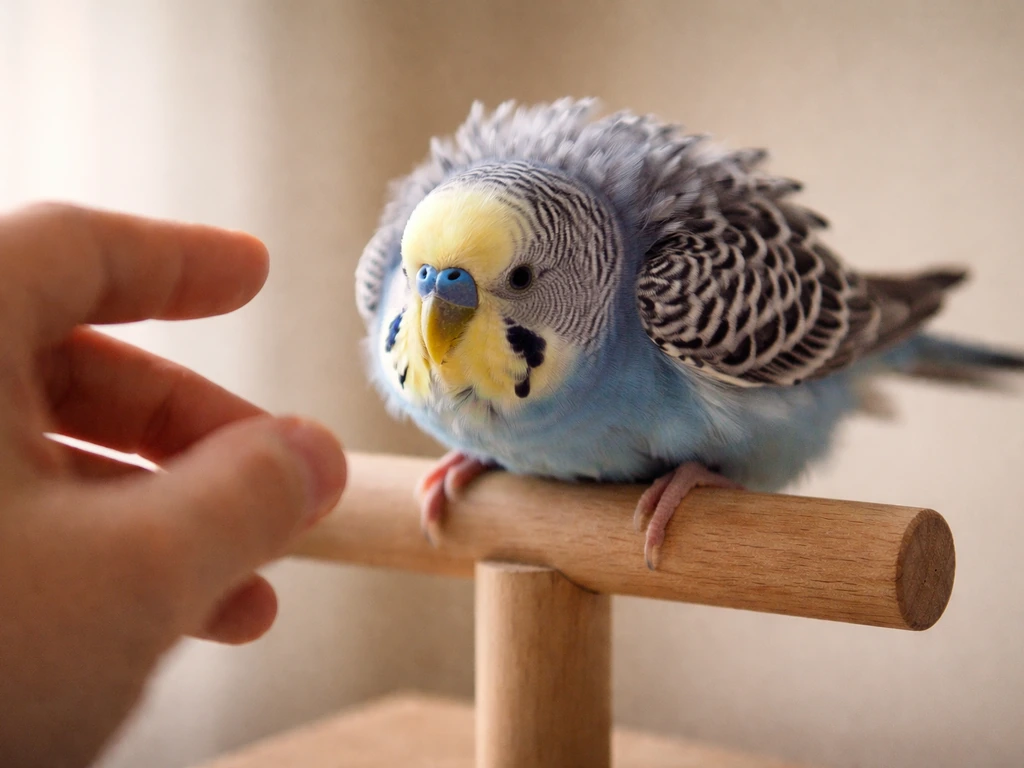
A frightened bird can stay close to you because you're the least-scary thing in the environment, not because it's attached to you. Fear-driven closeness is usually tense: feathers slicked flat, eyes wide and unblinking, weight shifted back, or wings held slightly away from the body. Stress signs also include excessive screaming or alarm calls (different from a relaxed contact call), hissing, panting, a fanned tail, raised head feathers combined with rigid posture, pacing, repetitive head-shaking, and in severe cases, feather destruction. If your bird shows multiple of these alongside apparent closeness to you, it may be stressed rather than bonded.
Sudden biting from a previously calm bird deserves special attention. New biting can be pain or discomfort-related, not a bonding breakdown, and warrants a veterinary check before you assume it's a behavior problem. Similarly, feather plucking can have medical roots, including respiratory infections, kidney or liver issues, or tumors causing discomfort, so don't interpret feather destruction solely as an emotional sign without ruling out physical causes first.
Hormonal and territorial behavior
Hormonal birds can appear intensely bonded but are actually in a breeding-drive state. Signs include nest-seeking, shredding materials, guarding a spot in the cage or a room, vent-rubbing, tail-fanning, regurgitation toward you (offered constantly and persistently, rather than occasionally), increased screaming, and a general spike in reactivity and biting. The bird may follow you obsessively or become aggressively territorial about you, treating you less like a flock mate and more like a mate to be defended. This can feel flattering but it isn't stable bonding. Hormonal behavior typically cycles with seasons and lighting and often diminishes when environmental triggers (long light hours, nesting spots, certain textures) are reduced. If hormonal behavior becomes extreme or unmanageable, a reputable avian vet assessment is the right move.
Mere tolerance
Some birds accept handling because they've learned resisting doesn't work, not because they trust you. Tolerance looks like stepping up without biting but immediately moving away, allowing touch but showing tension in body posture (feathers tight, leaning away, eyes darting), and not seeking you out when given freedom. If your bird steps up during training, reward immediately, and avoid common issues like sessions that are too long or training when the bird is tired, hormonal, or frightened stepping up without biting. There's nothing wrong with a tolerant bird, and tolerance can grow into trust over time, but don't mistake it for a secure bond.
| Behavior | Bonded | Fear/Stress | Hormonal/Territorial |
|---|---|---|---|
| Closeness to you | Voluntary, relaxed | Tense, no other option | Obsessive, possessive |
| Vocalization | Soft contact calls, chattering | Alarm calls, screaming, hissing | Loud, persistent, increased screaming |
| Body posture | Smooth feathers, soft eyes | Slicked feathers, rigid, panting | Puffed up, tail fanned, reactive |
| Preening you | Gentle, calm | Absent | Persistent, regurgitation-paired |
| Step-up | Easy, willing | Reluctant, fearful | May comply then bite |
| Following you | Curious, relaxed | Absent or panicked | Driven, guarding |
| Touch response | Leans in, relaxes | Leans away, tense | May invite then bite suddenly |
What you can do today to build or strengthen the bond
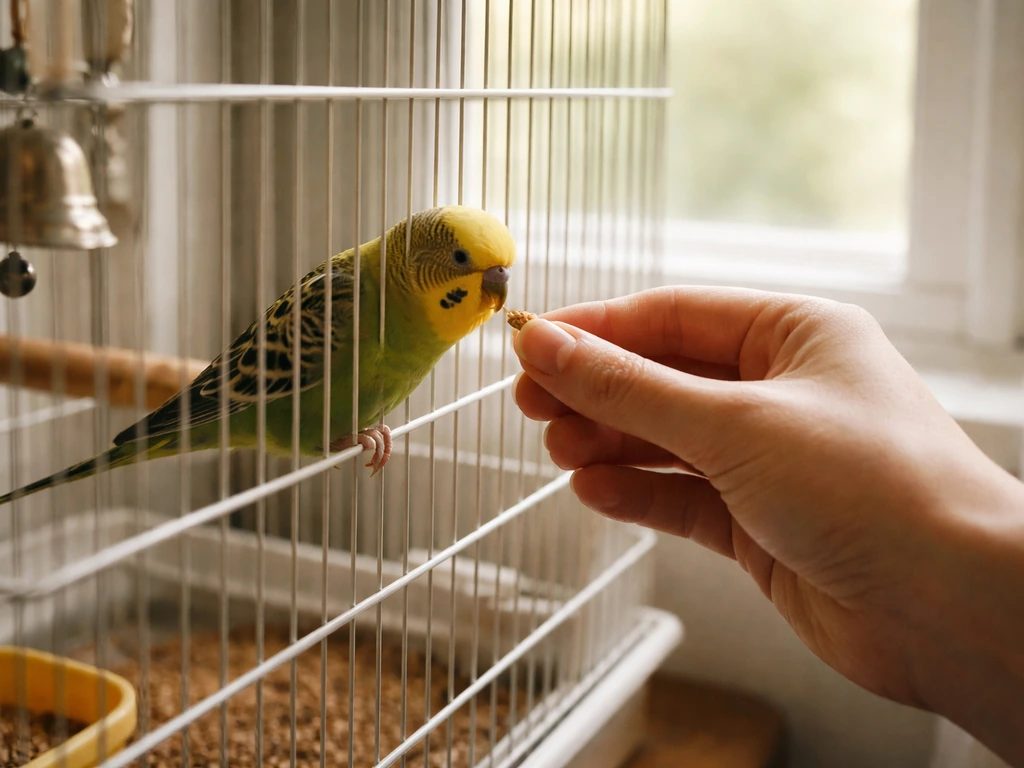
Bonding isn't something that happens to you passively. It's something you build through consistent, low-pressure interactions. Here are practical steps you can start right now, regardless of whether you have a new bird, a shy bird, or one that's been with you a while but feels distant. You can use the same idea by cueing calmly and rewarding any voluntary approach, so your bird gradually learns how to come here on purpose how to tell a bird to come here.
- Respond to contact calls. When your bird calls for you, whistle or speak back before you enter the room. This teaches the bird that calling you works and that you're reliable.
- Practice short step-up sessions. Keep sessions under five minutes. Offer your hand slowly at perch height, wait for the bird to place weight on it voluntarily, and reward immediately with a favorite treat or verbal praise. Don't force it. Reward even one foot, then build from there.
- Sit near the cage without demanding interaction. Reading, working, or just being near the bird without trying to handle it builds a baseline sense of safety. Many shy birds start engaging when they realize your presence doesn't always mean handling.
- Use slow blinks and calm, quiet voices. Slow eye blinks signal safety in bird body language. Practice giving them back. Keep your voice low and steady near the bird.
- Offer enrichment from your hand. Hand-feeding treats, offering foraging toys, or presenting a new food item creates a positive association with you specifically.
- Read and respect stress cues. If the bird moves away when you approach, back off. A bird that chooses to leave and then chooses to return later is building trust. A bird that can't escape your approach isn't.
- Establish a consistent daily routine. Predictable schedules (same wake time, same feeding window, same out-of-cage time) reduce ambient stress and make you a source of safety rather than unpredictability.
- Avoid force during hormonal periods. If your bird is in a hormonal cycle, reduce handling pressure, limit nesting opportunities, and manage lighting to shorter daylight hours rather than pushing through with training.
If your bird doesn't seem bonded yet, the most important thing is patience paired with environmental basics. A stressed or shut-down bird needs time to settle (sometimes weeks in a new home) before it can begin forming attachment. Think of it as letting the bird decide you're safe before asking it to decide you're preferred.
How bonding changes as trust grows over time
Early in a relationship, even a bird that will eventually become deeply bonded may show very little. It might watch you from a distance, accept food without coming close, or step up stiffly without leaning in. This is normal. Trust builds in layers, and the timeline varies enormously by species, individual history, and environment. A hand-raised parrot may show bonding behaviors within days. A rescue bird or wild-caught bird may take months.
The trajectory to watch for goes roughly like this: first, the bird stops fleeing when you approach. Then it begins tracking your movements with curiosity rather than alarm. Then it accepts food from your hand. Then it steps up willingly. Then it starts initiating contact, calling for you, leaning toward you, falling asleep near you. Each stage is a real milestone. If your bird has moved from stage one to stage three, that's genuine progress even if it hasn't reached the preening-your-hair phase yet.
Bonding can also change direction. A previously bonded bird may become distant after a move, a new household member, illness, or loss of a companion. That shift is information, not failure. It usually means something in the environment or the bird's health needs attention. Sudden behavior changes always warrant a vet check first, then a look at environmental stressors, before assuming the bond is simply broken.
Single-person households tend to produce tighter individual bonds, while multi-person households may produce a bird that distributes its attachment more broadly, or one that selectively bonds to one person and becomes territorial toward others. Neither is inherently better, but knowing your household setup helps you understand what you're seeing.
When to bring in professional help
If you've been working patiently and your bird still shows signs of extreme fear, feather destruction, persistent screaming, or self-injury, those aren't bonding problems to solve with more patience and treats. They're welfare concerns. An avian vet is the first call: medical causes for behavior changes are common and need to be ruled out before any behavioral intervention. After a medical clear, a certified parrot behavior consultant or avian trainer can help you design a structured plan specific to your bird's history and needs.
The spiritual layer: what these bonding behaviors have meant across cultures
For those of you who experience bird relationships through a spiritual or symbolic lens, the behaviors described above carry a long history of meaning across traditions. You don't have to choose between the practical and the poetic. Both can be true at once.
In many indigenous and folk traditions, a bird that persistently follows a person or seeks closeness is interpreted as a messenger or guide: an animal ally that has chosen to accompany a specific soul. Celtic tradition in particular holds birds as messengers between worlds, their voluntary approach to a human seen as a deliberate crossing of the threshold between the natural and the spiritual. When a bird lingers near you, seeks eye contact, or calls specifically for your presence, those who hold these worldviews read it as intentional communication, not coincidence.
In biblical imagery, birds appear repeatedly as carriers of divine attention. The dove returning to Noah, the sparrow held in God's sight, the eagle as a symbol of renewed strength: the closeness of a bird to a person has long been read in Judeo-Christian tradition as a sign of protection or guidance. When your own bird preens you or rests quietly against you, some would say it reflects that same ancient relationship: creature and caretaker, each choosing the other.
In Eastern and metaphysical traditions, the slow blink of a bird in your presence is sometimes likened to a trust gesture that mirrors meditative openness: a quiet moment of shared stillness. The contact call, that persistent note sent out when you leave the room, echoes themes found in many spiritual traditions about the call toward connection, the tether between beings who have recognized each other.
Whether you hold these frameworks literally, metaphorically, or simply find them beautiful, the behaviors themselves don't change. A bird that chooses you, again and again, is doing something remarkable regardless of how you name it. What might you take from that kind of choosing? That's worth sitting with.
FAQ
Can a bird be bonded to me if it does not like being touched?
Yes, but it should be paired with relaxed, voluntary cues. If your bird leans in, half-closes its eyes, and initiates contact without tense signals, that can be comfort and bonding. If the bird presses too hard, avoids your hands afterward, or shows fear signs (wide eyes, rigid posture), it may be tolerating closeness rather than choosing you.
My bird seems affectionate when I’m around but won’t step up. Is it still bonded?
Look for “choice” behaviors, not just routines. A bonded bird may still avoid hands, yet it will often approach when you are present, follow you with curiosity, offer contact calling, or preen you indirectly (like nuzzling your clothing). If it only perks up when you are away or acts the same when you leave and return, true bonding may not be established.
How long should I wait before I’m sure my bird is bonded to me?
Track the pattern over at least 2 to 4 weeks, since early bonding can look inconsistent. Make a simple note each day: voluntary approach (yes or no), calm body posture, contact calling, and any targeted social behavior like allopreening. A bond is more likely when multiple categories improve together and stay consistent, not when one sign appears randomly.
Why does my bonded bird seem distant sometimes, even if nothing changed?
Bonding depends on context. A bird can be bonded but still act distant during noisy guests, strange smells, or after schedule changes, or it may “switch attention” to a cage mate. If the bird’s behavior returns to calm approach and contact-seeking after the environment settles, that usually indicates bonding rather than a broken bond.
In a household with multiple people, can a bird be bonded to more than one person?
Yes, and it is common. Many birds bond more strongly with the person who provides predictable, low-pressure positive interactions (hand-feeding opportunities, gentle talk, consistent cues for training, and respectful body language). In multi-person homes, the bird may appear bonded to everyone but show true choice behaviors toward one person, including follow-initiation and targeted contact calls.
What if my bird is very close to me but also plucks or seems unwell?
If you are seeing repeated feather destruction, sudden aggression, persistent screaming, or self-injury, treat it as a welfare issue first, not a bonding measurement. Before concluding “my bond is failing,” arrange an avian vet visit and ask whether there are pain, respiratory, hormonal, or skin causes that could be driving the behavior.
Can moving the cage or changing the home environment make a previously bonded bird detach?
Changing bedrooms, moving the cage, adding nesting-like items, changing lighting hours, or introducing a new pet or household member can all temporarily shift attachment. When closeness drops after a specific trigger, consider it information about stress or hormonal activation. Once the environment is stabilized and any health issues are ruled out, many birds gradually re-establish choice behaviors.
How should I handle training or rewards if I want to strengthen bonding without overwhelming my bird?
Use “rewards for consent.” If your bird approaches or lets you touch briefly while staying relaxed, reward immediately with a favorite food or gentle attention, then stop before the bird has to tolerate discomfort. If the bird stiffens, flies away, or becomes frantic, reduce pressure, increase distance, and try smaller steps so you reinforce voluntary approach rather than compliance.
How can I tell if preening by my bird is bonding or just grooming behavior?
Watch for whether contact happens on purpose versus as a trap. Bonded preening or nuzzling tends to be gentle and paired with calm body language. Grooming that looks like anxious grabbing, frantic chewing, or sudden biting during otherwise high arousal can be stress or hormonal behavior, even if it seems affectionate.
Is slow blinking a reliable sign that my bird is bonded to me?
Gentle, calm “slow blinks” are often a trust cue, but they are most meaningful when the rest of the body looks relaxed and the bird keeps engaging after your blink or soft pause. A blink paired with tense posture or fear signals is more ambiguous, especially in birds that are easily startled.
Next Articles
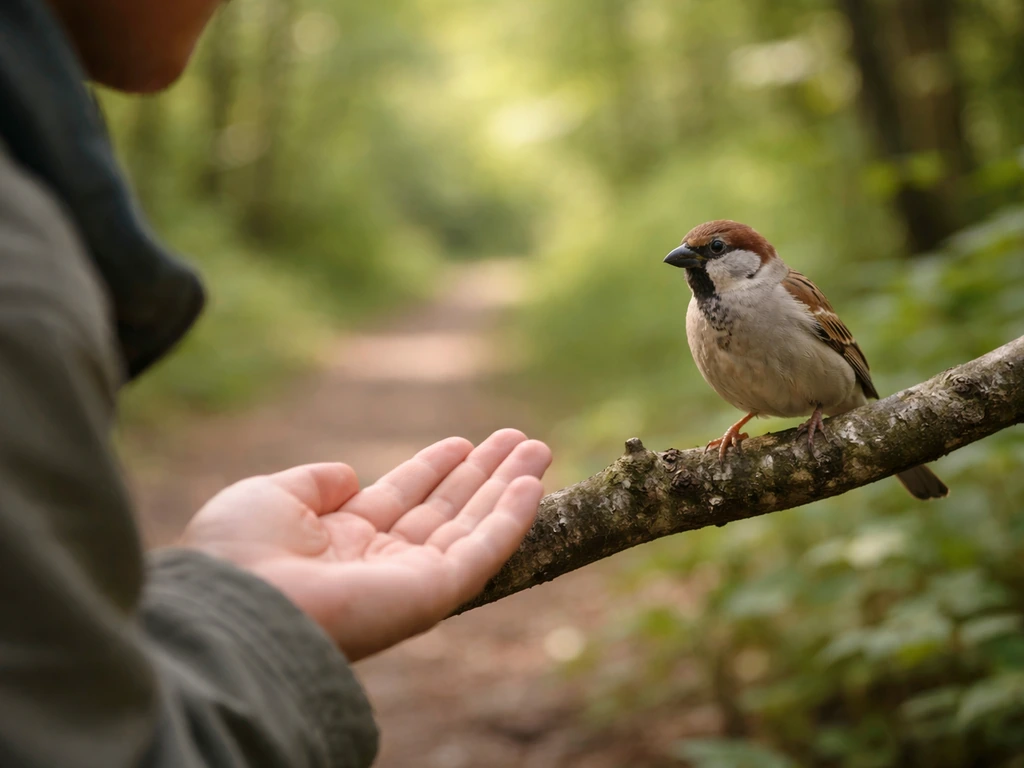
How to Know If a Bird Trusts You: Signs and Next Steps
Learn signs of trust in wild birds, plus next steps and myths to avoid fear, stress, and unsafe handling.
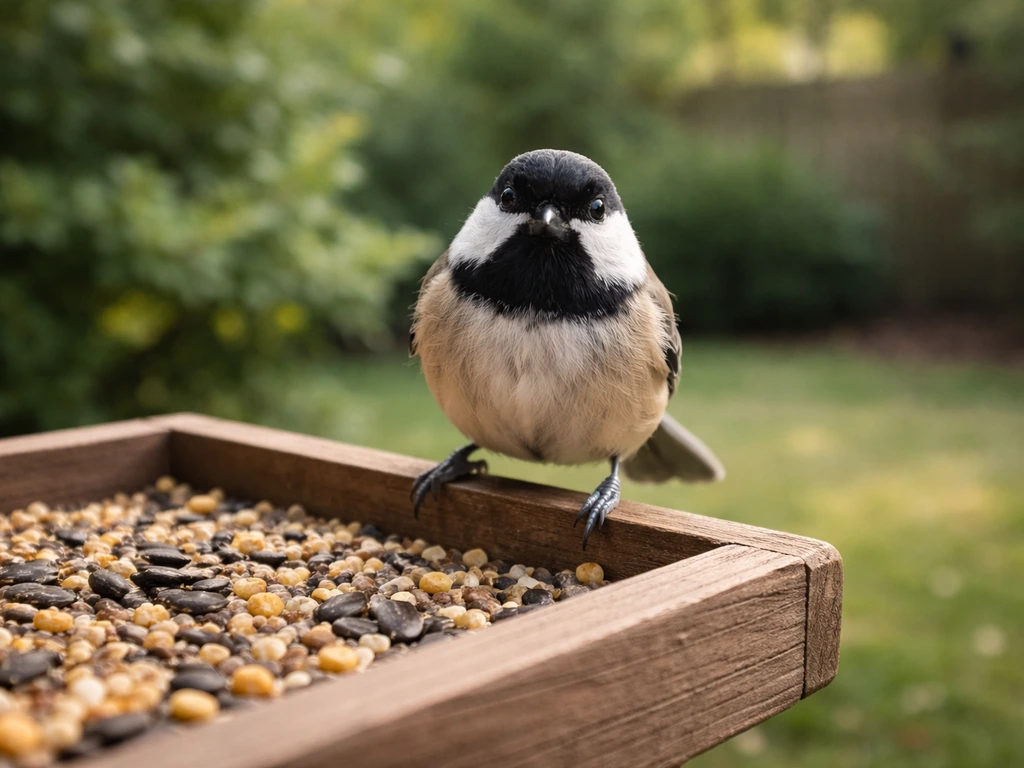
How to Tell a Bird to Come Here: Reliable Steps and Meaning
Step-by-step ways to get a bird to come now with food, voice cues, setup, and humane safety plus meaning of visits
How to Tell If a Bird Likes You: Signs and Steps
Learn signs a bird trusts and loves you, plus safe bonding steps, red flags, and optional spiritual interpretations.