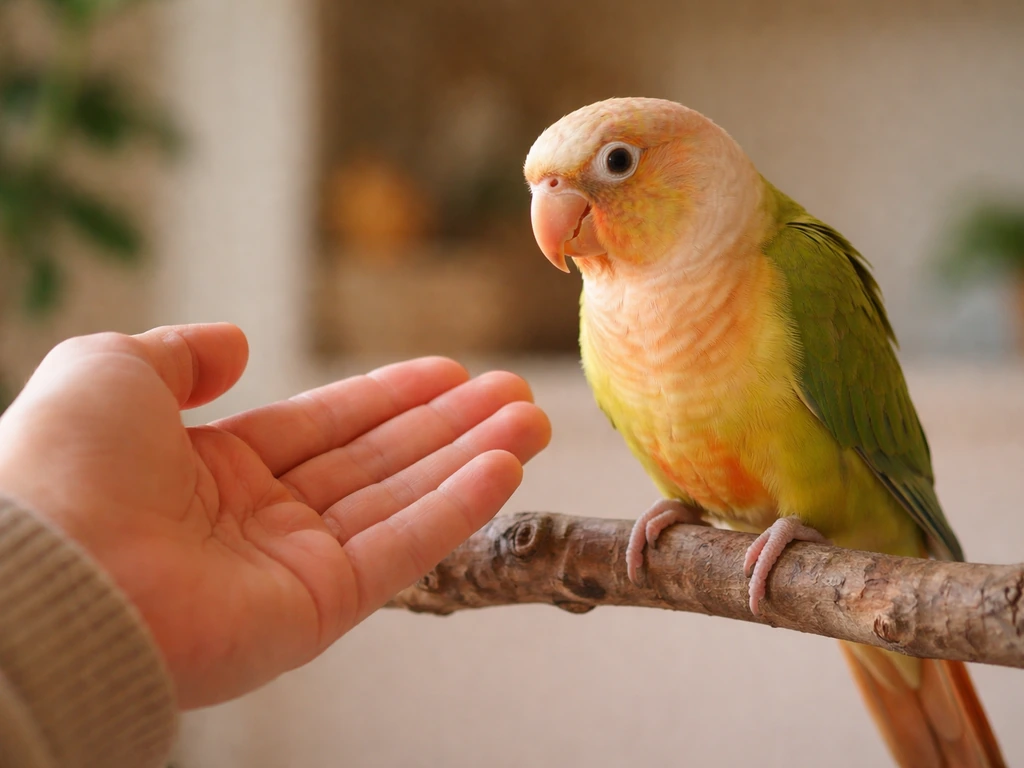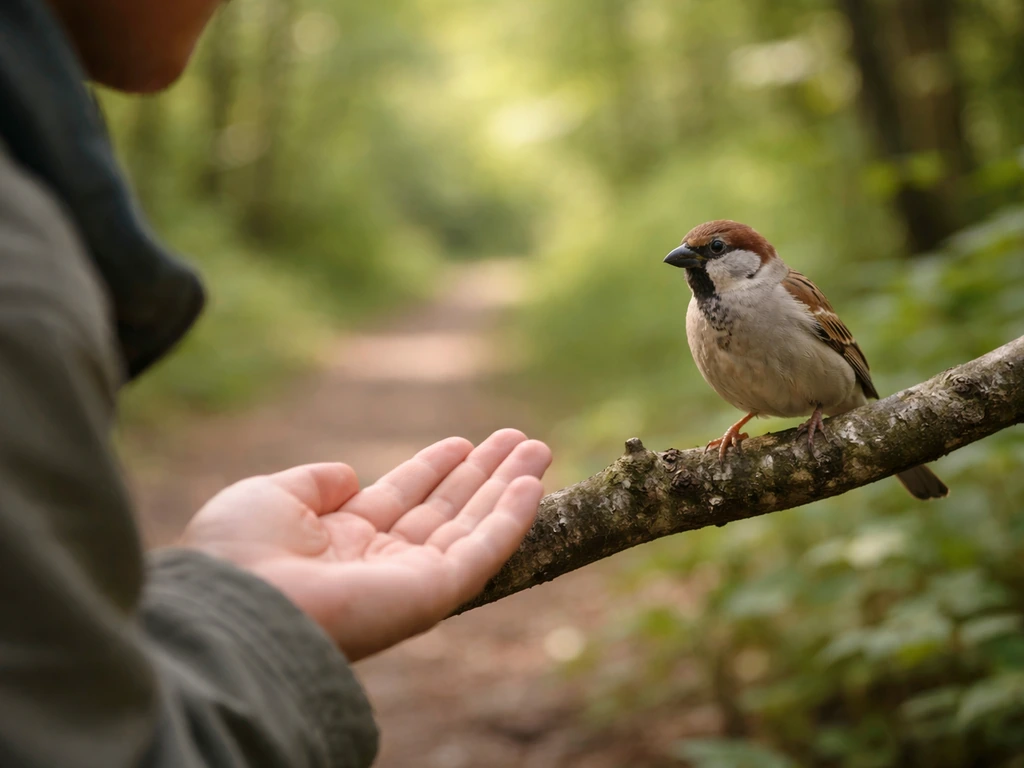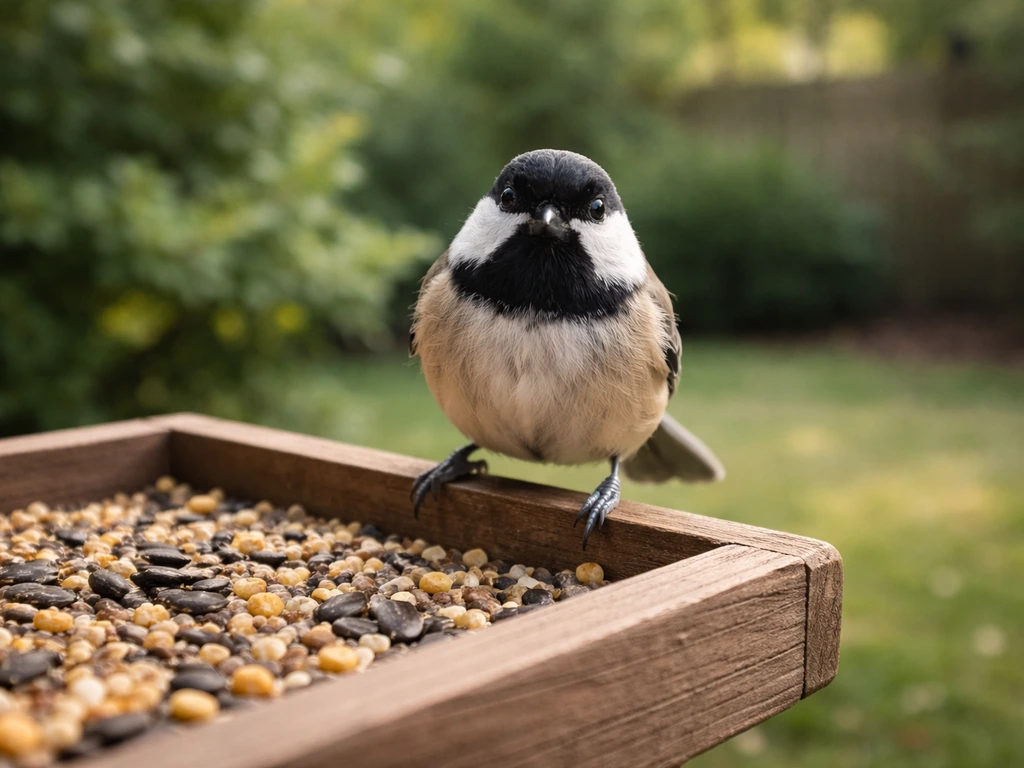
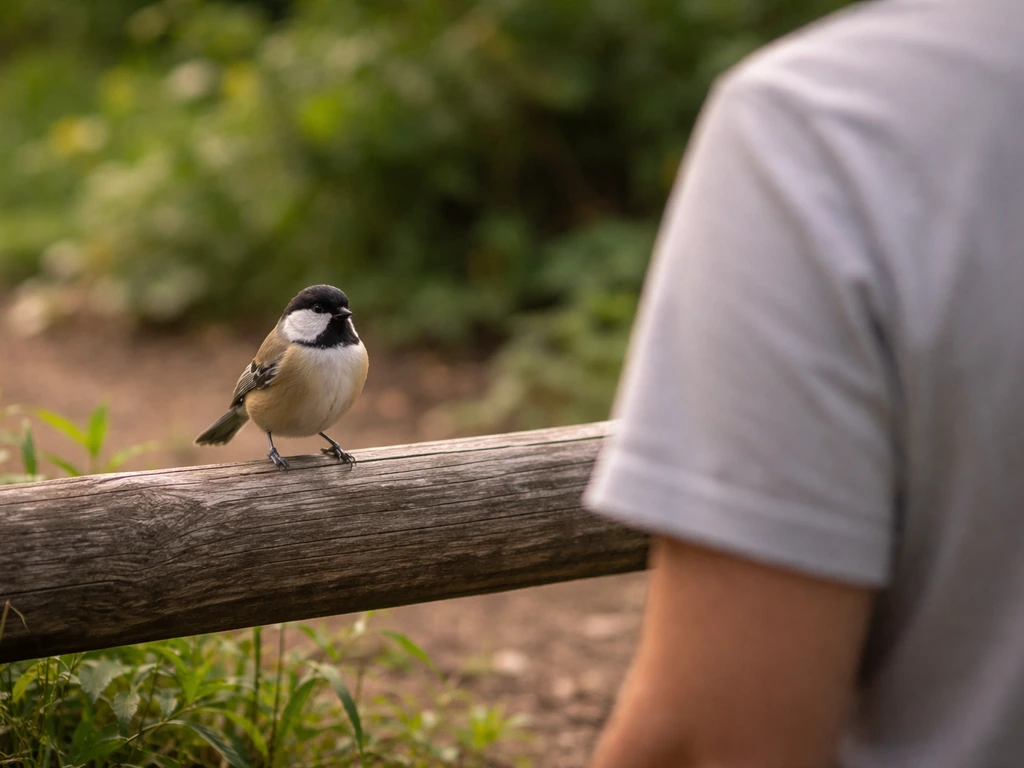
A bird is almost certainly looking directly at you if its head is angled so one eye is clearly aimed your way, its body has gone still, and it holds that posture for more than a second or two while you move. That combination of deliberate head orientation plus stillness is the clearest behavioral signal that a wild bird has registered you as the focus of its attention, not just a background feature of its environment.
How to Tell If a Bird Is Looking at You Safely

Maya Hartwell
27 May 2026
How birds actually use their vision and attention
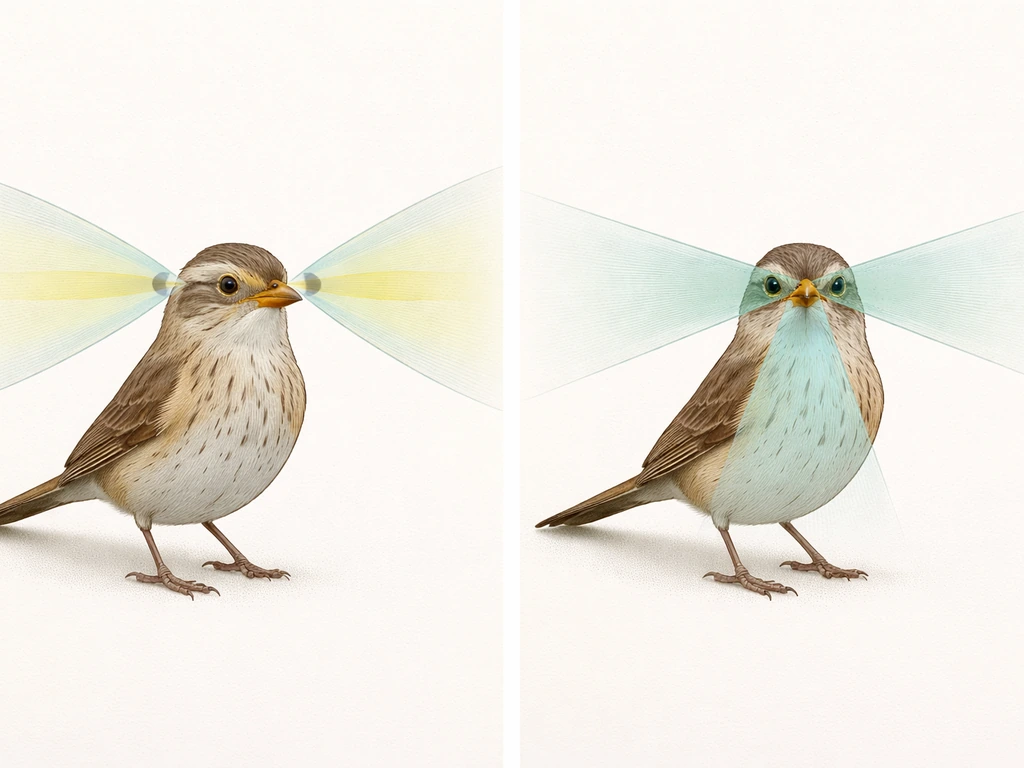
Birds don't experience the world visually the way we do. Most species have eyes positioned on the sides of their head, giving them a wide panoramic field of view but a narrow binocular zone directly in front. To look at something with real focus, a bird has to rotate its head so that one eye (or both, in forward-facing species like owls) aligns with the target. A 2022 study tracking pigeon head movements found that birds selectively orient different regions of their visual field toward targets, and those head orientations are systematic and deliberate, not random. In plain terms: when a bird turns its head to point an eye at you, that's an active choice, not an accident.
Research on lovebirds and cranes reinforces this. Gaze shifts in birds are mostly accomplished through head rotations rather than eye movements, because avian eye movement range is much smaller than ours. So the visible cue you're watching for is head pose, not pupil direction. When a crow tilts its head sideways so one eye is squarely on you, or a hawk rotates its whole head to track your walk across the yard, those are the mechanical signatures of visual fixation. blank" rel="noopener noreferrer">Some species, particularly ground-foraging birds like cranes, also use rhythmic head-bobbing specifically to stabilize their gaze during visual identification, which means a bird head-bobbing while watching you is doing exactly what it sounds like: locking on. Head-bobbing in foraging whooping cranes, paired with visual fixation, helps support detection and identification of objects by stabilizing gaze on specific targets, according to a U.S. Geological Survey publication blank" rel="noopener noreferrer">rhythmic head-bobbing.
Body language cues that say a bird is focused on you
Once you know that head orientation is the core mechanism, the specific signals become easier to read. Here are the ones worth paying attention to:
- Head angled so one eye is clearly aimed at you, held steady for more than a moment
- Full-body stillness while you move, especially if the bird was previously active (foraging, preening, calling)
- Tracking your movement: the head slowly pivots as you walk, keeping that eye-line on you
- Postural alertness: feathers slightly sleeked down, body upright or leaning forward rather than fluffed and relaxed
- Feet repositioning to face toward you without flying away
- Repeated head-tilts alternating eyes, which suggests the bird is processing you with both sides of its brain in sequence
- Reduced blinking, or intense still gaze from an owl or raptor whose eyes face forward
The single most reliable combo is stillness plus sustained head orientation. A bird that pauses what it was doing and angles an eye at you, then holds that pose while you shift position, is unambiguously tracking you. A bird that just happens to be perched facing your direction while it preens or calls is far less likely to be focused on you specifically. Context and movement response are everything.
Context matters: species, distance, and environment
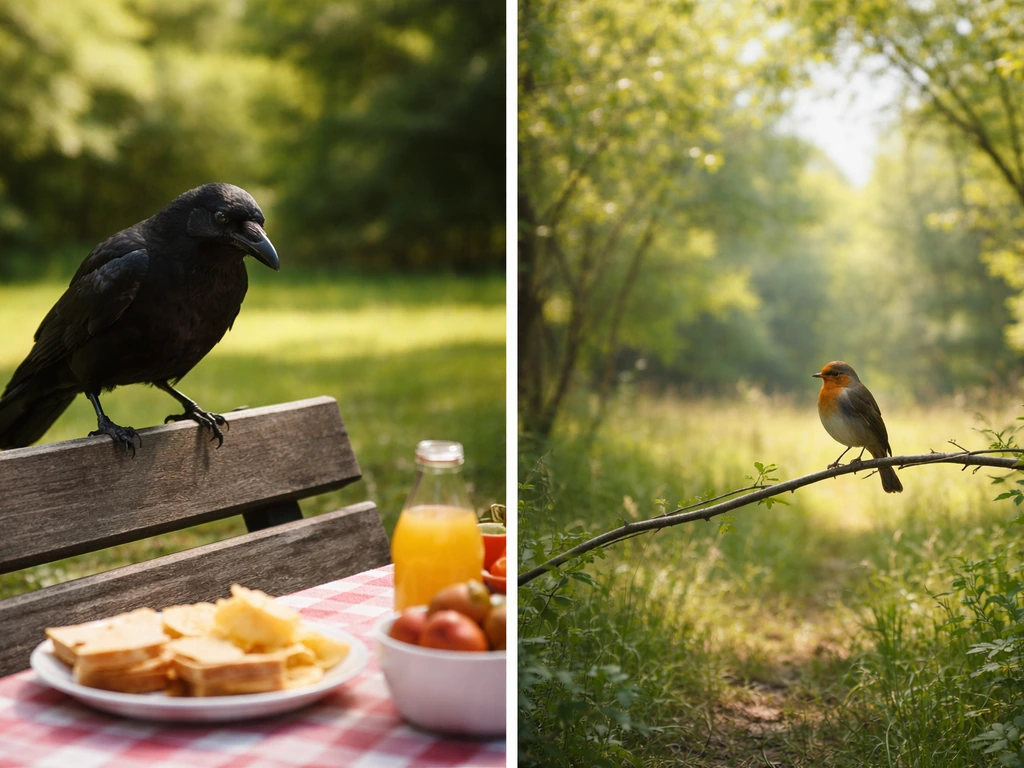
Not all birds read the same way, and the setting changes the interpretation considerably. A crow at ten feet watching you eat lunch is almost certainly focused on the food, not you personally, though the two often go together. A red-tailed hawk sitting at the top of a utility pole turning its head slowly as you pass below may simply be scanning for prey movement. But a mockingbird that dives repeatedly toward your head from a tree in late spring is absolutely focused on you, and not in a friendly way.
Distance is a useful calibrating factor. Most songbirds have a "flight initiation distance" of a few meters, meaning they'll flush when you get too close. If a bird holds its position and keeps watching as you approach within that expected flush distance without moving away, that's an unusually strong signal of focused attention. Raptors and corvids (crows, ravens, jays) are more likely to sustain deliberate observation from medium distances. Urban birds accustomed to people will often maintain eye contact in ways that rural birds of the same species won't, simply because habituation lowers alarm.
Lighting also matters practically. Birds with laterally placed eyes are harder to read in low light or backlit situations. In bright conditions, you can often see the reflective surface of the eye and tell clearly which direction it's pointed. At dawn or dusk, rely more on body posture and head angle than on eye direction.
| Species group | Typical gaze cue | Common reason for watching you |
|---|---|---|
| Corvids (crows, ravens, jays) | Sustained head-turn, alternating eye tilts, may approach | Food association, curiosity, territorial memory |
| Raptors (hawks, owls, eagles) | Full frontal or lateral head lock, minimal body movement | Prey detection, territorial scan, assessment |
| Songbirds (robins, mockingbirds) | Rapid head tilts, alarm posture, may give warning calls | Territorial defense (nesting season), food competition |
| Shorebirds and waders (herons, cranes) | Still upright posture, one-eye aim, slow tracking | Foraging focus, or you've entered a defended zone |
| Waterfowl (ducks, geese) | Head-forward posture, slow approach, may hiss | Food conditioning, territorial challenge, nest defense |
What to do once you know a bird is watching you
Your response really depends on what the bird seems to want. In most cases, the right move is calm, slow, and non-threatening. If you want to encourage a bird to approach you, the earlier cue about calm, slow, non-threatening movement is a good starting point for teaching it where to come. Avoid sudden movements, don't stare back with wide eyes (that can read as aggression to some species), and give the bird an obvious escape route by not positioning yourself between it and open space. If you want to encourage the encounter, try staying still and letting the bird close the distance on its own terms. This is especially relevant if you're watching a wild bird that seems genuinely curious rather than alarmed.
If you sense the bird is distressed or defensive, slow down and create more distance. The bird watching you while alarm-calling, bobbing aggressively, or making short feint-flights toward you is asking you to leave. Respect that, especially during spring and early summer nesting season. If the bird is watching you from a relaxed perch without vocalizing or tensing up, it's likely just assessing you, and you can observe back quietly.
A few practical next-step considerations worth keeping in mind:
- Move slowly and laterally rather than directly toward a watching bird
- Lower your profile if you want to seem less threatening (crouch slightly, avoid towering posture)
- Don't make prolonged direct eye contact with raptors or corvids, which can read as a challenge
- If small children or pets are nearby and a bird is watching intently from above (especially a hawk or owl), move them away as a precaution
- Avoid feeding a bird that's been watching you unless you're comfortable with repeat visits and possible dependence
- In nesting season, if a bird keeps watching from the same spot daily, check the area carefully for a nest before doing yard work
Is it a threat, curiosity, or just territory?
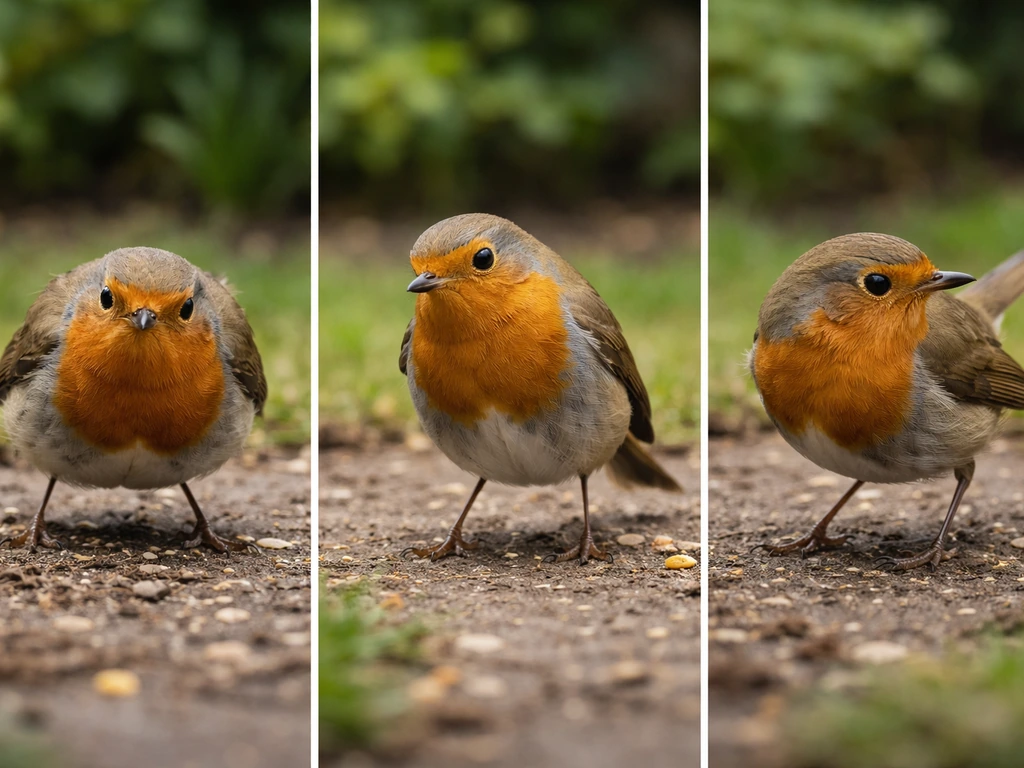
"A bird is looking at me" covers a wide range of actual bird intentions, and knowing the difference can prevent both unnecessary fear and unnecessary risks. Curiosity looks like relaxed sustained attention: the bird watches you, maybe follows at a distance or hops closer, but its posture stays loose and it doesn't vocalize in alarm. This is most common with corvids, which are genuinely intellectually curious animals known to observe humans repeatedly and even recognize individual faces.
Territorial watching is different. It tends to come with other signals: alarm calls, a particular stiff upright posture, repeated returns to the same watching spot, and often escalation if you don't move away. Mockingbirds, red-winged blackbirds, and Canada geese are classic examples. If a bird watches you and then dive-bombs or chases, you've crossed into its defended zone and it's not curious about you at all, it wants you gone.
A genuine threat posture, especially from larger birds like geese or herons, includes a lowered head, neck extended forward, hissing or loud calling, and a slow deliberate walk toward you. That's not a spiritual moment, that's a warning you should take seriously. Back away slowly, keep facing the bird, and don't run, which can trigger a chase response.
Mating-related watching is seasonal and usually involves elaborate displays alongside the gaze: puffed feathers, wing spreading, vocalizations. This is almost never directed at humans, but it can look intense and focused. If a bird seems to be "displaying" at your window, it's almost certainly seeing its reflection and responding to a perceived rival, not watching you.
The spiritual and symbolic side of a bird watching you
Across cultures and centuries, a bird locking eyes with a person has never been considered a mundane event. It's worth sitting with that for a moment, separate from all the behavioral science above. Many traditions treat a bird's deliberate gaze as a kind of message, a moment of contact between the ordinary world and something less easily explained.
In Celtic traditions, birds were considered messengers between the living and the spirit world. A bird that pauses and watches you, especially a crow, raven, or robin, was often interpreted as a soul or ancestor making contact. In many Indigenous North American traditions, sustained attention from a bird (particularly eagles, hawks, or owls) is understood as a sign that you're being seen by spirit forces, or that a message relevant to your life is present if you're willing to receive it. Eastern traditions, particularly in Shinto and some Buddhist-influenced cultures, treat birds near the home as auspicious visitors carrying energy from unseen realms.
From a biblical perspective, birds are repeatedly used as vessels of divine attention and care. The image of God watching over people "like a bird over its young" is woven through both the Old and New Testaments, and moments of unusual bird behavior have historically been interpreted as reminders of that watchful presence. If a bird holds your gaze in a moment when you're asking for guidance or carrying grief, many readers of these traditions would not dismiss that as coincidence.
In a more metaphysical or introspective framing, some people treat a bird's sustained gaze as a kind of mirror: an invitation to ask what you're being asked to notice. Are you being called to slow down? To look more carefully at something in your life? To trust a direction you've been second-guessing? The bird, in this lens, isn't necessarily a supernatural agent but a natural world event that arrives at a meaningful moment and invites reflection.
What you make of the symbolic dimension is entirely personal. You don't have to choose between "it was just a curious crow" and "it was a message from beyond." Both can be true in their own registers. The practical reading helps you respond safely. The symbolic reading helps you sit with the experience and find meaning in it. Neither cancels the other out.
This question of what a bird's attention toward you means is closely connected to related encounters worth thinking about: whether the bird seems to like or trust you specifically, whether it keeps returning, or whether it has started behaving in ways that suggest a deeper bond is forming. Those questions carry their own behavioral tells and their own symbolic weight, and they're worth exploring if a bird's gaze has left you wondering about what kind of connection might be forming how to know if a bird trusts you. If you're trying to figure out whether the bird seems to like or trust you specifically, you can also use this guide on how to tell if a bird likes you as a related next step. Those questions carry their own behavioral tells and their own symbolic weight, and they're worth exploring if a bird's gaze has left you wondering about what kind of connection might be forming.
So the next time a bird angles an eye your way and holds the look: you now know how to read the body language, respond appropriately, and decide for yourself what it might mean beyond the biology. What does this moment feel like to you? That question might be the most useful one of all.
FAQ
Can a bird look like it’s staring at me even if it isn’t actually focused on me?
Sometimes you are seeing “direction” that is only apparent. In backlight or glare, a bird’s head angle can look like an eye is aimed at you even when it is tracking something behind you (for example, a branch movement). A quick check is to subtly shift sideways while keeping your eyes on the bird, if the head orientation follows your motion, it is more likely true attention rather than a coincidental perch angle.
How long does a bird have to keep its gaze for it to count as “looking at me”?
A good rule is to read the posture across time, not a single moment. One second of eye alignment can happen during general scanning or calling. Evidence of “looking at you” is when the head stays oriented with minimal body movement for several seconds and the bird adjusts to your slow changes in position.
Do owls and other birds with dramatic head movement follow different rules for interpreting gaze?
Yes, especially in species with very upright or mobile necks. Owls can rotate their heads far and sharply while still hunting or surveying, and that can feel like direct eye contact. If the body is otherwise relaxed and the bird is not crouched, stalking, or hidden in a hunting posture, it is more likely general observation than an attack intent.
What’s the safest way to figure out if I’m too close without causing stress?
If you suspect the bird is focused because you are in its “flight initiation distance,” do not test it by approaching closer repeatedly. Instead, stop moving, create distance, and watch whether it flushes. If it does not immediately retreat while you remain still, that supports curiosity or assessment; if it does retreat when you resume motion, you were likely within its alarm threshold.
How can I tell the difference between a bird staring at me and a bird just preening or feeding while facing me?
In many birds, preening, feeding, or calling can include frequent head turns, which can mimic attention toward you. The practical distinction is whether the bird interrupts its activity to reorient and then becomes still. If it keeps working with only occasional glances, it is often scanning broadly rather than targeting you.
If the bird keeps turning its head away and back, does that still mean it’s watching me?
Darting eye contact can be misleading. Birds may visually reacquire you in quick head turns as you move, but then they look away to resume a task. “You are the focus” is more strongly suggested when the bird holds the head orientation steady rather than flicking its head rapidly then returning to normal behavior.
Do birds in cities interpret my presence differently than birds in the wild?
Yes. Habituated urban birds can keep head orientation and “eye contact” longer because their alarm response is reduced. Even then, watch for context cues like body tensing, abrupt stance changes, repeated alarm calls, or sudden increases in distance. Those are the signs that habituation is being overridden.
What should I consider if a bird keeps staring at me through a window?
If you are indoors near a window, a “bird looking at you” could be about your reflection. Signs include repeated turning toward the glass, wing-flicking or display posture, and repeated approach to the same point on the window. A safer interpretation is to treat it like territorial or reflection-driven behavior, then reduce the reflection (close blinds or cover the curtains).
What are the key signs that the bird is defensive or territorial, not just curious?
If the bird shows repeated feints toward your path, dives, or escalates after you do not retreat, assume territorial defense rather than harmless curiosity. The recommended move is to move away slowly and give it a new line of retreat, do not run, and avoid placing yourself between the bird and open escape space.
If a bird keeps coming back, does that mean it likes or trusts me specifically?
A reliable follow-up is to look for changes in distance preference over multiple encounters. If the same bird returns to watch when you are around and its posture stays loose, that suggests assessment or curiosity. If the bird becomes more aggressive each time, it suggests a defended zone or learned alarm, and you should keep more distance going forward.