A talking bird in your dream is one of the most striking dream images you can have, and across nearly every interpretive tradition, it points to the same core theme: a message is trying to reach you. Whether that message comes from your own subconscious, a spiritual guide, or your intuition working overtime, the bird chose words, and that matters. The species, what it said or implied, the tone it used, and where the dream took place all shift the meaning, so the goal here is to help you decode the specific dream you actually had, not just give you a vague answer. This helps answer the bigger question of what seeing a bird in your dream mean for you.
Talking Bird Dream Meaning: Messages, Omens, and Practical Insights

Maya Hartwell
7 Jun 2026
What it means when birds talk in dreams
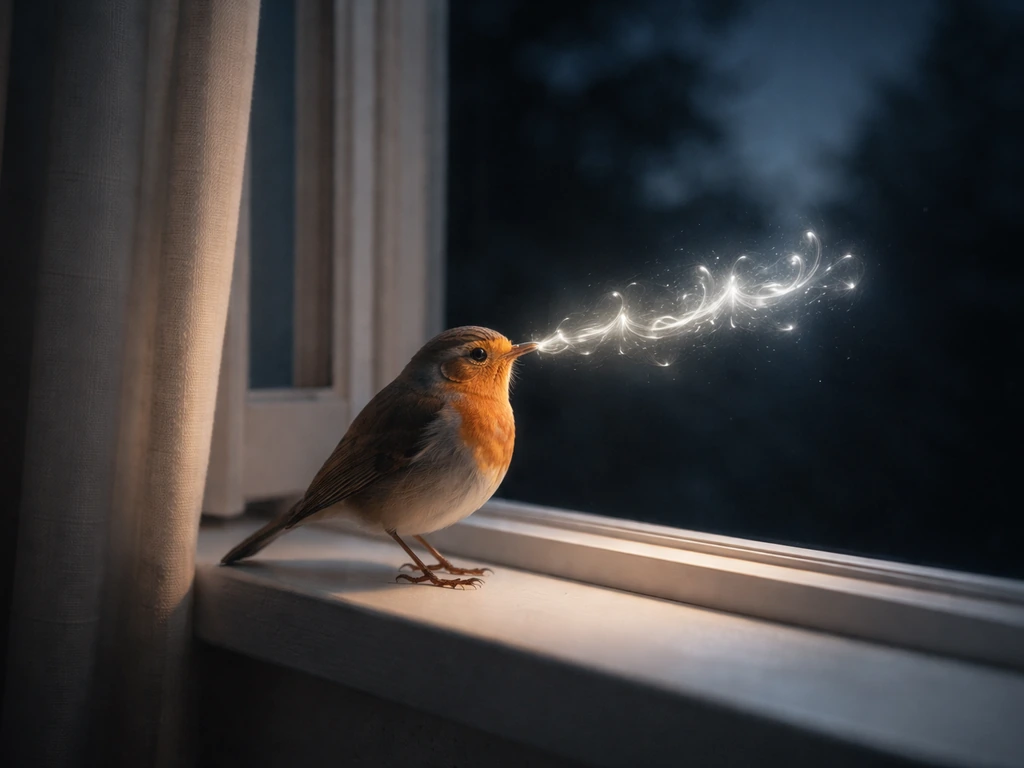
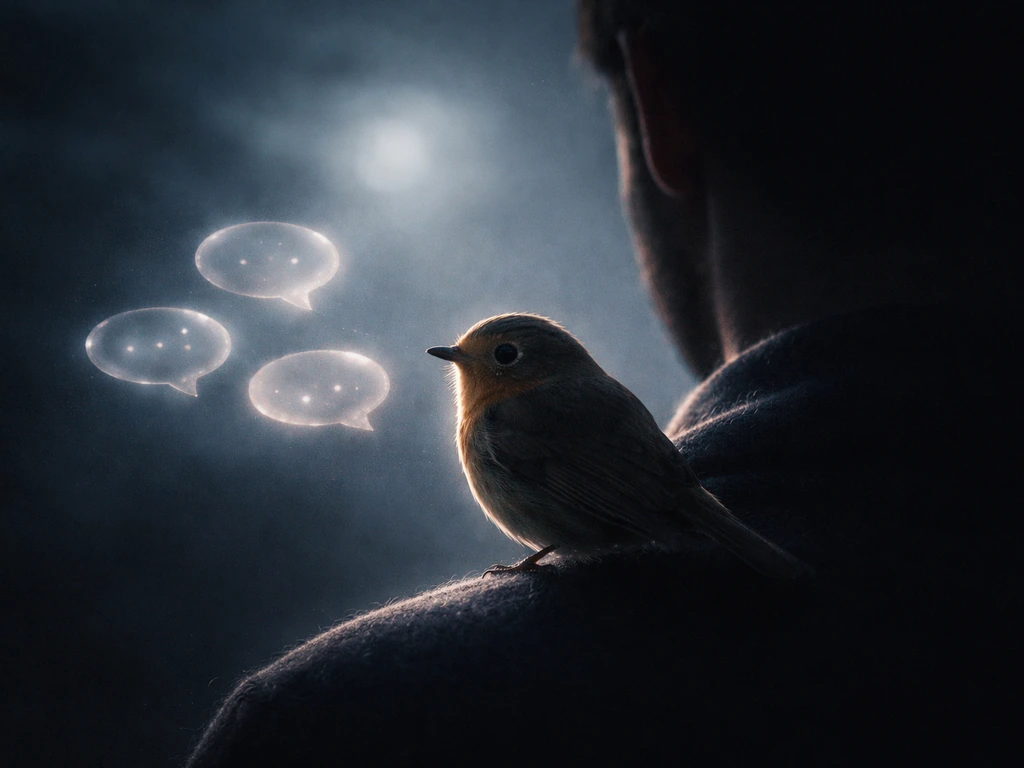
Birds occupy a special place in dream symbolism precisely because they exist between worlds. They move through air, they nest on earth, and across dozens of cultures they carry messages between the human and the divine. When a bird speaks in a dream, that bridge becomes explicit. The bird is no longer just a symbol passing through your dreamscape. It is actively communicating, which elevates the experience from background imagery to a direct encounter worth examining closely.
In many spiritual and metaphysical traditions, a talking bird is understood as a messenger, not unlike the ravens in Norse mythology that carried information to Odin, or the dove in biblical accounts that signaled peace and new beginnings. Islamic dream interpretation often treats a talking bird as a sign that good news or an important communication is coming from an external source. In broader folkloric traditions across Europe and parts of Asia, a bird that speaks is considered an omen of unusual clarity, a moment where the veil between ordinary life and deeper knowing becomes thin. These are frameworks, not guarantees, but they all agree on one thing: pay attention.
From a psychological standpoint, particularly in Jungian-influenced thinking, the talking bird can represent the parts of yourself that know things your waking mind has been too busy to hear. Jung's tradition treats dream animals as expressions of instinctual energy or personality aspects that are easy to overlook in daily life. A bird that speaks is, in that reading, your own inner voice finding a form vivid enough to get your attention. Neither interpretation cancels the other out. Most people find that both angles, the inner and the outer, offer something useful.
Symbolism of birds in dream interpretation
Before narrowing in on the talking aspect, it helps to understand what birds generally represent in dreams. Across most traditions and modern dream dictionaries, birds cluster around a consistent set of meanings: freedom, spiritual aspiration, life transitions, and the movement between the physical and non-physical. A bird in flight often signals that something in your life is in motion, a goal, a relationship, a phase. A perched bird tends to suggest a moment of stillness, waiting, or observation. A bird that enters your home or a room carries additional meaning around news, transitions, or messages entering your personal sphere.
Species matter here too. A raven or crow in dream symbolism is widely associated with revelation, insight, and messages with weight, often carrying a biblical messenger quality rooted in passages like the story of Elijah or Noah's raven sent to scout new land. Sparrows, which appear in both Matthew 10 and Luke 12 as symbols of God's watchful care, can bring a tone of reassurance into a dream rather than alarm. A parrot might introduce questions about mimicry or authenticity.
An owl leans into wisdom and hidden knowledge. Even if you are not certain of the species from your dream, think about the impression it left, the color, the size, the feeling of the bird, and that alone can guide your interpretation. Seeing a starling bird meaning in a dream can add extra layers, since starlings are often associated with community, pattern-making, and a message arriving through observation.
It is worth noting that if your dream featured other bird scenarios alongside speech, like a bird sitting nearby, landing on you, or entering your home, those details compound the message rather than contradict it. Related dream experiences, such as dreaming of petting a bird, seeing a lovebird, or even transforming into a bird, each carry their own symbolic weight and can add layers to what a talking bird dream might mean for you specifically. Related dream experiences, such as petting a bird dream meaning, can add extra context when you are trying to understand how touch, comfort, or trust may be shaping the message. If you were specifically turning into a bird in the dream, that detail can shift the message toward personal change and identity transforming into a bird.
Why your brain might generate a talking bird image

If you want a more neurological angle, here is what researchers say. Research discussions of blank" rel="noopener noreferrer">dream speech note that modern researchers focus on speech production in dreams as a window into cognition, and that dream speech can be studied as language changing under dream conditions If you want a more neurological angle.
The brain during dreaming is not idle. The activation-synthesis model, developed by psychiatrists Hobson and McCarley, proposes that the sleeping brain generates internal signals and then builds a narrative around them, and that narrative can be emotionally vivid and strange precisely because the usual logic filters are lowered. Under those conditions, a bird that talks is not bizarre. It is the brain reaching for a meaningful form to carry content it is processing.
Freud's earlier concept of dream-work adds another angle: abstract thoughts and unresolved emotions get transformed into concrete images during dreaming. If you have been sitting on something you need to say, or avoiding a conversation, or carrying a question without an answer, the mind may cast that tension as a creature with a voice. The talking bird becomes a pictorial stand-in for communication that has not happened yet in waking life. That does not make the dream meaningless. It actually makes it more pointed, because the image your mind chose, a bird, still carries the full symbolic weight that birds have accumulated across your entire life of stories, beliefs, and experiences.
There is also a simpler possibility worth mentioning. If you heard a bird outside your window during sleep, or if you recently spent time with a talking bird like a parrot, the brain can weave external sound or recent experience directly into dream narrative. This does not explain away the emotional impact of the dream, but it is a grounding factor worth considering before you treat every talking-bird dream as a major revelation.
How to interpret the bird's message based on tone, words, and behavior
The single most important variable in a talking bird dream is not what the bird looked like, but how the conversation felt. Bird dream interpretations often emphasize that the bird’s behavior and your interaction with it matter because birds can signify important messages and or upcoming change. Tone carries meaning in dream communication the same way it does in real life. A bird that spoke gently or warmly typically signals reassurance, guidance, or confirmation that you are on the right path. A bird that spoke urgently, repeatedly, or with alarm suggests your dreaming mind is registering something that needs attention, whether a situation you have been avoiding, a risk you are downplaying, or a decision that cannot wait much longer.
If you remember actual words or a clear theme, those are gold. Write them down immediately. Even if the specific words seem strange or disconnected from your life, look for the emotional core of what was said. A lovebird in particular can add a romantic or emotional layer, so you may want to look up love bird dream meaning alongside the words you heard. Was the bird offering comfort? Delivering a warning? Asking you a question? Revealing something hidden? The emotional function of the message often matters more than the literal content, especially since dream language tends to work in impressions rather than precision.
Behavior adds another interpretive layer. A bird that flew to you and spoke suggests something seeking your attention, something coming toward you. A bird that turned away or flew off after speaking may indicate a fleeting opportunity or a message with a time limit. A bird that perched calmly and spoke in a measured way carries a different quality than one that swooped, circled, or behaved erratically. Multiple birds talking at once can feel overwhelming in the dream and may reflect a waking state of competing priorities or voices. One bird, one message, is usually the clearest signal.
How setting shapes the meaning
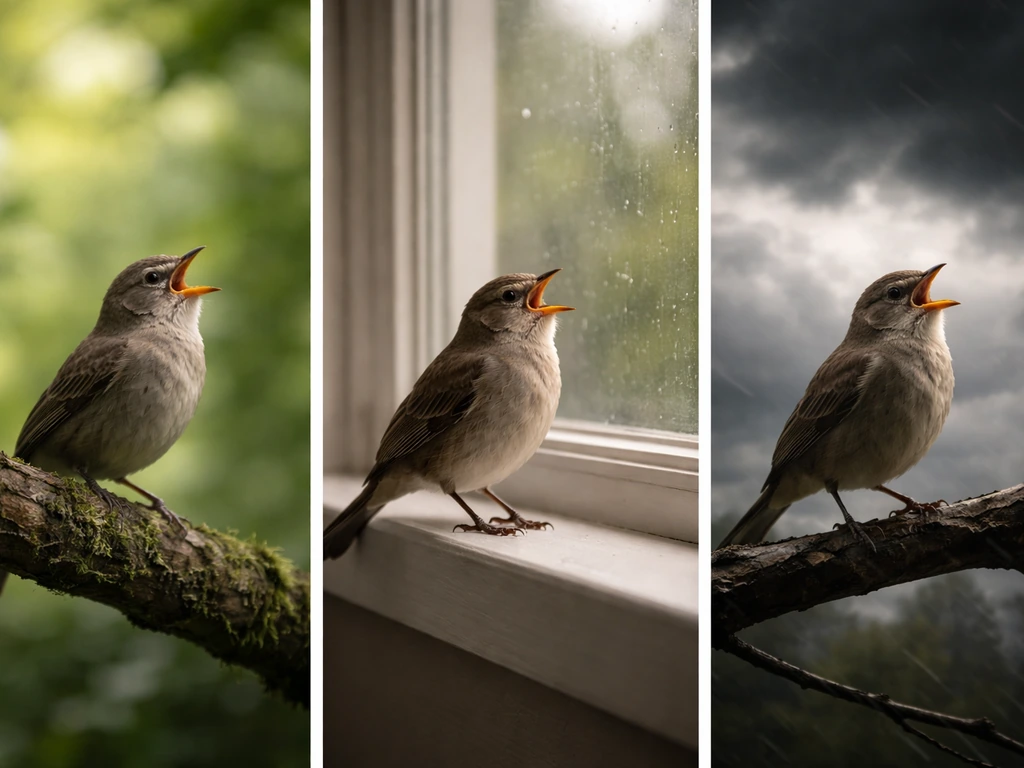
Where the bird appeared changes the interpretation meaningfully. A talking bird encountered outdoors, particularly in a natural setting, tends to align with themes of freedom, spiritual guidance, and the larger arc of your life. A bird that spoke to you inside your home, in a specific room, near a window or door, carries more personal, intimate symbolism. In many folkloric and modern dream dictionary traditions, birds entering a home or appearing in domestic spaces symbolize news or transitions entering your personal life. If the bird spoke to you in what felt like a sacred space, a church, a forest clearing, a place that felt charged, that context elevates the spiritual register of the message.
Key details to write down before they fade
Dream memories degrade fast, often within minutes of waking. If you had a talking bird dream, getting specific details down immediately gives you material to actually work with rather than a blurry impression. Here is what is worth capturing:
- The bird's appearance: species if you know it, color, size, condition (healthy, wounded, unusual features)
- What the bird said or the theme/feeling of what was communicated, even if the exact words are gone
- The tone of the bird's voice: calm, urgent, warm, threatening, sorrowful, joyful
- The setting: indoors or outdoors, familiar or unfamiliar location, time of day, light quality
- The bird's behavior: did it approach you, speak from a distance, fly away, stay still, repeat itself
- Your own emotional response in the dream: were you afraid, comforted, confused, curious, overwhelmed
- Any other people or symbols present in the dream alongside the bird
- Whether this is a recurring dream or a first-time occurrence
The Sleep Foundation recommends capturing the dream as fully as possible in a journal and treating that record as raw material for reflection rather than a literal prediction to decode. That is good advice here. The more detail you preserve, the richer your ability to draw your own meaning becomes. A pattern of talking bird dreams over several nights is worth more attention than a single isolated image, especially if the tone or location shifts between visits.
Positive vs. negative interpretations and what they may be pointing to
Most talking bird dreams lean positive in tone, but the condition of the bird and the feeling you carry out of sleep matter. Here is a practical breakdown of how these two directions tend to read:
| Dream quality | Common symbolic direction | Life areas to consider |
|---|---|---|
| Bird speaks warmly, calmly, or with encouragement | Validation, guidance, reassurance, confirmation | A decision you are sitting on, a path you are doubting, a relationship that needs trust |
| Bird delivers news or specific information | Incoming change, opportunity, or important communication | Career moves, messages from others, a situation about to shift |
| Bird speaks urgently or with alarm | A warning, an overlooked risk, something needing attention | A relationship pattern, a health concern, a situation you have been avoiding |
| Bird speaks but you cannot understand it | Intuition not yet fully accessible, a message still forming | Areas where clarity is blocked, need for stillness or reflection |
| Wounded or struggling bird that speaks | Disruption, difficulty ahead, or something fragile needing care | A project, relationship, or part of yourself that needs honest attention |
| Bird speaks then vanishes quickly | A fleeting opportunity, a message with a deadline | Time-sensitive decisions, conversations you keep postponing |
A dream with a negative or unsettling tone does not mean something terrible is coming. In most interpretive traditions, including biblical frameworks where birds are used as symbols of providence and care rather than doom, a difficult-feeling bird dream is more likely pointing to something that needs your honest attention than it is predicting disaster. Treat it as a flag, not a sentence.
If the dream left you genuinely disturbed, that emotional residue is worth taking seriously on its own terms. Recurring nightmares featuring threatening birds, particularly ones that leave you anxious upon waking, are something a therapist can help you work through. Imagery Rehearsal Therapy, which is widely considered a gold-standard behavioral approach for nightmare distress, involves consciously rewriting the dream's ending during waking hours to reduce its emotional charge over time. It is practical, evidence-based, and something worth knowing about if bird dreams are causing ongoing sleep disruption.
What to do after the dream
Journal with intention
Write first, interpret second. Before you decide what the dream means, get everything you remember onto paper or into a notes app. Then read back what you wrote and notice what stands out. Underline the details that feel most charged or most alive. Those charged details are usually where the meaning lives. If writing a full account feels overwhelming right after a distressing dream, even a brief summary with an emotion label, something like 'urgent bird, warning tone, felt anxious but curious,' is enough to work from later.
Sit with the message before acting on it
If the bird delivered a clear message, the instinct is often to act immediately. Resist that. Sit with the message for at least a day. Meditate on it if that is part of your practice, pray with it if you come from a faith tradition, or simply carry the question with you through your next few waking hours and notice what it illuminates. Many people find that a talking bird message becomes clearer not through analysis but through noticing which real-life situations it keeps touching as the day unfolds.
Consider the practical life areas it may be pointing to
Talking bird dreams are overwhelmingly associated with communication, truth-telling, and the courage to say something that needs to be said. If you are also wondering about seeing a bird meaning in waking life, compare that feeling with what the dream bird was communicating. Ask yourself honestly: Is there a conversation I have been avoiding? Is there a truth I am not letting myself acknowledge? Is there an opportunity I keep circling without committing? Is there a warning I have been receiving in waking life, through gut feeling, through other people's words, that I have been dismissing? The bird spoke. The practical question is whether you are ready to listen to what you already know.
If the dream felt negative or left you unsettled
Ground yourself first. A brief calming routine after a disturbing dream, whether that is breathing exercises, a short meditation, or simply making yourself a warm drink and sitting quietly, helps your nervous system settle before you try to interpret anything. If the dream was genuinely frightening, it is okay to write only the emotional summary for now and return to the details later in the day when you feel more stable. The meaning will still be there. You do not have to decode it while you are still shaken.
Ultimately, a talking bird dream is an invitation. Across spiritual traditions, psychological frameworks, and the quiet logic of personal experience, it asks you to listen more carefully, either to yourself, to someone in your life, or to a situation that has been trying to get your attention. The bird chose to speak. The next move is yours.
FAQ
What if I remember the bird spoke, but I cannot recall the exact words?
If the bird did not say anything specific, treat the dream message as the emotional function (reassurance, urgency, curiosity, warning) rather than the literal content. Also note whether the bird behaved like it wanted interaction (approaching, landing near you) or like it was done communicating (turning away, flying off), because that often indicates whether you need to initiate a real-life conversation or simply stay alert.
My dream had more than one talking bird. Does that change the meaning?
Multiple talking birds usually point to multiple competing “voices” rather than a single event. A practical way to decode it is to group the birds by tone (comforting versus alarming) and by where they were located in the dream (near you, across the room, outside the window). Then match those groupings to real-life topics you have been juggling (work, relationship, health, boundaries).
How do the bird’s condition and my feelings about it affect the dream meaning?
Yes. The same talking bird can feel reassuring or threatening depending on the relationship you had with it (trusting, fearful, fascinated) and the bird’s condition (healthy, injured, dying). An energetic but injured bird often reads as “something matters and needs attention,” while a calm, healthy bird that speaks gently more often reads as guidance or confirmation.
What does it mean when the talking bird addresses me versus speaking about someone else?
If the bird spoke to you directly, it commonly relates to a message you need to recognize from your own perspective, such as a boundary you are ready to set or a decision you are postponing. If the bird spoke about “someone else,” focus on the person or situation it pointed to, and ask what communication role you might have (mediator, messenger, protector, or observer).
Does it matter whether the talking bird appeared outdoors or inside my home?
A talking bird outside can be more about broader life direction (a transition, opportunity, or inner calling), while one inside often feels more personal and immediate (news entering your home life, relationship dynamics, or a conversation near a particular boundary). If it was near a door, window, or specific room, treat that location as a clue for what part of life is “opening” or “needing to be entered.”
Could a talking bird dream be influenced by sounds or recent experiences?
Dreams can blend internal imagery with external sounds, especially if you heard birds in the real world near bedtime or you recently watched bird content. Use a simple check: if the dream’s tone matches your daytime concerns, it is likely meaningful psychologically. If it is purely random and you feel no emotional residue, external-sound blending is more plausible, and you may not need to over-interpret.
The bird talked in a specific way, like repeating phrases or asking questions. How do I interpret that?
Yes, try to record the precise message style you experienced: affectionate, commanding, repetitive, or interrogative. Commanding questions (like “Why are you ignoring this?”) often point to avoidance. Repeated phrases can indicate a “stuck” issue. If the bird asked you something, the most useful next step is to write your first honest answer, even if you think it is small or obvious.
I felt scared after the dream. Does that mean something bad is coming?
If the dream made you feel uneasy, do not treat it as a direct prediction. A safer approach is to treat it as a signal to slow down, identify what you are minimizing, and take one grounding step before analysis. If the unease persists into waking life or the dream becomes recurring, consider talking with a therapist, especially for strategies that reduce nightmare distress.
The message felt urgent. Should I act immediately on what the bird said?
When the bird message feels urgent, set a “time window” for action rather than acting impulsively. A practical option is to pick one low-risk step within 24 hours, such as drafting a text you have been avoiding, making a call, or writing down the decision you need to make. Then reassess after rest, so you act on clarity instead of adrenaline.
What if the bird’s tone and my waking emotion do not match?
Write down two things: (1) the bird’s tone and (2) the specific emotion it left you with (relieved, anxious, hopeful, confused). If the tone felt like comfort but you woke anxious, the dream may be highlighting a need to trust yourself more. If the tone felt like warning but you woke numb, it may indicate you are dissociating from a real-life concern and need to reconnect gently.
My talking bird dream keeps coming back. What should I look for to decode it?
If you keep having talking bird dreams, look for patterns across nights: same tone, same bird type, same location, or the same theme of conversation. Then compare those patterns to real-life repetition (same argument topic, same boundary issue, same decision delay). Consistency usually matters more than novelty in dream communication.
Next Articles

Turning Into a Bird Dream Meaning: Spiritual and Psychological
Turning into a bird dream meaning for freedom, intuition, and messages, with spiritual and psychological interpretations
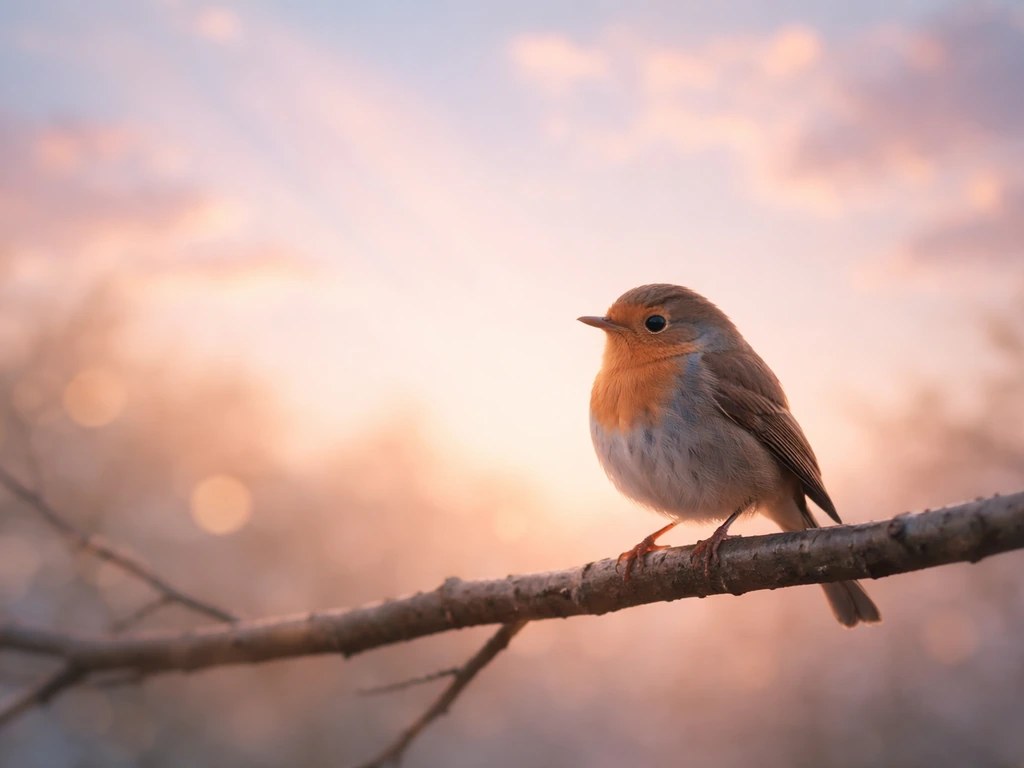
What Does Seeing a Bird in Your Dream Mean?
Interpret bird dream meanings by species, color, actions, and emotions, with biblical and metaphysical guidance.
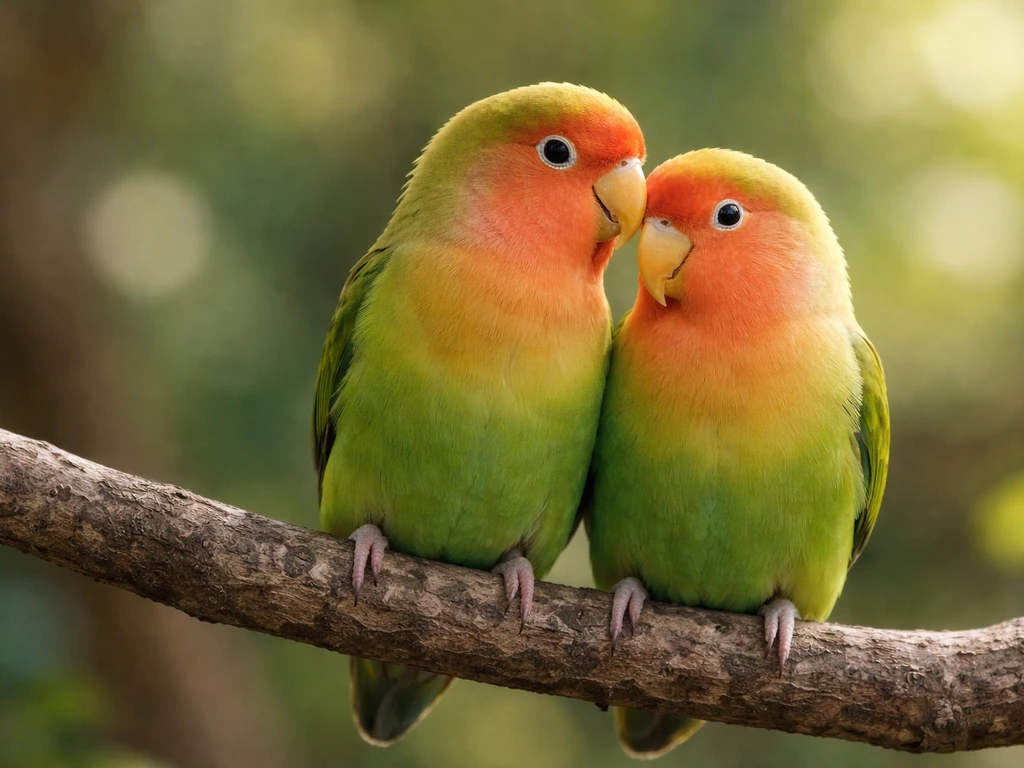
Love Bird Dream Meaning: Lovebirds and Your Love Life
Interpret love bird dream meaning with symbols for romance, bonding, jealousy, separation, and healing plus practical ne