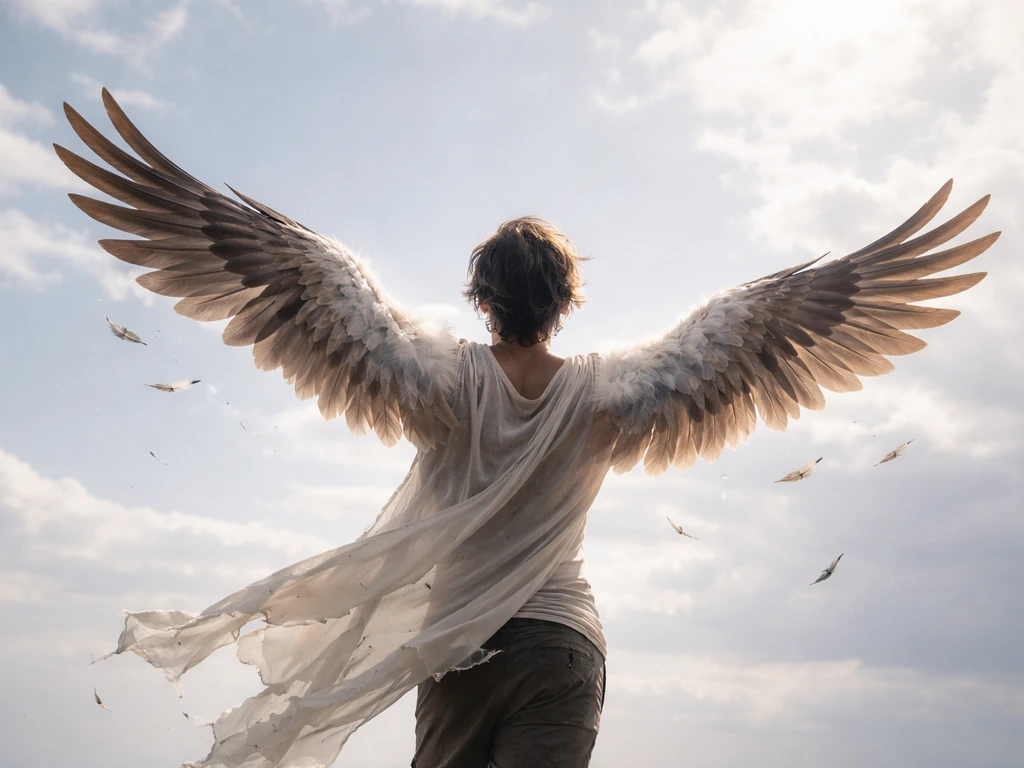
Dreaming about turning into a bird almost always points to transformation: a shift in how you see yourself, a longing for freedom, or a signal that something in your waking life is asking you to rise above it. The core meaning is about identity in motion. You are not just observing a bird in this dream; you are becoming one, and that distinction matters enormously. It usually means some part of you is ready to leave something behind, gain a new perspective, or experience life with far less weight.
Turning Into a Bird Dream Meaning: Spiritual and Psychological
Maya Hartwell
5 Jun 2026
What turning into a bird in a dream actually symbolizes
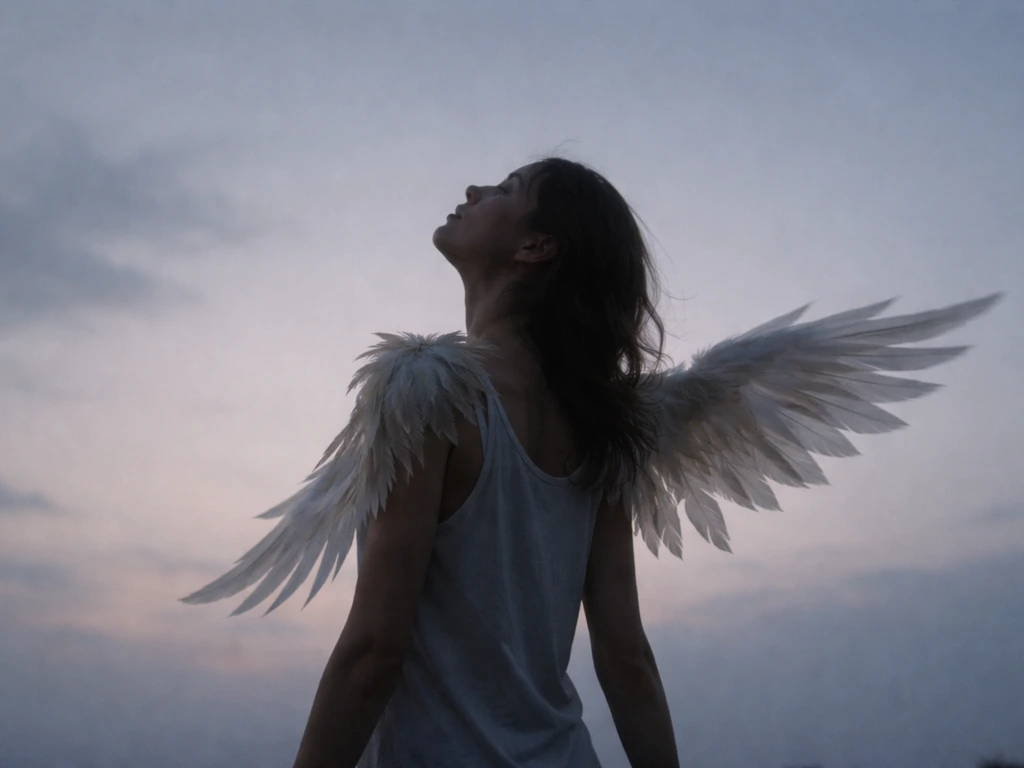
Across nearly every dream interpretation tradition, birds represent freedom, spiritual aspiration, and the ability to move between worlds. Many people search for the seeing a bird meaning connection to their own dreams and daily life, since bird symbolism often reflects messages, freedom, and change birds represent freedom. When you are the bird rather than a bystander watching one, the symbolism gets personal. The transformation itself is the message.
Dream researchers and symbolic traditions both treat metamorphosis dreams as identity dreams: your subconscious is exploring who you are becoming, who you want to be, or who you are afraid of being. The act of physically changing form in a dream is one of the most potent signals your mind can generate.
Bird imagery in dreams is widely associated with spiritual freedom and psychological liberation. The specific symbolism of becoming a bird layers that general meaning with the idea of a threshold crossing. You are not just near freedom; you are inhabiting it, at least for the length of the dream. That is a meaningful distinction worth sitting with.
Freedom, escape, spiritual growth, and intuition: the big four interpretations
Most turning-into-a-bird dreams cluster around four major themes, and you will likely recognize which one resonates most strongly with your current life situation.
- Freedom and release: The dream may reflect a deep desire to escape a situation that feels confining, whether that is a job, a relationship, a living arrangement, or a set of expectations others have placed on you. If the flight in your dream felt exhilarating and effortless, that longing is probably the dominant signal.
- Escape and avoidance: Not all bird transformation dreams feel liberating. If you were fleeing something, or if the transformation happened suddenly out of fear, the dream may be processing a real-life stressor. Dream research on threat simulation suggests that dreams sometimes rehearse escape scenarios as a kind of emotional preparation.
- Spiritual growth and elevation: Birds appear in countless spiritual traditions as messengers between earthly and divine realms. Becoming one in a dream can signal that you are entering a phase of spiritual awakening, expanded awareness, or a search for higher meaning. This reading is especially common if the dream had a luminous, peaceful, or sacred quality.
- Intuition and perspective: Birds see the world from above. Dreaming of becoming one can point to a need or ability to zoom out and see your situation more clearly, to trust your instincts, or to access insight you have been ignoring while focused on ground-level concerns.
These themes are not mutually exclusive. A single dream can carry all four at once. The emotional tone during and immediately after the dream is usually your best guide to which theme is most active for you right now.
The psychological angle: identity, vulnerability, and the desire to change
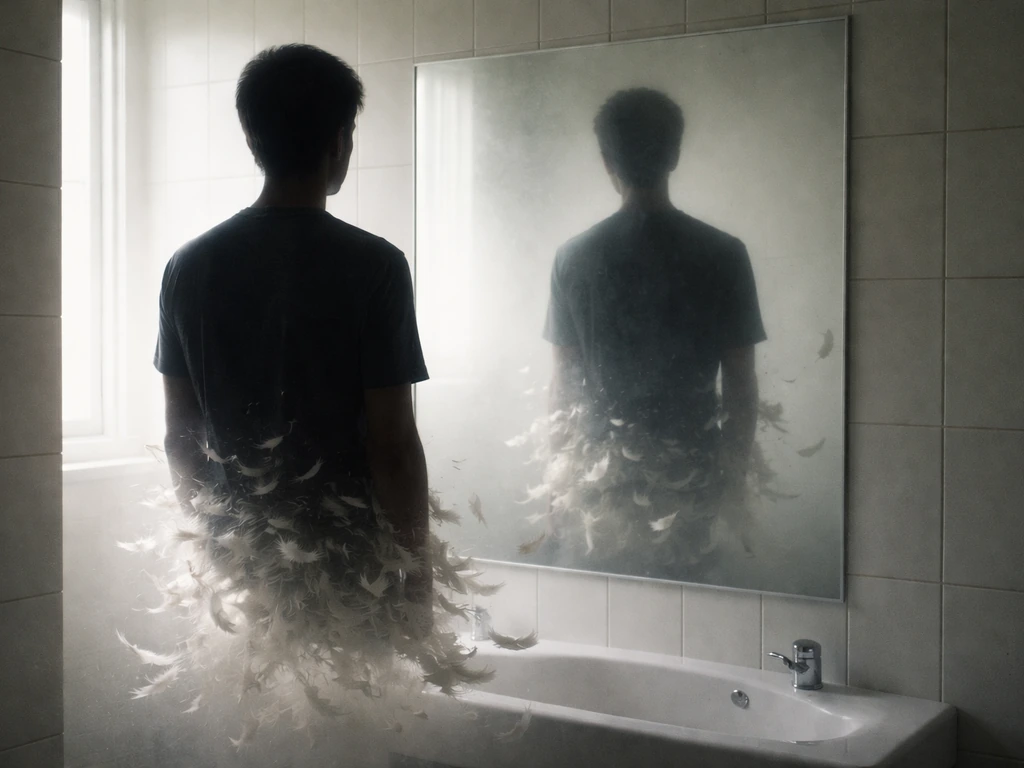
From a psychological perspective, transforming into any creature in a dream is a classic identity shift symbol. Dream researchers working with continuity theory argue that dream content tends to reflect waking concerns and experiences, meaning the transformation likely mirrors something you are already processing during the day, even if you have not consciously named it yet. A review article on dream research summarizes major frameworks such as the continuity hypothesis and the activation hypothesis continuity theory.
A few specific psychological readings come up consistently with this dream type. If the transformation felt disorienting or frightening, it may reflect anxiety about a real change happening in your life: a new role, a relationship shift, a move, a loss. If it felt peaceful or exciting, the dream may be expressing an optimistic response to the same kind of change, or a longing for one that has not happened yet. If you felt vulnerable as a bird (small, exposed, fragile), your subconscious may be processing feelings of being out of your element or exposed in some waking situation.
Dream meaning in cognitive-experiential frameworks is understood as personal and context-dependent. There is no universal bird transformation dream that means the same thing for everyone. Therapists who use dreamwork approaches emphasize that the dreamer's own associations, life context, and emotional responses during the dream do most of the interpretive work. A good question to ask: what in my life right now feels like it is pushing me toward a new form?
Spiritual and religious readings: omens, messages, and biblical themes
Spiritually, birds occupy a special position in almost every tradition as go-betweens, carrying messages from the divine to the human world. Dreaming of becoming one can be read as an invitation to step into that messenger role yourself, or as a sign that you are being called to a higher awareness. If you are looking for petting a bird dream meaning specifically, pay attention to how that touch felt and what it might say about connection, comfort, or vulnerability.
In Christian tradition, the dove is one of the most significant bird symbols. It is directly associated with the Holy Spirit and appears at the baptism of Jesus as a visible sign of divine presence and blessing. If you transformed into a dove in your dream, many Christian interpreters would read that as a deeply positive omen: spiritual favor, peace, or a divine calling. Eagles carry their own biblical weight, often associated with strength, renewal, and divine protection. The image of soaring on eagles' wings is a recurring metaphor for being carried through difficulty by a higher power.
In indigenous and shamanic traditions from many cultures, the ability to transform into a bird is associated with the shaman's capacity to travel between worlds. Becoming a bird in a dream can be interpreted as an activation of that travel, a visit from an ancestor or spirit guide, or an initiation into a deeper spiritual awareness. Celtic tradition similarly honored birds as otherworldly messengers, with particular species carrying specific meaning (the wren as a sacred intelligence, the raven as a prophet of change, the crane as a keeper of hidden knowledge).
Eastern traditions, including Hinduism and Buddhism, often connect birds with the soul or with liberation from the cycle of rebirth. In Hindu symbology, the Garuda represents divine power and the capacity to transcend earthly limitation. In many folk and metaphysical traditions worldwide, a bird appearing in a dream (especially when you become the bird) is treated as an omen of important news, a turning point, or direct spiritual guidance that deserves attention.
What the specific bird traits in your dream are telling you
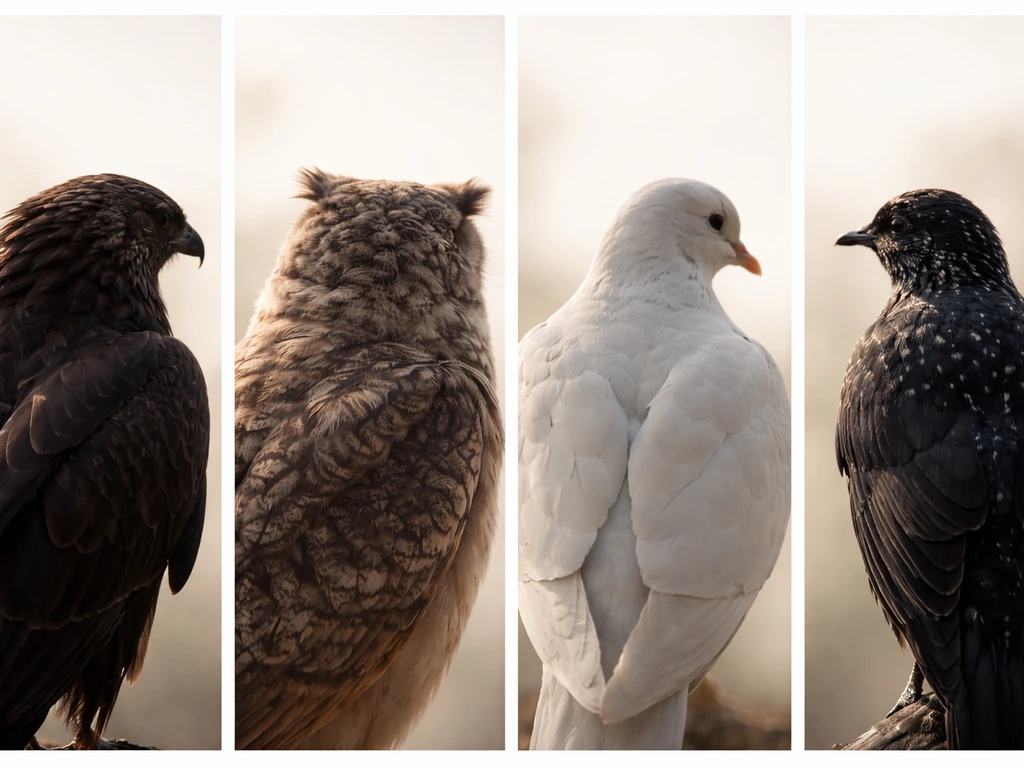
The species and behavior of the bird you became matters as much as the transformation itself. If you keep seeing a starling bird, you may wonder what the seeing a starling bird meaning could be in your own life right now bird in a dream. Every detail is a data point. Here is how to read some of the most common variations.
| Bird or Trait | Common Symbolic Reading |
|---|---|
| Eagle or hawk | Power, clarity of vision, leadership, spiritual authority, freedom from limitation |
| Dove | Peace, divine blessing, the Holy Spirit, purity, healing, or reconciliation |
| Crow or raven | Change, transformation, intelligence, omen of transition, mystical insight |
| Songbird or sparrow | Joy, simplicity, community, finding value in small things, everyday grace |
| Owl | Hidden knowledge, intuition, wisdom, the unconscious, transitions in the dark |
| Swan | Grace, beauty, elegance, a journey into emotional depth or creative expression |
| Unable to fly | Feeling trapped, blocked potential, fear holding you back from a desired change |
| Flying effortlessly | Confidence, liberation, momentum, readiness to move forward |
| Flying in a flock | Belonging, community, shared direction, the pull between independence and connection |
| Being chased while a bird | Processing a threat or stressor, rehearsing escape, unresolved conflict |
The difference between flying alone and flying in a flock is worth highlighting on its own. A solo flight dream tends to emphasize personal freedom and self-determination. A flock dream raises the tension between individual identity and group belonging. If you were flying with others in your dream, ask yourself whether that felt supportive or constraining, because that emotional nuance is exactly where the personal meaning lives. Dreams about talking birds or petting birds carry their own distinct layers of meaning around communication and connection, though the transformation dream usually sits in a different emotional register.
How to interpret your specific dream: what to notice and ask
Generic dream dictionaries can only take you so far. The most useful interpretation comes from examining the specific details of your dream against the specifics of your waking life. Here is a practical framework for doing that.
Details worth recording right after you wake

- What kind of bird did you become? If you do not know the species, describe its color, size, and any distinctive features.
- How did the transformation happen? Was it sudden, gradual, painful, effortless, or chosen?
- How did you feel during the transformation? Frightened, relieved, exhilarated, confused, peaceful?
- Could you fly, and if so, how well? Did flying feel natural or difficult?
- What was the setting? Outdoors, indoors, familiar place, unknown landscape, day or night?
- Were there other people or creatures present? Did anyone witness your transformation?
- What happened after you became the bird? Did you escape something, fly toward something, land somewhere, or simply exist?
- How did you feel when you woke up? That immediate emotional residue is often the clearest signal.
Questions to ask about your waking life
- Is there something in my life right now that feels confining or too heavy to carry?
- Am I in the middle of a significant change, or on the edge of one I keep avoiding?
- Is there a role, relationship, or responsibility that no longer feels like it fits who I am becoming?
- Have I been ignoring my instincts or intuition lately?
- Is there a situation where I need a wider perspective instead of staying focused at ground level?
- Am I longing for more independence, or am I actually craving more connection and belonging?
Dream meaning, in most psychological and spiritual frameworks alike, is co-created between the dream content and the dreamer's active engagement with it. You are not looking up the answer in a reference book; you are discovering it through the questions. The details of your dream are prompts, not conclusions.
Grounding yourself after the dream: journaling, reflection, and real-life steps
The most practical thing you can do after a vivid transformation dream is capture it before it fades. If you are wondering what seeing a bird in your dream means, the context and your emotions after waking are usually the best starting point. Dreams lose detail quickly once you are awake and moving. Keep a notebook by your bed, or if writing feels like too much effort immediately after waking, record a short voice note on your phone. Even a one-minute verbal description of the core images and feelings gives you something solid to return to. You can transcribe it later.
Once you have captured the raw dream, here is how to move from recording to reflection. Write down the dominant emotion first, before you analyze any symbols. Then note the bird species and the moment of transformation itself. Only after that, start asking the waking-life questions listed above. This order matters because it keeps your emotional truth front and center rather than letting symbol-hunting become a way of intellectually distancing yourself from what the dream was actually pointing at.
In terms of real-life response, a turning-into-a-bird dream rarely demands dramatic action. It is more often an invitation to pay attention. If you are also curious about a love bird dream specifically, its dream meaning can add more detail to what your symbolism is emphasizing love bird dream meaning. If the dream felt freeing, consider where in your life you could give yourself more room to move.
If it felt frightening or disorienting, name the specific thing that is causing you to feel like the ground is shifting under you. If the dream had a spiritual quality that moved you, give yourself space to explore that, through prayer, meditation, time in nature, or whatever form of reflection fits your practice.
A few grounding prompts worth writing in your journal after a bird transformation dream: What am I ready to leave behind? What would it feel like to carry less? What would I do differently if I truly believed I could rise above this situation? And perhaps the most important one: what part of me is trying to emerge right now, and what is holding it back?
These dreams tend to come during real periods of transition. They are not random noise. Revonsuo’s threat simulation theory proposes that dreams can simulate threatening events as realistic rehearsals, sometimes described as a “fire drill,” to improve future coping performance threat simulation theory suggests dreams can rehearse threatening events. Whether you read them as psychological processing, spiritual guidance, or simply a vivid expression of something your waking mind already knows, they deserve a few minutes of honest reflection. The bird you became in that dream may have something worth listening to.
FAQ
If my turning into a bird dream felt scary, does that mean something bad is coming?
Yes, the same transformation theme can show up in very different ways depending on your emotions and the setting. If you felt calm and upward, the dream often reflects readiness for a change. If you felt panic, freezing, or confusion, it can point to fear of losing stability, especially around identity shifts like a new job title, relationship status, or relocation.
What part of the dream should I focus on to interpret it accurately, the transformation or the flying?
Look for the moment you realized you were becoming the bird, and what your body sensation felt like then. Dream meanings often hinge on whether the transition felt voluntary or forced. Voluntary transformation tends to relate to agency and choice, while forced transformation more often mirrors feeling pushed by circumstances or other people’s expectations.
I do not know what bird I became, how can I interpret my dream anyway?
Species can add nuance, but you do not need to know the exact bird. Use what stands out to you, for example color, size, sound (chirping, calling), and behavior (hovering, gliding, diving). Then match that to your waking-life associations. A bird that felt “messenger-like” to you may connect to a conversation, decision, or piece of news you are anticipating.
What does it mean if I turned into a bird but could not fly?
If you were unable to fly, struggled to stay in the air, or kept falling, the dream usually shifts from freedom into limitation or blocked expression. That pattern often shows up when you feel constrained in a role, relationship, or habit, even if you intellectually want change. The key prompt becomes: what feels “ungrounded” or unsafe right now?
Do details like weather, height, or obstacles change the meaning?
Flying at high altitude, clear visibility, and smooth movement often align with perspective gain and “seeing from above,” while cramped spaces, storms, or obstacles can reflect confusion or emotional turbulence during a transition. Environments act like emotional mirrors, so note weather and surroundings, not just the bird.
How should I interpret the difference between flying alone and flying in a flock?
Flying alone versus with others matters, but the emotional tone of the group matters even more. Supportive companionship can signal healthy belonging during change, while tense flock dynamics can reflect identity conflict (wanting independence but fearing rejection). Ask yourself whether the group felt like protection or pressure.
My dream made me feel small and exposed. What could that indicate?
A dream where you feel especially vulnerable as a bird (small, exposed, easily harmed) often points to real-world concerns about safety, confidence, or being “seen” in a sensitive situation. It can also show up when you are protecting your soft side, like hesitating to share feelings, needs, or creative work.
Could this be a spiritual warning, or is it more likely psychological processing?
For many people, these dreams are not a literal prophecy but a mirror for ongoing processing. Still, if the dream repeatedly triggers intense distress, sleep disruption, or panic, treat it as a signal to slow down and get support from a therapist. You can then explore whether the dream is highlighting a specific stressor or unresolved fear.
What if I could talk as a bird in the dream?
If the dream includes speech, the meaning often pivots to communication needs. Turning into a bird plus talking can suggest you are trying to express something differently, like speaking more clearly, asking for help, or sharing an idea you have been holding back. The emotional quality of the words (comforting, warning, mocking) is especially informative.
Does it matter whether I physically became the bird versus watching someone else become one?
Yes. If you feel that you “became” the bird, the message often targets identity change and self-concept. If you instead felt like a spectator who watched another turn into a bird, the symbolism may point to how you relate to someone else’s transformation, or how you respond to change that is happening around you.
What should I do in real life after having this dream?
If the dream leaves you energized, it can be a cue to take small, practical steps that match the new “freedom” identity. If it leaves you unsettled, consider making changes that reduce instability, like setting boundaries, clarifying expectations, or building a short routine that restores a sense of control before tackling bigger decisions.
I get stuck trying to interpret symbols. How do I prevent overthinking?
Try a quick “association check” first: What in your waking life feels like it has weight, and what feels like relief is possible? Then pick one symbol-based question to answer in two sentences. For example, “What am I ready to leave behind?” This helps you avoid over-analyzing and keeps the interpretation personal.
What does it mean if I have this dream more than once?
If you keep having similar turning-into-a-bird dreams, it usually means the underlying theme is not fully integrated yet. A useful next step is to track what changes in your life during the day after the dream, and whether your dominant emotion shifts. Consistency in the same feeling type, like fear or liberation, can highlight what still needs attention.
Next Articles
What Does Seeing a Bird in Your Dream Mean?
Interpret bird dream meanings by species, color, actions, and emotions, with biblical and metaphysical guidance.
Love Bird Dream Meaning: Lovebirds and Your Love Life
Interpret love bird dream meaning with symbols for romance, bonding, jealousy, separation, and healing plus practical ne
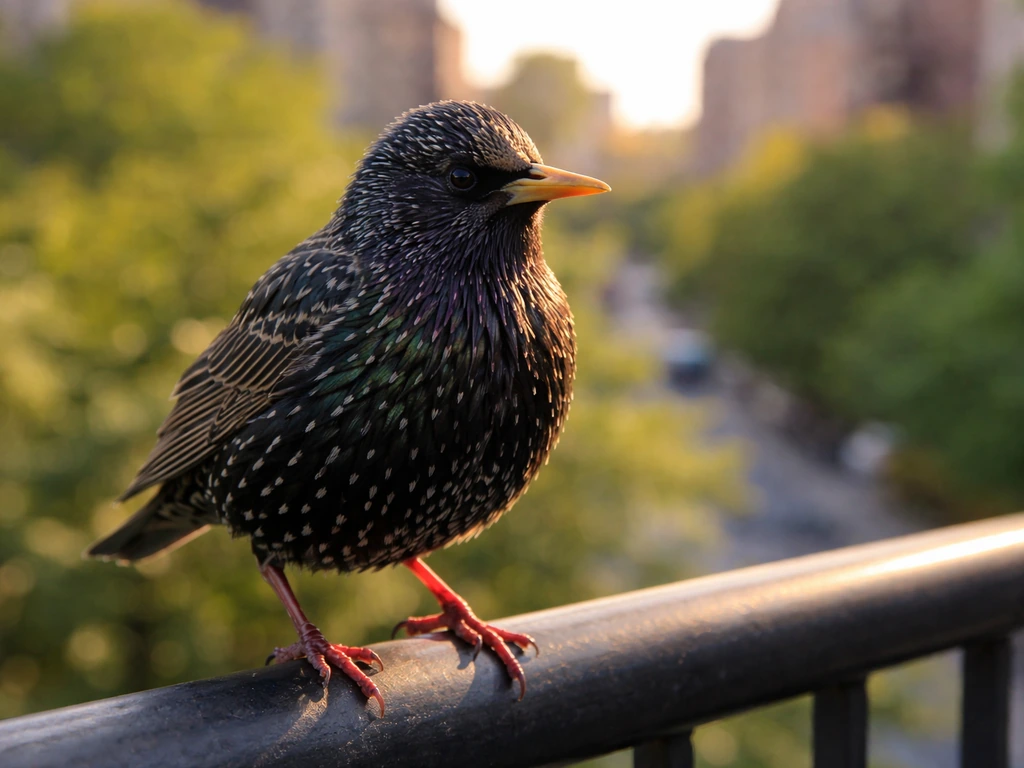
Seeing a Starling Bird Meaning: Signs, Symbolism, and Next Steps
Interpret seeing a starling bird meaning with spiritual, folklore, and practical causes plus next steps for your encount