
A bird flying into your home almost always has a simple, natural explanation: an open window, a reflective surface, interior lights attracting a night migrant, or a disoriented bird during nesting season. That said, across nearly every culture on earth, an uninvited bird indoors has also been read as a sign, a message, or an omen. For a deeper dive into the spiritual side, you can also consider the meaning of a bird getting inside the house. Both things can be true at once. Here's how to handle the practical side immediately, and how to think through what the encounter might mean to you personally.
Bird Enters Your Home Meaning: Practical and Spiritual Guide

Maya Hartwell
6 Jun 2026
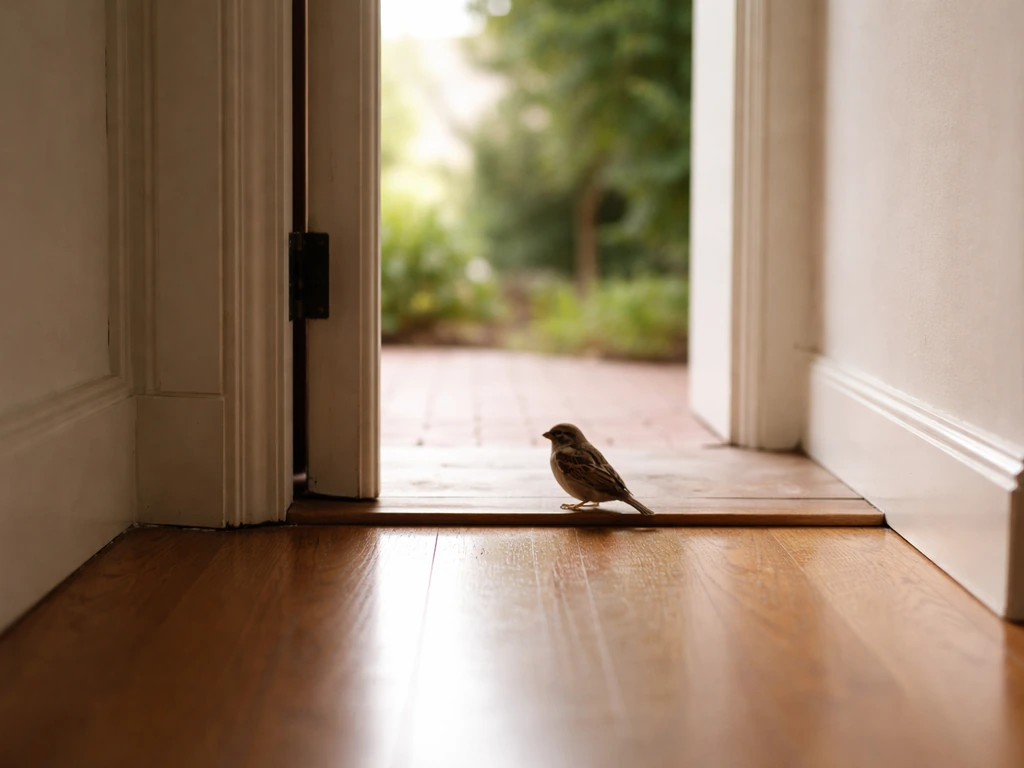
Why a Bird Actually Gets Inside Your Home
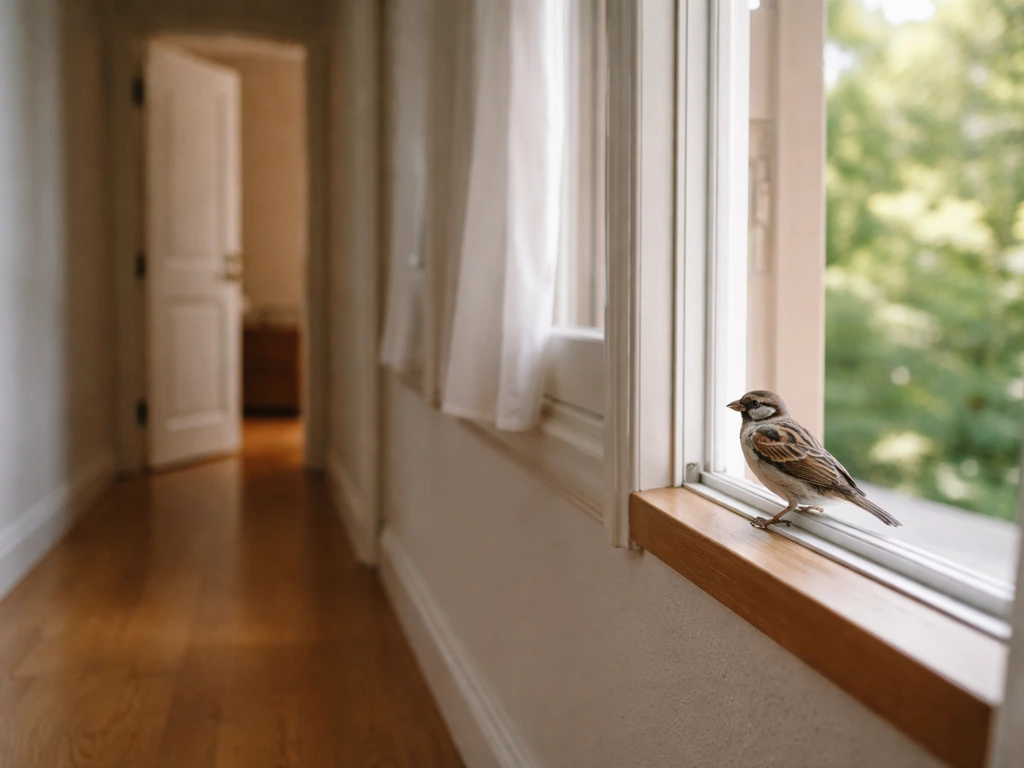
Before you reach for any symbolic interpretation, it helps to know what's most likely going on from the bird's point of view. Birds don't choose to enter your home the way a guest knocks on a door. Something in their environment pulled or confused them.
- Open doors and windows: The most common reason. A bird following insects, chasing prey, or simply flying fast ends up inside before it registers the change.
- Glass reflections: Birds can be attracted toward reflections in windows that mirror trees, sky, or other habitat elements. The U.S. Fish and Wildlife Service specifically notes that birds collide with or enter areas when attracted to landscaping visible through glass.
- Interior lighting: Artificial light at night draws migratory birds powerfully. Research cited by the Field Museum found that darkening half a building's windows led to roughly 11 times fewer bird collisions during spring migration. Night-migrating species are especially vulnerable, and even light shining outward from inside your home can pull them in.
- Nesting and territorial behavior: During spring and early summer, birds defending territory sometimes fly at their own reflection in a window and end up inside. Swallows and sparrows occasionally scout human structures as nesting candidates.
- Disorientation: Young birds, birds in stormy weather, and birds mid-migration can become confused by urban light and end up in unexpected places, including indoors.
Knowing the cause matters for prevention. If birds are entering at night, turning off interior lights facing windows for 15 to 20 minutes (as the U.S. Fish and Wildlife Service recommends) can allow a disoriented bird to escape on its own. If reflections are the issue, window decals or exterior screens break up the mirror effect significantly.
What to Do Right Now: Safely Getting the Bird Out
Your first priority is getting the bird out calmly and without injuring it. Panicked birds can hurt themselves badly by flying into walls, so the slower and quieter you move, the better.
- Clear a path to the outside. Open one door or window fully, ideally in the same room as the bird. Close interior doors to prevent the bird from going deeper into the house.
- Turn off interior lights. A darker room with a bright exit is your best tool. The Schuylkill Center's wildlife guidance specifically recommends blocking off areas except the exit path and dimming lights to direct the bird toward the opening.
- Leave the room if possible. Many birds will find the exit on their own once the space is quiet. Give it 10 to 15 minutes before intervening.
- If the bird is grounded or trapped, use a towel or blanket to completely cover it so it can't see you (Wildlife In Need Center recommends full coverage). Avoid terry cloth with loops, as birds can catch their beaks or toes in the material. Gently scoop the bird into a well-ventilated cardboard box or plastic carrier.
- Take the covered box outside, open it, and step back. An uninjured bird will typically fly away within seconds.
- Keep children and pets out of the room during the entire process.
If the Bird Looks Injured
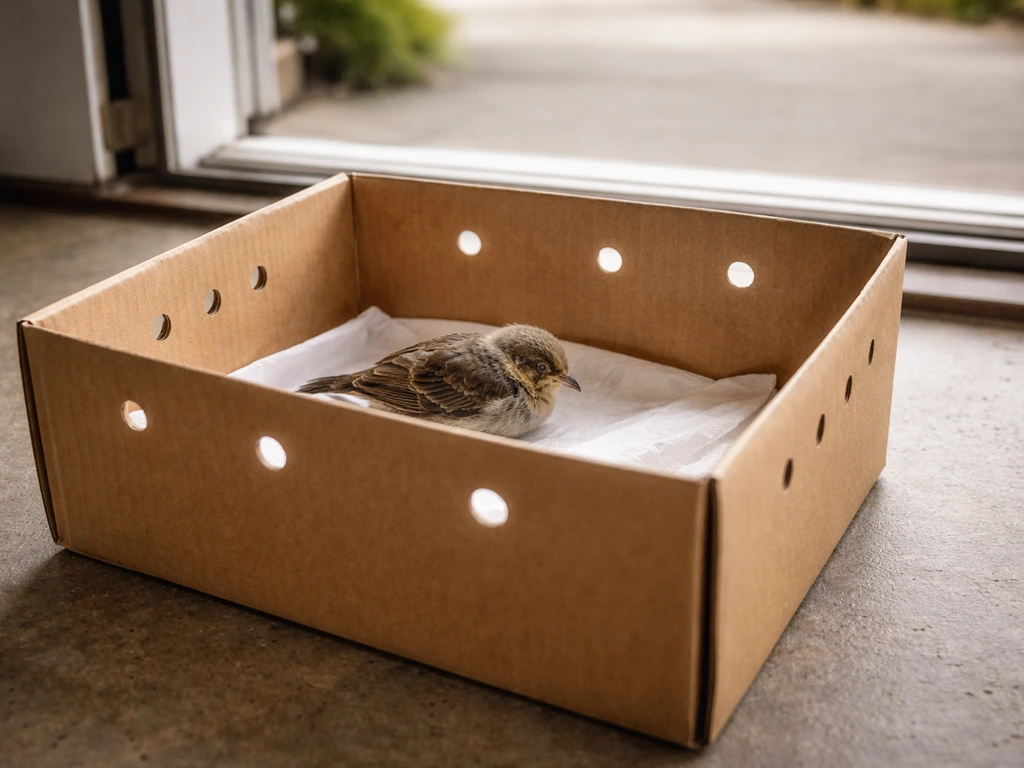
If the bird doesn't fly away when you open the box outside, or if it's visibly injured (drooping wing, unable to stand), Audubon recommends securing it in a box with airholes and crumpled paper towels to keep it upright, then calling a licensed wildlife rehabilitator. Don't try to feed or water a wild bird unless a rehabber instructs you to. Paper grocery bags with a folded top also work in a pinch, according to the Bird Alliance of Oregon.
Cleanup: Droppings, Feathers, and Health Basics
Once the bird is gone, clean up carefully. Bird droppings can carry Histoplasma, the fungus responsible for histoplasmosis, a lung infection. The CDC notes that spores become airborne when droppings are disturbed, so do not sweep or vacuum dry droppings.
- Put on gloves and, if the area is heavily soiled, a properly fitted N95 or HEPA respirator.
- Lightly mist droppings with water before picking them up to reduce dust and aerosolization.
- Use damp paper towels to collect droppings and feathers. Seal them in a plastic bag and dispose of them.
- Clean the soiled surface with soap and water first to remove visible dirt, then follow with an EPA-registered disinfectant that lists effectiveness against Influenza A viruses on the label. This follows CDC and EPA guidance for surfaces that may have been contaminated by wild birds.
- Wash your hands thoroughly afterward.
- If the bird was found dead inside, remove any bird feeders in your yard for at least two weeks and clean them thoroughly before putting them back up, as advised by the Wildlife In Need Center.
Spiritual and Symbolic Meanings of a Bird Entering Your Home
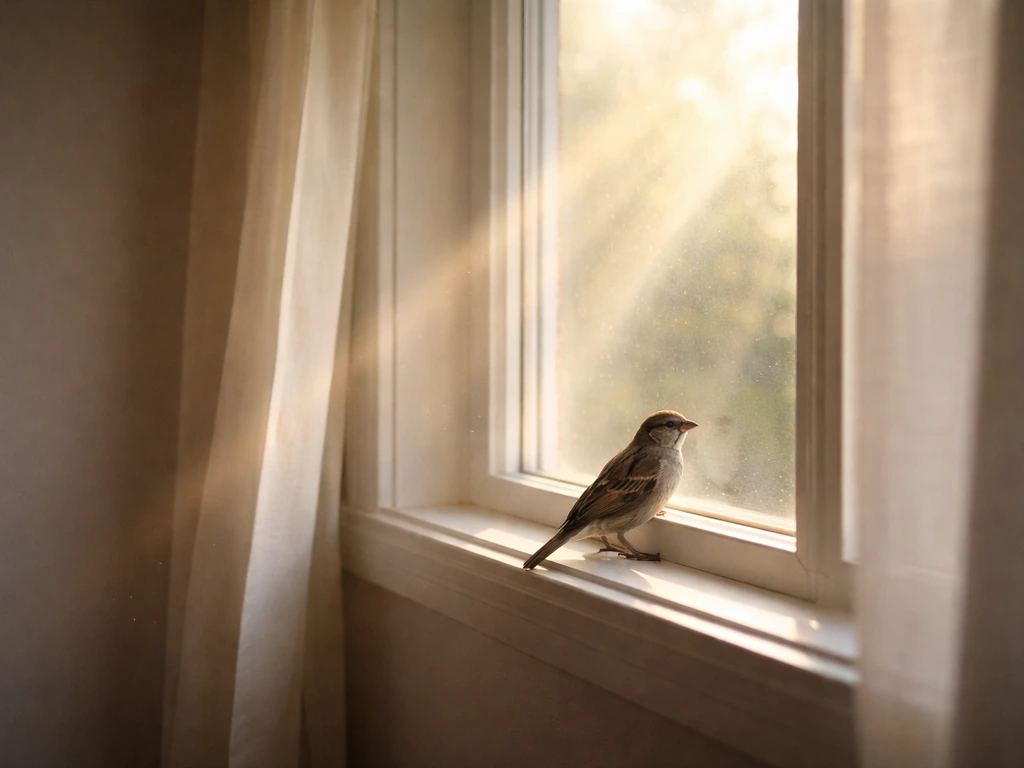
Once you've handled the practical side, it's natural to sit with the question: what might this mean? Across folklore, indigenous traditions, Eastern belief systems, and Western spirituality, birds entering a home have carried layered symbolic weight for centuries. None of these interpretations are mutually exclusive with a natural explanation, and none require you to believe anything you don't already feel drawn to.
In many folk traditions, a bird entering the home is seen as a messenger crossing the threshold between the outer world and your private, sacred space. That threshold crossing is what gives the event its charge. Your home represents your inner life, your family, your security. A bird slipping through that boundary uninvited feels like something is trying to reach you.
- Messenger from beyond: In Celtic, Native American, and various African traditions, birds are intermediaries between the living and the spirit world. A bird that enters your home may be interpreted as a message from an ancestor or a deceased loved one, particularly if it arrives shortly after a loss.
- Incoming news or change: English and European folklore has long associated a bird entering the house with news on the way, sometimes good, sometimes a warning of difficulty ahead. The specific meaning often depended on the bird's species and behavior.
- Blessing and good fortune: In Chinese tradition and some Eastern European folk beliefs, certain birds flying into the home (especially swallows) are welcomed as signs of good luck, fertility, and household protection.
- A soul visiting: In some traditions, particularly among certain Indigenous cultures and in older European folklore, the bird is understood as carrying the soul of someone who has recently passed, arriving to say goodbye or offer comfort.
- Personal awakening or spiritual attention: In more contemporary metaphysical interpretation, a bird finding its way into your private space is sometimes read as the universe drawing your attention inward, inviting you to notice something you've been overlooking in your life.
What the Scenario Might Tell You
The circumstances around the bird's visit shift the symbolic associations considerably. Whether you experienced a single bird or several, whether it arrived at dawn or after dark, and whether it left safely or died inside all carry different traditional meanings worth knowing about.
| Scenario | Practical Note | Common Symbolic Association |
|---|---|---|
| Single bird, daytime, flies out safely | Most common and least alarming event | Good news incoming; a brief message delivered and acknowledged |
| Single bird at night | Night migrants are especially drawn to interior light (USFWS) | Often read as a more urgent or unexpected message; in some traditions, an invitation to pay attention to dreams |
| Multiple birds or a flock entering | Usually linked to open doors or mass disorientation during migration | In folklore, interpreted as a significant collective message, sometimes tied to abundance or incoming community news |
| Bird that stays calm and lingers | May be disoriented or exhausted; give it time | Commonly read as a deliberate visit, a sign asking you to slow down and notice |
| Bird that is frantic or trapped | Needs a calm exit path; avoid chasing | In some traditions, associated with restless energy or a warning that something needs to be released or resolved |
| Bird found dead inside | Clean carefully; remove feeders for two weeks | The most charged omen in many traditions, sometimes read as a warning of major change, the end of a cycle, or less commonly, protection through sacrifice |
| Repeat visits by the same bird | Check for reflections or entry points; seal gaps | Strongly interpreted in metaphysical contexts as persistent spiritual communication or an unacknowledged message |
A morning arrival is often associated in folklore with fresh beginnings, while a bird appearing at dusk or night carries heavier, more introspective associations. Repeat visits, where a bird returns to the same window or entry point over days, tend to get the most spiritual attention from those who track these encounters, because the repetition is harder to dismiss as coincidence.
Related to this, the meaning of a specific bird species adds another layer: a blackbird entering your home carries different traditional weight than a dove or a robin, each with their own symbolic histories. Species-specific bird coming into house meaning can add a lot more detail to what people take away from the encounter.
If you want the specific meaning of a blackbird flying into your house, it helps to consider the timing and the feeling it left you with a blackbird entering your home.
Biblical and Cultural Perspectives on Birds as Signs
If you're approaching this encounter through a religious or biblical lens, birds hold significant symbolic ground in scripture and across major world traditions.
In the Christian tradition, Matthew 10:29 records Jesus teaching that not even a sparrow falls to the ground without the Father's knowledge, a statement that frames birds as existing within God's active awareness and providence. This passage has been used for centuries as a basis for seeing bird encounters as moments of spiritual attentiveness rather than random events. The dove's symbolism as a carrier of peace and reconciliation comes directly from Genesis 8, when Noah's dove returned with an olive leaf, signaling that the floodwaters were receding. The dove has since become one of the most universally recognized symbols of peace and divine communication across Christian, Jewish, and broader Western traditions.
In Celtic traditions, birds (especially ravens, wrens, and robins) were seen as shape-shifting messengers moving between the mortal world and the Otherworld. Encountering them in unusual circumstances was considered a liminal moment, a crack in the ordinary where something sacred could pass through. In Hinduism, specific birds are associated with particular deities: the peacock with Saraswati and Kartikeya, the crow with the ancestors (pitrs), and the garuda with Vishnu.
A crow or unusual bird appearing in the home in Hindu household belief is sometimes read as ancestral communication or a sign that a puja or prayer is warranted. In Indigenous North American traditions, bird symbolism varies widely by nation and species, but the general principle that birds carry messages between worlds is widespread. Many traditions treat the arrival of an unexpected bird with reverence and gratitude rather than alarm.
Across all of these frameworks, what's consistent is this: birds occupy a liminal role. They live between earth and sky, between what we can see and what we can't. Whether you read that as divine design or as a beautiful human projection onto the natural world, the symbolic weight is real and worth sitting with.
Is It a Message or Just a Bird? How to Decide
This is the honest question at the heart of every encounter like this one. And I think the most useful answer is: it can be both. A bird enters your house because of light, or an open window, or disorientation during migration. That's true. Whether that perfectly natural event also carries meaning for you personally is a separate question, and one that only you can answer. The meaning of finding a bird in your house can vary widely depending on the timing, the bird’s behavior, and your personal feelings about the encounter.
Here's a simple framework for thinking it through:
- Context: What's happening in your life right now? A bird entering during a period of grief, transition, or decision-making tends to feel charged with meaning. If nothing significant is happening, the encounter may feel neutral, and that's fine too.
- Emotion: How did you feel in the moment the bird arrived? A sense of calm, recognition, or unexpected peace is worth noting. So is a feeling of unease. Your emotional response is data.
- Pattern: Is this a one-time event, or has it happened before? A single bird is easy to set aside. A bird that returns to the same window three days in a row is harder to ignore, and most spiritual traditions agree it deserves more attention.
- Personal belief: What do you already believe about signs and synchronicity? You don't have to adopt a new belief system to find meaning here. Work within your own framework, whether that's prayer, meditation, journaling, or simply sitting quietly with the question for a day.
- Action: Does the encounter prompt you toward something useful, like reconnecting with someone, making a decision you've been avoiding, or simply being more present? If so, follow that thread regardless of whether you call it a message or a coincidence.
The encounters that tend to stay with people are the ones where the natural event and the emotional moment align in a way that feels specific. A bird flying in and flying out in two minutes, while you're watching TV, probably isn't asking you to change your life. A bird that lands quietly near you on the day of a funeral, stays a while, and then leaves calmly is the kind of thing that people remember for decades and interpret as they need to. Trust yourself to know the difference.
If you're drawn to exploring specific variations of this encounter more deeply, the meaning shifts noticeably depending on the species involved, the time of day, or even whether the experience happened in waking life or in a dream. If your thoughts are centered on dreaming of bird flying in the house, the meaning often points to subconscious messages and household emotions rather than a literal prediction. Some people also connect a myna bird “coming home” with astrology, using the moment of return to reflect on themes like direction, timing, and inner change myna bird coming home meaning in astrology. Each of those details opens its own layer of interpretation, and your particular encounter may fit more precisely into one of those specific patterns.
What does this bird's visit stir up in you? That question, more than any definitive answer, might be the most honest place to start.
FAQ
What should I do if the bird dies inside my home or I discover one afterward?
If you find a bird dead inside, treat it as a separate situation from a “sign” moment. Wear gloves, use paper towels to pick it up, double-bag it, and avoid sweeping or vacuuming, since dried droppings and feathers can aerosolize particles. If it looks newly deceased or you suspect a collision, contact local wildlife authorities for guidance on disposal and reporting.
If birds keep entering through the same window, does that change the meaning and what should I do to stop it?
In many households, the “meaning” people feel is stronger when the visit repeats at the same window, but prevention comes first. Identify the exact entry point, cover or seal the access for a week (including screens gaps), and reduce reflections by closing blinds or adding temporary window decals at night.
Does the spiritual interpretation change if the bird only shows up at night, and how can I prevent that specifically?
If a bird repeatedly appears after dark, focus on behavior and timing rather than symbolism. Night migrants are often disoriented by indoor lights, so try turning off interior lights facing windows and using a single light source near an exit door, then keep that setup consistent for several nights.
What if the bird won’t leave, even after I open doors or windows?
If the bird lands but does not fly out, avoid forcing it with hands or chasing. Instead, open an exterior door or window near where it is, dim the rest of the room if possible, and let it choose the route out. If it cannot right itself, looks tangled, or seems exhausted, use a ventilated box with breathable airholes and call a wildlife rehabilitator.
How can I tell whether the bird is injured or just disoriented, and does that affect what the event “means”?
Yes, and it can matter for both safety and interpretation. Avoid handling if the bird is injured, behaving abnormally, or appears tame or “caught up,” since illness or stress can increase risk. Also note whether it is actively pursuing lights or glass, because that points to reflection and navigation issues rather than a message.
If the bird’s behavior feels intense, does that mean it has a different meaning than a bird that flies in and out quickly?
For symbolism, consider how you felt in the moment, not whether it “fits” a popular story. A calm bird that leaves on its own often gets interpreted as reassurance, while a bird that panics, hits glass repeatedly, or arrives during a high-stress day may make people associate it with urgency or pressure, but the emotional context is the key input.
What is the difference between dreaming of a bird entering the home versus it happening in real life?
If it happened in a dream, treat it differently from a physical visit. Dream encounters are commonly read as processing emotions tied to home, safety, or change, so it helps to write down what you felt and where in the dream the bird was headed. Then compare that to your waking-life situation rather than making a literal prediction.
Should I focus on symbolism only after I’ve cleaned up, and how can cleaning change my state of mind?
Cleaning up is practical, but it also helps you close the “loop” mentally. After removal, ventilate the area, disinfect surfaces the bird contacted, and wait until the smell and mess are gone before reintroducing symbolic reflection. This reduces the chance that ongoing stress from lingering droppings influences your interpretation.
Next Articles
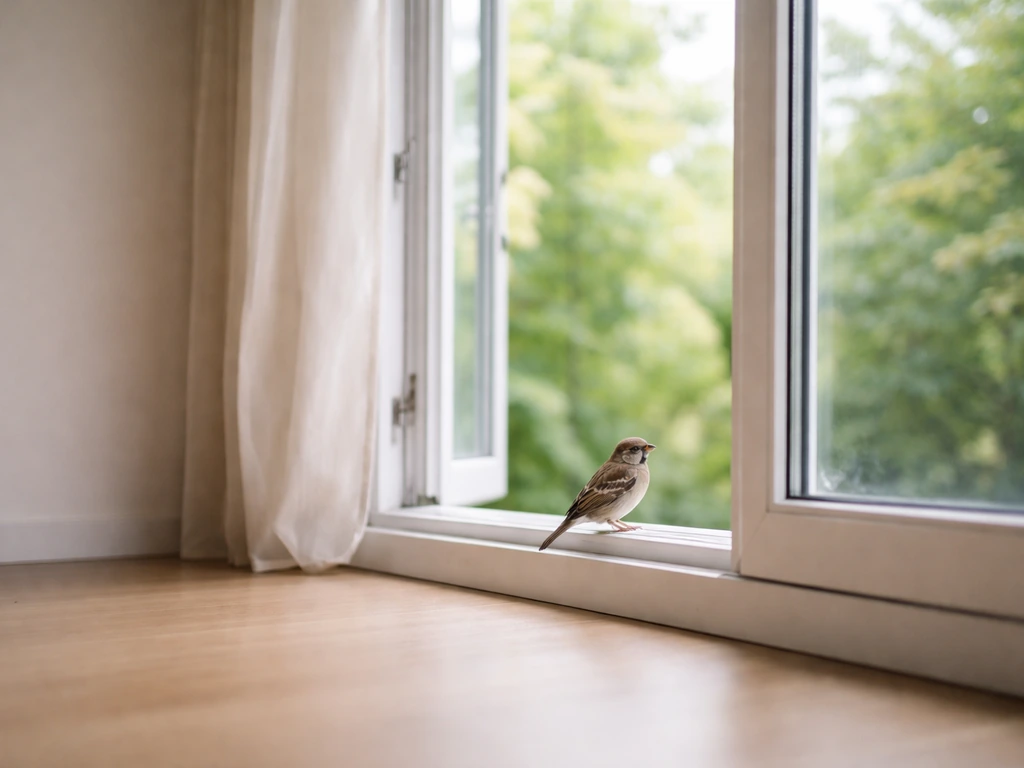
Meaning of Finding a Bird in Your House: What to Do
Learn the real causes, safe rescue steps, cleanup tips, and spiritual meanings of finding a bird indoors.
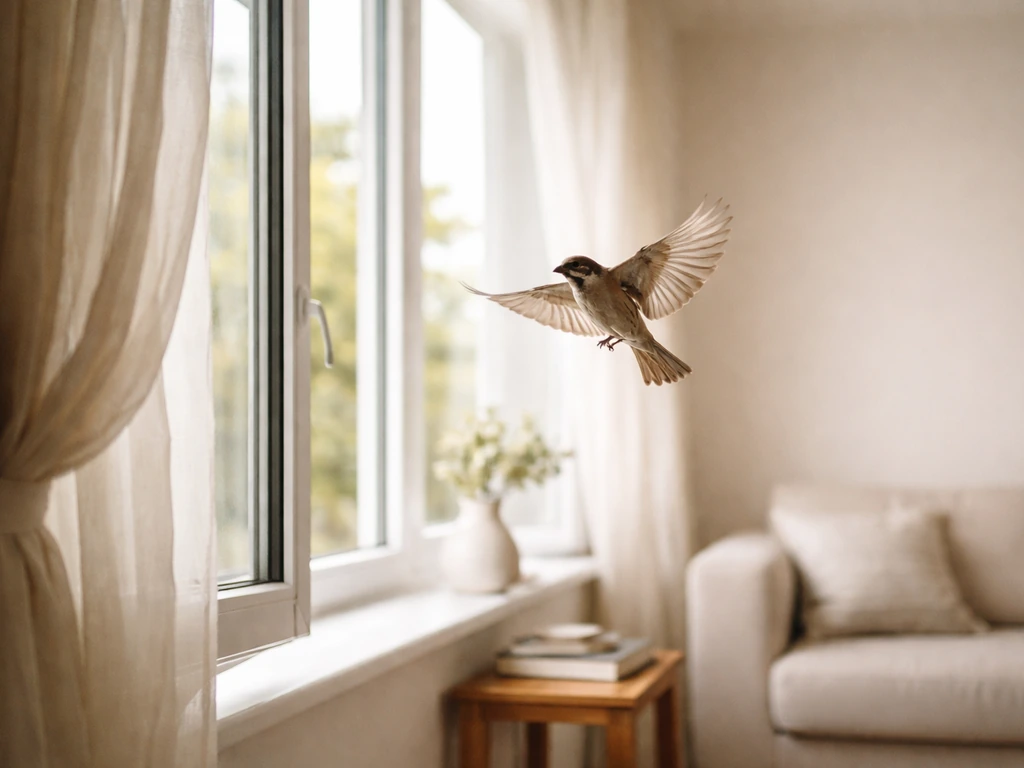
Meaning of a Bird Getting Inside the House and What to Do
Learn why a bird enters your home, how to safely guide it out, and common spiritual meanings behind the visit.
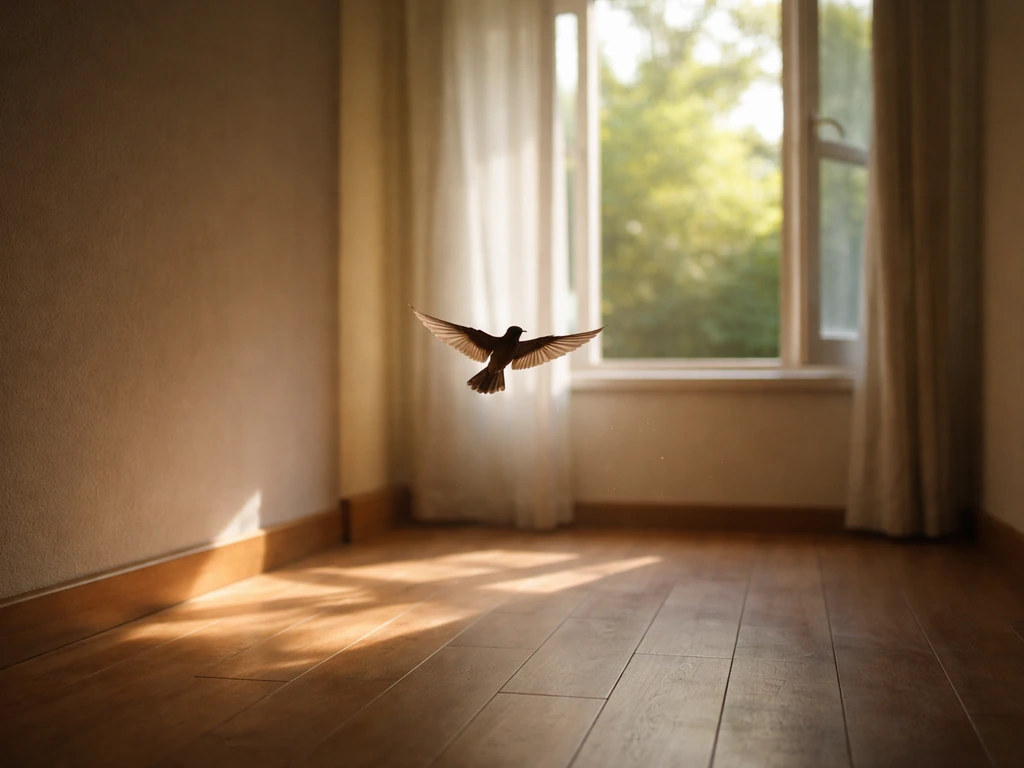
Dreaming of Bird Flying in the House Meaning and Signs
Interpret bird flying in your house dreams: spiritual, biblical and emotional meanings plus quick steps to journal and a