
When a bird gets inside your house, it almost always came in through an open window, door, or gap it mistook for open sky. That's the practical truth most people need first. But once the bird is out safely, many people are left with a lingering feeling that the visit meant something, and across cultures and centuries, a bird entering the home has carried real symbolic weight. This guide covers both: exactly what to do right now to get the bird out safely, and how to interpret the encounter spiritually if that's what you're searching for.
Meaning of a Bird Getting Inside the House and What to Do

Maya Hartwell
2 Jun 2026
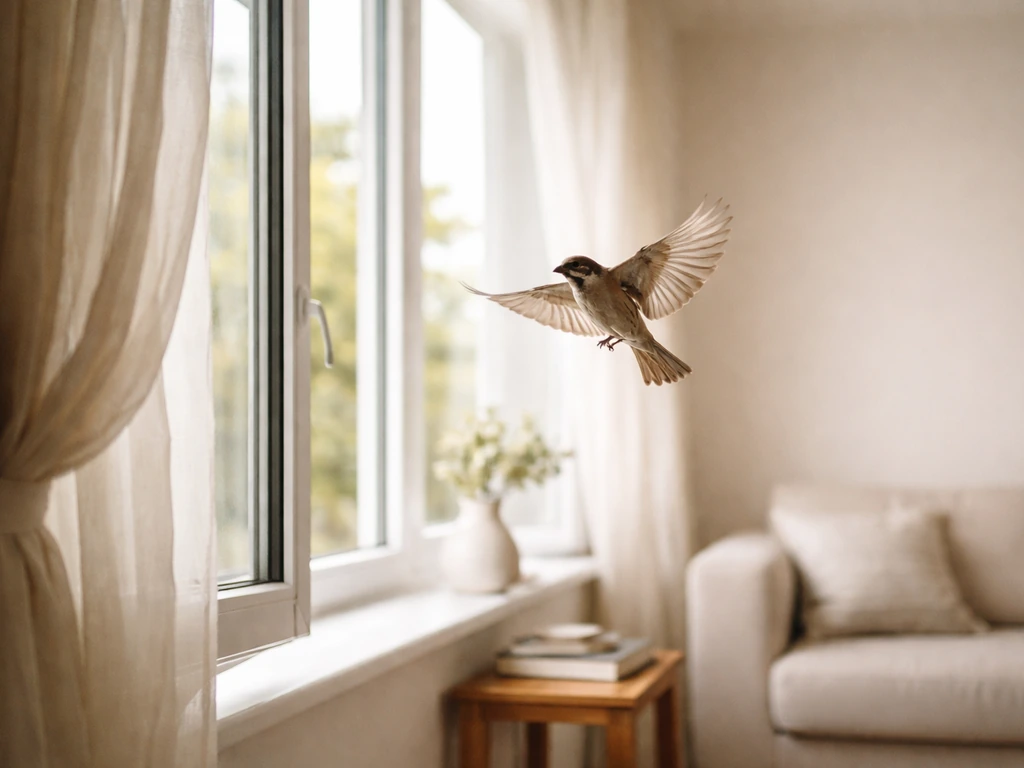
Why birds end up inside your house
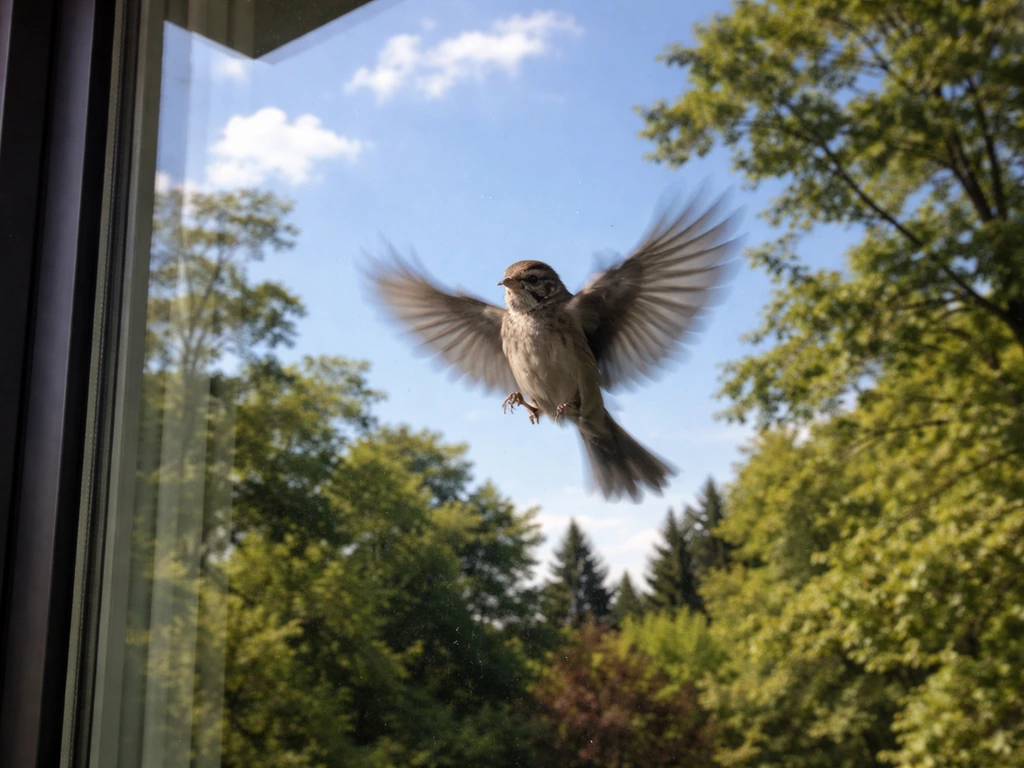
Birds don't fly into homes on purpose. The most common reason is simple disorientation. A window or glass door reflects sky and trees so convincingly that a bird flies straight toward what looks like open space. Bright interior lights at night attract birds in the same way they attract moths.
Open doors and windows during warmer months are obvious entry points, especially if there's food, warmth, or perceived shelter nearby. During nesting season, some species will scout enclosed spaces aggressively, treating your garage, porch, or even an open bedroom as a potential nesting site. Bad weather can push birds to seek shelter anywhere that looks protected. And sometimes a bird that has collided with your window will bounce inside rather than outside, stunned and disoriented.
The point is: it's almost always an accident of perception on the bird's part, not a forced entry.
What to do the moment a bird gets inside
Your first move is to make the exit obvious. Birds follow light, so the fastest, gentlest removal method is to turn off every interior light you can and open one window or exterior door wide. The open exit becomes the brightest point in the space, and the bird will usually find it within minutes. This is the same principle the Audubon Society applied during New York City's Lights Out program, where simply dimming bright lights caused birds to move on almost immediately.
If the bird is in a garage or shed, cover any windows that don't open with a sheet, towel, or cardboard so the bird doesn't keep flying toward glass. Then open the main garage door and turn off the interior lights. For garages or sheds, cover any non-opening windows so the bird does not keep flying toward glass, then turn off garage lights and open the garage door since birds usually fly toward the light turn off the garage lights and open the garage door so birds fly toward the light. Give the bird some quiet time to orient. Noise, chasing, and frantic movement will only panic it and make things take longer.
If the bird hasn't found the exit after a while and you need to assist it, try this: use a large towel or bed sheet held up between you and the bird to create a gentle wall. Move slowly toward the bird, herding it (not chasing it) in the direction of the open window or door. If you need to physically contain it, drape the towel over the bird, tuck the wings gently against the body, and keep the head covered (this calms them). Do not offer food or water at any point.
- Turn off all interior lights and close doors to other rooms to contain the bird to one space.
- Open the window or exterior door closest to where the bird is perched.
- Step back, stay quiet, and give the bird 10 to 15 minutes to find the exit on its own.
- If it hasn't left, use a large towel to slowly guide it toward the open exit.
- If you must handle it, cover it with the towel, keep wings tucked, and release it outside immediately.
- Keep pets and children out of the room during the whole process.
If the bird is injured, trapped, or keeps coming back
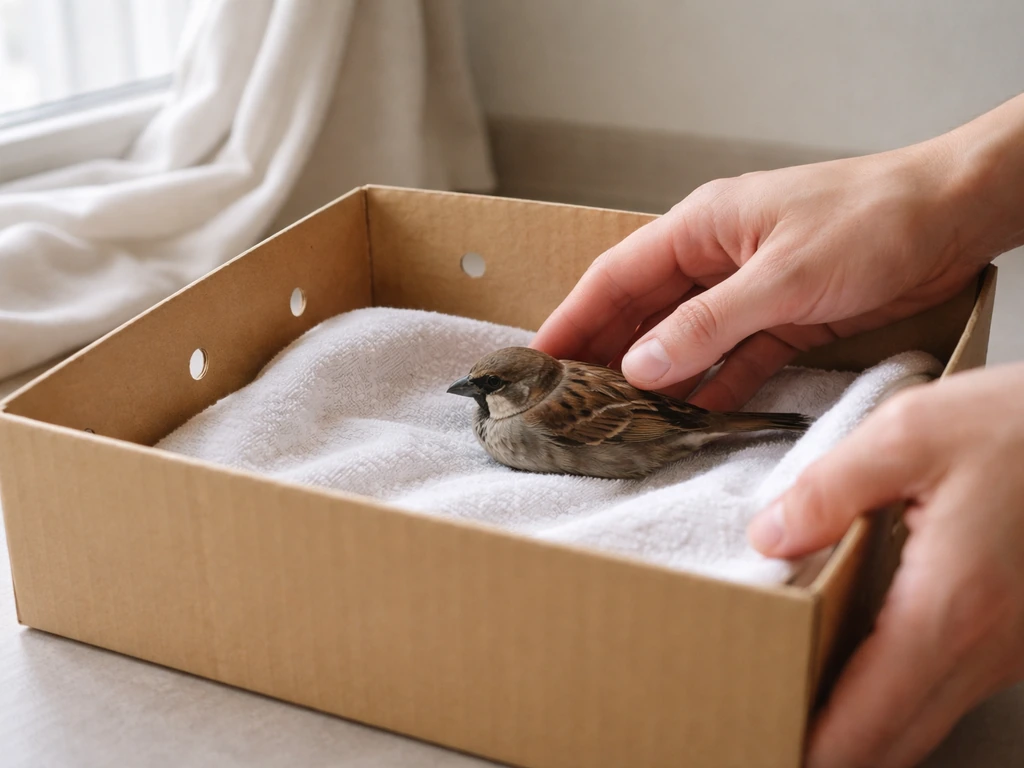
Window collisions are deceptive. A bird might seem completely fine and fly off, only to die hours later from internal injuries. Birds have lighter, more fragile skeletons than most people realize, and impact injuries to internal organs often don't show on the outside. If a bird flew into your window and is sitting still on the ground or inside the house looking stunned, don't assume it's okay just because it's upright.
The right move with a suspected window-strike bird is to gently place it in a paper bag or small cardboard box (not a plastic bag), keep it in a warm, dark, quiet spot outside away from pets, and observe it for up to an hour. Do not give food or water.
If it doesn't fly off on its own, or if you see bleeding, a drooping wing, obvious deformity, a head tilt, or signs of cat bites or puncture wounds, call a licensed wildlife rehabilitator. You can find one through your state's wildlife agency or the National Wildlife Rehabilitators Association. Injuries that look minor can be life-threatening, and a wildlife vet is the only person who should be assessing and treating them.
Signs that definitely require professional help include: bleeding anywhere on the body, a visibly broken bone or wing drooping at an odd angle, a head tilting to one side, large bubbles under the skin, maggots, or a bird that a cat or dog got hold of even briefly (cat saliva alone can cause fatal infections in birds within hours).
If the same bird or the same species keeps returning to your house, it's almost certainly being drawn back by reflected light or by a food or nesting opportunity near the entry point. That's a practical problem with a practical fix, which is covered in the prevention section below. But repeated visits also carry a different symbolic weight in many traditions, which is worth noting when you get to the interpretation section.
What a bird in the house means spiritually
This is what most people are really here for, and the honest answer is that no single tradition owns this symbol. Across cultures and centuries, a bird entering the home has been interpreted in wildly different ways, and understanding several of them side by side is more useful than grabbing the first result you find. If you're looking specifically for a myna bird coming home meaning in astrology, you'll want to compare that with the timing, symbolism, and your own situation, since interpretations vary by tradition myna bird coming home meaning astrology. Here's how different belief systems tend to frame this kind of encounter.
Biblical and Christian perspectives
Birds in the Bible are consistently used as symbols of divine care and provision. In Matthew 6:26, Jesus points to the birds of the air to illustrate that God provides even for creatures that don't sow or reap, using this as a reason not to worry. Psalm 84:3 describes a sparrow and swallow finding a home near the altars of God, framing birds as creatures drawn to sacred space.
In Christian art and theology, the dove specifically represents the Holy Spirit, most powerfully in the baptism narratives of the Gospels. From this lens, a bird entering your home might be read as a symbol of divine presence, a reminder of care and provision, or even a gentle prompt to examine your faith or worry in a particular area of life.
Folklore and common superstition
In Western European folklore, a bird flying into the house has historically been treated as an omen, sometimes of death or illness in the household, sometimes of unexpected news or a message arriving from far away.
The specific bird matters in these traditions: a robin was often seen as a bearer of spiritual messages, while a crow or blackbird carried heavier connotations (which connects closely to the symbolic meaning carried by a black bird flying into your house, a related encounter worth exploring separately). Celtic traditions particularly emphasized birds as messengers between worlds, liminal creatures that could cross the boundary between the living and the dead.
Many Indigenous American traditions also treat unexpected bird visitors as messengers, though interpretations vary widely by nation and specific bird species. Research on the psychology of superstition suggests that these beliefs persist in part because they give people a sense of agency and meaning in moments that feel random, and that's not nothing.
Islamic perspective
It's worth noting that Islamic teaching explicitly discourages drawing omens from birds. A hadith in Sahih al-Bukhari states that there is no Tiyara, meaning no valid evil omen should be taken from birds or similar events. This is an important counterpoint to folklore-based interpretation. For Muslim readers, the event is more likely a practical matter than a spiritual signal.
Metaphysical and intuitive frameworks
In contemporary metaphysical and New Age thought, birds entering the home are frequently framed as signs from spirit guides, ancestors, or the universe, depending on the reader's belief system. The general symbolism assigned to birds in these traditions centers on freedom, communication, transition, and spiritual elevation. A bird entering your most private space, your home, is often read as a message that something is shifting in your personal world, that a message needs to be received, or that a soul you've lost is checking in. The specific timing of the visit, what you were thinking about, what life situation was active, tends to be treated as the most meaningful interpretive layer.
How the bird's behavior changes the meaning
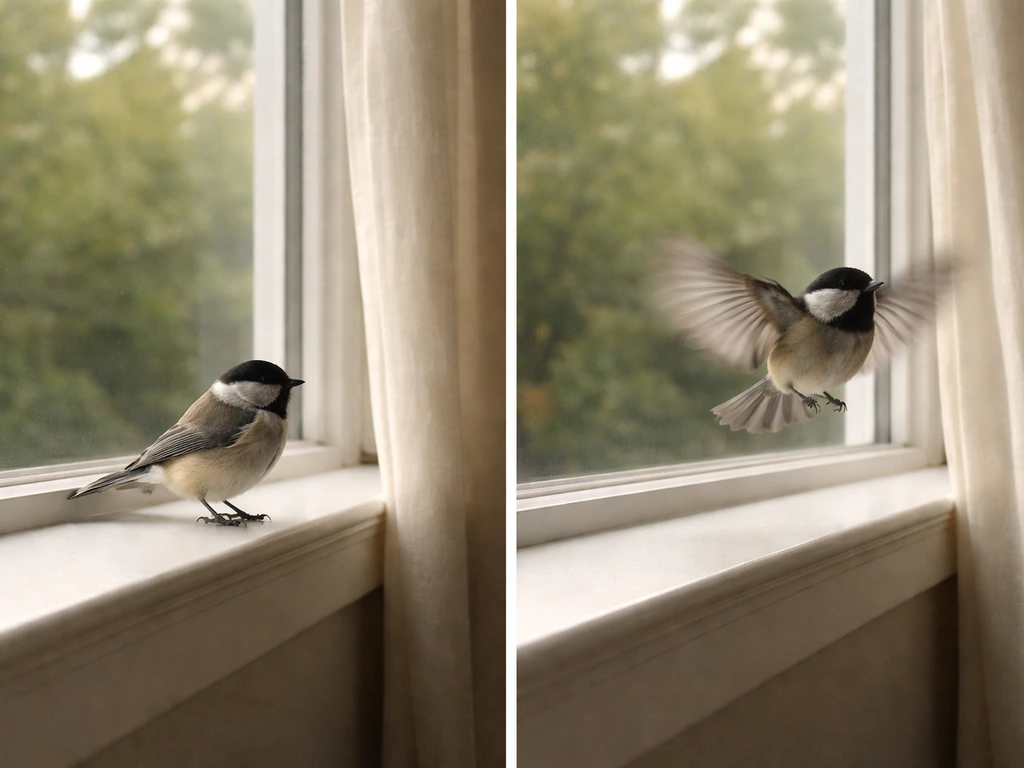
Not all bird visits look the same, and in most symbolic traditions, the how matters as much as the what. A bird that glides in quietly and perches calmly, looking around, is interpreted very differently than one that crashes into glass and flies in panicking. Here's a rough interpretive map of behaviors people commonly ask about.
| Behavior | Practical explanation | Common symbolic reading |
|---|---|---|
| Calm entry, perches and stays still | Seeking shelter, warmth, or food | Seen as a peaceful message or gentle spiritual visit; often associated with a deceased loved one |
| Frantic circling or repeatedly hitting walls/glass | Disoriented by light and reflections | In folklore, frantic movement amplifies urgency; sometimes read as a warning or strong spiritual agitation |
| Flies straight to a specific room | Following light or warmth from that room | Some traditions read location as meaningful; a bedroom visit is read more personally than a kitchen visit |
| Returns repeatedly on different days | Drawn by light reflection or nesting instinct | Repeated visits often interpreted as a persistent message or sign that hasn't been 'received' yet |
| Found dead inside | Window collision, exhaustion, or injury | Widely considered a separate symbolic event; commonly associated with endings, transitions, or warning |
The bird's species adds another layer. A dove or white bird carries near-universal associations with peace and the spiritual realm. A sparrow or wren in many traditions represents joy and community. A blackbird or crow, as explored in more depth in the related discussion of black birds entering the house, tends to carry more complex, often more serious symbolic weight. If you're trying to interpret the visit, the species is worth researching within the specific tradition that resonates most with you.
Location in the home matters too. A bird landing in a common space like a kitchen or living room has different energy in most folk traditions than one that finds its way into a bedroom or a child's room. A bird near an altar or sacred space in the home is often read in spiritual frameworks as confirmation or amplification of whatever spiritual practice is active there. Some traditions also distinguish between a bird entering through a window versus a door, treating the window as a symbol of the unseen or the unconscious and the door as a symbol of conscious intention.
How to decide what it means for you
Here's the honest framework I'd offer anyone sitting with this experience: meaning is co-created between the event and the person experiencing it. No tradition, no article, and no symbol dictionary can tell you definitively what your bird visit meant, because the meaning lives in the intersection of the symbol and your personal context.
Start by asking yourself a few grounding questions. What was happening in your life in the days around the visit? Were you at a crossroads, grieving someone, worrying about something specific, or feeling stuck? What did you feel in the moment the bird arrived, before you started thinking about what it meant? Did the species, the timing, or the behavior feel significant to you personally? What belief system or tradition feels most true to your experience of the world?
If you're drawn to the biblical lens, the encounter might be an invitation to sit with themes of trust and provision. If folklore resonates, consider whether the visit felt like a warning or a welcome. If you approach life through a metaphysical frame, the visit might be asking you to pay attention to what you've been ignoring. And if none of that resonates, it might simply have been a bird that got confused by your window glass, and that's okay too. Encounters like this are worth noticing. They don't have to be supernatural to be meaningful.
This same interpretive process applies if you've been dreaming about birds flying inside your house, which carries its own distinct symbolic tradition and is worth exploring separately if that's been your experience alongside the waking event.
Cleaning up and preventing it from happening again
Safe cleanup after the bird is gone
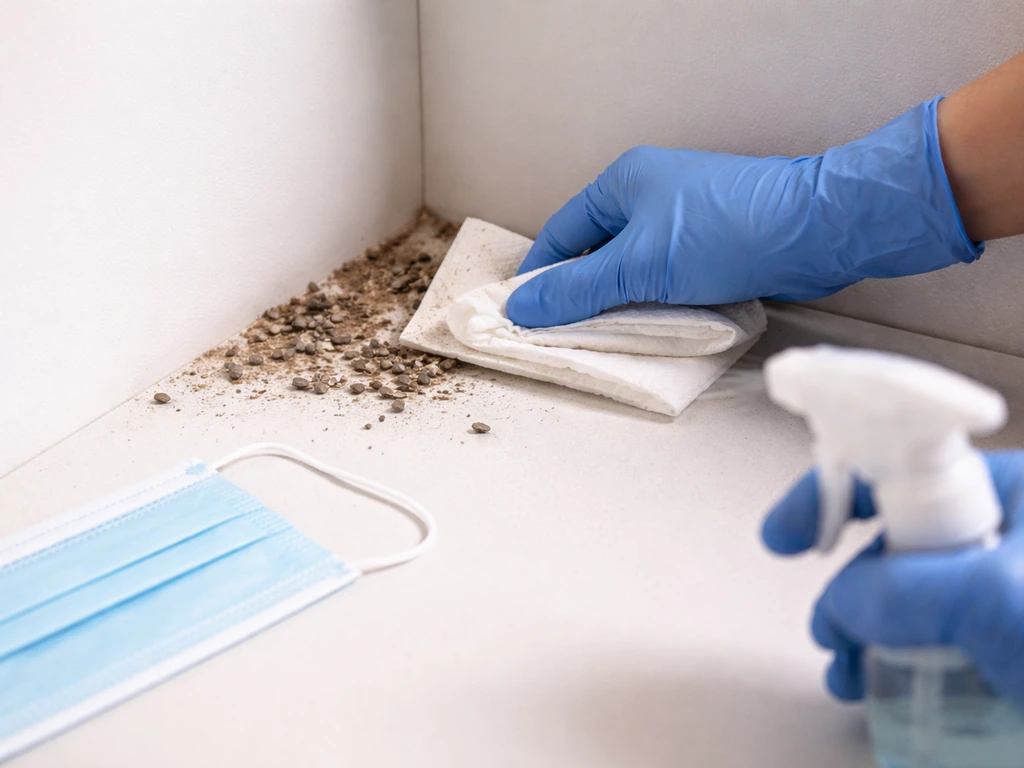
Bird droppings carry real health considerations, primarily the risk of histoplasmosis, a fungal infection caused by Histoplasma, which lives in bird and bat droppings. You inhale spores when droppings are disturbed and become airborne. The CDC notes that the best way to prevent exposure is to not let droppings accumulate in the first place, but if cleanup is needed, you want to minimize aerosolization. Wear gloves and a mask (ideally an N95). Dampen the droppings with water or a diluted bleach solution before wiping so you're not creating dust. Bag and dispose of materials. Wash your hands thoroughly afterward. Don't sweep dry droppings.
Keeping birds from getting back in
The single most effective prevention is addressing window reflections, since that's the most common reason birds enter or collide with homes. Cornell Lab of Ornithology recommends applying patterned deterrents directly to the outside surface of glass, with markings spaced no more than 2 inches apart vertically and 4 inches apart horizontally (Acopian BirdSavers use the 4-inch spacing). Window screens, exterior films, and tempera paint patterns all work. The key is coverage density: one or two stickers in a corner of the glass does almost nothing.
For repeated entry through open doors and windows, consider installing fine mesh screens or keeping doors to certain rooms closed during peak bird activity seasons (spring nesting season and fall migration are the highest-risk periods). If a bird keeps returning to a specific entry point, it has identified that space as a resource or nesting site, and removing the attractant (food, nesting material, or the reflection itself) is the only long-term fix.
- Apply window deterrents to the outside glass surface with markings no more than 2 inches apart vertically.
- Use fine mesh screens on windows and doors you frequently leave open.
- In garages, cover non-opening windows with opaque material to eliminate false exits.
- Remove bird feeders or water sources close to entry points if birds are regularly approaching the house.
- During nesting season, check for and block any gaps in eaves, rooflines, or vents before birds settle in.
- Keep exterior lights off or use motion-sensitive lighting at night to reduce light attraction during migration.
One final thought: if a bird enters your home, gets out safely, and the whole event leaves you unsettled or curious, that feeling is worth sitting with. If you're trying to understand the bird coming into your house meaning, this is also the moment to stay grounded while you reflect on what it may symbolize for you.
Whether you frame it as a spiritual nudge, a folkloric message, or simply an unusual morning, the experience of a wild creature briefly sharing your space is genuinely rare and genuinely strange. You don't have to resolve it completely. Sometimes the most honest thing is to notice it, care for the bird as best you can, and let the question of meaning stay open a little longer.
FAQ
Should I close all windows and doors after the bird gets out, or leave things open until night?
Close the entry points once the bird is outside, especially if you turned lights off then back on. Birds may re-enter if they notice the same bright interior area, and leaving doors open overnight can invite another disoriented bird.
What if the bird lands on something high (curtain rod, ceiling fan area) and I cannot see where it is?
Keep interior lights off except the single exit you want the bird to use, and open one window or exterior door. Avoid running fans or climbing, keep pets out of the room, and give it time to locate the brightest open path.
Is it safe to use a broom, towel-whipping, or “shooing” the bird toward the window?
Use calm, gentle herding only. Fast shooing increases panic and can cause additional collisions or internal injury. If it is not moving, create a barrier with a towel and slowly guide it, do not jab or sweep.
Can I put the bird back outside in the same spot where it entered?
It is usually better to place it outside in a sheltered area near vegetation or cover, not on a bare surface with predators or sudden glass reflections. If you used a box or bag for monitoring, keep it warm and quiet until release, then choose a safe location away from cats and dogs.
How long should I wait before assuming the bird is gone for good?
If it had a window collision, watch for about an hour with monitoring (for suspected injury) and check the room where it exited. If it flew out normally and there is no visible distress, you can move on after it is fully out of the home, but stay alert for a second bird attempting entry near the same point.
Does the species matter if I cannot identify it accurately?
Yes, but you can still interpret the encounter without perfect ID. Behavior and context matter, such as whether it perched calmly, crashed into glass, or repeatedly returned to one entrance. For spiritual interpretation, focus on what felt personally meaningful rather than forcing a specific species label.
What should I do if the bird has a lot of feathers and looks “fluffed up” but is not moving?
Treat it as potentially injured. Keep it in a warm, dark, quiet spot and plan for wildlife assessment if it does not improve quickly, especially if it is lethargic, unable to stand, or shows breathing difficulty. Do not offer food or water.
If I found droppings, should I be worried even if I cleaned right away?
Risk is lower if droppings were fresh and not disturbed, but still take precautions. Wear gloves and a mask, dampen before wiping, avoid sweeping dry material, bag it, then wash hands thoroughly.
How do I clean safely if the bird was in the house near furniture or bedding?
Remove washable items and launder on normal settings. For areas that cannot be washed, damp-clean with disposable towels or wipes to avoid dust, then discard. Use ventilation and avoid dry sweeping, especially if you suspect droppings.
What is the best prevention if the issue keeps happening through the same window?
Prioritize reflection control on the outside of the glass. Apply a patterned deterrent with tight spacing across the whole window, because a few stickers in one corner usually do not break up the illusion. Pair this with closing curtains at peak times or using screens.
Will leaving a single light on near the exit actually help, or does it attract more birds?
It can help if you turn off other interior lights and open one clear exit, because the bird follows the brightest path. If you leave many rooms lit, you can unintentionally create multiple “attractions” and prolong the bird’s confusion.
Is it okay to relocate the bird yourself if it seems healthy after release?
If it flies off normally, you can leave it alone. If it cannot fly well, consider contacting a rehabilitator rather than transporting it yourself, since handling and temperature stress can worsen injuries. Only relocate if a professional advises it.
What should I do if a cat or dog is in the room when the bird enters?
Immediately separate animals and close pet access to that room. Even brief contact can cause severe infections from saliva or punctures, so if the bird was bitten or seized, seek wildlife help right away rather than waiting to see if it recovers.
How can I interpret the visit without relying on omens, especially if I feel unsettled?
Use a “meaning check” rather than a prediction. Ask what the timing coincided with emotionally (worry, transition, grief, or a decision). Treat the event as an invitation to pause and take one practical or emotional step, rather than forcing a specific fate-based message.
Next Articles
Dreaming of Bird Flying in the House Meaning and Signs
Interpret bird flying in your house dreams: spiritual, biblical and emotional meanings plus quick steps to journal and a
Myna Bird Coming Home Meaning in Astrology and Spirituality
Astrology and spiritual meaning of a myna bird coming home, plus scenarios, timing clues, and calming next steps.
Meaning of a Black Bird Flying Into Your House: What to Do
What a black bird flying inside your house can mean, practical steps to remove safely, plus spiritual symbolism options.