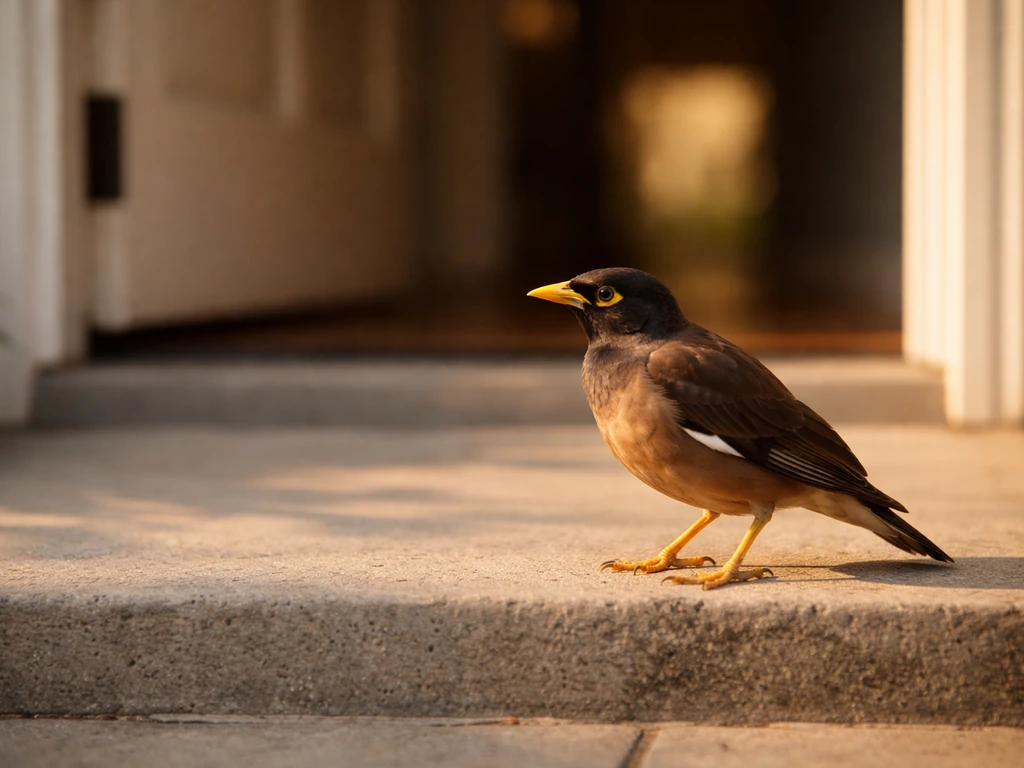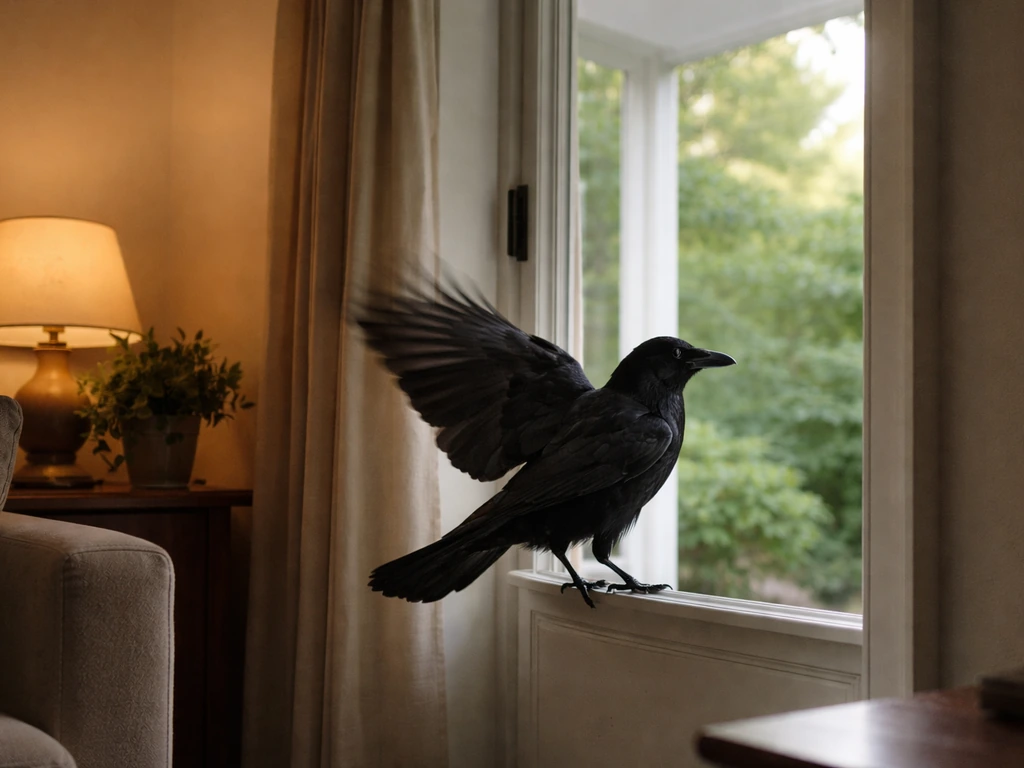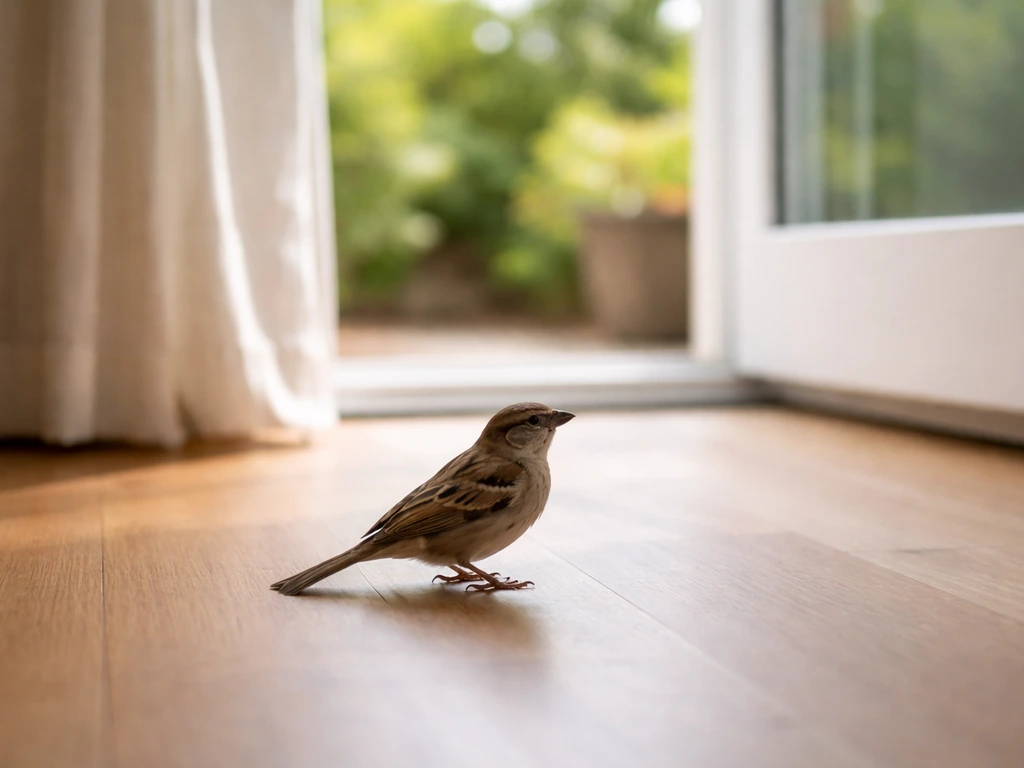
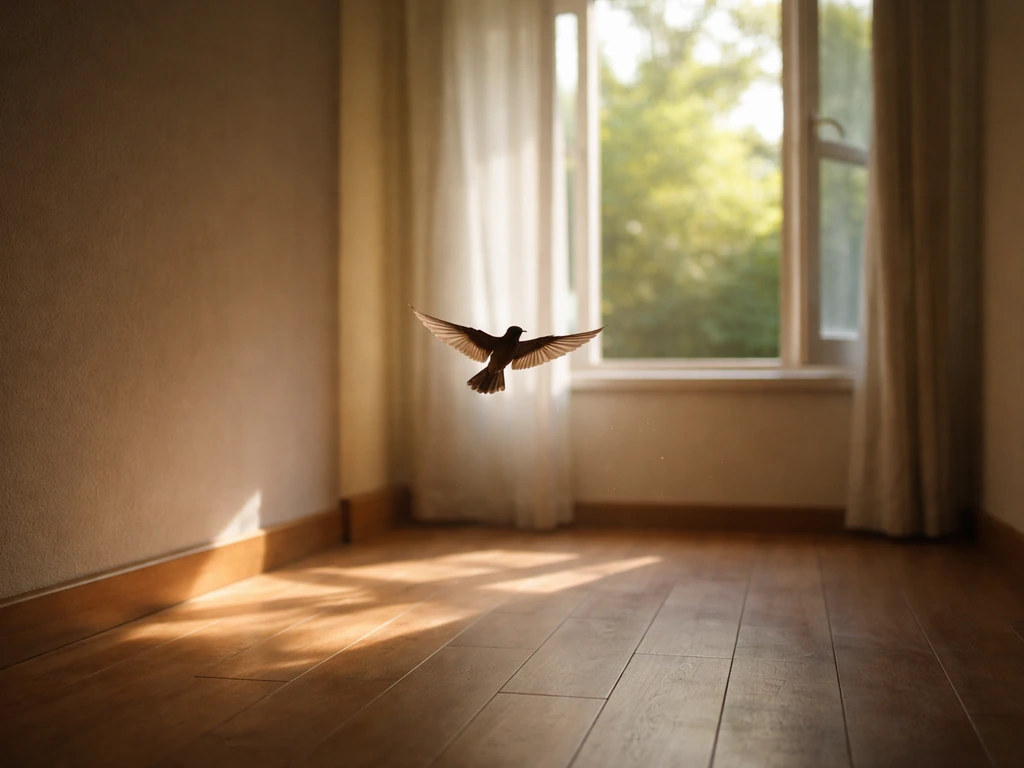
Dreaming of a bird flying inside your house most commonly points to change, communication, and a part of your inner life that is looking for more freedom. The house in dreams tends to represent your mind or your sense of self, and a bird in motion inside it suggests something is stirring, a new idea, an emotion trying to land somewhere, or a message that has not quite been received yet. It rarely means something bad, though the details of the dream matter a lot for how you interpret it.
Dreaming of Bird Flying in the House Meaning and Signs

Maya Hartwell
1 Jun 2026
What the Dream Image Usually Symbolizes
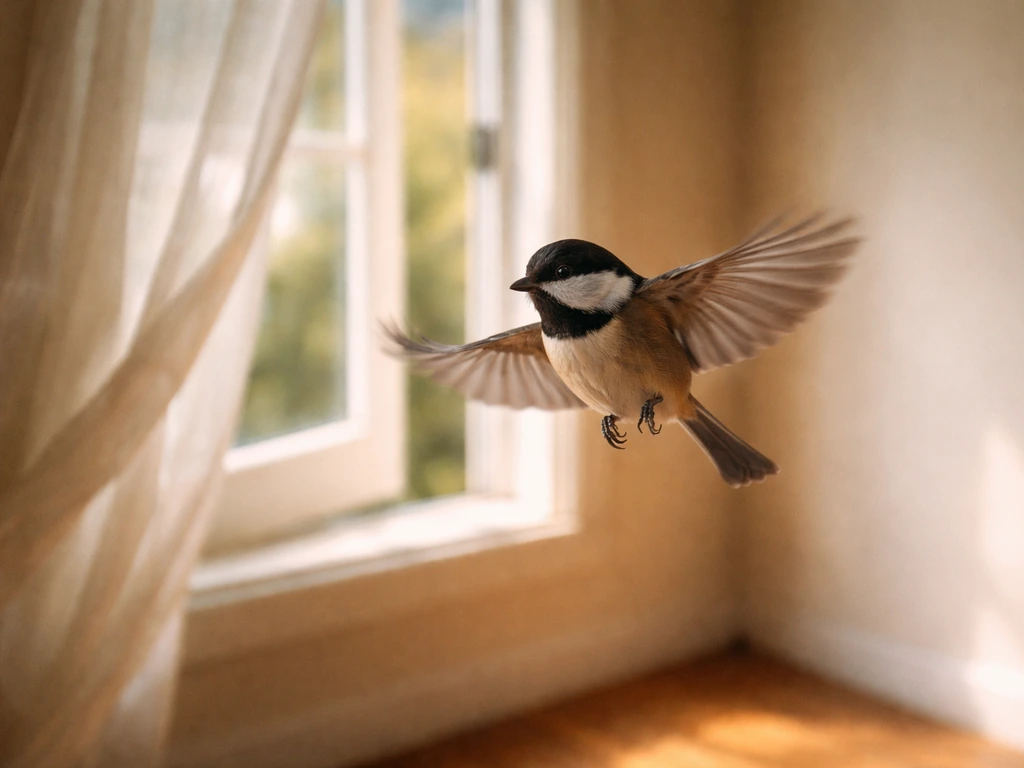
To understand this dream, it helps to look at the three core elements separately before putting them together. Birds, across nearly every dream tradition, represent communication, freedom, and the movement of ideas or spirit. Flying specifically adds momentum to that symbolism: something is in motion, not static. And the house is almost universally treated in dream work as a representation of the self, the psyche, or your domestic and personal life. Put those three things together and you get a pretty clear symbolic picture: something related to freedom, communication, or a new possibility has entered your inner world and is actively moving around inside it.
Many dream dictionaries note that a bird appearing in flight is often tied to movement toward change. That aligns with how a lot of people describe these dreams: they feel significant, they stick around after waking, and they are hard to shake. Some sources link birds entering the house specifically to a psychological or spiritual transition taking place in mind, body, and soul. That framing is useful because it does not pin you to a single outcome. It just says something is shifting.
The Spiritual Meaning of a Bird Flying in Your House
From a spiritual and metaphysical standpoint, a bird flying inside your home in a dream is widely interpreted as a message or a form of guidance arriving. The idea is that your subconscious, or something beyond it depending on your belief system, is using the image of a bird to deliver something worth paying attention to. In Islamic dream interpretation rooted in Ibn Sirin's tradition, birds in the home are sometimes associated with angels or spiritual presences, and flying among birds can signal important changes approaching, often for the better. These are framed as symbolic possibilities, not certainties.
In broader spiritual and metaphysical traditions, the species and color of the bird tend to shift the interpretation. A white bird often reads as peace or purity. A black bird can suggest a message that requires careful attention (more on the sibling topic of black birds specifically in that dedicated piece on the site). A brightly colored bird like a cardinal or parrot might lean toward creative energy or bold communication. If the species was vivid and memorable in your dream, that detail is worth sitting with.
One consistent thread across spiritual traditions is that the bird flying inside the house represents something that has crossed a threshold. It has moved from the outside world into your personal space. Spiritually, that is often read as a message or awareness that has now entered your consciousness and cannot be ignored. Whether you read that through a metaphysical, psychological, or religious lens, the core invitation is the same: pay attention.
How the Bird's Behavior Changes the Meaning
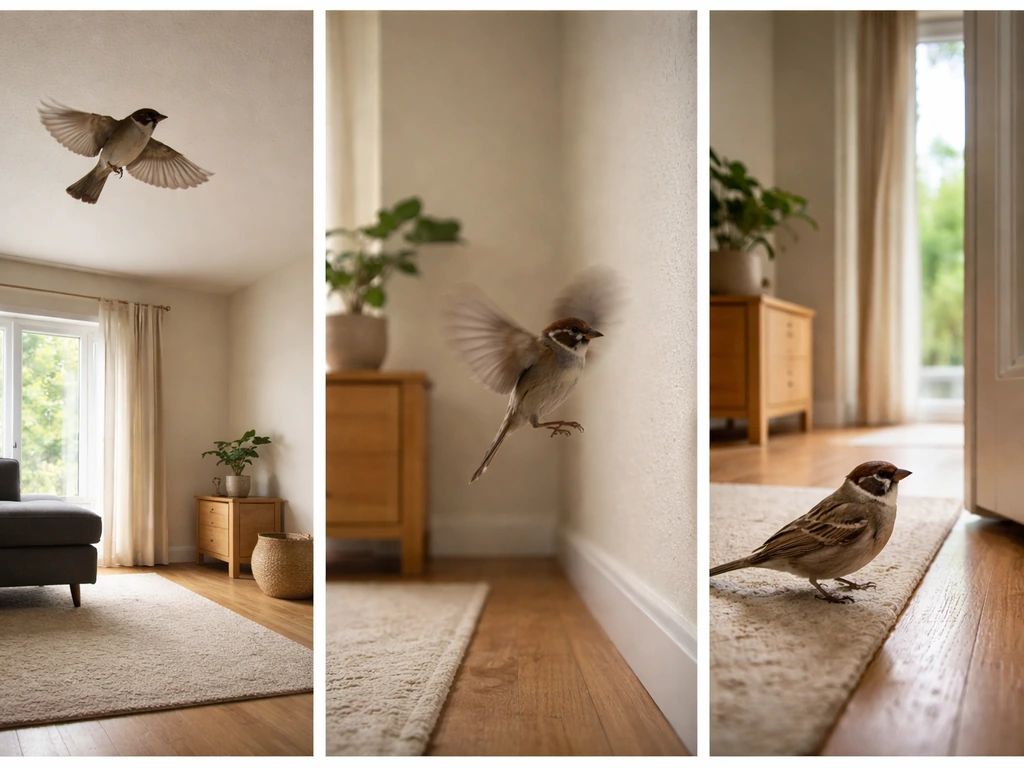
This is where your specific dream details become the most useful tool you have. Dream interpreters across traditions consistently say the bird's behavior is as important as the bird itself.
| Bird Behavior in the Dream | Common Interpretation |
|---|---|
| Flying freely, calmly around the room | Positive omen, ideas or messages circulating freely, a sense of grace or ease arriving in your life |
| Frantically flapping, hitting walls or windows | Something feels trapped in your life, an idea, emotion, or situation that is not finding its exit yet |
| Flying toward a window and escaping | A resolution is coming, something you have been holding is about to be released |
| Landing calmly on furniture or your hand | A message is ready to be received, something is settling, a pause or arrival is near |
| Circling without landing | Uncertainty, a decision or situation orbiting without resolution |
| Wounded or struggling in flight | Difficulty with progress, something that wants to move forward but is hindered |
| Flying in through a window | An unexpected development is approaching, something from outside your current awareness entering your life |
A bird that enters through a window in the dream is particularly interesting because the window acts as the delivery mechanism: something unexpected is coming through a specific opening. Dream sites that focus on this detail often connect it to the arrival of the unexpected, which can be positive or challenging depending on your emotional response during the dream. A wounded or struggling bird, by contrast, is often linked to difficulty in getting something important off the ground, whether that is a project, a relationship, or a personal goal.
Emotional and Life-Context Connections Worth Considering
Dreams do not occur in a vacuum. What is happening in your waking life right now matters enormously for how this dream is speaking to you. The house as a symbol of self and safety means that a bird flying inside it often connects to questions of boundaries, privacy, and what you are letting into your personal space. If your home life or personal boundaries have felt disrupted lately, the flying bird might be externalizing that experience.
The freedom theme is worth taking seriously too. Birds in flight often represent liberation or the desire for it. Are you feeling confined in any area of your life right now? A job, a relationship, a routine, a role you have outgrown? The bird moving freely or trying to get out of the house could be pointing directly at a part of you that is looking for more room to breathe. Conversely, if the bird felt like a welcome presence and you felt calm watching it, the dream might be telling you that something good is already arriving.
Home in dreams also carries the energy of what is familiar and private. When something that belongs outside, like a wild bird, enters that space, it can represent a boundary being crossed, not necessarily in a threatening way, but in a way that draws attention. You might be receiving something from the world outside your usual comfort zone. Or the dream might be prompting you to check in on what you are allowing into your inner life, relationships, information, influences, or expectations from others.
Biblical and Folklore Perspectives

A Biblical Lens
In Christian scripture, birds are consistently presented as symbols of God's provision and care rather than omens. Matthew 6:26, one of the most-cited bird passages, speaks of how the birds of the air are cared for by God, and uses that as evidence of divine provision for people. The Psalms also carry bird imagery in a tender direction, with references to sparrows and swallows nesting near God's dwelling as a picture of peace and belonging. If you read this dream through a biblical lens, a bird freely present in your home might read as a reminder of provision, presence, and peace, rather than a warning.
Folklore from Around the World
Folklore on birds and indoor spaces is remarkably varied, and it is worth knowing that before you land on any one interpretation. In some European and Irish traditions, a bird in the house, particularly one that circles the room and lands on furniture, has historically been treated as a death omen or a sign of illness. Appalachian and Southern U.S. folklore similarly frames a bird in the house as a sign of either a visitor coming or a death approaching, with the traditional response being to quickly open windows and doors to let the bird out.
But not all folklore goes dark. In some European traditions, a robin entering the home is considered good luck, while a cuckoo is treated as a bad omen. In parts of Asia and other cultural traditions, a bird flying into the home is read as a harbinger of celebration or good news. The species matters, the direction it flies matters, and so does the cultural lens you bring. There is no single universal folklore verdict, which is actually freeing: it means you get to weigh these interpretations and decide which resonates.
How to Interpret This Dream Practically, Starting Today

The most useful thing you can do after a vivid dream like this is to write it down while the details are still fresh. Cleveland Clinic also recommends keeping a dream journal, noting that it can help you track and understand your experiences and emotions keeping a dream journal can help you track and understand your experiences and emotions. Journaling is recommended consistently across sleep research and dream work as the first step in making sense of a dream's emotional content. Do not just record what happened. Record how you felt during it.
Here are some journal prompts to work with right now:
- What was the bird doing, and what did I feel while watching it? (Calm, anxious, curious, sad, hopeful?)
- What kind of bird was it, and does that species carry any personal meaning for me?
- Was the bird trying to get out, settling in, or just passing through? What might that mirror in my waking life?
- What part of my life right now feels like it needs more freedom or open space?
- Is there a message I have been waiting for, or one I have been avoiding?
- What has recently crossed into my personal space, emotionally, relationally, or practically, that I have not fully processed?
- If the bird could represent one part of me, what part would it be?
After journaling, you do not need to take a grand action. Small next steps are enough. If the dream pointed to something about freedom, you might start a conversation you have been putting off. If it felt like a message, sit quietly for a few minutes and ask yourself what you have been too busy to hear. If it felt unsettling, sharing the dream with someone you trust can help defuse its emotional charge.
If you find the same dream recurring, some dream therapists and sleep medicine practitioners recommend a technique called imagery rehearsal therapy (IRT). The idea is simple: while awake, you rewrite the dream's ending to something less distressing, and then mentally rehearse that new version. This approach is evidence-supported for reducing nightmare distress and can help you feel more in control of recurring dream material.
When to Treat This as a Stress Signal Rather Than an Omen
Not every vivid or unsettling dream is a spiritual message. Sometimes it is your nervous system doing housekeeping. If the bird dream left you frightened, if you are having it repeatedly, or if you are waking up feeling anxious and having trouble getting back to sleep, those are signals worth taking seriously as health and wellness considerations rather than purely spiritual ones.
The American Academy of Sleep Medicine distinguishes between the occasional vivid dream and what it calls nightmare disorder, which involves recurrent, distressing dreams that significantly disrupt sleep or cause daytime distress. If your bird dream (or any dream pattern) is happening frequently and affecting your sleep quality or your mood the next day, that is a cue to talk to a healthcare provider rather than to dig deeper into omen interpretation.
Stress, anxiety, major life transitions, medication changes, and irregular sleep schedules can all produce vivid, dramatic dream content. If your life is under significant pressure right now, the bird crashing around the inside of your house might be your mind visualizing that pressure rather than delivering a cosmic message. If you are wondering about bird enters your home meaning, focus on what the dream made you feel and what changed in your life around the same time.
Some people also connect the myna bird coming home to astrology, using it as a symbolic cue tied to timing, omens, and personal meaning myna bird coming home meaning astrology. Both interpretations can be true at once: the dream can be meaningful symbolically and also be a sign that you need more rest, more support, or less stress. One does not cancel out the other.
The clearest guiding principle is this: if the dream sparks curiosity and reflection, explore its symbolism. If it is causing distress or repeatedly disrupting your sleep, that is the signal to bring in practical support. Dreams about birds in the home are rarely something to fear, and this particular dream image tends to carry far more invitation than warning in it.
FAQ
Does dreaming of a bird flying in my house always mean good luck or a positive change?
Look at two things first, how the bird landed or behaved (calm, agitated, trapped, injured) and how you felt watching it (welcome, fearful, indifferent). If you felt safe, the “message” angle is more likely, if you felt threatened or powerless, the dream may be reflecting stress about boundaries or feeling unable to make progress.
What does it mean if the bird looks frantic or keeps crashing inside the house?
Not necessarily. If the bird repeatedly crashes, circles frantically, or you are struggling to get it out, the dream can reflect “stuck” energy around a goal or an emotional situation you have not given a clear path forward. In that case, focus on one small action to restore momentum (a plan, a difficult conversation, or setting a clear rule about access to your time).
Does the bird’s direction of movement in the dream change the meaning?
Yes, the direction of flight can matter even within the same tradition. A bird flying toward you can symbolize awareness arriving in your personal sphere, a bird heading toward a door or window can point to options opening (or a decision coming), and a bird escaping can suggest letting go of something that is no longer serving you.
How should I interpret the dream if the bird enters through a window versus a door?
A window often acts like a “specific channel” for the dream’s symbolism. If the bird enters through a window, it can point to an unexpected idea, news, or opportunity coming through a particular source (social media, a conversation, a work channel). If it enters through an open door, it can be more about access, permission, and what you are allowing into your home life or routine.
What if the bird is injured or dying in the dream?
If the bird is sick, bleeding, or visibly wounded, it commonly maps to difficulty getting something off the ground, like a plan that keeps stalling or a relationship that needs care. Treat this as a prompt to check what is being neglected (rest, communication, follow-through), rather than assuming a literal outcome.
How much should I trust the bird’s species and color in interpreting the dream?
Color can refine the emotional tone. White often aligns with relief or clarity, bright colors can relate to creativity and confident self-expression, and darker colors typically suggest you need to pay attention to a specific message or tension. If the color still stands out strongly, write down the color and the feeling it created, because emotion is usually the tie-breaker.
What does it mean if I realize I’m dreaming during the bird-in-the-house dream?
If you are aware you are dreaming, you can test interpretations. Ask yourself in the dream (or remember afterward) what the bird “wants” or where it is trying to go. When a dream is lucid, the most actionable meaning is often the one that helps you move from confusion to clarity in waking life.
What does it suggest if the bird can’t get out or seems trapped?
When the bird is trapped, the house-safety symbolism can flip into “boundaries under pressure.” Common waking-life links include feeling monitored, overwhelmed by visitors, difficulty setting limits, or being stuck in a routine. A practical step is to choose one boundary you can enforce this week, then create a short plan to communicate it.
If I keep having the same dream, is it a warning or just a pattern?
Recurrence usually points to a repeating emotional theme, not a fixed prophecy. Track what has been repeating in your life alongside the dream, stress peaks, relationship tensions, or unresolved decisions. If the dream is frequent and disturbs sleep or mood, consider speaking with a clinician, because imagery rehearsal therapy or sleep-focused support may help.
How do I connect this dream meaning to what’s happening in my life right now?
For many people, this dream shows up during periods of change, especially when daily life feels restrictive or when you are trying to process new information. If you recently started a new job, ended a relationship, moved, or changed routines, that context can often explain why “freedom and communication” imagery is so prominent.
What should I do if the dream leaves me anxious or scared?
Treat it as “symbolic attention” rather than a literal sign if you have anxiety after waking. Try a brief grounding routine (slow breathing, write one sentence about what you feared, then one sentence about what you actually control today). If anxiety persists or sleep is affected, shift from interpretation to support.