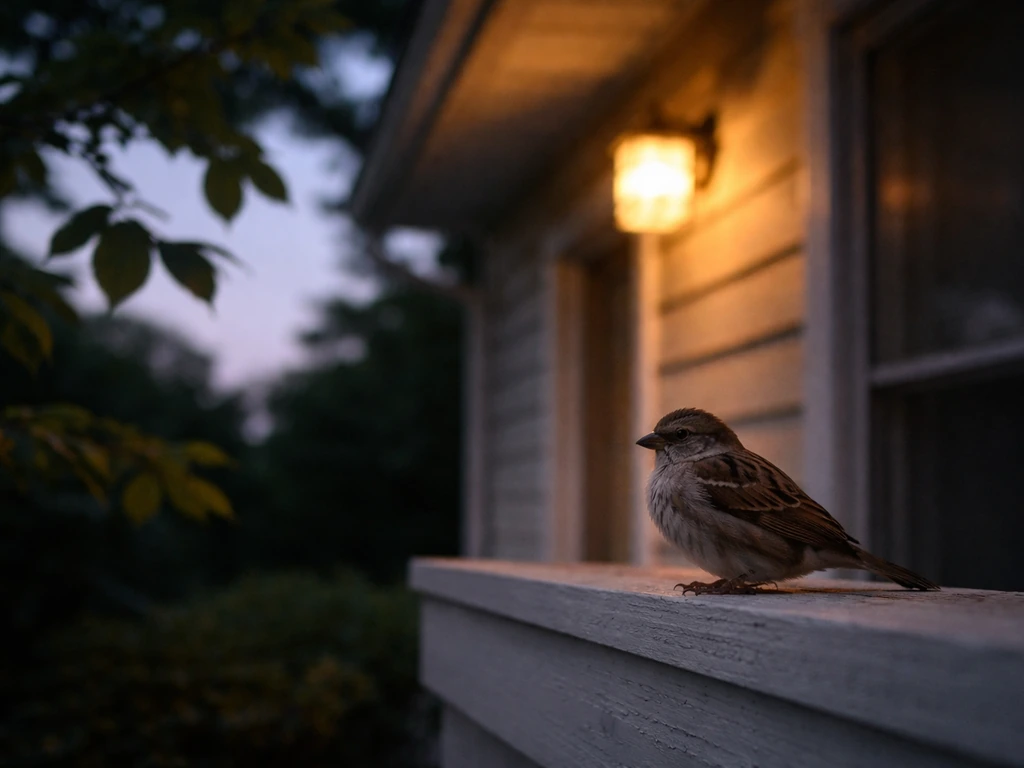
A bird building a nest in your house is almost always a sign of one thing first: the bird found a safe, sheltered spot and took it. That's the practical truth. But for a lot of people, it also feels like something more, and across dozens of cultural and spiritual traditions, nest-building inside or directly on a home is considered one of the more meaningful bird encounters you can have. This article covers both sides so you can handle what's happening right now and decide what, if anything, it means to you.
Bird Building Nest in My House Meaning and What to Do

Maya Hartwell
26 Apr 2026
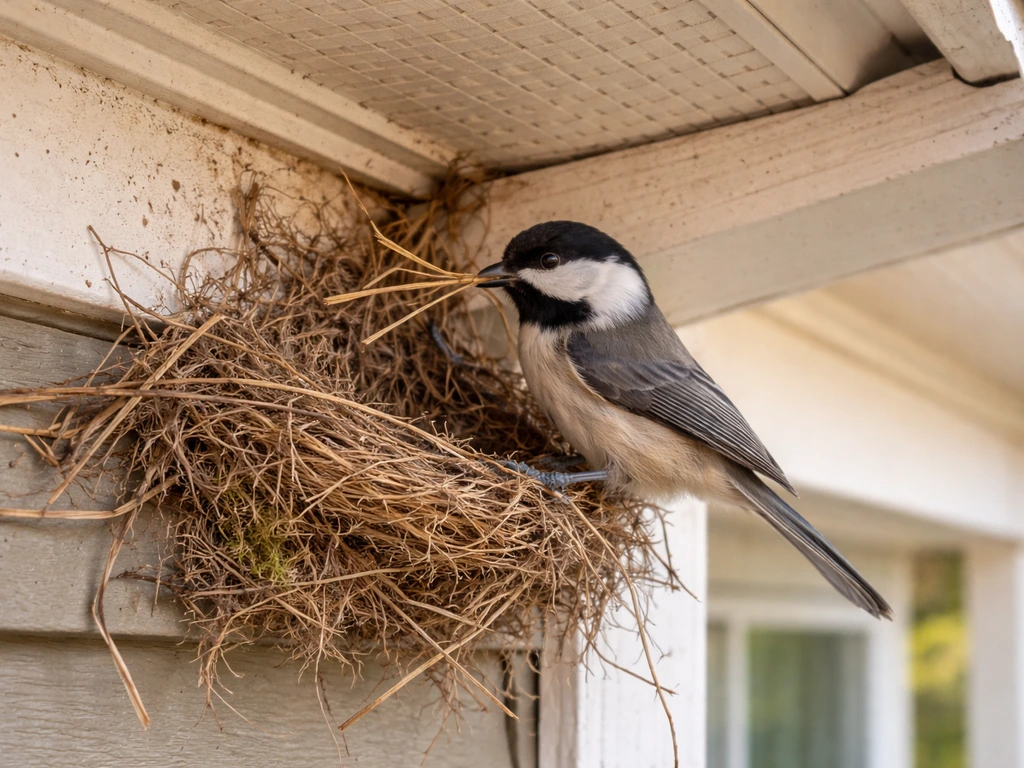
What it actually means when a bird builds a nest in your house
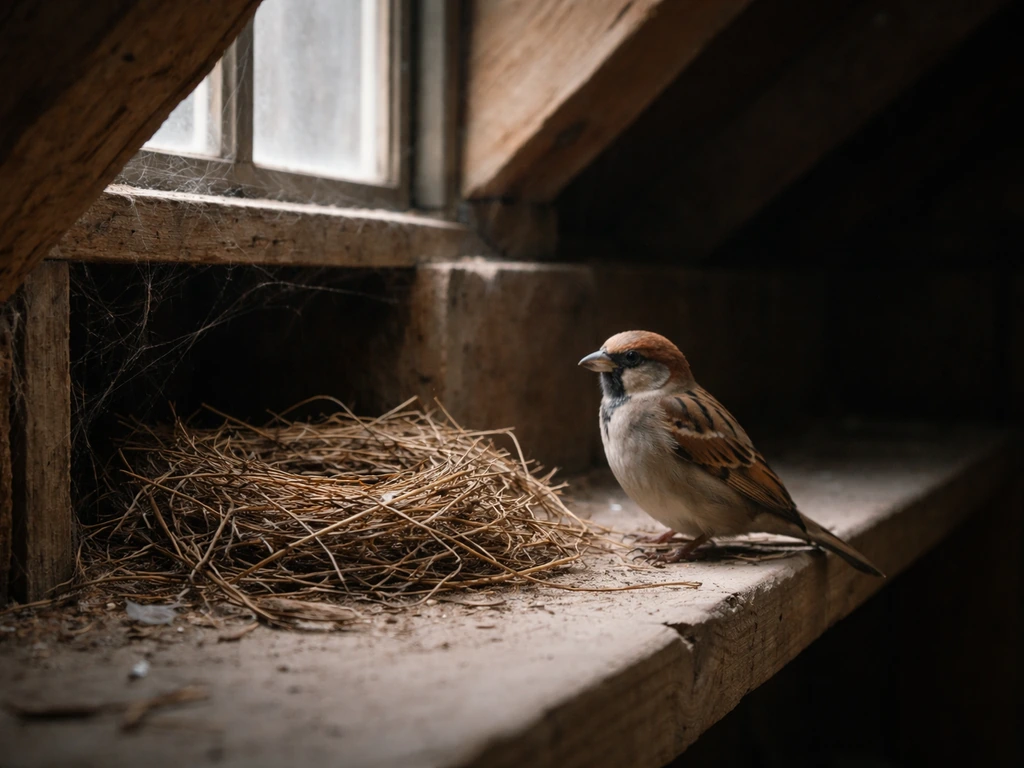
In plain terms, a bird nesting inside your house means the bird perceives your home as a viable habitat. It offers what the bird needs most during breeding season: shelter from wind and rain, protection from predators, and a stable surface to anchor a nest. Your house didn't invite the bird in a mystical sense, but it did provide exactly the right conditions at exactly the right time. That said, the fact that a living creature chose your home as the place to raise its young is not nothing. It carries weight across many traditions, and there's no reason you can't hold both the natural explanation and the symbolic one at the same time.
Why birds pick houses and which species are most likely to show up
Birds are opportunists when it comes to nesting. They're not being random; they're scanning their territory for spots that check specific boxes. Your home, particularly any open vents, gaps under eaves, porch overhangs, open garages, or chimneys, can look like prime real estate to a bird on the hunt for a nest site.
The most common indoor or on-structure nesters in North America include house sparrows, European starlings, house finches, chimney swifts, barn swallows, and robins. Pigeons and mourning doves sometimes use wide ledges or open sheltered areas. Each species has its own triggers but they share a few key ones: the arrival of spring or early summer (breeding season), an abundance of nesting material nearby like grass, twigs, and string, and the presence of a sheltered cavity or ledge within their established territory.
Indoor nesting, meaning birds getting fully inside your house, is less common but does happen through open windows, uncapped chimneys, or damaged roof soffits. More often, the nest is under your roof rather than inside your living space. Either way, the nesting triggers are the same: the bird assessed the location and decided it was safe enough to raise young there.
The spiritual and symbolic meaning of a bird nesting in your home
Across cultures and throughout history, a bird choosing your home as a nesting site has been seen as one of the most auspicious bird encounters possible. The symbolism almost universally centers on themes of protection, blessing, new beginnings, and the sanctity of the home itself.
Biblical and Christian traditions
In the Bible, birds nesting near or within sacred spaces are described as a sign of God's provision and peace. Psalm 84 specifically references the sparrow finding a house and the swallow a nest near the altar, framing this as a sign of belonging and divine shelter. In many Christian folk traditions, a bird nesting on your home was considered a sign that the household was under God's protection, and disturbing the nest was thought to bring bad luck or hardship.
Celtic and European folklore
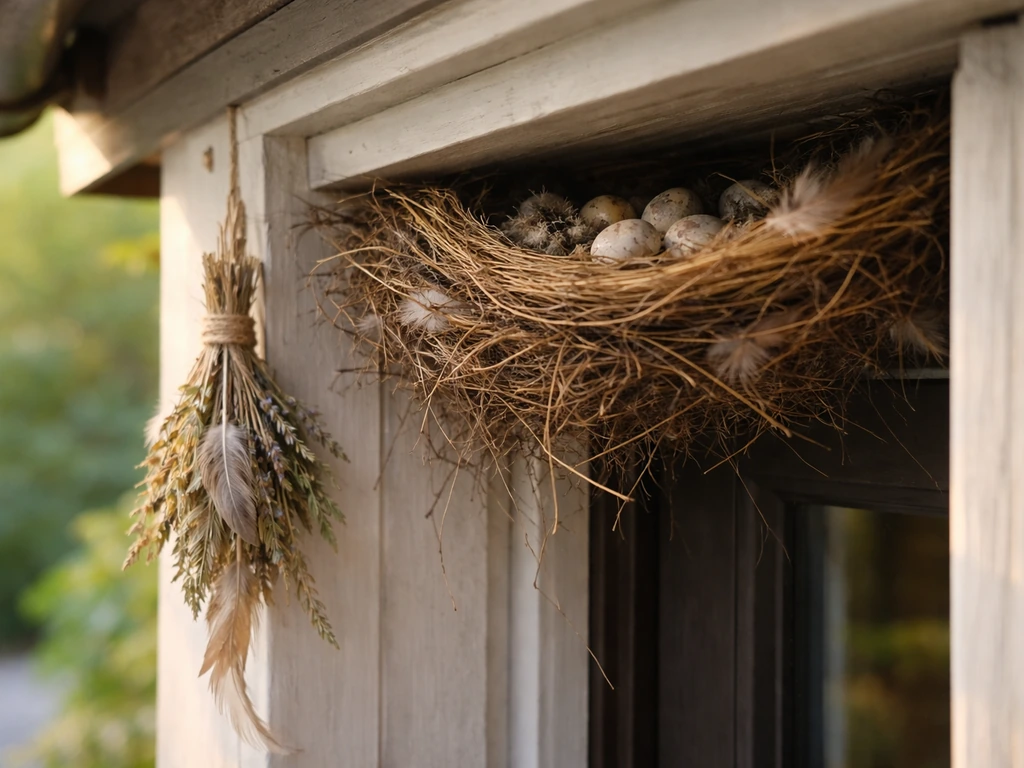
Celtic traditions viewed nesting birds near a home as a sign that the land and home were in harmony with nature. Swallows nesting under the eaves were especially prized as omens of good fortune, safe return for travelers, and prosperity for the household. In many parts of rural Europe, it was considered deeply unlucky to remove a swallow's nest, and doing so was said to invite illness or misfortune. The robin, closely tied to spiritual messages in British and Irish folklore, nesting near a home was thought to signal protection and even communication from the spirit world.
Eastern and indigenous traditions
In many Chinese folk beliefs, a bird choosing to nest in or on your home is considered extremely good luck, associated with happiness, abundance, and family unity. Swallows are particularly associated with marital harmony and the return of prosperity. Various indigenous North American traditions view nesting birds as carriers of messages from the spirit world, with the nest itself symbolizing community, safety, and the sacredness of home as a concept. In Feng Shui thinking, a bird nest near the entrance of a home is often read as an invitation for positive energy and new opportunities to enter.
The deeper symbolic thread
What's striking is how consistent the symbolic meaning is across traditions that had no contact with each other. A nest is about new life, protection, and home as a sacred concept. When a bird builds one in your space, the invitation (if you choose to see it as one) is to reflect on what home means to you right now, what new things might be taking shape in your life, and what you're being asked to nurture or protect. It can also be a nudge about boundaries, as nests are carefully built and fiercely defended, and sometimes the message is about what structures or limits you need to put in place in your own life.
If the nest is near your front door or main entrance, many traditions treat that as especially significant since the threshold of a home carries its own spiritual weight across cultures. You might find the related meaning of a bird nest at the front door worth exploring alongside what you're experiencing now. This includes a bird nest on a door wreath, where the wreath’s placement can add its own symbolism to the meaning bird nest on door wreath meaning.
What to do today: safety, humane removal, and protecting your home
Your first step is to figure out exactly where you are in the nesting timeline, because that determines everything about what you can and should do. Here's how to think through it.
Step 1: Assess the nest status before touching anything
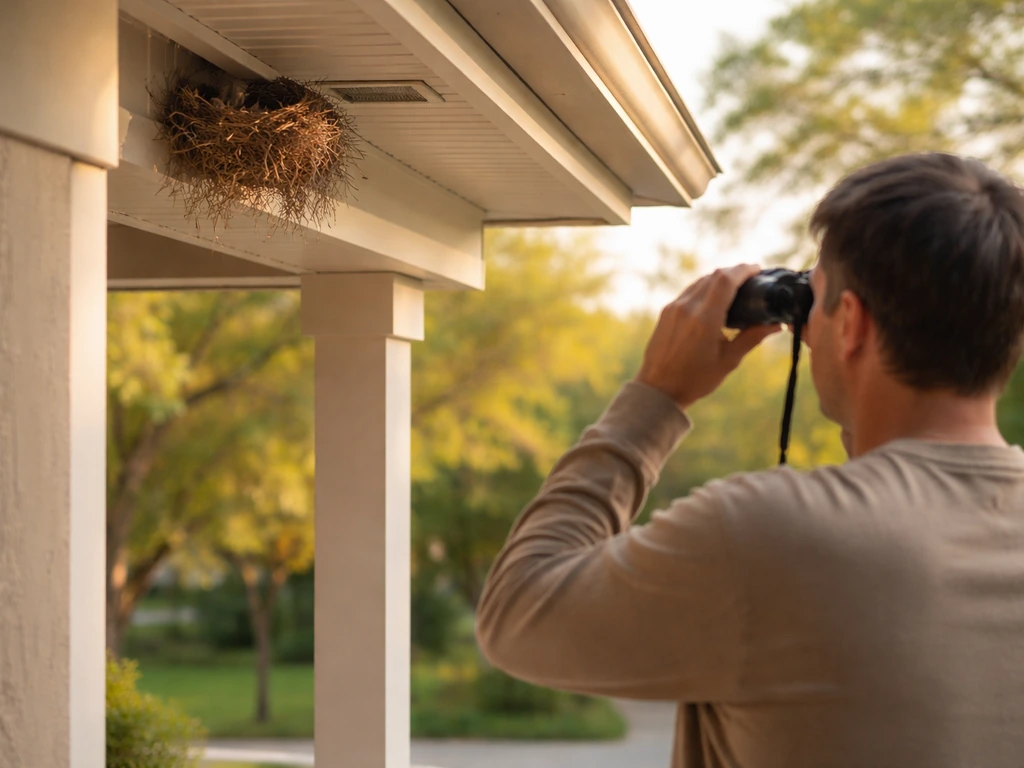
Look carefully from a distance. Is the bird still gathering materials, or is it sitting on the nest? If you can tell whether the bird is in or on the nest, you can better understand what stage the encounter is in and how to respond. This is where the phrase the bird is on the nest meaning can help you frame what the bird’s behavior might symbolize for you the bird is in or on the nest.
Do you see eggs? Do you hear or see chicks? The answers determine what's legal and what's humane. Most native bird species in the US are protected under the Migratory Bird Treaty Act, which makes it illegal to disturb or remove an active nest (one with eggs or live young) without a federal permit.
House sparrows and European starlings are not protected under this law, but all others generally are.
Step 2: If the nest is still being built and has no eggs
This is your window. If there are no eggs and no chicks, and you want to prevent nesting in that location, you can humanely discourage it now. Remove the nest materials (most birds will simply find another spot) and block or seal the entry point the bird is using. Do this gently and promptly. Once eggs are laid, your options narrow significantly.
Step 3: Address any immediate safety or damage concerns
blank" rel="noopener noreferrer">Nests built inside vents (especially dryer vents and bathroom exhaust vents) are a fire hazard and should be dealt with even if it means contacting a wildlife removal professional. Nests in chimneys can block airflow and pose carbon monoxide risks. If the nest is in a vent or chimney and you suspect eggs or chicks are present, contact a licensed wildlife removal service rather than attempting removal yourself. blank" rel="noopener noreferrer">Sears PartsDirect also warns that a bird or nest inside a dryer vent can block airflow, make the dryer work harder, and become a fire hazard, and it advises not to stick anything into the duct if the bird is still inside.
Step 4: Droppings cleanup and health precautions
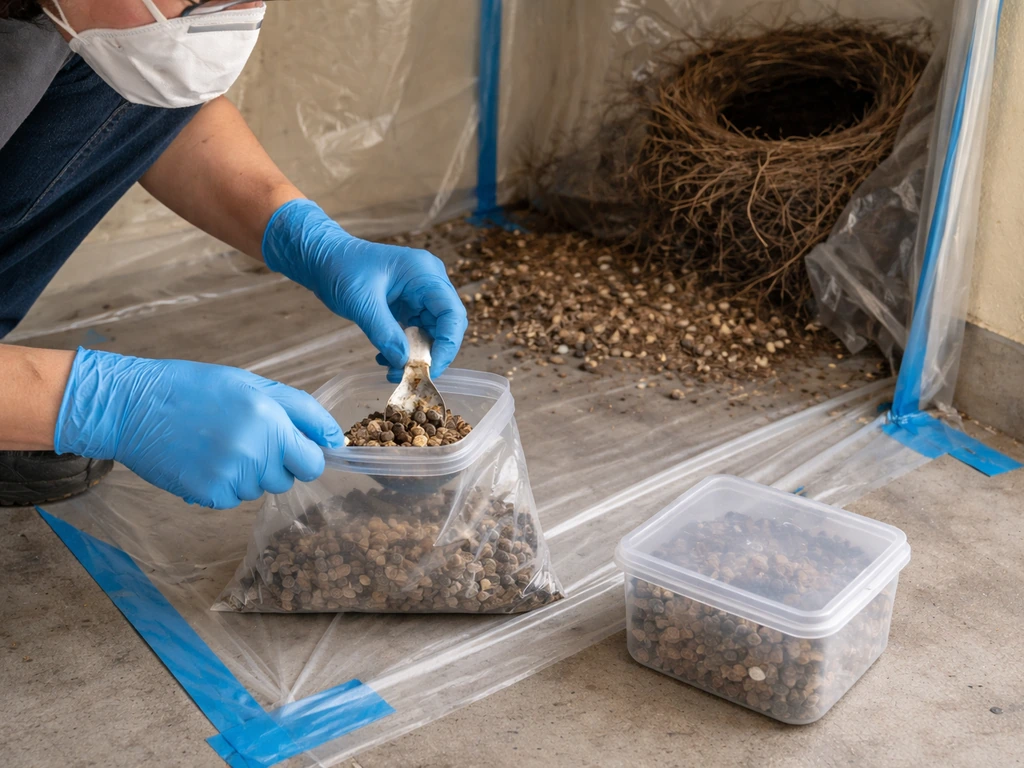
Bird droppings aren't just a mess. The CDC notes that accumulated bird and bat droppings can harbor Histoplasma, a fungus that causes histoplasmosis, a lung infection you can get by inhaling disturbed spores. Don't dry sweep or use a leaf blower on droppings accumulations. Wet the area first to reduce dust, wear a mask (ideally an N95), and use gloves. If there's a large accumulation, the CDC advises calling in professional cleanup rather than handling it yourself.
When to leave the nest alone
If the nest already has eggs or chicks, the honest answer is: wait it out if it's at all safe to do so. Most songbird nesting cycles, from egg-laying through fledging, run about four to six weeks total. That's not long in the grand scheme of things, and in many traditions, allowing that cycle to complete undisturbed is considered the right thing to do both practically and spiritually.
NestWatch, a program run by the Cornell Lab of Ornithology, recommends treating any nest with eggs or live young as active and off-limits. If you're not sure whether a nest has been abandoned, give it at least four weeks before assuming it's inactive, and watch from a distance rather than checking up close, since too much human presence near an active nest can cause adults to abandon it or trigger premature fledging.
Once the chicks have fledged and the adults are no longer returning, the nest is considered inactive and can be safely and legally removed in most cases. At that point, seal the entry point so it doesn't become a recurring nesting spot next season.
| Nest Status | What You Can Do | What to Avoid |
|---|---|---|
| Under construction, no eggs | Remove nest materials, seal entry points, deter humanely | Waiting too long; eggs can appear quickly |
| Has eggs, adults present | Wait it out; observe from a distance | Disturbing or removing the nest (illegal for most native species) |
| Has chicks | Wait for fledging (typically 2-4 weeks after hatching) | Any disturbance that could cause adults to abandon nest |
| Appears abandoned (no activity for 4+ weeks) | Remove nest, clean area safely, seal entry point | Dry sweeping droppings; working without gloves/mask |
| In a vent or chimney (any stage) | Contact a licensed wildlife removal professional | DIY removal if eggs or chicks are present |
Reading the signs around the nest: droppings, bird behavior, and damage
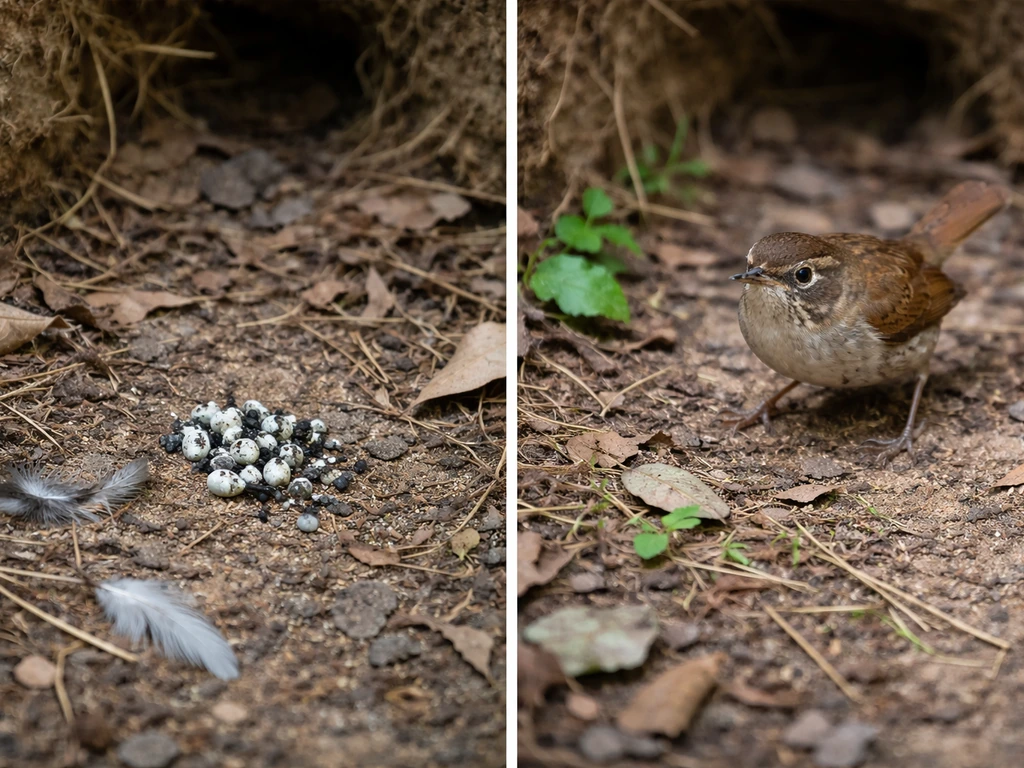
The nest itself is only part of the picture. What the bird is doing around it, and what it's leaving behind, can add layers to both the practical situation and, if you're so inclined, the symbolic interpretation.
Bird behavior near the nest
A bird that repeatedly returns to the same spot, makes alarm calls when you approach, or aggressively swoops near a particular area of your home is almost certainly nesting there or very close by. In spiritual terms, a bird that seems to be drawing your attention deliberately, circling, calling, or making unusual contact with you near the nest site, is often interpreted as a bird trying to communicate something or mark a moment as significant. Whether you read that as a message from the universe, a spirit guide, or simply as a protective parent bird doing its job, both interpretations are fair.
Droppings as a signal and a health consideration
A concentration of droppings under or near a specific area of your home is often the first sign that birds have been roosting or nesting there regularly. Practically, this tells you there's a persistent nest site that needs attention after the nesting cycle ends. Symbolically, some traditions read bird droppings landing on or near you as a sign of incoming luck or financial blessing (think of the Italian and Turkish folk belief that bird droppings on you bring good fortune). A nest accompanied by heavy droppings accumulation is less romantically poetic, but the nesting itself still carries the symbolic weight described above.
Structural and material damage
Some nesters, particularly starlings and sparrows, can cause real damage over time: pulling insulation from vents, blocking exhaust systems, and introducing parasites like mites into wall cavities. If you're seeing shredded materials, unusual smells, or signs of pest insects near the nest area, document the damage and factor that into your decision about how quickly to act after the nesting cycle ends.
Your next steps at a glance
- Locate the exact nest site and observe from a distance to determine the nesting stage (construction, eggs, or chicks).
- If there are no eggs yet, humanely remove nest materials and seal the entry point promptly.
- If eggs or chicks are present, check your local and federal wildlife protection rules and plan to wait out the nesting cycle (roughly 4 to 6 weeks from egg-laying to fledging for most songbirds).
- If the nest is inside a vent, chimney, or structural cavity, contact a licensed wildlife removal professional regardless of the nesting stage.
- After the nest is inactive, clean the area carefully: wet droppings before sweeping, wear gloves and an N95 mask, and consider professional cleanup for large accumulations.
- Seal the entry point permanently after cleanup to prevent the site from being reused next season.
- Take a moment, if you're drawn to it, to reflect on what the encounter means to you. A bird choosing your home as the place to bring new life into the world is not an everyday thing.
Whatever you decide to do practically, this kind of encounter tends to stay with people. There's something about watching a bird build a nest, gathering each piece of material with such deliberate care, that makes you stop and notice.
If you want to go deeper into the symbolic side, it's worth thinking about where the nest appeared (near the front door carries different weight than deep inside an attic), what species of bird it is, and what else is happening in your life right now. If you're trying to understand the bird nest outside my house meaning, the location matters, because different entry points can carry different symbolic weight.
If you are specifically wondering about the bird nest in front of house meaning, the spot matters and it is often tied to themes of welcome, protection, and new beginnings at your threshold. New beginnings and protected spaces tend to show up as themes in people's lives at the same time a nest appears, and whether that's coincidence or something more is entirely yours to decide.
FAQ
Does a bird building a nest in my house always mean it will have babies soon?
Not necessarily. Many birds build or start assembling nests days to weeks before eggs are laid, and some may abandon the spot if conditions change (weather, predators, human disturbance). If you can see eggs or chicks, treat it as active. If it is only a new structure with no eggs, you may still have a chance to discourage the location, depending on the species and local rules.
What should I do if the nest is in a spot I can’t safely access, like an attic or high vent?
If you cannot reach the area safely, avoid repeated checks and do not try to remove the nest. The safest approach is to reduce access by keeping doors closed, limiting activity below the area, and letting it run its course if it appears active. After the nesting cycle is clearly over, seal the entry points so it does not become a repeat site.
Is it okay to relocate the nest or move the materials to a nearby spot?
Usually no. Moving an active nest can harm the eggs or chicks and can cause adult birds to abandon the attempt. Even when it seems like “the same birds will just use the other spot,” relocation changes conditions and increases failure risk, and for many native species it can also create legal issues.
How can I tell whether a bird nest is active without getting too close?
Use observation from a distance, focusing on whether adults are repeatedly delivering food or whether you can clearly see eggs, chicks, or wing flutters. A strong sign of active nesting is frequent adult visits to the exact entry point, loud begging calls, or continuous presence on the nest. If you cannot confirm status, wait and re-check over several days rather than hovering near the nest.
What if the bird is building inside a dryer vent, bathroom exhaust, or other mechanical system?
In those locations, prioritize safety and ventilation. Such nests can cause overheating or block airflow, so plan for a professional inspection or wildlife removal. If you suspect eggs or chicks, do not attempt DIY removal, because the risk of disturbance and harmful exposure is higher.
Are house sparrows and starlings treated differently than native birds when it comes to the law?
Yes. In the US, house sparrows and European starlings are not covered the same way as most native migratory species under the Migratory Bird Treaty Act, but other birds around your property may be protected. Also, local or state rules can differ, so it is still smart to confirm the species before taking disruptive action.
Can I clean up droppings if a nest is still active?
Avoid disturbing the area if there are eggs, chicks, or adults actively tending the nest. If cleaning is unavoidable for health or sanitation reasons, it should be approached as a low-dust, protected procedure and ideally handled by professionals, especially if there is a heavy accumulation or poor ventilation.
If I want to prevent nesting next season, when is the best time to seal entry points?
The best time is after the nesting cycle ends and adults stop returning, when the nest is clearly inactive. Then seal the specific entry route (gaps, vents, or openings) so the same “prime real estate” is not available again. Sealing too early can trap adults in the structure or block the current nesting attempt.
Why are the birds acting aggressively or making loud alarm calls near me?
That behavior usually means the nest is very close and the adults are defending the area, especially when you approach the exact approach route. Give the birds space and change your walking path temporarily. Increased swooping and sustained calls are a common signal to stop trying to “manage” the situation on your own.
Do I need to worry about parasites, mites, or other pests because the nest is near my living space?
Sometimes, yes, especially with species known to nest in cavities near walls or vents. After the nesting ends, inspect the surrounding area for signs like shredded insulation, heavy debris buildup, or pest activity. If you see ongoing mite or insect problems, a pest professional can help assess whether treatment is needed once the nest is removed and the entry is sealed.
What if the bird keeps coming back to the same spot year after year?
That usually means the location consistently offers the same shelter and access. Once the current cycle is over and it is safe and legal, seal the entry points and remove attracting materials (loose strings, accessible nesting fibers). Some people also use bird deterrents, but timing matters, because deterrents applied during active nesting can increase harm and abandonment risk.
Next Article
What Does It Mean When a Bird Roosts? Practical and Spiritual Insights
Understand why birds roost near home and when it signals normal rest versus nesting or infestation, plus spiritual meani