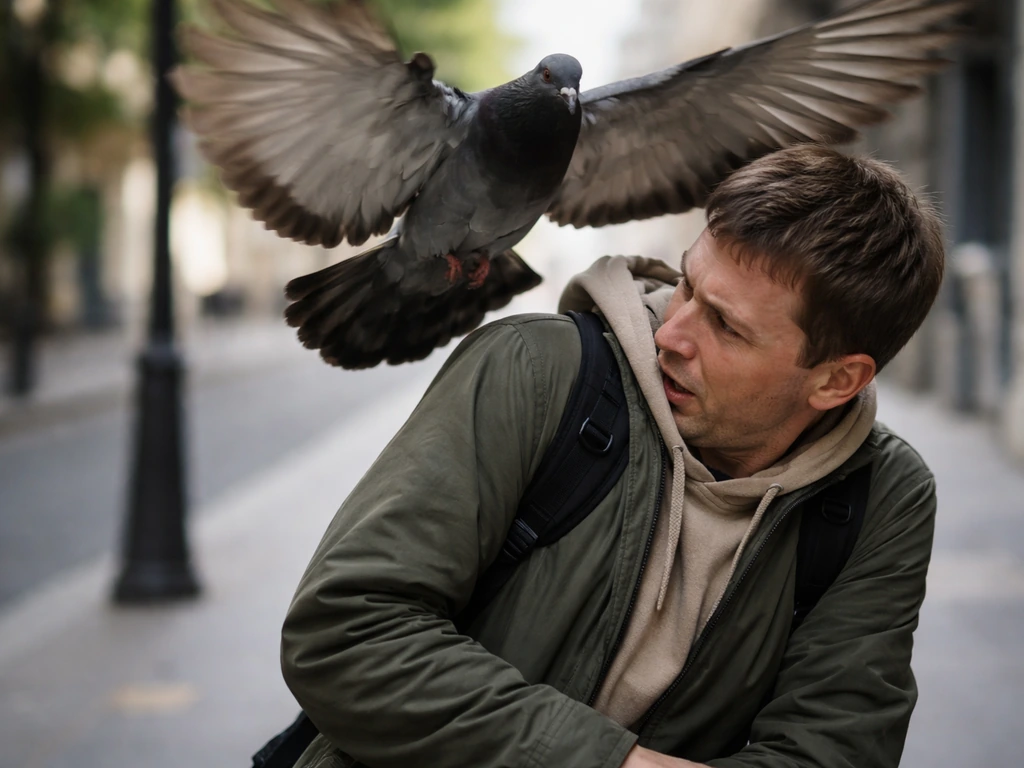
Getting hit by a bird almost always starts as a pure accident, a split-second collision that leaves you startled, maybe a little scratched, and immediately wondering what just happened. Literally, it means a bird misjudged its flight path, got spooked, or simply didn't see you. Symbolically, across dozens of traditions, it's read as a sudden message demanding your attention: a nudge toward awareness, a signal of coming change, or an interruption meant to shake you out of autopilot. Both readings matter, and you can hold them at the same time.
Getting Hit by a Bird Meaning: Literal and Spiritual

Maya Hartwell
29 May 2026
What 'Getting Hit by a Bird' Actually Means (Literal vs. Symbolic)
On the literal side, birds collide with people for very ordinary reasons. Urban environments, sudden movement, low-flying species like swallows or pigeons, or a nesting bird defending territory can all send a bird straight into you. It happens most often in spring and summer when birds are more territorial and young birds are learning to fly. The physical experience ranges from a light brush of wings against your face to a harder strike from a larger bird, and occasionally a small scratch or peck if the bird panics on contact.
On the symbolic side, this is where it gets interesting. A bird hitting you is unexpected, unplanned, and physically felt. That combination, in nearly every interpretive tradition, signals something worth pausing to consider rather than brushing off. It's different from simply seeing a bird, or even having a bird land near you. Contact means something crossed into your personal space in a way you couldn't ignore.
It's also worth separating 'getting hit by a bird' from related experiences. Almost hitting a bird while driving, running over a bird, or killing a bird by accident all carry their own symbolic weight and tend to be interpreted slightly differently across traditions. A direct physical strike on your body is one of the more intimate of these encounters, which is part of why people feel compelled to look up what it means.
What to Do Right After It Happens

Before you dive into meaning-making, take care of yourself first. Even a small bird can leave a scratch, and bird claws carry bacteria. Here's what to do in the first few minutes.
- Check yourself for broken skin, scratches, or puncture wounds. Even light contact can leave marks you might not notice immediately due to adrenaline.
- If the skin is broken, wash the area immediately with soap and running water for at least 5 to 20 minutes. The longer the better for any wound with a real break in the skin, per CDC guidance.
- Apply pressure with a clean cloth if there is any bleeding.
- Apply an antibiotic ointment and cover with a clean bandage once bleeding has stopped.
- If the bird made contact with your eyes, rinse with clean water immediately and seek medical evaluation.
- Check where the bird went. If it flew away normally, that's a good sign. If it is on the ground, stunned, or acting strangely, do not handle it with bare hands.
- If you need to move an injured bird, use gloves, a towel, or a box, and contact a local wildlife rehabilitator.
Most bird strikes are minor and need nothing more than a good wash and a bandage. But don't skip the cleaning step even if the scratch looks small. The CDC Yellow Book advises washing the wound with soap and running water for at least 20 minutes after bites or scratches, and seeking professional medical care for high-risk exposures blank" rel="noopener noreferrer">don’t skip the cleaning step even if the scratch looks small. Birds can carry bacteria like Pasteurella and Salmonella in their beaks and claws, and while bird-to-human rabies transmission is extremely rare, any bite or deep scratch that breaks skin is worth taking seriously. CDC also notes that rabies post-exposure prophylaxis includes wound washing plus human rabies immune globulin and rabies vaccine given at the first medical visit, and most exposures require medical attention quickly blank" rel="noopener noreferrer">bird-to-human rabies transmission is extremely rare.
When to Seek Medical Help
See a doctor or go to urgent care if the wound is deep, won't stop bleeding, is on your face or near your eye, or shows any signs of infection (redness spreading, warmth, swelling) in the days after. You should also seek medical attention promptly if you were bitten or deeply scratched and cannot confirm the bird was healthy, particularly with wild birds behaving erratically. Medical staff can assess whether a tetanus update is needed and discuss whether any further treatment is appropriate. If you have any doubt, it's always worth the visit.
Spiritual and Symbolic Meanings Across Traditions
Once you've handled the practical side, you can turn to the question most people are actually here to answer: what does it mean? Across cultures, being physically struck by a bird tends to cluster around a handful of core themes.
A Wake-Up Call or Warning
The most common interpretation is simply: pay attention. Birds are widely understood as messengers in spiritual traditions, and a collision is about as direct a delivery as a message can get. Many people who experience this describe it as arriving during a period of stress, inattention, or decision-making. The collision is read as the universe (or their own intuition, or a divine source depending on their framework) tapping them hard on the shoulder. Ask yourself honestly: were you somewhere mentally that wasn't present in the moment? Were you distracted, avoiding something, or on autopilot?
Change, Transition, or Disruption Making Way

In many metaphysical and folk traditions, unexpected disruptions involving birds signal imminent change, sometimes welcome and sometimes not. The key here is framing: the collision disrupts your current path. That disruption isn't automatically bad. It may be interpreted as something breaking open, or a transition you've been resisting finally demanding acknowledgment. If you've been feeling stuck or on the edge of a life shift, this encounter can feel deeply resonant.
Messages About Communication and Freedom
Birds are cross-culturally associated with communication, freedom, and the movement between earthly and spiritual realms. Being struck by one can be read as a prompt around something you need to say (or stop saying), a conversation you've been avoiding, or a question about your own freedom and whether you're living it. The specific bird species can sharpen this meaning: a crow carries different symbolic associations than a sparrow or a hawk.
An Omen of News, Unexpected or Otherwise
Older European folklore often read sudden bird contact as a sign that unexpected news was coming, not necessarily bad news, just news that would require you to respond. Some traditions considered it a sign that a message was already in transit toward you. In a broader metaphysical reading, this maps onto the idea of something entering your awareness that you hadn't anticipated.
Biblical, Folklore, and Cultural Angles
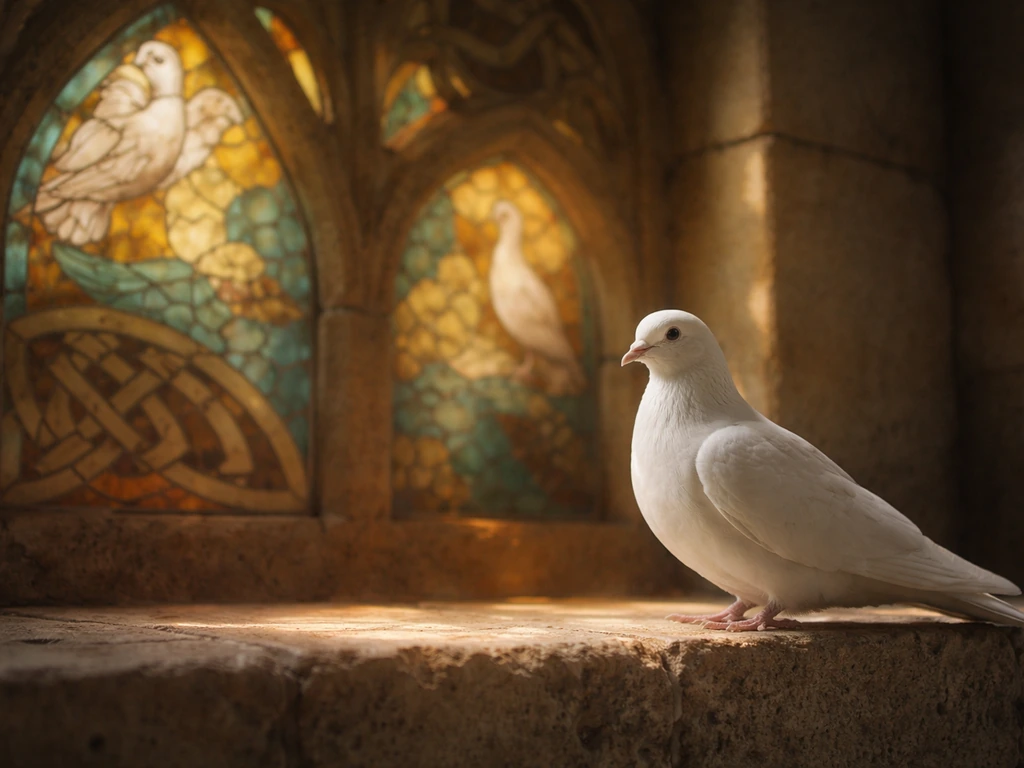
Across major traditions, birds carry consistent significance as messengers between worlds or between the human and divine. The Bible uses birds frequently as symbols of divine care, the Holy Spirit (depicted as a dove), and God's provision (Matthew 6:26, where Jesus points to birds as evidence of divine sustenance). In this framework, a bird striking you could be read as an unexpected, physical reminder to look up from your immediate concerns and trust in a larger plan.
In Celtic traditions, birds were considered soul-carriers and messengers from the Otherworld. A sudden, forceful bird encounter was taken seriously as a sign that something from beyond the ordinary was pressing through. Celtic folk tradition paid close attention to which direction the bird came from and which direction it flew after contact.
Many Indigenous North American traditions hold birds as spirit helpers or clan ancestors, and an uninvited physical encounter is treated with great respect rather than dismissal. Depending on the nation and tradition, such an event might prompt prayer, an offering, or a conversation with an elder for interpretation. It's worth noting that these traditions are diverse and deeply specific, so broad generalizations don't do them justice, but the common thread is treating bird encounters as meaningful rather than random.
In Eastern traditions, particularly in some branches of Chinese folk belief, birds striking people or windows are often connected to news of change arriving, sometimes linked to ancestors attempting contact. Japanese folklore similarly treats unusual bird behavior as spiritually significant and worthy of acknowledgment.
How to Figure Out What It Means for You
Spiritual meaning isn't one-size-fits-all. The same event lands differently depending on context, and using context clues is the most practical way to move from 'something happened' to 'here's what I think it's pointing toward.' Run through these questions honestly.
| Context Clue | What to Ask Yourself | Why It Matters Symbolically |
|---|---|---|
| Time of day | Was it dawn, midday, dusk, or night? | Dawn often signals new beginnings; dusk and night lean toward endings or transitions |
| Where it hit you | Head, face, back, chest, hands? | Head = thoughts/awareness; chest = emotions/heart; back = something unseen approaching |
| Bird's behavior after | Did it fly away freely, seem stunned, or die? | Flying away suggests a message delivered and complete; death adds weight and asks for deeper reflection |
| Your emotional state beforehand | What were you thinking about or avoiding? | The timing of disruptions tends to be meaningful; notice what you were mid-thought on |
| Location | Were you at home, at work, traveling, a meaningful place? | Location adds context; a strike near a place of stress carries different resonance than one on a peaceful walk |
| Bird species | What kind of bird was it? | Species carry specific symbolism (crows, hawks, sparrows, doves all differ widely) |
| One time or recurring | Has this happened before recently? | A pattern asks for more attention than a single incident |
After running through those questions, try journaling for five minutes without editing yourself. Write what happened, how you felt, and what, if anything, immediately came to mind. People often find that their first uncensored thought after an event like this is the most revealing one.
If It Keeps Happening or You're Feeling Anxious About It

If birds are hitting you repeatedly or you're experiencing multiple bird-related incidents in a short period, two things can be true at once: there may be a practical explanation, and there may also be a symbolic pattern worth noticing. On the practical side, look at your environment. Are you walking through nesting territory at the same time every day? Are there feeding stations or water sources nearby drawing large numbers of birds? Changing your route or timing can resolve the literal problem.
On the symbolic side, recurring bird encounters are generally interpreted as amplified messages. If a single strike is a tap on the shoulder, repeated strikes are read as an ongoing invitation to pay attention to something you haven't fully addressed yet. Rather than escalating fear, treat repetition as a prompt: what keeps showing up in your life alongside these incidents? What theme or question have you been carrying?
If anxiety is the dominant feeling, grounding practices help. Prayer, meditation, or a simple ritual of acknowledgment (even something as informal as saying aloud, 'I hear you, I'm paying attention') can satisfy the feeling that you need to respond. Some people find it helpful to research the specific bird species involved and sit with its symbolic associations for a few days. Avoid the trap of confirmation bias, where you look for everything to confirm a feared outcome. Interpretation should open possibilities, not narrow them into dread.
It's also worth distinguishing this from related but different experiences. Some people also wonder what it means to flip someone the bird as a harsher, more aggressive kind of symbol or gesture. Nearly hitting a bird while driving or accidentally killing a bird tends to trigger similar searches and similar anxiety. Those carry their own interpretive frameworks and practical considerations, but the underlying advice is the same: acknowledge the experience, tend to any practical needs, and approach the meaning with curiosity rather than fear.
When the Anxiety Goes Beyond the Incident
Most people feel startled and curious after a bird strike, and that settles naturally within a day or two. But if you find yourself ruminating heavily, feeling like something terrible is about to happen, losing sleep, or spiraling into superstitious thinking that's interfering with daily life, that's worth taking seriously as a mental health concern rather than a spiritual one. Anxiety can attach itself to an unusual event and amplify it far beyond what the event itself warrants.
Talk to a therapist or counselor if intrusive thoughts about the incident aren't resolving on their own. Cognitive behavioral approaches are particularly well-suited to helping people differentiate between meaningful pattern recognition and anxiety-driven catastrophizing. A good therapist won't dismiss your spiritual curiosity; they'll help you hold it alongside emotional wellbeing rather than in opposition to it.
The question worth sitting with isn't 'is something bad going to happen?' It's 'what is this experience inviting me to notice or do differently?' That reframe usually points somewhere genuinely useful, which is the whole point of interpreting these moments in the first place. Running over a bird meaning can be approached in a similar way, balancing the literal circumstances with the symbolic message you take from it.
FAQ
Does “getting hit by a bird” have a different meaning if it was a bite or deep scratch (not just a wing/peck)?
Yes. Symbolically people often still treat it as an attention signal, but practically it becomes a medical-priority event. If skin breaks, treat it like a potential infection risk, watch for spreading redness or worsening pain over the next 48 to 72 hours, and ask a clinician whether a tetanus update is needed. That medical reality should be part of your interpretation, because “meaning” and safety are not separate.
What should I do if the bird strike happened to my child, especially on the face or near the eye?
Take extra caution. Rinse promptly with clean running water and mild soap, then seek same-day medical advice if there is any eye-area involvement, persistent redness, trouble seeing, or bleeding that does not quickly stop. For kids, even small scratches can be harder to assess, and clinicians can help decide on proper cleaning, bandaging, and whether follow-up is needed.
Is it meaningful if a bird only barely touched me, or does “hitting” require a stronger impact?
Many people interpret “contact” as the key threshold, not the force. A brief brush can still be read as a disruption out of autopilot, but you may want to calibrate the intensity of the meaning to the intensity of the event. If it was truly minor, consider using the incident as a check-in question rather than expecting a major omen.
How do I tell the difference between a spiritual “message” and anxiety turning this into a threat?
Use a decision rule: if your interpretation leads to concrete, helpful action (grounding, a conversation you avoid, a routine adjustment) it’s more likely guidance. If it spirals into fear of catastrophe, constant scanning for signs, or sleep disruption, that points toward anxiety. The article already suggests grounding, and a useful next step is to limit meaning-search time and track your mood before and after you reflect.
What if it happened repeatedly in the same location, even on different days?
Then start with the literal explanation first. Look for nesting, a food or water source, or predictable flight paths (for example, around a doorway or window). Changing route or timing for one or two weeks can be a practical test. If repeated contact continues after the environment changes, then it may be reasonable to revisit the symbolic “amplified message” angle.
If the bird flew off in a certain direction, is that relevant to the symbolism?
In some traditions it is, but it’s optional. If you want to use that detail, note it factually (where it came from and where it left) and then connect it to a real-life question rather than a fixed prediction. For example, “from the left” might simply remind you to address something you have been ignoring, not necessarily point to an exact outcome.
What does it mean if I got hit by a specific species, like a crow versus a sparrow?
Species can sharpen themes, but avoid overfitting. A crow is often associated with intelligence, clearing, or attention, while smaller birds may be read as gentler reminders about everyday communication and perspective. If you do research, treat it as a lens for journaling prompts, not a verdict about what must happen next.
Is it appropriate to interpret the event as a sign if I do not believe in spiritual meanings?
Yes, you can use it in a non-spiritual way. Even without metaphysical beliefs, it can function as a “situational awareness” signal: slow down, check your surroundings, and reflect on whether you were distracted. The practical framing still supports meaning-making, and it avoids forcing spiritual conclusions when you do not want them.
What if I feel guilty, like I did something wrong, or the bird was “punishing” me?
That guilt often fuels anxiety and is rarely supported by the literal reality of bird behavior. A gentler reframe is to treat it as misjudged flight, spooking, or territorial defense. If you keep blaming yourself, consider separating responsibility (you may have been in the wrong place at the wrong time) from intention (birds do not usually “target” people).
Should I do anything to the incident report or clothing, like washing items or documenting it?
If there was any chance of contamination from beak or claws, wash the affected fabric promptly. For repeated or severe incidents, take a quick note (time, location, bird type if known, what happened, any symptoms) since it helps both medical follow-up and practical troubleshooting of patterns like nesting areas.
When should I seek mental health help after a bird strike?
If intrusive thoughts keep returning, you cannot sleep, you avoid normal activities because of fear of another incident, or the event begins to affect relationships and daily functioning. The article mentions therapists and cognitive approaches, and a practical next step is to track symptoms for one to two weeks and then seek support if they are escalating rather than fading.
Next Article
What Might Prompt You to Flip the Bird and How to Stop
Triggers for flipping the bird and practical stop-it steps, plus aftercare and optional symbolic meaning to choose peace