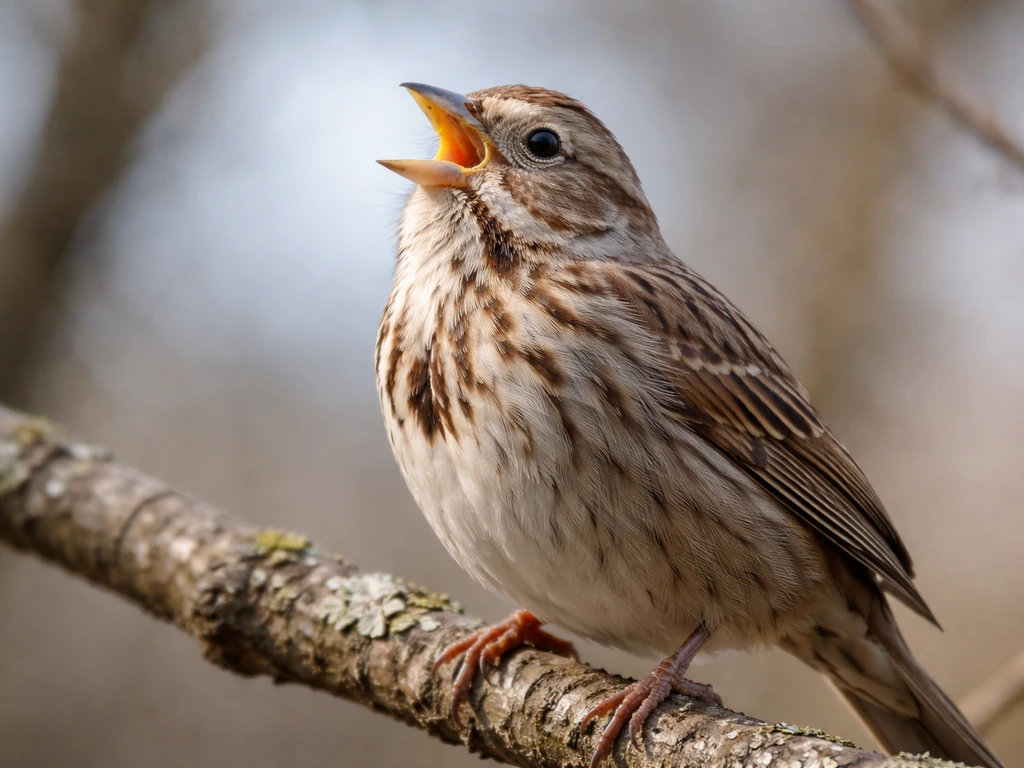
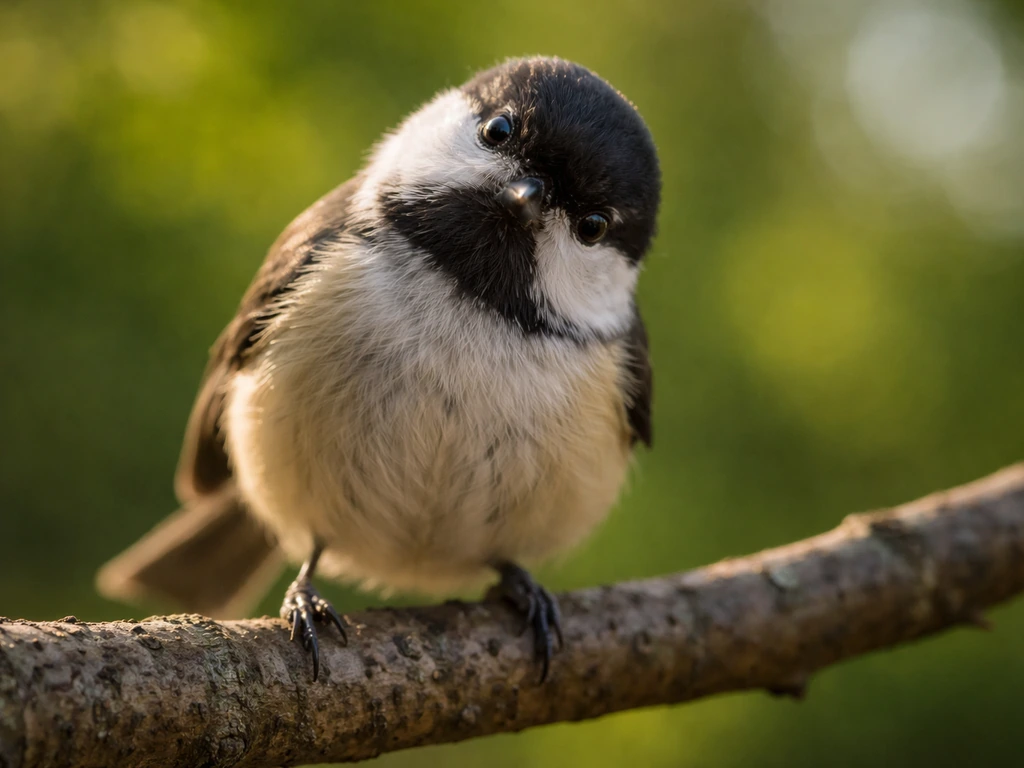
When a bird tilts its head at you, it almost always means one of three things: it is listening carefully, studying something with one eye, or processing its environment with intense curiosity. That is the everyday answer, and it covers the vast majority of head tilts you will ever see. But because a persistent or sudden tilt can occasionally signal a health problem, and because many people on this site are also asking what that moment meant on a deeper level, this guide covers all three angles: the practical biology, the health red flags, and the symbolic or spiritual layer that bird encounters have carried across cultures for centuries.
What Does It Mean When a Bird Tilts Its Head?

Maya Hartwell
20 May 2026
Why birds tilt their heads: the everyday reasons
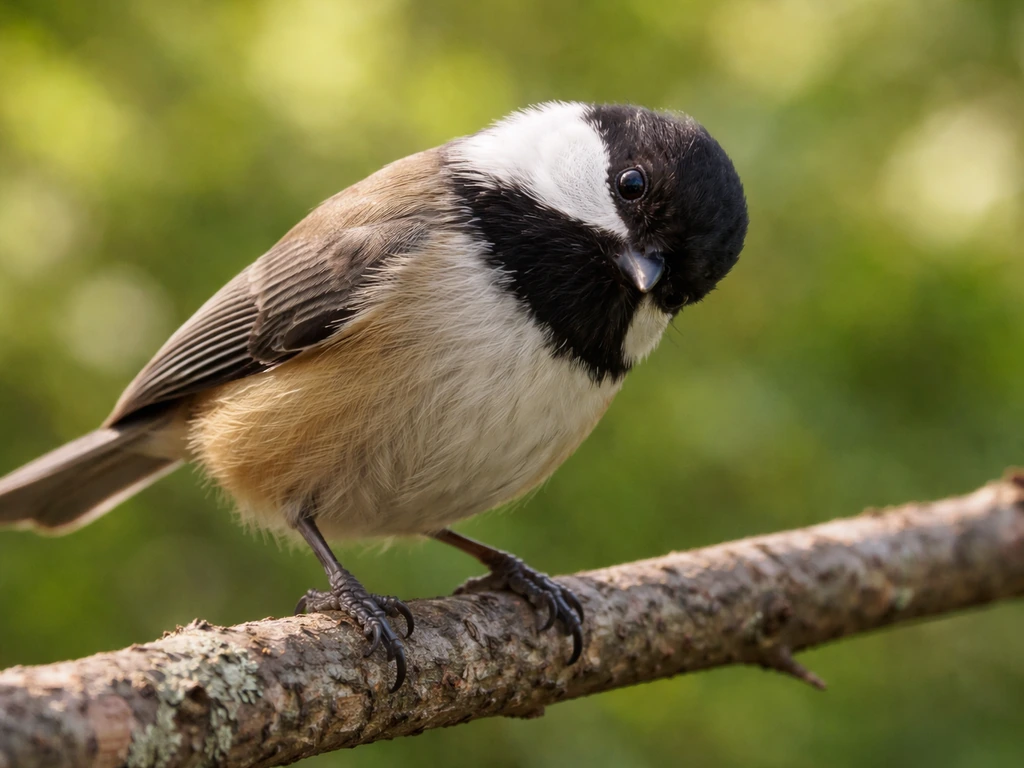
Birds do not have forward-facing eyes the way humans do. Their eyes sit on the sides of their heads, which gives them a wide field of view but limits true binocular depth perception. To get a sharper look at something, a bird angles its head so one eye can lock onto the subject directly. If you have ever had a robin or a jay freeze and tilt at you from a few feet away, that is exactly what is happening: it is choosing its best eye for the job.
Hearing is the other big driver. Birds have excellent directional hearing, and tilting the head repositions the ear openings to pick up sound more precisely. A bird that goes very still, tilts, and seems to scan the air is almost certainly zeroing in on a sound: a rustle in leaves, a distant call, or even the hum of electronics in your home. The head tilt and the listening pause often happen together, and the bird may hold the position for several seconds before acting on what it heard.
Beyond hearing and vision, head tilting is also a communication and curiosity behavior. Parrots, for example, frequently tilt their heads when they see their person walk into the room. It is a marker of engagement: the bird is paying attention to you, interested in what you are doing, and possibly waiting to see if you will respond. Head tilting in social species can also be part of soliciting interaction, play, or allopreening, especially when it is paired with other gestures like soft vocalizations or leaning toward you.
Normal head-tilting vs. a genuine red flag
Most head tilts are completely normal. The ones that deserve a closer look share a specific pattern: the tilt is persistent, involuntary, and one-sided, meaning the bird cannot seem to straighten its head and holds the angle even when resting. This is called torticollis, and it is different from the quick, voluntary tilt a bird makes when something catches its interest.
A persistent tilt often points to something affecting the bird's vestibular system, which controls balance. Middle or inner ear inflammation is a common cause. Neurological issues, including brain inflammation or lesions, are also on the list. Because birds are prey animals that instinctively hide illness, a sudden head tilt can be more serious than it looks on the surface, and waiting to see if it resolves on its own is not the right call.
The red flags to watch for alongside a head tilt are listed below. If you see any combination of these, treat it as urgent and contact an avian vet the same day.
- Inability to grip the perch or falling off the perch repeatedly
- Rolling, tumbling, or staggering when moving
- Abnormal eye movements (eyes flickering or moving rapidly side to side, called nystagmus)
- Tremors or shaking in the head, wings, or body
- Lying on the cage floor and not trying to get up
- Not eating or drinking
- Nasal discharge, sneezing, swelling around the eyes, or noisy breathing
- Sudden onset with no clear environmental trigger
Sinusitis and eye infections can also affect how a bird holds its head and face, so any head-region symptoms that appear together with unusual posture are worth noting and reporting to a vet. Merck's veterinary guidance makes a point of distinguishing a true head tilt from a head turn or other postural difference, because the specific presentation helps localize where the problem is coming from. That is something your vet will assess, but your detailed observations are what give them the best starting information.
How species and context change what the tilt means
Not every bird tilts for the same reason, and the context around the behavior matters as much as the behavior itself. A parrot tilting at you while you are cooking dinner reads very differently from a wild robin tilting its head toward the ground in your garden.
Wild birds in your yard or outdoors
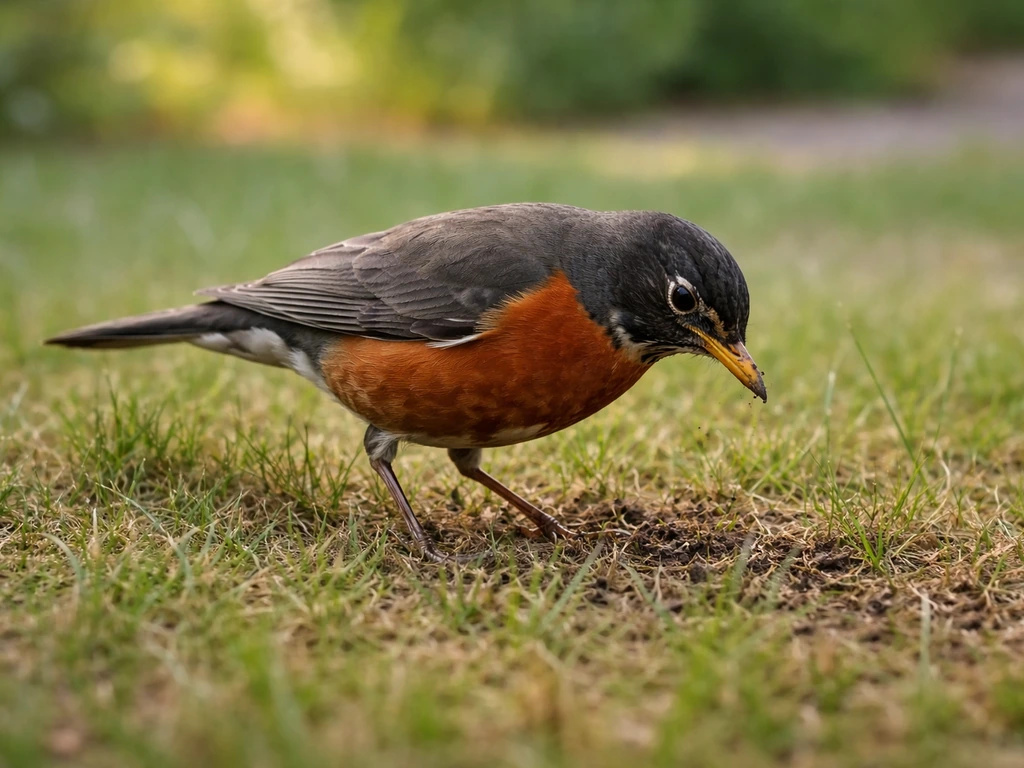
Robins and other ground-foraging birds are famous for tilting their heads toward the soil. For a long time people assumed they were listening for worms, and research suggests hearing does play a role, though vision may also contribute. Either way, a wild bird tilting toward the ground is almost always hunting for food, not performing for you. A wild bird tilting toward you specifically, especially if it holds eye contact, is sizing you up: deciding whether you are a threat, a food source, or simply something worth tracking.
Pet birds at home
With pet birds, head tilting is much more often social and communicative. Parrots in particular are known for tilting when they are engaged, curious, or trying to read your facial expressions. If your bird tilts when you talk to it, hold something new, or make an unfamiliar sound, that is engagement, not alarm. Head tilting in a flock or multi-bird household can also serve as a social signal: soliciting grooming, showing submission, or mirroring a companion's posture. Context clues like vocalizations, body posture, and whether the bird is approaching or retreating all add to the picture.
During feeding
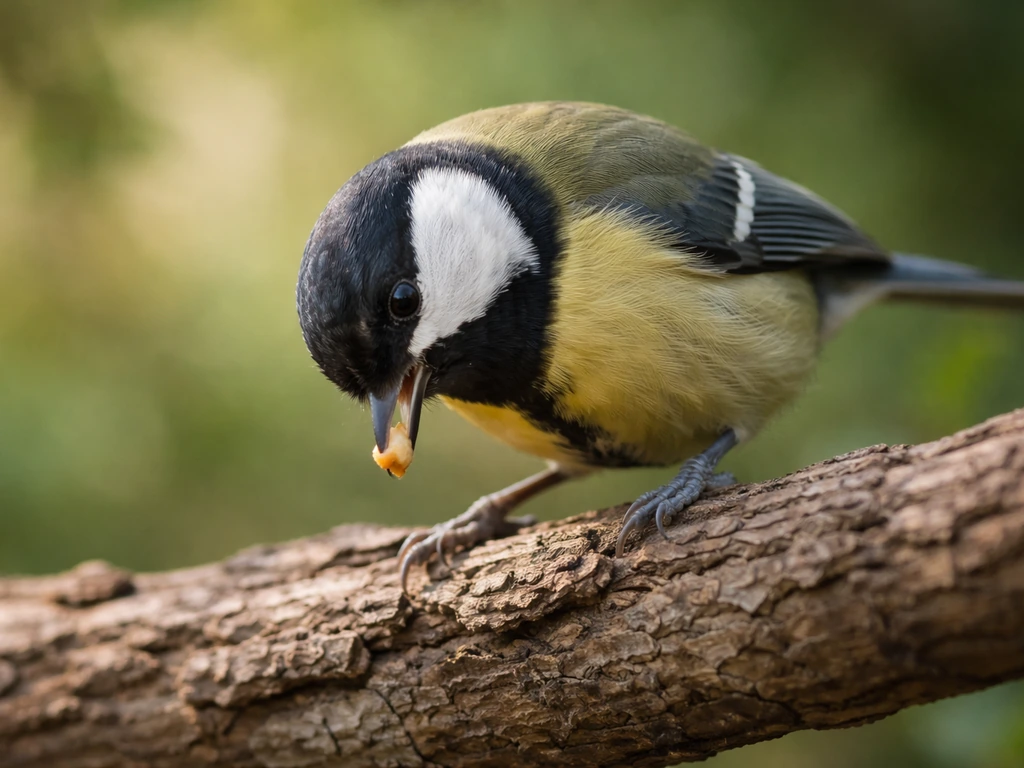
A bird tilting its head while eating is usually orienting one eye toward the food to judge it more precisely, especially if the food item is new, small, or oddly shaped. This is normal and often brief. If the tilt during eating is prolonged, asymmetrical, or paired with difficulty swallowing or picking up food, that is worth flagging.
What to check in your environment right now
If you are watching a pet bird tilt its head and trying to figure out what triggered it, run through these environmental checks before jumping to any conclusions.
- Check for unusual sounds: appliances cycling on, high-frequency electronics, music, or street noise outside. Birds will track sounds you may not even notice.
- Look at what is in the bird's line of sight: mirrors, reflective surfaces, or new toys can trigger visual investigation and repeated head tilting. Birds sometimes fixate on their own reflection, mistaking it for another bird.
- Check the lighting: changes in light angle, new lamps, or sunlight shifting through a window can make a familiar environment look different and prompt a bird to study it.
- Look at cage placement: is the bird's perch at a height where it is seeing something from an unusual angle? A perch that is too high or low relative to your face changes how the bird needs to orient to look at you.
- Check food and enrichment: a new food item, a rearranged toy, or a change in foraging setup can trigger sustained curiosity and head tilting.
- Note the time of day: many birds are most socially active and communicative in the morning and early evening. Tilting behavior during these windows is usually social.
- Look for hazards near the cage: fumes from non-stick cookware overheating, scented candles, cleaning products, or air fresheners can affect a bird's neurological function before you notice other symptoms.
Head tilting as attention, curiosity, and learning
One of the most meaningful things a bird can do when you are interacting with it is tilt its head. It is paying attention. In terms of cognition, birds, especially parrots and corvids, are remarkably capable of reading social cues, and the head tilt is part of how they actively process information from their environment and from the people around them. When your bird tilts toward you while you are talking, it may be trying to match your facial expressions or tone to something it already knows, or it may simply be listening for a word it recognizes.
This learning dimension is worth taking seriously. Birds that are frequently engaged, spoken to, and given things to investigate will tilt their heads more, because they have more to be curious about. It is a healthy behavioral signal in that context. If your bird has stopped tilting and seems less engaged overall, that flatness in behavior can itself be a sign worth noting, much like the tail wagging, feather ruffling, or mouth opening that signals shifts in a bird's state across other behaviors. If you also notice a bird opening its mouth, the meaning depends on context, since it can be a normal behavior (like begging or heat management) or a sign of stress or illness mouth opening.
The spiritual, symbolic, and cultural meaning of a bird tilting its head
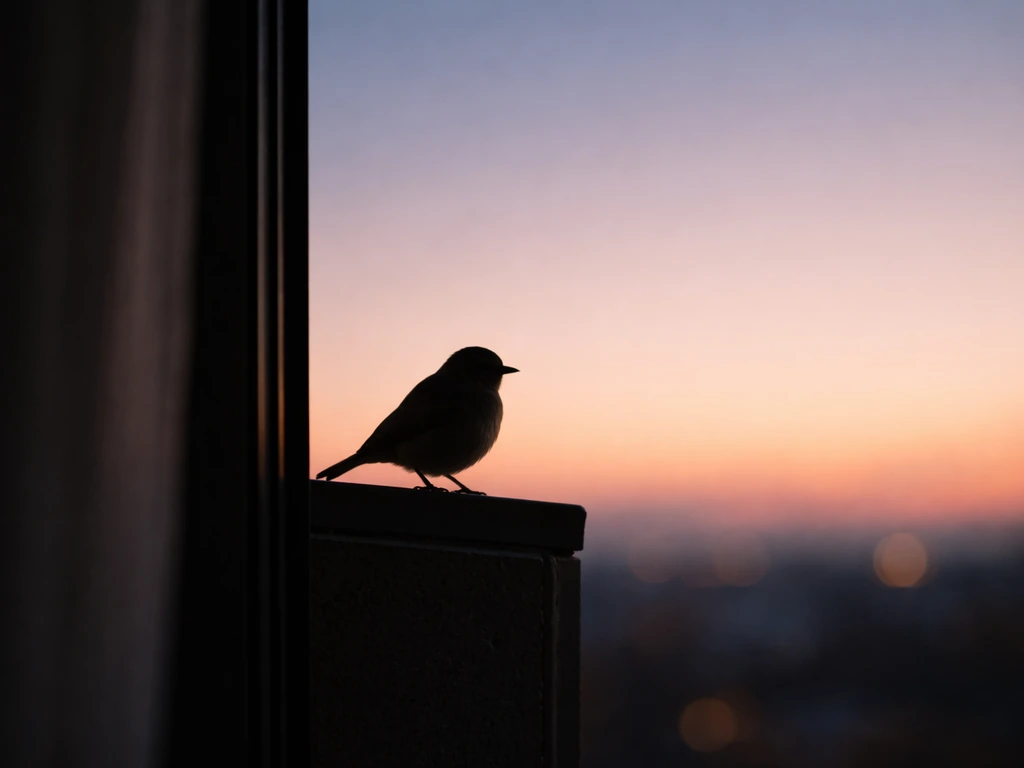
People have read meaning into bird behavior for as long as there have been people. The practice of interpreting bird actions as omens or messages, known as ornithomancy, appears across ancient Greek, Roman, Celtic, Indigenous, and Asian traditions. Ornithomancy is the practice of taking omens from birds, historically based on birds’ flight and cries, among other actions. What is interesting about the head tilt specifically is that it is a gesture of attentiveness, and across many symbolic frameworks, a bird that pauses and turns its full attention toward you is understood as a moment of contact: between the human world and something beyond it.
In numerous folk traditions, birds are considered messengers between realms. When a bird holds still, fixes its gaze, and tilts its head as though truly seeing you, many people interpret that as the message arriving: the bird is not just looking at you, it is delivering something, a reminder, a prompting, an answer to something you have been sitting with. The tilt, in this reading, is the bird leaning in to make sure you receive what it has come to say.
In Celtic tradition, birds were frequently seen as guides between the earthly and the otherworldly, and a bird that lingered and paid unusual attention was taken as a significant sign rather than a casual encounter. In many Indigenous American traditions, birds carry specific meanings tied to species, direction, and behavior, and a bird that pauses to engage directly with a person is often considered to be acting as a messenger from ancestors or spirit helpers. The specific meaning is always tied to the tradition and the person's own relationship to those teachings, which is why it is worth approaching these interpretations with openness rather than a fixed answer.
From a biblical or Christian symbolic perspective, birds more broadly have been associated with divine messengers, the Holy Spirit (the dove being the most recognized symbol), and the idea that God's attention reaches into small, overlooked moments. A bird pausing to look directly at you has, for some people in this tradition, carried a feeling of being seen or accompanied in a difficult season.
What might you take from this moment? If you felt something when the bird tilted its head toward you, that is worth sitting with. Across traditions, the consistent thread is attentiveness: the bird stopped, it oriented toward you, and it held that attention. Whether you read that as a message, a mirror, a comfort, or simply a beautiful moment of contact with the natural world is yours to interpret. No single tradition has the final answer, and the personal resonance of the encounter matters more than any external definition.
When to call an avian vet and what to track before you do
If you are dealing with a pet bird and the head tilt is new, persistent, or paired with any of the red flag signs listed earlier, contact an avian vet today, not tomorrow. A fluffed-up bird can also suggest stress, illness, or trouble regulating body temperature, so context matters. Birds hide illness well, and a sudden onset tilt can be more urgent than it appears. While you are arranging care, lower the bird's perches so it cannot fall far if it loses grip, reduce stress in the environment, and observe without handling unless absolutely necessary.
When you call the vet or walk in, the more specific your observations, the better. Avian neurologic workups, as outlined by resources like LafeberVet's avian neurologic exam protocols, rely heavily on owner-reported observations because the bird may behave differently in a clinical setting. Track the following and bring it with you:
| What to observe | What to note specifically |
|---|---|
| When it started | Sudden onset vs. gradual, any event that preceded it (fall, fright, new food, new toy) |
| Which direction and how often | Consistent tilt to the left or right, or does it vary; how many times per hour |
| Duration | Brief and voluntary, or constant and held even at rest |
| Eye movements | Any flickering, rapid side-to-side movement, or one eye appearing different from the other |
| Balance and grip | Can the bird perch normally, or is it falling, leaning, or lying on the cage floor |
| Eating and drinking | Appetite and water intake since tilt began |
| Other symptoms | Sneezing, nasal discharge, swelling around eyes or face, noisy breathing, tremors |
| Environmental changes | Anything new in the past 48 to 72 hours: food, products used nearby, cage changes, temperature shifts |
For wild birds, if you spot one in your yard that is tilting persistently, stumbling, or cannot fly, contact a licensed wildlife rehabilitator rather than a standard vet, as they have the permits and species-specific expertise to help. Your local Audubon Society chapter can usually point you to the nearest rehabilitator quickly.
The head tilt is one of those bird behaviors that sits right at the intersection of the practical and the profound. Most of the time it is pure curiosity, a living creature genuinely paying attention to you or its world. Occasionally it is a health signal that needs prompt action. And sometimes, in the right moment, it feels like something more: a pause, a turning, an attentiveness that makes you wonder what the encounter was really about.
If you are wondering what does it mean when a bird lights, start by checking whether the bird is simply engaged or if there are any health red flags alongside the behavior. Sometimes, it can even be read through folklore as the bird's ruffling feathers meaning, pointing to agitation or heightened energy in the moment bird ruffling feathers meaning.
If you are also noticing feather puffing along with the bird's posture, that can point to different meanings, including stress, comfort, or a health issue what does it mean when a bird fluffs up. If you are wondering what it means when a bird tilts its head, start by noticing whether it is brief and curious or persistent and accompanied by other symptoms. If you want to go deeper than general advice, learn what it means when a bird tilts its head in different contexts like feeding, hearing, or social behavior.
All three of those readings can be true at once, and knowing how to tell them apart is exactly what gives you the confidence to respond well. In other words, the phrase “bird ruffling feathers” points to behavior that makes others uncomfortable or causes tension bird ruffling feathers meaning.
FAQ
How can I tell the difference between a normal head tilt and a worrisome one?
A normal tilt is usually brief, voluntary, and the bird can straighten back up quickly. Be more concerned if the tilt looks involuntary, stays one-sided for a long time, or comes with other changes like balance issues, sitting low, reduced appetite, puffing, or abnormal breathing.
If my bird tilts its head after a loud noise, should I assume it is just startled?
Not always. A tilt right after a sudden sound can be fear or listening, but if the tilt persists beyond a few minutes, becomes one-sided, or you notice coordination problems, treat it as a potential vestibular or ear-related issue and monitor closely for same-day veterinary advice.
Can head tilting happen during sleep or resting?
Occasional micro-tilts while settling can be normal, but a clearly tilted head held during rest for extended periods is not. If you see the bird repeatedly holding the same angle when it should be relaxed, consider it a persistent sign to document and report.
My bird tilts toward the mirror or when it sees its reflection, is that normal?
Often yes, especially for parrots and social species. The reflection can trigger engagement or curiosity, but if the bird also shows frantic pacing, repeated one-sided tilting that does not break, or changes in eating and droppings, rule out discomfort or illness.
What should I do in the moment if I see a persistent one-sided head tilt in my pet?
Keep the environment calm and limit handling. Offer familiar food and water and reduce fall risk by lowering perches or placing a temporary brooder-style setup. Record when it started, whether it is getting better or worse, and any other symptoms to share with an avian vet.
Does eye focus or blinking change how I interpret head tilting?
Yes. If the bird tilts and seems to track an object with smooth eye movements, it often indicates visual focus. If the tilt is accompanied by abnormal eye discharge, swelling, frequent rubbing, or reduced blinking, the issue may involve the eye or sinuses, which is important to mention to the vet.
Is head tilting in wild birds ever a sign of feeding behavior?
Yes. Ground-foraging birds may tilt toward the soil as they scan or evaluate food, especially in brief bouts. But if the bird is tilting while stumbling, cannot fly, or appears unable to maintain upright posture, contact a licensed wildlife rehabilitator rather than assuming it is simply hunting.
How should I observe and track the behavior for a vet call?
Use short notes rather than vague impressions. Record the date and time it started, whether the tilt is left or right, how long it lasts, what the bird was doing immediately before (eating, resting, reacting to sound), and any linked signs like loss of balance, appetite changes, or vocal changes.
Can head tilt be caused by something in the home like fumes or aerosols?
It can. Irritants that affect the respiratory tract or sinuses may change head posture, especially if the bird also has watery eyes, sneezing, or labored breathing. If you recently used cleaning sprays, scented products, or nonstick fumes, mention it to the vet immediately.
Should I give my pet any medication or human remedies if it has head tilt?
No. Do not try to medicate without an avian vet’s direction. Birds are sensitive to dosing errors and some common human treatments can worsen neurologic, balance, or kidney issues. The safest first step is environmental support and prompt professional guidance when the tilt is persistent or accompanied by red flags.
Next Article
What Does It Mean When a Bird Opens Its Mouth?
Learn what it means when a bird opens its mouth, how to spot distress fast, and spiritual meanings to reflect on safely.