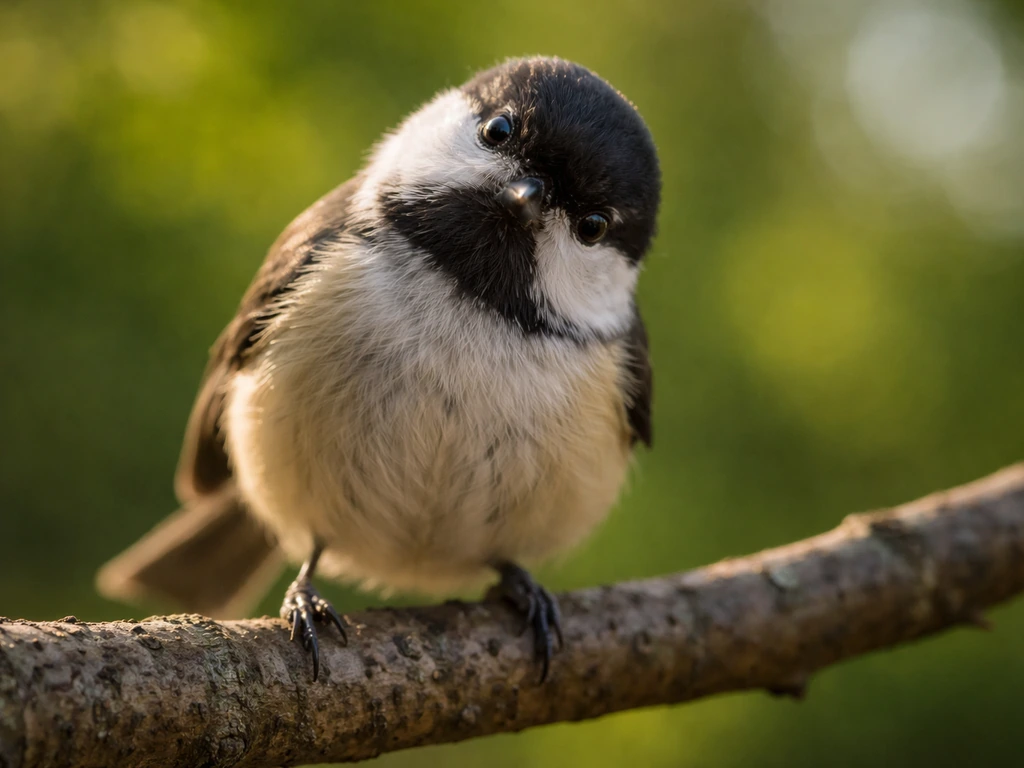
When a bird wags its tail, it is most often doing something completely normal: foraging, signaling alertness, asserting itself to a rival, or simply settling onto a perch. Species like wagtails and phoebes do it almost constantly as part of their baseline behavior. But if the moment felt pointed, if the bird seemed to linger or look directly at you, many traditions would say there's a message worth sitting with. If you also saw the bird open its mouth, that can point to behaviors like calling, feeding, or defensive or courtship signaling depending on the context. Both readings can be true at once, and this guide will help you figure out which one fits what you actually saw.
What Does It Mean When a Bird Wags Its Tail

Maya Hartwell
21 May 2026
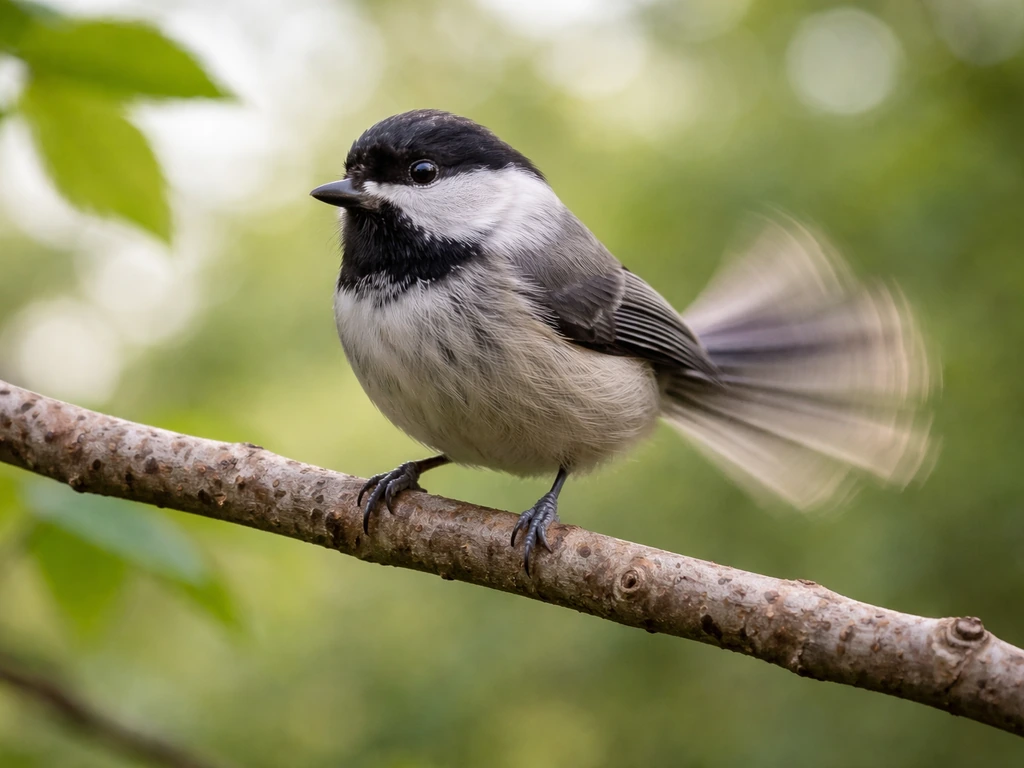
Tail wagging is usually just normal bird behavior
Before you read anything spiritual into a wagging tail, it helps to know that tail movement is one of the most common and functional things birds do. It is not rare, not dramatic, and for many species it happens almost every minute of every active hour. The motion can be vertical (pumping up and down), horizontal (side to side), or a combination of both, and different species favor different styles.
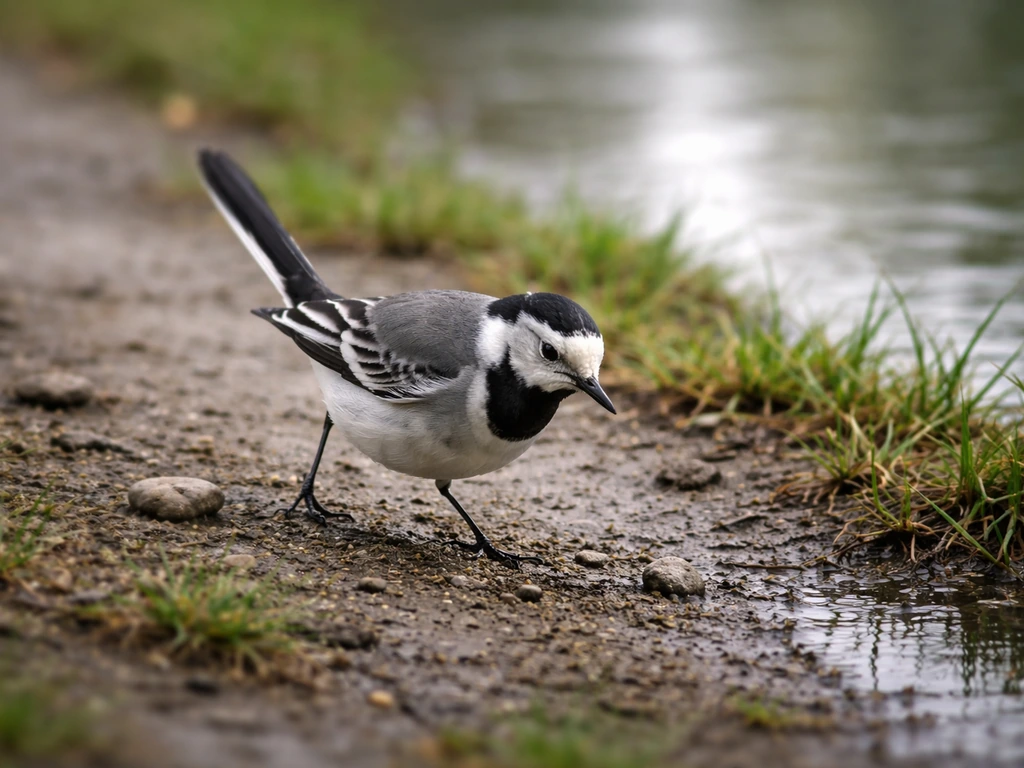
Wagtails are the textbook example. These small birds pump their tails up and down in a near-constant rhythm while they move across the ground, and scientists still debate exactly why. The leading theories are that it helps flush insect prey into the open, signals social status or dominance to nearby birds, or communicates alertness to potential predators. The honest answer, even from BBC Science Focus and wildlife researchers, is that no single explanation has been proven definitively. The behavior is real, frequent, and functional, even if the precise function is still argued over.
The willie wagtail, a fantail native to Australia, wags its tail horizontally as it forages across open ground, making quick darting movements to catch insects it flushes up with each sweep. New Zealand fantails do something similar, rocking and spinning with side-to-side tail action when perched. The Black Phoebe, a familiar bird across the western United States, perches low over water, slowly pumping its tail, then darts out to snag an insect mid-air. Its tail-pumping rate actually increases measurably when a predator is nearby, which researchers confirmed through field experiments using predator sound playback.
The broader picture is that tail flicking and wagging show up across dozens of bird families in at least three broad contexts: foraging, social interactions, and predator-prey situations.
BirdNote’s explanation for tail flicking and flashing in predator-prey situations is that it can signal to predators that the bird is alert and harder to catch while warning other birds in the flock about danger tail flicking and wagging show up across dozens of bird families in at least three broad contexts: foraging, social interactions, and predator-prey situations. .
A 2020 meta-analysis covering these functions found that tail movements serve multiple purposes depending on the species and situation, and that the same motion can mean completely different things depending on what else the bird is doing.
Why birds wag their tails: species, situations, and context
There are a handful of specific situations that reliably produce tail wagging in birds, and knowing which one you are looking at changes the interpretation significantly, whether you are reading it practically or symbolically.
| Situation | Typical tail behavior | Species examples |
|---|---|---|
| Foraging on the ground | Rhythmic, repetitive wag (up-down or side-to-side) | Willie wagtail, pied wagtail, Black Phoebe |
| Predator nearby or approaching | Faster pumping, often paired with calls and approach behavior | Black Phoebe, many flycatchers |
| Social signaling / dominance | Wag paired with posture display, may face another bird | Wagtails, some thrushes |
| Alarm / flock warning | Tail flash (spread and wag to show contrasting color), often repeated | Redstarts, some warblers |
| Settling after landing | Brief wag on perch, then stops | Most passerines |
| Courtship display | Wag combined with song-flight or raised wings | Black Phoebe, fantails |
One thing worth noting: if the bird you saw is a dedicated tail-wagger by nature (a wagtail, phoebe, or fantail), that movement is just who they are. It carries less interpretive weight than if you saw, say, a robin or a sparrow pumping its tail intensely in an unusual context. Species baseline matters enormously here.
How to tell what the tail wag actually means: body language clues

The tail never acts alone. To read what a bird is really communicating, you need to look at the whole picture: tail position, head movement, wing posture, vocalizations, and what the bird does immediately before and after. A body-language expert (or an experienced birder) would tell you the same thing: context is everything.
Here is a practical checklist to run through when you notice a bird wagging its tail: If you are wondering what it means when a bird lights, it can help to consider both normal bird behavior and the context of your encounter bird wagging its tail.
- Tail height: Is it raised high (alert, assertive) or held low (relaxed, foraging)?
- Speed: Slow and rhythmic usually means foraging or settling. Fast and urgent often signals a predator or threat nearby.
- Head movement: Is the bird bobbing its head, too? Combined head-and-tail motion is common in alert or territorial displays.
- Wing position: Wings slightly drooped or flicked alongside the tail wag often indicates a stress or threat response.
- Vocalizations: Calling while wagging is a strong signal. The Black Phoebe, for example, calls specifically when chasing intruders or during predator encounters, distinct from its foraging quiet.
- What the bird is doing with its feet: Hopping across open ground while wagging = foraging. Stationary on a branch, facing you, wagging = something else.
- Whether it is looking at you: A bird that orients toward you while wagging, and does not flee, is doing something intentional, whether that is assessing a threat (you) or, in a more metaphysical reading, making contact.
This kind of full-body read is what separates a meaningful observation from a misread one. Just as you might look at a bird tilting its head to understand what it is paying attention to, or watch a bird ruffling its feathers to gauge its comfort level, the tail is just one signal in a larger conversation the bird is having with its environment and possibly with you. Ruffling can also signal comfort or agitation, so it helps to read it alongside the bird's tail motion and posture ruffling its feathers.
What it might mean spiritually or symbolically
If you felt like that bird was trying to tell you something, you are in long and well-traveled company. Across many traditions, birds are seen as messengers between the ordinary world and something larger: ancestors, spirit guides, divine signals, or the subconscious mind making itself visible. A bird that wags its tail while watching you, that stays close and seems unhurried, fits naturally into that interpretive frame.
In a general metaphysical reading, a bird wagging its tail is often interpreted as a sign of vitality, alertness, and active energy. The repetitive rhythmic motion is associated with persistence and momentum. Some spirit-animal frameworks would say this bird is showing you that it is time to keep moving, stay alert, or signal your own presence and strength to the world rather than staying quiet and still.
The willie wagtail carries specific spiritual weight in several traditions. In Aboriginal Australian folklore, the willie wagtail is considered a messenger bird, and in some communities it is specifically associated with good omens, including predictions of successful crops. Some metaphysical interpretations extend this to themes of guidance, protection, and ancestral presence. The bird's near-constant wagging is seen not as restless energy but as an ongoing signal, a reminder to stay attentive to what is around you.
More broadly, the spiritual meaning ecosystem treats animal encounters as potentially message-bearing events, especially when the encounter feels unusual, repeated, or personally resonant. If a bird wagging its tail catches your eye and you cannot shake the feeling that it mattered, that instinct is worth honoring, whatever your belief system looks like.
Biblical, folklore, and metaphysical lenses
Reading meaning into bird behavior has a long history that predates modern spirituality by thousands of years. The ancient Greeks practiced ornithomancy, formal divination from the flight patterns and calls of birds, as part of their religious and civic life. Roman augurs did the same, treating bird behavior as direct communication from the gods. In these traditions, a bird that behaved unusually near a person, or that seemed to choose an encounter, was considered significant by definition.
In Celtic and Northern European folklore, certain birds were understood to carry news from the spirit world, and unusual behavior from them was read as a warning, blessing, or summons. The specific motion mattered less than the context: where you were, what you had been thinking about, and whether the encounter felt chosen rather than coincidental.
From a biblical perspective, it is worth being honest about the tension. Both Deuteronomy 18:10-14 and Leviticus 19:26 explicitly caution against seeking omens, naming it among practices that place trust in signs rather than in God. For readers who hold a Christian faith, interpreting a bird's tail wag as a divine message sits uncomfortably against those warnings. That does not mean the encounter cannot be meaningful, many Christians find that nature prompts reflection, gratitude, and a sense of God's presence without crossing into divination, but it is a distinction worth making consciously.
In the New Age and metaphysical world, the dominant framework is that animals carry energetic signatures and that encounters are rarely accidental. A tail-wagging bird in this reading might be interpreted as a spirit animal activating, a signal to pay attention to your environment, or an ancestor making contact. The willie wagtail is one species that shows up frequently in these discussions with specific associations: guidance, movement, and protective presence. Whether you find this resonant or prefer to keep it natural and observational, both approaches are valid, and honest about what they are.
What to do after you see it
Whether your instinct is practical or spiritual, the best first move is simply to observe without disturbing. Stay still, keep your distance, and let the bird do what it is doing. If it is foraging, you will see that rhythm settle in. If it is alarmed, it will escalate or flush. If it seems to linger near you, notice that too. Audubon recommends watching for posture changes that indicate stress, and backing away if you see them. A tail wag is not a reason to approach; it is a reason to watch.
If there is a nest nearby (which is possible if the bird seems to be holding its ground near a particular shrub or low structure), give it significantly more space. Nest disturbance can cause abandonment, especially early in the season, and some species are legally protected. The general guidance from wildlife authorities for sensitive nesting areas starts at 330 feet for eagles and scales down for smaller birds, but the principle is the same: if the bird seems anxious and you suspect a nest, move back.
Here is a simple set of next steps you can take today, regardless of how you want to interpret what you saw:
- Write down what you saw as soon as possible: the species if you know it, the time of day, the location, the weather, and what you were doing or thinking about just before the encounter.
- Note the full body language: was the tail pumping fast or slow, was the bird vocalizing, was it facing you or moving away?
- Look up the species. If it is a dedicated tail-wagger (wagtail, phoebe, fantail), that context matters. If it is a species that does not normally do this, the behavior is more notable.
- If you are drawn to spiritual interpretation, sit with the question: what felt significant about this moment? What might a message of alertness, movement, or guidance mean for where you are in your life right now?
- If you want to attract more sightings, provide foraging habitat: low ground cover, open patches of lawn or bare soil near vegetation, and a clean water source draw ground-foraging birds reliably.
- If you keep a nature journal or spiritual practice journal, log the encounter there. Patterns across multiple sightings often carry more interpretive weight than a single moment.
There is something genuinely interesting about a bird that seems to have chosen to wag its tail near you, hold eye contact, and not leave. Science gives us good functional explanations for most of what birds do. But it also leaves real room for wonder, and for the personal meaning you bring to a moment like that. The question worth sitting with is not just what the bird was doing, but what you felt when it did it.
If you are wondering what finding a bird feather means, this same idea of context and personal resonance can guide your interpretation what does finding a bird feather mean. That feeling is data too. If you are trying to pin down what does it mean when a bird wags its tail, the key is matching the behavior to the species and the context you observed.
FAQ
How can I tell if the tail wag is just foraging versus the bird reacting to me?
If it kept tail-wagging while doing nothing else to indicate danger or courtship (no sudden flits, no repeated vocal calls, no aggressive posture), it is more likely routine foraging or an alert posture. A quick tell is whether the bird is also scanning the ground or water for prey (practical) versus repeatedly watching you from a stable perch (more likely social attention or general curiosity).
What does it mean if the tail wag is slow versus fast?
Slow, deliberate tail pumping from a perch over a hunting area (often with head-bobbing or stillness between movements) is more consistent with hunting or scanning. Rapid, escalating tail motions paired with raised body, fluffed feathers, or sudden bursts can indicate alarm or territorial response, meaning you should back away and stop lingering.
Does the meaning change if the bird species usually does not wag its tail?
Yes. The exact meaning depends on whether the bird is a species that regularly tail-wags (wagtail, phoebe, fantail) or a less typical tail-wagger (many robins and sparrows). For non-dedicated tail-waggers, look for nearby triggers like a predator overhead, a nest nearby, a rival bird close by, or you getting too near the bird’s route of escape.
What if the bird also opened its mouth when it wagged its tail?
Tail wagging plus repeated open-mouth behavior often points to a specific function, most commonly calling or feeding-related activity. Check what is happening right then: if the bird opens its mouth while the head angles upward or toward another bird, it may be vocalizing or signaling; if it opens the mouth while a food item is present or the bill is near the ground, feeding is more likely than “message” behavior.
Which body-language signs should I check besides the tail to avoid misreading the moment?
Look at the rest of the body language. If the tail wag happens while the bird is upright, calm, and loosely perched, it fits comfort, alertness, or routine activity. If the bird starts leaning forward, spreading wings slightly, hopping with agitation, or repeatedly launching and landing, that usually indicates stress or defense.
What does it mean if the bird wagged its tail, then immediately flew away?
If you saw a bird wag its tail and then suddenly fly to a safer spot, the most likely driver was environmental (prey movement, nearby predator, or disturbance) rather than a persistent personal message. If it stayed close for several minutes without escalation, that suggests the encounter is part of its normal behavior or you were not threatening.
Could tail wagging mean there is a nest nearby?
Try to note the setting. Tail wagging near dense shrubs, fence lines, or specific low structures can coincide with nesting territory, especially if the bird reacts strongly to your approach. If the bird appears watchful and won’t leave, increase distance because nest disturbance risk is higher than “bird curiosity.”
How should I interpret it if other birds were around?
Avoid assuming “message” meaning when the bird is likely using the motion as a social signal. If two birds were involved, watch for whether the tail wag coincided with chases, boundary displays, or feeding competition, because that points to dominance or coordination rather than your personal presence.
Is there any risk in getting closer when a bird is tail-wagging?
Yes. If the tail wagging continued at a steady, species-typical rhythm during normal hunting and you did not see stress behaviors, it is usually harmless routine. But if you notice anxious signs, short flights between close cover, or repeated alarm calls, treat it as a warning to leave the area rather than a sign to approach for a better look.
What’s a good way to decide what I actually observed, versus what I’m assuming?
A practical way to reduce confirmation bias is to write down what you actually observed before interpreting it. Include species, time of day, location (ground, water, shrub), whether other birds were present, and the bird’s posture changes. Then compare your notes to likely contexts, foraging, social interaction, or predator response, before assigning meaning.
Next Article
What Does It Mean When a Bird Tilts Its Head?
Understand why a bird tilts its head, from curiosity and communication to health red flags and symbolic meaning.