If you're hearing scratching, fluttering, or chirping sounds coming from your chimney, there's a good chance a bird has either landed inside the flue or dropped down far enough to get stuck. If you can hear a bird in your chimney, the first step is to confirm the sounds are consistent with a trapped animal and not a fire or structural issue. The most common culprits are chimney swifts, starlings, and sparrows, and the good news is that many trapped birds can find their own way out if you give them the right conditions today. Open your fireplace damper, darken the room, open a door or window to the outside, and give the bird a clear, calm path toward the light. That's the core of it. Everything below will help you confirm what you're dealing with, work through the steps safely, and understand what happens if the bird still won't leave.
Is There a Bird in My Chimney? Steps to Help It Exit

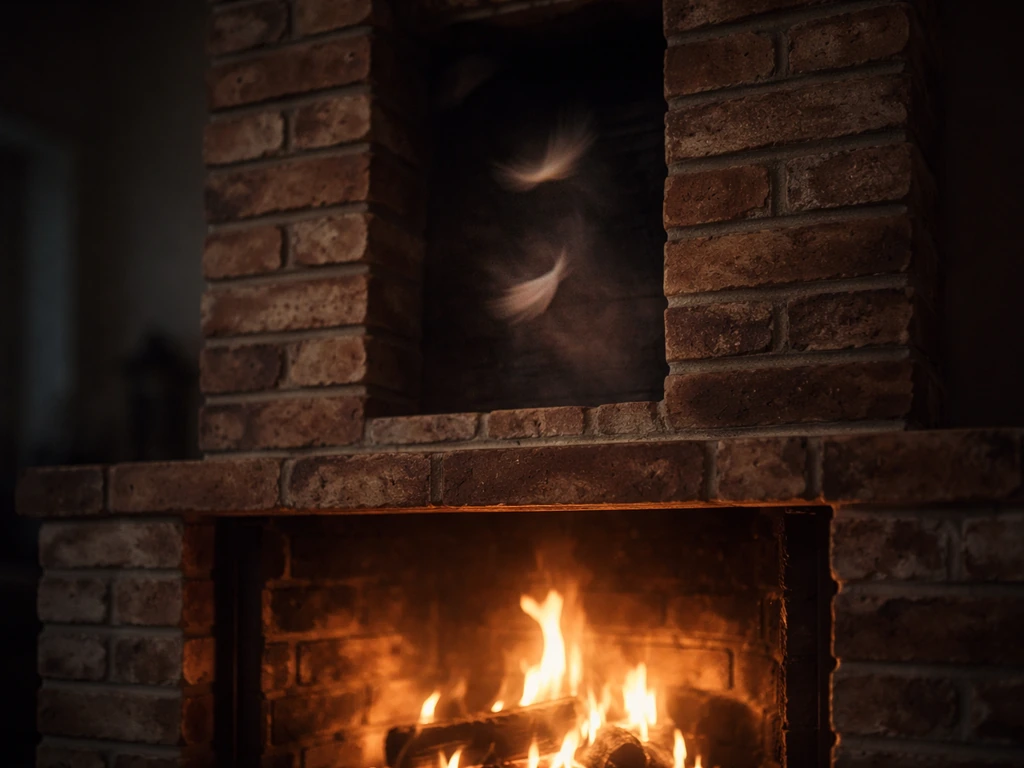
First: Figure Out What's Actually Making That Noise
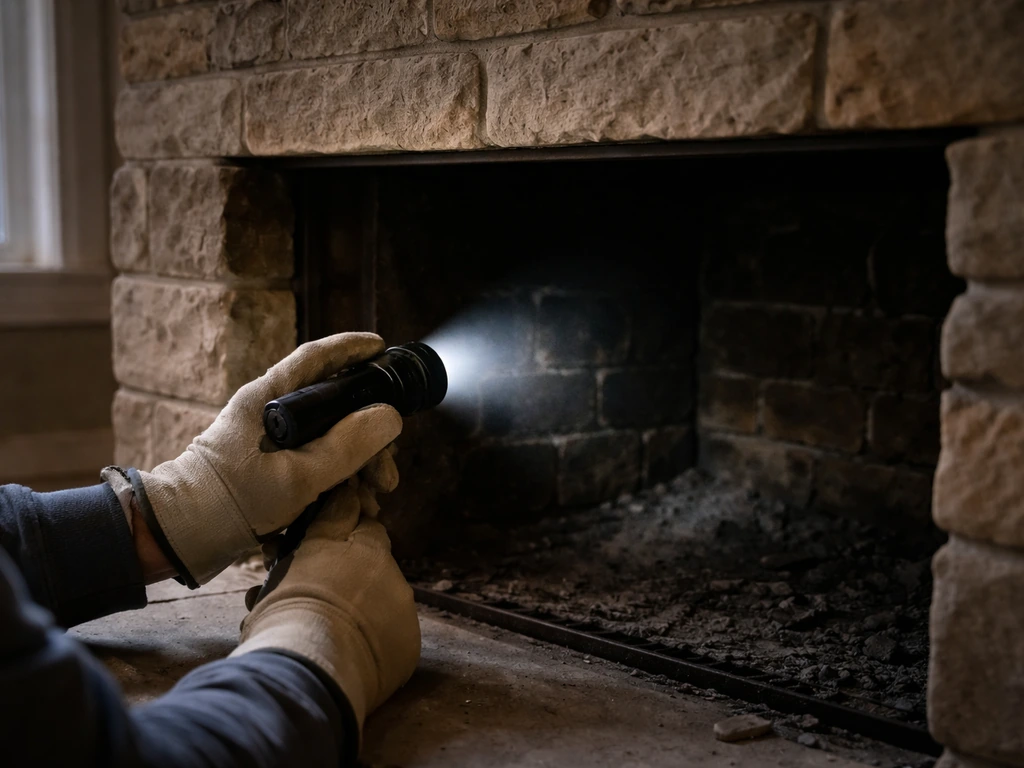
Before you assume it's a bird, it's worth ruling out a few other common causes. Chimneys make a surprising range of sounds on their own. Creosote buildup can produce popping and snapping as it expands with temperature changes. A chimney fire (which is a serious emergency) can sound like something burning or cracking inside the flue. Drafts pushing through gaps can create low whistles or tapping. None of those are birds, and you want to make sure you're treating the right problem.
A bird, though, has a pretty distinct sound profile. Listen carefully for a few minutes and see what you're actually hearing.
| Sound or Sign | Likely Cause |
|---|---|
| Chirping, tweeting, or bird calls | Bird (possibly chimney swift or small songbird) |
| Fluttering or wing-beating | Bird trying to escape or roost |
| Scratching and scrabbling | Bird, squirrel, raccoon, or rat |
| Chattering or clicking | Squirrel or raccoon (heavier, more persistent) |
| Popping or cracking sounds | Creosote expansion or early chimney fire |
| Hissing or roaring from inside | Active chimney fire — call 911 immediately |
| Low tapping with wind outside | Draft or structural settling |
If you hear anything that sounds like a fire (roaring, intense crackling, or you smell smoke from an unused fireplace), stop reading this and call 911. Chimney fires can reach temperatures around 2,000°F and cause serious structural damage in minutes. That's a different situation entirely from a bird visit. If you still think there is a bird in your wall, focus on ruling out the source of the noise and then take the right next step for the animal involved.
Signs It's Definitely a Trapped Bird (and Signs It Might Not Be)
A trapped bird usually gives itself away pretty clearly. Here's what to look and listen for when you crouch down near the fireplace opening or just pay close attention to the sounds coming down the flue.
Signs pointing to a bird
- Distinct chirping, singing, or bird calls from inside the chimney
- Soft, rapid fluttering sounds (wings beating against the flue walls)
- Visible movement if you open the damper and look up carefully with a flashlight
- A bird already sitting in the firebox or on the damper ledge
- Feathers or light debris falling down into the fireplace
- Sounds that are intermittent and stop when you bang on the wall (startled animal response)
Signs it might be something else
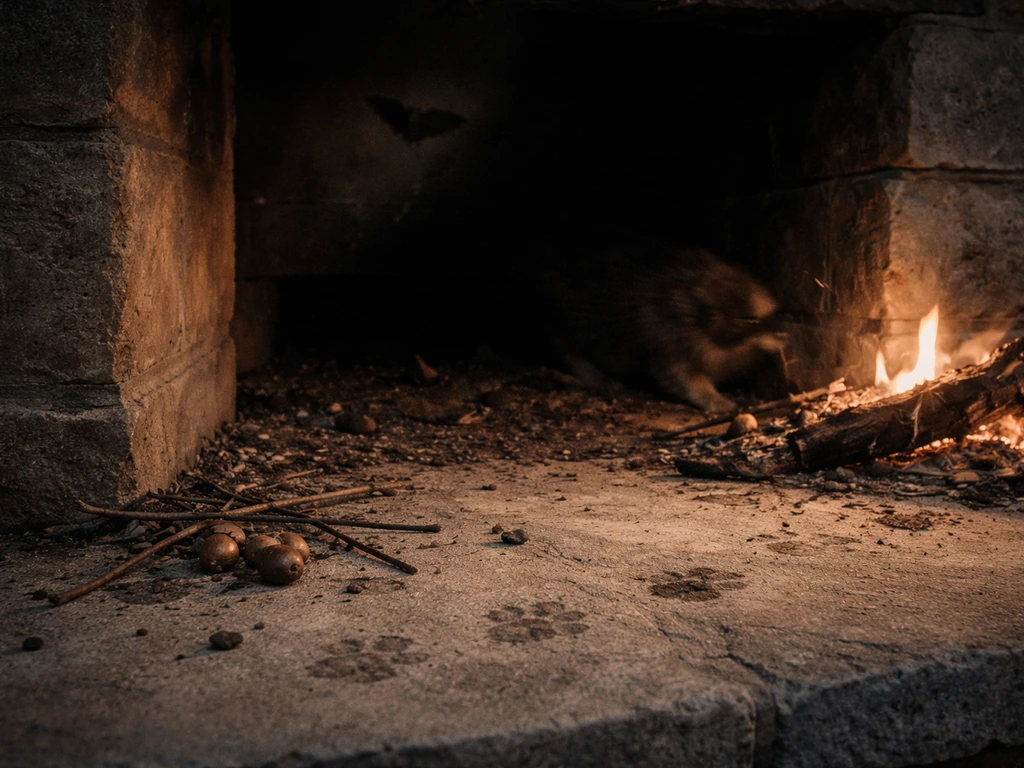
- Heavy, slow scratching that continues for long stretches (more likely a squirrel or raccoon)
- Chittering or chattering sounds (squirrel behavior)
- Thumping or rolling sounds (raccoon, especially a mother with young)
- No sounds at all but a persistent musty smell (old nest, deceased animal, or moisture issue)
- Sounds that only happen when the wind picks up (draft-related, not animal)
Raccoons, squirrels, and bats are all known to enter chimney flues, so don't rule out other wildlife. The approach for getting a bird out is different from handling a raccoon, which may require a wildlife control professional from the start. If you're confident you're dealing with a bird, keep reading.
How to Help the Bird Escape Today
The goal is to create the most obvious escape path possible and then get out of the bird's way. Birds panic when they see humans, and a panicked bird inside a chimney or fireplace will injure itself trying to flee in the wrong direction. Your job is to set up the environment and then let the bird figure out the rest.
If the bird is still up in the flue
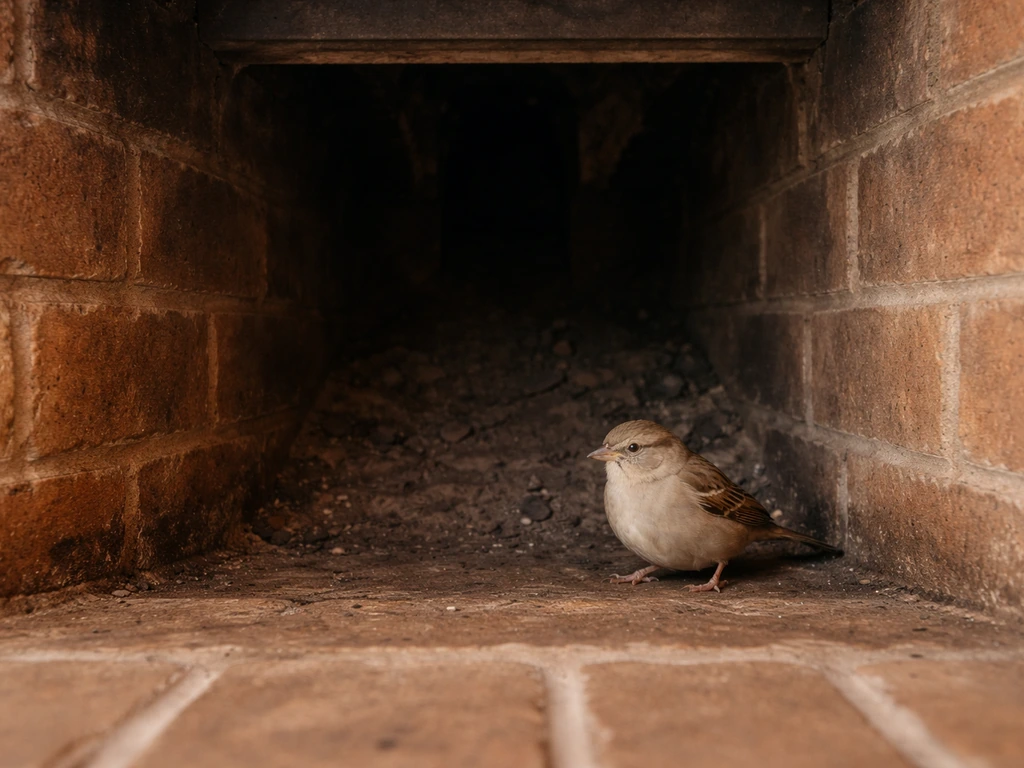
- Make sure your fireplace damper is fully open. This is the most important step. The bird needs a clear path downward into the firebox before it can exit the house.
- Close off the room. Use towels under doors or close interior doors to keep the bird from flying into the rest of your home if it does come through.
- Open the fireplace doors or curtain fully. Then step back and out of the room.
- Turn off all lights in the room. Darken it as much as possible. Birds move toward light, so removing competing light sources inside helps them orient toward the exit.
- Open a window or exterior door in the room. This gives the bird a clear light source to fly toward once it drops into the firebox area.
- Leave the room and stay quiet. Give it at least 30 to 60 minutes without human presence. Check back carefully.
If the bird is already in the firebox
If the bird has already dropped into the fireplace area and is sitting in the firebox covered in soot, your approach shifts slightly. Open the fireplace doors slowly and step back. Follow the same steps above: darken the room, open an exterior door or window, and leave quietly. The bird will likely find its own way out toward the light. Do not try to grab the bird with your bare hands. Even a small bird can scratch and carry parasites, and the stress of being grabbed can be fatal for a bird that's already exhausted.
What not to do
- Do not light a fire or turn on the gas insert to 'smoke the bird out' — this will kill the bird and create a serious fire hazard
- Do not use chemicals, sprays, or repellents inside the flue
- Do not close the damper while the bird is inside — it will be completely trapped with no exit
- Do not bang loudly on the fireplace walls trying to scare it out — panicked birds injure themselves
- Do not leave interior lights on — they compete with the natural light of your exit point and confuse the bird's navigation
When the Bird Won't Leave: Your Next Steps
If you've given it an hour or two with the right conditions and the bird still hasn't come out, or if you're hearing sounds but can't get the bird to drop into the firebox at all, it's time to bring in help. Some situations go beyond what a homeowner should handle alone.
Call a licensed wildlife rehabilitator
If the bird is a juvenile (young, possibly not fully feathered), appears injured, is completely covered in soot, or seems disoriented and unable to fly, call a local licensed wildlife rehabilitator. Wisconsin Humane Society and the RSPCA both explicitly recommend this step for these specific conditions. You can find wildlife rehabilitators in the U.S. through the National Wildlife Rehabilitators Association or your state's fish and wildlife agency. Explain clearly that you have a bird in a chimney, describe what species it looks like if you can tell, and describe what condition it appears to be in.
Know your species: chimney swifts are protected
This matters legally. Chimney swifts are protected under the Migratory Bird Treaty Act, which means if you have a nesting pair or active nest of swifts inside your chimney, you cannot legally disturb or remove the nest while eggs or young are present. Chimney swifts are also beneficial birds that eat enormous quantities of insects. If you've identified swifts as your chimney residents, the U.S. Fish and Wildlife Service recommends waiting until after they've migrated (typically by fall) before taking any exclusion steps. A wildlife professional can help you confirm the species and navigate the legal requirements.
Call a chimney sweep or chimney professional
If there's a nest blocking the flue, debris built up from the bird's presence, or you suspect structural damage from wildlife, a certified chimney sweep (look for CSIA-certified professionals) can safely inspect and clear the flue. They have the right tools and can also assess whether the chimney is safe to use after the bird situation is resolved. Because birds, nesting materials, feathers, and droppings inside the flue create both blockage and fire risks, this isn't a step you want to skip if the situation was significant.
Cleanup and Safety Checks After the Bird Is Gone
Once the bird is out, your job isn't quite done. Bird droppings, nest materials, and feathers left inside a flue can block airflow, introduce pathogens, and create a fire risk when you eventually use the fireplace again. Here's what needs to happen.
Immediate indoor cleanup
- Wear gloves and a dust mask when cleaning up droppings or feathers from the firebox area
- Wipe down the firebox with a damp cloth and dispose of debris in a sealed bag
- Do not vacuum dry droppings — this aerosolizes bacteria and fungi; dampen them first
- Wash your hands thoroughly after any contact with the area
Get a chimney inspection
Even if you don't use the fireplace regularly, the Chimney Safety Institute of America recommends annual inspections. After a bird incident, book one before the next time you light a fire. A professional will check for nest material blocking the flue, creosote buildup (which wildlife presence can disrupt and dislodge), cracks in the liner, and any damage to the cap or crown. Nesting materials are highly flammable, and a blockage you can't see can cause carbon monoxide to back up into your home. It's worth the cost of an inspection to know the chimney is clear and safe.
How to Stop Birds From Getting In Again
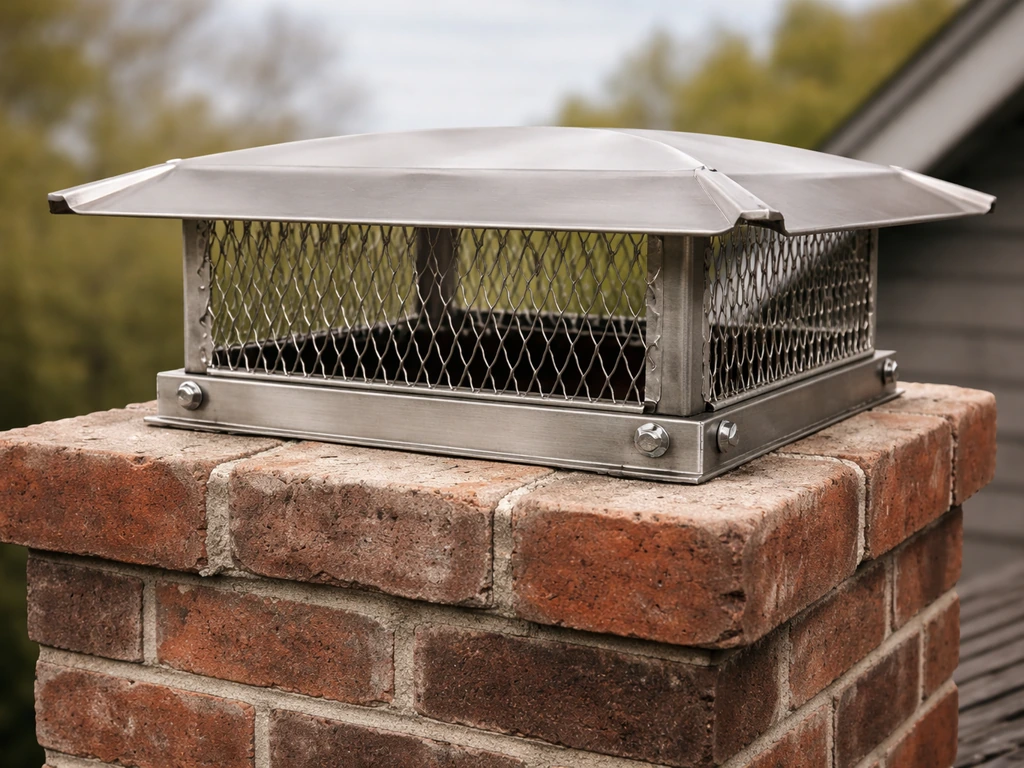
The single most effective thing you can do is install a properly fitted chimney cap. A chimney cap with a wire mesh guard covers the top of the flue opening while still allowing smoke to vent. It keeps out birds, squirrels, raccoons, and rain. If your chimney doesn't have a cap, or if the existing cap is damaged, cracked, or loose, that's how the bird got in. If you are wondering how did a bird get in my attic, damaged or missing chimney caps and openings are a common pathway for birds to find their way into the upper spaces that's how the bird got in.
What to look for in a chimney cap
- Stainless steel or galvanized steel construction for durability
- A fitted design that bolts or anchors securely to the top of the flue — not just resting on top
- Wire mesh with openings small enough to exclude birds and wildlife but large enough not to restrict draft
- Avoid hardware cloth as a DIY cap solution — it's not appropriate for chimney use and can create draft and moisture problems
Beyond the cap, there are a few other preventive steps worth taking. Have any gaps or cracks in the chimney crown (the concrete or mortar collar at the top) repaired, as birds and squirrels will exploit even small openings. If your chimney has a metal liner, capping it is especially important because smooth metal walls don't give birds the footholds to escape once they fall in, making entrapment more likely. Set a reminder to have the cap inspected annually alongside your chimney cleaning, typically in late summer or early fall before you start using the fireplace again.
What This Encounter Might Mean Spiritually
Once the bird is safe and the chimney is sorted, you might find yourself still thinking about the encounter itself. That's not unusual. Across cultures and across centuries, birds entering the home have carried deep symbolic weight, and a bird coming down through the chimney is one of the more striking versions of this experience.
Birds as messengers and omens
In many Western folk traditions, a bird entering the home uninvited is interpreted as a message from the spirit world, sometimes as a warning, sometimes as a sign of good news on its way, and sometimes as a visit from a deceased loved one. In Celtic traditions, birds were seen as intermediaries between this world and the Otherworld, able to pass through boundaries that humans cannot cross. The chimney itself is symbolic: in many cultures, the hearth is the heart of the home, the channel between the domestic and the elemental, which gives a bird arriving through it a particular sense of threshold-crossing.
Biblical and spiritual interpretations
From a biblical perspective, birds appear throughout scripture as symbols of the divine, of freedom, and of provision. The dove is probably the most recognized symbol of the Holy Spirit, but ravens brought food to Elijah in the wilderness, and sparrows are used in the Gospels as an image of God's attentiveness to even the smallest creatures. Some readers in this tradition interpret a bird unexpectedly entering the home as a nudge toward mindfulness or a reminder of divine care, not necessarily a literal omen but a moment of symbolic resonance worth pausing over.
Eastern and Indigenous traditions
In many Indigenous North American traditions, birds are considered spiritual guides, and their unexpected presence in a human space is taken seriously as a potential message or sign requiring reflection. The meaning often depends on the species: owls carry very different weight than songbirds or swifts in most traditions. In some East Asian frameworks, birds visiting the home are interpreted as auspicious signs, carrying good fortune or news. As with all symbolic interpretation, the meaning you draw from the encounter is shaped by your own cultural context, your inner state, and what the experience felt like to you in the moment.
What might you take from this?
Whether you hold any of these traditions or simply find the encounter interesting to reflect on, a bird coming down your chimney and into your home is an unusual enough event to make you stop. Some people experience it as a disruption; others feel something like a visitation. If you're drawn to the spiritual side of bird encounters, it's worth sitting with the question of what the experience meant to you, not what tradition says it should mean, but what it felt like when it happened. The practical and the symbolic don't cancel each other out. You can get the bird out safely, clean the chimney, install a cap, and still find that the event left an impression worth exploring.
FAQ
How can I tell if the sound is coming from the chimney flue versus the attic or wall?
Sit near the fireplace and listen while slowly moving your ear around the firebox opening, then check whether the sound changes when you open a damper. If the noises do not intensify near the flue, or you hear activity higher up in the house, the animal may be in the attic or chase rather than in the chimney. In that case, follow a wildlife entry-point plan, not just an escape-path plan.
Should I run the fireplace fan, open the HVAC register, or turn on a furnace to help it exit?
Avoid creating strong suction or airflow that can pull the bird deeper into the flue or scatter it into the chimney system. The safer approach is to darken the room and open an exterior door or window so there is a gentle, direct path toward daylight and the outdoors. If you use fans, keep them low and indirect, and do not blast air toward the opening.
Is it safe to put a blanket or sheet over the fireplace while I try to help the bird out?
No, covering the opening can trap the bird and block the escape route you are trying to provide. If you need to reduce visual cues for yourself, adjust the room lighting (darken) rather than blocking the flue opening. Leave the bird an unobstructed path to the outside.
What if the bird is already inside but I cannot see it when I open the doors?
Do not widen the opening repeatedly, and do not reach inside. Open the fireplace doors slowly, step back, and use the light-direction method (dark room, open outside door or window). If you still cannot confirm the bird is in the firebox area after an hour or two, switch to calling help rather than continued attempts.
Can I use mothballs, spray, or smoke to drive the bird out?
No. Repellents and aerosols can harm wildlife and may create unsafe chimney conditions. Stick to environmental guidance (light, quiet, open route). If it is not leaving after you have created the right conditions, contact a licensed wildlife rehabilitator or a chimney professional depending on what you observe.
What should I do if I hear fluttering but the bird keeps moving deeper into the chimney?
Stop trying to grab or chase it. Keep the damper open, reduce interior lighting to encourage movement toward the outdoors, and maintain a steady exit path. If the bird seems to be climbing further up or the noise pattern shifts beyond the firebox within a short time, get professional assistance instead of escalating homeowner interventions.
Do I need to wear gloves or a mask when cleaning up droppings afterward?
Yes, wear disposable gloves and consider eye protection, and avoid stirring debris. Bird droppings and nesting material can carry pathogens, so use careful removal and disposal, not sweeping dry debris. If there is heavy nesting material, use a chimney sweep or another trained professional to reduce dust exposure.
How do I know whether I should call a wildlife rehabilitator versus a chimney sweep first?
Call a wildlife rehabilitator first if the bird is juvenile, visibly injured, completely soot-covered, or appears disoriented and unable to fly. Call a certified chimney sweep if you suspect blockage from nesting materials or debris, or if there are signs of structural concerns (for example, damaged crown or liner issues). When both apply, many areas can coordinate, but do not delay emergency steps if you suspect an active fire.
What if I suspect the species is a chimney swift, and I see what looks like a nest?
Do not disturb the nest or attempt removal while eggs or young may be present. Use a wildlife professional to identify the species and confirm legal exclusions timing, since chimney swifts are protected and timing matters. After the bird situation is resolved, prioritize installing or repairing a properly fitted chimney cap to prevent recurrence.
After the bird is out, when is it okay to use the fireplace again?
Do not light another fire until the chimney has been checked and cleared if there was significant bird activity. Even if the bird appears gone, nest material and debris can reduce airflow or create a blockage that increases carbon monoxide risk. An inspection before the next burn is the practical decision, especially if you heard prolonged scratching or saw soot-covered material.
How do I confirm my chimney cap actually fits and is installed correctly?
Look for full coverage of the flue opening with no gaps around the perimeter where birds could enter. The cap should be secure against wind and temperature movement, and the mesh should not be loose enough to snag or allow a bird to wedge inside. If your cap is missing, cracked, or rattling, replace it before the next season.
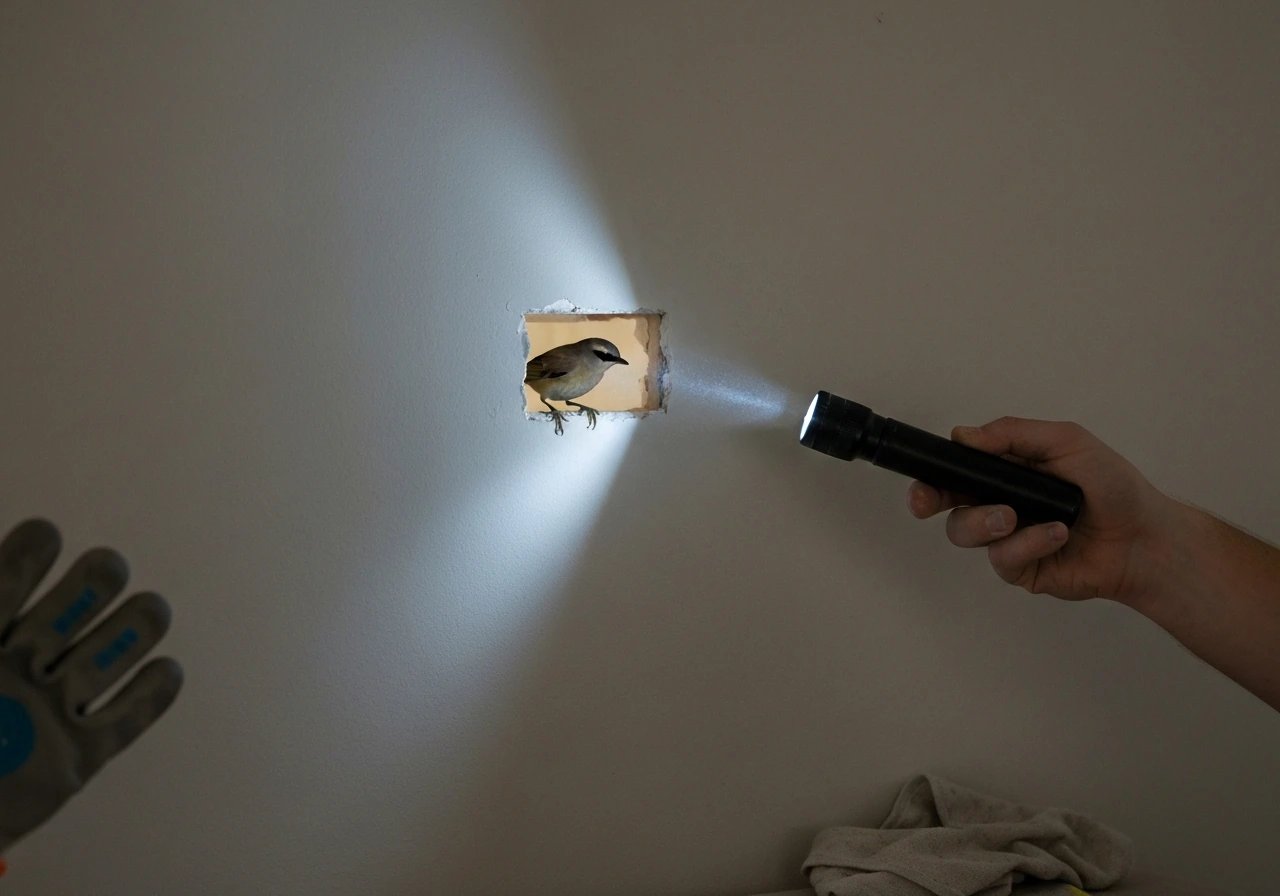
Day-of steps to identify a bird in wall, safely guide escape, and clean droppings, with cultural and spiritual meaning t
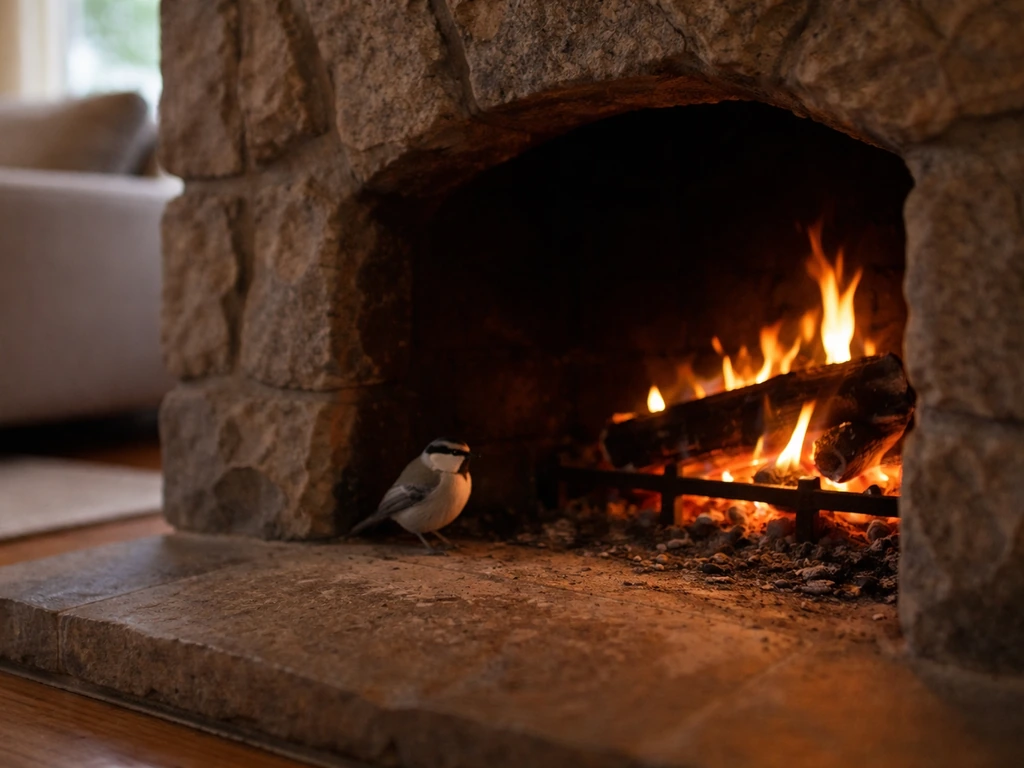
Meaning of a bird coming down a chimney: real causes, spiritual symbolism, safety steps, and what to do today.
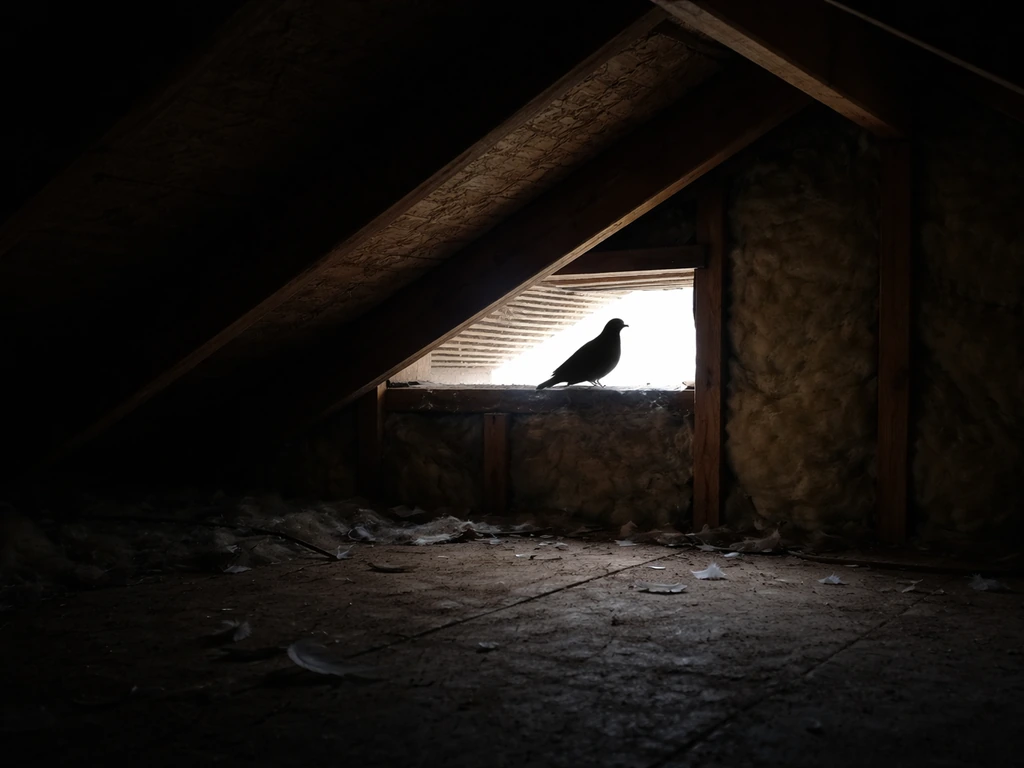
Find how the bird got in your attic, safely remove it, spot nesting, clean droppings, and seal entry points to prevent r